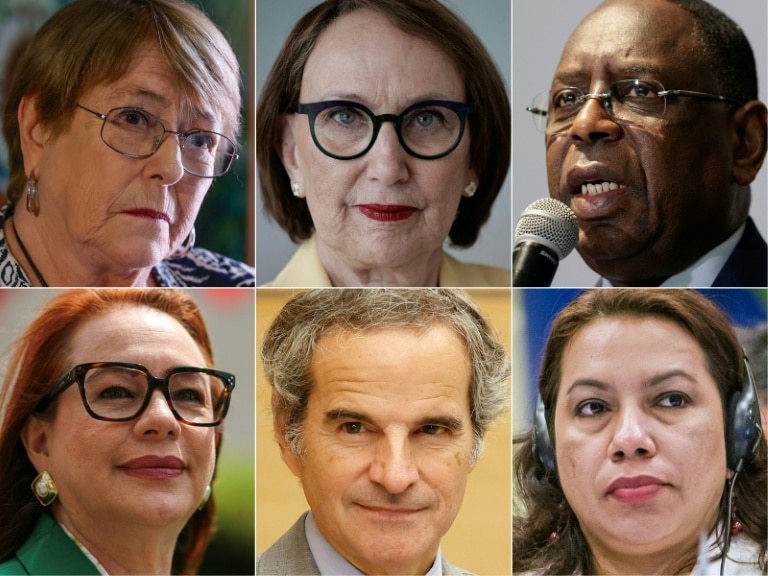
As the United Nations grapples with a deep-seated crisis of finance and global confidence, six contenders vying to succeed outgoing Secretary-General António Guterres are preparing to take the stage Thursday for a landmark televised debate in the iconic General Assembly Hall. The event comes exactly one week ahead of the formal launch of the selection process, a procedure that carries enormous consequences for the future of the 78-year-old global institution.
Scheduled to run for 90 minutes starting at 5:00 pm local time (2100 GMT) and broadcast globally by Bloomberg, the town hall-style debate will see the hopefuls field questions from three key groups: seasoned diplomats, serving UN employees, and representatives from global civil society. Unlike past contests, the 2026 race lacks a clear frontrunner and has so far failed to spark widespread public or diplomatic enthusiasm, even as the organization faces one of its most challenging periods in modern history.
The six candidates stepping into the spotlight are: former Chilean President Michelle Bachelet; former Ecuadorian President and UN General Assembly President María Fernanda Espinosa; Argentine diplomat Rafael Grossi; Costa Rican economist and former UN Under-Secretary-General Rebeca Grynspan; Guyanese former foreign minister Carolyn Rodrigues-Birkett; and Senegalese President Macky Sall.
General Assembly President Annalena Baerbock framed the debate as a singular moment for transparency in the selection process. “This UN town hall will provide a rare opportunity to engage with the ideas, priorities and leadership vision of the candidates for one of the world’s most important positions,” she said. Baerbock emphasized the high bar for the next leader, noting that in an increasingly fragmented global order, the UN requires more than just skilled administration. “The United Nations needs not only an exceptional chief administrator who will make the organization fit for the 21st century but also the leadership and integrity of someone willing to vigorously defend the UN Charter and all its three pillars: peace and security, human rights, and development,” she added.
The race unfolds against a backdrop of growing pressure on the UN from major powers, particularly the United States. During the previous Trump administration, Washington repeatedly accused the organization of reckless spending, overextension into non-core policy areas, and failure to deliver tangible results on its core mandates. While the U.S. has pushed for a refocus on the UN’s founding mission of peace and security, many other member states have pushed back, stressing that human rights and development are equally critical pillars that cannot be sidelined.
Analysts point out that the 2026 contest has a noticeably different tone than the 2016 selection that elevated Guterres. Richard Gowan, senior analyst for the International Crisis Group, told Agence France-Presse that “the race does seem short on energy” compared to the 2016 campaign, which featured more candidates and widespread political intrigue. “This time around everyone agrees that the race is incredibly important for the future of the UN, but the contest itself has been quite cautious,” Gowan explained. “There is a sense that the candidates are treading carefully to avoid offending the US and other veto powers on the Security Council.”
Prior to Thursday’s public debate, all six candidates have already undergone three hours of private questioning from representatives of the UN’s 193 member states. Most contenders have aligned on core priorities, stressing the need to advance ongoing internal reforms to boost administrative efficiency, and calling for more active personal engagement from the secretary-general in global peace negotiations and conflict resolution efforts.
The formal selection process will kick into high gear on July 30, when the 15-member Security Council holds its first closed-door, anonymous straw poll to gauge preference for the candidates. The process will see repeated rounds of non-binding votes until one candidate secures at least nine votes from Council members, and avoids a veto from any of the five permanent Security Council members: the United States, Russia, China, the United Kingdom, and France. Once a candidate is endorsed by the Security Council, their name will be sent to the full General Assembly for formal appointment, with the new secretary-general set to take office on January 1, 2027.
Many diplomats who spoke to AFP remain uncertain about the final outcome, noting that a number of major world capitals have not yet publicly committed to a candidate. Gowan noted that while Grossi remains the most frequently cited potential frontrunner, he has not yet locked in enough support to secure victory. “Other candidates like Grynspan and Rodrigues-Birkett also have significant numbers of admirers,” Gowan said, adding that a dark horse candidate could still emerge to claim the top post. In fact, unconfirmed speculation has already circulated in UN corridors and media reports, with the New York Post citing unnamed sources claiming former U.S. President Trump has expressed support for FIFA President Gianni Infantino to take the helm, though Infantino is not an official candidate in the current race.
Two longstanding (though not formally binding) traditions are shaping the contest this cycle. First, under the informal geographic rotation framework for the secretary-general post, Latin American states have laid claim to the position this term, after ten years of Guterres, a European. Second, a growing coalition of member states is pushing for the UN to appoint its first female secretary-general in the organization’s history, a demand that has gained traction across many regional blocs.