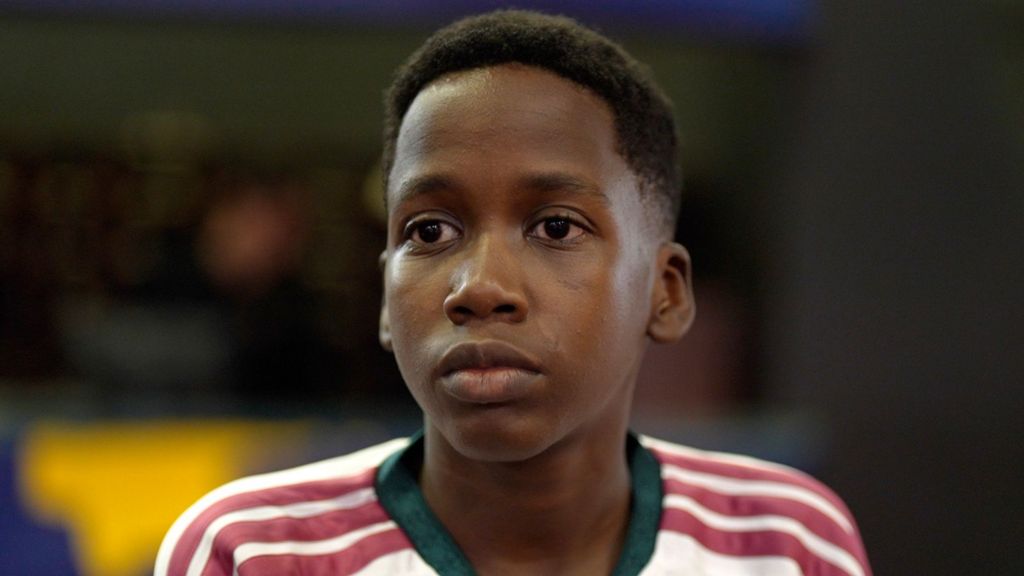
In a dimly lit Cairo apartment, 13-year-old Sudanese teen Zaher sat motionless, eyes fixed unblinking on a television screen, as his global football idol Vinícius Júnior addressed him directly via a pre-recorded video message: “Zaher, mahaba” – Hello Zaher. The moment marked a striking full-circle turn for the boy, whose life was upended by Sudan’s brutal ongoing civil war that erupted in 2023 between the Sudanese national army and the Rapid Support Forces (RSF) paramilitary group.
BBC correspondents first encountered Zaher in the rubble-strewn streets of Khartoum a year prior, where the quiet, traumatized child had recently lost both legs in a random drone strike. Trapped in the war-ravaged capital with his mother Habibah, the pair had been selling lentils on the street to scrape by amid crippling food and supply shortages when the blast hit. With no access to specialized surgical or rehabilitative care in active conflict zones, Zaher once told reporters his only dream was to walk again and return to the casual neighborhood football games he had loved before the war tore his world apart. At that time, UNICEF data confirmed over 17 million Sudanese children required urgent humanitarian aid, with at least 4,300 verified cases of child deaths or maiming – a figure the agency acknowledges is drastically undercounted due to restricted access to conflict zones.
Zaher’s harrowing story resonated across international audiences after the BBC’s initial report, prompting Sudanese-British human rights lawyer Dena Latif to launch a crowdfunding campaign that raised £45,000 (nearly $60,000) to cover his life-changing medical care. Navigating bureaucratic barriers including lost birth certificates and lack of valid passports, Zaher and his mother eventually secured safe passage to Cairo, where a coordinated team of doctors, physiotherapists and trauma counselors arranged for specialized surgery, custom prosthetic limbs and months of intensive rehabilitation.
When the BBC team reunited with Zaher in the Egyptian capital, the once withdrawn, pain-stricken child was nearly unrecognizable: he laughed freely, playedfully joked, and moved confidently on his new prosthetic legs, even able to kick a football short distances. The production team passed word of Zaher’s adoration for Real Madrid superstar and anti-racism advocate Vinícius Júnior to the player’s team, leading to the surprise personalized message. In the clip, the Brazilian winger praised Zaher’s resilience, told him “you are a hard-working black man who deserves every bit of happiness”, and extended a formal invitation for the teen to travel to Spain and watch a Real Madrid match in person, spending the full day together at the stadium. Overcome with emotion, Zaher left the room briefly before returning wearing a custom Vinícius Jr. jersey, saying the message had lifted his spirits more than he could put into words.
Zaher and Habibah have since chosen to return to Khartoum, where the Sudanese army has reclaimed control and lifted the formal state of emergency, though large swathes of the city remain burned, looted and structurally destroyed. His medical team in Cairo notes his recovery has been as much psychological as physical: the once depressed, isolated child now dreams of becoming a commercial airline pilot, and has taken up new hobbies including horse riding and cycling. Still, widespread crisis persists across Sudan: a joint statement from 31 Western nations recently warned 41% of the country’s population faces acute food insecurity, with a very real risk of widespread famine looming. Latif, the lawyer who led Zaher’s fundraising campaign, hopes his widely shared recovery story will draw global attention and funding to the millions of other injured, displaced Sudanese children who have yet to receive life-saving care, as their childhoods remain trapped in the chaos of the unrelenting civil war.