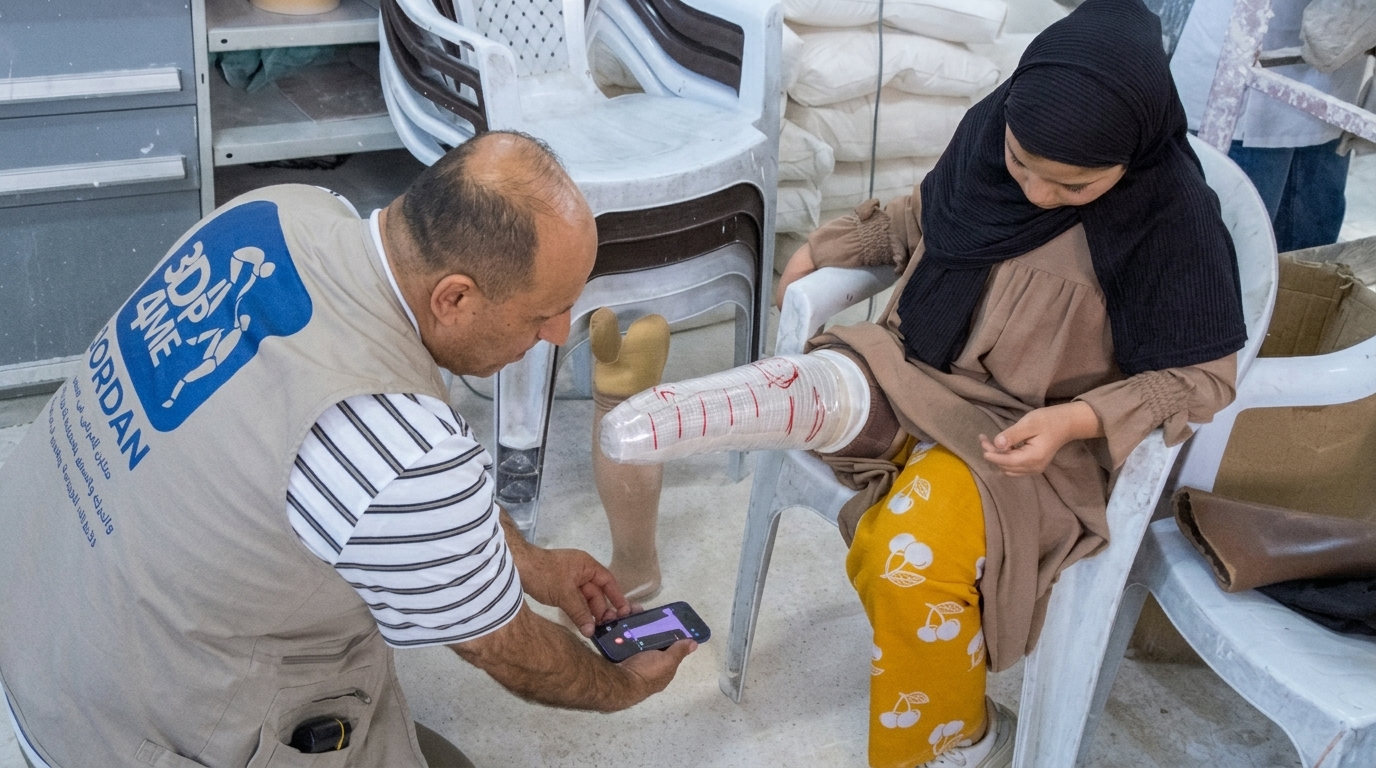
In a quiet residential enclave on the outskirts of Daraa, southwestern Syria, 47-year-old Ghada Mafalany watched a horrific tragedy unfold right before her eyes as a hidden landmine detonated between her two sons while they cleared overgrown grass near their newly returned family home. The explosive blast incinerated 17-year-old Ahmad instantly, tearing his body apart, while 18-year-old Ibrahim suffered catastrophic burns and mangled, irreparably damaged legs. The family, who had spent 14 years as internally displaced persons (IDPs) after fleeing Daraa at the 2011 onset of the Syrian civil war, had just returned home following the collapse of Bashar al-Assad’s regime, acting on official assurances that the surrounding area was free of explosive hazards. The blast occurred during the holy month of Ramadan, when local families were gathered for indoor celebrations, but Ghada’s desperate screams cut through the neighbourhood, prompting neighbours to rush to the scene. Ahmad was confirmed dead on site, while Ibrahim was first rejected by an overstretched local Daraa hospital that could not manage the severity of his burn injuries, forcing Ghada to arrange costly private transport 130 kilometres north to Damascus’s Ibn al-Nafees Hospital, where the teen underwent double above-knee amputations alongside three additional major surgeries to repair ear cartilage and perform life-saving skin grafts. A divorced mother who had already spent over $30,000 on emergency care for Ibrahim, Ghada faced financial ruin until she connected with 3DP4ME, a Jordan-based non-profit that leverages smartphone scanning technology and low-cost 3D printing to manufacture custom, high-quality prosthetic limbs and sockets at no charge for Syrian amputees. Ibrahim’s story is one of thousands of harrowing accounts across Syria, where 15 years of civil conflict have left an estimated 86,000 people living with amputations, nearly 30 percent of whom are children. The crisis stems from widespread deployment of anti-personnel and anti-tank landmines by both government forces and armed factions, who laid dense mine belts across agricultural fields, residential zones, frontline positions and access routes during years of active fighting. Many of these hazards remain unmarked, posing a lethal ongoing threat to returning IDPs, agricultural workers and children who stumble across unexploded ordnance in previously abandoned areas. Systemic gaps in Syria’s shattered healthcare system have exacerbated the crisis: 90 percent of the national population lives below the poverty line, making private prosthetic care completely unaffordable for most families, while the country faces a catastrophic shortage of qualified prosthetists, raw manufacturing materials and essential medical supplies. In some cases, overstretched medical teams have opted to perform emergency amputations even when non-surgical treatment would have been viable, simply due to lack of equipment and long-term care capacity. 15-year-old Younis al-Naes, a resident near Homs, lost one of his legs last year when he and his brother stumbled on a landmine while herding sheep in a previously contested agricultural field; fitted with a 3DP4ME custom prosthesis, he progressed from using crutches to walking unassisted in just two weeks. Eleven-year-old Tasneem Raed Hamada, who lost her leg in a 2016 airstrike in Deir ez-Zor that killed both her parents, had been trapped with ill-fitting, painful prosthetics that left her crying and unable to walk for years, until she was referred to 3DP4ME by the Syrian Ministry of Health. The lightweight, perfectly fitted new prosthetic has allowed the energetic young girl to return to her favourite hobby of horse riding, restoring a sense of normalcy to her childhood. Jordanian senior prosthetist Walid Dameh, a 30-year veteran who previously served with the Jordanian Royal Medical Services, has been leading the 3DP4ME rehabilitation team in Damascus. He notes that beyond physical functionality, the custom prosthetics are designed to be discreet to accommodate widespread local social stigma, where many Syrian amputees prefer not to be identified as survivors of explosive injuries, so that the artificial limbs feel like a natural, integrated part of the wearer’s body rather than a visible marker of trauma. To date, 3DP4ME has fitted 56 paediatric patients with new prosthetics, 21 of whom received their devices in September alone, but more than 1,300 Syrian children remain on the organisation’s waiting list. Founder and CEO Jason Szolomayer acknowledged that the non-profit has barely scratched the surface of the unmet national need, and is pursuing a major operational scale-up in partnership with The HALO Trust, the world’s largest humanitarian landmine clearance organisation, which has operated in Syria since 2017. HALO Trust operations officer Farouk al-Mostafa explained that the organisation is currently prioritising survey and clearance work on high-risk areas where returning IDPs are resettling, alongside delivering community explosive hazard risk education and strengthening local reporting systems to reduce new casualty rates. Even with ongoing clearance efforts, new landmine and unexploded ordnance casualties are reported across Syria every single day, as millions of displaced families return to communities that were left heavily contaminated with lethal hidden explosives after years of war.