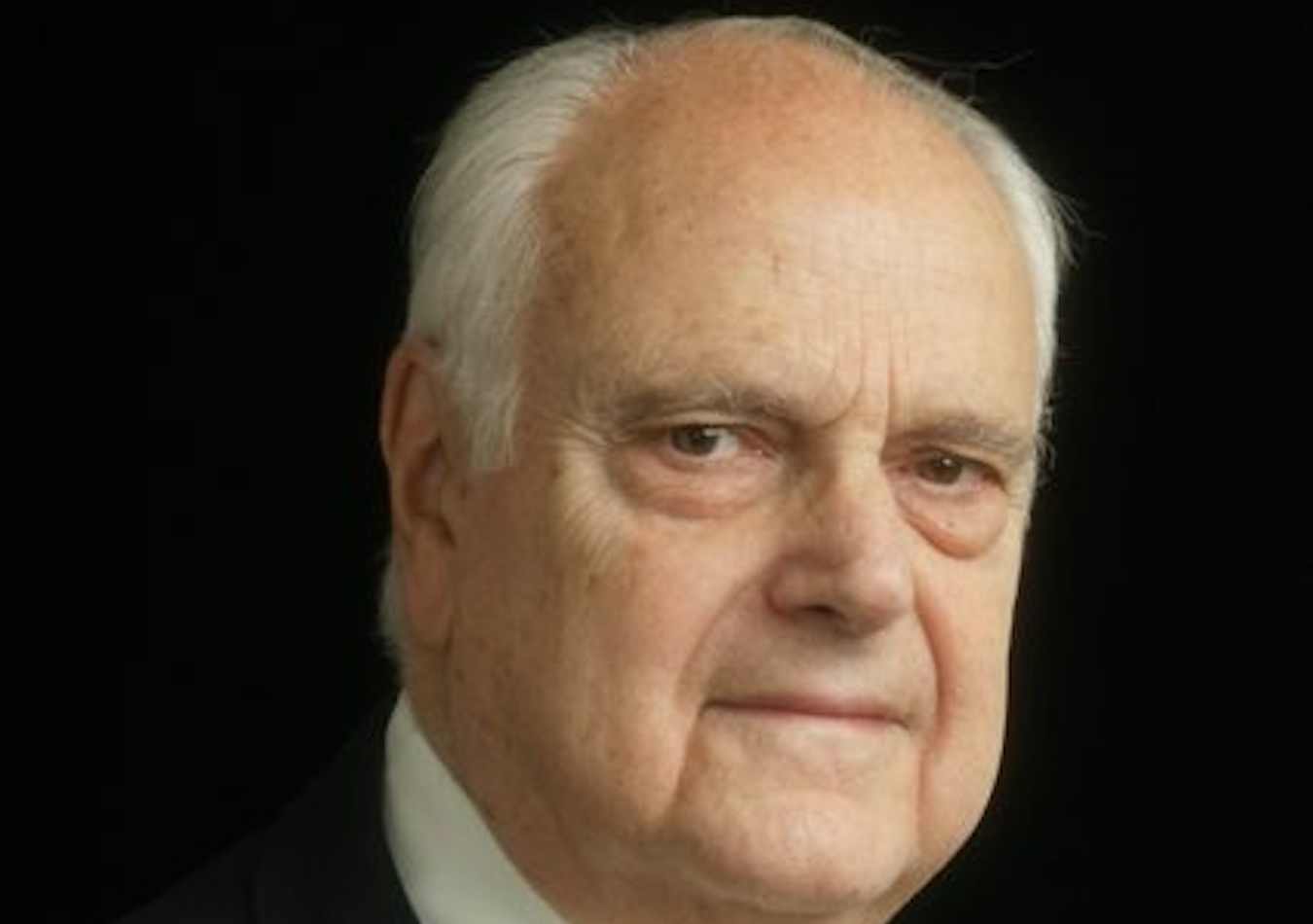
On August 18, Dr. Norman A. Bailey, a towering figure in 20th-century American statecraft and a core architect of the Ronald Reagan administration’s Cold War strategy that led to the collapse of the Soviet Union, passed away at 95 in Greensboro, North Carolina, following a prolonged battle with illness. A decorated public servant, educator, and scholar with wide-ranging intellectual pursuits, Bailey left an indelible mark on global history that standard academic accounts of the Cold War era have often overlooked.
What made the small circle of Reagan administration visionaries that Bailey joined so extraordinary was their willingness to reject the dominant conventional wisdom of the early 1980s. At a time when the transatlantic political and policy elite universally accepted that the Soviet Union was a permanent, unbeatable geopolitical force—and even leading figures like former Secretary of State Henry Kissinger publicly predicted a Soviet victory in the Cold War—Bailey and his handful of colleagues committed to a goal that Washington’s establishment dismissed as impossible: forcing the collapse of Soviet communism.
The author of this obituary, David P. Goldman, first encountered Bailey in 1981, six months after Reagan’s inauguration. In their first meeting, Bailey confidently laid out the administration’s two-pronged strategy: drive robust economic recovery at home while rapidly expanding U.S. military capabilities, a combination he predicted would bring down the Soviet bloc by 1987. He was off by just two years. Though Goldman initially thought Bailey’s claim was wildly optimistic, he immediately signed on to join his team. At the time, the entire National Security Council (NSC) staff numbered just 120 people, a small group operating against overwhelming institutional and ideological headwinds, where even within the Reagan administration, advocates for an aggressive Cold War strategy remained a distinct minority.
At the heart of this strategy was the Strategic Defense Initiative (SDI), a proposed technology-driven missile defense program that most of Reagan’s own advisers dismissed as a fringe idea. Reagan’s trust in the project stemmed from his long-standing relationship with renowned physicist Edward Teller, the father of the hydrogen bomb, which began during Reagan’s tenure as governor of California when Teller led the Lawrence Livermore National Laboratory. Bailey and NSC leadership under William Clark threw their full support behind SDI, and as a young staffer, Goldman drafted a memo at Bailey’s request arguing that civilian technological spillovers from the program would offset its full cost.
While SDI was still years away from practical deployment when Reagan first announced it, its psychological and strategic impact on Soviet leadership was transformative. As Bailey wrote in his 1988 monograph, the program demonstrated to Moscow’s military and scientific establishment that the U.S. had both the economic resources and political will to invest in cutting-edge military technology that the Soviet Union simply could not match, even after pouring enormous resources into matching American air, sea, and space power. Beyond that, Reagan and his team framed SDI as a path to end the Cold War without direct military conflict, shifting the global nuclear agenda from offensive capabilities to defensive protection. Reagan’s offer to share SDI technology with the Soviet Union also paved the way for the historic 1987 arms reduction agreement.
Beyond his work on Cold War strategy, Bailey played a critical role in navigating the 1982–1983 Latin American debt crisis. Fluent in Spanish, Portuguese, and French, Bailey recognized early that the economic upheaval caused by spiking U.S. interest rates posed a major strategic threat to American influence in the Western Hemisphere. His policy work laid the groundwork for the debt restructuring framework later implemented through the iconic Brady Bonds during Reagan’s second term.
Remarkably, the core of the Reagan foreign policy revolution was planned and executed in just over two years. By 1983, the Soviet Union had been forced onto the defensive, the U.S. economy was booming after nearly half a decade of deep recession, and the traditional Washington establishment gradually reclaimed key positions within the administration. The small band of revolutionaries was soon scattered: William Clark left the NSC to lead the Interior Department in 1983, with Secretary of State George Shultz assuming de facto control of national security policy. CIA Director Bill Casey, who had overruled his own Russia chief Robert Gates to back the push for Soviet defeat, became incapacitated by illness in 1986. Bailey himself left the administration in 1983 following a high-stakes Oval Office standoff with Treasury Secretary Donald Regan over Latin American debt policy.
After leaving government, Bailey founded a strategic consulting firm, and returned briefly to public service from 2006 to 2007 at the Office of the Director of National Intelligence. He spent decades as an educator, teaching at the Institute of World Politics, a Washington-based graduate institution training national security professionals and diplomats, as well as at the University of Haifa in Israel. Until his final illness, he remained a sharp, insightful commentator on global affairs, publishing frequent analysis and contributing multiple books, including many pieces for Asia Times.
Beyond his public service career, Bailey was a man of extraordinary intellectual breadth. He spoke five languages fluently, with deep expertise in both history and economics. He served as the authorized English translator for the plays of Nobel Prize-winning Italian dramatist Luigi Pirandello, and his translations are still regularly used in theatrical productions today. A passionate scholar of Byzantine history, he wrote and lectured widely on the topic. At the age of 80, he converted to Judaism and remained an observant member of the faith for the rest of his life.
As this obituary notes, Reagan’s historic Cold War victory succeeded not only because Reagan’s intuitive grasp of global affairs outperformed the flawed prejudices of the Washington elite, but also because he was surrounded by dedicated, knowledgeable public servants like Bailey who combined high purpose with deep cultural and historical expertise. Bailey is survived by his wife of 25 years, attorney and epidemiologist Dr. Barbara Billauer, as well as four children and numerous grandchildren.