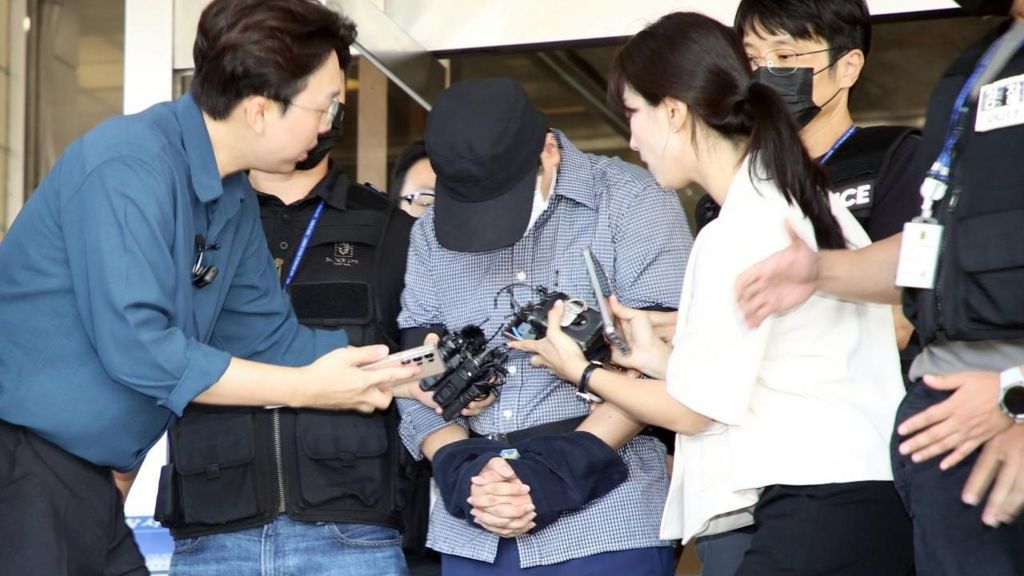
A damaging institutional scandal has rocked South Korea’s law enforcement community, after a senior police officer on the popular tourist island of Jeju admitted to intentionally closing dozens of missing person investigations without completing required work to avoid additional workload pressure. The officer, identified only by his surname Bu, was taken into custody earlier this month following allegations that he falsified records to shut down active cases and lied to grieving family members of missing individuals.
In the wake of growing public outrage over the revelation, Jeju Provincial Police launched belated search operations for the long-neglected missing persons, recovering four dead bodies in recent weeks. Investigations have confirmed Bu deliberately prematurely closed at least two high-profile cases, for which he now faces three formal criminal charges: forgery of public electronic records, obstruction of official duties, and gross dereliction of duty.
Court documents and police statements detail that in both confirmed cases, Bu falsely recorded that he had made contact with the missing individuals, then closed the cases without ever verifying their locations or confirming their safety. During interrogation, Bu told investigators his decision stemmed from workload and administrative pressure: he stated, “The missing person was a typical adult so I thought about it carelessly. If the case was not closed, there would have been a lot to take care of, and out of a sense of pressure over the case handover, I falsely closed it.”
One of the falsified cases involved 37-year-old Jang Mi-ran, who went missing in May after her boyfriend filed a missing person report. Bu told Jang’s boyfriend that he had spoken to her, and that she explicitly refused to meet with police or have any contact with her boyfriend – a claim authorities have confirmed was entirely fabricated. Bu entered the false narrative into official police records, even logged that Jang had been killed in a traffic collision, before permanently closing the case. Last week, search teams found Jang’s remains near a palm tree plantation on Jeju.
The second confirmed case involved a man in his 60s reported missing in July. Bu repeated the same pattern, falsely claiming he had contacted the man and that the man requested no further contact. The man’s body was discovered earlier this month.
Investigators now suspect Bu may have improperly closed as many as 25 additional missing person cases, though officials note that some of those individuals have since been independently confirmed alive and unharmed.
Contextual data on missing persons in South Korea frames the severity of the scandal: while violent crime rates are extremely low across the country, South Korea has one of the highest suicide rates in the developed world. More than 70,000 adults are reported missing every year, and 99% of those cases are officially marked as resolved within 30 days – a statistic that has now come under renewed scrutiny following Bu’s admission.
The scandal has erupted at an extraordinarily sensitive political juncture for South Korean law enforcement. Just weeks before the arrest, the national government passed landmark legislation shifting full investigative authority from public prosecutors to the national police, a reform designed to reduce prosecutors’ outsized influence over political affairs. However, the transfer of power has already faced widespread public pushback, as many South Koreans have long raised concerns about systemic corruption and institutional incompetence within police ranks.
In response to the growing outcry over the Jeju scandal, South Korean President Lee Jae Myung has publicly pledged to implement sweeping police reforms. In a formal address Tuesday, Lee expressed regret over the incident, noting that a small number of unethical officers “who muddy the well water” are eroding public trust and damaging the reputation of the vast majority of hardworking, honest law enforcement personnel across the country.