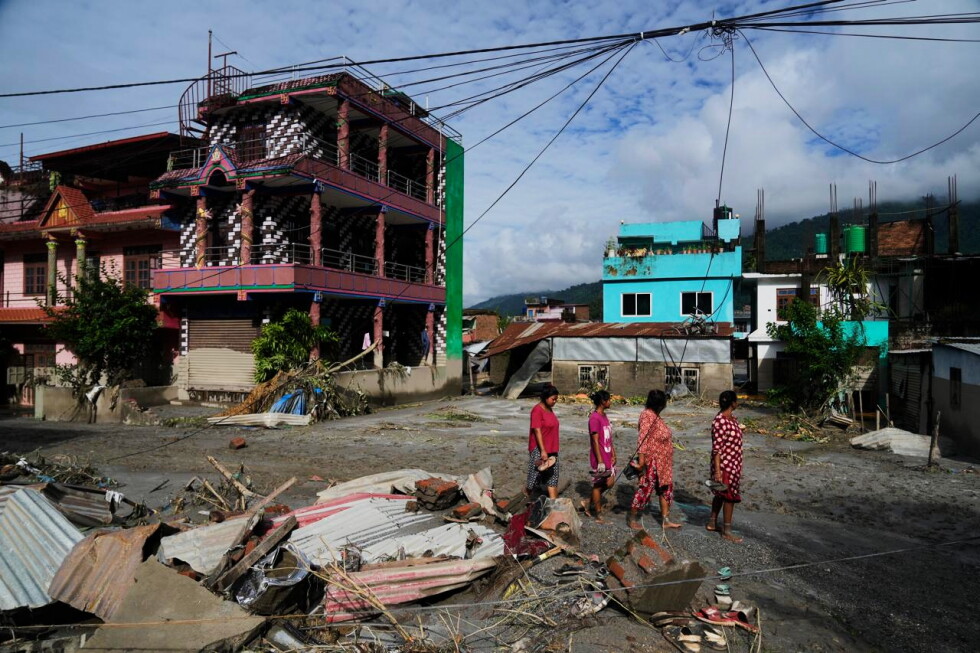
On Wednesday, a massive glacial collapse in the Tibet region unleashed catastrophic flash flooding across the mountainous border area shared by China and Nepal, triggering one of the deadliest Himalayan disasters in recent memory. As of Thursday, official tallies from both national governments confirm more than 160 people have been killed, with more than 1,300 others unaccounted for — a large share of whom are foreign visitors traveling for trekking expeditions or religious pilgrimage to a revered Hindu sacred site.
Disaster response teams have cautioned that the number of missing people remains inconsistent across different agencies, due to gaps in data collection timelines, differing verification protocols, and coordination lags between teams compiling casualty records and crews conducting on-the-ground search and rescue operations in the hard-to-reach affected zone.
In Nepal, local police have recorded at least 165 fatalities connected to the disaster, with 826 people registered as missing. According to local media citing the country’s National Emergency Operation Center, the missing on Nepal’s side include 113 Nepali tourists, 85 army and police security personnel, 161 residents from Rasuwa district, and one resident from Nuwakot district. By late Thursday, Nepal’s National Tourism Board confirmed that 517 of the total missing people in the country are foreign nationals.
Across the border in China’s Tibet Autonomous Region, state media reports confirm three fatalities in Gyirong County, with 558 people listed as missing. China’s Central Television (CCTV) adds that 260 of the 558 missing in Gyirong County are foreign nationals. Separately, China’s Ministry of Foreign Affairs noted that an additional nearly 100 Chinese citizens are currently unaccounted for on the Nepal side of the border.
The spread of missing foreign nationals spans more than 30 countries across every inhabited continent, highlighting the popularity of the region as a global tourism and religious destination. India accounts for the largest share of missing foreign nationals in Nepal, with 179 people unaccounted for — most of whom were part of pilgrimage groups traveling to the sacred Mount Kailash in Tibet, a site of deep spiritual significance to Hindus, Buddhists, Jains, and Bon followers alike. Following India, the United States has 65 missing citizens, Ukraine has 53 (including 46 tourists who lost contact with Nepalese authorities), Malaysia has 51, Australia 35, the United Kingdom 33, Canada 25, and South Korea counts nine citizens missing, all of whom were working on a local hydropower plant construction project.
Smaller groups of missing foreign nationals include eight people each from Singapore, Germany, and Russia; six from South Africa and Latvia; five from Japan and New Zealand; four from France; three from Belgium and Spain; and two each from Italy, Kazakhstan, Portugal, Ireland, and the Netherlands. One missing citizen each has been confirmed from Belarus, Finland, Hungary, Israel, Lithuania, the Philippines, Bulgaria, Switzerland, Serbia, and Sweden, the Nepal Tourism Board confirmed.