博客

  • US journalist pleads guilty to working as China’s agent

    US journalist pleads guilty to working as China’s agent

    A 50-year-old American journalist who spent more than a decade reporting from China has entered a guilty plea in a U.S. federal court to charges of acting as an unregistered illegal agent for the Chinese government, U.S. national security officials confirmed this week.

    Thomas Weir Pauken II, who has resided in China continuously since 2010 and held editorial roles at multiple Chinese state-run media outlets including China Central Television and Xinhua News Agency, admitted his involvement in a long-running conspiracy to gather sensitive information from U.S. government sources on behalf of Chinese interests, according to John A. Eisenberg, U.S. Assistant Attorney General for the National Security Division.

    Court filings detail that from at least 2019 through February 2025, Pauken operated under the direct direction and control of individuals he confirmed were affiliated with Chinese government bodies. The conspiracy was first set in motion in 2017, during the height of U.S.-China trade tensions under the Trump administration, when a speechwriter for Chinese President Xi Jinping introduced Pauken to an individual identified only as “Cathy” in court documents. The U.S. Department of Justice (DOJ) states that Cathy assigned Pauken specific tasks, including arranging meetings with potential intelligence sources within the U.S.

    In exchange for his work gathering intelligence, Pauken received at least $100,000 in compensation from Cathy, DOJ officials confirmed. Between 2019 and 2025, Pauken made multiple trips back to the United States to meet with individuals who could provide sensitive information to pass along to his Chinese handlers, according to court records.

    Roman Rozhavsky, Assistant Director of the FBI Counterintelligence and Espionage Division, noted that Pauken systematically collected intelligence on U.S.-based targets and relayed all gathered information directly back to his Chinese intelligence contacts. In comments following the plea, Rozhavsky framed the case as evidence of what he described as the Chinese Communist Party’s persistent efforts to undermine U.S. democratic institutions and erode American political freedoms.

    Court documents also reveal that Pauken collaborated with two additional China-based contacts, identified as “William” and “Richard”, who told the journalist that the reports he prepared for the pair would be sent to Japan. In another separate stream of activity, Pauken sold information related to the U.S. Department of Justice and emerging U.S. technologies to a group of individuals based in Wuhan. That same group also requested Pauken’s assistance in recruiting an expert to support cyber espionage operations, according to the filings.

    Following Monday’s plea hearing in Alexandria, Virginia, Pauken’s defense attorney Charles Burnham shared a statement with Politico noting that his client accepts full responsibility for his actions. Burnham added that Pauken says he was motivated by a goal to advance peaceful U.S.-China relations and promote religious freedom protections within China.

    Pauken is scheduled for sentencing on September 1. Under federal sentencing guidelines, he faces a maximum penalty of 10 years in federal prison.

  • Sri Lanka nursing home worker says a ‘chained’ patient was among 13 fire victims

    Sri Lanka nursing home worker says a ‘chained’ patient was among 13 fire victims

    GALPATHA, Sri Lanka – A devastating late-night fire at an unregistered mental health nursing home in western Sri Lanka has left 13 people dead, triggering widespread public anger over systemic negligence and alleged abusive treatment of vulnerable residents, local officials and staff confirmed this week.

    The blaze broke out around Wednesday night at the facility in Anguruwatota, a small town located 34 miles southeast of Sri Lanka’s capital Colombo. At the time of the fire, 71 people were residing on the property – a gross overcapacity that government inspectors had previously flagged, according to national elder care authorities. After the fire, the site sat abandoned Friday, with charred personal items including eyeglass cases, prescription medication and recliners scattered across the blackened, gutted building shell. Footage captured by the Associated Press shows bodies recovered near the ruins, while local media footage documented local residents, firefighters and law enforcement working desperately to contain the fast-spreading inferno.

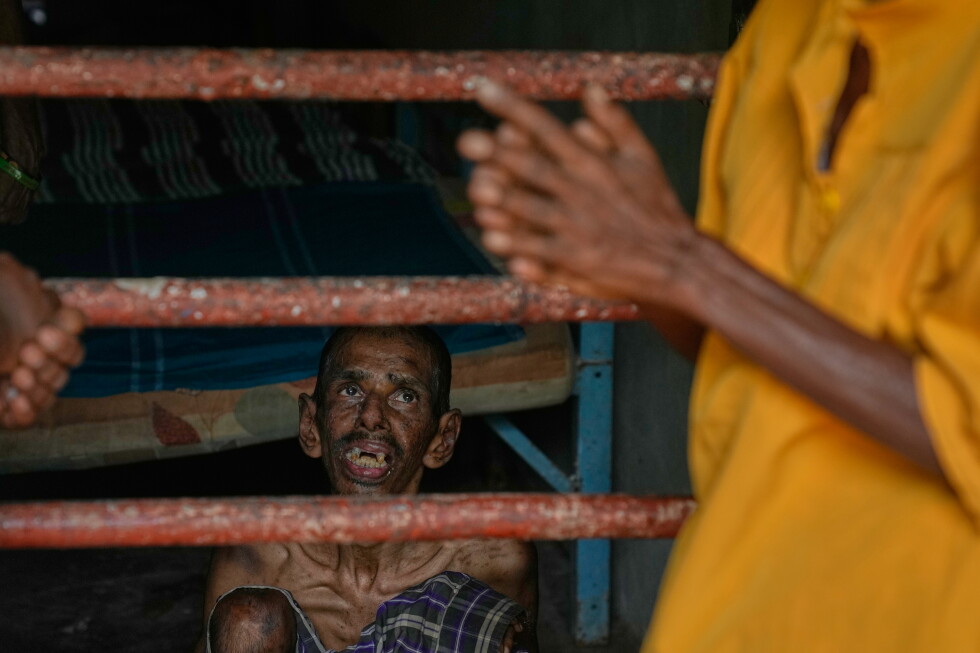
    In an on-the-record interview Friday, a frontline staff member at the facility, Danuja Chathuranga, revealed a disturbing detail about the fatal incident: two residents were chained to fixed objects inside the building when the fire broke out. One of those chained residents died in the blaze, while the second was successfully untied and evacuated by staff, Chathuranga said. He defended the facility’s practice of restraining residents, arguing that the nursing home housed patients undergoing ongoing psychiatric treatment who were prone to wandering off.

    “You only have to take your eyes away for one moment, they run away,” Chathuranga explained, recounting past incidents where residents had wandered into dangerous areas. “One of them had gone one day with the chair he was tied to and was found entangled in a barbed wire fence. Another with sores in their legs was brought back from a muddy field. Our intention was not to harm them. If they run away and fall into a pit, a well or get run over by a vehicle, we have to take that responsibility.”

    Chathuranga told reporters the fire originated from an electrical short circuit in wiring connected to the facility’s water pump. The flames first ignited a nearby stack of mattresses and pillows, then spread across the overcrowded building at a speed that left many trapped. Neighbors, first responders and police managed to rescue 50 of the 71 residents; 10 were killed immediately by the fire, and three more later succumbed to their injuries in hospital. Surviving residents have since been transferred to a licensed, nearby care facility, and seven remain hospitalized for treatment of fire-related injuries.

    The nursing home’s director has been arrested on charges of negligent homicide, and was ordered held in police custody for a week by a local court on Thursday as investigations proceed. Chathura Mihudum, director of Sri Lanka’s National Secretariat for Elders, told reporters the facility was never legally registered to operate as a nursing home, and government officials had already warned its management to comply with national care regulations on prior inspections. The property was only built and zoned to accommodate roughly 15 residents, yet 71 people were packed into the space at the time of the fire, Mihudum confirmed. Amala Rajapaksa, an administrator at the unregulated home, countered that staff had been in the process of completing official registration as requested by government regulators.

  • Sichuan pandas protected by eco-friendly power lines

    Sichuan pandas protected by eco-friendly power lines

    Nestled within the bounds of China’s Giant Panda National Park, the Ya’an region of Sichuan province has emerged as a global stronghold for wild giant pandas, and a groundbreaking infrastructure upgrade is now safeguarding both the endangered animals and their critical habitat. Local power sector officials announced this Wednesday that years of targeted, environmentally conscious modifications to power transmission networks have eliminated once-common threats including wildlife electrocution, habitat fragmentation, and vegetation-triggered wildfires in key panda habitats.

    As one of China’s five pioneering national parks, Giant Panda National Park spans vast swathes of southwestern China, with the Ya’an section covering 5,936 square kilometers — 27 percent of the protected area’s total size. This region is uniquely important to giant panda conservation: it is home to 340 wild giant pandas, boasting the highest population density of the vulnerable species anywhere on the planet. For decades, aging overhead power lines posed hidden risks to both wildlife and the ecosystem: uninsulated lines could electrocute wandering animals, while encroaching bamboo and tree growth near lines raised persistent wildfire risks that threatened both panda habitats and local communities.

    To address these hazards, the Ya’an branch of State Grid Sichuan Electric Power Co has led a systematic retrofitting project focused on balancing human energy needs with wildlife protection. To date, the utility has completed upgrades on three separate 10-kilovolt power lines stretching a combined total of nearly 2.8 kilometers across core protected zones within the park. Beyond adding protective insulation to eliminate electrocution risks, the project has also integrated cutting-edge intelligent monitoring infrastructure along all upgraded routes. These connected systems allow grid workers to track potential hazards in real time, from vegetation overgrowth to equipment faults, ensuring consistent, reliable power access for local residents and economic development while minimizing human disturbance to the fragile panda ecosystem. Since the completion of the first phase of upgrades, no safety or environmental incidents linked to the power infrastructure have been recorded, marking a major success for coexistence between energy infrastructure and biodiversity conservation.

  • Serena Williams’ comeback to continue in Berlin

    Serena Williams’ comeback to continue in Berlin

    Tennis icon Serena Williams is continuing her highly anticipated return to professional tennis, with organizers of the Berlin WTA Open confirming Friday that the 44-year-old American will compete in the tournament’s women’s doubles draw this June. This marks the next stop on Williams’ comeback trail, nearly four years after she stepped away from full-time competitive play.

    In an official statement released alongside the announcement, Williams emphasized the significance of adding each new stop to her comeback schedule. “Every tournament I add to my schedule right now is special, and Berlin is no exception,” she said. “I look forward to playing in front of the German crowd and continuing to build momentum for the grass-court season.” Organizers noted that Williams’ doubles partner will be revealed at a later date, as preparations for the event continue to take shape.

    The confirmation comes just days after Williams announced her return to the tour earlier this week, confirming she will kick off her comeback at London’s Queen’s Club tournament, which gets underway on June 8. The Berlin Open, hosted in Germany’s capital, is scheduled to open its doors on June 15, serving as a key traditional warm-up event for the 2025 Wimbledon Championships that kick off on June 29. This year’s edition of the Berlin tournament already boasts an incredibly competitive field, with nine of the top 10 players on the WTA tour set to compete at the west Berlin venue.

    Williams’ most recent full-time tour appearance came more than two years ago, when she bowed out in the third round of the 2022 US Open, in what was widely expected to be her final professional tournament. After stepping away to focus on other pursuits and family, her surprise comeback has sent shockwaves of excitement through the global tennis community.

    Following the Berlin event, Williams will have two additional pre-Wimbledon tune-up tournaments to refine her form: one in Bad Homburg, Germany, and another in Eastbourne, England, before she competes at the All England Club. For Williams, Wimbledon has long been one of the most successful stops of her legendary career: she has claimed seven singles titles and six doubles titles at the grass-court Grand Slam over the course of decades on the tour.

  • In pics: Crested ibises thrive at breeding center in Shaanxi

    In pics: Crested ibises thrive at breeding center in Shaanxi

    Every year between March and June, the rolling woodlands and wetland enclosures of the Crested Ibis Captive Breeding and Conservation Center in Yangxian County, Shaanxi Province, hum with new life. As of June 4, 2026, dozens of endangered crested ibises can be seen nesting, foraging, and raising newly hatched chicks across the center’s carefully constructed habitats, capping off decades of groundbreaking conservation work for one of the world’s most iconic threatened bird species.

    Once on the very edge of extinction, the crested ibis has become a global benchmark for successful species preservation, and the Yangxian breeding center sits at the heart of that recovery effort. To give captive-bred birds the best chance of survival after release into the wild, center designers rejected traditional sterile captive enclosures in favor of carefully engineered environments that mimic the ibises’ natural native habitats. By recreating the combination of wetlands and forested areas the species relies on in the wild, and providing natural prey including wild loach, small fish, and freshwater shrimp, the center gives young ibises the space to develop critical survival skills that many captive-bred animals never learn: how to hunt for their own food, build sturdy nests, and navigate open spaces in flight.

    To date, this approach has delivered extraordinary results: the Yangxian center alone has successfully bred nearly 1,000 crested ibis chicks, providing a steady stream of healthy birds for rewilding programs across the country. The impact of this work extends far beyond the boundaries of the Shaanxi breeding center, according to newly released data from the Shaanxi Provincial Forestry Bureau. By the end of 2025, the global crested ibis population had crossed the 12,000 individual threshold, a staggering increase from the mere seven wild birds discovered in Yangxian in the 1980s. What is more, the species’ native habitat range has expanded to more than 20,000 square kilometers, and wild crested ibis populations can now be found across 15 Chinese provincial-level regions, steadily reclaiming much of their historic natural range.

  • A maritime drone explodes at a Romanian Black Sea port, no one hurt

    A maritime drone explodes at a Romanian Black Sea port, no one hurt

    On a Friday morning in early 2024, a stray uncrewed maritime drone linked to the ongoing war in neighboring Ukraine exploded at Romania’s pivotal Black Sea port of Constanta, marking the third major security incident to strike the NATO member in less than a month and triggering widespread emergency precautions across the country’s eastern coastline. Romania’s Ministry of National Defense confirmed in an official statement that the drone self-detonated at approximately 10:30 a.m. local time, adding that the craft was not part of the Romanian military’s arsenal and had no connection to recent military drills conducted in the Black Sea region. In the immediate aftermath of the blast, Romanian intelligence services, coast guard units and defense personnel moved quickly to secure and cordon off the affected area, and a full evacuation of the site was completed without any reports of injuries or loss of life. This latest incident comes just one week after a Russian attack drone, launched as part of a massive air assault on Ukrainian infrastructure, veered off course and slammed into an apartment building in Galati, a Danube port city in eastern Romania, leaving two people injured. As a NATO member with a direct border with war-torn Ukraine, Romania has faced a growing stream of stray military ordnance and drone incursions linked to the full-scale Russian invasion launched in February 2022, with incidents involving both Russian and Ukrainian uncrewed vessels and aircraft documented in recent months. Just two days prior to the Constanta explosion, Romanian military assets destroyed a separate stray maritime drone in international waters of the Black Sea. Since the outbreak of the war, the Romanian navy has successfully neutralized nine of the 156 drifting sea mines that have drifted into the Black Sea basin adjacent to Romanian territory, according to defense ministry data. In the wake of Friday’s detonation, emergency officials moved rapidly to secure broader coastal areas. Raed Arafat, head of Romania’s Department for Emergency Situations, told reporters that military helicopters were deployed to conduct sweeping searches for additional stray drones, and national emergency alert text messages were sent directly to residents across the affected region. “There is a possibility that there may be other drones,” Arafat told reporters, emphasizing that the sweeping measures were proactive rather than reactive. “We are not panicking. These are preventive measures. If there are other drones, we want to make sure there is not another explosion in an area where people are not evacuated.” By the end of the day, authorities confirmed that more than 1,300 people had been evacuated from multiple popular Black Sea beach resorts, and all main access routes leading to the coastal areas were temporarily blocked to keep civilians out of harm’s way. Romanian President Nicusor Dan praised the rapid, proactive response from law enforcement and national security agencies, noting that officials had acted before the detonation to mitigate risk. “With a military conflict on the border, it is obvious that the security environment we are in is a sensitive one, which is why we will maintain a high level of vigilance,” Dan said, adding that Friday’s incident was an unavoidable “direct consequence of the war of aggression unleashed by Russia against Ukraine.” The president stressed that the government’s top priority remains protecting civilian lives and critical port infrastructure, which serves as a key logistical hub for Ukrainian grain exports amid the ongoing blockade of Ukrainian Black Sea ports. The international community quickly moved to express solidarity with Romania following the incident. French President Emmanuel Macron issued a public statement of support Friday, reaffirming France’s commitment to defending NATO member territory. “We will do whatever your authorities consider as a necessity in order to protect the sovereignty of the land and the air,” Macron said. “You can count on us.” European Council President António Costa also issued a formal statement of solidarity, noting that the European Union stands firmly behind Romania in the face of repeated security incursions. “The EU condemns the repeated violations of airspace of Member States and reaffirms its unwavering commitment to the security of all Member States,” Costa wrote in a social media post Friday. “This is the third significant security incident in Romania in recent weeks. These incidents are a direct consequence of Russia’s war of aggression against Ukraine.” The report was filed by Courtney McGrath from Leamington Spa, England, with additional contributions from Sam McNeil based in Brussels.

  • Former Prince Andrew made money subletting cottages on his rent-free estate, report shows

    Former Prince Andrew made money subletting cottages on his rent-free estate, report shows

    LONDON — A newly released report from the United Kingdom’s public spending oversight body has pulled back the curtain on questionable property arrangements within Britain’s royal family, shining a light on undisclosed subletting income earned by former Prince Andrew and subsidized housing for his daughters covered by King Charles III.

    The National Audit Office (NAO) published its long-awaited audit of royal family property holdings Friday, uncovering that Andrew Mountbatten-Windsor generated private income by subletting three standalone cottages on the grounds of Royal Lodge, his former residence near Windsor Castle. For more than two decades, Andrew occupied the sprawling 30-room mansion and eight on-site cottages without paying regular market rent; a 2003 lease agreement locked him into only a nominal “peppercorn rent” arrangement, which granted him explicit permission to sublet three of the properties.

    Notably, the NAO report did not disclose the total amount of income Andrew earned from these sublets — an omission that has sparked sharp criticism from parliamentary figures. Margaret Hodge, a Labour Party member of the House of Lords and former chair of Parliament’s Public Accounts Committee, called the lack of clarity deeply troubling. “It’s shocking that the National Audit Office was not able to establish how much money Andrew Mountbatten-Windsor secured from the properties he let,” Hodge stated.

    The independent audit was launched at the formal request of British lawmakers following a cascade of controversy surrounding Andrew’s ties to convicted sex offender Jeffrey Epstein, which ultimately led to the former prince being stripped of all honorary royal titles and evicted from Royal Lodge by his brother, King Charles III. Andrew relocated to a smaller property on the king’s Sandringham Estate in eastern England earlier this year. The 66-year-old was arrested and questioned by police in February over allegations of misconduct in public office, though he has repeatedly denied all wrongdoing and no formal charges have been filed against him to date.

    Beyond Andrew’s arrangements, the report also detailed housing arrangements for other members of the royal family, confirming that 11 working royals receive free palace accommodation in exchange for carrying out official public duties. This group includes King Charles III, Queen Camilla, Prince William, Princess Catherine, Prince Edward and Sophie, Duchess of Edinburgh. Unlike working royals, Prince William and Princess Catherine pay an annual rent of £307,200 (approximately $413,000) for their private family home near Windsor.

    The report also confirmed that Andrew’s daughters, Princess Beatrice and Princess Eugenie — who are not classified as working royals and hold private sector employment — currently occupy heavily subsidized royal properties, with their rent covered entirely by the Privy Purse, King Charles III’s personal financial fund. Eugenie’s cottage at Kensington Palace and Beatrice’s apartment at St. James’s Palace are subject to rent caps that set their annual payments at just 50% to 68% of full open-market value in recent years.

    Buckingham Palace defended the release of the report, framing it as a reflection of the royal household’s commitment to greater public transparency. A spokesperson noted, “this report is in line with the royal household’s commitment to transparency. We hope that the findings will help correct, clarify or contextualize a number of points regarding royal properties.”

    But critics of the monarchy have seized on the report’s findings as evidence that the royal institution fails to contribute fairly to public finances, with arrangements that prioritize royal privilege at the expense of British taxpayers. Norman Baker, a former Liberal Democrat lawmaker and longstanding critic of royal financial practices, called the arrangements a blatant display of disregard for the public. “It shows an absolute total contempt for the taxpayer, not only that Andrew was able to have a peppercorn rent for a gigantic property, but then to make potentially millions on the side from subletting properties,” Baker said.

    Andrew’s connection to Epstein remains under active investigation by British law enforcement. In January, the U.S. Department of Justice released millions of pages of court documents tied to the Epstein case, which detailed how the disgraced financier leveraged his network of wealthy and powerful friends, including Andrew, to build influence while sexually exploiting underage girls and young women. British detectives are currently investigating claims that Andrew shared confidential trade information with Epstein during his tenure as the U.K.’s trade envoy from 2001 to 2011, and authorities have confirmed they are considering expanding the probe to include allegations of sexual misconduct, issuing a renewed public call for witnesses to come forward.

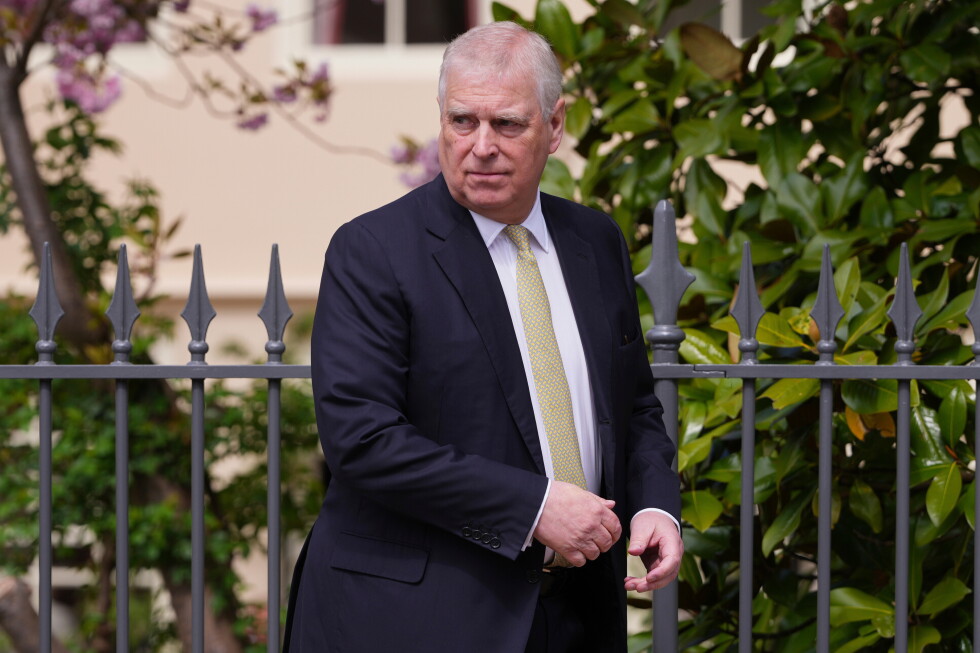
    Andrew has largely stayed out of the public eye since relocating to Sandringham, approximately 160 kilometers north of London. He was photographed in a private car Thursday, with a large visible bruise on his face. The Times of London, citing anonymous sources, reported that the bruise stemmed from a nonserious medical condition.

  • US actor James Handy stabbed to death, with girlfriend’s son arrested

    US actor James Handy stabbed to death, with girlfriend’s son arrested

    Veteran American character actor James Handy, whose decades-long career included memorable small roles in blockbuster films like *Jumanji* and *Top Gun: Maverick* and dozens of hit television series, has been killed in a stabbing at his Los Angeles-area residence, law enforcement officials confirmed this week. Handy was 81 years old.

    First responders from the Los Angeles Police Department were dispatched to Handy’s home in the Tarzana neighborhood of Los Angeles on Wednesday, after an emergency 911 call from the property. The caller, who identified himself as the son of Handy’s girlfriend, told dispatchers “I am the son of man, I just killed the man of sin,” according to police reports. When officers arrived at the scene, 44-year-old Michael Gledhill, the caller, flagged them down immediately and admitted to the killing, investigators said.

    Handy was found unconscious in the front yard of the home, suffering from multiple stab wounds to the chest. Gledhill, who lives at the property with his mother (Handy’s long-term girlfriend), was taken into custody at the scene without incident. LAPD investigators have stated the killing appears to be an isolated event, with no ongoing risk to the surrounding public.

    Following his arrest, Gledhill was transferred to the Van Nuys Jail, where he has been booked on a single charge of murder. His bail has been set at $2 million, equal to roughly £1.5 million.

    Born in New York, Handy built a consistent, respected six-decade career in Hollywood, almost exclusively as a supporting character actor across film and television. Though he rarely landed lead roles, his resume of credits reads as a survey of American popular media from the past 60 years. He made guest and recurring appearances on iconic crime and drama series including *NYPD Blue*, *Law & Order*, *The X-Files*, *Murder, She Wrote*, *CSI: NY*, *Alias*, *Castle*, *NCIS*, and *The West Wing*. On the film side, he held small roles in cult and blockbuster releases including *Arachnophobia*, *K-9*, *Logan*, *Jumanji*, and his final big-screen credit, 2022’s global hit *Top Gun: Maverick*, where he portrayed Jimmy, a bartender working alongside Jennifer Connelly’s character, the love interest of Tom Cruise’s Pete “Maverick” Mitchell.

    News of Handy’s death has prompted tributes from across the entertainment industry. Entertainment journalist Jay Bobbin said he was heartbroken by the passing of what he called a “superb character actor.” Don Winslow, the best-selling author and producer who created the 2001 police procedural *UC: Undercover*, which featured Handy in a recurring role, called the performer a “terrific actor.” “We were honoured to have him on *UC: Undercover* in a recurring role,” Winslow said. “His performances were always special.”

  • Nearly 50 people die of thirst in Sahara desert after lorry breaks down

    Nearly 50 people die of thirst in Sahara desert after lorry breaks down

    A devastating tragedy has unfolded in the remote, unforgiving expanse of Niger’s northern Sahara Desert, where at least 49 people have died from dehydration after the truck they were traveling in suffered a mechanical breakdown and left them stranded without access to water, regional authorities have confirmed. The group of travelers was heading back to Niger from Mali, where they had gathered to take part in a regional Muslim festival, when their vehicle became stuck more than 80 kilometers west of Assamaka, a key border checkpoint connecting Niger and Algeria.

    In an official statement released via Facebook by the Agadez Governorate, regional officials outlined the brutal conditions the stranded group faced. “The travelers found themselves trapped in the heart of a hostile environment where extreme temperatures and lack of supply points make survival extremely difficult,” the statement read. Just two people from the first group managed to survive: after days of waiting for help, the pair undertook a dangerous cross-desert trek to reach Assamaka, where they immediately notified local authorities of the emergency.

    According to the governor’s account, the truck had departed from the Malian border town of Telhandek but drifted off its planned route into an unmonitored, isolated stretch of the desert. For several days, the driver, his apprentice, and all the passengers worked tirelessly to fix the disabled vehicle, but their attempts to repair it failed completely. Cut off from any outside sources of water, the group was left completely exposed to the desert’s extreme heat. “Dozens of lifeless bodies were found under the immobile truck and in its surroundings,” the statement added. Once rescue teams reached the site, they recovered the remains of the victims and buried them in marked mass graves.

    In a startling secondary discovery, the rescue team—made up of local emergency personnel and Nigerien military troops—stumbled on a second stranded group while returning from the first recovery mission. This second truck, carrying more than 60 passengers, had also broken down after suffering a battery failure, and the group had already been stranded without aid for three days. The vehicle had departed from Harouba, another Malian town located more than 300 kilometers from the Niger’s northern border. Rescuers immediately distributed emergency water to the exhausted and dehydrated passengers, successfully repaired the truck’s battery, and helped the group continue their journey safely.

    The Sahara Desert that spans northern Niger remains one of the most dangerous transit corridors for irregular migrants from across West Africa who are seeking to reach Europe via North Africa. Thousands of migrants attempt the crossing every year, despite well-documented risks of extreme heat, dehydration, and vehicle failure in remote areas where rescue can take days to arrive. In the wake of the tragedy, the Agadez governor emphasized that the incident highlights the extreme vulnerability of young people who engage in irregular cross-border migration and informal cross-border economic activity. Many of these travelers are forced to traverse ungoverned, high-risk desert areas out of economic necessity, as they seek to escape poverty and access better living opportunities, he added.

  • US Senate approves $70 billion for Trump immigration crackdown

    US Senate approves $70 billion for Trump immigration crackdown

    In a pivotal legislative vote held on Friday, the U.S. Senate has passed a $70 billion funding package to advance former President Donald Trump’s hardline immigration enforcement agenda, capping off a full day of fractious amendment votes that laid bare deep internal divisions within the Republican Party over several of the Trump’s most controversial policy proposals.

    The legislation would allocate sustained funding to U.S. Immigration and Customs Enforcement (ICE) and the U.S. Border Patrol for the remainder of Trump’s current term, delivering the Republican leader a long-sought major victory on one of his signature policy issues. This outcome follows months of bitter partisan conflict over the future direction of U.S. immigration enforcement. Next, the bill will move to the House of Representatives, where top Republican leaders are pushing to hold an early vote next week to finalize the measure and send it to Trump’s desk for signature.

    Friday’s vote comes in the wake of a record-breaking partial shutdown of the U.S. Department of Homeland Security (DHS) earlier this year. That shutdown was triggered when Democrats refused to support new immigration enforcement funding without placing restrictions on controversial tactics, including immigration raids in sensitive community locations and the use of unmarked masks by enforcement officers. Republicans rejected these Democratic demands, opting instead to advance the ICE and Border Patrol funding through the fast-track budget reconciliation process, a procedural rule that allows the party to bypass Democratic opposition as long as their own caucus remains unified.

    The final vote followed an hours-long, chaotic amendment process known on Capitol Hill as a “vote-a-rama,” which permits lawmakers to force roll call votes on politically charged issues ahead of the final up-or-down vote on the full bill. For Trump, the process brought renewed public scrutiny to controversial proposals that have already sparked unease among some members of his own party. These included a proposed $1.8 billion “anti-weaponization” compensation fund for allies who claim they were unfairly targeted by federal law enforcement, and a $1 billion earmark for security upgrades at a planned private White House ballroom. While the $1 billion ballroom funding was ultimately stripped from the final immigration bill, both proposals have become flashpoints for broader Republican anxiety about defending Trump’s policy priorities ahead of upcoming midterm elections, where voter anger over the rising cost of living is expected to dominate the campaign landscape.

    The bill’s passage had already been delayed for weeks after a rebellion within the Senate Republican caucus over the Justice Department’s proposed $1.8 billion anti-weaponization compensation package. Critics across the political spectrum have slammed the fund as an unaccountable “slush fund” that could potentially divert taxpayer money to people convicted of crimes related to the 2021 attack on the U.S. Capitol. Acting Attorney General Todd Blanche told lawmakers earlier this week that the Trump administration would not move forward with implementing the fund. Despite this public statement, Trump himself has continued to praise the proposal, calling it “beautiful” and saying he would need to “ask the lawyers” to confirm whether the plan was fully scrapped or just temporarily paused.

    This deliberate ambiguity from the president pushed a bloc of Senate Republicans to support a Democratic amendment that would codify the fund’s elimination into law. “When you’re explaining, you’re losing. There’s no way to explain the $1.776 billion fund. So the only way you can explain it is explain that you got rid of it,” North Carolina Senator Thom Tillis told reporters Friday. While the string of amendment votes ultimately failed to derail Trump’s broader immigration agenda, the outcomes exposed clear limits to Republican party discipline: multiple GOP senators defected from the party line on votes targeting the anti-weaponization fund, the scrapped ballroom security funding, and Trump’s recent move to install a loyalist housing official to lead the U.S. intelligence community.

    For their part, Democrats leveraged the vote-a-rama process to highlight their policy priorities, introducing amendments that would redirect immigration enforcement funding toward affordable housing and other programs aimed at easing household cost burdens. Democrats argued that Republicans were prioritizing Trump’s mass deportation agenda over addressing the economic struggles of American voters. In a separate, high-profile rebuke of Trump’s foreign policy, several Senate Republicans joined Democrats to back an amendment that would bypass House Republican leadership and hold a vote on new sanctions targeting Russia over its full-scale invasion of Ukraine, paired with $8 billion in new military financing loans for Kyiv.

    Republican supporters of the immigration funding bill pushed back against criticism, arguing that the new allocation was necessary to resolve the ongoing uncertainty around immigration enforcement funding left unresolved by the earlier DHS shutdown. The temporary stopgap funding measure that ended the earlier shutdown provided funding for most DHS agencies through September 30, including the Federal Emergency Management Agency, the U.S. Coast Guard, the Transportation Security Administration, and the U.S. Secret Service. However, it deliberately excluded funding for ICE and Border Patrol, setting the stage for the separate partisan battle that concluded with Friday’s Senate vote.

    Friday’s outcome delivers Trump a major legislative win on his core immigration pledge, while simultaneously highlighting a persistent structural challenge for Republican congressional leaders: even with full control of both chambers of Congress, they must constantly navigate internal resistance to the political baggage tied to many of the president’s most divisive priorities.