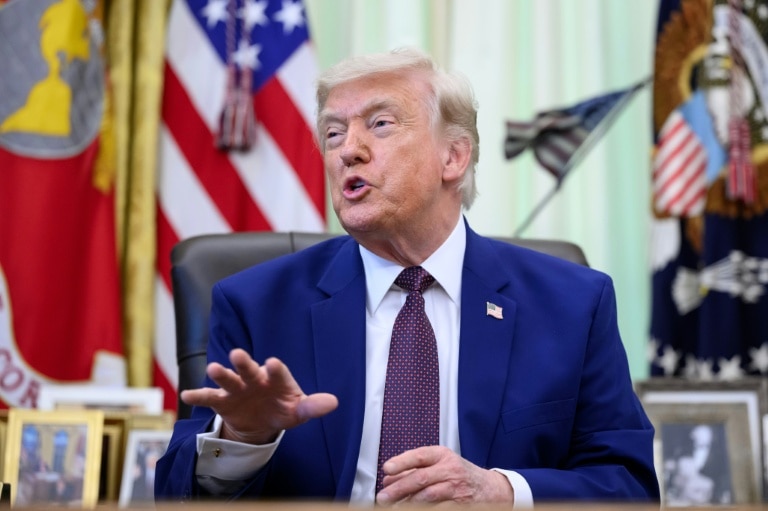
In a pivotal legislative vote held on Friday, the U.S. Senate has passed a $70 billion funding package to advance former President Donald Trump’s hardline immigration enforcement agenda, capping off a full day of fractious amendment votes that laid bare deep internal divisions within the Republican Party over several of the Trump’s most controversial policy proposals.
The legislation would allocate sustained funding to U.S. Immigration and Customs Enforcement (ICE) and the U.S. Border Patrol for the remainder of Trump’s current term, delivering the Republican leader a long-sought major victory on one of his signature policy issues. This outcome follows months of bitter partisan conflict over the future direction of U.S. immigration enforcement. Next, the bill will move to the House of Representatives, where top Republican leaders are pushing to hold an early vote next week to finalize the measure and send it to Trump’s desk for signature.
Friday’s vote comes in the wake of a record-breaking partial shutdown of the U.S. Department of Homeland Security (DHS) earlier this year. That shutdown was triggered when Democrats refused to support new immigration enforcement funding without placing restrictions on controversial tactics, including immigration raids in sensitive community locations and the use of unmarked masks by enforcement officers. Republicans rejected these Democratic demands, opting instead to advance the ICE and Border Patrol funding through the fast-track budget reconciliation process, a procedural rule that allows the party to bypass Democratic opposition as long as their own caucus remains unified.
The final vote followed an hours-long, chaotic amendment process known on Capitol Hill as a “vote-a-rama,” which permits lawmakers to force roll call votes on politically charged issues ahead of the final up-or-down vote on the full bill. For Trump, the process brought renewed public scrutiny to controversial proposals that have already sparked unease among some members of his own party. These included a proposed $1.8 billion “anti-weaponization” compensation fund for allies who claim they were unfairly targeted by federal law enforcement, and a $1 billion earmark for security upgrades at a planned private White House ballroom. While the $1 billion ballroom funding was ultimately stripped from the final immigration bill, both proposals have become flashpoints for broader Republican anxiety about defending Trump’s policy priorities ahead of upcoming midterm elections, where voter anger over the rising cost of living is expected to dominate the campaign landscape.
The bill’s passage had already been delayed for weeks after a rebellion within the Senate Republican caucus over the Justice Department’s proposed $1.8 billion anti-weaponization compensation package. Critics across the political spectrum have slammed the fund as an unaccountable “slush fund” that could potentially divert taxpayer money to people convicted of crimes related to the 2021 attack on the U.S. Capitol. Acting Attorney General Todd Blanche told lawmakers earlier this week that the Trump administration would not move forward with implementing the fund. Despite this public statement, Trump himself has continued to praise the proposal, calling it “beautiful” and saying he would need to “ask the lawyers” to confirm whether the plan was fully scrapped or just temporarily paused.
This deliberate ambiguity from the president pushed a bloc of Senate Republicans to support a Democratic amendment that would codify the fund’s elimination into law. “When you’re explaining, you’re losing. There’s no way to explain the $1.776 billion fund. So the only way you can explain it is explain that you got rid of it,” North Carolina Senator Thom Tillis told reporters Friday. While the string of amendment votes ultimately failed to derail Trump’s broader immigration agenda, the outcomes exposed clear limits to Republican party discipline: multiple GOP senators defected from the party line on votes targeting the anti-weaponization fund, the scrapped ballroom security funding, and Trump’s recent move to install a loyalist housing official to lead the U.S. intelligence community.
For their part, Democrats leveraged the vote-a-rama process to highlight their policy priorities, introducing amendments that would redirect immigration enforcement funding toward affordable housing and other programs aimed at easing household cost burdens. Democrats argued that Republicans were prioritizing Trump’s mass deportation agenda over addressing the economic struggles of American voters. In a separate, high-profile rebuke of Trump’s foreign policy, several Senate Republicans joined Democrats to back an amendment that would bypass House Republican leadership and hold a vote on new sanctions targeting Russia over its full-scale invasion of Ukraine, paired with $8 billion in new military financing loans for Kyiv.
Republican supporters of the immigration funding bill pushed back against criticism, arguing that the new allocation was necessary to resolve the ongoing uncertainty around immigration enforcement funding left unresolved by the earlier DHS shutdown. The temporary stopgap funding measure that ended the earlier shutdown provided funding for most DHS agencies through September 30, including the Federal Emergency Management Agency, the U.S. Coast Guard, the Transportation Security Administration, and the U.S. Secret Service. However, it deliberately excluded funding for ICE and Border Patrol, setting the stage for the separate partisan battle that concluded with Friday’s Senate vote.
Friday’s outcome delivers Trump a major legislative win on his core immigration pledge, while simultaneously highlighting a persistent structural challenge for Republican congressional leaders: even with full control of both chambers of Congress, they must constantly navigate internal resistance to the political baggage tied to many of the president’s most divisive priorities.