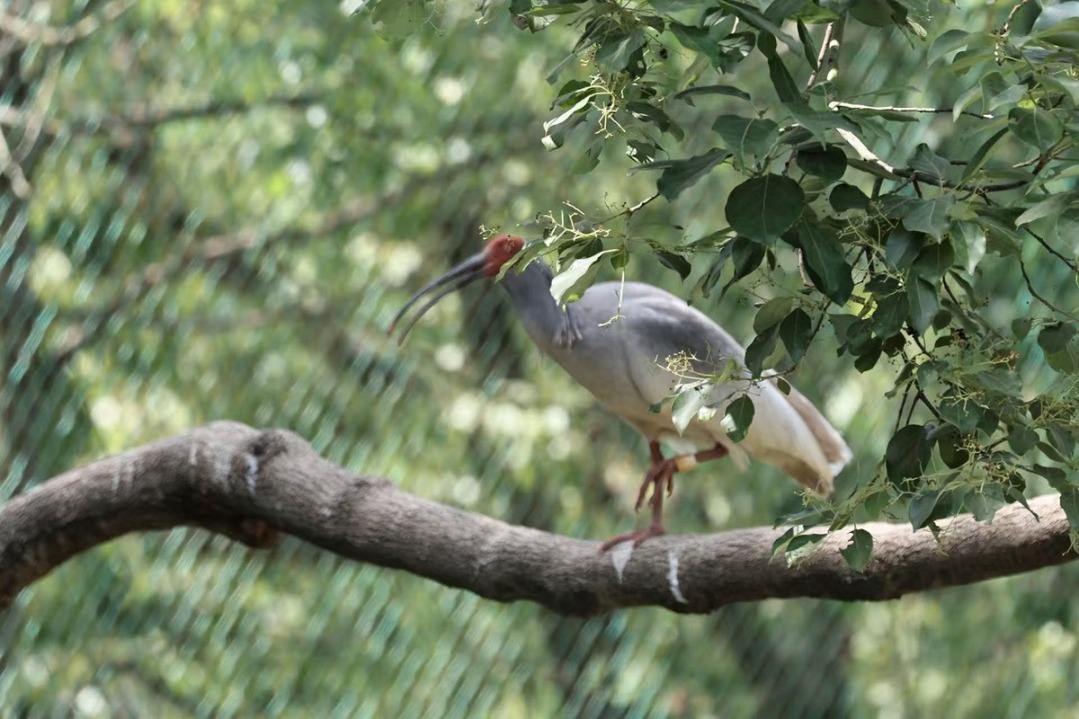
Every year between March and June, the rolling woodlands and wetland enclosures of the Crested Ibis Captive Breeding and Conservation Center in Yangxian County, Shaanxi Province, hum with new life. As of June 4, 2026, dozens of endangered crested ibises can be seen nesting, foraging, and raising newly hatched chicks across the center’s carefully constructed habitats, capping off decades of groundbreaking conservation work for one of the world’s most iconic threatened bird species.
Once on the very edge of extinction, the crested ibis has become a global benchmark for successful species preservation, and the Yangxian breeding center sits at the heart of that recovery effort. To give captive-bred birds the best chance of survival after release into the wild, center designers rejected traditional sterile captive enclosures in favor of carefully engineered environments that mimic the ibises’ natural native habitats. By recreating the combination of wetlands and forested areas the species relies on in the wild, and providing natural prey including wild loach, small fish, and freshwater shrimp, the center gives young ibises the space to develop critical survival skills that many captive-bred animals never learn: how to hunt for their own food, build sturdy nests, and navigate open spaces in flight.
To date, this approach has delivered extraordinary results: the Yangxian center alone has successfully bred nearly 1,000 crested ibis chicks, providing a steady stream of healthy birds for rewilding programs across the country. The impact of this work extends far beyond the boundaries of the Shaanxi breeding center, according to newly released data from the Shaanxi Provincial Forestry Bureau. By the end of 2025, the global crested ibis population had crossed the 12,000 individual threshold, a staggering increase from the mere seven wild birds discovered in Yangxian in the 1980s. What is more, the species’ native habitat range has expanded to more than 20,000 square kilometers, and wild crested ibis populations can now be found across 15 Chinese provincial-level regions, steadily reclaiming much of their historic natural range.