博客

  • Fifa World Cup 2026: What you need to know about South Africa

    Fifa World Cup 2026: What you need to know about South Africa

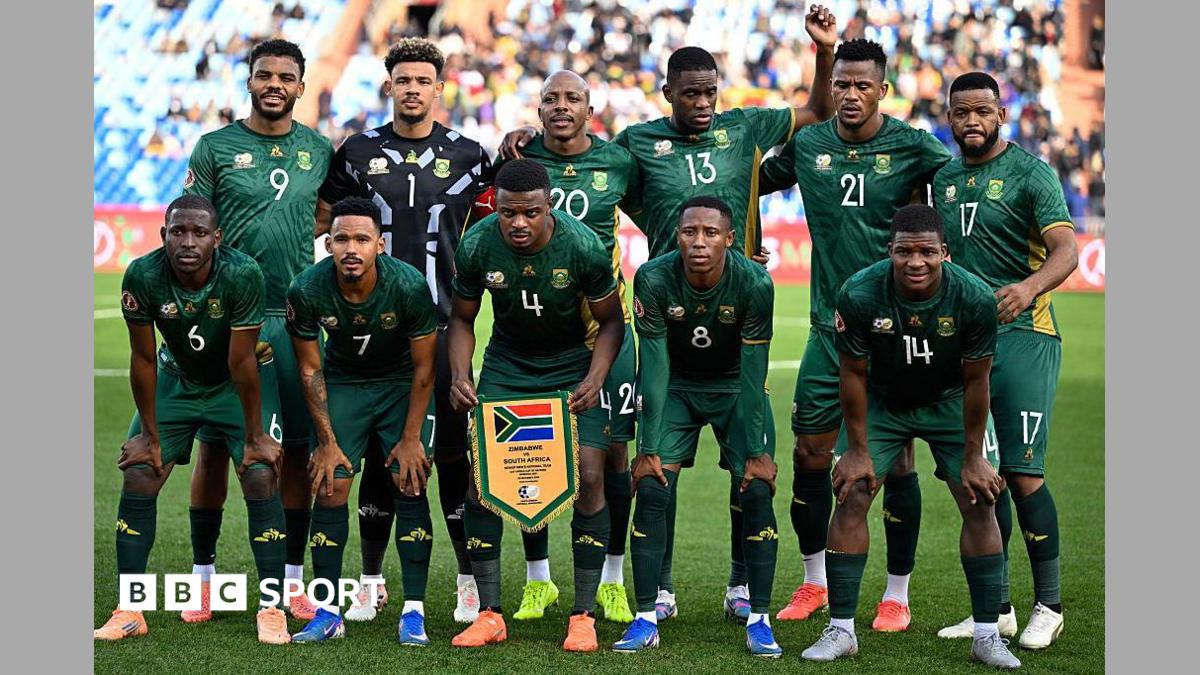
    After a 16-year absence from the global football stage, South Africa’s senior men’s national team, affectionately known as Bafana Bafana, is making its much-anticipated return to the FIFA World Cup in 2026. The team last featured at the tournament when South Africa hosted it in 2010, where they exited the group stage on goal difference despite a famous upset win over eventual champions France – marking the third consecutive World Cup cycle where the side failed to progress beyond the group stage. A full 16 years later, history is repeating in a curious twist: just like in 2010, South Africa will kick off the entire tournament, this time facing co-host Mexico in the opening match.

    Leading the side into this historic return is 74-year-old Belgian head coach Hugo Broos, who will retire from his post following the 2026 tournament, bringing a close to five years of transformative leadership that has restored belief to a squad that for years lacked consistency on the global stage. A fascinating quirk of fate puts Broos in a unique position: 40 years ago, he took the pitch as a player for Belgium against Mexico in the opening match of the 1986 World Cup. “You can’t plan something like that,” Broos said of the coincidence. “It’s beautiful.” Broos will also make his own piece of history at this tournament: he will briefly become the oldest head coach in World Cup history, surpassing Germany’s Otto Rehhagel (71 years and 317 days at the 2010 tournament). The record will only be his for seven hours, however, as the Czech Republic’s Miroslav Koubek – seven months older than Broos at 74 – will take the record later the same opening day, before 78-year-old Dick Advocaat of Curacao claims the mark three days later.

    South Africa’s road to qualification was far from straightforward: the side was deducted three points after fielding suspended midfielder Teboho Mokoena in a qualifying match, yet they still pulled off an upset to top their group, finishing ahead of regional powerhouse Nigeria to secure their World Cup spot. That impressive qualifying campaign has injected a new level of confidence into the squad that has often been missing in past tournaments, and that mental strength is one of the side’s key advantages. Broos has also reshaped the team’s defensive organization, tightening up the backline significantly, while the midfield boasts elite fitness and relentless work rate that disrupts opposition build-up.

    Unlike the successful South African sides of the 1990s that featured a host of players plying their trade in top European leagues, the 2026 squad is drawn almost entirely from the country’s domestic league, giving the side a cohesive understanding but leaving it short on top-level experience in high-stakes international matches. That inexperience has shown in past tournaments: South Africa has a long-standing struggle to adapt when matches turn against them, with no clear backup plan when their initial game plan unravels. That flaw was on full display earlier this year at the Africa Cup of Nations, where Cameroon caught Bafana Bafana on the break to eliminate them in the round of 16, leaving Broos’ side unable to adjust to the changing dynamics of the match. While Broos has nurtured a core of talented young players poised to carry South African football into a bright future, most analysts agree that a deep knockout run in 2026 may be out of reach for the side.

    Three players stand out as key to any potential South African success in the tournament. Midfielder Teboho Mokoena, 29, is a two-way threat who combines solid defensive work with powerful long-range shooting, capable of capitalizing on any space afforded to him outside the box. Captain and goalkeeper Ronwen Williams, 34, has already cemented his place in African football history: at the 2023 Africa Cup of Nations, he saved four penalties in a shootout against Cape Verde to secure upset victory. Growing up in one of South Africa’s most impoverished communities, Williams has become a powerful role model for young aspiring footballers across the country. Leading the line up front will be 25-year-old Lyle Foster of England’s Burnley, who became the most expensive South African footballer in history when he moved to the Premier League club for a reported £6 million in 2023. Broos has noted that Foster is working to rebuild his confidence after a tough domestic season, but remains the side’s most clinical attacking option.

    For football fans eager to follow South Africa’s 2026 World Cup run, BBC Sport will provide live coverage of every one of the side’s matches across its website and app, including real-time updates, expert analysis, and fan reaction. As Bafana Bafana prepare to step onto the World Cup pitch for the first time in 16 years, the side will be hoping to rewrite their national history and secure their first ever knockout stage berth, marking a positive new chapter for South African football after years in the international wilderness.
  • Former supermodel Carré Otis files Paris rape complaint against ex-Elite boss

    Former supermodel Carré Otis files Paris rape complaint against ex-Elite boss

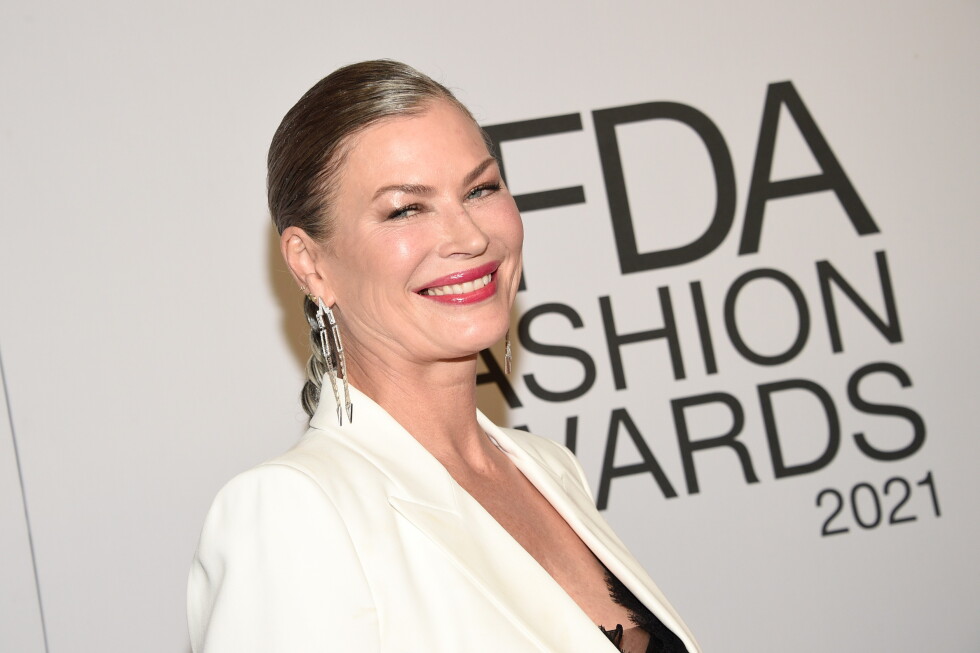
    PARIS – In a bold move intended to break long-standing silence around systemic abuse in the global fashion industry, 58-year-old former American supermodel Carré Otis has submitted a formal criminal complaint to a Paris court, accusing Gérald Marie, the one-time European head of Elite Model Management, of rape and human trafficking. Though legal barriers mean Marie will not face prosecution in Otis’s specific case, legal representatives for the model say the filing is designed to pave the way for other alleged survivors to step forward and join the legal action.

    Marie, a 76-year-old French national who oversaw Elite’s European operations from 1985 to 2010 — a decades-long stretch when the agency controlled a dominant share of the international modeling market and launched the careers of dozens of the world’s most recognizable supermodels — has repeatedly denied all allegations against him.

    Under French criminal law, the statute of limitations for alleged sexual abuse committed against a minor expires 30 years after the victim reaches adulthood, meaning claimants must file by their 48th birthday. Otis’s previous 2021 complaint, which she joined alongside multiple other former models who accused Marie of rape and sexual assault dating back to the 1980s, was dismissed by courts on the grounds that all claims had exceeded the legal time limit.

    The latest complaint, reviewed by the Associated Press, brings formal charges of rape of a minor and human trafficking against Marie. Court documents detail that in 1986, when Otis was just 17 years old, Elite Model Management sent her to Paris to pursue her modeling career. She was placed in Marie’s personal apartment, believing the arrangement was part of the agency’s support for new rising talent. According to the allegations, Marie raped Otis repeatedly during her stay, before coercing her into being trafficked to other wealthy men across multiple European countries. Otis also never received any compensation for the modeling work she did during that period, the complaint adds.

    Mathias Darmon, Otis’s lead attorney, confirmed in an official statement to the AP that even with the statute of limitations barring prosecution for Otis’s own claims, the new filing creates a formal legal pathway for other survivors to join the proceedings, regardless of whether their own claims are time-barred. “The goal is to give other victims the opportunity to find the courage to join our complaint,” Darmon said. “We are opening the door for all those affected by this internationally significant case to come forward and have their voices heard.”

    In comments reported by French public broadcaster France Info on Friday, Otis framed the complaint as a broader denouncement of the pervasive, decades-long culture of sexual exploitation of young models that ran rampant through the global fashion industry, drawing explicit comparisons to the fallout from the Jeffrey Epstein sex trafficking scandal that exposed systemic exploitation of vulnerable young people by powerful figures. Otis rose to global fame as a supermodel in the late 1980s and early 1990s, gracing the covers of major fashion publications including *Elle*, *Vogue*, and *Vanity Fair*, and featuring in the coveted annual Pirelli calendar.

  • Fall in official Ebola numbers appears to be good news but it’s not that simple

    Fall in official Ebola numbers appears to be good news but it’s not that simple

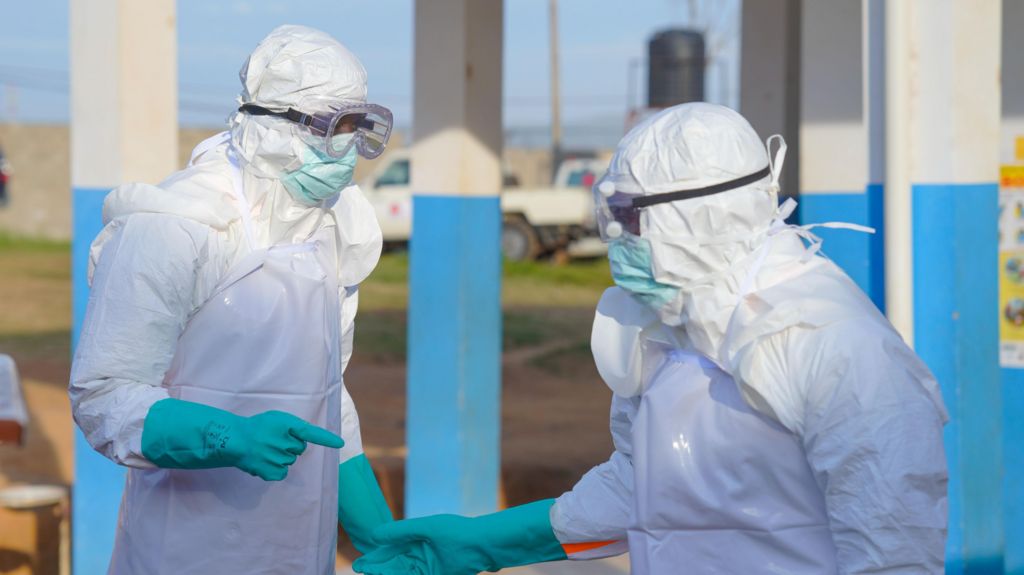
    Ebola, a deadly viral pathogen that transmits through direct contact with infected bodily fluids, requires medical personnel to utilize full personal protective equipment when caring for confirmed patients to prevent accidental exposure. The latest Ebola outbreak statistics from the eastern Democratic Republic of Congo (DRC) have sparked initial cautious optimism, after a dramatic downward revision of reported case counts – but public health leaders stress the reduction does not signal the outbreak itself has become less severe.

    Previously, DRC authorities had reported more than 1,000 suspected cases and nearly 250 suspected deaths linked to the current outbreak. The updated count, however, narrows those figures to roughly 380 confirmed cases and 60 confirmed deaths within DRC borders, with an additional 15 confirmed cases and one fatality recorded in neighboring Uganda. The key shift behind the revised numbers is a transition from counting suspected cases to only confirmed cases: expanded laboratory testing has allowed officials to rule out thousands of patients who presented with Ebola-like fever but were actually suffering from other endemic illnesses, most commonly malaria, which is widespread across DRC.

    Dr. Tedros Adhanom Ghebreyesus, Director-General of the World Health Organization (WHO), noted that the outbreak gained a significant foothold before coordinated response efforts began, but that intervention teams are now closing the gap in containment. Even with progress in data collection, however, major barriers to stopping the outbreak remain.

    One of the most pressing challenges is incomplete contact tracing, a core strategy for stopping Ebola chains of transmission. Currently, only around 45% of people who have had direct contact with confirmed Ebola patients are being actively monitored for symptoms. WHO guidelines require at least 90% of contacts to be traced to bring an outbreak under control. The low follow-up rate is partially tied to the outbreak’s location: the epicenter lies in a conflict-affected region of eastern DRC, where ongoing violence disrupts public health work.

    Community mistrust is another major obstacle. Earlier this week, an Ebola burial response team was attacked in South Kivu province, forcing workers to abandon a coffin and raising grave concerns about further uncontrolled transmission. Traditional funeral practices in the region often involve close contact with deceased bodies, including washing and touching, and large public gatherings – two factors that dramatically increase Ebola infection risk, since the virus spreads through bodily fluid contact. Dr. Tedros emphasized that building trust with local communities is a non-negotiable critical step to getting the outbreak under control.

    The current outbreak is concentrated across three eastern DRC provinces, a territory roughly the size of the United Kingdom, with large swathes of rural, remote terrain that is difficult for response teams to access. Compounding this, the region is one of the most politically volatile in Africa, with multiple active armed groups operating across the area that disrupt aid work.

    Speaking to the BBC’s *Today* program, Dr. Tedros highlighted a broader global health priority: earlier this year, he urged foreign ministers planning to increase defense spending not to overlook the threat of “invisible enemies” like infectious disease, noting the COVID-19 pandemic claimed roughly 20 million lives – far more than any recent armed conflict. He also reassured the global public that the risk of a worldwide Ebola pandemic is low, since unlike the respiratory coronavirus that caused COVID-19, Ebola is not transmitted through airborne particles.

    WHO’s current risk assessment classifies the outbreak as very high risk within DRC (which has now faced 17 separate Ebola outbreaks since the virus was first discovered there 50 years ago), high risk across the central African region, and low risk globally. In line with this low global assessment, British officials announced earlier this week they will not implement mandatory temperature screenings for flights arriving from affected regions at UK airports, citing the proven limited effectiveness of such measures. During the 2014 West African Ebola outbreak, more than 12,000 passengers were screened across five major UK airports, but screenings failed to detect the country’s only confirmed case – that of nurse Pauline Cafferkey, who entered the UK undetected before being diagnosed.

  • Putin rejects Zelenskyy’s offer to meet, saying he sees ‘no point’ in it

    Putin rejects Zelenskyy’s offer to meet, saying he sees ‘no point’ in it

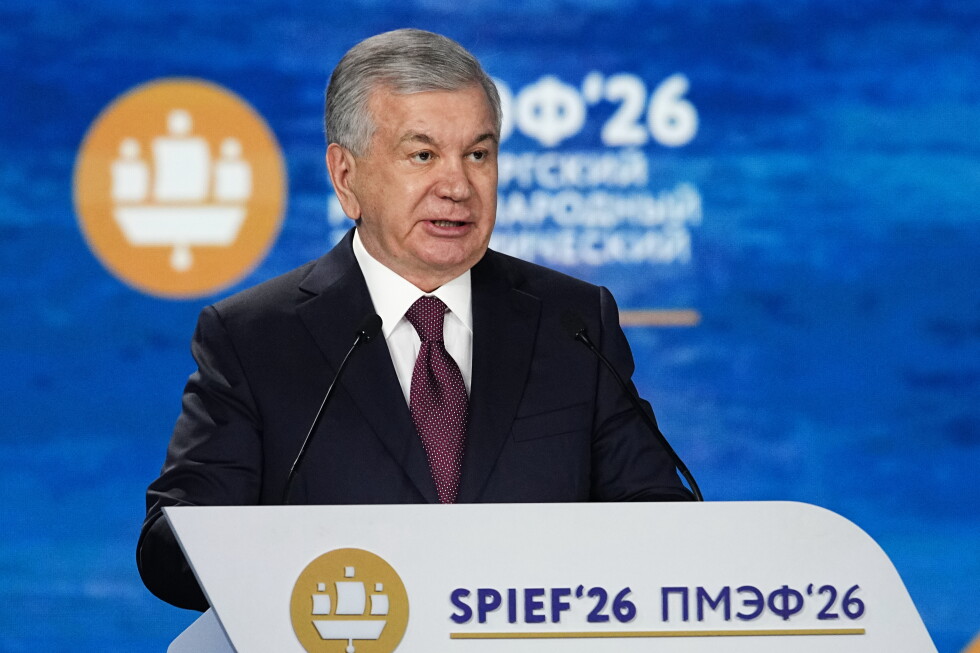
    Speaking from the annual St. Petersburg International Economic Forum on Friday, Russian President Vladimir Putin delivered a firm rejection of a direct, face-to-face negotiation proposal from Ukrainian President Volodymyr Zelenskyy, arguing that recent actions and the tone of the Ukrainian leader’s overture have eliminated any possibility of productive high-level talks.

    The proposal, delivered in an unprecedented open letter from Zelenskyy to Putin this past Thursday, marked the first public direct communication from the Ukrainian leader to his Russian counterpart since Moscow launched its full-scale military incursion into Ukraine in 2022. Beyond the meeting request, the letter also included a broad, harsh critique of Putin’s 26-year tenure in power, which Putin characterized as deeply provocative and unconstructive.

    Putin tied his rejection directly to a May 22 drone strike on a college dormitory in Russia-controlled Luhansk Oblast, which the Kremlin says left 21 people dead and dozens more injured. Questioning the intent behind Zelenskyy’s overture, he asked: “Is it a way to create conditions for personal meetings and talks, or create an environment which makes any personal meetings impossible? I think it’s the second.” With that context, he reiterated, there is simply “no point” in holding the proposed meeting.

    Alongside rejecting the immediate meeting call, Putin also turned aside Zelenskyy’s push for an immediate ceasefire, arguing that Moscow is seeking a permanent, comprehensive settlement to the conflict, which is now entering its fifth year, rather than a short-term temporary truce. He reaffirmed that Russia remains open to reaching a negotiated compromise aligned with the understandings reached during last year’s summit between he and former U.S. President Donald Trump in Anchorage, Alaska, and emphasized that any final deal requires Kyiv to formally accept those terms. “Naturally, the Ukrainian side would like us to suspend the advances made by Russian troops,” he noted. “But it would be better to end the war by agreeing to the compromises that were discussed in Anchorage.”

    The rejection came amid shifting geopolitical dynamics in the conflict, with Zelenskyy himself recently acknowledging that U.S. priorities have moved away from the conflict amid intensifying tensions related to the Iran conflict, and that Kyiv cannot afford to wait passively for Washington to refocus its attention on ending the fighting. For his part, former President Trump has previously stated that a meeting between Putin and Zelenskyy would be a positive development. This is not the first time a meeting proposal has fallen through: Putin previously invited Zelenskyy to hold talks in Moscow, an invitation the Ukrainian leader rejected outright, and Putin only last month opened the door to a possible meeting in a third country — but only on the condition that a finalized agreement is already ready to be signed by both parties.

    Beyond the conflict discussion, Putin used his keynote address at the forum, Russia’s high-profile annual economic gathering often compared to the World Economic Forum in Davos, to lay out his vision for a shifting global order and push back against criticisms of Russia’s economic performance amid prolonged conflict and sweeping Western sanctions. He argued that developing economies have claimed a steadily larger share of global output, while the economic weight of Western powers has contracted significantly, and accused the West of destabilizing the global financial system through its unilateral sanctions on Moscow. He emphasized that by freezing Russian sovereign assets held abroad, Western nations have irreparably damaged global trust in the U.S. dollar and euro, noting that any country could now face the same fate of having its legitimate Western-held assets seized unexpectedly. “The roots of the current global turbulence lie in the transition from a vertical, hierarchical model, which served the interests of a small number of states, to a more complex, distributed and multipolar one,” he said. “Russia views global changes not only as a threat but also as immense opportunities. And to capitalize on them, we aim to act swiftly and pragmatically.”

    Putin called for a complete overhaul of the global financial system, urging the creation of a “modern, flexible and responsible financial architecture — free from risks, bans and barriers.” He pushed back against widespread assessments that Russia’s economy is struggling amid the conflict, highlighting that Russia’s national debt is only a small fraction of that carried by major Western economies, and that its budget deficit is far narrower than those seen in the West. Despite his optimistic framing, Russia’s economic outlook has darkened in recent months as the conflict drags on, forcing the government to raise domestic taxes and expand internal borrowing to keep deficit levels in check. During a Thursday media session, Putin argued that claims of a struggling Russian economy are overblown, explaining that recent cooling measures were intentional policy moves designed to rein in persistent inflation.

    Staged to showcase Russia’s economic resilience and attract new foreign investment amid its diplomatic and economic estrangement from the West, this year’s forum has leaned heavily into the Kremlin’s stated goal of building a multipolar global order. While Western officials and most Western business leaders have boycotted the event since the 2022 full-scale incursion, Russia has drawn high-level delegations from across the Global East and Global South: Saudi Arabia sent a large official delegation this year, the presidents of Uzbekistan and Tanzania delivered addresses, and Chinese Vice President also gave a major speech on Friday. Notably, a U.S. official, Rodney Mims Cook Jr., head of the U.S. Commission of Fine Arts, is attending the event, marking the first such high-level U.S. attendance in years.

    In additional comments Thursday, Putin acknowledged that Ukrainian drone strikes have successfully penetrated Russian defensive lines multiple times in recent weeks, and pledged to upgrade and strengthen the country’s air defense networks to counter the growing threat. “To our regret, some of them break through,” he told reporters. “Russia has an air defense system, we need to improve it, strengthen it, and we will do that.” Just hours before the forum officially opened on Wednesday, a Ukrainian drone strike sparked a large fire at an oil terminal in St. Petersburg and also targeted a nearby Russian naval base, underscoring the reach of Kyiv’s drone capabilities deep inside Russian territory.

  • Singer Fally Ipupa’s pride at being given major DR Congo honour

    Singer Fally Ipupa’s pride at being given major DR Congo honour

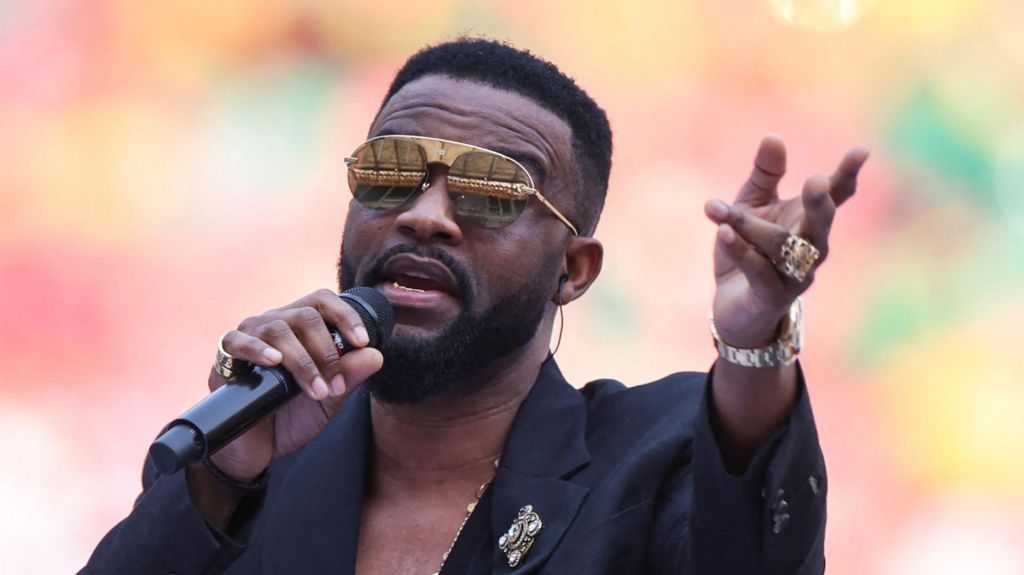
    One of the most influential and successful African musical talents of his generation is celebrating one of the highest honors of his home country this week, after being formally inducted as a Knight of the Democratic Republic of Congo’s revered National Order of the Leopard. For 48-year-old Fally Ipupa, whose decades-long career has taken him from local collaborator to global icon with millions of loyal fans across every continent, the recognition carries far more meaning than a personal accolade.

    Ipupa’s journey to international stardom began 30 years ago, when he launched his professional career performing alongside fellow Congolese music legend Koffi Olomidé. Over the course of his career, he has built an extensive and versatile discography: he contributed to chart-topping group tracks as a member of collectives Talent Latent and Quartier Latin International, before going on to release eight full-length solo albums that have cemented his status as a cross-regional hitmaker.

    The knighthood, bestowed Tuesday, marks the highest honor Ipupa has received to date. The National Order of the Leopard is one of the DRC’s most prestigious state awards, granted exclusively by the country’s sitting president to public figures who have earned extraordinary distinction for their contributions to the nation. While the induction did not include a televised public ceremony, a government spokesperson confirmed Ipupa’s new title on state television the following day, praising the artist as a “worthy son of the nation.”

    In her remarks, the spokesperson highlighted that Ipupa’s one-of-a-kind artistic style and creative vision have played a critical role in elevating Congolese rumba on the global stage and spreading Congolese culture to international audiences. He follows in the footsteps of the late iconic Congolese musician Papa Wemba, who also received the same knighthood honor.

    Reacting to the news on social media, Ipupa shared his sense of “immense pride and deep emotion” with fans, emphasizing that his success has never been a solo achievement. “This path has never been mine alone. It belongs to an entire people,” he wrote, extending a message of encouragement to young Congolese creatives: “Your starting point does not define your destiny. Work, believe, persevere. The world is ready to hear your voice.”

    The latest award caps off a landmark year for Ipupa’s global career, which has already seen a string of historic firsts. His most recent studio album, *XX*, made him the first African artist ever to debut directly at the top of the French official album charts. Just last month, he also made history as the first Francophone African artist to sell out two consecutive back-to-back shows at Paris’s 80,000-capacity Stade de France. Later this year, he is scheduled to perform one of the largest shows of his career in the United Kingdom at London’s iconic O2 Arena.

    Ipupa’s grueling promotional schedule across Europe and the United States has come at a small cost, however: he recently told French outlet *Le Monde* that he lost his voice from repeated performances on television and radio programs, and his doctor ordered a full week of complete vocal rest to recover.

    Beyond his string of professional highs, Ipupa’s career has also included moments of profound loss and public controversy. Four years ago, a fatal crowd crush at a sold-out Ipupa concert in Kinshasa, the DRC’s capital, left 11 people dead. The tragedy was linked to the venue being oversold by more than a third of its maximum capacity.

    The artist has also faced criticism over the local Congolese music industry practice known as libanga, where musicians accept payment to shout out or praise politicians, corporations, and influential figures in their tracks. Ipupa has previously acknowledged the practice openly, telling Kenya’s Trace FM that he can earn roughly €10,000 per paid mention in a song. For years, Congolese diaspora fans angered by what they saw as overly close ties between Ipupa and the DRC’s widely criticized government organized boycotts that blocked his concerts abroad.

    Beyond the controversy, Ipupa has also carved out a profile as a philanthropist and served as a UNICEF goodwill ambassador, and he has long maintained that his core mission as an artist is to unite rather than divide audiences. Accepting the knighthood, he reiterated that the award extends far beyond him as an individual: “This distinction is more than personal. Above all, it celebrates Congolese music, our culture, our identity, this force that unites us and elevates us beyond borders.”

  • Ireland issues travel bans for two Israeli ministers

    Ireland issues travel bans for two Israeli ministers

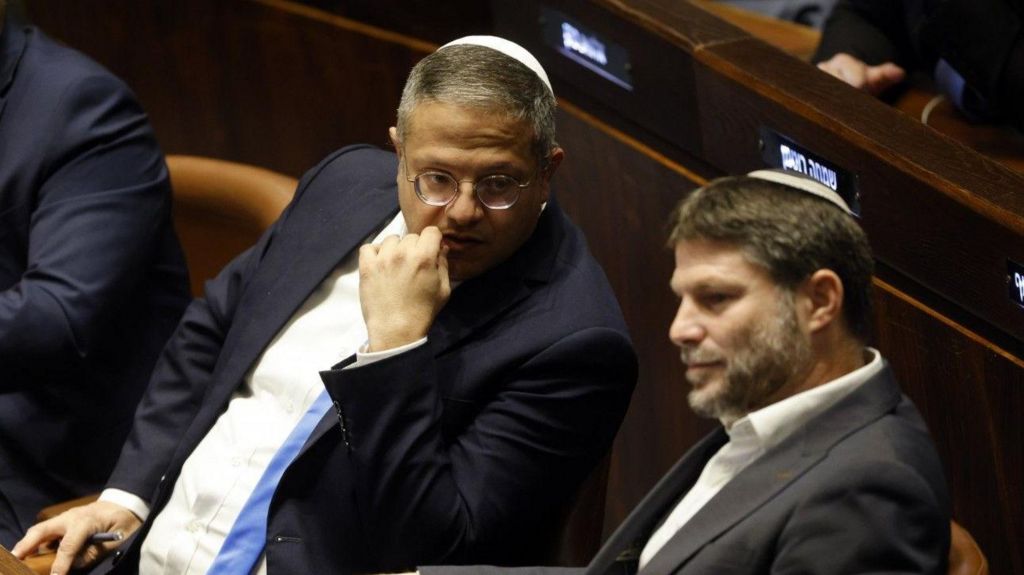
    In a significant escalation of international pressure on two far-right Israeli cabinet members, Ireland has officially implemented travel bans barring Israeli National Security Minister Itamar Ben-Gvir and Finance Minister Bezalel Smotrich from entering the country, Irish Taoiseach Micheál Martin has confirmed.

    The sanctions, confirmed by Ireland’s Department of Justice this week, follow formal approval from the Irish government outside standard cabinet procedures. In an official statement, a spokesperson for Irish Justice Minister Jim O’Callaghan said immigration officials across the country have received explicit instruction to reject any entry applications from Ben-Gvir and Smotrich should either attempt to travel to Ireland.

    The move by Dublin is not an isolated action. It builds on a growing wave of international pushback against the two Israeli politicians, who have a long record of inflammatory rhetoric and actions targeting Palestinian communities. Last year, the United Kingdom became the first Western government to impose formal sanctions on the pair, alongside Australia, Norway, Canada and New Zealand. Those sanctions included entry bans and asset freezes, marking the first time sitting Israeli ministers faced punitive measures from Western powers. At the time, UK Foreign Secretary David Lammy accused Ben-Gvir and Smotrich of “inciting extremist violence and serious abuses of Palestinian human rights.”

    Most recently, France implemented a unilateral entry ban on Ben-Gvir last month. The ban came after Ben-Gvir released a video mocking bound pro-Palestinian activists who had been seized by Israeli soldiers while attempting to deliver humanitarian aid to Gaza via sea. The video sparked global outrage, with condemnation coming not just from capitals across Europe and North America, but even from Israeli Prime Minister Benjamin Netanyahu, who publicly stated that Ben-Gvir’s actions were “not in line with Israel’s values.”

    Speaking at the EU-Western Balkans Summit held in Montenegro on Friday, Martin doubled down on Ireland’s position, arguing that the words and actions of the two Israeli ministers amount to an open call for the displacement and elimination of Palestinian people from their historic homeland. The Taoiseach told attendees that Ireland will push for the European Union to adopt its own collective sanctions against the pair, a position already endorsed by France, Spain and Italy.

    “That’s again something that the international community needs to take on board and we will be pursuing that with others,” Martin said. “In my view, their behaviour justifies sanctions at EU level as well, and that’s something that we will raise, whether we can get sufficient support across the European Union is a different matter.”

    Ireland’s announcement comes amid a fresh escalation of violence in the Gaza Strip, nearly 20 months after the outbreak of the ongoing war. Despite a US-brokered ceasefire agreement that took effect last October, Israel launched a new round of airstrikes in Gaza this week that the Israeli military says killed four senior leaders of Hamas’s General Security Apparatus. Israeli officials have repeatedly accused Hamas of using lulls in fighting to rearm and reconstruct its military infrastructure.

    The current conflict traces back to the October 7, 2023 attack led by Hamas on southern Israel, which killed roughly 1,200 people and took 251 others hostage. Israel’s large-scale military response in Gaza has resulted in a staggering humanitarian toll: Gaza’s Ministry of Health reports that more than 72,950 people have been killed in Israeli strikes and ground operations since the campaign began.

  • Hospitality jobs boom as US prepares for World Cup

    Hospitality jobs boom as US prepares for World Cup

    The United States labor market defied economist projections in May, delivering stronger-than-forecast job growth that was heavily fueled by stepped-up hiring at food and beverage establishments ahead of the 2026 FIFA World Cup co-hosted by North America. Data released by the U.S. Bureau of Labor Statistics (BLS) on Friday shows the economy added a total of 172,000 nonfarm payroll positions last month, far outpacing the consensus forecast of 105,000 that experts had published ahead of the report.

    Nearly 41% of all new jobs created in May were concentrated in the leisure and hospitality sector, which added 70,000 positions overall. That marks a dramatic acceleration from the sector’s average monthly gain of just 14,000 over the preceding 12 months. Food and drinking services alone accounted for 48,000 of those new leisure and hospitality roles, as businesses scaled up their workforces to meet expected surges in customer demand during the upcoming summer soccer tournament, which is being jointly hosted by the United States, Mexico and Canada.

    Beyond leisure and hospitality, solid job gains were also recorded in local government and health care, offsetting a decline in employment across the financial sector. The national unemployment rate held steady at 4.3% in May, remaining near multi-decade lows despite ongoing economic headwinds. In an additional positive revision, the BLS updated its previously published payroll numbers for March and April, finding that job growth in those two months was a combined 93,000 higher than initially reported, underscoring the unexpected resilience of the U.S. labor market.

    Analysts note that this robust hiring trend has persisted even as businesses face rising operational costs tied to geopolitical tensions stemming from the U.S.-Israel conflict with Iran. The stronger-than-expected May jobs report adds new complexity to discussions about the future of U.S. monetary policy, as policymakers balance persistent labor market strength against ongoing efforts to cool inflation.

  • Case of missing 11-year-old feared killed exposes cracks in the French judicial system

    Case of missing 11-year-old feared killed exposes cracks in the French judicial system

    PARIS — A wave of public anger and blame has swept across France this week, following the suspected killing of 11-year-old Lyhanna, a missing schoolgirl whose disappearance after classes on May 29 has riveted national attention and ignited fierce scrutiny of systemic failures within the country’s judicial system.

    The outcry comes after six days of intensive searches carried out by law enforcement officers and civilian volunteers across southwestern France, where Lyhanna was last seen. Authorities confirmed Thursday that the body of a child, dressed in clothing matching what Lyhanna wore the day she vanished — a black-and-white striped top, black shorts, and yellow socks emblazoned with artwork from the popular Japanese manga *One Piece* — was discovered in an isolated, rural section of a farm in the Gers region. An official autopsy has been ordered to confirm the identity and cause of death.

    The main suspect in the case, a 41-year-old man who is already in police custody, was identified via security camera footage: he was recorded near Lyhanna’s school in the small town of Fleurance, and later seen driving with the child in his vehicle, according to local French media reports. The suspect has told investigators he dropped Lyhanna off near the local municipal swimming pool, a claim that has not been independently verified.

    Most disturbing to the public is the revelation that multiple prior complaints of sexual violence, including allegations of rape against the suspect, were filed by underage girls and their families years before Lyhanna’s disappearance. Clémence Meyer, chief prosecutor for the Gers region, confirmed this week that a 2020 allegation that the man raped a minor at his home was investigated, with medical examinations and witness interviews completed, but the case was ultimately dismissed in 2024 due to what officials called insufficient evidence.

    When Lyhanna vanished, the suspect was already the subject of an open, active rape investigation stemming from allegations by another minor, who claims he repeatedly assaulted her at his home between 2024 and 2025. That case has been delayed for months as it bounced back and forth between different regional legal jurisdictions. A third allegation of child rape against the suspect was filed just this week, Meyer added.

    French President Emmanuel Macron broke with long-standing protocol to comment on the domestic tragedy during an official visit to Montenegro on Friday, joining the widespread national dismay over the case. “Things didn’t happen as they should have done. That is clear. And so it is unacceptable,” the president stated. “We cannot look her family in the face and say everything went well.” Macron acknowledged that the tragedy has exposed dangerous, systemic cracks in France’s child protection and judicial frameworks, saying he was “shocked” by the series of missed warnings.

    In response to the public outcry, the French government has launched a full internal investigation into the mishandling of prior complaints against the suspect. Justice Minister Gerald Darmanin outlined the scope of the probe Thursday, saying officials will examine multiple critical failures: the prolonged delays in transferring casework between jurisdictions, the continued reliance on paper rather than digital information sharing that slowed communications, apparent failures by law enforcement to follow up on existing orders, and the core question of why multiple red flags over the course of months did not trigger intervention.

    “It’s completely unacceptable,” Darmanin said. “We are all terrified by this malfunction.” He added that the case lays bare deep institutional flaws: “it reveals our poor organization and without doubt, the fact that at the Justice Ministry and elsewhere, we don’t take the words of children seriously.”

  • England stretches lead to 99 at lunch as New Zealand all out for 113 at Lord’s

    England stretches lead to 99 at lunch as New Zealand all out for 113 at Lord’s

    The first Test match between England and New Zealand at cricket’s iconic Lord’s ground entered its second day on Friday with England firmly in the driver’s seat, holding a 99-run lead by the lunch interval, built on solid opening partnership work and disciplined bowling from the hosts.

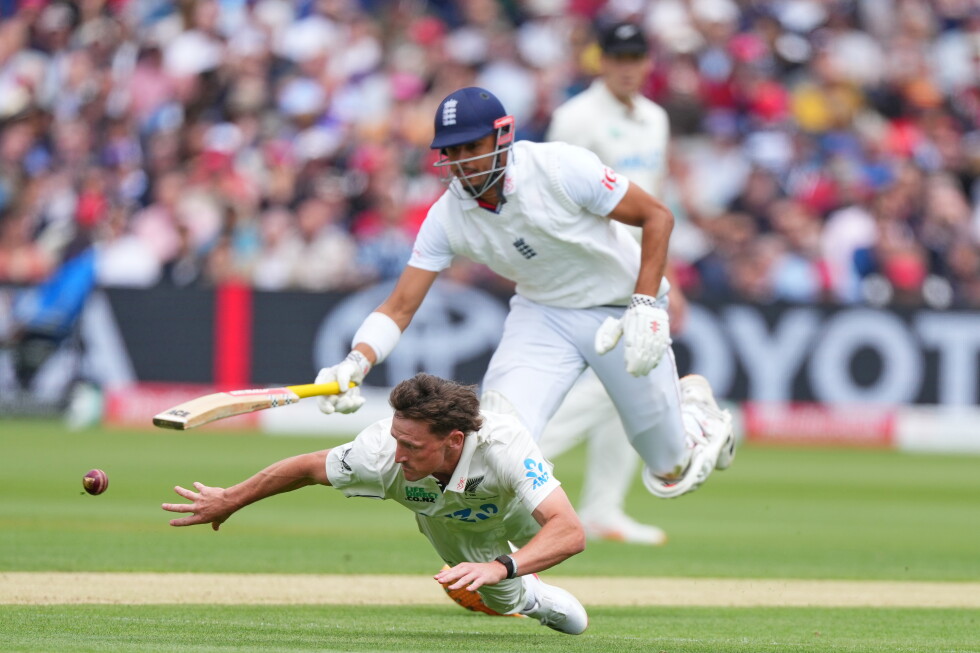
    New Zealand entered Friday’s play on precarious footing, resuming at 61-6 after England’s bowlers ripped through their top order on day one. It took less than an hour for the Black Caps to be bowled all out for 113, leaving England with a 27-run first innings lead despite England only managing 140 runs in their own first turn at the crease. The final four New Zealand batters put on a defiant 84 runs to push the team past 100 after they had slumped to 29-6 by Thursday evening.

    The standout batting performance from New Zealand came from pace bowler Kyle Jamieson, who hit a rapid 38 runs off just 29 deliveries, including three massive sixes off England’s fast bowlers. Jamieson’s knock came after he took a blow to the helmet from Josh Tongue, and the 2.07-meter all-rounder, New Zealand’s tallest international cricketer in history, fought back courageously before he was eventually the last man out. Jamieson had already claimed a five-wicket haul in England’s first innings, making his performance all the more impactful despite his team’s poor overall batting result.

    England finished the New Zealand innings with a dominant bowling display, led by Ollie Robinson, who claimed outstanding test-best figures of 5-39. This marked Robinson’s first five-wicket haul in international test cricket since 2022, and his first at Lord’s, a remarkable achievement on his welcome return to the test side. Tongue chipped in with 3 wickets for 40 runs, while fellow fast bowler Gus Atkinson took 2 wickets for just 9 runs to wrap up the New Zealand innings quickly.

    By lunch, England had extended their overall lead to 99, reaching 72-1 after 15 overs in their second innings. England’s opening batsmen Ben Duckett and newcomer Emilio Gay put on a valuable opening stand of 52 runs on a pitch that still offered significant assistance to fast bowlers, especially under overcast conditions that helped swing the ball. Stadium floodlights were switched on at midday due to the gloomy weather.

    Duckett survived multiple early scares: he was dropped on 12 by Rachin Ravindra off Jamieson’s bowling, a routine catch at short midwicket that the New Zealand fielder put down, and he also picked up a finger injury after being hit by a delivery. The left-handed opener hit consecutive boundaries off New Zealand pace man Matt Henry, who had been restricted by back spasms on Thursday, but he eventually fell for 33, edging a delivery from Will O’Rourke into the hands of the fielder at gully.

    Henry, despite his back issues, batted on Friday and passed a fitness test bowling between innings to take the ball for New Zealand. Emilio Gay, who scored 8 runs in England’s first innings, remained unbeaten on 24 at the lunch interval, with Jacob Bethell not out on 8 at the other end. Gay also hit Henry for back-to-back boundaries late in the opening session to cap a strong morning for the hosts.

  • Is there an AI stock market bubble, and is it ready to burst?

    Is there an AI stock market bubble, and is it ready to burst?

    Against a backdrop of simmering geopolitical tension in the Middle East, persistent inflationary pressures, and growing anxiety over soaring national debt levels, one might expect US financial markets to be facing sharp volatility or a downward correction. But instead, Wall Street has continued to smash through record after record in recent trading sessions – and nearly all of that momentum traces back to one dominant trend: the explosive global excitement around artificial intelligence.

    As geopolitical flashpoints like the ongoing conflict around Iran have stoked broader uncertainty across global commodity and security markets, and economists continue to sound the alarm over stubborn inflation and unsustainable debt burdens, the disconnect between underlying macroeconomic risks and the red-hot rally in AI-linked equities has sparked a fierce debate among investors and analysts. The core question on nearly every market observer’s mind is this: Has the hype around AI grown into a dangerous asset bubble that is primed to burst?

    BBC business correspondent Samira Hussain has delved into this market disconnect, unpacking the competing forces that have driven AI stocks to astronomical valuations even as major systemic risks linger on the horizon. For proponents of the AI boom, the technology represents a transformative paradigm shift that will reshape entire industries, drive productivity gains for decades to come, and justify the current elevated valuations of leading AI developers and chip manufacturers. But for skeptics, the breakneck speed of the rally has echoes of past market manias – from the dot-com bubble of the 1990s to more recent speculative frenzies – where unchecked hype outpaced actual tangible profits and sustainable business models, ultimately leading to a painful crash.

    This ongoing debate leaves investors facing a high-stakes dilemma: whether to buy into the AI boom and chase further gains, or step back to avoid the risk of a catastrophic bubble burst that could erase trillions in market value. As the rally continues to push markets to new heights, the question of how long this disconnect can last looms over every corner of global finance.