博客

  • Indonesian court finds 4 military members guilty of acid attack on activist, sends them to prison

    Indonesian court finds 4 military members guilty of acid attack on activist, sends them to prison

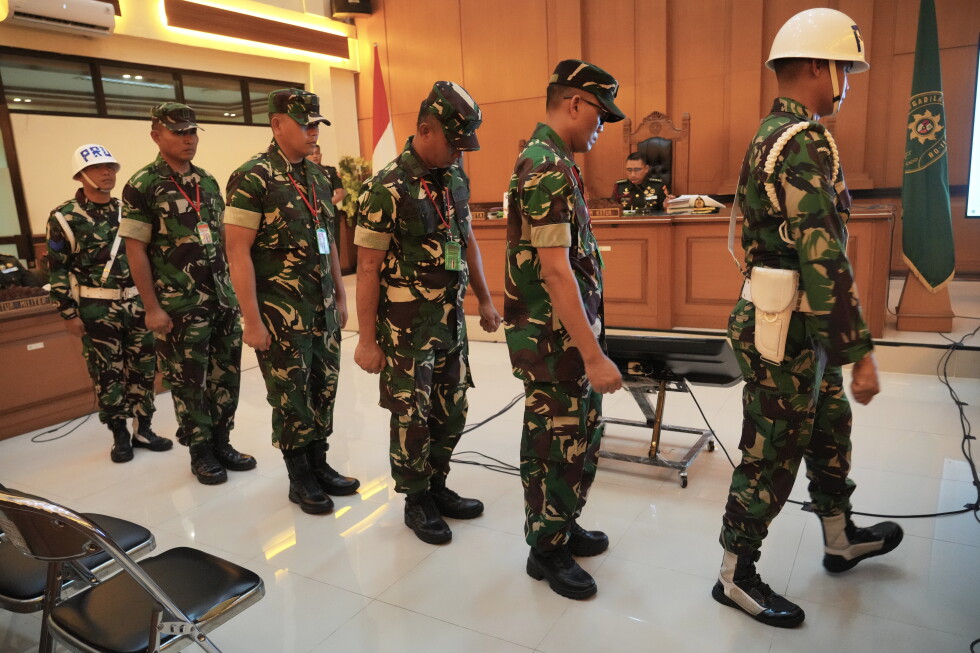
    JAKARTA, Indonesia – In a ruling that has reignited long-running debates over military accountability and impunity for attacks on human rights defenders in Indonesia, a military tribunal handed down guilty convictions and prison sentences of up to three years Wednesday to four active-duty intelligence service members for a brutal acid assault on a prominent local rights campaigner.

    The four convicted personnel include three Indonesian Navy Marines – Sgt. Edi Sudarko, First Lt. Budhi Hariyanto Widhi Cahyono, and Capt. Nandala Dwi Prasetya – and one Indonesian Air Force officer, Lt. Sami Lakka. All four were assigned to the intelligence division of the Indonesian National Armed Forces (TNI) at the time of the March attack, which targeted Andrie Yunus, a human rights lawyer and senior organizer with the Commission for the Disappeared and Victims of Violence, widely known by its Indonesian acronym KontraS.

    The assault unfolded as Yunus rode his motorcycle through central Jakarta, shortly after he finished recording a podcast discussing the TNI’s growing political influence over the Indonesian civilian government. Attackers threw concentrated hydrochloric acid directly at Yunus’s face, leaving the 27-year-old with severe full-thickness burns and permanent vision impairment in his right eye.

    The three-judge panel of the Jakarta Military Court handed down varied sentences across the four defendants: Sudarko, identified as the organizer who recruited the other co-conspirators, received the maximum three-year prison term, while Cahyono was sentenced to two and a half years behind bars. Prasetya was ordered to serve two years, and Lakka received an 18-month sentence. Both Sudarko and Cahyono, who was found to have proposed the acid attack plot, have been dishonorably discharged from the TNI.

    In reading the court’s verdict, presiding judge Fredy Isnartanto condemned the actions of the convicted soldiers, noting that as serving service members, they had violated their core oaths of duty by targeting the activist. “The defendants, as TNI service members, betrayed their duties by deliberately throwing acid at Andrie Yunus,” Isnartanto stated. “Their actions damaged the image of the Indonesian military and demonstrated clear arrogance. The attack inflicted lasting trauma and suffering on the victim and caused permanent damage to his eye.”

    The verdict was met with immediate and widespread criticism from domestic and international human rights groups, which argue the ruling deliberately ignored evidence of potential coordination and involvement by higher-ranking military officials, and that the lenient sentences fail to deliver meaningful justice for the attack.

    Amnesty International Indonesia’s regional office warned that the prosecutors’ lenient sentencing requests and the court’s narrow focus on only four low- to mid-ranking soldiers reinforced widespread fears that the entire proceedings amounted to a show trial designed to deflect scrutiny rather than uncover the full truth. The organization has called for a new investigation led by civilian judicial authorities to identify and prosecute any individuals who ordered or funded the attack.

    Indonesia’s independent National Commission on Human Rights (Komnas HAM), which launched its own parallel probe into the assault, concluded that the attack was a pre-planned, coordinated operation that likely involved far more individuals than the four defendants. The commission’s findings also documented multiple violations of Yunus’ fundamental rights, including his right to personal security, freedom from cruel and degrading treatment, and right to equal access to justice.

    Prosecutors in the military trial had claimed the four men acted entirely on their own initiative, with no superior orders. They argued the attack was motivated by personal anger over Yunus’ public criticism of the military, claiming the soldiers’ only goal was to “teach him a lesson” for his activism. Yunus, a leading voice for security sector reform and an end to military impunity in Indonesia, rose to prominence last year as a key organizer of widespread public protests opposing proposed amendments to Indonesia’s military law that would expand the armed forces’ already broad authority over civilian governance. Colleagues confirm Yunus has faced repeated threats and intimidation tied to this high-profile advocacy work.

    Per representatives from the Advocacy Team for Democracy (TAUD), the civil society group supporting Yunus through the legal process, the activist refused to testify at the trial, which opened in late April. Yunus cited two core reasons for his refusal: he is still undergoing ongoing medical recovery, including multiple skin graft surgeries to treat his burn injuries, and he has no confidence that the military court would deliver an impartial, fair ruling.

    Last week, a civilian court at the South Jakarta District Court partially granted a pretrial motion filed by Yunus, ordering Jakarta Police to resume their investigation into the attack to ensure full justice and protection for Yunus and other rights defenders. The civilian judges backed Komnas HAM’s longstanding call for expanded investigation to identify additional perpetrators, including any civilian co-conspirators. Both Komnas HAM and a broad coalition of Indonesian civil society groups estimate that more than a dozen individuals were involved in planning and carrying out the assault.

    The conviction has drawn new international attention to the persistent problem of unpunished attacks on human rights activists in Indonesia. The case echoes the decades-long unresolved assassination of Munir Said Thalib, the iconic founder of KontraS and leading critic of military corruption, who was poisoned with arsenic on a flight to Amsterdam in 2004. While a single low-ranking intelligence agent was convicted in that killing, evidence of higher-level involvement has never been fully investigated or prosecuted.

  • Stabbing suspect due in court after night of anti-immigrant protests in Northern Ireland

    Stabbing suspect due in court after night of anti-immigrant protests in Northern Ireland

    BELFAST, Northern Ireland — A single suspected stabbing has triggered days of chaotic, racially-charged unrest across Northern Ireland, after anti-immigration and far-right activists exploited a violent criminal attack to stoke community tension and mobilize violent street protests.

    Authorities confirmed Thursday that a 30-year-old Sudanese asylum seeker is scheduled to appear before a Belfast court to face charges of attempted murder. The suspect entered Northern Ireland from the neighboring Republic of Ireland in 2023, filed a successful asylum application, and was granted a five-year residency permit. The stabbing, which occurred Monday in north Belfast, left a 40-something male victim hospitalized with severe, life-altering injuries to his face, eyes and back. Graphic mobile phone footage of the attack spread rapidly across social media platforms in the hours after it occurred, giving anti-immigration groups immediate ammunition to frame the incident as a failure of the region’s immigration policy.

    Police have formally ruled out any connection to terrorism and confirmed they are not searching for any additional suspects in connection with the stabbing. Even so, calls for public action circulated online among far-right circles within 24 hours, drawing crowds to the streets Tuesday night.

    Masked rioters targeted residential properties believed to house immigrant families, setting multiple homes ablaze. Local garbage bins and a public Belfast bus were burned, and officers attempting to restore order were pelted with bricks and other projectiles. Firefighters were able to extract multiple trapped residents from the burning buildings before the blazes spread, though no fatalities linked to the unrest have been reported to date.

    The violence drew unified condemnation from all levels of government across the United Kingdom and Northern Ireland’s cross-community power-sharing administration. First Minister Michelle O’Neill, leader of Irish nationalist party Sinn Fein, labeled the unrest “thuggery” in a public statement Wednesday. “Groups of masked men burning families out of their homes is nothing less than disgusting cowardice,” O’Neill said.

    Her counterpart, Deputy First Minister Emma Little-Pengelly of the pro-British Democratic Unionist Party, echoed the criticism, noting that “taking frustration at the evil actions of a person out on those who had no part in it is utterly wrong.” UK Prime Minister Keir Starmer called the original stabbing “sickening” and added that the government would not “tolerate abhorrent scenes of violence like this on our streets.”

    Northern Ireland Justice Minister Naomi Long called out external far-right agitators for exploiting the incident for political gain, noting many of the online organizers “yesterday would have struggled to find Belfast on a map.” Long told the BBC that the targeting of immigrant families amounted to overt racism. “If you’re driving people from their homes based on nothing but the color of your skin, you can’t dress that up any other way, it’s racism, and those bad faith actors need to take a step back,” she said.

    The unrest is the second high-profile incident in the United Kingdom in recent weeks where a violent criminal attack has been weaponized by anti-immigration figures, including high-profile American political actors. Last week, the conviction of a murderer in the December stabbing death of a university student in Southampton, England, was seized on by activists and U.S. Vice President JD Vance, who framed the killing as evidence of dangers tied to open immigration.

    The victim, 19-year-old Henry Nowak, was stabbed to death with a Sikh dagger by Vickrum Digwa, who falsely told responding officers that Nowak had assaulted him in a racist attack. Police initially misidentified Nowak as the aggressor before recognizing his fatal injury and attempting life-saving resuscitation. Digwa was convicted of murder and sentenced to life in prison with a minimum 21-year term before he is eligible for parole. A protest held over Nowak’s death later turned violent, with participants attacking police with chairs and rocks, and multiple attendees have been charged with violent disorder.

  • Firms charged with manslaughter over deadly Hong Kong fire

    Firms charged with manslaughter over deadly Hong Kong fire

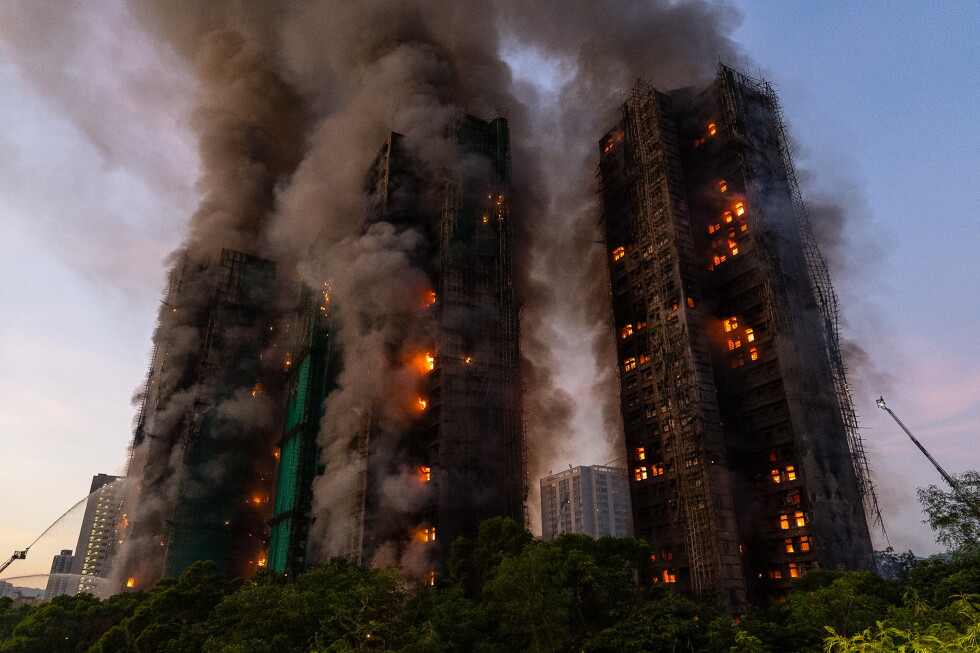
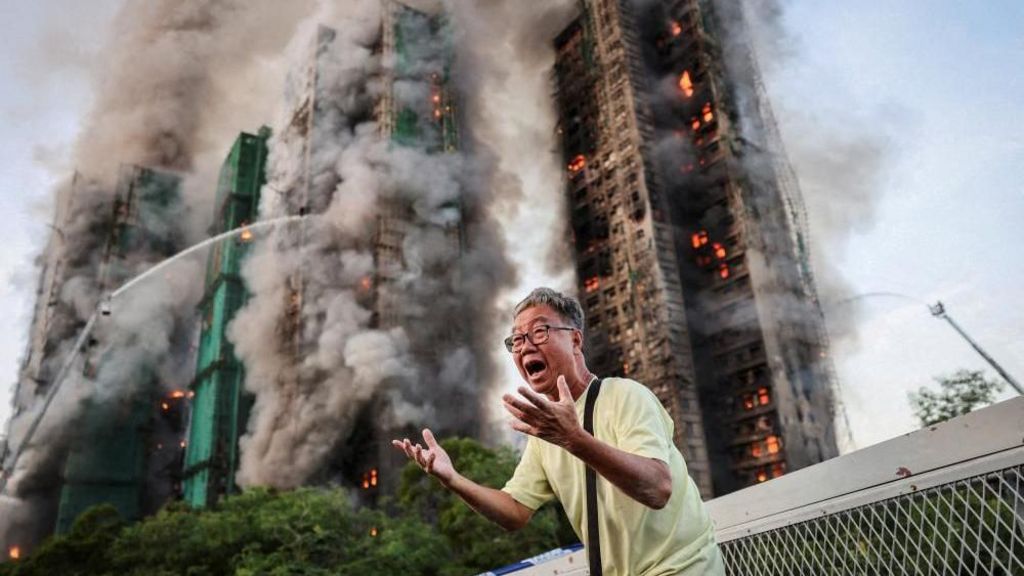
    A devastating blaze that ripped through Hong Kong’s Wang Fuk Court residential complex last November remains the city’s deadliest fire in over seven decades, having claimed 168 lives. Months of investigative work have now culminated in formal charges against two companies and seven individuals connected to the fatal incident.

    Authorities confirmed Tuesday that the accused face a total of 25 criminal charges, ranging from manslaughter and conspiracy to defraud to attempting to pervert the course of public justice and tax evasion. The charged entities include a project consultancy firm and the main contractor that led the building’s renovation work, while the seven individuals encompass directors from both companies and a registered inspector employed by the consultancy. As of the latest update, law enforcement has not released the public identities of the companies and people facing charges.

    The investigation into the tragedy unfolded steadily in the months following the fire. Within days of the blaze breaking out, Hong Kong’s Independent Commission Against Corruption (ICAC), the city’s anti-graft watchdog, took two directors from structural engineering consultancy Will Power Architects into custody. By March 2025, local police had arrested 38 people on suspicion of manslaughter and fraud-related offenses. The ICAC also conducted a separate arrest round-up, detaining 23 additional people including independent consultants, contractors, and sitting members of Wang Fuk Court’s owners’ corporation. Prior industry reporting has previously identified Prestige Construction and Engineering Company as the official registered contractor for the pre-fire renovation project.

    The tragedy has prompted widespread calls for tighter regulation of residential building renovation works across Hong Kong, with public safety advocates pushing for more rigorous inspection protocols and greater transparency in contractor licensing to prevent similar disasters in the future.

  • China car exports jump 73% in May as high fuel prices raise interest in EVs

    China car exports jump 73% in May as high fuel prices raise interest in EVs

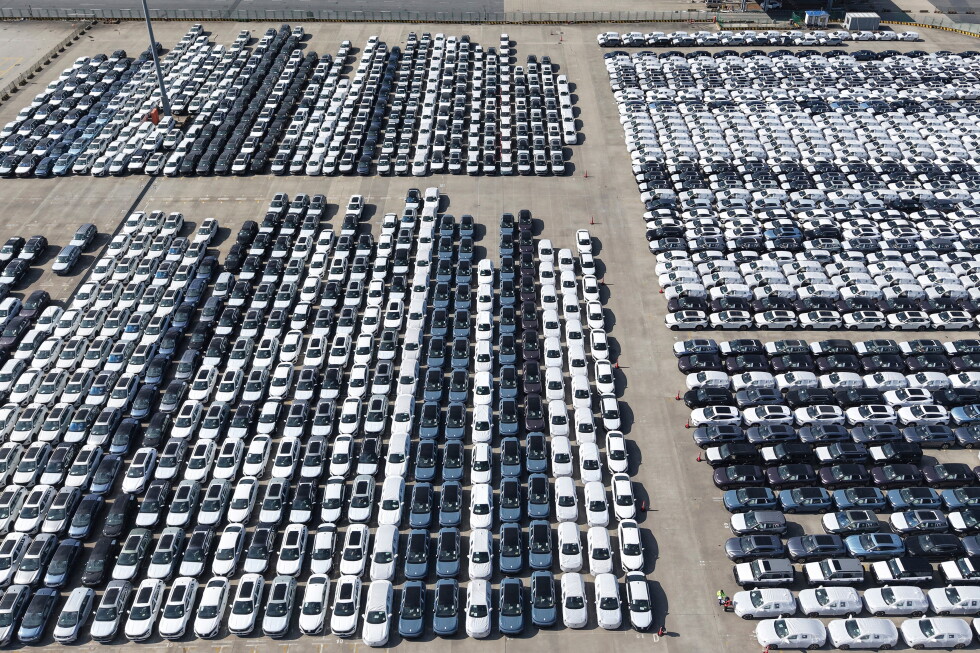
    New data released by China’s leading automotive industry body confirms that the country’s passenger vehicle exports posted explosive year-on-year growth in May, jumping 73% to hit roughly 809,000 units. Analysts point to surging global demand for electric vehicles (EVs), triggered in part by elevated gasoline and diesel prices tied to geopolitical instability in Iran, as the core catalyst behind the unexpected strong performance.

    The China Association of Automobile Manufacturers (CAAM) revealed Wednesday that combined exports of pure battery EVs and plug-in hybrid models more than doubled from May 2025, reaching approximately 435,000 units. This figure accounts for more than half of China’s total passenger car exports for the month, and represents a modest uptick from April’s total export volume of 796,000 passenger vehicles.

    The export boom comes as major domestic Chinese automakers, including industry leader BYD, have accelerated their global expansion strategies, targeting high-growth markets across Latin America, Southeast Asia, and the European Union. The push overseas comes at a time when domestic demand for new vehicles in China remains under persistent pressure, following cuts to national government incentives for consumers transitioning from gasoline-powered cars to EVs.

    CAAM data shows domestic passenger car sales fell 23.4% year-on-year in May to 1.44 million units, marking the seventh consecutive month of annual declines. Sales of traditional internal combustion engine vehicles, which run on gasoline and diesel, plummeted nearly 42% from a year earlier as EVs continue to capture growing market share across China.

    Industry analysts broadly expect China’s passenger car export growth to maintain strong momentum through 2026. UBS analysts project full-year 2026 passenger car exports will rise around 40% from 2025, with EV exports alone forecast to climb by as much as 80%. Paul Gong, head of UBS’s China automotive industry research, noted that persistently high global crude oil prices have directly translated to greater consumer interest in electric models across key export markets.

    “China’s car exports outperformed market expectations through the first five months of this year, while domestic sales have lagged behind consensus forecasts,” Gong explained.
    Claire Yuan, an auto analyst at S&P Global Ratings, echoed this optimistic outlook for exports, projecting full-year 2026 growth of between 30% and 50% year-on-year.

    Shifting global auto market trends back up this forecast. The International Energy Agency (IEA), in its annual global EV outlook released in May, reported that one out of every four new cars sold worldwide in 2025 was electric. Despite a slow start to the year for global auto sales, the IEA expects that share to grow substantially in 2026, with EV sales projected to hit 23 million units this year, accounting for nearly 30% of all new car sales globally.

    China, which already holds the title of the world’s largest EV producer, supplies the majority of all electric vehicles sold across global markets. BYD, the country’s top EV maker, notched more than 160,000 overseas sales in May alone, marking an 80% increase from the same month last year. The Shenzhen-based automaker, which overtook Tesla in 2025 to become the world’s top-selling EV manufacturer, has set an ambitious full-year overseas sales target of 1.5 million units for 2026 — a more than 40% jump from 2025’s total of 1.05 million units.

    For Chinese automakers, growing overseas sales also offer a critical path to improving profit margins. A fierce year-long price war for market share within China’s domestic auto market has significantly eroded profitability for most brands across the sector. While domestic demand remains soft for now, Yuan noted that a recovery may take hold in the second half of 2026, as consumers bring forward purchases following the launch of new vehicle lineups by major manufacturers.

  • NDIS insider charged over alleged $5m plot to defraud disability scheme

    NDIS insider charged over alleged $5m plot to defraud disability scheme

    A 48-year-old Adelaide-based employee of Australia’s National Disability Insurance Agency (NDIA) has been hit with multiple criminal charges over her alleged role in a $5 million fraud plot targeting the National Disability Insurance Scheme (NDIS), the federal government’s flagship support program for people living with disability. The scheme was first flagged to authorities in March this year, when internal systems detected the employee’s unauthorized access to protected personal records held by the agency. Law enforcement and investigative bodies have since laid out the full scope of the alleged misconduct.

    According to charging documents from the Australian Federal Police (AFP), the woman accessed more than 40 protected NDIS participant records without permission both during and outside of her scheduled working hours. Investigators allege she used that illicit access to file false claims against the NDIS plans of her own family members, who are registered NDIS participants. The claims were submitted for supports and services that were never actually delivered to the participants, the AFP says. To date, the accused is alleged to have received more than $53,000 in improper payments through a local NDIS service provider, as part of the broader $5 million coordinated fraud scheme.

    Beyond the fraudulent claims, investigators say the woman also violated conflict of interest rules: she failed to disclose to the NDIA that she had an ownership or operational connection to a local NDIS-registered business, and also did not declare that one of her relatives was employed at that same business. The undeclared connection created the opportunity for the alleged fraud, authorities say.

    On Thursday, a multi-agency enforcement team comprising AFP officers, NDIA internal investigators, South Australia Police, and Services Australia personnel carried out coordinated raids at three locations: the woman’s private residence in Blakeview, a second residential property in Mawson Lakes, and a business premises in the Adelaide suburb of Prospect. Multiple electronic devices were seized across all three sites, and investigators are currently conducting forensic analysis on the seized hardware to build out their case. Police have confirmed that additional charges are expected as the investigation progresses, with probing into potential co-conspirators ongoing.

    The case was investigated by the Australian Government’s Fraud Fusion Taskforce (FFT), a specialized multi-agency unit set up to target large-scale fraud against federal government payment programs. AFP Detective Inspector Aidan Milner emphasized that the collaborative structure of the taskforce was critical to uncovering and halting the alleged exploitation of a program designed to support some of Australia’s most vulnerable community members.

    A spokesperson for the NDIA reiterated that the agency takes all allegations of internal misconduct and fraud extremely seriously. “Anyone who abuses their position for personal gain will be caught and held to account,” the spokesperson said. “The safety of participants and security of their personal information are absolute priorities. This arrest shows we act decisively when our systems detect alleged fraudulent activity and we pursue every lead with our Fraud Fusion Taskforce partners.”

    Louise Glanville, NDIS Quality and Safeguards Commissioner, added that the Australian community has zero tolerance for fraud against the NDIS, a program that relies on public trust to deliver critical support to hundreds of thousands of participants across the country.

  • Iran attacks US bases in Jordan and Bahrain

    Iran attacks US bases in Jordan and Bahrain

    Escalating tensions across the Middle East took a sharp turn for the worse on Wednesday, as Iran launched retaliatory missile and aerial strikes against United States military installations located in Jordan and Bahrain. The attack came in direct response to recent U.S. retaliatory strikes on Iranian military infrastructure near the Strait of Hormuz, throwing a fragile April ceasefire into serious jeopardy and derailing previously optimistic peace talks billed as entering their final stages.

    The cross-border exchanges mark the most serious breakdown in de-escalation efforts since the broader regional conflict began three months ago, when joint U.S.-Israeli strikes on Iran launched the war that upended regional stability and roiled global energy markets. According to a statement released by Iran’s Revolutionary Guards and carried by the country’s official IRNA news agency, Iranian forces deployed long-range missiles to hit and destroy four key targets at U.S. facilities in Jordan, including an F-35 fighter jet staging area at an air base and a U.S. command center in Al-Azraq.

    Jordan’s military quickly countered the assault, confirming it had intercepted and shot down five incoming Iranian missiles, with no reported casualties or material damage to Jordanian assets. Across the Gulf in Bahrain, defense forces intercepted and destroyed multiple incoming Iranian aerial threats targeting another U.S. base stationed on its territory. An Agence France-Presse correspondent based in Bahrain’s capital Manama reported hearing multiple loud explosions in the early hours of Wednesday morning, consistent with the interception operations. Kuwaiti military authorities also announced their air defense systems were engaging unidentified hostile aerial targets Wednesday, marking the second recent incident of Iranian activity near Kuwaiti territory.

    The latest cycle of escalation was triggered by the downing of a U.S. Apache attack helicopter by Iranian forces earlier this week. Following the incident, the U.S. military carried out a retaliatory strike on Iranian positions near the Strait of Hormuz, with U.S. Central Command (CENTCOM) confirming the operation targeted Iranian air defense batteries, ground control stations and surveillance radar sites using precision munitions launched from U.S. Air Force and Navy fighter jets. Ahead of Iran’s retaliatory strikes, Iranian Foreign Minister Abbas Araghchi had issued a clear warning of retaliation in a post on X, writing that the U.S. had chosen to test Iran’s resolve, and that Iran’s powerful armed forces would not leave any attack or threat unanswered.

    Iran’s retaliatory strikes throw into question recent optimistic claims from U.S. President Donald Trump, who just hours before the escalation told reporters that negotiations to end the three-month-long conflict were in their “final throes”, and that a final peace deal would be reached within two to three days. After the helicopter was downed on Monday, Trump reiterated his pledge of a strong response in an interview with ABC News, saying the U.S. reaction would be “very strong, very powerful, and that’s what this one is.”

    The already shaky ceasefire had already faced a major test over the weekend, when Iran and Israel resumed a brief round of hostilities before agreeing to a renewed halt. One major sticking point in ongoing peace negotiations has been Iran’s demand that any final deal include a formal ceasefire in Lebanon, which was drawn into the conflict after Iran-backed Hezbollah militants fired rockets into Israeli territory on March 2. Israel has responded with a sustained campaign of airstrikes and a limited ground invasion into southern Lebanon that has killed more than 3,600 people to date. Despite the nominal regional truce, cross-border fire between Israel and Hezbollah has continued almost unabated.

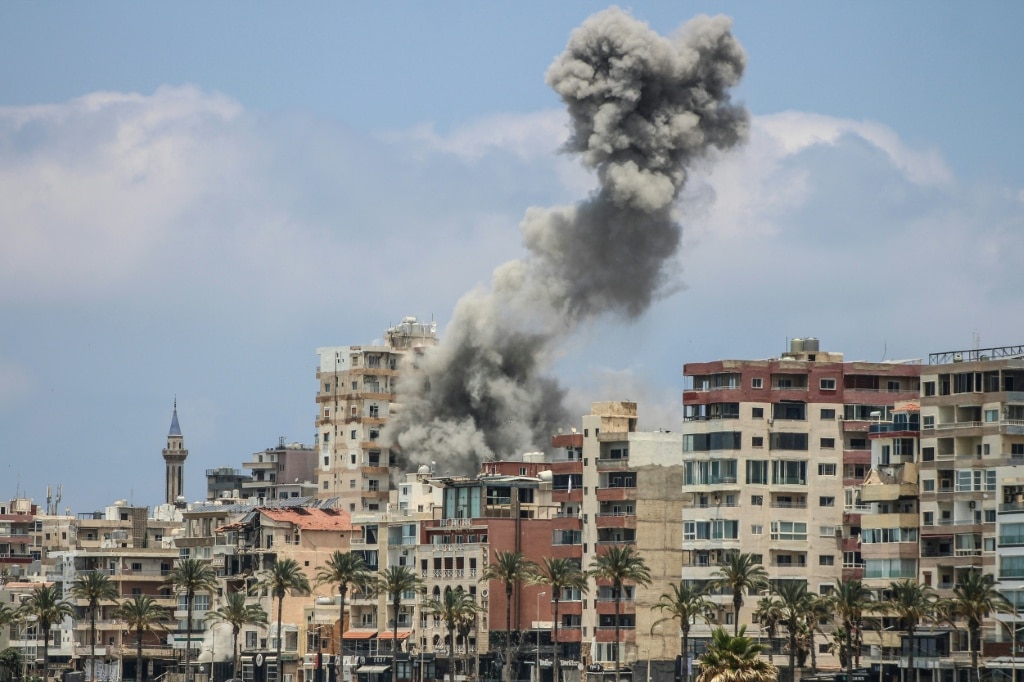
    On Tuesday, Israeli airstrikes on the southern Lebanese city of Tyre killed 11 people, according to Lebanese officials. The Israeli military also issued an evacuation order for the entire city, prompting a mass exodus of residents northward. AFP correspondents on the ground reported heavy traffic of residents fleeing Tyre, including from the city’s historic Christian quarter, while displaced residents began arriving in the northern coastal city of Sidon with personal belongings strapped to the roofs of their vehicles.

    The rapid collapse of de-escalation efforts has also overshadowed ongoing diplomatic attempts to reopen the Strait of Hormuz, a critical global chokepoint for around a fifth of the world’s daily oil supplies that Iran has blockaded since the start of the war. Global crude oil prices rose 1% on Wednesday as hopes of an imminent peace deal faded, a sharp reversal from the previous day’s 5% price drop that came amid growing optimism a deal would be reached. Araghchi reiterated his warning to foreign forces this week, saying that any foreign military presence near Iranian territory around the strait faces constant risk of being caught in crossfire, and that the only solution for foreign forces is to withdraw from the area.

    The downed Apache helicopter marks the second crewed U.S. military aircraft confirmed shot down by Iran since the conflict began, following the loss of an F-15 fighter jet in April. CENTCOM confirmed that both crew members of the downed helicopter were rescued shortly after it went down off the coast of Oman.

  • Somali World Cup referee denied entry to US arrives home to hero’s welcome

    Somali World Cup referee denied entry to US arrives home to hero’s welcome

    MOGADISHU, Somalia — Hundreds of flag-waving Somali supporters and senior government officials packed Mogadishu’s international airport on Wednesday to greet top referee Omar Artan, who returned home after being barred entry to the United States and removed from the 2026 FIFA World Cup officiating roster. Artan, a trailblazer who was set to become the first Somali referee ever to officiate at a men’s World Cup, was turned away at Miami International Airport Saturday over undisclosed “vetting concerns,” per an official statement from U.S. Customs and Border Protection.

  • Hong Kong charges 7 people and 2 firms over deadly fire that killed 168

    Hong Kong charges 7 people and 2 firms over deadly fire that killed 168

    HONG KONG – Nearly eight months after Hong Kong’s deadliest fire in recent decades claimed 168 lives, local authorities have brought formal charges against seven individuals and two companies in connection with the November 2025 tragedy that ripped through a crowded suburban residential complex.

    The catastrophic blaze broke out on November 26, 2025, rapidly spreading across seven apartment buildings at Wang Fuk Court, a tight-knit residential community in Tai Po that was home to thousands of people. For months after the fire reduced the complex to ashes, surviving former residents and bereaved family members of the victims have waited anxiously for accountability and answers about what led to the devastating loss of life.

    In an official statement released Wednesday, law enforcement and anti-graft officials confirmed that the seven suspects and two corporate entities face a total of 25 criminal charges. Beyond the core charges of manslaughter and conspiracy, the allegations also include money laundering, intentional efforts to undermine public judicial proceedings, and tax evasion.

    All seven charged individuals held distinct roles in a large-scale renovation project underway at Wang Fuk Court at the time of the fire. The two corporate defendants are the main contractor leading the renovation work and the project’s appointed consultancy firm.

    The first court hearing for the cases was scheduled to open Wednesday afternoon. This latest development follows a wave of arrests earlier this year: back in March, Hong Kong police took 38 individuals into custody on charges tied to the disaster, ranging from manslaughter to fraud, with nine of those suspects already formally charged. Separately, the city’s Independent Commission Against Corruption also arrested 23 people that same month on suspicion of bribery and conspiracy to defraud.

    An independent public inquiry into the root causes of the fire is still ongoing. Legal counsel for the inquiry previously shared that a preliminary assessment found nearly every fire safety system installed in the complex failed to operate during the blaze, with the breakdown traced entirely to preventable human error.

  • ‘Escalating tensions’: ASX, oil prices jump on Middle East fears

    ‘Escalating tensions’: ASX, oil prices jump on Middle East fears

    Against a backdrop of rising military friction between the United States and Iran that has sent global risk assets swinging sharply, Australia’s domestic sharemarket has closed out a surprisingly positive trading session on Wednesday, defying widespread investor anxiety over potential geopolitical fallout.

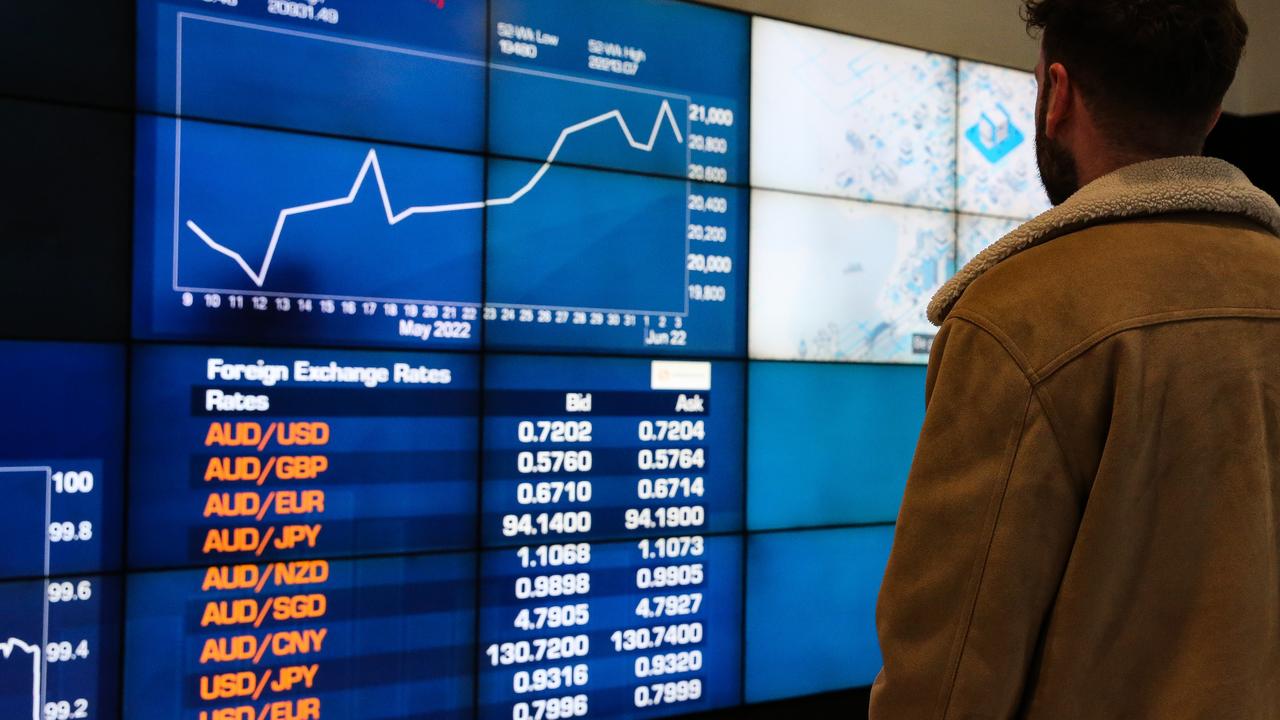
    The benchmark ASX 200 index gained 49.10 points, or 0.57%, to settle at 8653.30, while the broader All Ordinaries index added 32.20 points, equivalent to a 0.36% rise, to close at 8857. The Australian dollar edged slightly lower, dipping 0.06% to trade at 70.20 U.S. cents by market close.

    Out of the 11 tracked market sectors, eight finished the day in positive territory, with consumer staples and consumer discretionary stocks leading the upward charge. The only notable drags on overall market gains were the technology and materials sectors, which both recorded an average 2% drop across the board.

    Domestic supermarket giants Woolworths and Coles continued their strong streak of performance on Wednesday, capping off a week of double-digit near gains. By closing bell, Woolworths jumped 3.15% to hit $37.63 per share, while Coles rallied 4.95% to reach $23.73. Drinks and hospitality affiliate Endeavour Group also followed the upward trend, surging 5.39% to settle at $3.13. Over the past five trading days, Woolworths’ shares alone have rallied nearly 9.58%, putting the retail giant among the top performing large-cap stocks on the exchange this week.

    Other major consumer discretionary firms also posted solid gains: Wesfarmers, Australia’s largest retail conglomerate, climbed 4.25% to $83.39, electronics retailer JB Hi-Fi gained 3.50% to close at $76.02, and home goods chain Harvey Norman jumped 4.39% to $4.76.

    On the losing side, technology stocks bore the brunt of investor risk aversion. Cloud accounting firm Xero fell 2.04% to $76.82, network infrastructure provider Megaport slumped 5.20% to $18.05, and data center operator Next DC closed down 4.12% at $15.14.

    Commodity markets moved sharply in response to escalating Middle East tensions: Brent Crude oil prices rose 2% to $93 U.S. per barrel (equivalent to $132 Australian), a move driven by fears of disrupted supply through the Strait of Hormuz, a critical global energy chokepoint. Contrary to typical safe-haven trends, spot gold prices fell to $4200 U.S. an ounce, as the precious metal has faced sustained downward pressure since the outbreak of the latest Middle East conflict. Persistent high inflation and expectations of further U.S. interest rate hikes have made yield-bearing assets like government bonds and savings accounts more attractive to risk-averse investors compared to non-yielding gold.

    The escalation of hostilities came after the U.S. carried out strikes on Iranian sites near the Strait of Hormuz, a move U.S. President Donald Trump confirmed was retaliation for Iran shooting down a U.S. Apache helicopter in Omani airspace. Iran responded with retaliatory strikes targeting locations in Kuwait, Bahrain, and Jordan, raising fears of a broader regional conflict.

    Marc Jocum, senior product and investment strategist at Global X, noted that conflicting risk pressures have defined market activity this week. “Escalating tensions in the Middle East following U.S. military air strikes pushed oil prices higher and reminded investors that geopolitics remains an ever-present wildcard,” he explained. “At the same time, markets are nervously awaiting tonight’s U.S. inflation data following last week’s stronger-than-expected jobs report, with concerns that sticky inflation could keep the Federal Reserve in tightening mode for longer.”

    In individual company news, several high-profile stocks made sharp moves on Wednesday. Sigma Healthcare, the parent company of Australian pharmacy chain Chemist Warehouse, slumped 5.48% to $2.76 after confirming it had entered early exploratory discussions for a potential takeover of U.K.-based health and beauty retailer Boots. The company emphasized that talks remain preliminary, and there is no guarantee the transaction will be finalized.

    Mining firm Northern Star Resources saw its shares fall 3.54% to $18.54, after the company released an open letter to shareholders confirming it had rejected a sale proposal from U.S. hedge fund Elliott Investment Management, which holds a 3-4% stake in the miner. IGO Limited also dropped 6.01% to $8.44, after a fire broke out Tuesday at the Chemical Grade Plant 3 facility at its Greenbushes lithium operation, one of the world’s largest hard-rock lithium mines.

    There were also bright spots in individual trading: newly listed defence technology firm Boresight surged 67.50% on its market debut, after raising $8 million through an initial public offering priced at 20 cents per share. The stock closed at 33.5 cents by the end of trading. Insurance firm Steadfast Group also soared after receiving a public takeover bid priced at $6 per share, a 51% premium to its previous closing price. The stock settled at $5.38 by market close on Wednesday.

  • Aftershocks complicate Philippine recovery from quake that killed 45 and displaced thousands

    Aftershocks complicate Philippine recovery from quake that killed 45 and displaced thousands

    Three days after a catastrophic 7.8-magnitude earthquake tore through southern Mindanao in the Philippines, rescue teams searching for trapped victims were forced into a frantic emergency evacuation Wednesday when a powerful aftershock shook a partially collapsed grocery building in General Santos, bringing more crumbling concrete debris down on the site.

    The chaotic scene, captured by an Associated Press video journalist, unfolded as a safety officer blew a warning whistle and rescuers shouted to alert roughly 30 firefighters and coast guard personnel, who scrambled out of the leaning three-story structure to safety before more of the building gave way. The grocery lost its two upper floors in the initial quake on Monday, and crews have been searching for one remaining missing employee trapped in the rubble.

    “It was a strong aftershock and an alarm was immediately sounded so those inside and under the damaged building can run out for a headcount,” explained Ressa Mia Tactaquin-Betoya, a spokesperson for the firefighting contingent leading the search. “It was scary because we don’t want our rescuers to be harmed so the area must be secured before they can go back in,” she told the AP.

    General Santos, a bustling coastal commercial hub known nationally as the Philippines’ tuna capital, has borne the brunt of the destruction from the quake, which has already claimed at least 45 lives and left 17 others unaccounted for across the affected region. The disaster has displaced more than 25,000 people, according to local officials, with thousands hunkered down in 45 state-run emergency shelters, too shaken by the event to return to their damaged or destroyed homes.

    Data from the Philippines Institute of Volcanology and Seismology (PHIVOLCS) shows more than 2,100 aftershocks have rattled the region since the main quake, several of which have registered as high as magnitude 6.4 — strong enough to inflict additional casualties and worsen existing damage to already unstable structures.

    Monday’s temblor ranks among the most powerful seismic events to strike the Philippines in 50 years. Official damage assessments confirm at least 630 people were injured, more than 3,100 residential homes were damaged or destroyed, along with 29 public roads, 11 bridges, and more than 100 government facilities.

    General Santos’ international airport, a key transport hub for the region, sustained significant structural damage that has forced indefinite closure to all commercial traffic, with only government and military flights carrying emergency aid and response personnel allowed to operate, said Civil Aviation Authority of the Philippines spokesperson Eric Apolonio.

    The quake struck on the first day of national classes after a two-month summer break, adding an extra layer of tragedy to the disaster. Around 6,000 public school buildings across quake-hit provinces now require full structural safety assessments before classes can resume, and many of those injured in the quake were young students who had gathered for traditional morning flag-raising ceremonies.

    Most fatalities stemmed from falling debris in collapsed structures and landslides across General Santos and the adjacent provinces of Sarangani, South Cotabato, and Davao Occidental. One person was swept out to sea by post-quake tsunami surges that reached up to 1.4 meters above normal tide levels across the southern Philippines. Smaller tsunami waves were recorded as far afield as Indonesia, Palau, and southern Japan before all tsunami warnings were lifted.

    In the immediate minutes after the quake, seven swimmers along the General Santos coastline were pulled out to sea by unusually strong currents. The Philippine coast guard confirmed three have been rescued, one swam back to shore independently, one drowned, and two remain missing. PHIVOLCS chief Teresito Bacolcol confirmed the anomalous currents were almost certainly triggered by the seismic shift.

    Geologists confirm the quake was caused by tectonic movement along the Cotabato Trench, an undersea fault line that generated an even larger 8.1-magnitude quake in August 1976. That historic event triggered massive tsunami waves that killed an estimated 8,000 people across the region.

    The Philippines sits along the Pacific “Ring of Fire”, a global network of active seismic faults that circles the Pacific basin, making it one of the most disaster-prone nations on Earth, regularly battered by both destructive earthquakes and volcanic eruptions.