博客

  • Ref Artan receives hero’s welcome after World Cup exclusion

    Ref Artan receives hero’s welcome after World Cup exclusion

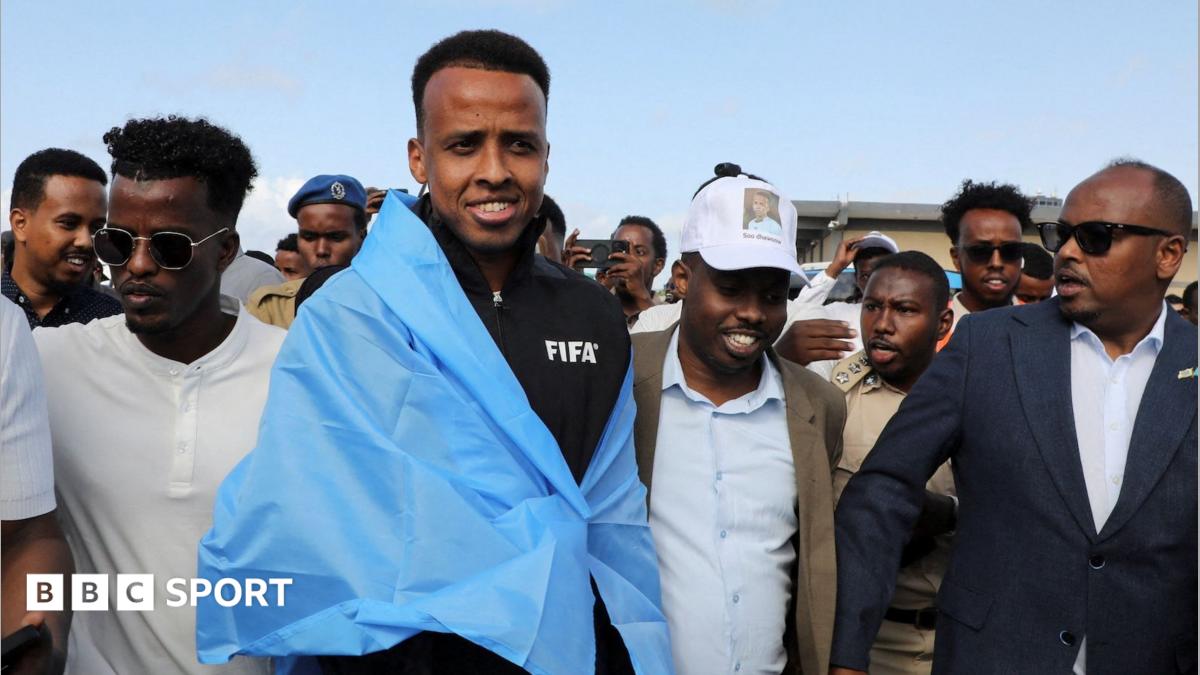
    In a moment that blended national pride with unfulfilled dream, Somali referee Omar Artan has returned home to a rapturous, hero’s welcome in Mogadishu, just days after a sudden U.S. entry denial blocked his path to becoming the first Somali official to officiate at a FIFA World Cup finals. The 34-year-old, who earned the title of Africa’s Referee of the Year in 2025, was en route to the 2026 World Cup when he was turned away at Miami International Airport on Monday — a shocking outcome given he held both a valid diplomatic passport and an approved single-entry U.S. visa.

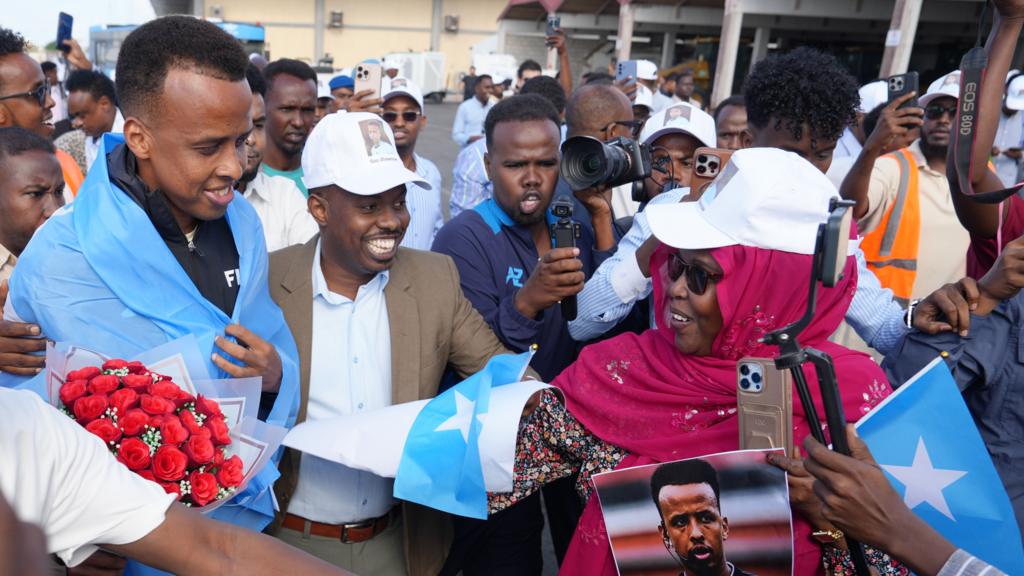
    Upon his arrival at Aden Adde International Airport in the Somali capital Wednesday, Artan was met by a cheering crowd that included senior Somali government officials, leadership from the Somali Football Federation, fellow regional referees, and hundreds of local residents eager to honor his trailblazing achievement even in the wake of disappointment. Addressing the gathered crowd, Artan expressed profound gratitude to his compatriots and his homeland, saying “I want to thank my people and my country from the bottom of my heart for this incredible show of support.”

    Despite the crushing setback of his World Cup exclusion, Artan has not stepped back from his career ambitions. The referee has publicly reaffirmed his commitment to reaching the global tournament, vowing that he will achieve his long-held goal of officiating at the 2030 FIFA World Cup, turning this unexpected disappointment into fuel for future progress for himself and for Somali football on the global stage.

  • Pakistan launches deadly air strikes in Afghanistan, reigniting tensions

    Pakistan launches deadly air strikes in Afghanistan, reigniting tensions

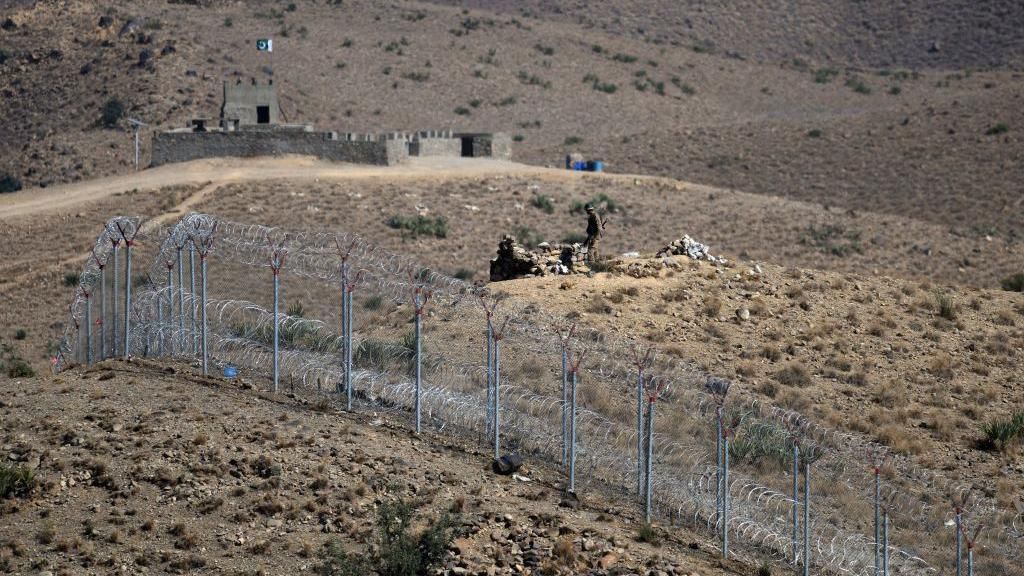
    After months of tentative calm along one of South Asia’s most volatile frontiers, Pakistan has reignited cross-border hostilities with a series of deadly air strikes targeting militant positions inside Afghanistan, leaving conflicting casualty reports and threatening a fresh escalation of tensions between the two neighboring nations. Pakistan’s Information Minister Attaullah Tarar confirmed Wednesday that the operation, framed as “calibrated strikes,” successfully destroyed four pre-selected militant sites along the shared border, with official Pakistani counts putting the militant death toll at 26. The casualty narrative is sharply contested by Afghanistan’s ruling Taliban government, however, which says the strikes hit civilian population centers across three eastern Afghan provinces — Kunar, Khost, and Paktika — leaving 13 civilians dead, including 11 children, one woman, and one elderly man. This new flare-up marks the first major escalation of violence between Pakistan and Afghanistan since February, when large-scale border clashes claimed hundreds of lives on both sides. The outbreak of fighting on Wednesday breaks a ceasefire agreement the two countries reached last October, which had been reached to end weeks of deadly back-and-forth clashes that had already destabilized the already restive border region. Tarar emphasized that the cross-border strikes were a direct response to a wave of recent terrorist attacks targeting Pakistani territory, framing the operation as a necessary defensive measure. He added that all strikes were focused exclusively on confirmed militant hideouts, safe havens, a weapons training facility, and an ammunition cache located inside Afghanistan. “Pakistan has always strived for maintaining peace and stability in the region, but at the same time the safety and security of our citizens remains our top priority,” Tarar said in his official statement. Long-standing mutual distrust underpins the latest confrontation: Islamabad has for years repeatedly accused Kabul of allowing militant groups that stage attacks inside Pakistan to operate freely from Afghan soil, a charge the Taliban administration has consistently rejected. In the wake of Wednesday’s strikes, Taliban spokesman Zabihullah Mujahid reaffirmed the government’s position that Afghanistan never permits any armed group to use its territory to launch attacks against neighboring countries, contradicting Pakistan’s core justification for the operation. Since the heavy fighting in February, sporadic low-level clashes have continued to disrupt border communities, and the international community has repeatedly called on both governments to exercise restraint and return to diplomatic negotiations to resolve their long-standing border disputes. Global leaders have repeatedly warned that sustained hostilities between Pakistan and Afghanistan risk triggering a broader regional crisis that could destabilize already fragile security across South Asia.

  • China touts Xinjiang at trade forum, spotlighting a region once marked by detention centers

    China touts Xinjiang at trade forum, spotlighting a region once marked by detention centers

    ALTAY, China – Against a backdrop of long-standing international controversy over human rights violations against ethnic minority communities, China has convened a high-profile international gathering in its northwestern Xinjiang Uyghur Autonomous Region aimed at showcasing the country’s economic development push for the strategically located territory.

    The one-day International Conference for Trans-Altai Subregional Cooperation, held Wednesday in the border city of Altay, brought together senior officials from Kazakhstan, Mongolia, Russia and multiple other regional countries. Attendees are scheduled to hold working sessions focused on expanding cross-border trade and building out new economic partnership frameworks for the resource-rich, landlocked Trans-Altai zone.

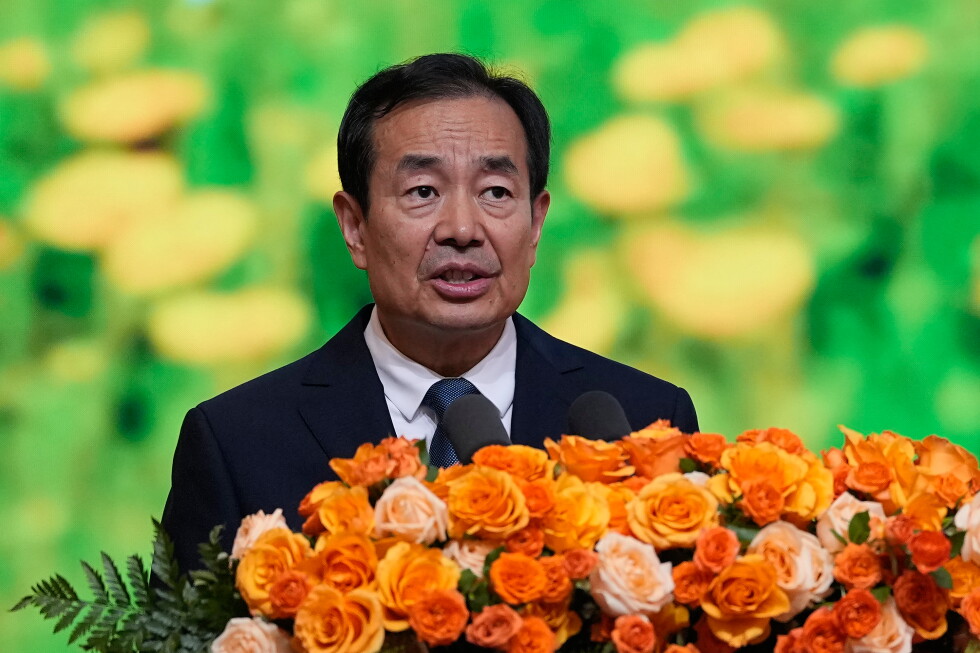
    In his opening address to the conference, Chen Xiaojiang, the top Communist Party official in Xinjiang, framed the region’s current growth trajectory as clear proof of the success of Beijing’s governing model. “Xinjiang has become a vivid epitome of China’s rapid economic development and fully reflected the significant advantages and vitality of China’s governance,” Chen stated, adding that regional authorities have laid out ambitious plans to roll out dozens of large-scale infrastructure projects—including expanded railway networks and upgraded air transport connections—to support long-term growth. Beijing also aims to scale up development of Xinjiang’s core core sectors: coal, crude oil, natural gas and cotton, among other resource and agricultural industries.

    Like many of China’s inland western provinces, Xinjiang lags far behind the country’s wealthy, industrialized eastern coastal regions in economic output and household income. Official 2020 data underscores this gap: rural residents in Xinjiang recorded an average per capita annual income of just 13,052 yuan, equivalent to roughly $1,927, compared to 31,930 yuan ($4,714) for rural households in eastern China’s prosperous Zhejiang province. This persistent economic inequality has been cited by Beijing as one of the underlying drivers of past social unrest in the region, which Beijing has used to justify sweeping security crackdowns starting in 2017.

    Following isolated attacks carried out by a small group of Uyghur extremists that culminated in widespread unrest, Beijing launched a broad crackdown that saw an estimated 1 million or more ethnic minority residents—overwhelmingly Uyghurs, a mostly Muslim Turkic ethnic group—detained in a network of extrajudicial internment camps across the region. Chinese authorities have long defended the detentions as necessary counterterrorism and anti-extremism measures designed to root out separatist and violent extremist ideology.

    By 2021, Beijing announced that it had closed the vast majority of the formal detention camps, but independent investigations and leaked documents have confirmed that many of the facilities were simply repurposed into standard prisons. A data leak shared with the Associated Press revealed that thousands of Uyghur detainees have been handed down lengthy prison sentences on what independent policy experts widely agree are fabricated or grossly exaggerated charges linked to separatism or religious extremism.

    Even for ethnic minority residents not held in formal detention, human rights advocates report widespread, systematic coercion. The London-based human rights organization Global Rights Compliance found that forced participation in state-run labor programs remains pervasive across southern Xinjiang, the region’s area with the largest concentration of Uyghur residents, and that the scope of this forced labor has expanded under China’s current five-year national economic development plan.

    Beijing has repeatedly pushed back against global criticism of its policies in Xinjiang, arguing that what it labels “anti-China forces” have deliberately distorted and exaggerated conditions in the region. Chinese authorities maintain that all counterterrorism and anti-extremism measures applied in Xinjiang do not target specific ethnic, religious or regional groups, but are focused solely on protecting national security and public safety across the region.

  • Paraguay fans are eager for their long-awaited World Cup return, in the country they now call home

    Paraguay fans are eager for their long-awaited World Cup return, in the country they now call home

    As the 2026 FIFA World Cup gets underway on U.S. soil, global soccer fans have turned their collective attention to the host nation’s squad. But for the tight-knit community of Paraguayans living across the United States, this tournament marks a far more personal milestone: the return of their beloved national team to the world’s biggest soccer stage after a 16-year drought.

    Paraguay last qualified for the World Cup in 2010, when the squad recorded its best-ever finish, advancing all the way to the quarterfinals. This year’s appearance marks the ninth time the nation, currently ranked 40th globally by FIFA, has competed in the tournament. Drawn into Group D alongside the U.S., Turkey and Australia, Paraguay will face off against Australia on June 19 and Turkey on June 25, both matches hosted in Santa Clara, California.

    For the estimated 37,000 Paraguayans calling the U.S. home, the moment has been decades in the making, and fans have been organizing watch parties, community gatherings and match-day celebrations across the country. While steep ticket prices for the opening Group D match against the U.S. — with some seats reselling for more than $1,000 apiece — have put the fixture out of reach for most local fans, many have scraped together funds to secure tickets for the team’s later matches in California.

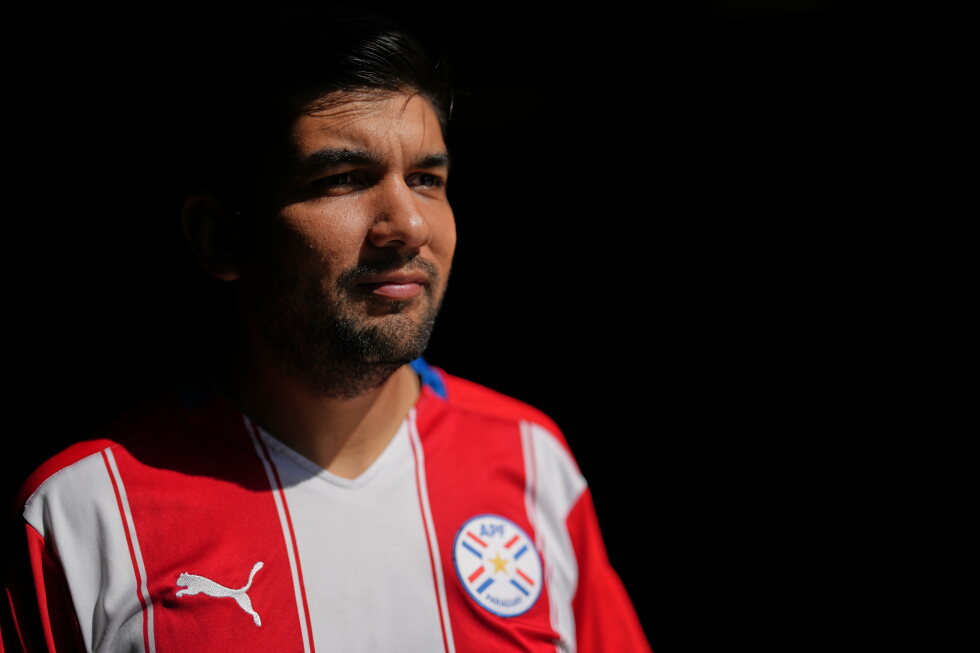
    Thirty-two-year-old Santiago Araujo is one of the lucky fans who scored tickets to Paraguay’s match against Australia, set to take place just 80 miles from his family’s Paraguayan restaurant, Cafe Guarani, in the coastal California town of Pacific Grove. Araujo, who moved to California with his family when he was 11 years old, says soccer is woven into the cultural identity of every Paraguayan. “Every Paraguayan I know wants to go,” he explained. “It’s not like there’s seasons of any other sports in Paraguay. I used to sleep with a soccer ball as my toy.”

    His family’s restaurant is leaning into the excitement, hosting pre- and post-match celebrations that bring the local Paraguayan community together over traditional dishes including manioc empanadas and iced yerba mate. Similar gatherings are planned at I Love Paraguay Restaurant in Queens, New York, where a large concentration of Paraguayan Americans resides. Other major Paraguayan American communities are based in Bernardsville, New Jersey — an affluent town that Paraguayan President Santiago Peña visited in 2024.

    For many fans, even the dream of attending a match comes with steep barriers. Ana Di Sessa, a Paraguayan American based in New Jersey, says she would love to travel to the California matches, but the combined cost of flights, accommodation and overpriced tickets puts the trip out of budget for most working-class fans. Zoraida Pereira, a 43-year-old travel agent based in Bernardsville who moved to the U.S. from Paraguay more than 30 years ago, says she has only sold travel packages for the later Santa Clara matches, as opening game prices are prohibitive for nearly all her clients. Even when forced to choose between her host and home nations on the pitch, Pereira’s loyalty is clear: “I am rooting for Paraguay this time around. They’ve been out for so long.”

    For the team itself, the moment carries just as much emotional weight. Midfielder Miguel Almirón, a 32-year-old veteran who plies his club trade with Major League Soccer’s Atlanta United, grew up watching the 2010 World Cup squad and dreamed of one day getting the chance to compete on soccer’s global stage. “It’s going to be something beautiful in that moment, not just for me, but also for my family and for all the Paraguayan fans, and for anyone who’s been with us through all the tough moments,” Almirón said. “There are going to be a lot of emotions at that moment. We take it on with responsibility, because we know so many people are depending on us.”

    That excitement extends 5,000 miles back to Paraguay, a small landlocked South American nation of roughly 7 million people bordered by Argentina, Bolivia and Brazil, best known for its vast grasslands, rich biodiversity and indigenous Guarani cultural heritage. A new documentary titled *El Renacer Albirrojo* (The Red-and-White Rebirth) chronicles the national team’s 16-year journey to qualify for the tournament, and the squad was sent off to the U.S. with a massive public celebration capped by fireworks. Many Paraguayan Americans report that friends and family are traveling from Paraguay to the U.S. to attend the matches, joining local fans to cheer on the team.

    For 34-year-old Rodrigo Valdez, a computer engineer based in San Diego who was born in the U.S. but raised in Paraguay, the tournament is a once-in-a-generation opportunity. Even with a 4-month-old newborn at home, his wife encouraged him to buy a ticket to the Australia match as a first Father’s Day gift. Valdez will drive more than 450 miles to Santa Clara to see the match, after gathering with local family and friends to watch the opening game against the U.S. in San Diego. “It was a unique opportunity for us that we are living in California,” he said. “It will be very meaningful.”

  • Bettors taking a chance on the longshot US in World Cup, though France and Spain remain favorites

    Bettors taking a chance on the longshot US in World Cup, though France and Spain remain favorites

    LAS VEGAS — Ahead of the opening kickoff of soccer’s biggest global tournament, Fox Sports is leaning into a familiar narrative to hype its 2026 FIFA World Cup coverage: a second American sports miracle. The campaign leans on 1980 “Miracle on Ice” hero Mike Eruzione, who captained the unheralded U.S. college hockey team to a stunning upset of the dominant Soviet Union squad at the Lake Placid Olympics. Just like that iconic underdog win, a U.S. men’s national soccer team lifting the World Cup trophy this year is a long shot by every measure.

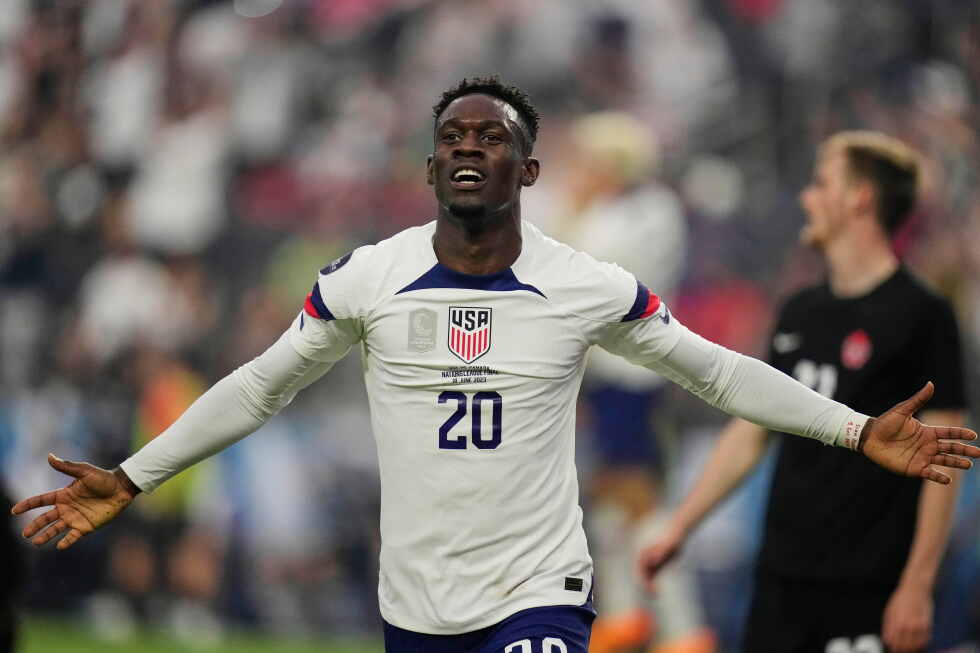
    Odds posted by major U.S. sportsbooks including BetMGM, Caesars Sportsbook and DraftKings reflect the low probability of a U.S. victory, with prices ranging from 40-1 to 60-1 for the American side. Longtime sports handicapper Bruce Marshall says he is unimpressed with both the team and its high-profile head coach Mauricio Pochettino, the former manager of top European clubs Paris Saint-Germain, Tottenham Hotspur and Chelsea. Marshall also brushed off the team’s pre-tournament 3-2 friendly win over Senegal as irrelevant to their World Cup prospects.

    “I’m not that high on the USA team,” Marshall said. “I don’t care what they did against Senegal. I thought Pochettino was a vanity hire. Listen, his track record isn’t as great as people make it sound. He’s had some great teams.”

    Despite the long odds, patriotic American bettors are still pouring money into the U.S. team, a trend that has left major sportsbooks facing significant financial exposure. If the unthinkable happens and the U.S. pulls off a soccer equivalent of the 1980 hockey miracle, bookmakers could face massive payouts.

    “We’ve definitely seen a lot of patriotism being shown with USA being our biggest liability,” said Mark Bickerdike, Caesars’ head of soccer trading. “If USA get off to a good start and progresses, our liability is only going to grow. But, in general, we’re happy with the prices, so let’s lay what we think are the right prices and sort of go from there. Should USA make it to the semifinals and finals, we might be hanging onto our seats a little bit.”

    France and Spain emerge as consensus favorites
    Across all three major sportsbooks, France and Spain stand out as the co-favorites to claim the 2026 World Cup title. Both are listed at +450 on BetMGM and Caesars, while DraftKings matches that price for Spain and puts France just behind at +475.

    Spain enters the tournament on a high note after claiming the 2024 European Championship title with a win over England, and will look to add a second World Cup crown to their 2010 victory. But the side faces a key injury concern: 18-year-old breakout star Lamine Yamal and winger Nico Williams are both managing hamstring injuries heading into the tournament. Marshall notes that the young attacking pair were the driving force behind Spain’s Euro win, and their health will make or break the team’s chances.

    “I think Spain will win if Yamal and Nico Williams are OK,” Marshall said. “They won the Euros because those two guys flipped the whole thing. They stretched the field so much. They had so much speed on the wing. If one or both of them isn’t 100%, Spain won’t be quite the same team it was at the Euros.”

    If Spain stumbles, defending power France is well-positioned to capitalize. Led by global superstar Kylian Mbappé, France is aiming for its third World Cup title in the last eight tournaments, and its fifth trip to the final over that same stretch.

    A deep and competitive field of contenders
    Beyond the two top favorites, a slate of other top nations have realistic shots at a title run. England, Brazil, Argentina and Portugal all hold odds of 9-1 or better across all three major bookmakers. DraftKings sportsbook director Johnny Avello noted that this year’s tournament features an unusually competitive field, with no dominant frontrunner separating from the pack.

    “There’s no real gap between two or three teams and then everybody else,” Avello said. “I would call it a pretty normal ladder for a future book. You’ve got a couple of teams at the top that are shorter prices. I think it’s balanced out pretty good. I don’t think there’s any clear-cut favorite here.”

    The final World Cup for two legendary stars
    This tournament will almost certainly mark the final World Cup appearance for two of the sport’s all-time greats: Argentina’s Lionel Messi and Portugal’s Cristiano Ronaldo. The prospect of either legend claiming one last major title has captured fan and bettor interest alike, driving increased wagers on both sides.

    “That always piques customers’ interest,” Bickerdike said. “That is arguably our biggest driver. Although Portugal have been playing fairly well recently, if you look at the likes of Spain, they’re probably a more in-form team. It’s obviously always the big debate: Who’s the greatest? Is it Messi or is it Ronaldo? It’s going to be their last World Cup, and going out on a high is sort of a dream scenario.”

    In-game betting set to surge
    While live in-game wagering is not a new innovation, its popularity has exploded in recent years thanks to mobile betting apps that make placing mid-match wagers faster and easier than ever. For soccer specifically, in-game betting accounts for a larger share of total handle than any other sport, industry leaders say, and that trend is expected to hold throughout the World Cup.

    “The in-game play is going to be really huge,” Avello said. “When you look at all the sports that we book, I think soccer percentage-wise has the bigger in-game play than any other sport.”

  • Zelensky under pressure to end row with Poland over WW2 name of army unit

    Zelensky under pressure to end row with Poland over WW2 name of army unit

    A deep diplomatic rift has opened between Ukraine and one of its most critical European allies, Poland, after a presidential decree from Volodymyr Zelensky honoring a mid-20th century Ukrainian nationalist military group reignited long-simmering historical tensions that now threaten to upend bilateral cooperation.

    The conflict traces back to a late-May decree from Zelensky that renamed a Ukrainian Special Operations Forces unit after the Ukrainian Insurgent Army (UPA), a partisan group that operated across Eastern Europe between the 1940s and 1950s. For many Ukrainians, the UPA is enshrined as a symbol of national resistance, celebrated for fighting against three occupying forces: Nazi Germany, the Soviet Red Army, and interwar Polish governing authorities. Naming the elite military unit “Heroes of the Ukrainian Insurgent Army” was framed by Zelensky as an effort to honor the legacy of Ukrainian independence struggle, a tradition that remains resonant for frontline Ukrainian troops who today display the UPA’s red-and-black flag in combat against Russia’s 2022 full-scale invasion.

    But the move triggered immediate and widespread outrage across Poland’s entire political spectrum. Warsaw accuses the UPA of perpetrating a targeted genocide of ethnic Polish civilians in the Volhynia region between 1943 and 1945, a massacre that historians estimate killed roughly 100,000 Poles. Polish President Karol Nawrocki condemned the decree as an unacceptable glorification of “bandits and killers,” a view echoed even by pro-Ukrainian politicians including Prime Minister Donald Tusk. Many Poles have framed the decision as a deep act of ingratitude, pointing to Poland’s unprecedented support for Ukraine since Russia’s invasion: Poland was the first neighbor to open its borders to more than 4 million Ukrainian refugees, and currently hosts nearly 1 million displaced Ukrainians, while also serving as a key hub for Western military aid to Kyiv.

    The anger has escalated to the highest levels of state honors, with Nawrocki confirming he is actively considering revoking the Order of the White Eagle – Poland’s highest state decoration, awarded to Zelensky by then-President Andrzej Duda in 2023. The Polish president told reporters he has already held consultations with the Order’s governing council, and will announce a final decision “in due course.” Under Polish regulations, the honor can be revoked if a recipient is found to have committed an act that renders them unworthy of the distinction, though commentators note any formal revocation would require backing from Prime Minister Tusk, who has sought to de-escalate the standoff.

    Hardline political factions in Poland have pushed for far more aggressive action against Kyiv. Opposition Law and Justice party MPs have called for a full sweeping reassessment of bilateral relations, while far-right Confederation leader Krzysztof Bosak has demanded Poland cut funding for the Starlink satellite internet services critical to Ukraine’s military operations, and block Ukraine’s EU accession process until Kyiv reverses the unit naming decree. Nawrocki himself went further, stating that Zelensky’s decision proves “Ukraine is not ready to join the European family.”

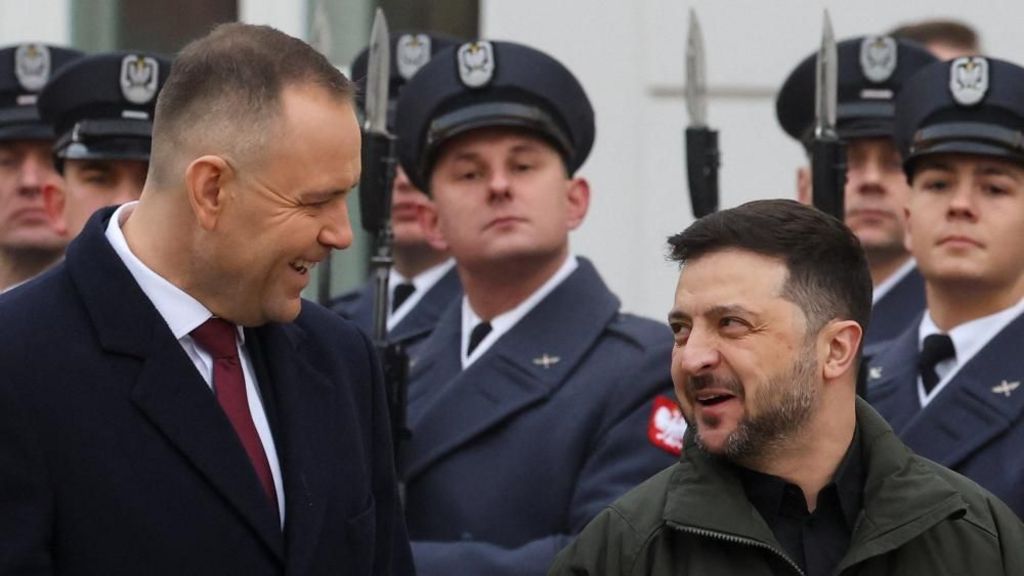
    Kyiv has so far declined to issue a formal official response to the criticism, though Ukraine’s foreign ministry has stressed it never intended to cause offense to Poland. In a last-ditch effort to ease tensions, Zelensky’s chief of staff Kyrylo Budanov traveled to Warsaw over the weekend to meet with Polish officials ahead of the Order of the White Eagle council meeting. However, the diplomatic outreach failed to produce a breakthrough: following Budanov’s visit, Nawrocki moved forward with convening the honorary council to discuss revoking Zelensky’s award, and Tusk later acknowledged openly that “diplomacy has yielded no results.”

    The growing rift has already produced visible ripple effects: Zelensky, who regularly departs for foreign trips from Poland’s Rzeszów Airport, chose this week to fly to the United Kingdom via Moldova instead. Tusk has clarified the airport remains open to the Ukrainian leader, saying “I am not going to tell him where and how to fly,” but the shift underscores the growing chill in relations.

    Analysts warn that a formal revocation of Zelensky’s honor could trigger a full diplomatic rupture between the two neighbors, with serious consequences for both nations and the broader Western coalition supporting Ukraine against Russia. The growing discontent in Poland already threatens to overshadow a major upcoming conference on Ukraine’s post-war reconstruction, scheduled for later this month in Gdansk, with Polish foreign ministry officials indicating Zelensky may choose to skip the event entirely. Observers also note rising tensions could benefit right-wing Polish parties that have grown increasingly critical of continued military and refugee support for Ukraine, a shift that aligns with the strategic goals of the Kremlin.

    Tusk has repeatedly pushed for de-escalation, urging both leaders to hold direct, honest negotiations to resolve the dispute before tensions spiral out of control. “Co-operation serves the interest of both our states and nations, while conflict serves Moscow’s interests,” he emphasized in a recent statement, framing continued bilateral unity as a critical national and continental security priority.

  • Banned referee Artan arrives home in Somalia

    Banned referee Artan arrives home in Somalia

    Somalia’s star football referee Omar Artan has returned to a jubilant, nationwide welcome in Mogadishu after being denied entry to the United States ahead of the 2026 FIFA World Cup, reaffirming his promise to reach the global tournament’s pitch at the 2030 edition.

    The 34-year-old, who was named the Confederation of African Football’s Men’s Referee of the Year for 2025, made history as the first Somali referee ever selected for a World Cup finals. He was one of just 52 on-pitch officials chosen for the 2026 co-hosted tournament, which splits matches across the U.S., Canada and Mexico. All match officials are required to be based in Florida for pre-tournament training, preparation and security protocols, making entry to the U.S. non-negotiable for Artan to take up his place.

    Despite holding a valid diplomatic passport and approved single-entry U.S. visa, Artan was detained for hours and subjected to an 11-hour immigration interview upon arrival at Miami International Airport on Monday. He was ultimately denied entry and repatriated, with U.S. authorities offering no public explanation for the decision. The move falls in line with a sweeping travel ban implemented by U.S. President Donald Trump in June 2025, which imposes a full entry ban on all visa holders from 12 countries, including Somalia.

    The incident comes on the heels of inflammatory comments Trump made about Somalia just two months before the tournament, ahead of an immigration enforcement operation in Minnesota’s large Somali-American community. Trump dismissed Somalia as “barely a country” claiming “they just run around killing each other. There’s no structure,” and added that Somali immigrants should “go back to where they came from,” warning the U.S. would “go the wrong way if we keep taking in garbage to our country.”

    Andrew Giuliani, head of the White House Task Force on the World Cup, defended U.S. Customs and Border Protection’s decision in an interview with BBC World Service, saying “While I can’t go into the derog [derogatory information] on that I can tell you it was the right decision by customs and border patrol and I support that decision.”

    Artan arrived back at Mogadishu’s Aden Adde International Airport on Wednesday, where hundreds of supporters, senior government officials, Somali Football Federation representatives, fellow referees and ordinary residents gathered to greet him. Crowds carried pro-Artan banners, wore custom hats printed with his image, and social media creators streamed the welcome live to their online audiences. Hundreds more were expected to join a public reception at Mogadishu Stadium later the same day, where Artan planned to attend a domestic league match between Heegan and Dekadaha.

    Speaking to reporters after his arrival, Artan expressed gratitude for the outpouring of support from his homeland. “Everything is pre-destined. Fifa supported me well and were in touch with me until I reached Mogadishu,” he said. “I promise you that I’ll be officiating you in the next World Cup. Somalia, everywhere, I’m letting you know.”

    In a message to young Somalis, Artan urged the next generation not to lose hope or be demoralized by his treatment. “Let’s all defend Somalia’s honour. We all belong to Somalia whether it’s bad or good. That flag is ours and so is the passport – let’s defend it,” he said. “Despite this happening to me, I’ll still stand for my nation. I want to continue my journey from here and urge the youth to do the same.”

    Artan, who has held FIFA referee credentials since 2018, has become a national icon in Somalia after his landmark selection to the 2026 World Cup squad. Supporters across the country have framed his rejection as an insult to Somali national dignity, even as the referee himself says he remains committed to pursuing his World Cup dream. The incident has also sparked broader questions about FIFA’s ability to manage logistics and protect its appointed officials ahead of the 2026 tournament, with critics asking how the governing body could allow a referee’s historic qualification to be derailed by U.S. immigration policy.

  • Ukraine launches long-range strikes on military and energy sites in Russia

    Ukraine launches long-range strikes on military and energy sites in Russia

    On Wednesday, Ukraine carried out a coordinated series of long-range attacks targeting key assets hundreds of kilometers inside Russian territory, a calculated escalation of Kyiv’s strategy to increase the military and economic cost of Moscow’s full-scale invasion for the Kremlin. The strikes hit deep behind Russian lines at energy facilities and defense manufacturing sites, according to Ukrainian President Volodymyr Zelenskyy, who outlined the scope of the operation in a public social media address.

    Zelenskyy confirmed that Ukrainian forces used domestically developed FP-5 Flamingo long-range missiles to strike a key military industrial facility in Cheboksary, the capital of Russia’s Chuvashiya region. The site sits more than 900 kilometers (over 560 miles) from the active front lines in eastern and southern Ukraine, marking one of the farthest inland Ukrainian strikes to date. Zelenskyy noted the facility produces critical components for Russian attack drones and missiles, weapons Moscow relies on heavily for its ongoing campaign against Ukraine. Oleg Nikolayev, the regional governor of Chuvashiya, later verified the missile strike but declined to release further details on damage or casualties. Independent Russian outlet Astra News reported the target was the VNIIR-Progress plant, which manufactures antenna systems for Russian military drones.

    Additional strikes hit a second key energy site in Russia’s Samara region, where local governor Vyacheslav Fedorishchev confirmed drone attacks damaged multiple industrial facilities and left three people injured. Though Fedorishchev did not publicly name the affected sites, Astra published photographs showing a massive uncontrolled blaze burning at the region’s large oil refinery. Zelenskyy added that Ukraine’s domestic security agency, the Security Service of Ukraine (SBU), carried out separate attacks on two more oil infrastructure sites in Russia’s Vladimir region, located roughly 700 kilometers from the front.

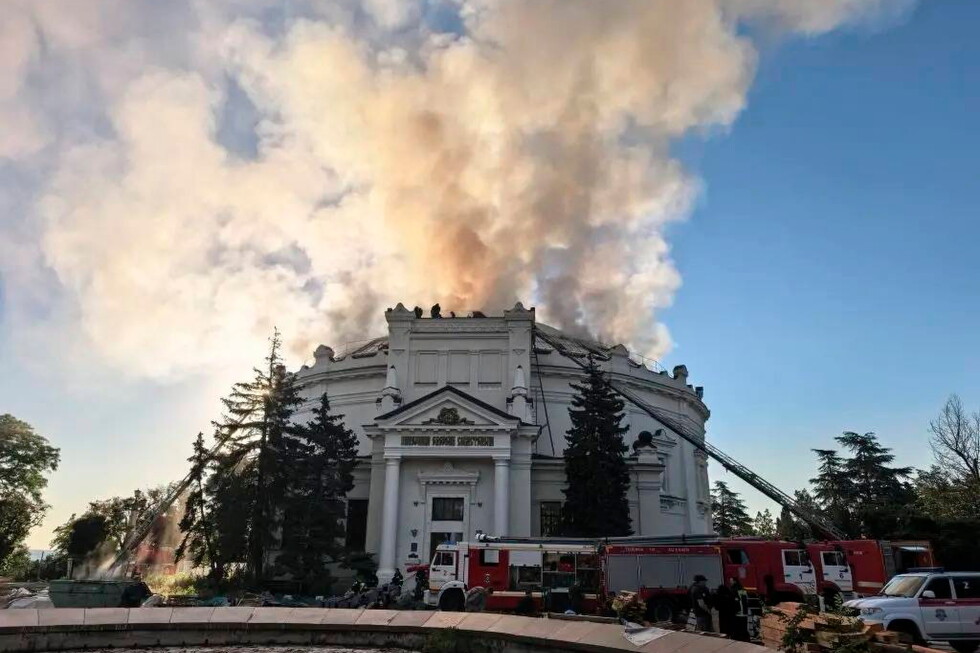
    The long-range assault also extended to Russia-occupied Crimea, where a Ukrainian drone struck a historic landmark in the port city of Sevastopol: a building housing a massive panoramic painting by 19th century artist Franz Rubo that depicts the 1850s defense of Sevastopol during the Crimean War. Mikhail Razvozhayev, the Kremlin-appointed head of Sevastopol, claimed the artwork was completely destroyed in the strike.

    The cross-border strikes come amid a prolonged period of stagnation along the roughly 1,000-kilometer front line, where both Moscow and Kyiv have been hampered by widespread drone use that prevents large-scale territorial advances. In response, both nations have increasingly turned to long-range strikes to weaken the opposing side’s military capacity and public morale. For Russian President Vladimir Putin, the deep and increasingly audacious Ukrainian attacks pose a direct political challenge, undermining his repeated public claims that Russia is gaining the upper hand in the war, which entered its fifth year in 2025.

    The latest strikes follow just one week after Ukrainian attacks set fire to an oil terminal in St. Petersburg and struck a nearby Russian naval base, an incident that overshadowed Putin’s major annual economic forum held in his hometown. That disruption marked just one in a string of recent political setbacks for the Russian leader: just weeks before the St. Petersburg attack, Putin ordered significant cuts to Moscow’s annual Victory Day military parade over widespread security fears of potential Ukrainian drone strikes on the capital.

    Russia did not leave the Ukrainian strikes unanswered. Overnight, Russia launched a massive wave of drone and missile attacks across multiple Ukrainian regions. In the northeastern region of Kharkiv, regional administration head Oleh Syniehubov reported that a barrage of 26 drones struck early Wednesday, injuring four people. Overall, Syniehubov said Russian attacks across Kharkiv killed one person and wounded 15 others in the 24-hour period ending Wednesday morning. In the southern Zaporizhzhia region, 10 people were injured in overnight Russian aerial strikes, according to regional governor Ivan Fedorov. In the Black Sea port city of Odesa, regional governor Oleh Kiper reported that Russian drone strikes damaged two residential apartment buildings, leaving a mother and her two children, aged 8 and 10, in need of medical care.

    Ukraine’s Air Force reported that its air defense systems successfully intercepted 181 out of the 207 Russian drones launched in the attack. Russia’s Defense Ministry for its part claimed that its own air defenses shot down 326 Ukrainian drones overnight during the cross-border strike operation.

  • When will an African side win the World Cup?

    When will an African side win the World Cup?

    For decades, football fans across Africa have shared one enduring dream: to see a nation from the world’s second-largest continent lift the sport’s most prestigious prize, the FIFA World Cup. That dream remains unfulfilled decades after it was first predicted, but after historic breakthroughs and systematic investment across the continent, many believe the moment is closer than ever before.

    Sunday Oliseh, a 51-year-old former player who helped Nigeria claim Africa’s first Olympic men’s football gold medal at Atlanta 1996, sums up the widespread continental longing. “If there’s something I want to see before God takes me to heaven or hell it would be great to see an African nation win [the World Cup], because this is a tournament that we all love passionately in Africa,” he says.

    Since the first World Cup kicked off in 1930, 49 national teams from 13 African countries have taken part in 22 editions of the tournament. For decades, their progress was limited by systemic barriers rooted in colonialism, restricted allocation of tournament slots, and missed narrow opportunities. Before 2022, Africa had only ever produced three World Cup quarter-finalists: Cameroon’s Indomitable Lions in 1990, Senegal in 2002, and Ghana’s Black Stars in 2010. It was not until the 2022 Qatar World Cup that the continent made history, when Morocco’s Atlas Lions fought past heavyweights Belgium, Spain, and Portugal to become Africa’s first ever World Cup semi-finalists.

    This landmark achievement came as no accident: it was built on more than a decade of targeted, long-term investment backed by King Mohammed VI of Morocco. The King Mohammed VI Football Academy opened in 2009, followed by a $65 million state-of-the-art training complex in 2019, creating a development pipeline that turned Morocco into Africa’s highest-ranked men’s national side.

    William Troost-Ekong, a former Nigeria captain, says Morocco’s success created a replicable roadmap for other African nations. “Morocco has created a blueprint of how it can be done, which is years and years of investing in grassroots football and academies,” he told BBC Sport Africa. “It starts with structure, with planning. Investment [is] very, very important. It has to be something that comes from federations being supported from a governmental level. Morocco have invested not just money but also time and effort, with a clear idea of how they can progress. The facilities they have, the consistency throughout their age groups, I think that’s the only blueprint you can follow.”

    Confederation of African Football (Caf) has also taken steps to strengthen the game across the continent, boosting prize money for the Africa Cup of Nations and top continental club competitions to increase federation and club revenue, while also investing in national schools championships. Caf president Patrice Motsepe reaffirmed the governing body’s commitment to developing the sport, predicting that “An African country will be champions of the world. That is what we are working towards, that’s what we are investing in and we are confident it will happen.”

    Veteran manager Claude Le Roy, who led Cameroon at the 1998 World Cup and coached five other African national sides, echoes the focus on youth development as the foundation for long-term success. “If you want to permanently have high-level national teams in Africa, you need to work with youth categories,” the 78-year-old said. “That’s the base of everything.”

    Structural changes to the World Cup itself have also opened new doors for African nations. For most of the tournament’s history, Africa was severely underrepresented: between 1930 and 1962, Egypt was the only African entrant in the first eight editions, and the continent boycotted the 1966 World Cup after FIFA refused to allocate it a direct qualifying spot. Through successive tournament expansions, the number of African slots grew from 1 in the 1970s to five from 1998 onward, and the 2026 expanded 48-team tournament hosted by Canada, Mexico and the United States will mark a new milestone: nine African teams qualify automatically, with DR Congo claiming an additional spot via inter-confederation play-offs to bring the total contingent to 10, the largest in African history.

    South Africa captain Ronwen Williams, who will lead his nation in the tournament’s opening match in Mexico City, says the growth of African participation reflects broader progress across the continental game. “We’ve been on the rise – the leagues, Caf, the [African] Champions League, Afcon,” he told the BBC. “Everything has improved immensely. For so many countries to go out and compete at the highest level, it’s amazing.”

    Williams and Troost-Ekong both argue that greater participation will directly improve performance, particularly under the new format that allows two-thirds of participating teams to advance past the group stage. “Making it more accessible is going to be the key factor in the long term for teams to be more competitive,” Troost-Ekong said. “You need that exposure for improvement. The more experience they get, the more capable they will be with handling pressure. Experience is invaluable.”

    Another growing advantage for African nations is the ability to tap into talent from global African diasporas, reversing decades of talent drain that saw top players choose to represent European nations. Many diaspora players develop their skills in elite European club academies, and a growing number of African federations are now actively recruiting eligible players to represent their ancestral nations. Morocco was an early pioneer of this approach, convincing Canada-born goalkeeper Yassine Bounou and Spain-born stars Achraf Hakimi and Brahim Diaz to represent the Atlas Lions. More recently, 2026 debutants Cape Verde and DR Congo, returning to the finals for the first time since 1974, both relied heavily on diaspora talent: 18 of DR Congo’s 26-man squad were born in Europe, including defenders Aaron Wan-Bissaka and Axel Tuanzebe, who switched allegiance from England’s youth setup. Tuanzebe even scored the decisive qualification goal that sent DR Congo to the 2026 finals.

    Gabriel Zakuani, a former DR Congo captain now working as a technical consultant identifying and recruiting eligible diaspora players, says outreach and persuasion are key to unlocking this talent pool. “Recruitment is massive,” he told the More Than The Score podcast. “You have to get players to believe in your vision. Potentially they can’t play for England, Belgium or France, but they can still get to the World Cup. The biggest example is Axel Tuanzebe. He’s gone through the system with England and then he scores the goal to gets us to the World Cup. That is the fairytale ending, and probably the story I’ll use for the next player I try and get into the country.”

    Morocco’s 2022 semi-final run has also shifted the continental mindset, proving to a new generation of African players that a deep tournament run is achievable. “What Morocco did, that was the start for us as Africans to believe that we can [go far],” South Africa’s Ronwen Williams said. “It starts with that belief, and you need to go out and perform.”

    Senegal forward Iliman Ndiaye says that belief has already translated to a winning mindset across the continent. “I wouldn’t even bother packing my suitcase and travelling to the World Cup if it’s not to win it,” he told BBC World Service’s Newsday. “I don’t play these tournaments to just be a tourist. What Morocco did at the last World Cup should give all African teams inspiration.”

    Even with all this progress, African sides have faced heartbreaking near-misses in the past, and a title win will still require a measure of good fortune. Senegal were knocked out of the 2002 quarter-finals by a golden goal against Turkey, a rule that has since been scrapped. In 2010, Ghana’s Asamoah Gyan hit the crossbar with a last-minute extra-time penalty against Uruguay in the quarter-finals, and Ghana went on to lose the subsequent penalty shootout that would have sent them through to the semi-finals.

    For 2026, the expanded format adds an extra knockout round, meaning managing injuries and suspensions will be even more critical than before. Former Ghana midfielder Michael Essien says luck is the missing ingredient for a title run. “There’s been a lot of progress,” he told BBC Sport Africa. “The only thing that’s missing is luck. We just have to keep believing and hopefully one day it will happen.”

    Morocco (ranked 8th globally) and Senegal (ranked 14th) enter the 2026 tournament as Africa’s strongest contenders to break the title drought, though both face challenging group stage draws. Even if the continent falls short in 2026, Morocco will have home-field advantage in 2030, when it co-hosts the tournament alongside Spain and Portugal, with plans to host the final.

    Today, the gap between African sides and the European and South American powerhouses that have dominated World Cup history is undeniably narrower. For millions across the continent and the global African diaspora, the moment when an African nation lifts the World Cup – and creates pan-African sporting legends – is steadily edging closer.
  • Pope honors Barcelona sacred monuments on death centenary of Sagrada Familia designer Gaudí

    Pope honors Barcelona sacred monuments on death centenary of Sagrada Familia designer Gaudí

    BARCELONA, Spain – On a pivotal stop of his weeklong trip across Spain, Pope Leo XIV centered his Wednesday itinerary around honoring two of Catalonia’s most cherished religious and cultural landmarks, tying the visit to the 100th anniversary of the death of legendary Catalan architect Antoni Gaudí, the visionary behind the iconic Sagrada Familia Basilica.

    Before launching his scheduled public ceremonies, the Pope opened his day with a quiet, private visit to incarcerated people at a local Barcelona prison, carrying forward the tradition established by his predecessor Pope Francis, who prioritized meeting marginalized communities that cannot participate in large-scale public papal events during international trips.

    Leo’s visit to Spain has underscored a striking shift in the nation’s religious landscape: five decades after the end of the 20th-century dictatorship that left a legacy of religious upheaval across the country of 50 million, hundreds of thousands of faithful Catholics have turned out in droves to welcome the first American pope, demonstrating the enduring strength of religious belief in modern Spain.

    The first major public event of the day took place at Montserrat, a dramatic mountain sanctuary located just outside Barcelona that holds deep spiritual meaning for Catalan people. The site, home to an 11th-century Benedictine abbey and a 16th-century basilica, is one of the most revered pilgrimage sites in Spain, best known for its iconic Black Madonna statue that draws millions of worshippers annually. Pope Leo led a midday prayer at the abbey to honor the site’s centuries-long role as a center of Catalan piety.

    The undisputed highlight of the Pope’s Barcelona visit came Wednesday evening, when he celebrated an evening Mass at Sagrada Familia, the unfinished architectural masterpiece that has become a global symbol of both Catalonia and Christian faith. The service marked 100 years since Gaudí’s death at age 73, three days after he was struck by a tram in Barcelona in 1926.

    The story of Sagrada Familia is intertwined with papal history: construction first launched during the papacy of Leo XIII, the current Pope’s namesake, more than 140 years ago. Today, the basilica remains a work in progress, but it is one of the most visited tourist sites in the world, welcoming more than 5 million guests annually. Gaudí, who is currently under consideration for sainthood by the Catholic Church, devoted more than 40 years of his life to the project, describing it as a complete retelling of the Christian faith carved in stone.

    Every detail of the basilica is infused with religious symbolism. The Nativity and Passion of Jesus Christ are etched into the structure’s eastern and western facades, while a third southern facade, the Glory, will serve as the main entrance once construction is complete. Architecturally, the structure draws on Byzantine and Gothic traditions to create a masterpiece of geometry and form that celebrates Christian belief and God’s creation through stone and natural light.

    In total, 18 spires pierce Barcelona’s skyline, each carrying specific symbolic meaning: 12 represent Jesus Christ’s 12 apostles, four honor the four Evangelists who wrote the Gospels, one topped with a star rises above the apse to venerate the Virgin Mary, and the tallest of all is the newly completed Tower of Jesus Christ. Finished last year at a height of 172.5 meters (564 feet), the tower makes Sagrada Familia the tallest church in the world, a title Pope Leo formally cemented Wednesday when he consecrated the structure during his evening Mass.

    Inside, Gaudí’s design draws deep inspiration from the natural world he called his greatest teacher. Cross-shaped in layout, with the altar positioned at the far apse, the interior is defined by towering tree-like columns that soar toward the ceiling, with shifting colored light filtering through stained glass windows, mimicking the effect of sunlight dappling through forest leaves. Gaudí famously once said, “Everything comes from the great book of nature, always open that we must read.”

    Historian Mònica Santín, who leads educational tours of the basilica, notes that Gaudí’s work was guided by two core texts: the Gospels and the natural world. “The way he lets in the natural light is also an invitation to the Christian mystery,” Santín explained. “When you enter inside, it is all light. What is that the symbol of? We can’t see God, but we perceive his light all around us. I think that is how you can read this message, and it is fascinating.”

    This reporting on religious issues is supported by the Associated Press through a collaboration with The Conversation US, with funding provided by Lilly Endowment Inc. The Associated Press holds sole editorial responsibility for this content.