博客

  • Penny Wong calls for ‘stand against violence’ as Belfast rocked by riots

    Penny Wong calls for ‘stand against violence’ as Belfast rocked by riots

    Three straight days of anti-immigration unrest have rocked Belfast, Northern Ireland, leaving a trail of arson damage and drawing international condemnation from diplomatic leaders, including Australia’s top foreign affairs official.

    Masked assailants torched residential properties, civilian vehicles and a public bus during overnight violence in the region’s capital, escalating tensions that first ignited after a June 8 stabbing attack allegedly carried out by a 30-year-old Sudanese national. The unrest has unfolded against a broader backdrop of surging anti-immigration sentiment across the United Kingdom, alongside growing public support for the right-wing Reform UK party.

    Australian Foreign Minister Penny Wong, who is currently in London for scheduled bilateral talks with European political leaders, addressed the unfolding crisis during a press briefing. Reporters pressed Wong on what steps Australia would take to prevent similar violent unrest from breaking out on Australian soil.

    Wong opened her response by emphasizing a universal standard for political conduct across all nations. “First, I would make the point that all leaders need to stand against violence,” she said. “Whatever our differences of view, whatever policy discussion, whatever the argument we have about what should or shouldn’t happen, violence is never acceptable. All political leaders of all parties should always put that view. So, let’s start with that.”

    The condemnation from Australian officials has been bipartisan in nature, with center-left Labor Party Senator Raff Ciccone also speaking out against the violence early Wednesday. Appearing on Sky News, Ciccone described the footage coming out of Belfast as “horrific”, noting that the disturbing imagery greeted many Australians when they turned on their morning news.

    Ciccone extended his sympathy to the victims of the initial alleged stabbing and their family, adding that law enforcement should be allowed to carry out a full, thorough investigation into the attack. He went on to frame the unrest in Northern Ireland as part of a broader global challenge to social cohesion that many nations, including Australia, currently face.

    “Quite frankly, we’ve had a discussion in this country around the need for calm, for national unity, particularly when there are worldwide events that are occurring right now and for many months and years around social cohesion,” he said. “It’s so important, and being a centrepiece about the conversations that the government has been having for some time now. We’ve got to get down and tackle the root causes of why people decide that it’s okay to conduct these horrific attacks against one of their own and against other citizens, other people in our society. It’s not just a unique problem in Australia or in Northern Ireland. It’s unfortunate that we are seeing a lot more of these cases around the world.”

  • SpaceX on cusp of record IPO that could make Musk a trillionaire

    SpaceX on cusp of record IPO that could make Musk a trillionaire

    SpaceX is on the brink of making Wall Street history, entering its final pricing phase on Thursday ahead of a Friday trading debut that is set to become the largest initial public offering ever recorded. The groundbreaking offering not only has the potential to catapult co-founder and CEO Elon Musk to unprecedented trillionaire status, but also sets the stage for a wave of tech and artificial intelligence public debuts in the coming months.

    Founded by Musk in 2002, the aerospace and rocket firm will begin trading on the Nasdaq exchange Friday morning, with market observers across the globe closely watching to see how Wall Street absorbs the blockbuster offering that could send ripples through global financial markets. In keeping with longstanding tradition for high-profile market debuts, Musk and other SpaceX executives are scheduled to ring the Nasdaq opening bell at the exchange’s Times Square headquarters in New York to mark the occasion.

    This IPO marks the largest financial gambit of Musk’s already storied career. Earlier this year, the billionaire folded two of his other major ventures — his AI startup xAI and his social media platform X, formerly Twitter — into SpaceX, including both assets in the public offering. The company is rolling out more than 555 million shares to investors at an expected price of $135 per share, a valuation that would land SpaceX firmly among Wall Street’s most valuable elite companies with a total market capitalization of roughly $1.8 trillion.

    The final price of the offering will be confirmed during pricing sessions Thursday, and widespread speculation has emerged that SpaceX could raise its target offer price. Bloomberg reports that the offering has already drawn investor demand for more than four times the number of available shares, signaling overwhelming early interest. In a break from typical IPO structures, 30% of all available shares have been reserved for retail investors — three times the standard allocation for individual small-scale investors, giving ordinary Musk supporters the opportunity to purchase a stake in the company.

    The entire success of the historic offering hinges largely on investor confidence in Musk’s reputation as a visionary tech entrepreneur. Following the IPO, Musk will hold three of the most powerful roles at the public company: chief executive, chief technology officer, and board chair. If the IPO performs as expected, it will create thousands of new millionaires and hundreds of new billionaires among current and former SpaceX employees, as well as early investors who backed the company across its nearly 25 years of private operation.

    Even with overwhelming early demand, the offering has split opinion on Wall Street. Many analysts and investors have voiced caution over the company’s financial outlook, noting that the $1.8 trillion valuation depends almost entirely on Musk delivering on a slate of ambitious, science fiction-level goals that rely on unproven technology. These projects include developing orbital space-based data centers and establishing crewed human settlements on Mars, both of which remain far from commercial viability.

    On paper, SpaceX’s growth trajectory is staggering: the company reported $18.7 billion in revenue in 2025, but it also posted a net loss of $4.9 billion for the year, reflecting heavy ongoing investment in research and development for its next-generation projects. In its public IPO filing, SpaceX made an extraordinary long-term prediction that the company would eventually generate more than $28.5 trillion in annual revenue across its various operating markets. When it launches, the SpaceX IPO will easily surpass the 2019 Saudi Aramco public debut, which raised $29.4 billion and has held the title of the world’s largest IPO for more than six years. It also leads a wave of big tech and AI companies set to go public, with both OpenAI and Anthropic having already filed regulatory paperwork for their own market debuts expected to follow SpaceX.

  • ‘We love these weeks’: Why Trent Robinson isn’t worried about his missing Origin stars

    ‘We love these weeks’: Why Trent Robinson isn’t worried about his missing Origin stars

    As the NRL’s round of State of Origin-enforced squad reshuffles kicks off, the Sydney Roosters are preparing to face the Dolphins at Brisbane’s Suncorp Stadium on Friday night with a drastically altered lineup—seven of their top first-grade stars are sidelined for the clash, but head coach Trent Robinson says the mass absences have created a golden opportunity for rising talent to prove their worth at the top level.

    Both sides are navigating significant Origin-related disruptions. The Dolphins will also be without five of their Queensland Maroons representatives for the match, but they have received a timely boost: playmaker Isaiya Katoa has been released from New South Wales Origin camp to suit up for the club on Friday. For the Roosters, the absentees read like a who’s who of regular matchwinners: captain and fullback James Tedesco, Lindsay Collins, Mark Nawaqanitawase, Reece Robson, Robert Toia, Sam Walker and Victor Radley will all watch from the sidelines, with Nawaqanitawase in line to make his senior State of Origin debut for the Blues.

    One of the most anticipated inclusions in the Roosters’ extended squad is 19-year-old prospect Rex Bassingthwaighte, a Dubbo native recently named to the NSW Under-19s side who has long been tagged as the club’s future long-term fullback. Speaking to reporters ahead of the game, Robinson said the young talent has earned his first call-up to a top-grade bench spot after turning heads in junior and reserve competitions. “Rex has come down from Dubbo and been on our radar for a while,” Robinson said. “He’s got a free spirit about him, but he’s also really gone after moments through the junior grades. We saw that in the SG Ball, we’ve seen that in reserve grade, so it was good to put him on that the bench, and I’m looking forward to see if he gets that opportunity. You can see when someone’s going to be a first-grader, and it’s time to give some of those guys an opportunity.”

    While the roster is far from the Roosters’ full-strength starting side, the club still retains elite experience with key playmaker Daly Cherry-Evans, forward Angus Crichton, backrower Naufahu Whyte and other established first-graders suiting up. This match also marks the Roosters’ sixth consecutive clash against non-NSW-based opposition, a stretch that has forced the club to dig deep into its 38-player full-time squad. For Robinson, the forced rotation is a positive outcome for the club’s long-term depth. “The guys that you’ll see play, they’ve been in our squad, they train every day,” Robinson said. “We train with about 38 players, and we’re a really close crew. And some of those players that don’t get to play as often get to play tomorrow, and that’s a great thing for a club. We love these weeks. The possibility is really high, and you want to see someone take that opportunity that they’re going to get. But then it’s also for the other guys that play each week to shoulder the load and say, ‘OK, follow me’. It creates a really good environment for footy this weekend, and it’s some of the most enjoyable weeks of the year.”

    Two players in particular are gearing up for highly anticipated returns to their preferred positions, starting with halfback Hugo Savala. With regular starting half Sam Walker sidelined for Origin, Savala will step into the halves to partner Cherry-Evans, the man he is widely expected to replace long-term. Savala has turned in strong performances at left centre throughout the 2024 season, but the playmaker made his name as a five-eighth in his breakout rookie campaign, and Robinson said the shift back to his natural position has injected extra energy into the young gun. “I think it’s hard to see energy grow from somebody whose energy is so high already. But it’s a great opportunity for him,” Robinson said. “He’s excited about getting back into the halves and playing his role, and so are we.”

    For Cody Ramsey, the opportunity to start at fullback is even more meaningful, coming nearly two years after he last started in the role at NRL level and 12 months after he returned from a career-threatening battle with ulcerative colitis. Ramsey, who joined the Roosters after leaving the St George Illawarra Dragons, has played four NRL games since his comeback, filling in on the wing admirably while Nawaqanitawase and Daniel Tupou recovered from injury. Now he will step into the fullback role to cover Tedesco’s Origin absence, a position he calls his own. “I think it was really beneficial to have him play on the wing,” Robinson explained. “It’s not great having Mark and ‘Toops’ out, but to be able to have Cody come in and play (was great) knowing that if Ted did get in Origin that he was going to play that fullback role. So having him on the wing, getting him comfortable on the field again in NRL, and then coming back into fullback, he’s been driven this week.”

    For the Dolphins, a win on Friday would see them jump over the injury-hit Roosters into the top eight of the NRL premiership, putting them in strong position to secure a first finals berth since entering the competition. For the Roosters, the opportunity to pull off an upset with a young, inexperienced side has the club embracing the challenge ahead of kickoff.

  • Trump vows to ‘hit Iran hard’ as he pivots from de-escalation

    Trump vows to ‘hit Iran hard’ as he pivots from de-escalation

    In a sudden and sharp escalation of tensions between the United States and Iran, President Donald Trump announced Wednesday that Washington would launch a new wave of military attacks on Iran “today”, just one day after the two sides exchanged deadly fire that put the months-old fragile ceasefire at its greatest risk of collapse. Speaking to reporters at the White House shortly after the latest cross-border clashes, Trump accused the Islamic Republic of acting in bad faith during ongoing ceasefire negotiations, claiming Tehran “keeps playing us for suckers” to drag out talks. “We hit them hard yesterday, and we are going to hit them again hard today,” the president told assembled journalists. The president’s sharp vow of renewed military action comes at a time when third-party diplomatic efforts to salvage the peace process are still underway: a Qatari mediation delegation touched down in Iran this week, a move widely viewed by global diplomatic analysts as a last-ditch push to keep negotiations alive, while Pakistan continues its role as an additional intermediary between Washington and Tehran. For two weeks, the tentative ceasefire agreed by the two parties back in April has limped from one crisis to the next, with violent outbursts of fighting alternating with brief lulls, as efforts to reach a broader permanent cessation of hostilities have stalled. The most recent round of open conflict reignited last week, when the U.S. launched strikes on Iranian-held islands and key military infrastructure. Tehran responded by launching missile and drone attacks targeting U.S. allies Bahrain and Kuwait. In a striking reversal just days ago, Trump intervened to halt clashes between Iran and Israel that broke out after Israeli strikes on Beirut, the capital of Lebanon. Iran has repeatedly stated that any final peace deal must include provisions for Lebanon, where its long-time close ally Hezbollah is engaged in active combat against Israeli forces. Speaking to the *Financial Times* just this past Sunday, following his order to stop an Israeli planned attack on Iran, Trump made clear his assertion of total control over U.S. policy: “I call the shots. I call all the shots. [Netanyahu] doesn’t.” He added that Israel “won’t have a choice” but to accept any ceasefire agreement Washington reaches with Tehran. However, by Wednesday the president had made a dramatic pivot back to pushing for military escalation. “Iran is all talk and no action,” he said in his remarks Wednesday. “They’ve taken too long to negotiate a deal that would have been great for them, now they will have to pay the price!!!” Despite his threats of new attacks, Trump also noted that peace talks had reached a relatively advanced stage, claiming Tehran had already agreed to the key non-nuclear provision: “They have agreed to not having a nuclear weapon, all they have to do is sign the paper,” he said. The renewed outbreak of open conflict in the strategic Persian Gulf region has already roiled global energy markets, pushing benchmark Brent crude prices up by nearly 3% to trade at $94.11 per barrel. Most commercial oil and gas shipments through the Gulf have been halted amid the ongoing hostilities, though Trump pushed back against that narrative Wednesday, boasting that “millions of barrels of oil” are being exported out of the Gulf under cover of darkness. “Now I’m going to tell you because they [Iran] just figured it out,” he told reporters. The president offered no supporting data or evidence to back up this unsubstantiated claim, but independent news reporting has indicated that some neighboring Iraq and Gulf oil producers have been able to ramp up their exports in recent weeks. Bloomberg reported Wednesday that Iraqi crude oil passing through the Strait of Hormuz or loading at the country’s key southern Basra port has reached roughly seven million barrels so far this month. The United Arab Emirates has also increased exports by sailing tankers through the Strait of Hormuz with their identification transponders turned off to avoid detection. The current cycle of escalation was triggered Tuesday, when Iranian forces shot down a U.S. Apache attack helicopter operating in the region. Iranian Foreign Minister Abbas Araghchi appeared to confirm the strike in a social media post, but framed the incident as an accidental engagement resulting from opposing military forces operating in close proximity to one another. Currently, both the U.S. and Iran are locked in a struggle for control of the strategic Strait of Hormuz, with each side enforcing rival blockades and opening fire on commercial vessels they accuse of violating their respective blockade terms. U.S. Central Command confirmed it launched what it called “a proportional response” to the downing of the helicopter, targeting Iranian air defense systems, ground control stations and radar installations across the country. In turn, Iran retaliated with a coordinated barrage of missiles and drones targeting U.S. military bases stationed in Bahrain and Jordan. This latest shift in policy is part of a pattern of inconsistent messaging and decision-making from Trump, who has oscillated repeatedly between declaring a historic peace deal is just days away and threatening devastating new military action against Iran, a country whose military capabilities he has repeatedly claimed are “obliterated”. As recently as Tuesday, Trump stated that the U.S. and Iran were just “two or three days” away from finalizing a “very good deal” that would end the open conflict and fully reopen the Strait of Hormuz to global commercial shipping. In a development that adds further uncertainty to the situation, independent outlet Middle East Eye reported Wednesday that U.S. Secretary of State Marco Rubio is planning an official visit to Bahrain, a key U.S. Gulf ally that has found itself on the front lines of Iranian retaliation for recent U.S. strikes. While the planned trip could still be scrapped in light of Trump’s new threats, diplomatic observers note it is unlikely such a visit would be scheduled in advance if a major new U.S. offensive was imminent. This article is adapted from original reporting by Middle East Eye, which provides independent, in-depth coverage of the Middle East, North Africa and global affairs.

  • Reactor reboot at world’s largest nuclear plant highlights flaws in Japan’s radioactive waste plans

    Reactor reboot at world’s largest nuclear plant highlights flaws in Japan’s radioactive waste plans

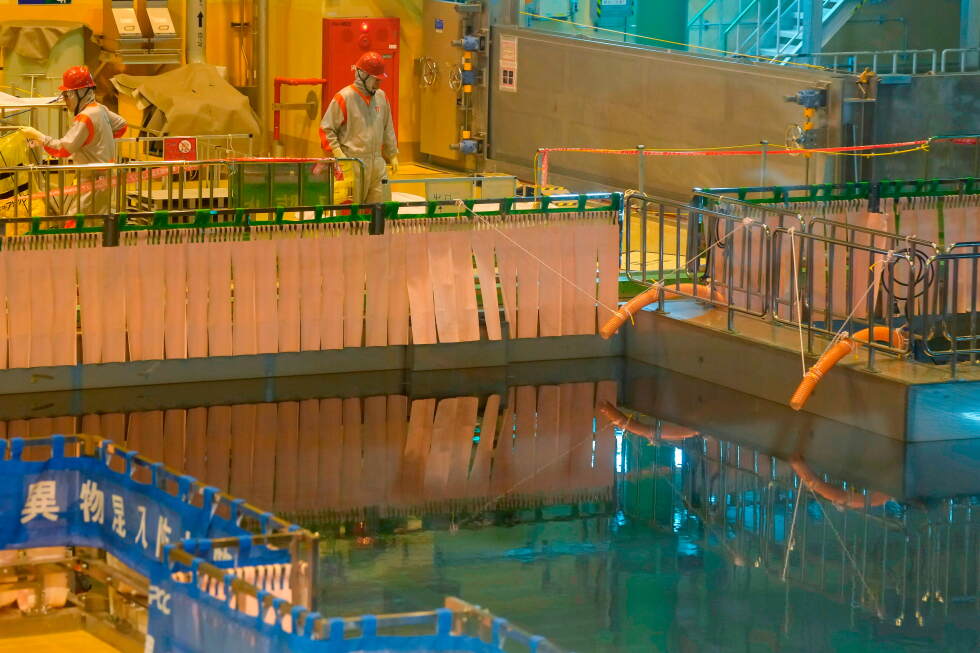
    Against the backdrop of a global energy crunch that has tightened oil supplies and pushed Japan’s electricity security to a critical juncture, the East Asian nation has brought the world’s largest nuclear power facility back online. But the long-awaited restart of the 14-year-shuttered Number 6 reactor at the Kashiwazaki-Kariwa Nuclear Power Station, operated by Tokyo Electric Power Company Holdings (TEPCO), has thrown a harsh spotlight on a decades-old, unresolved crisis that threatens to derail Japan’s entire nuclear energy revival: the country is rapidly running out of space to store dangerous spent nuclear fuel, and it still has no credible, actionable plan for permanent disposal of the radioactive material.

    Kashiwazaki-Kariwa’s restart earlier this year was framed by the Japanese government as a catalyst to bring more idled reactors back online following the 2011 Fukushima disaster. However, industry data tells a stark story: according to the Federation of Electric Power Companies of Japan, Kashiwazaki-Kariwa is one of three Japanese nuclear facilities whose on-site spent fuel cooling pools will hit full capacity within the next five years. “Without solid fuel management plans, our power generation will stall sooner or later,” said Takeyuki Inagaki, general manager of Kashiwazaki-Kariwa.

    Japan’s nuclear sector has operated under strict post-Fukushima safety rules for 14 years. Back in March 2011, a 9.0-magnitude earthquake off Japan’s northeastern coast triggered a massive tsunami that caused catastrophic meltdowns at three Fukushima Daiichi reactors, also operated by TEPCO. The disaster displaced roughly 160,000 people, and large swathes of the Fukushima coast remain uninhabitable to this day. In the wake of the disaster, all of Japan’s 54 nuclear reactors were taken offline for safety inspections and upgrades; just 15 have resumed operations to date, including Kashiwazaki-Kariwa’s Number 6 unit. TEPCO has implemented sweeping new safety upgrades at the plant based on Fukushima lessons, including filtered venting systems and hydrogen explosion prevention technology; even so, the facility’s Number 6 cooling pool is already 88% filled with spent fuel, visible from a top-floor public observation area.

    Prime Minister Sanae Takaichi has made expanding nuclear power a core pillar of Japan’s strategy to alleviate energy shortages driven by the global oil crisis, but every restart adds more spent fuel to the growing national stockpile. Without a permanent storage solution, industry and independent experts warn that a growing number of reactors will be forced to shut down once on-site storage runs out.

    Japan has long pinned its hopes on a nuclear fuel recycling program, which officials argue aligns with the resource-poor nation’s energy security goals, while cutting the volume and toxicity of final radioactive waste. The program would extract plutonium and uranium from spent fuel for reuse in new reactor operations. However, the centerpiece of the recycling plan — a specialized plutonium-fueled reactor — has suffered catastrophic failure, leaving the program dead in the water. What’s more, even a fully operational recycling program would not be able to process all of Japan’s accumulated spent fuel, leaving the country with a growing stockpile of plutonium large enough to build thousands of nuclear weapons. Many independent experts have urged the Japanese government to abandon its commitment to recycling and pursue direct permanent disposal of spent fuel, a path already adopted by most other nuclear-advanced nations including the United States, the United Kingdom and Germany, which largely abandoned reprocessing due to prohibitive costs and intractable technical barriers.

    Official data underscores the urgency of the problem: as of December 2025, Japan’s 17 operating nuclear power plants hold more than 17,000 tons of spent fuel in their on-site cooling pools, utilizing nearly 80% of the nation’s total available storage capacity, per Japan’s Ministry of Economy, Trade and Industry. On top of the waste from routine reactor operations, Japan must also address the massive, poorly understood volume of high-level radioactive waste left behind by the Fukushima disaster, explained Lila Okamura, a professor at Senshu University and leading expert on environmental politics and nuclear waste management. Okamura noted that selecting a permanent disposal site, constructing an underground facility and completing multi-millennia monitoring of the site would take more than 10,000 years total, making it a multi-generational project that requires careful, deliberate planning — not the rushed, uncertain approach the government is pursuing today.

    Weeks after Kashiwazaki-Kariwa’s Number 6 reactor came back online, the Japanese government took a new step toward solving the storage crisis: Industry Minister Ryosei Akazawa formally requested that Ogasawara Village, which administers the remote Pacific island of Minamitorishima, approve a feasibility study for a permanent high-level radioactive waste disposal site there. Located roughly 2,000 kilometers south of Tokyo, the uninhabited government-owned island is currently the site of a new Japanese Self-Defense Force long-range missile firing range, built as a deterrent to China, and holds commercially valuable deep-sea rare earth mineral deposits. “With a lot of spent fuel accumulating at nuclear power plants across the country, a final disposal of radioactive waste is a crucial challenge that must be resolved,” Akazawa wrote in a formal letter to Ogasawara Mayor Masaaki Shibuya.

    Critics have already pushed back on the selection of Minamitorishima, arguing the choice was driven more by political convenience than geological or safety logic. Satoshi Takano, a member of the Japanese government’s own advisory panel on spent fuel disposal, noted “there will be little opposition from a government-owned remote island,” making it an easy political choice rather than the best technical one. While some experts acknowledge that Minamitorishima sits on a geologically stable tectonic plate, making it a potentially suitable candidate, local residents of Ogasawara and nearby inhabited islands have raised widespread concerns about impacts on public safety and the region’s vital tourism industry. Ogasawara is a UNESCO Natural World Heritage Site, and local assembly member Yusuke Hirano summed up widespread local opposition: “I was baffled when I heard about the plan. I think nuclear waste is incompatible with islands that are a UNESCO Natural World Heritage site.”

    Minamitorishima is not Japan’s first attempt to find a permanent disposal site. Since the government began its search in the early 2000s, three other locations have already been studied, and attracting local community support for a radioactive waste dump has consistently proven difficult, even when the government offers hundreds of millions of dollars in local subsidies. The full feasibility and approval process is expected to take roughly 20 years; municipalities that participate in the first stage of review can receive up to 2 billion yen ($12.8 million) in federal grants, while second-stage participants get up to 7 billion yen ($44.7 million), with funding for the final stage still undisclosed. Globally, the world’s first permanent geologic disposal facility for spent nuclear fuel is set to open in Finland later this year, setting a global benchmark for long-term waste management.

    In the near term, Japanese utilities have turned to temporary stopgap measures to free up space in overflowing cooling pools. TEPCO is currently shifting spent fuel from the Number 6 reactor to other, less full units at Kashiwazaki-Kariwa, and hopes to resume shipments of spent fuel to dry cask storage facilities in northern Japan in the near future. Other utilities with nearly full cooling pools have announced plans to build their own on-site dry cask storage. But these measures only delay the inevitable, and local activists and residents warn that the growing stockpile of spent fuel brings its own immediate risks, including increased chances of overheating accidents at crowded storage facilities.

    Mie Kuwabara, a civil society activist based in Niigata Prefecture, where Kashiwazaki-Kariwa is located, shares the widespread skepticism of the Minamitorishima plan and the government’s rushed approach to reactor restarts. “It’s irresponsible to accelerate restarts and produce more spent fuel without deciding its final destination,” Kuwabara said. She argued that the choice of uninhabited Minamitorishima reflects a troubling disregard for long-term safety: “It’s like saying that it’s OK to put a facility there because nobody is around to complain if there is a problem. It’s scary.”


  • Thousands march in Pakistan-administered Kashmir as clashes kill at least 15

    Thousands march in Pakistan-administered Kashmir as clashes kill at least 15

    A fragile, unsettling quiet has settled over major population centers across Pakistan-administered Kashmir, following days of violent clashes between anti-government protesters and security forces that have left at least 15 people dead and dozens more wounded, local authorities confirmed this week.

    The unrest was triggered by a long-simmering political dispute over 12 reserved legislative seats set aside for Kashmiri refugees in the region’s upcoming July assembly election. The provision reserves these seats exclusively for refugees who do not currently reside in Pakistan-administered Kashmir, barring permanent local residents from contesting them. The Joint Awami Action Committee (JAAC), a coalition of local activist groups, organized a mass protest march to the regional capital Muzaffarabad demanding the full abolition of the reserved seats, arguing that all legislative positions should be held by people who actually live and vote in the region.

    In response to the protest call, regional authorities moved quickly to crack down on the coalition: they officially banned the JAAC on June 5 under regional anti-terrorism laws, levying sedition and terrorism allegations against the group, claiming its activities undermine regional peace and security. Authorities have also launched targeted legal action against the coalition’s senior leaders.

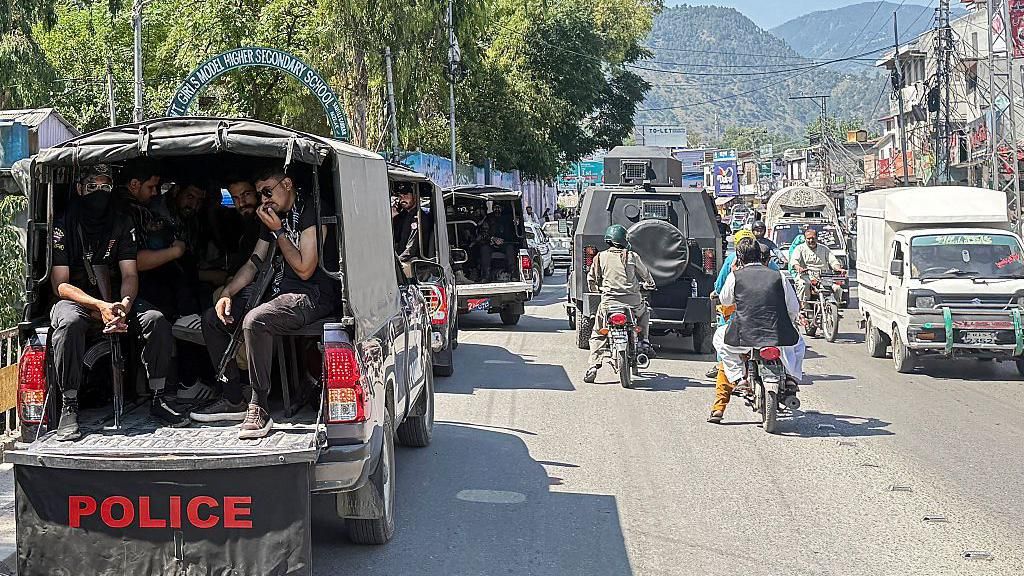
    The harsh crackdown failed to deter widespread participation, however. Thousands of local residents joined the protest march, sparking violent confrontations with security forces across multiple districts of the region. Official estimates place the size of the main protester convoy at more than 10,000 people, which is currently positioned just four kilometers outside the city of Rawalkot. Regional officials have explicitly blocked the convoy from advancing through Rawalkot on its route to Muzaffarabad.

    Sardar Waheed Khan, Poonch district commissioner for Pakistan-administered Kashmir, told BBC Urdu that enhanced security patrols have been deployed across the area to enforce public order, and local residents have been ordered to stay in their homes. Local mosques have also broadcast public announcements echoing the order to remain indoors. Air surveillance helicopters are now conducting regular flights over both Rawalkot and Muzaffarabad to monitor protester movements.

    The first major clashes erupted earlier this week in Rawalakot, with additional violent confrontations breaking out in the city of Kotli on Tuesday that left three more people dead. To date, the official death toll stands at 15: 11 civilian protesters and four security force officers. At least 50 people have been wounded in the unrest, and local officials have acknowledged the death toll may climb as violence continues.

    Global human rights group Amnesty International issued a sharp rebuke of the government response Tuesday, condemning what it called a “violent and sweeping crackdown” on the protests. The organization highlighted the implementation of a regional internet shutdown, mass arbitrary arrests of activists and protesters, and the use of deadly force against demonstrators, warning that the crackdown marks a dramatic, alarming deterioration of human rights protections in the region.

    Despite the violence and government restrictions, the protest march to Muzaffarabad is still moving forward, and the JAAC has called for a region-wide general strike to back its demands. Currently, the capital Muzaffarada remains under a heavy security presence: streets are largely empty, storefronts are shuttered, and uniformed police patrol quiet neighborhoods. It remains unclear whether most business closures stem from public safety fears or are part of the strike in solidarity with JAAC demands. One local Muzaffarabad trader told BBC Urdu he closed his shop voluntarily, and would keep it closed until the group’s demands are met or the strike is called off.

    The legal status of the 12 reserved seats has already been addressed by the Supreme Court of Pakistan-administered Kashmir, which issued a formal advisory opinion ruling that the seats are constitutionally protected and cannot be modified through administrative action, political negotiation, or public pressure.

    For context, Pakistan-administered Kashmir is a semi-autonomous region with its own independent regional government. The broader Kashmir region has been a flashpoint of conflict between India and Pakistan for more than seven decades. Both nations claim the entire Himalayan territory in full, and have fought two full-scale wars and one limited armed conflict over control of the region. Today, India and Pakistan each administer separate portions of Kashmir, with tensions regularly flaring along the de facto border dividing the two control zones.

  • Haiti forced to change World Cup kit over war imagery

    Haiti forced to change World Cup kit over war imagery

    Just days ahead of their opening 2023 Women’s World Cup Group C clash against Scotland, Haiti has been required to alter its official team kit after global governing body FIFA ruled out a design feature honoring a pivotal moment in the nation’s fight for independence. The original kit, produced by Colombian apparel manufacturer Saeta, included a subtle illustration of the 1803 Battle of Vertieres — the conflict that ultimately secured Haiti’s sovereignty from colonial rule — paired with the country’s national flag. Haitian players wore the original design in two warm-up friendly matches held in Florida earlier this month, triggering a review by FIFA’s equipment compliance team.

    In an official statement shared to Instagram Wednesday, Saeta clarified the original creative intent behind the controversial design, emphasizing it was never meant to carry a political message. “The final design we presented was crafted as a tribute to all the Haitian men and women who work every day to build a better future for their country,” the statement read. “Throughout the standard regulatory review process, FIFA concluded that specific visual elements in the design could be interpreted in a way that violates their equipment guidelines, and formally requested adjustments to the kit. While FIFA’s interpretation does not align with our original, non-political intent, Saeta respects the governing body’s processes and has fully implemented the required modifications to meet their final specifications.”

    The kit revision comes as Haiti prepares to make its long-awaited return to the World Cup stage, kicking off its campaign against Scotland in Boston on Saturday. This is only the second time in the nation’s history that it has qualified for the tournament, ending a 52-year drought since its last World Cup appearance. Ranked 83rd in the global FIFA rankings, the underdog Caribbean side faces a daunting group stage challenge: after facing Scotland, it will go up against five-time tournament champion Brazil and current African title holder Morocco.

    Haiti’s historic qualification has already been hailed as one of the most uplifting underdog stories of this year’s tournament. The team overcame extraordinary off-pitch obstacles to secure their spot, amid widespread gang violence and political instability that has plunged the impoverished Caribbean nation into chaos. The ongoing unrest made it impossible for the team to host any of its qualifying matches on home soil, forcing the side to play all home fixtures in neutral territories. Despite these crippling challenges, the squad pulled off one of the biggest upsets of the qualifying process to book their place in the 32-team tournament.

    For Haitian midfielder and team star Jean-Ricner Bellegarde, the World Cup berth offers a chance to reshape global perceptions of his crisis-stricken homeland. “We know many people around the world have a negative image of our country, that they only see all the problems we face,” Bellegarde told AFP in an interview. “But just being here, competing on this stage, will bring so much good for our country, our people, and our families.”

  • Climate change-fuelled storm decimated world’s rarest great ape: study

    Climate change-fuelled storm decimated world’s rarest great ape: study

    A single extreme weather event amplified by human-caused climate change has delivered a catastrophic blow to the world’s rarest great ape species, new research has confirmed, leaving fewer than 800 Tapanuli orangutans surviving in the wild. According to a study published Wednesday in the peer-reviewed academic journal Current Biology, last November’s Cyclone Senjaya triggered widespread mudslides and flash flooding across Indonesia’s Sumatra island that killed an estimated 58 Tapanuli orangutans. This toll accounts for roughly 7% of the species’ entire remaining wild population, and 11% of the apes that live in the affected Batang Toru Ecosystem – the only protected habitat the species still occupies. The broader flooding event killed more than 1,000 human residents across the region as well.

    Only formally recognized as a distinct species by the scientific community in 2017, Tapanuli orangutans are already one of the most vulnerable large mammals on Earth. The entire wild population is confined to a small, fragmented stretch of highland forest in northern Sumatra, after decades of human development pushed them out of their preferred lowland habitats. Conservation scientists have warned for years that overlapping threats of industrial encroachment and climate-driven extreme weather could push the species to extinction in just a few decades.

    To reach their population loss estimates, researchers from the University of Indonesia and conservation initiative Borneo Futures cross-referenced satellite imagery of landslide damage in Batang Toru with existing maps that track Tapanuli orangutan population density across the ecosystem. Their analysis found that roughly 8,300 hectares of critical forest habitat – more than 11% of the ecosystem’s total forest area – was destroyed or severely damaged by the cyclone-triggered landslides. In addition to the 58 confirmed or projected orangutan deaths, the storm wiped out critical food sources and shelter that the remaining apes depend on for survival.

    “This level of loss is substantial for a species with such a small total population,” explained Erik Meijaard, chief scientist at Borneo Futures. “For a population already on the brink, losing one out of every 14 individuals to a single weather event is a devastating blow that the species cannot absorb repeatedly.”

    Jatna Supriatna, lead researcher from the University of Indonesia, emphasized that the mass mortality event was directly tied to rising global temperatures that have increased the frequency and intensity of extreme tropical cyclones in the region. “The loss of an estimated 58 Tapanuli orangutans to a single climate-induced landslide event is a devastating demographic shock to the world’s rarest great ape,” he said.

    Conservation groups have campaigned for decades to stop planned industrial development in the Batang Toru Ecosystem, including a large proposed hydroelectric dam and ongoing illegal gold mining operations that have already fragmented the apes’ remaining habitat. Data from conservation advocacy group Mighty Earth, released earlier this year, underscores the growing risk: Sumatra lost more than 4.4 million hectares of forest between 2001 and 2024 – an area larger than the entire country of Switzerland – and widespread deforestation has left the island’s hilly landscapes far more vulnerable to catastrophic climate-driven landslides.

    To avoid what would be the first extinction of a great ape species in modern history, Supriatna said, both Indonesian authorities and global stakeholders must take urgent action. “Indonesia must permanently protect the Batang Toru ecosystem from further industrial encroachment,” he said. “But our international partners must also meet their global commitments by providing immediate biodiversity-recovery financing to support habitat restoration and protection efforts.”

  • Cape Town becomes first African World Marathon Major

    Cape Town becomes first African World Marathon Major

    In a landmark announcement that reshapes the global landscape of elite long-distance running, the Abbott World Marathon Majors series confirmed Wednesday that Cape Town Marathon has joined its prestigious roster, marking the first African-hosted race to earn a spot in the sport’s most exclusive circuit.

    Cape Town now takes its place alongside seven of the most iconic marathons on the planet: London, New York City, Boston, Chicago, Berlin, Sydney, and Tokyo. The addition brings a distinctly African cultural and geographic identity to the elite series, which has long been centered in North America, Europe, Asia, and Oceania.

    Dawna Stone, chief executive of Abbott World Marathon Majors, emphasized the transformative impact of the inclusion, noting that Cape Town’s one-of-a-kind cultural heritage, warm community hospitality, and breathtaking natural setting will add an entirely new dimension to the elite circuit. “I know runners in Africa and across the world will have a phenomenal experience at this race,” Stone added.

    The Cape Town Marathon has already built a reputation for attracting world-class elite competition. This year’s May edition, for example, drew 41-year-old double Olympic gold medalist Eliud Kipchoge, who made his first-ever marathon start on African soil, finishing 16th with a time of 2:13:29. The race was ultimately won by Ethiopia’s Mohamed Esa, who set a new course record of 2:04:55 — the fastest marathon time ever recorded across the African continent. Esa’s compatriot Yihunilign Adane took second place just four seconds behind at 2:04:59, while Kenya’s Kalipus Lomwai rounded out the podium in 2:05:06. All three top finishers ran new personal best times in the event.

    Cape Town Mayor Geordin Hill-Lewis celebrated the Majors inclusion as the payoff for years of coordinated effort to grow the race and meet the series’ strict standards. “It follows many years of hard work to secure inclusion in the Majors,” he said of the milestone decision.

    Beyond its impact on global running, organizers project that the new Major status will deliver a substantial economic boost to the Cape Town region, with an estimated $49 million in additional visitor spending on travel, accommodation, and dining expected to flow into the local economy.

    Looking ahead, the first edition of the Cape Town Marathon as an official World Major is scheduled for May 23, 2027. It is worth noting that the 2025 edition of the race was ultimately canceled over safety concerns, after unseasonably high winds created unsafe conditions for competing runners.

  • Macron says trust in France institutions ‘at stake’ after girl’s killing

    Macron says trust in France institutions ‘at stake’ after girl’s killing

    A brutal suspected murder of an 11-year-old girl in southwestern France has ignited nationwide fury, after systemic failures in the country’s child protection and justice systems allowed an alleged offender with a history of past accusations to remain free to strike. President Emmanuel Macron has acknowledged that public faith in France’s state institutions now hangs in the balance in the wake of the tragedy.

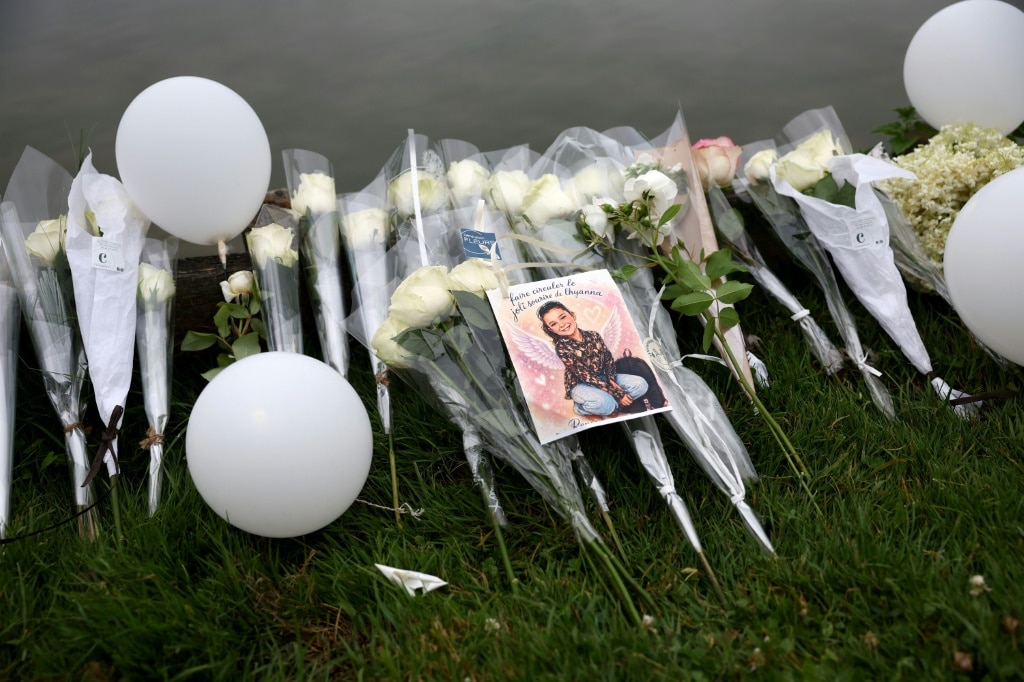
    The victim, identified only as Lyhanna, went missing from her home in the town of Fleurance on May 29, and her body was recovered by authorities one week later. The primary suspect in the case is 41-year-old Jerome B., a former school worker and father of one of Lyhanna’s classmates, who had previously been accused twice of raping a child. Both prior investigations were either closed without resolution or stalled indefinitely, long before Lyhanna’s disappearance.

    Addressing a weekly cabinet meeting on Wednesday, Macron stressed that the crisis extends far beyond the killing itself. Speaking to reporters after the meeting, government spokeswoman Maud Bregeon relayed Macron’s assessment that “it is trust in our institutions that is at stake.” While acknowledging the widespread public anger over the mishandling of prior allegations against the suspect, Macron called for measured response to the tragedy, noting that “We do not respond to a tragedy with shouting.” He added that investigators must now untangle what went wrong: “We must now understand what falls under individual responsibilities and what concerns systemic lapses within all the public services involved.”

    Public outrage boiled over on Monday, when an estimated 60,000 people joined silent marches and protests across the country. Many demonstrators called for the resignation of Justice Minister Gerald Darmanin, who has refused to step down but issued a public apology for what he admitted was a “huge failure” in Lyhanna’s case. As of Wednesday, authorities have not yet released results of the forensic examination of Lyhanna’s body, and the suspect has only been formally charged with abduction, pending further investigation. Lyhanna’s funeral is scheduled for Friday afternoon, and will be held in private per her family’s request, according to the family’s legal representative.

    The case has already shed new light on the deep, long-running flaws in France’s handling of child sexual assault allegations. Nine months before Lyhanna went missing, another mother filed a formal complaint against Jerome B., accusing him of repeatedly raping her 10-year-old daughter between September 2023 and May 2024. The accusation was supported by a formal medical report, but law enforcement never questioned the suspect before Lyhanna’s disappearance.

    Speaking to reporters on Tuesday, the accuser — who requested anonymity to protect her daughter — slammed the justice system for its inaction. “The justice system did not do its job,” she said. “I called every Monday morning, while my daughter was with the psychologist. I called the police. The last time I rang them, they told me that if I kept harassing them, they would press charges against me.”

    Independent and government data backs up claims of systemic failure. According to France’s independent commission on child sexual violence, CIIVISE, only 7% of reported complaints of child sexual assault in France result in a criminal conviction. A 2022 government report previously flagged chronic understaffing and limited time allocated to child abuse investigations, and data published by investigative outlet Mediapart this week revealed that 70% of cases end with no additional evidence collection — such as phone record pulls, security camera review or digital device searches — after investigators interview the suspect.

    Prime Minister Sebastien Lecornu told the French Senate on Wednesday that the specific investigation into the prior accusations against Jerome B. did not suffer from a lack of resources, but he conceded that the broader justice system does face widespread resourcing gaps. “But that does not mean the justice system does not have a resources issue,” he added.

    Lyhanna’s death is far from an isolated incident, and is the latest in a string of high-profile child protection failures that have shaken France in recent years. In Paris, dozens of kindergarten and primary school monitors have been suspended this year over allegations of sexual abuse against pupils in their care; Paris Mayor Anne Hidalgo confirmed Tuesday that 52 staff have been suspended so far in 2025 over suspected “sexual or sexist abuse.” In 2024, a French court sentenced a retired surgeon to 20 years in prison after he confessed to sexually assaulting or raping 299 child patients over a 25-year period between 1989 and 2014 — he continued practicing for decades even after a prior conviction for possessing child sexual abuse imagery.

    CIIVISE estimates that roughly 160,000 children experience rape or sexual assault in France every year, the vast majority at the hands of a family member or someone known to the victim. Following Lyhanna’s killing, thousands of French residents joined a silent march Tuesday in Saint-Jean d’Angely, where Lyhanna’s grandparents joined the crowd to call for sweeping reform to France’s child protection laws.