博客

  • Messi, Maradona or Pele? Ranking the top 10 World Cup legends

    Messi, Maradona or Pele? Ranking the top 10 World Cup legends

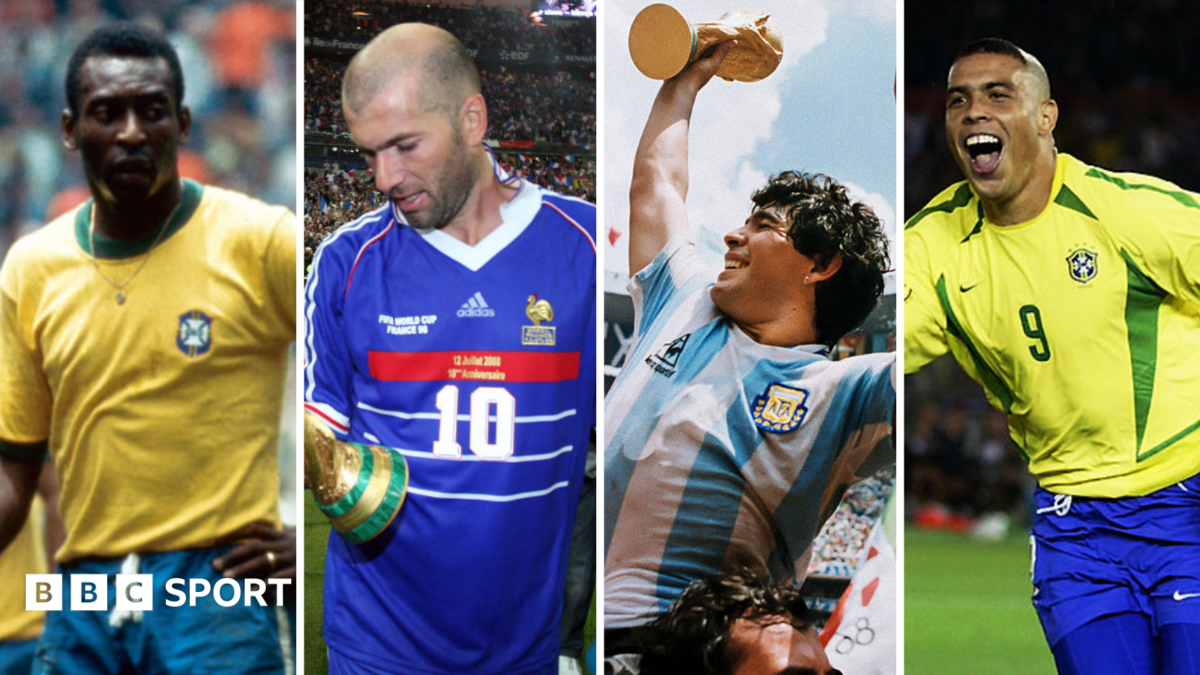
    Narrowing down thousands of elite players across 22 men’s FIFA World Cup tournaments spanning nearly 120 years to a final list of just 10 all-time greats is no small feat, according to senior BBC Sport journalist Alex Bysouth. While Bysouth notes the top six or seven selections are largely undisputed, debate will inevitably rage over the final spots on the ranking, with many iconic players forced to miss out.

    Among the standout omissions is Miroslav Klose, the men’s World Cup’s all-time leading goalscorer, who lands just outside the top 10 at 11th. Also left off the final list are Brazilian dribbling legend Garrincha, Italian icon Roberto Baggio, 1958 single-tournament 13-goal record holder Just Fontaine, Dutch revolutionary Johan Cruyff, Portuguese powerhouse Eusébio, German clinical finisher Gerd Müller, and no individual from Spain’s universally celebrated 2010 World Cup-winning squad, whose collective strength left no single player standing out enough to claim a spot. With that context, here is Bysouth’s ranking of the 10 greatest World Cup legends in history:

    10. Sir Geoff Hurst, England (1966 Winner)
    England’s 1966 home World Cup final was meant to see star striker Jimmy Greaves return from a group stage injury to start, but manager Alf Ramsey opted to retain Hurst — a player who had made his international debut just months earlier. That decision went down in football folklore: the West Ham forward scored the only hat-trick in a men’s World Cup final for 56 years, leading England to their first and to date only World Cup title. Hurst was not the most naturally gifted player in that England squad, but his historic final feat — only matched 56 years later by Kylian Mbappé in Qatar, who finished on the losing side — cements his place in World Cup history. Without Hurst, there would be no iconic “they think it’s all over” commentary, nor the decades of national longing that have followed England’s 1966 triumph.

    9. Cafu, Brazil (1994 & 2002 Winner)
    The only player in history to feature in three consecutive World Cup finals, Cafu’s legacy stretches from the favelas of São Paulo to the world’s biggest football stages. He came off the bench to claim his first winners’ medal when Brazil beat Italy on penalties in the 1994 Rose Bowl final, finished as a runner-up in 1998 on home soil for France, and lifted the trophy as captain in the 2002 co-hosted tournament in Japan and South Korea. Across four tournaments, Cafu notched 16 World Cup wins — a total only topped by the omitted Miroslav Klose. Before lifting the 2002 trophy, he wrote “100% Jardim Irene” on his Brazil shirt, a tribute to the working-class favela where he grew up, cementing his status as both a World Cup great and a grounded icon of the game.

    8. Paolo Rossi, Italy (1982 Winner)
    Rossi’s 1982 World Cup run remains one of the greatest fairytale redemption stories in tournament history. Returning to international football just months after a two-year ban over match-fixing allegations he always denied, Rossi rose to the occasion in one of the most iconic World Cup matches of all time: Italy’s second-round clash with tournament favorites Brazil at Barcelona. Expected to rely on their solid defense to grind out a result, Italy found their match-winning hero in Rossi, who scored a hat-trick — including the game-winner — to knock out the Seleção. He went one step further, bagging a brace against Poland in the semi-final, and scoring the opening goal of Italy’s 3-1 final victory over West Germany at the Santiago Bernabéu, securing Italy’s first World Cup title since 1938. His six tournament goals earned him the Golden Boot, Golden Ball, and FIFA World Player of the Year honors.

    7. Zinedine Zidane, France (1998 Winner)
    A second-generation Algerian immigrant raised in the public housing towers of northern Marseille, Zidane became the face of France’s multicultural 1998 World Cup-winning squad, a team that united the nation behind the tournament hosted on home soil. After a red card against Saudi Arabia in the group stage sidelined him for two matches, Zidane returned in the knockout stage to lead France past Italy and Croatia, before delivering a masterclass in the final against favorites Brazil. He scored two trademark header goals from corner kicks, sparking mass celebrations across Paris that saw a million fans pack the Champs-Élysées, with chants of “Zidane for president” ringing out around the Arc de Triomphe. Zidane’s World Cup legacy is equal parts brilliance and controversy: he is also remembered for a red card after headbutting Marco Materazzi in the 2006 final, which France lost to Italy, but that moment does not overshadow his status as one of the tournament’s greatest ever players.

    6. Kylian Mbappé, France (2018 Winner)
    Mbappé’s World Cup legend is still being written at just 27 years old, with potentially two or three more tournaments left in his career before he retires. As a 19-year-old at the 2018 Russia World Cup, he became France’s youngest ever World Cup goalscorer, the first teenager to score twice in a knockout round match since Pele in 1958 (in a last-16 win over Argentina), and the first teen to score in a World Cup final since Pele, as France lifted the trophy against Croatia. Despite his prolific club success at Paris Saint-Germain and now Real Madrid, Mbappé has yet to win a UEFA Champions League title — his greatest performances have consistently come on the World Cup’s biggest stage. His sensational hat-trick in the 2022 Qatar final against Argentina, including a stunning volley, was a performance worthy of a second title, even if he ultimately ended on the losing side against Lionel Messi.

    5. Franz Beckenbauer, West Germany (1974 Winner as Captain, 1990 Winner as Manager)
    Nicknamed Der Kaiser, Beckenbauer is one of only a handful of people to win the World Cup both as a player and as a manager. After finishing runner-up in 1966 and third in 1970, he captained host West Germany to the 1974 title against the heavily favored Dutch side led by Johan Cruyff. Despite falling behind to a second-minute penalty before the German side had even touched the ball, the elegant ball-playing defender led his team to a comeback victory over Cruyff’s revolutionary Total Football side, a style that had influenced Beckenbauer’s own approach to the game. After retiring as a player, he moved to the dugout, leading West Germany to the 1986 final (a loss to Argentina) before securing revenge and the 1990 title in Italy, cementing his unique multi-decade World Cup legacy.

    4. Lionel Messi, Argentina (2022 Winner)
    For years, it looked like World Cup glory would elude Messi, one of the greatest players of his generation and of all time. As he entered his mid-30s, Messi had never lifted the trophy, even after leading Argentina to the 2014 final. His fifth tournament in Qatar got off to a disastrous start, with a shocking opening defeat to Saudi Arabia that left Argentina facing early elimination. But Messi turned the tournament around single-handedly: he notched a goal and an assist in a critical win over Mexico, scored against Australia in the last 16, converted a penalty against the Netherlands in the quarter-final, and scored another spot kick against Croatia in the semi-final to send Argentina to the final. In a classic final against France, Messi scored twice to bring his tournament total to seven goals, and converted his penalty in the shootout to secure Argentina’s first World Cup title since Diego Maradona’s 1986 triumph, finally completing his legacy.

    3. Ronaldo (Brazil, 1994 & 2002 Winner)
    Ronaldo’s 2002 World Cup triumph remains the sport’s most iconic redemption arc. Like Cafu, the teenage Ronaldo was part of Brazil’s 1994 World Cup squad but did not make an appearance. By 1998, he was the best player on the planet, a dynamic combination of blistering pace, technical skill and ruthless finishing, and carried Brazil to the final, scoring four goals en route. But a pre-match seizure left him disoriented for the final, and Brazil fell to France, leaving the star with a painful legacy he carried for four years. Years of serious knee injury kept him out of club and international football for long stretches ahead of 2002, leaving his place in the squad in doubt. But in Japan and South Korea, the Brazilian legend reclaimed his status, scoring eight goals — including two in the final win over Germany — to erase the memory of 1998, and brought his total World Cup goal tally to 15, a record that stood for years.

    2. Diego Maradona, Argentina (1986 Winner)
    No player in World Cup history brought more drama, star power and iconic moments than Maradona, who claims the second spot on this list. Left out of Argentina’s 1978 home World Cup win at 17, he made his tournament debut in 1982, where he was sent off for retaliation in a fiery knockout clash with Brazil. His defining tournament came in 1986 in Mexico, where he delivered what many still consider the greatest individual performance in World Cup history. His quarter-final clash with England produced two of the most famous goals in history: the controversial “Hand of God” opening goal, followed by a moment of pure genius, where he dribbled from inside his own half past six England players to score one of the greatest goals the tournament has ever seen. He scored twice more against Belgium in the semi-final, and captained Argentina to a final win over West Germany, finishing the tournament with five goals and five assists. Maradona’s World Cup career ended as dramatically as it played out: he led Argentina to the 1990 final, where they lost, and was sent home from the 1994 tournament after failing a doping test.

    1. Pele, Brazil (1958, 1962 & 1970 Winner)
    There was never any question who would top this list: Pele remains the only player in men’s World Cup history to win three titles, across three different decades, and for generations, he was the most iconic name in global football. As a 17-year-old in 1958, he fulfilled a promise he made to his father after Brazil’s devastating 1950 Maracana final defeat to Uruguay, scoring a semi-final hat-trick against France and two more in the final win over Sweden to claim his first title. He was part of the 1962 Brazilian squad that retained the trophy, though he missed most of the tournament through injury after scoring in the opening match. A series of brutal tackles in the 1966 tournament led him to vow he would never play in the World Cup again, but he returned in 1970, leading what many consider the greatest World Cup squad of all time to victory in Mexico, scoring in the 4-1 final thumping of Italy and setting up two more goals. Across four World Cups, Pele scored 12 goals in 14 matches and left an unmatched legacy as the greatest World Cup star of all time.

    Bysouth has invited football fans to share their own takes on the ranking in public comments, opening the debate up to the global football community.

  • Victoria Police release new images of escaped prison inmate Orijol Rukaj

    Victoria Police release new images of escaped prison inmate Orijol Rukaj

    Two months after a convicted inmate vanished from a supervised funeral visit in Melbourne, Australian authorities have turned to the public for fresh tips, releasing new closed-circuit television footage in a bid to reignite the stagnating manhunt.

    Forty-seven-year-old Orijol Rukaj has not been spotted by law enforcement since he slipped away undetected mid-service on April 25, when he was granted temporary, supervised release from custody to attend a funeral at Keilor East Cemetery in Melbourne’s northwestern suburbs.

    After eight weeks of intensive searches across the state that yielded no confirmed sightings, Victoria Police have announced a new push for public assistance, publishing additional CCTV clips captured inside the correctional facility that show Rukaj at multiple timepoints. Investigators hope the newly released images will jog the memory of members of the public who may have encountered the fugitive since his escape.

    In a public statement detailing the progress of the manhunt to date, police confirmed that officers executed visits to 20 separate properties across Melbourne’s metropolitan area on June 9 to question Rukaj’s known associates. Following those inquiries, investigators confirmed they now believe the escaped inmate remains hiding somewhere within the Melbourne region.

    The investigation has also uncovered that multiple people allegedly helped Rukaj plan his escape, though all suspects believed to be involved are currently outside of Australia. Police added that Rukaj has documented ties to Albanian organized criminal networks, further underscoring the urgency of the manhunt.

    Law enforcement has released a detailed public description of the fugitive: he is a Caucasian male with a thin build, standing approximately 176 centimeters tall, with hazel eyes and short, shaved brown hair. He speaks with a Southern European accent, and was last seen wearing a white collared shirt, a black suit, and a pair of Asics athletic trainers.

    Victoria Police have issued a clear warning to the public: anyone who spots Rukaj should contact emergency services via the triple-zero emergency line immediately. Members of the community with any relevant information that could help investigators locate the fugitive are asked to either visit their nearest local police station or contact the anonymous Crime Stoppers hotline at 1800 333 000.

  • Minimum wage rise sparks warning of two more interest rate hikes

    Minimum wage rise sparks warning of two more interest rate hikes

    Starting July 1, more than one in five Australian workers will see their pay packets grow after the Fair Work Commission formalized a 4.75% increase to the national minimum award wage, a decision that has split economic experts over its impact on inflation and the Reserve Bank of Australia’s monetary policy trajectory.

    The adjustment lifts the hourly minimum wage from $24.95 to $26.44, or from $948 to $1004.90 per week, covering 2.8 million employees whose pay is set under modern awards rather than enterprise agreements. The announcement comes amid already shifting conditions in Australia’s labour market, recent data shows.

    New Commonwealth Bank analysis of current wage trends found a 0.8% quarterly wage increase pushed annual growth to 3.1% in May, holding steady even as official Australian Bureau of Statistics data recorded an unexpected 19,000 drop in employment and a small uptick in the unemployment rate in April. CBA senior economist Harry Ottley noted that wage growth has remained remarkably stable in recent months, with no definitive evidence that persistently high inflation has triggered a self-reinforcing wage-price spiral.

    “Right now, there is still no clear sign that higher inflation is translating into stronger permanent wages growth, with labour market conditions remaining relatively balanced,” Ottley explained. His team projects official May employment data, set for release in the coming days, will show a rebound of 23,000 new jobs, a signal the labour market has retained resilience against the pressure of already elevated interest rates and global economic volatility stemming from the Middle East conflict. Still, Ottley warned that rising unemployment points to emerging softness, with growth in hiring expected to stay muted through 2026 as the economy cools, pushing the unemployment rate to a peak of around 4.6%.

    The newly announced minimum wage increase will add fresh upward momentum to national wage growth, Ottley confirmed, with additional gains expected for public sector workers including New South Wales nurses in coming months, even as overall wage inflation remains contained for the time being.

    But other leading economists have raised sharp alarms over the size of the pay increase, which came in higher than many market forecasts. AMP economist My Bui warned that while the Fair Work Commission’s decision to prevent negative real wage growth for low-income workers is logically understandable, the sheer scale of the workforce affected creates meaningful inflation risk. Even though the hike is projected to add less than 0.6 percentage points to next year’s annual wage growth, Bui noted there is a significant risk that higher minimum wages will push pay demands across other private sector industries.

    “Wage pressures will add to already sticky services inflation, as businesses pass on higher labour and input costs, which have remained elevated amid rising goods prices,” she said. CreditorWatch chief economist Ivan Colhoun echoed that concern, pointing out that more than two-thirds of the workers impacted by the increase are concentrated in four labour-intensive sectors: retail, hospitality, healthcare and social assistance, and administrative and support services. For businesses already grappling with sky-high inflation, rising borrowing costs and a recent temporary jump in fuel prices, the new wage mandate will add significant new cost burdens.

    “While the larger than expected minimum wage increase will be welcome for the lowest paid, many businesses and the RBA are unlikely to be as happy,” Colhoun said. The inflation risk has led AMP to revise its interest rate forecast, with Bui now projecting two additional Reserve Bank rate hikes to counter inflationary pressure. Her baseline forecast puts the peak cash rate at 4.85% with a hike coming in November, though she warned there is a growing chance the next increase could come as early as July, rather than being delayed until later in the year.

  • G7 summit at Swiss-French border brings tight security in case violent protests occur

    G7 summit at Swiss-French border brings tight security in case violent protests occur

    GENEVA — Ahead of the upcoming G7 summit set to kick off on Monday near Lake Geneva, French and Swiss law enforcement and border officials are rolling out strict, pandemic-style border controls to counter anticipated large-scale and potentially violent protests against the attending leaders, including former U.S. President Donald Trump. The three-day gathering, which runs from June 15 to 17 in the French lakeside town of Evian-les-Bains, brings together the heads of government from the world’s seven largest advanced economies to deliberate on key global issues ranging from Middle East stability and the ongoing conflict in Ukraine to growing global economic imbalances.

    The threat of unrest stems from a long history of disruptive protests at elite global summits, and local stakeholders in nearby Geneva, Switzerland are determined to avoid a repeat of the violent clashes that damaged downtown storefronts during the 2003 G8 summit, when Russia was still a member of the group. This year, a broad coalition of activist groups has organized demonstrations to channel widespread frustration across multiple flashpoints: from Trump’s policy stances on trade tariffs and Middle East conflicts to perceived inaction on climate change, as well as renewed scrutiny of his past ties to convicted sex offender Jeffrey Epstein.

    The coalition of anti-capitalist, environmental, feminist, and progressive activist groups, which brands itself the No G7 coalition, framed the gathering as a meeting of global powers that perpetuates exploitation and inequality. “As the G7 meets in Evian, France, to plan the destruction of peoples, the exploitation of life and the domination of bodies, let us organize our resistance against fascism and imperialism,” the coalition said in an official call for large-scale international protest mobilization. The standoff between authorities and activists centers on competing priorities: the right of demonstrators to gather and voice dissent, and the right of residents and businesses to be protected from damage and unrest targeting symbols of political and corporate power.

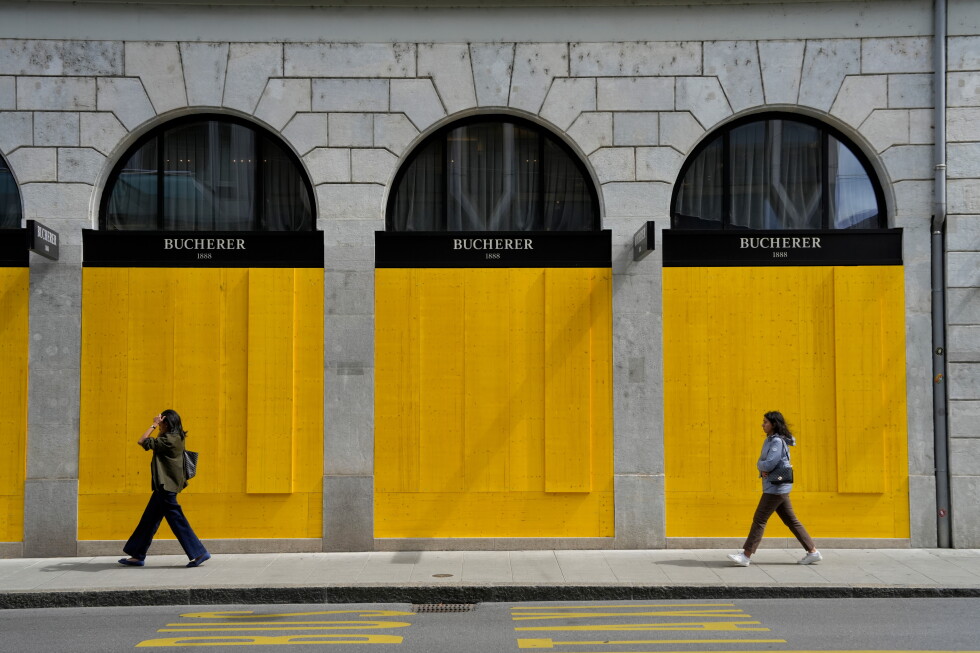
    In preparation for potential unrest, businesses across central Geneva, a major hub for United Nations and global intergovernmental agencies, have already boarded up their storefronts. Several key institutions, including the World Trade Organization — which was the target of massive anti-globalization protests in Seattle in the 1990s — have closed their downtown offices and ordered all non-essential staff to work remotely for the duration of the summit. While Switzerland is not a G7 member state, the close proximity of Geneva to the summit host town makes it a natural gathering point for traveling activists.

    To coordinate security, the two neighboring nations have signed a new military cooperation agreement tailored to the summit. Because Geneva’s main international airport is 95% surrounded by French territory, all arriving G7 leaders will travel through French-controlled airspace and border checks before entering Switzerland. The Swiss federal government confirmed it will deploy roughly 4,000 armed forces personnel to support local police operations, which include sweeping airspace restrictions, floating patrols across Lake Geneva, and targeted closures on cross-border road routes. Only seven of the 35 existing road border crossings between the two countries will remain open for the week, and Geneva officials have permanently closed a major downtown park that activists had selected as their primary protest gathering spot.

    On the French side of the border, security will be even more stringent: more than 13,000 police and gendarmerie officers will be deployed to secure the summit perimeter, with 800 dedicated border control officers on duty — a major jump from the 60 officers that work the crossing on a typical day. French authorities have implemented a special resident permit system for Evian, a town best known globally for its branded bottled water, and cordoned off a large secure exclusion zone around the Hotel Royal, where G7 leaders will hold their closed-door meetings. Only one pre-authorized protest march has been approved, scheduled for June 14 ahead of the summit’s official start, and all unapproved public gatherings are banned for the week.

    Not all observers agree that the harsh security measures are justified. Cedric Dupont, a professor of international relations at the Geneva Graduate Institute, argues that authorities are overreacting to the protest threat, pointing to widespread economic disruption and long border delays similar to those experienced during COVID-19 pandemic restrictions. “It seems that they have not learned the lesson,” Dupont said, noting that protesters can easily enter Geneva from other regions of Switzerland regardless of border restrictions. “It’s just creating more problems than actually solving them.”

    The restrictions are already set to upend daily life for cross-border communities. According to the French Foreign Ministry, more than 110,000 commuters cross the France-Switzerland border daily to work in Geneva. French officials have advised all residents to cancel non-essential travel to the region and work from home where possible. Commuter ferry crossings across Lake Geneva that normally stop in Evian have been rerouted to other docks outside the restricted zone, though authorities have confirmed recreational activities such as swimming and paddleboarding will remain permitted in non-restricted areas as the summer tourist season gets underway. To offset expected economic losses for local businesses, the Geneva cantonal government has allocated a 6 million Swiss franc ($7.6 million) compensation fund for any properties damaged during protests. Officials have acknowledged that violent unrest cannot be ruled out entirely, even with the sweeping security measures in place.

  • Chinese police detain man after dog torture videos spark outrage

    Chinese police detain man after dog torture videos spark outrage

    In a case that has ignited widespread public anger across China, authorities in the southwestern megacity of Chongqing have taken a man identified only by his surname Li into custody over allegations that he tortured adopted dogs and cats, then profited by selling graphic footage of the abuse online. The incident has thrown a spotlight on shifting public attitudes toward animal welfare across the country, as grassroots demand grows for formal legal protections for animals long absent from Chinese statute books.

    The scheme unraveled after a woman who offered her puppies for free adoption shared her suspicious experience with friends, who then brought the case to wider public attention on Chinese social media. Earlier this month, Li posted an adoption advertisement on the popular short-video platform Douyin, posing as a loving pet owner to lure vulnerable animals. According to local media reports, Li claimed his two young children adored puppies, a fabricated backstory designed to convince people to entrust their pets to him.

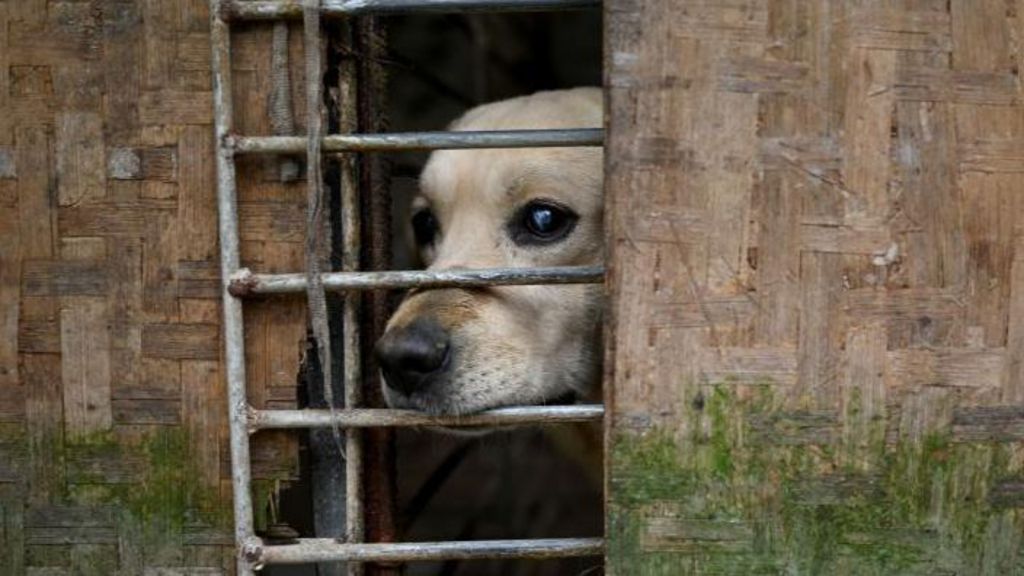
    The true horror of his actions emerged Sunday, when animal welfare volunteers found one of the puppies Li had adopted abandoned in the stairwell of his apartment complex. The young dog had suffered a broken leg, a severed tail, and severe facial swelling, and later died from its injuries. Further investigation uncovered that Li had abused multiple adopted cats and dogs, recording the abuse to sell the violent clips to buyers online.

    By early this week, news of the abuse had sparked mass public protest, with more than 100 demonstrators gathering outside Li’s residential building to demand accountability. Many carried signs calling for systemic change, with placards reading “Those who abuse animals practice cruelty toward all living things” and “Stop animal abuse — we urgently call for laws banning animal cruelty.”

    Video footage posted to social media showed police responding to the protest, removing demonstrators from the premises, with some activists reporting they were barred from recording or sharing images of the demonstration online. Following Li’s detention, public calls for harsh legal penalty for the suspect have flooded Chinese social media platforms. One top-voted comment on Weibo, China’s leading microblogging platform, read, “This is appalling. I fully support severe punishment.”

    Currently, no formal national laws in China criminalize animal cruelty, meaning authorities have not yet publicly disclosed what specific charges Li is being investigated for. Even without formal legal protections, public awareness of animal welfare issues has risen sharply across China in recent years, driven in large part by growing pet ownership and grassroots advocacy on social media. This high-profile case has become a flashpoint for broader demands for legislative change, with activists and ordinary citizens increasingly pushing for the government to add animal cruelty statutes to the national legal code.

  • Brittany Higgins steps back into political arena to fight misogyny and far right

    Brittany Higgins steps back into political arena to fight misogyny and far right

    Almost four years after her high-profile sexual assault allegation against a former parliamentary colleague rocked Australian politics, Brittany Higgins has announced a formal return to the national political sphere, taking on a leadership role dedicated to pushing back against growing misogyny and the mainstreaming of far-right ideological positions across the country.

    The appointment was made public by the Vida Fund, an Australian advocacy organisation that works to support independent female candidates running on platforms of gender equality reform. Higgins will step into the role of executive director, tasking herself with building and rolling out a new national gender equality strategy to keep equity at the forefront of Australian political discourse.

    In her first public remarks following the appointment, Higgins framed the move as a timely response to shifting political tides. “We are entering a period where misogyny, extremism are becoming increasingly organised and visible. Vida intends to meet that moment with evidence-based advocacy, strategic campaigning and community-backed action,” she said.

    She specifically called out right-wing political groups for normalising anti-gender rhetoric, noting that “One Nation and the new right are trying to mainstream misogyny on a scale Australians have never seen before.” Higgins also targeted former Nationals leader Barnaby Joyce, criticising his push for restrictions on reproductive rights that echo divisive U.S. conservative policy battles, adding “it has never been more important to get organised and take action.”

    This role marks Higgins’ first formal permanent position within Australian political advocacy after her 2021 allegation that she was raped by then-parliamentary colleague Bruce Lehrmann inside Parliament House. Lehrmann has consistently denied all allegations against him. A 2022 criminal trial against Lehrmann was aborted after juror misconduct, and all criminal charges were subsequently dropped. However, when Lehrmann launched a civil defamation suit against media outlet Network 10 and journalist Lisa Wilkinson over their reporting of the allegation, the Federal Court ruled on the balance of probabilities that the rape did occur, leading Lehrmann to lose the case.

    In the years following the initial allegation, Higgins and her husband David Sharaz have faced ongoing legal battles. Most recently, former senator Linda Reynolds, who was Higgins’ boss at the time of the alleged incident, launched a defamation suit against the pair over a series of critical social media posts about Reynolds’ handling of the allegation. The WA Supreme Court ruled in Reynolds’ favour, ordering Higgins and Sharaz to pay $341,000 in damages, a ruling that ultimately left the couple bankrupt.

  • Foreign workers say they were paid less than $2 an hour to build a new US Consulate in Milan

    Foreign workers say they were paid less than $2 an hour to build a new US Consulate in Milan

    MILAN – A high-profile $350 million American consulate construction project in Milan has become the center of a major labor exploitation investigation that has already led to the arrest of two senior managers, casting a shadow over U.S. diplomatic contracting practices in Europe.

    Based on interviews with five former foreign construction workers, combined with reviews of employment correspondence and payroll records, the Associated Press has confirmed that workers on the site were paid less than $2 an hour, a fraction of the fair wages promised to them when they were hired. The contractor at the heart of the scandal, Caddell Construction, an Alabama-based firm that is one of the largest U.S. diplomatic mission builders globally, is the formal target of the probe led by Italian public prosecutor Paolo Storari, an official who has previously led high-profile investigations into illegal sweatshop operations that supply luxury fashion brands.

    Authorities launched the investigation roughly six months ago, with the probe covering approximately 70 workers, the vast majority of whom migrated from India and Kenya to work on the project. Two Caddell site managers were taken into custody earlier this month. Prosecutors confirmed that one manager was arrested while attempting to board an outbound flight to leave Italy, while the second was taken into custody just before his planned escape from the country. To date, only Caddell Construction has been named as an official target of the investigation, with no subcontractors facing formal action at this stage.

    Prosecutors detailed multiple alleged violations: the firm illegally deducted excessive housing and meal costs from worker wages, forced staff to work 60-hour weeks spread over six days, and left some workers with monthly take-home pay of less than 580 USD after deductions – a rate that works out to under $2 an hour, far below Italian minimum wage standards.

    The AP conducted interviews with the five former workers at a Milan trade union center, where they are receiving support including legal aid and emergency housing. All workers requested anonymity out of fear of retaliation and to avoid disrupting the ongoing investigation. Four of the workers interviewed are from Kenya, and one is from India; all five stated they were hired by Caddell after previously working on a major expansion project for the U.S. Embassy in Nairobi, Kenya.

    Multiple workers provided formal employment letters on Caddell company letterhead, signed by a company representative, that promised annual salaries of nearly $29,000, equal to more than 2,400 euros a month. In practice, none of the workers received anything close to that agreed-upon rate, and multiple workers reported being threatened by site human resources staff after they questioned the missing pay.

    “When you go to the office to ask any question, you are being told, ‘Either you work or you will be returned to your country. That’s the amount you are supposed to be paid,’’’ one Kenyan electrician told the AP. He added that he was promised 2,300 euros a month, but only took home 800 euros after deductions. A second Kenyan electrician said he was threatened with defamation charges after sharing an AI-generated summary of Italian minimum wage laws with management. He was told the 25,000 euro annual salary listed on his employment contract was “for visa purposes,” not an actual binding pay promise.

    The Indian worker, a veteran electrician with more than 10 years of experience on major construction projects across the Persian Gulf, reported a similar experience: he was promised 2,500 euros a month, but his pay stub shows he took home just 500 euros a month, equal to an hourly rate of 1.80 USD. All five former workers, aged between their late 20s and early 50s, said they were fired without any formal cause earlier this year. One worker said he returned to Milan from a family visit to Kenya only to find he had lost both his job and his company-provided housing. Two of the former workers are currently homeless and sleeping in Milan parks, while another is staying temporarily with a friend. One worker turned down a new job offer from Caddell at a site in another country after his experience in Milan.

    Both the U.S. State Department and Caddell Construction have stated they are investigating the allegations and are fully cooperating with Italian law enforcement. “The U.S. government does not tolerate labor exploitation,” the State Department said in an official statement. Caddell released its own statement saying it is conducting an internal inquiry to confirm that all subcontractors and consulting partners comply with local labor laws and legal standards. “Caddell is committed to treating and paying workers fairly. We will continue to work with authorities in good faith to ensure the welfare of those who work on this important project,” the company said.

    This is not the first controversy to hit the firm: more than 10 years ago, Caddell paid millions of dollars in a settlement with the U.S. government to resolve allegations that it submitted false claims to access government contracting incentives. The firm did not respond to requests for comment on this prior case.

    The Milan consulate project is a major part of a 20-year construction boom that has reshaped Milan’s skyline and boosted the international profile of Italy’s capital of fashion and finance. Caddell grew to become the leading contractor for U.S. diplomatic facilities after the State Department launched a massive global security upgrade program following the 1998 al-Qaeda bombings of U.S. embassies in East Africa that killed more than 250 people. On its website, the firm noted that very few contractors can meet the strict security requirements to bid on diplomatic facility projects, and as of 2023, the firm had completed 39 embassy and consulate projects valued at a total of $7.4 billion, with four additional projects added since that time.

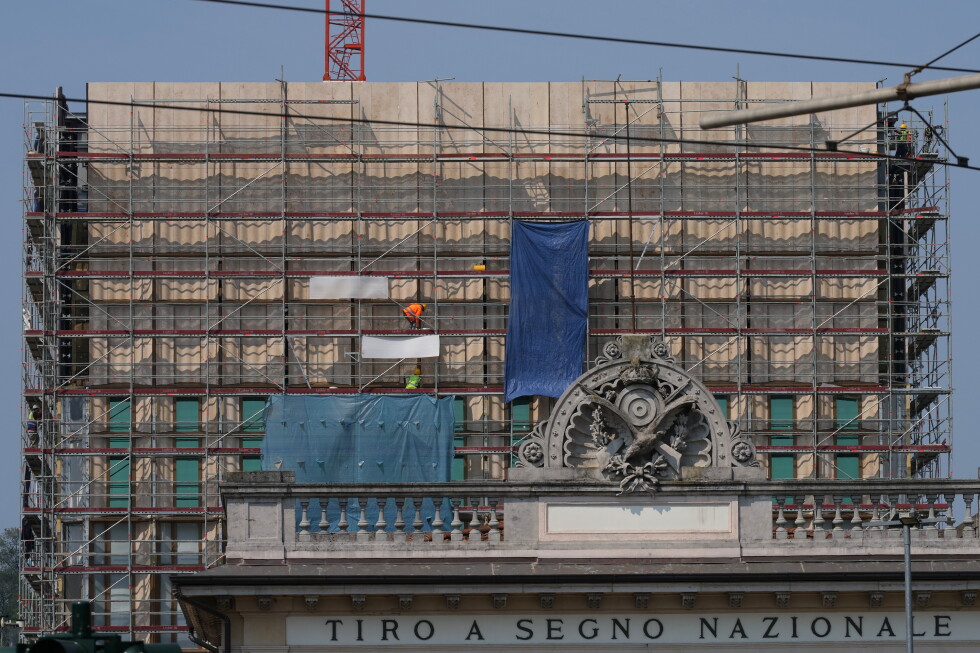
    The new Milan consulate campus is being built on 10 acres of land that was once a public shooting range. The project includes restoration of a historic 100-year-old building, a new five-story main consulate building, restored public gardens, a reflecting pool, and a large outdoor community gathering space. The State Department initially projected the project would employ roughly 500 local workers, though the majority of the workers named in the probe are foreign migrant workers.

    Construction work on the site is continuing, but it is now under court supervision. Following the launch of the investigation, the illegal wage deductions have been ended, workers are limited to a 45-hour work week, and they are guaranteed two full days off per week.

    Pay stubs provided by the workers confirm the alleged excessive deductions, with monthly charges of roughly 590 USD for housing and more than 350 USD for food, even these large deductions do not account for the full gap between the promised wages and the actual pay workers received. Laura Malguzzi, a labor representative for the Fillea Cgil construction union federation that is supporting the workers, said the union is seeking full damages to recover all unpaid wages owed to the workers. She added that investigators were struck by how the pay stubs openly documented the alleged exploitation, with no attempt to hide the violations, suggesting the firm believed it would face no consequences. “They probably had in their minds the absolute certainty that they were untouchable,” Malguzzi said.

    Many of the workers had accepted low pay in their home country of Kenya, where widespread unemployment leaves workers with few other options, but they said they expected far better treatment from a major American contractor working in Western Europe. “They can just hire you, and you just go running,” one worker said. “Because you are poor you have nothing. And you have nothing you can do.” Despite their hardships, the former workers are calling on current employees at the site to speak out about any abuses they have faced. “I believe in justice,” one worker said. “Also the workers there should not be afraid. They should come and speak up.”

  • Australia recalls Meredith after 5 years, bats first against Bangladesh in 2nd ODI

    Australia recalls Meredith after 5 years, bats first against Bangladesh in 2nd ODI

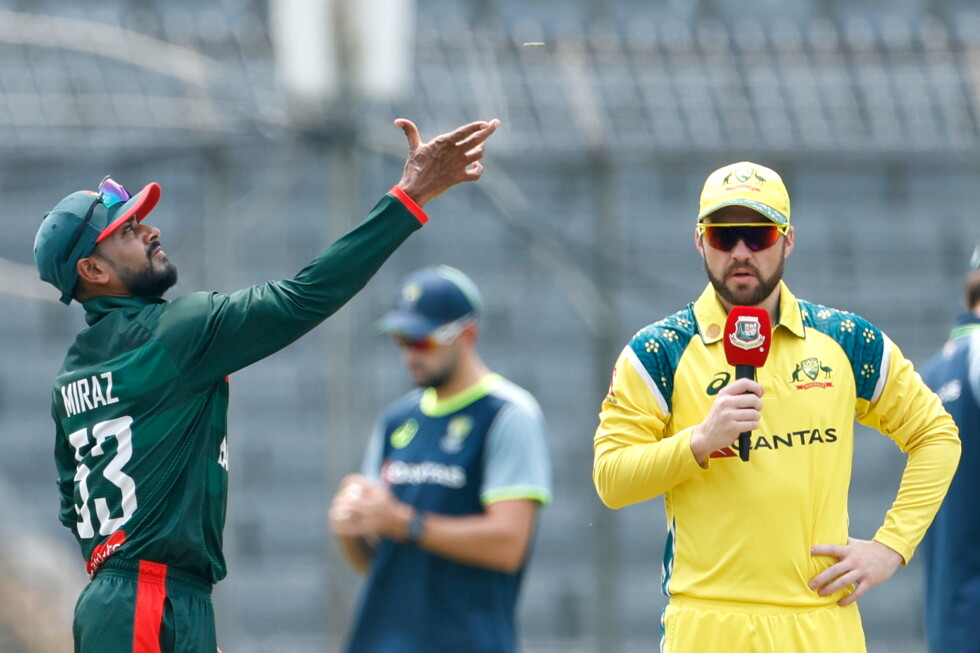
    MIRPUR, Bangladesh — The second ODI cricket clash between Bangladesh and Australia delivered a key pre-match twist on Thursday, as Australia turned to a familiar pace talent for his first international limited-overs appearance in five years, before captain Josh Inglis won the pre-game toss and opted to set a first-innings total for the hosts.

    Bangladesh heads into this fixture with a golden opportunity to make history, having secured an dominant 86-run victory in the opening match of the series via the Duckworth-Lewis-Stern (DLS) rain-adjusted method. The win puts Bangladesh one step away from its first ever ODI series win over a full-strength Australian side — though the current Australian touring squad is far from its best, facing pressure to perform without the team’s three top-tier fast bowlers: Pat Cummins, Josh Hazlewood, and Mitchell Starc.

    The only adjustment Australia made to its starting XI from the first match was bringing 32-year-old fast bowler Riley Meredith back into the fold, replacing Liam Scott. Meredith has only appeared in one senior ODI for Australia to date, a 2021 fixture against the West Indies, making his return a long-awaited milestone for the paceman.

    Bangladesh also made just one single change to its starting lineup, with opening batter Saif Hassan stepping out of the squad to make room for experienced batter Soumya Sarkar.

    Full starting lineups for the second ODI are as follows:

    Bangladesh: Tanzid Hasan, Soumya Sarkar, Najmul Hossain Shanto, Tawhid Hridoy, Litton Das, Mosaddek Hossain, Mehidy Hasan Miraz (captain), Taskin Ahmed, Mustafizur Rahman, Nahid Rana, Tanvir Islam

    Australia: Matt Short, Cooper Connolly, Josh Inglis (captain), Marnus Labuschagne, Alex Carey, Cameron Green, Matthew Renshaw, Xavier Bartlett, Riley Meredith, Nathan Ellis, Adam Zampa

    This report is part of AP News’ ongoing cricket coverage, with more updates available via the organization’s official cricket hub.

  • US launches a second day of strikes on Iran and Iran fires back at the Gulf states and Jordan

    US launches a second day of strikes on Iran and Iran fires back at the Gulf states and Jordan

    A new cycle of violence has swept across the Middle East early Thursday, as the United States unleashed a second, more extensive wave of airstrikes targeting Iranian military assets, drawing immediate retaliatory strikes from Tehran against three neighboring Gulf and regional states. This tit-for-tat escalation has put a fragile two-month ceasefire to the test, roiled global energy markets, and underscored deep divides that continue to block a negotiated end to a conflict that began in late February.

    U.S. Central Command confirmed the latest round of airstrikes concluded just before sunrise Thursday, stating the operation was launched “in response to Iran’s unwarranted and continued aggression.” The strikes, carried out jointly by U.S. Air Force, Marine Corps, and Naval assets, targeted Iranian military surveillance infrastructure, communication networks, and air defense installations across multiple Iranian cities. Explosions from the attacks were reported as far as the capital Tehran, the key Strait of Hormuz port city Bandar Abbas, and other southern Iranian regions along the strategic waterway. Iran’s paramilitary Revolutionary Guard reported that strikes hit a manufacturing complex, a military barracks, and a Guard outpost on the outskirts of Tehran. Tehran has so far released limited details on the full scope of casualties and infrastructure damage from the expanded assault, which U.S. officials confirm was broader in scope and intensity than the previous day’s attacks.

    In response to the U.S. strikes, Iran launched its second consecutive day of retaliatory strikes targeting Bahrain, Kuwait, and Jordan. The escalation triggered immediate disruptions across the region: Kuwait closed its entire airspace for several hours Thursday morning, offering no further details on potential damage. While the U.S. Embassy in Amman, Jordan, issued advance warnings of the incoming Iranian strikes, the Jordanian government has not publicly acknowledged the attack. In Bahrain, the Interior Ministry reported an 11-year-old girl was injured, and multiple civilian vehicles and residential properties were damaged by falling debris from air defense interceptions aimed at the incoming Iranian projectiles. Early Thursday also brought an additional security alert from Israel, which ordered northern residents to seek shelter after detecting potential incoming fire from Iran-allied Hezbollah in Lebanon, further expanding the scope of regional instability.

    This exchange marks the third round of direct cross-border strikes in just one week. It follows an initial Iran-Israel clash Sunday through Monday, then two back-to-back rounds of hostilities between the U.S. and Iran. The new escalation comes as diplomatic efforts to reach a ceasefire and end the overall conflict have once again hit a deadlock. Iran has remained firm in its position that it will maintain its effective chokehold on the Strait of Hormuz, the world’s most critical chokepoint for global oil and natural gas trade. Tehran’s control of the waterway has already disrupted global energy supplies and pushed crude prices sharply higher, giving Iran what it sees as a powerful bargaining chip in negotiations.

    Even as both Washington and Tehran have signaled openness to a deal that could end the conflict if framed as a domestic political win, deep core disagreements continue to block progress. U.S. President Donald Trump, who is pushing for a rapid agreement to ease pressure on fuel prices ahead of November’s midterm elections, has repeatedly called on Iran to sign a peace deal and suggested this week an agreement could be reached within days. But Trump’s demands remain unacceptable to Tehran: the U.S. insists Iran abandon its stockpile of highly enriched uranium, which Washington argues puts Tehran just a short technical step away from developing a nuclear weapon. Iran, which maintains its nuclear program is entirely peaceful, has refused to give up its uranium stockpile and is demanding sweeping sanctions relief and the immediate release of billions of dollars in frozen Iranian assets before any final deal is reached — a demand Trump has already rejected. Iran also insists any peace deal must end ongoing fighting between Israel and its ally Hezbollah in Lebanon.

    Adding to the already high human cost of the conflict, an Indian government official confirmed Thursday that three Indian mariners were killed in a recent U.S. attack on the Palau-flagged oil tanker *Settebello*, which U.S. Central Command accused of violating a blockade by transporting Iranian crude oil. Indian Ports, Shipping and Waterways Minister Sarbananda Sonowal announced the deaths of the three missing crew members on the social platform X. U.S. forces fired on the tanker’s engine room to halt its voyage Wednesday. The head of the International Maritime Organization, a United Nations body overseeing global shipping, condemned the attack, noting that 43 separate attacks on commercial shipping have been recorded in the region since the conflict began, putting civilian seafarers at severe risk. A second tanker near the strike site off the coast of Oman reported an engine room fire early Thursday, according to British military maritime operations authorities, though it remains unclear what caused the blaze, with initial unconfirmed reports pointing to a potential second U.S. strike.

    Trump has confirmed that the U.S. military has been running what he calls a “secret mission” to move oil shipments past Iranian forces in the Strait of Hormuz for the past month. He claimed that ships are transiting undetected under cover of darkness, enabled by U.S. strikes that destroyed Iranian radar systems, and that more than 100 million barrels of oil have already evaded Iran’s blockade. That figure roughly equals five days of pre-war traffic through the strait, but no independent verification of the claim has been released. U.S. Central Command has disputed Iran’s claims that the strait is fully closed, saying commercial vessels continue to transit the waterway, but the threat of attacks has drastically reduced normal shipping traffic.

    The conflict, which began with joint U.S.-Israeli strikes on Iran starting February 28, has already sent shockwaves through the global economy. International benchmark Brent crude traded above $93 per barrel Wednesday, representing a more than 25% jump since the start of hostilities, driving up prices for gasoline, food, and other essential goods worldwide. Israeli Prime Minister Benjamin Netanyahu has also further complicated efforts to reach a compromise, with his stated goals including the full collapse of Iran’s theocratic government, the complete elimination of Iran’s nuclear program, and the destruction of the Hezbollah militant group in Lebanon — aims that make any negotiated deal far harder to achieve.

    Mediation efforts remain ongoing, with a Qatari diplomatic delegation working in coordination with U.S. officials wrapping up talks in Tehran and departing the capital Thursday morning, according to an anonymous official briefed on the mediation process.

  • Knicks stage historic comeback to beat Spurs, one win from NBA title

    Knicks stage historic comeback to beat Spurs, one win from NBA title

    In a clash that will go down in NBA Finals folklore, the New York Knicks pulled off the largest comeback in championship series history on Wednesday, erasing a mammoth 29-point deficit to edge the San Antonio Spurs 107-106 at Madison Square Garden. The stunning result gives New York a commanding 3-1 lead in the best-of-seven title race, with Game 5 set to tip off this Saturday in San Antonio.

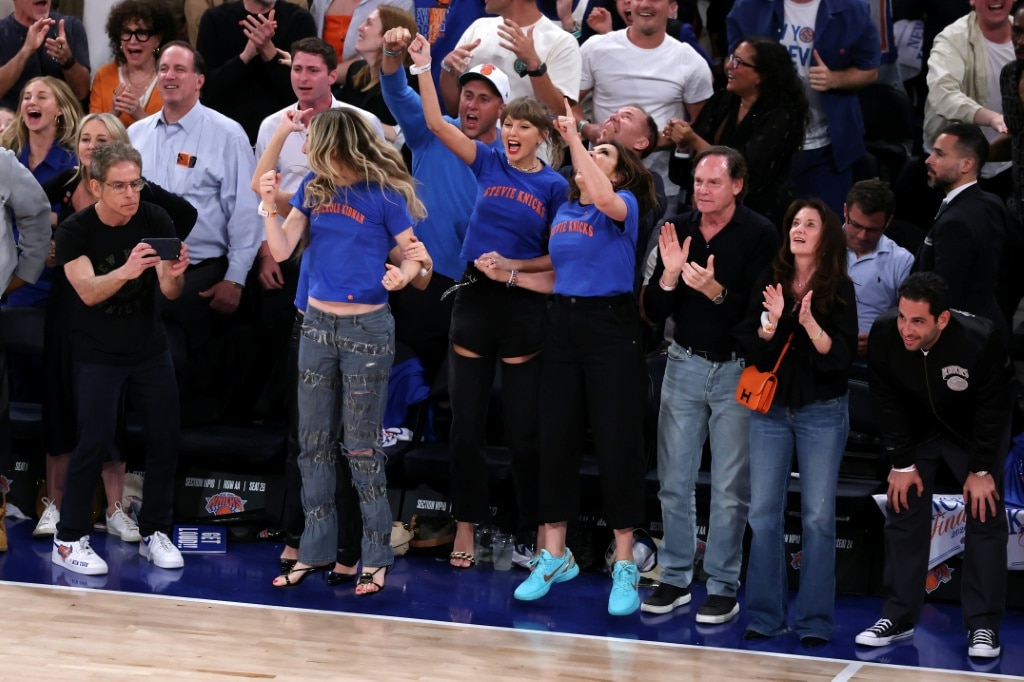
    OG Anunoby, who finished the night with 33 points, delivered the game-winning tip-in with just 1.2 seconds left on the clock, converting the putback after Jalen Brunson’s three-point attempt bounced off the rim. The last-second bucket sent the sold-out, star-studded Garden crowd into a wild celebration, capping off an unprecedented second-half surge from the Knicks. Brunson led all scorers with 36 points in a performance that showcased his clutch leadership when his team needed it most.

    San Antonio got off to a historic start that looked set to lock in a series-tying win. Led by young star Victor Wembanyama, who posted a 24-point, 13-rebound double-double, the Spurs hit 14 first-half three-pointers – a new NBA Finals record – and carried a 76-49 lead into the halftime break. Their 27-point halftime advantage was also the largest ever for a road team in the Finals, built on red-hot shooting that left the Knicks reeling early.

    Additional contributions from Dylan Harper (21 points), De’Aaron Fox (18 points) and Devin Vassell (18 points) powered San Antonio’s opening half dominance, but the team’s offense vanished after the break. The Spurs managed just 30 total second-half points, and their late-game collapse allowed the Knicks to claw their way back into contention.

    Early game foul trouble plagued the Knicks from the start: center Karl-Anthony Towns picked up two quick fouls in the first quarter, while reserve Mitchell Robinson was called for a flagrant foul after a frustrated forearm to Wembanyama’s throat. Brunson, constantly hounded by San Antonio’s defense, did not hit his first basket until the second quarter. By the midpoint of the game, it looked like the Spurs would force a 2-2 split heading back to Texas.

    The turning point came early in the third quarter, when Wembanyama was called for a flagrant foul after an elbow to Towns’ face, leaving the Spurs star one foul away from an automatic suspension. The call seemed to introduce hesitation into San Antonio’s play, and the Knicks capitalized immediately with a 13-0 scoring run. The Spurs cooled off dramatically, connecting on just 4 of 20 third-quarter shots and turning the ball over five times after only two turnovers in the entire first half.

    Trailing 90-75 going into the final quarter, the Knicks chipped away at the lead steadily, withstanding San Antonio’s attempts to stem the tide and leaning on their collective resilience to stay in the fight. Brunson put the Knicks ahead for the first time all game with a 105-104 floater just 82 seconds away from the final buzzer. San Antonio’s Stephon Castle hit two free throws to reclaim the lead, setting up Anunoby’s last-second heroics.

    After the game, Wembanyama took responsibility for the collapse, acknowledging his team’s lack of hunger in the final two quarters. “I don’t know. I think it’s just execution, greediness of some sort. We clearly weren’t the most hungry in the second half,” the Spurs star said.

    Towns paid tribute to the Garden faithful who never gave up on the team despite the lopsided halftime deficit. “It was an ugly, ugly game. We didn’t bring it in the first half. But they stuck with us,” Towns said.

    Knicks head coach Mike Brown praised his team’s collective resilience in the face of severe early adversity, highlighting the squad’s chemistry as the key to the historic win. “You talk about a total team effort when we hit adversity. Our guys showed their resiliency and showed they’re connected enough to handle a moment like that,” Brown said.

    Prior to Wednesday’s game, the largest comeback in NBA Finals history was a 24-point rally by the Boston Celtics against the Los Angeles Lakers back in 2008. The Knicks’ 29-point comeback has now set a new benchmark for late-series resilience in championship play, putting New York 48 minutes away from their first NBA title in decades.