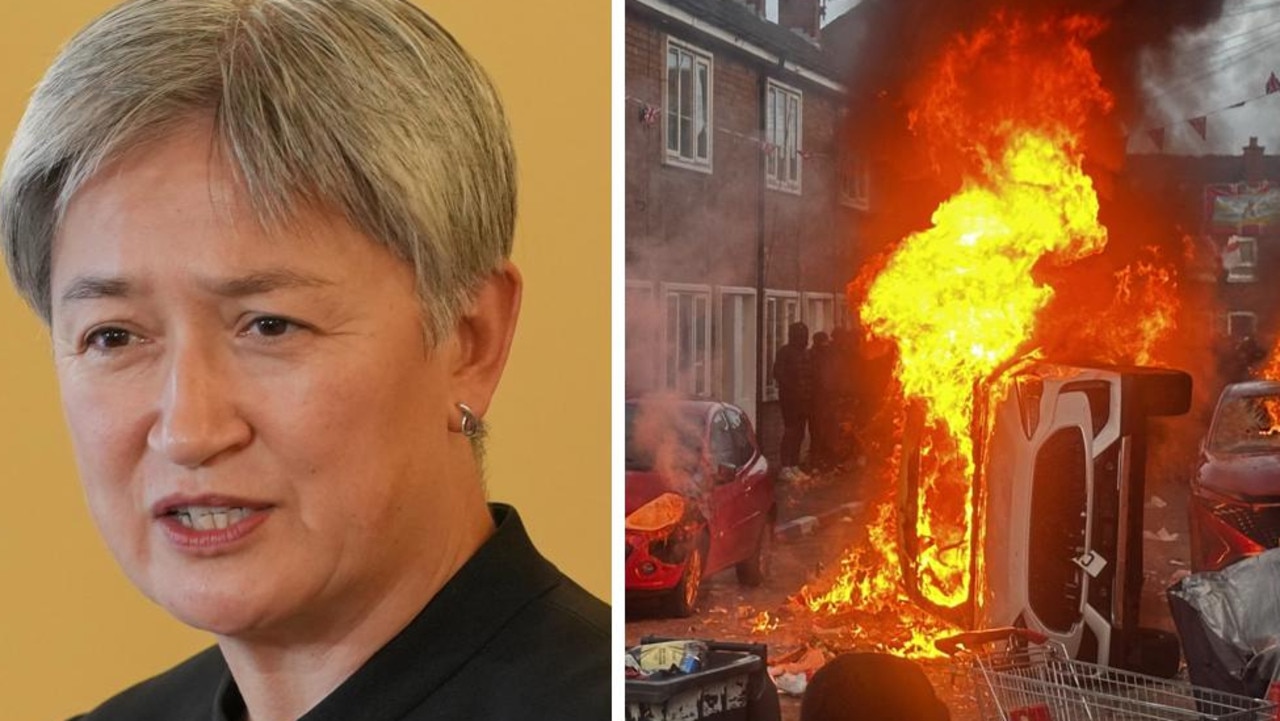
Three straight days of anti-immigration unrest have rocked Belfast, Northern Ireland, leaving a trail of arson damage and drawing international condemnation from diplomatic leaders, including Australia’s top foreign affairs official.
Masked assailants torched residential properties, civilian vehicles and a public bus during overnight violence in the region’s capital, escalating tensions that first ignited after a June 8 stabbing attack allegedly carried out by a 30-year-old Sudanese national. The unrest has unfolded against a broader backdrop of surging anti-immigration sentiment across the United Kingdom, alongside growing public support for the right-wing Reform UK party.
Australian Foreign Minister Penny Wong, who is currently in London for scheduled bilateral talks with European political leaders, addressed the unfolding crisis during a press briefing. Reporters pressed Wong on what steps Australia would take to prevent similar violent unrest from breaking out on Australian soil.
Wong opened her response by emphasizing a universal standard for political conduct across all nations. “First, I would make the point that all leaders need to stand against violence,” she said. “Whatever our differences of view, whatever policy discussion, whatever the argument we have about what should or shouldn’t happen, violence is never acceptable. All political leaders of all parties should always put that view. So, let’s start with that.”
The condemnation from Australian officials has been bipartisan in nature, with center-left Labor Party Senator Raff Ciccone also speaking out against the violence early Wednesday. Appearing on Sky News, Ciccone described the footage coming out of Belfast as “horrific”, noting that the disturbing imagery greeted many Australians when they turned on their morning news.
Ciccone extended his sympathy to the victims of the initial alleged stabbing and their family, adding that law enforcement should be allowed to carry out a full, thorough investigation into the attack. He went on to frame the unrest in Northern Ireland as part of a broader global challenge to social cohesion that many nations, including Australia, currently face.
“Quite frankly, we’ve had a discussion in this country around the need for calm, for national unity, particularly when there are worldwide events that are occurring right now and for many months and years around social cohesion,” he said. “It’s so important, and being a centrepiece about the conversations that the government has been having for some time now. We’ve got to get down and tackle the root causes of why people decide that it’s okay to conduct these horrific attacks against one of their own and against other citizens, other people in our society. It’s not just a unique problem in Australia or in Northern Ireland. It’s unfortunate that we are seeing a lot more of these cases around the world.”