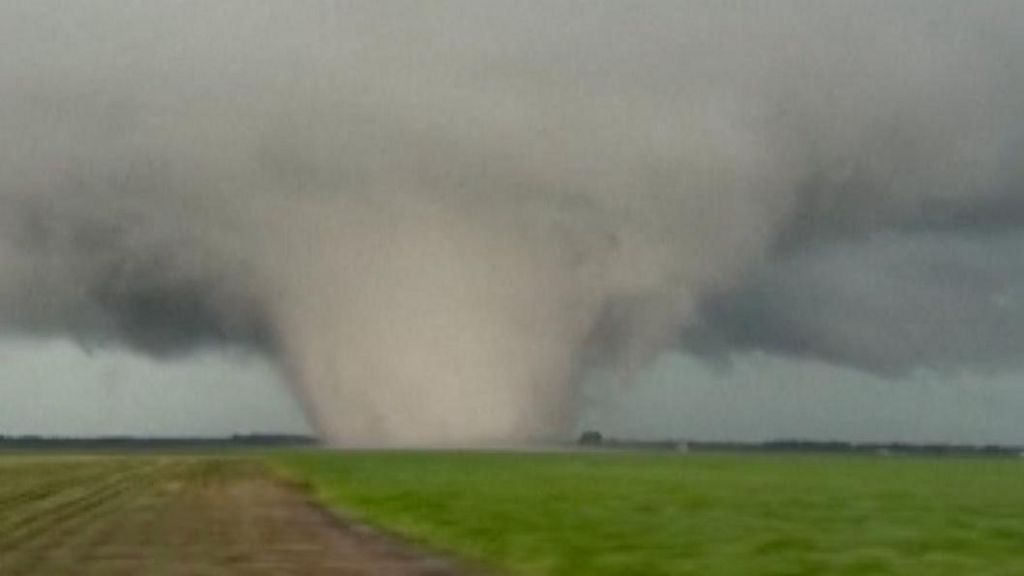
A devastating outbreak of severe thunderstorms and tornadoes has swept across large swathes of the U.S. Midwest, leaving a trail of destruction in its wake. Meteorologists had warned of heightened severe weather risk for days ahead of the event, but the speed and intensity of the system caught many residents off guard. Multiple tornado touchdowns were recorded across at least half a dozen states, with eyewitness accounts describing entire residential blocks reduced to rubble. Dozens of homes have been confirmed destroyed, with hundreds more suffering structural damage that leaves them uninhabitable for the foreseeable future. The violent winds have also downed hundreds of power lines and toppled transmission towers, cutting electricity service to more than 500,000 residential and commercial customers as of the latest update from regional power authorities. Transportation networks across the region have also been thrown into chaos. Major airports in Midwestern hub cities have halted arrivals and departures for extended periods, delaying or canceling more than 1,200 commercial flights nationwide, stranding thousands of travelers at gate sides and terminals. Local highway authorities have closed multiple stretches of major interstate highways due to downed power lines, fallen trees, and debris blocking roadways, complicating emergency response efforts. State and local emergency management agencies have already deployed search and rescue teams to the hardest-hit areas, conducting door-to-door checks to locate missing residents and provide emergency medical care to those injured. The National Weather Service has extended severe weather warnings for parts of the region into the next 24 hours, warning residents of continued risks of flash flooding, strong straight-line winds, and additional tornado formation as the system slowly moves eastward. Recovery officials note that the full scope of damage will take days to assess, and long-term recovery efforts for affected communities are expected to take weeks or even months.
博客
-
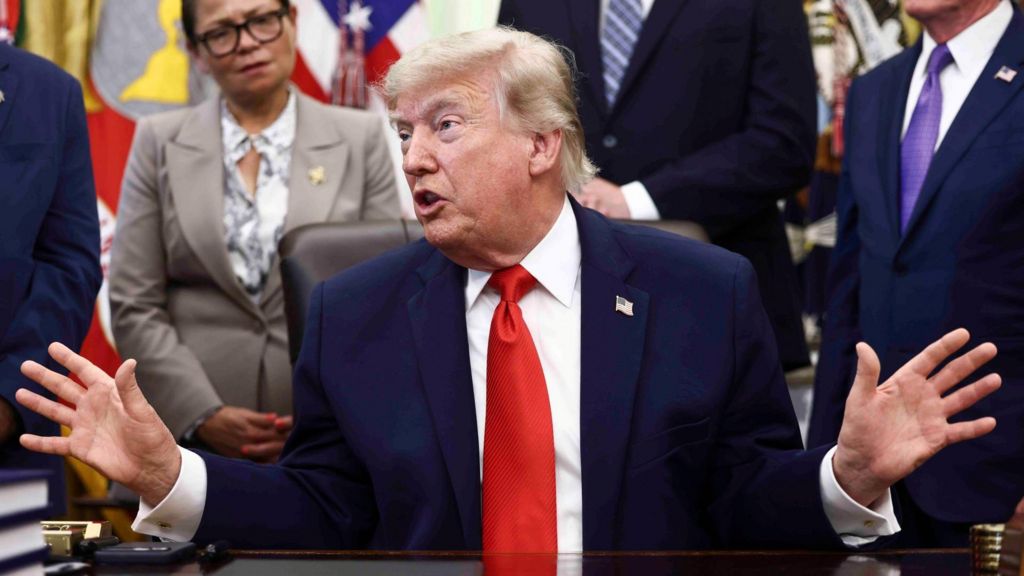
Trump accuses Iran of leaking agreement details that ‘bear no relation to the truth’
A sharp public rift has erupted over the contours of a potential Iran peace deal after leaked supposed terms circulated by Iranian media drew a blistering rejection from former U.S. President Donald Trump, who declared that good-faith negotiation with Tehran is impossible.
The breakdown in public messaging comes weeks after a broad wave of U.S. and Israeli strikes on Iranian targets that launched the latest open conflict in February. Iran retaliated with attacks on Israeli positions and Gulf states aligned with Washington, and effectively shut down the Strait of Hormuz — the global economy’s critical chokepoint for oil and liquefied natural gas shipments. An April ceasefire paused large-scale hostilities, but intermittent tit-for-tat strikes have continued, including two back-to-back exchanges just this week.
The chaos erupted just 24 hours after Trump’s own volatile shift in messaging: on Thursday, he first threatened new military strikes on Iran, then hours later announced he had called off the attacks because negotiators had reached a “great settlement” that would be signed imminently. Iranian officials quickly pushed back, calling any claims of a finished agreement pure speculation.
On Friday, Iranian state media outlets published what they claimed were the finalized terms of the emerging agreement, laying out terms that aligned with longstanding public demands from Tehran. The leaked details included an immediate end to the U.S. naval blockade on Iran, the release of at least $300 billion in frozen Iranian assets to cover damage from the recent U.S. and Israeli strikes, and preconditions for full negotiations: half of all frozen assets must be unblocked, oil sanctions suspended, and the blockade lifted before formal talks on core issues begin. The leaked draft also calls for a final deal to be ratified by a United Nations Security Council resolution, with talks limited to enrichment activity, sanctions relief, and Iranian economic reconstruction. It also includes Tehran’s longstanding demand for an end to Israeli hostilities with Iran-backed Hezbollah in Lebanon.
Iran’s top diplomat Seyed Abbas Araghchi walked back the leak, however, acknowledging that a deal has never been closer but urging media to avoid unconfirmed speculation about the content of ongoing talks.
U.S. officials quickly pushed back against every core element of the Iranian leak. A senior Trump administration official told the BBC that the U.S. vision for any agreement requires the full destruction and removal of Iranian nuclear material and the permanent dismantling of Iran’s enrichment program. No Iranian assets will be released, the official said, until Tehran meets all U.S. demands, reopens the Strait of Hormuz permanently, and commits to cutting off funding for proxy groups including Hezbollah across the Middle East. The nuclear dispute has spanned decades: Western nations have long accused Iran of pursuing a nuclear weapons capability, a charge Tehran consistently denies, saying its program is exclusively for peaceful energy and scientific research.
U.S. Vice President JD Vance also issued a public correction Friday, noting “a couple of bizarre things” in the leaked reporting. “Iranians are not receiving any cash, and no funds are being released for simply signing a deal or attending a meeting,” Vance wrote in a post on X. He emphasized that the potential agreement is structured to prioritize U.S. and allied security concerns, with economic benefits only unlocked after Iran verifiably meets all its obligations.
In his most blunt comments Friday, Trump rejected the leaked terms out of hand, saying the published details “bears no relation to the truth” and have “nothing to do with the terms that were agreed to” in private talks. “They were very dishonorable people to deal with,” Trump wrote of Iranian negotiators, urging Tehran to “get your act together, and FAST!” He added that there is “no such thing as dealing in good faith” when negotiating with the Islamic Republic.
The indirect talks between the U.S. and Iran, which do not include Israeli negotiators, have been mediated primarily by Pakistan. The goal of the current discussions is to extend the fragile April ceasefire and set a framework for future negotiations on core contentious issues, including Iran’s nuclear program. -
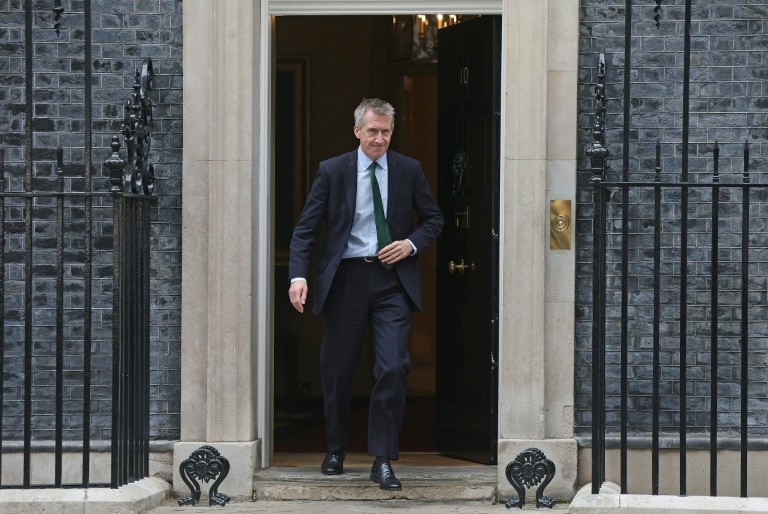
UK faces hard choices over military spending: analysts
The recent high-profile resignations of two senior British defence officials have thrust long-simmering tensions over the United Kingdom’s military resourcing and future strategy into the global spotlight, leaving Prime Minister Keir Starmer’s new administration facing a series of unenviable decisions over the country’s defence priorities. Just days after former Defence Secretary John Healey and Armed Forces Minister Al Carns stepped down in protest of the government’s upcoming, still-unreleased 10-year Defence Investment Plan (DIP), Starmer appointed Dan Jarvis, a veteran ex-Parachute Regiment officer with a decades-long record of security service, to take the helm of the Ministry of Defence (MoD) on Thursday.
At the core of the controversy is a projected £28 billion funding gap in the MoD budget between the present day and 2030, a deficit that has already eroded military readiness and forced difficult trade-offs between modernisation, infrastructure upgrades, and global operational capability. In his scathing resignation letter, Healey accused Starmer and the Treasury of failing to allocate the critical resources needed to protect UK national security amid a rapidly growing global threat environment, noting that promised additional defence funding had been “backloaded” to the final years of the 10-year plan. Fenella McGerty, a senior analyst at the International Institute for Strategic Studies, explained that this funding structure creates a so-called “hockey-stick” growth trajectory, where nearly all spending increases do not take effect until the end of the decade, leaving the military underresourced for immediate readiness needs.
Pressure to increase defence spending has also come from across the Atlantic, where former US President Donald Trump has repeatedly called on NATO allies to raise their own defence contributions and reduce reliance on US security support. Starmer has already made public pledges to incrementally raise UK defence spending: the target is set to reach 2.5% of GDP next year, rising to 3% by 2029 if the Labour Party wins the next general election, and hitting 3.5% by 2035. However, defence analysts argue even these increases will not be enough to fund a truly global military posture. “This would only cover operations very much focused on the mainland and the near vicinity of the UK,” explained Jamie Gaskarth, a senior research fellow at London-based think tank Chatham House.
Nick Reynolds, a land warfare expert at the Royal United Services Institute, emphasized that the UK faces unavoidable hard choices about which military capabilities it can afford to maintain. Both the British Army and Royal Navy require extensive refurbishment of existing aging equipment, he noted, a process that will demand a significant budget increase even before any major modernization efforts can begin. Recent operational challenges have laid bare these resource gaps: when conflict erupted in the Middle East earlier this year following US-Israeli strikes on Iran, it took the Royal Navy several weeks to deploy just one single vessel to the region to reassure allied partners. Gaskarth attributed this delay to a long-running strategic shift toward maintaining fewer, more technologically advanced platforms, a trend that has left the UK with too few deployable assets to respond to multiple global crises simultaneously. “It actually means in a crisis you can no longer rely on the idea that you will have assets in place in different regions around the world,” he said.
Beyond underfunding, the second major point of contention from the resigning ministers is the DIP’s perceived lack of innovation, particularly its failure to prioritize emerging technologies that have already proven decisive on the battlefield in Ukraine. Carns, who resigned shortly after Healey, publicly criticized the plan for being designed to “fight the last war rather than the next one”, arguing it failed to incorporate critical lessons from the ongoing conflict in Ukraine. He called for increased investment in uncrewed systems, famously noting that “data is the new gunpowder” for modern warfare.
Unnamed senior military sources quoted by The Times have echoed this criticism, arguing the unpublished plan overemphasizes expensive traditional hardware such as new warships, main battle tanks, and fighter jets at the expense of next-generation capabilities including AI-enabled command software, space and cyber defence tools, hypersonic weapons, and low-cost attack drones. Reynolds explained that drones offer a uniquely cost-effective lethal capability for modern militaries: “Drones are a cheap, highly precise artillery system and give a lot more range than traditional artillery. So it’s essential they are part of the force structure, because they can grant an affordable volume of lethal capability.” While the UK has already begun investing in drone technology, Gaskarth noted that it has not yet made the wholesale strategic shift needed, with current policy focused on domestic production rather than rapidly scaling capabilities through partnership with Ukrainian manufacturers. Gaskarth added that while senior policymakers, military leaders, and politicians all acknowledge that threats to the UK are growing and immediate, the pace of defence reform remains glacial.
The long-delayed DIP is currently scheduled for publication ahead of the upcoming NATO summit set to take place in Turkey on July 7, Starmer has confirmed. In terms of identifying the UK’s most pressing security threats, analysts and officials broadly agree that Russia remains the most urgent immediate threat following Moscow’s 2022 full-scale invasion of Ukraine, while China poses a growing long-term challenge to global security norms. Carns, in a post on social media following his resignation, argued that Britain has spent a decade shrinking its global influence at a time when major powers are rewriting the rules of global communications, energy, and trade. “Right now the rules on communications, energy and trade are being rewritten. By China. By Russia. By countries that take their own security seriously. We need to be at that table. That’s a choice we must make,” he wrote.
-

French town buries murdered child as questions mount over police failings
Two weeks after 11-year-old Lyhanna was killed in southwestern France, the young girl was laid to rest on Wednesday, a tragedy that has roiled the nation in anger over catastrophic systemic failures that allowed her suspected killer to remain free despite multiple red flags. Hundreds of local residents joined Lyhanna’s family for the funeral service in the small town of Fleurance, located roughly 30 miles west of Toulouse. Following the ceremony, she was interred at the town’s municipal cemetery. In a show of collective solidarity across the wider Gers region, mayors ordered flags lowered to half-mast outside town halls and called on local communities to gather in remembrance and support for the victim’s family. The murder sparked a national wave of revulsion once details of systemic missteps came to light: the prime suspect, 41-year-old Jérôme Barella, had been reported to French law enforcement nine months earlier for repeated sexual abuse allegations against a 10-year-old child, yet investigators never once summoned him for questioning. Further records show that U.S. authorities had previously alerted French police to suspicious online activity by Barella that indicated he may have been accessing child sexual abuse material. According to reporting from French newspaper Le Monde, this alert was only uncovered after a post-arrest search of Barella’s records last week. The French National Office for Minors (OFMIN) confirmed the alert was received in 2023 and was classified as a “low priority” signal, noting the office processes roughly 300,000 such notifications annually. The scandal has expanded beyond Jérôme Barella, with new sexual abuse allegations now levied against his father and brother as well. This week, Jérôme’s 44-year-old brother Yannick was taken into custody after he presented himself to police to file a defamation complaint. He was subsequently placed under formal investigation for rape, based on claims from two accusers: one who was a minor at the time of the alleged assault, and a second who is Yannick’s former partner. Yannick has denied all allegations against him. The family’s 71-year-old patriarch, Joël Barella, is also now under formal investigation after prosecutors in Béziers reopened a 2019 sexual abuse case accusing him of assaulting his partner’s granddaughter. A second granddaughter has since come forward with additional abuse allegations in national media, and Joël has repeatedly denied all claims. Investigative records confirm Jérôme Barella, whose daughter was a close friend of Lyhanna, was seen driving the 11-year-old away from her school on the Friday she disappeared. He was taken into custody three days later, and Lyhanna’s remains were discovered on a nearby farm eight days ago. What began as a horrific local murder has rapidly escalated into a national political scandal, as the French public has confronted the full scope of official failures that allowed Barella to remain at liberty. Court records show Barella had already been linked to three separate open sexual abuse cases when he was reported for the alleged rape of 10-year-old Rosa in August 2023. A medical examination confirmed the credibility of Rosa’s claims, yet justice officials and gendarmes moved so slowly that Barella was never contacted over the nine months between the report and Lyhanna’s killing. The case has erupted at a moment of growing public anxiety across France over systemic failures in how the justice system handles sexual violence against women and children. In recent weeks, Paris City Hall has faced widespread accusations of negligence over a string of sexual abuse charges against school employee. Just this week, iconic French singer Patrick Bruel was placed under formal investigation for rape and sexual assault, charges he has repeatedly denied. In response to mounting pressure for his resignation over the Lyhanna case, Justice Minister Gérald Darmanin has refused to step down. A public opinion poll released Friday found that two-thirds of French respondents support Darmanin remaining in his post. Darmanin has pushed back against claims that the failures stem from chronic underfunding or understaffing in the justice system — a common criticism from activists. Instead, he has framed the blunder as a failure of priority-setting, arguing the obvious severity of the allegations against Barella should have elevated the case much earlier. Prime Minister Sébastien Lecornu has already announced plans to strengthen France’s legal framework for sexual violence crimes, proposing longer prison sentences for child rapists and mandatory statutory deadlines for the completion of investigations into child sexual abuse claims. But advocacy groups and labor unions say incremental changes are not enough. They are calling for a sweeping new standalone law addressing sexual violence against women and children, paired with a dedicated €2.7 billion ($3.1 billion) budget to implement systemic reforms. Activists have pledged to hold weekly peaceful protests outside court buildings across France every Monday to demand action. “This isn’t hysteria — this is a call for structural change,” said Sophie Binet, general secretary of the powerful CGT labor union, which has backed the reform movement.
-

Iran war is straining African airlines, industry body warns
NAIROBI, KENYA – The ongoing conflict in Iran has triggered a sharp upward swing in global jet fuel prices, amplifying existing supply chain pressures across African aviation and pushing regional carriers to re-evaluate their route networks. The crisis has laid bare a dangerous overreliance on imported refined jet fuel that leaves the continent’s airlines exposed to sudden global market shocks, according to the African Airlines Association (AFRAA).
Long before the outbreak of the Iran war, African carriers already faced a steep cost disadvantage: AFRAA data shows they paid roughly 17% more for jet fuel than the global average. This new wave of price hikes has squeezed already razor-thin profit margins across the entire sector, putting significant strain on carrier balance sheets.
“The impact is dire, a major shock for all our members,” AFRAA Secretary-General Abderahmane Berthe told the Associated Press in an interview. “Fuel makes up between 30% and 40% of an airline’s total operating costs. Any price increase hits their bottom line immediately.”
The entire global aviation industry has turned its attention to the Strait of Hormuz, the critical global energy chokepoint that carried roughly one-fifth of the world’s total oil and refined fuel shipments before Iran effectively closed the waterway to commercial shipping when the war began in February. For African airlines, the fallout from this closure is far more severe than for carriers in other regions, due to longstanding structural weaknesses: higher baseline procurement costs and far smaller financial buffers to absorb unexpected market shocks.
Berthe explained that while some airlines have introduced limited fuel surcharges to offset costs, most cannot pass the full brunt of price increases on to passengers for fear of crashing travel demand. Instead, they are forced to absorb the extra costs directly, eating into already limited profits.
Supply disruptions have also sparked urgent concern at key African aviation hubs, including Nairobi in Kenya and Addis Ababa in Ethiopia, where consistent, reliable jet fuel access is non-negotiable for both regional and long-haul international operations. To adapt, a number of carriers have already begun restructuring their route networks: cutting flight frequencies, pausing service on low-demand routes, and reworking their entire schedules to mitigate rising costs and fuel supply uncertainty.
The ongoing crisis has reignited longstanding calls for African nations to invest in expanding domestic petroleum refining capacity, to cut the continent’s heavy dependence on imported refined jet fuel. “We need African solutions to African problems,” Berthe emphasized. “Many African countries are major crude oil producers, yet we still rely entirely on non-African suppliers for the refined jet fuel our aviation sector needs to operate.”
Attention is increasingly shifting to large-scale regional projects already in operation that could ease this dependency, most notably Nigeria’s giant Dangote Refinery. The facility is projected to become a major supplier of refined fuel across the continent, including to key aviation hubs in Kenya, Ethiopia, and South Africa. Already, major hubs like Addis Ababa have begun sourcing fuel from Dangote to stabilize supplies, a shift that Berthe says is already helping ease pressure on regional fuel supply chains amid the current crisis.
Even amid these mounting pressures, demand for air travel across Africa remains robust. AFRAA projects annual passenger growth of roughly 6% for African carriers in coming years, a growth rate that outpaces many mature global aviation markets. Still, Berthe warned that prolonged market shocks from the Iran war could cause lasting damage to both airline profitability and cross-continental connectivity.
“If this crisis drags on, the impact on African airlines will be very severe,” he said. “If Africa wants a truly resilient, sustainable aviation sector, it must secure its own fuel future.”
-

Elon Musk gets public trading of SpaceX underway from Texas
SpaceX, the aerospace manufacturer and space transportation firm founded by billionaire entrepreneur Elon Musk, has officially kicked off its public trading journey from a base in Texas, marking one of the most anticipated milestones in the history of corporate public offerings. In comments released alongside the launch, Musk opened up about the company’s humble origins, revealing that when he first established SpaceX decades ago, he personally estimated that the venture had less than a 10 percent probability of ever achieving meaningful success. Against all early projections, the aerospace trailblazer has evolved from a risky startup experiment into a global industry leader, and its impending public listing is set to become the largest initial public offering in corporate history. The launch of public trading from Texas underscores the company’s deep roots in the U.S. southern space corridor, a region that has become a central hub for SpaceX’s launch operations and long-term strategic development. For years, SpaceX has disrupted the global space industry, delivering groundbreaking advancements in reusable rocket technology, securing billions in NASA and commercial contracts, and advancing ambitious projects including the Starlink satellite internet constellation and the Starship development program targeted at deep space exploration missions to Mars. The transition to public ownership opens a new chapter for the company, allowing outside investors to take a stake in Musk’s long-term interplanetary vision while bringing unprecedented capital to accelerate its expanding portfolio of projects.
-

Discovery of €1.2m jewellery prompts fresh probe into former Spanish PM
In an unprecedented development for modern Spanish politics, former Socialist Prime Minister José Luis Rodríguez Zapatero has been formally placed under investigation for tax fraud and smuggling, following the recovery of €1.2 million worth of luxury watches and jewelry from his office during a recent search linked to a separate corruption probe.
Zapatero, who held the nation’s top office from 2004 to 2011 and remains a powerful, influential figure within the ruling Spanish Socialist Workers’ Party (PSOE) led by his close ally current Prime Minister Pedro Sánchez, was already under investigation for alleged influence peddling connected to the 2021 €53 million government bailout of struggling Spanish airline Plus Ultra. The bailout was approved as part of a national state fund created to support strategically important businesses impacted by the global COVID-19 pandemic.
As part of that ongoing influence peddling inquiry, Spanish National Police executed a raid on Zapatero’s private office last month. During the search, investigators uncovered a cache of high-end gold jewelry including necklaces, bracelets, rings and earrings studded with sapphires and emeralds, sourced from Zambia and Thailand according to Spanish media reports. The total estimated value of the seized items comes to roughly €1.2 million, equivalent to £1.02 million.
Investigators have confirmed that their new probe centers on suspicions that Zapatero cannot provide valid documentation proving he paid required customs duties for the luxury goods. Close associates of the former prime minister have told reporters the collection of jewelry is inherited family property, and Zapatero’s official spokesperson Luis Arroyo has stated that the former leader “will provide full explanations before the judge” regarding the seized items. Zapatero has been formally summoned to give testimony before a court later this month.
This new investigation marks a historic moment in recent Spanish politics: it is the first time any former Spanish prime minister has been subjected to a formal criminal probe. The development is also the latest in a string of damaging corruption scandals to hit the ruling PSOE. Last month, police also raided the party’s central Madrid headquarters, seizing a range of relevant documents, and carried out coordinated searches at the private residences of senior party officials and a prominent Spanish business leader. Multiple close associates of Sánchez, including the prime minister’s wife and brother, currently face separate corruption-related charges, all of which they have vigorously denied. Zapatero has also repeatedly denied any wrongdoing in the ongoing Plus Ultra influence peddling case, stating he never accepted any improper payments in exchange for intervening to secure the airline bailout.
-
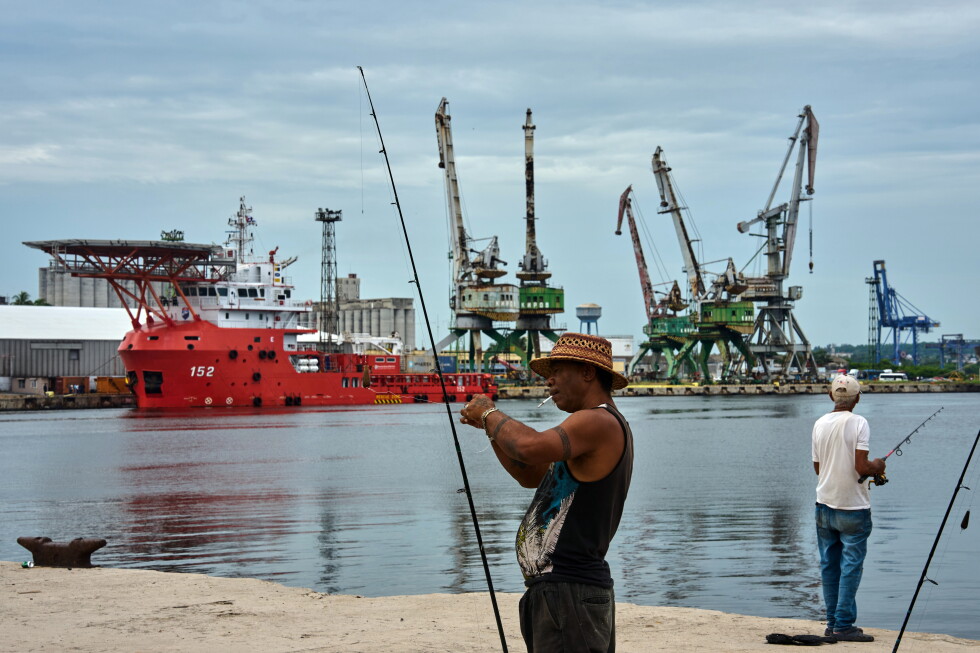
Ship from Colombia laden with food and other goods docks in Cuba to help ease crises
HAVANA – A Colombian-flagged cargo vessel carrying nearly 100 metric tons of food and critical supplies docked in Havana early Friday, marking the latest in a wave of cross-border humanitarian donations to Cuba as the long-running U.S. energy embargo continues to squeeze the island nation’s infrastructure and economy. The Associated Press verified that the ship, which departed the Colombian port of Cartagena at the start of June, navigated into Havana Bay at dawn, guided to its berth by a small Cuban auxiliary escort vessel.
According to Colombia’s Presidential Agency for International Cooperation, the 93-ton shipment was assembled and dispatched on direct orders from Colombian President Gustavo Petro. The cargo includes a wide range of urgently needed items: non-perishable staple foods, prescription pharmaceuticals, critical hospital equipment, electrical infrastructure parts, and solar panels to help alleviate the country’s ongoing energy crisis. An additional seven tons of donated goods, collected by grassroots Colombian solidarity organizations, were also loaded aboard the vessel for Cuban communities in need.
This Colombian delivery follows just days after another large humanitarian shipment reached Havana last weekend: a separate cargo ship carrying 1,700 tons of essential supplies jointly sent by Mexico and Belize. These coordinated donations come in response to a severe economic and energy crisis that has gripped Cuba since early 2025, when former U.S. President Donald Trump announced harsh new trade measures threatening tariffs on any third country that supplies oil to the island.
The U.S. government’s sanctions push is rooted in demands that the Cuban government release detained political opponents and implement sweeping political and economic liberalization reforms, conditions Washington has set for any rollback of long-standing trade restrictions. Cuba currently produces only 40 percent of its own domestic oil demand, and the cut-off of most international oil supplies triggered by the U.S. threat has left the island’s energy grid severely strained. Widespread, extended power outages have become a daily reality for many Cuban residents, paralyzing portions of economic activity and exacerbating shortages of basic goods across the country.
International aid organizations have warned that the cumulative impact of decades of U.S. sanctions, compounded by the recent energy embargo, has created one of the worst humanitarian situations Cuba has faced in decades, prompting an outpouring of solidarity from governments and civil society groups across Latin America and the Caribbean.
-

Watch: Four UFO videos newly declassified by US government
In a fresh step toward greater transparency around unexplained aerial phenomena, the U.S. government has officially declassified and released four previously undisclosed UFO videos captured by eyewitnesses. The newly released footage, which has begun circulating publicly, documents a series of bright, circular glowing orbs moving across the sky above an undisclosed location in the northeastern region of the United States.
This declassification follows a series of previous releases of unidentified aerial phenomenon (UAP) records by the U.S. government over recent years, as federal agencies have increasingly prioritized formal documentation and public disclosure of encounters that cannot be immediately explained by conventional aircraft, weather phenomena, or known man-made objects. The move comes amid ongoing work by congressional committees and Pentagon-led task forces mandated to investigate UAP sightings reported by military personnel and civilian observers across the country.
While the origins of the glowing orbs captured in the footage remain unconfirmed, the release of these videos marks another data point for researchers and officials working to categorize and understand unexplained aerial encounters. Officials have not yet issued additional commentary on whether the objects observed in the new videos have been linked to any known natural or human activity, leaving open ongoing analysis of the sighting.
-
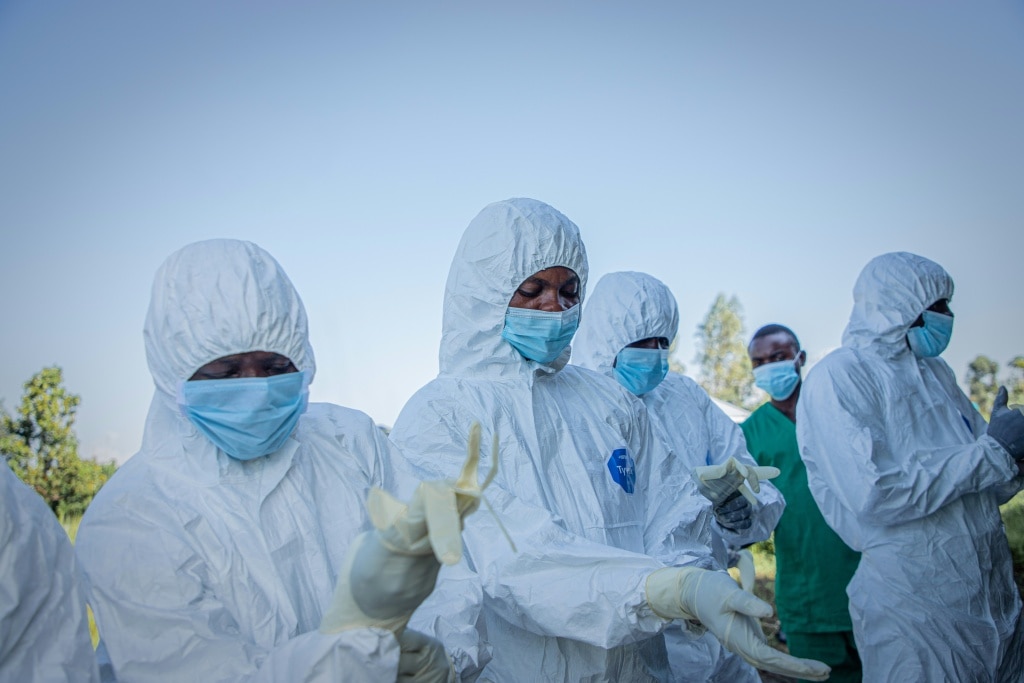
Ebola spreading into new areas in northeast DR Congo: WHO
In an urgent alert issued Friday, the World Health Organization (WHO) confirmed that the ongoing Ebola outbreak in the northeastern Democratic Republic of the Congo (DRC) is spreading into previously unaffected zones, with a far larger caseload than initial detection efforts have captured. The global health body emphasized that current response capacity falls drastically short of what is needed to rein in the virus, particularly as isolation bed infrastructure lags behind projected demand driven by the outbreak’s rapid spread.
According to the WHO’s most recent official data, 676 confirmed Ebola cases and 136 confirmed deaths have been recorded since the outbreak was first formally declared on May 15. An additional 119 suspected cases are under investigation, and 32 confirmed patients have successfully recovered from the virus to date.
Unlike previous Ebola outbreaks in the region, the current event is driven by the rare Bundibugyo strain of the virus, for which no universally approved vaccines or targeted treatments currently exist. The outbreak is centered primarily in the DRC’s Ituri province, but confirmed cases have now been documented in two additional neighboring provinces: North Kivu and South Kivu.
“The outbreak continues to expand both in terms of case numbers but also in terms of geographic spread,” explained Olivier le Polain, WHO’s lead for epidemiology and analytics for the outbreak response. Speaking to reporters from Beni in North Kivu, le Polain noted that new cases are being identified in previously untouched health zones across the three affected provinces on an almost daily basis.
He attributed the rapid expansion to two key factors: the outbreak’s larger underlying scale than official counts reflect, and the high rate of population movement across the region. While early new cases in unexposed zones were linked to travel from established outbreak hotspots, le Polain confirmed that community transmission is now occurring within these new geographic areas. “There are still many blind spots in some areas that are high risk,” he added.
Contact tracing, a core tool for halting Ebola spread, has improved but still remains below the threshold needed for effective control. Currently, just over 70 percent of known close contacts of confirmed cases are being monitored appropriately. “That’s a huge improvement from where we were about a week or two ago, but it’s still too low to ensure appropriate control,” le Polain said.
Even as surveillance efforts expand, the lack of adequate isolation infrastructure creates a major bottleneck for the response. With only 250 isolation beds currently available across all affected provinces, le Polain warned that capacity is already insufficient given the outbreak’s current trajectory, and a rapid scale-up is critical. “Surveillance can scale up, but if you don’t have any space to put your patients safely, it becomes very difficult,” he noted.
The United Nations children’s agency UNICEF has issued a separate warning that child infections are likely to rise in coming weeks due to increased household transmission, following patterns seen in past Ebola outbreaks. Douglas Noble, UNICEF’s global incident manager for Ebola, who recently returned from a visit to Ituri’s capital Bunia, highlighted that more than half of children under five in the province already live with chronic malnutrition, leaving them exceptionally vulnerable to severe outcomes if infected.
“These are already very vulnerable children,” Noble told reporters. “As the outbreak evolves we must be prepared for increasing household transmission, which means we may see more children affected in the days ahead.” He added that UNICEF has already begun adjusting its interventions to prepare for this projected increase in child cases.
The outbreak has already crossed international borders, with Uganda reporting 19 confirmed cases and two deaths to date. The African Union’s health agency announced Thursday that the situation in Uganda remains under control. The WHO currently assesses the Ebola risk level as very high within the DRC, high for Uganda, high for all countries that share land borders with the DRC and Uganda, and low for the rest of the world.