博客

  • Migrant rights will be safeguarded at third-country return hubs, EU migration commissioner says

    Migrant rights will be safeguarded at third-country return hubs, EU migration commissioner says

    Amid ongoing implementation of the European Union’s landmark new migration and asylum pact, the bloc’s top migration official has reaffirmed that non-negotiable international human rights standards will govern any proposed asylum return hubs planned in non-EU countries, pushing back against widespread criticism from rights advocacy groups.

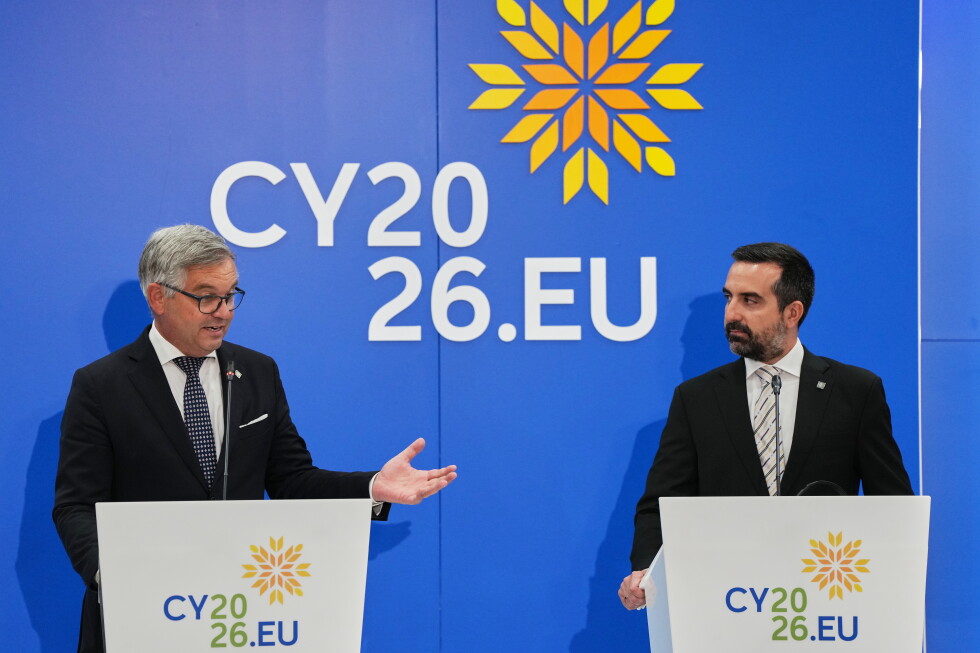
    Speaking at a press conference hosted during a gathering of EU migration ministers in Nicosia, Cyprus on Friday, EU Migration Commissioner Magnus Brunner emphasized that every agreement establishing these processing centers for rejected asylum seekers will undergo independent review to guarantee full compliance with legal protections. Brunner confirmed that both the International Organization for Migration and the United Nations Refugee Agency will participate in the vetting process to audit the terms of any finalized deal, stressing that “Human rights standards and international law is non-negotiable.”

    The return hub framework, a central provision of the EU’s updated migration policy, has drawn significant skepticism from human rights organizations, which have raised urgent alarms that the facilities could devolve into overcrowded long-term detention centers, leaving failed asylum seekers trapped in prolonged legal limbo with no clear path forward. Critics have also warned that the pact’s streamlined assessment processes could cut off access to protection for legitimate asylum claimants.

    On the same day, Greece’s migration ministry confirmed that a coalition of five EU member states — Greece, Germany, Austria, Denmark, and the Netherlands — are currently in active negotiations with several African nations to host the hubs on their territory. Under the coalition’s current timeline, agreements with the unnamed third countries are expected to be finalized this year, with the facilities scheduled to become operational by 2027. When pressed to name the countries under consideration, Brunner deferred to the negotiating member states, noting that “We created the rules, we create the basis, but it’s up to the member state to negotiate agreements if they want to.”

    Cyprus, which currently holds the bloc’s rotating six-month presidency, will join the return hub negotiations once its term ends on July 1, according to Cypriot Deputy Minister for Migration Nicholas Ioannides. Ioannides pushed back against rights groups’ criticism of the new pact, arguing that the framework’s core goal is to prepare the bloc for future large-scale migration flows, similar to the 2015 refugee crisis that caught EU institutions off guard. “These groups disagree with the gist of this project, with the whole architecture,” Ioannides said, adding that implementing clear new rules is the EU’s top priority to avoid repeating past unpreparedness.

    Brunner defended the new migration pact, arguing that it delivers more effective, streamlined rules that target criminal people smuggling networks and irregular migration routes, while concentrating protection resources on claimants with legitimate humanitarian needs. He pointed to early data showing the bloc’s migration reforms are already delivering results: irregular arrivals along the Western Balkan route have plummeted 90% over the past three years, and crossings from Turkey to Greece’s Aegean islands dropped 67% in the first four months of this year compared to previous periods.

    In a separate development announced Friday, Cyprus has finalized a bilateral agreement with Lithuania to relocate migrants already granted international protection to the Baltic EU member state, a small but significant step to share migration responsibility across the bloc.

  • ‘Surrender or face full force’ of state, Nigerian president warns armed groups

    ‘Surrender or face full force’ of state, Nigerian president warns armed groups

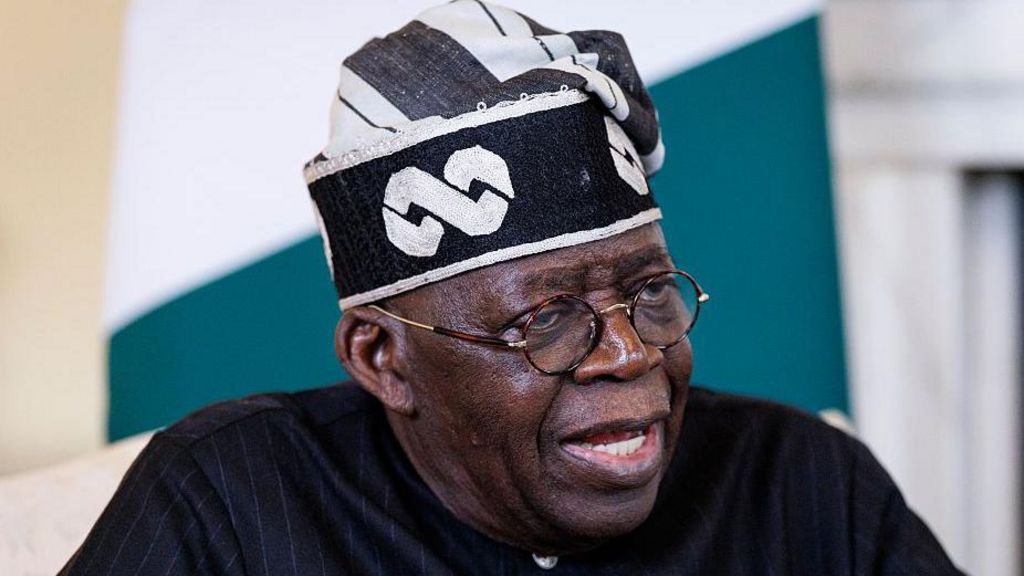
    On Nigeria’s annual Democracy Day, a national holiday commemorating the 1999 transition back to civilian rule after decades of military dictatorship, President Bola Ahmed Tinubu delivered a stern national address that paired a tough ultimatum to domestic armed groups with major new announcements to boost the country’s struggling security apparatus.

    Tinubu opened his remarks by acknowledging that this year’s celebrations were overshadowed by a fresh wave of mass school abductions that have reignited public anxiety across the country. The West African nation has grappled with persistent insecurity for decades, with insurgent attacks, village raids, and ransom-fueled mass kidnappings concentrated largely in northern and central states – a crisis that has grown more acute in recent months. The president specifically referenced recent abductions of schoolchildren in Oyo and Borno states, noting that security forces remain optimistic about securing the safe release of all captives.

    “Democracy without security is not solid enough,” Tinubu told the nation, as he outlined a sweeping package of security investments. His administration is rolling out a recruitment drive for more than 50,000 new police officers, has approved thousands of additional military personnel, and has earmarked a record 5.41 trillion naira (equivalent to roughly $4 billion) for defense and security in the 2026 national budget.

    Defending his administration’s performance since he took office in May 2023, Tinubu claimed that Nigerian military forces have killed 13,000 people classified as terrorists over the past 12 months. He added that civilian fatalities linked to insurgent activity have dropped 81% compared to 2015 levels, and that more than 124,000 armed fighters and their family members have surrendered and disarmed under the government’s Operation Safe Corridor, a national reintegration program for former insurgents.

    These claims have been challenged by independent security analysts, who note that violent attacks continue to disrupt communities across multiple Nigerian states, and that insurgent activity is now spreading into previously stable southern regions of the country. The rising insecurity has coincided with a prolonged economic crisis that has left millions of ordinary Nigerians struggling to afford basic goods. Civil society organizations and labor unions have organized peaceful mass protests across major state capitals, calling for urgent government action to address both widespread insecurity and skyrocketing costs for food and transportation, driven by persistent high inflation. The groups have repeatedly raised alarms about the heavy toll of rising prices on low- and middle-income households.

    Tinubu defended the controversial economic reforms his administration has implemented since taking office, including the elimination of a long-standing national fuel subsidy and the deregulation of Nigeria’s foreign exchange market. He argued that these unpopular measures were necessary to stabilize the country’s public finances and rebuild confidence among international and domestic investors, steps he says will lay the groundwork for long-term economic growth.

    Beyond security and economic policy, the president used the 27th anniversary of civilian rule to pay tribute to the activists and national heroes who led the country’s pro-democracy movement. He gave special recognition to figures linked to the annulled June 1993 presidential election, widely believed to have been won by the late Moshood Kashimawo Olawale Abiola, whose victory was overturned by the military junta in power at the time, a turning point in Nigeria’s struggle for democratic governance.

  • ‘Nightmare from start to finish’ for South Africa in opener

    ‘Nightmare from start to finish’ for South Africa in opener

    The 2026 FIFA World Cup’s Group A opening match delivered far more than a three points for co-hosts Mexico, who wrapped up a comfortable 2-0 victory over South Africa at Mexico City’s iconic Estadio Azteca in a game marred by two red cards for Bafana Bafana, tactical criticism, and rising continental tension over South Africa’s recent anti-migrant violence.

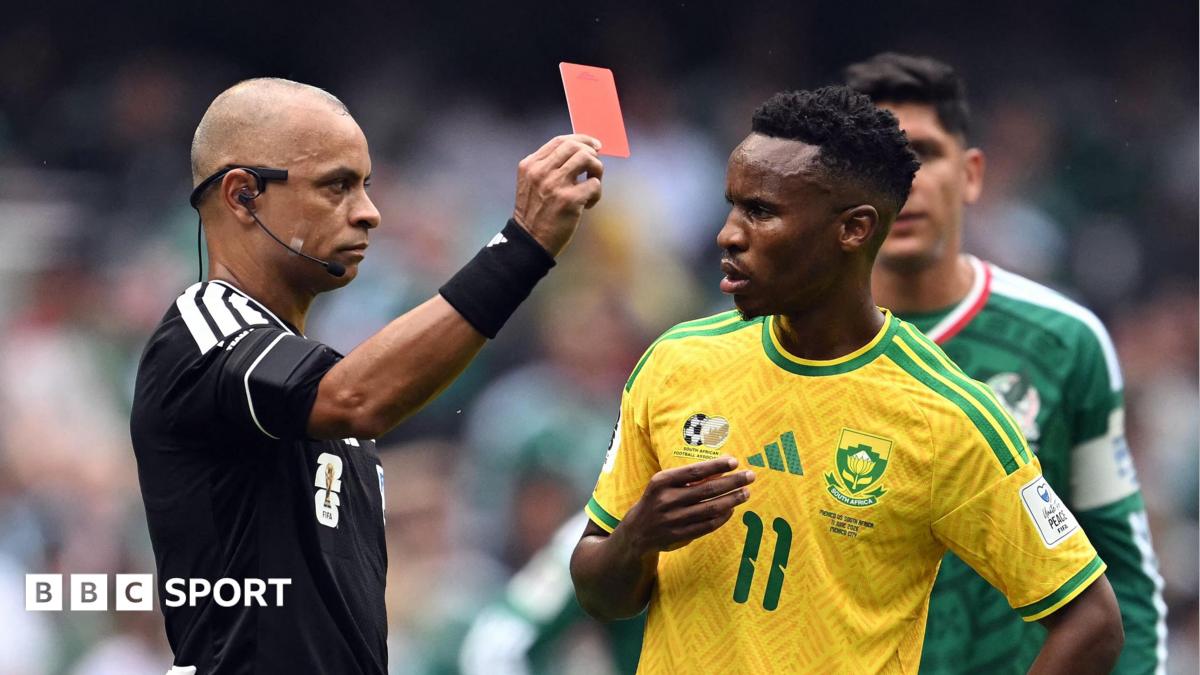
    South Africa’s match unraveled within the opening 10 minutes, when midfielder Sphephelo Sithole lost possession on the edge of his own penalty area, allowing Mexico to convert the early chance and take a 1-0 lead. The second half delivered more setbacks: Sithole was shown a red card, followed by a second dismissal for forward Themba Zwane in the 84th minute after a VAR review upgraded a potential foul to a straight red for violent conduct. The sending-off marked only the second time in World Cup history that an African side has had two players dismissed in their opening finals match, a statistic last recorded by Cameroon against defending champions Argentina in 1990 – a match the Indomitable Lions famously won 1-0, a result South Africa never came close to matching.

    Former South African captain Dean Furman, commentating for BBC Radio 5 Live, described the performance as “a nightmare from start to finish.” He argued that no Bafana Bafana player could claim to have performed to their potential, saying “Mexico were in total control from minute one. They looked more assured, they were calm in possession. It was just turnover after turnover after turnover, and when you’re playing against quality opposition you get punished.”

    On the contentious second red card, South Africa head coach Hugo Broos – the oldest coach at this year’s tournament at 74 – disputed the call, claiming Mexican winger Roberto Alvarado blocked Zwane and went down unnecessarily. However, Furman, who played alongside Zwane for several years, said the call was justified under modern rules: “I know it’s incredibly soft but it’s the modern game, you can’t lash out. It’s going to be an interesting World Cup if that’s what we’re giving red cards for but that is the game today. You can’t do that.”

    South African captain Ronwen Williams acknowledged the disappointing result but sought to highlight his side’s resilience, even with two players down. “Obviously the opening game of the World Cup comes with so much emotion,” the 34-year-old said. “We knew they were going to have the atmosphere, the energy behind them and we didn’t want to concede in the opening few stages. And then that’s exactly what happened. As difficult as it was with two guys sent off, we didn’t give up. It shows the mentality that we have and the character that we kept fighting.”

    Domestic fans in Johannesburg were far less forgiving. Relebogile Lairi called the performance a “very disappointing start,” saying supporters “expected a lot more from the boys” and blamed widespread “stage fright.” Nicholas Makomene criticized Broos’ defensive 5-3-2 setup, saying there was “no need to park the bus” against the co-hosts.

    Beyond the pitch, the result exposed deep divides across the African continent, 16 years after South Africa made history as the first African nation to host the World Cup, a moment that unified the continent behind African teams. This year, many fans across Africa backed Mexico over South Africa, in response to recent anti-migrant protests and violence in South Africa that has led multiple African nations to repatriate their citizens. South African officials have condemned the violence and rejected accusations of xenophobia, but that has done little to ease tensions.

    In Nairobi, Kenyan organizer Elisha Kamau held a “hate-watch” party that drew nearly 200 attendees, almost all of whom supported Mexico. “The second reason I think is just the timing of the xenophobic attacks. It depends who is playing South Africa, but I think most people would support the other team,” Kamau explained. Congolese fan Daniel Kaniki, watching from a fan park in Atlanta, echoed that sentiment: “Africa is like one country and if one is chasing others, we are not a family any more. That’s why I’m supporting Mexico.” Not all fans across the continent aligned with this view, however: Ghanaian fan Vanlare Quist said he rooted for South Africa, arguing that anti-immigrant sentiment was driven by a small minority of bad actors, not the entire nation.

    Looking ahead, South Africa faces a must-win second Group A match against the Czech Republic on June 18. Both teams enter the fixture winless, after the Czechs dropped a 2-1 opening match result to South Korea. Furman is pushing for a major tactical shift, urging Broos to abandon the defensive 5-3-2 setup he used against Mexico in favor of the more attacking 4-3-3 formation that fits South Africa’s traditional style of play.

    “They have to put this to bed very, very quickly,” Furman said. “I know you’re playing against better opposition in a big match and you’re probably looking to soak up the pressure and go a little bit more defensive, but that’s just not our style at all. For me, going forward, you’ve got two games left to save yourself, to try and get a victory to get yourself into the next round. Go with our 4-3-3. Put your attacking players on, put your number 10s on, your more imaginative players. Let’s see what South African football is all about.”

  • Storm chaser digs man out of rubble after tornadoes rip through US Midwest

    Storm chaser digs man out of rubble after tornadoes rip through US Midwest

    On June 11, a massive tornado carved a destructive path through Livingston County, Illinois, capping a day of widespread severe weather that swept across the American Midwest. The extraordinary outbreak, which unfolded through Thursday afternoon and evening, left a trail of crumbled homes, disrupted critical infrastructure, and tested the resilience of communities across three states. Amid the chaos, an experienced storm chaser and video journalist’s quick thinking turned a routine reporting trip into a life-saving mission.

    Scott Lasker, who crisscrosses the United States documenting tornadoes as they touch down, was on assignment capturing post-storm damage roughly 100 miles outside of Chicago, near the hard-hit city of Streator. The region had been under a tornado watch all day, with forecasters warning of unstable atmospheric conditions favorable for severe rotating storms. As Lasker surveyed the wreckage, he heard a desperate woman screaming for assistance nearby.

    Rushing to the scene, Lasker found the woman’s husband pinned beneath the collapsed remains of his home. According to his account to local CBS News Chicago, Lasker immediately began working to pry the trapped man free from the rubble, while the woman used Lasker’s own camera to document the frantic rescue effort. “I gave him a little comfort and then the police showed up,” Lasker told the outlet, adding that responding law enforcement officers completed the extraction and got the man to safety.

    By the end of Thursday night, at least 12 confirmed tornadoes had been recorded across Illinois, Indiana, and Wisconsin, with Streator ranking among the communities that suffered the worst destruction. Tara Bedei, mayor of the 12,000-person city, confirmed that no fatalities had been reported in the area, but aerial and on-the-ground video footage shows widespread structural damage across the town, with entire blocks reduced to piles of splintered wood and mangled debris.

    Beyond structural damage, the outbreak left hundreds of thousands of residents without electrical power, as high winds knocked down power lines and damaged utility infrastructure across the region. At Chicago’s Midway Airport, air traffic controllers were forced to evacuate the control tower mid-operation after a tornado warning was issued for the area, triggering a cascade of flight disruptions that saw thousands of scheduled journeys canceled or delayed. Even professional sports were not spared: a scheduled Major League Baseball game between the Chicago White Sox and Atlanta Braves was called off due to the unsafe weather conditions.

    The June outbreak comes as the U.S. already faces an active severe weather season. Preliminary data from the National Oceanic and Atmospheric Administration (NOAA) recorded 168 tornadoes across the country throughout the month of May, underscoring the heightened risk that storm systems like the one that hit the Midwest pose to populated areas this time of year.

  • Huge fire destroys warehouse outside San Francisco

    Huge fire destroys warehouse outside San Francisco

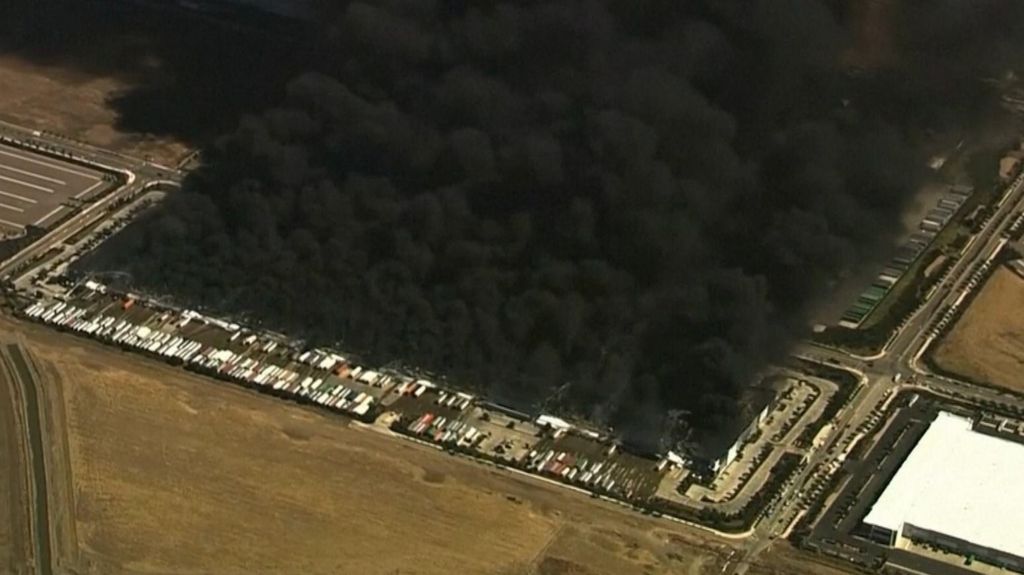
    A large-scale out-of-control fire has completely destroyed a warehouse belonging to a medical equipment distribution center located just outside the San Francisco city limits. The company that operates the facility confirmed late Wednesday that all on-site staff were quickly evacuated from the burning structure as flames spread rapidly across the property. Emergency fire crews were dispatched to the scene immediately after witnesses reported plumes of black smoke rising from the industrial zone where the warehouse is situated. A full headcount conducted after evacuation confirmed that every employee was accounted for, with no reports of injuries related to the incident so far. Investigators have not yet released information about the potential cause of the fire, and an inquiry into the origin and spread of the blaze is already underway. The distribution center plays a key role in getting critical medical supplies to healthcare providers across Northern California, and early assessments are now being conducted to gauge what impact the loss of the facility will have on regional supply chains in the coming weeks. While the company has moved quickly to reassure partners that alternative distribution channels are being activated, local healthcare stakeholders are monitoring the situation closely to avoid disruptions to patient care.

  • Keir Starmer says he’s staying put after defense secretary’s departure hammers his authority

    Keir Starmer says he’s staying put after defense secretary’s departure hammers his authority

    LONDON — British Prime Minister Keir Starmer is facing the most severe threat to his premiership to date after the abrupt resignation of his most trusted senior cabinet member, Defense Secretary John Healey, has left his already fragile administration reeling and pushed growing internal unrest within the ruling Labour Party to a breaking point.

    Healey, a widely respected loyalist who had stood by Starmer through months of political turbulence, stepped down from his post Thursday, publicly breaking with the government over its failure to commit to accelerated military spending amid growing global security threats. In his resignation statement, Healey warned that current planned defense investment levels are insufficient to guarantee Britain’s national security at a moment of intensifying global risk. Just hours after Healey’s departure, junior defense official Al Carns also resigned, echoing criticism that the government’s long-awaited Defense Investment Plan lacks the transformative change the British military requires.

    The resignation hits Starmer particularly hard, as foreign and defense policy had remained the lone area where the embattled prime minister had retained consistent public and cross-party praise since he took office following a landslide general election victory in July 2024. During his short tenure, Starmer positioned Britain as a leading European security leader: he deepened military and diplomatic support for Ukraine, partnered with French President Emmanuel Macron to build a multinational “coalition of the willing” to secure Ukraine’s borders in the event of a future ceasefire, and joined Paris to launch a joint maritime security task force to protect commercial shipping through the Strait of Hormuz. He also took a firm public stance aligning with pressure from former U.S. President Donald Trump, urging European NATO members to increase their own defense spending commitments to match the changing security landscape.

    “Starmer has been consistently staunch about warning of the security risk from Russia,” explained Olivia O’Sullivan, head of the U.K. in the World program at the London-based think tank Chatham House. “He’s been given quite a bit of credit by the public for having to deal with Trump and doing so with a level of steadiness and calm. And he has been, in line with previous U.K. governments, a close and consistent ally of Ukraine.”

    The core dispute that triggered Healey’s resignation centers on funding for the government’s 10-year Defense Investment Plan, which outlines a target to raise British military spending to 3.5% of gross domestic product by 2035. For years, the British military has pushed to reverse decades of underinvestment and capability decline, as Russia has grown increasingly militarily assertive following its 2022 full-scale invasion of Ukraine, regularly conducting overt and covert probes of NATO’s northern and eastern European defenses. Healey argued that accelerating spending to hit a 3% of GDP target by 2030 was non-negotiable, citing official British intelligence assessments that warn Russia could be prepared to launch an attack on a NATO member state as early as that year. He warned that a slower, lower-spending path “could make the country less safe.”

    Treasury Chancellor Rachel Reeves rejected Healey’s demand, refusing to revise the government’s existing timeline, prompting his resignation. The debate over defense spending divides political and policy observers in the U.K.: critics argue that military funding is often an open-ended demand, pointing to long-running issues with procurement delays and massive budget overruns on major defense projects. For his part, resigning junior minister Al Carns argued that the problem extends beyond total spending levels, telling the BBC that the government’s plan is not “transformative enough.” “I want to see a higher percentage for uncrewed systems, AI, data — data is the new gunpowder — and we’ve got to move that forward if we are going to win the next war,” he said.

    Healey’s exit marks the latest in a string of high-profile departures that have gutted Starmer’s cabinet in recent weeks. Last month alone, the prime minister lost multiple junior ministers followed by Health Secretary Wes Streeting, who resigned explicitly to position himself for a potential leadership challenge if a contest is called. The most prominent potential challenger, Greater Manchester Mayor Andy Burnham, is widely expected to trigger a leadership race if he wins a special parliamentary election scheduled for this Thursday.

    Unlike previous resignations from figures with openly stated leadership ambitions, Healey’s departure from a minister long seen as a loyal team player with no personal designs on the top job signals that Starmer’s credibility is eroding even among his closest allies. “[It] suggests that Starmer’s credibility, even with his inner circle of ministers, is perhaps draining away,” O’Sullivan noted.

    Undeterred by the growing rebellion, Starmer struck a defiant tone during a public interview Friday, vowing to hold onto power and fight any challenge to his leadership. “It’s my job to make hard-edged decisions,” he said, emphasizing that “defense is my number one priority. And I have taken the difficult decisions to make sure that we are safe as a country.”

    “I’m not going to go away. I don’t think we should plunge the country into the chaos of a leadership election,” Starmer added. “I don’t think it should happen, but if it does, then I will fight.”

  • Ethiopia’s Tsegay handed four-month doping ban

    Ethiopia’s Tsegay handed four-month doping ban

    One of Ethiopian long-distance running’s most decorated champions, Gudaf Tsegay, has been issued a four-month competition ban following a positive doping test that detected a banned aromatase inhibitor in her system. The 29-year-old, a two-time world champion and Olympic bronze medalist, has not competed since last October, months before the case became public.

    Tsegay’s athletic resume includes a 5,000m world title in 2022, a 10,000m world championship crown in 2023, and a bronze medal in the women’s 5,000m at the 2020 Tokyo Olympic Games. She also claimed bronze in the 10,000m at the 2023 World Athletics Championships held in Tokyo, her last major competitive appearance before stepping off the track.

    The positive result emerged from an out-of-competition doping test conducted last December, where analysts found a metabolite of Letrozole, a substance classified as a prohibited aromatase inhibitor on the World Anti-Doping Agency (WADA) banned list. Clinically, Letrozole is primarily used to treat breast cancer by reducing estrogen levels in the body.

    When the Athletics Integrity Unit (AIU) notified Tsegay of the positive finding in late January, the runner responded within 24 hours to confirm she had been prescribed the drug to treat a officially diagnosed medical condition, and submitted full supporting medical documentation to back up her claim. In February, Tsegay filed an application for a retroactive therapeutic use exemption (TUE) with World Athletics, the governing body for international track and field. World Athletics confirmed that her ongoing treatment aligned with WADA’s international standards for approved TUEs, but WADA ultimately rejected her request for a retroactive exemption granted under exceptional circumstances.

    Following the rejection, Tsegay entered a formal case resolution agreement with both WADA and the AIU to settle the violation without extended litigation. In an official statement announcing the ban, the AIU noted that the four-month sanction was deemed appropriate under anti-doping rules governing cases where the athlete bears minimal to no fault or negligence.

    The length of the ban was determined based on multiple mitigating factors: Tsegay’s limited degree of fault, her immediate and honest admission of the violation, the confirmation that her use of Letrozole met WADA’s TUE standards for medical need, and the formal finding that she would have been approved for a TUE if she had submitted the application before taking the medication. The ban has been backdated to 1 June 2024, and will remain in effect through 30 September 2024.

  • New Zealand great Williamson says ‘right time’ to retire from international cricket

    New Zealand great Williamson says ‘right time’ to retire from international cricket

    One of international cricket’s most respected modern stars and New Zealand’s all-time leading run-scorer Kane Williamson has shocked the global cricket community by announcing his immediate retirement from all forms of international cricket on Friday. The 35-year-old made the announcement mid-way through New Zealand’s ongoing three-Test series against England, just days out from the series’ second Test scheduled to begin at The Oval next week.

    Williamson featured in the opening Test of the series at Lord’s last week, where the Black Caps fell to defeat, posting scores of 0 and 18 in the two innings. The veteran batsman explained that his decision to step away had come after months of reflection, and that the timing felt right to close out his 14-year international career.

    “I’ve thought about it for a while, but over the last few days it’s become clear now is the right time,” Williamson said. “I’ve always felt a strong drive and hunger for international cricket, and I take pride in knowing I’ve given it my all in every match I’ve played for New Zealand. Continuing with anything less wouldn’t be right and I feel fortunate to step away on my own terms.”

    The unexpected timing of the announcement, which came just one match into a planned series and with future home series against India and Australia already scheduled for the 2026/27 season, caught many fans and analysts off guard. But speaking to reporters in London after the announcement, Williamson said he was confident his departure would clear the way for the next generation of Black Caps talent to step up and thrive.

    “When I look at the dressing room now and I see the talent, and the journey that I think this team’s looking to go on, it just feels like the right time for me to step away. I feel really good about it,” he added.

    Widely regarded as one of the four best batsmen of his generation, Williamson is part of the so-called ‘Fab Four’ alongside modern greats Virat Kohli of India, Australia’s Steve Smith and England’s Joe Root. He made his international debut for New Zealand in 2010, and went on to represent the Black Caps across 378 matches, finishing his career with an unprecedented 19,346 international runs. His record includes 48 centuries and six double-centuries across all formats, making him New Zealand’s most prolific run-getter in the history of the sport.

    In Test cricket, the format where he earned his greatest acclaim, Williamson played 110 matches, amassing 9,515 runs at an elite average of 54.06 with 33 centuries to his name. Beyond his on-field batting prowess, he earned widespread praise for his calm, thoughtful leadership, serving as captain across all three formats from 2016 to 2024, a golden era for New Zealand cricket. Under his captaincy, the Black Caps reached two 50-over World Cup finals, three World Cup semi-finals, and claimed the title of the inaugural ICC World Test Championship in 2021.

    Current New Zealand head coach Rob Walter paid warm tribute to Williamson’s legacy, emphasizing that his impact extended far beyond his statistical achievements. “Anyone who’s had the privilege of working with Kane understands he is a very special player and person. His numbers and batting skills speak for themselves, but it’s what he means to this Black Caps team, as well as world cricket — that will be his legacy,” Walter said.

    Walter acknowledged that Williamson’s departure would leave a gaping hole in the New Zealand line-up for the upcoming second Test against England. “You don’t lose Kane Williamson off the team sheet and get stronger, because he’s a legend,” he added. When asked who would replace Williamson in his traditional batting spot at number three for the Oval Test, Walter declined to confirm a replacement. The likely candidates are reserve batsman Henry Nicholls, who is already in the touring squad, or rising star Rachin Ravindra, who could move up one position from his current spot at number four.

    Williamson’s career is decorated with some of the highest honours in the sport: he was named ICC Cricketer of the Year in 2015 and ICC Test Player of the Year in 2019, and won New Zealand cricket’s most prestigious domestic award, the Sir Richard Hadlee Medal, a record four times.

    Sir Richard Hadlee himself, one of New Zealand cricket’s all-time greatest icons, issued a statement praising Williamson’s career and leadership. “He’s demonstrated a willingness to continually advance his game to the highest level in all three formats and he rightfully finishes as one of the best players of his era,” Hadlee said. “The way he prepared himself physically and mentally was perhaps the most impressive part. He was always committed to working hard and developing his technique to ensure he was ready to be a world class player. He’s been an unflappable leader and the architect of some of our greatest moments in cricket.”

  • The China collapse that just never arrives

    The China collapse that just never arrives

    For more than 20 years, the idea that China is on the cusp of systemic collapse has lingered in Western analytical and media circles. The concept first entered mainstream discourse in 2001, when commentator Gordon Chang published *The Coming Collapse of China*, a work that infamously forecast China’s state-led economic model would collapse within 10 years.

    When that initial deadline passed without incident, the prediction was revised, repackaged, and cemented its place as a persistent genre of analysis that has outlived every missed timeline. For proponents of the narrative, a Chinese crisis has always been just around the corner. To understand the patterns that shape this flawed forecasting tradition, it is useful to examine two prominent analysts who sit on opposite ends of the collapse debate spectrum.

    Nouriel Roubini, the economist who earned the nickname “Dr. Doom” for his accurate early prediction of the 2008 global financial crisis, joined the camp of China skeptics in 2011. At that time, he warned China faced a significant risk of a sharp economic hard landing driven by runaway sovereign and corporate debt, excessive capital investment, and large-scale infrastructure projects disconnected from actual consumer and business demand. Roubini pegged a major crash to arrive after 2013.

    By 2015, when consensus around a Chinese hard landing reached its peak, Roubini re-evaluated his position against new on-the-ground data. He ultimately rejected the full collapse scenario, revising his forecast to predict a “bumpy landing”: a period of slower growth that would not spiral into total systemic failure. For Roubini, shifting evidence justified a shifting conclusion.

    Geopolitical strategist Peter Zeihan has taken a far different approach. For more than 10 years, Zeihan has maintained that China’s economy and political system face inevitable structural collapse. He points to an aging population shrinking the available workforce and an overreliance on exports that undermines long-term growth stability. While Zeihan has repeatedly adjusted his projected timeline for collapse in books, media interviews, and public talks, his core conclusion has remained largely unchanged.

    Zeihan’s identified challenges are not fabricated: China is indeed navigating rapid population aging, and its export sector faces stiffer global competition than in decades past. Yet the systemic collapse he has forecast has never materialized. China has responded to demographic headwinds by accelerating automation adoption and has steadily climbed the global industrial value chain, moving beyond low-cost manufacturing to high-value advanced production.

    This contrast between the two analysts is telling: Roubini adjusted his stance to match new evidence, while Zeihan has simply pushed his collapse deadline further into the future.

    This pattern of missed projections repeats across the broader discourse. When China’s Shanghai Stock Exchange plummeted in 2015, commentators immediately declared a hard landing was imminent. When major property developer China Evergrande Group defaulted on its debt in 2021, comparisons to the 2008 collapse of Lehman Brothers that triggered the global financial crisis appeared nearly overnight. In both cases, the predicted collapse never arrived. China’s economic and political system remained standing, despite serious stress.

    This is not to claim China faces no meaningful challenges. Household wealth remains heavily concentrated in a cooling property market. Youth unemployment rose to such unprecedented levels that Chinese authorities suspended public release of the data. Rising Western protectionism has made accessing key export markets far more difficult. Analysts forecasting trouble did not invent these strains; they correctly identified genuine vulnerabilities. What they have consistently misjudged is not the existence of stress, but how that stress would spread through China’s unique economic and political system.

    A prediction that fails repeatedly, only to be quietly postponed, eventually changes its nature. It stops being a data-driven forecast and becomes a persistent ideological expectation that survives every disconfirmation. The open question today is no longer whether China faces serious economic headwinds — it clearly does — but why collapse forecasts keep missing the mark in the same consistent direction. Errors stemming from incomplete bad data are typically random: some forecasts skew too optimistic, others too pessimistic, and over time they average out to match reality. The China collapse forecast does not scatter randomly; it consistently leans toward the same pessimistic outcome.

    The timeline for collapse has receded steadily for two decades: 2011 shifted to 2012, then to 2016. A hard landing was again pronounced after the 2015 stock correction, and the prediction persisted through the U.S.-China trade war, the COVID-19 pandemic, and the Evergrande default. Across that same 20-year period, China’s economy expanded more than fourfold in size, average household incomes quadrupled, and the country’s industrial base steadily moved up the global value chain. A forecasting error that consistently points in the same direction reveals more about the biases of the observer than the conditions of the country being observed.

    Three core forces explain the surprising durability of the collapse narrative, and none require intentional deception from its proponents.

    First, the conclusion of imminent collapse is politically and professionally useful. For investors, it provides a seemingly analytical justification for avoiding Chinese assets that actually stems from personal anxiety rather than data. For Western governments, it frames risk management around China as confirmation that a rising peer competitor cannot sustain its success, eliminating the need to adjust to a new global economic order. For media outlets, a collapsing China is far more clickable than a complex, rising rival: nuance does not drive audience engagement the way a looming disaster does. When a conclusion is this welcome to key audiences, confirming evidence is accepted uncritically while contradicting evidence is subjected to extreme scrutiny. Being wrong carries almost no professional cost: a forecaster can miss the same prediction for 20 years and remain a sought-after media authority. This bias is rarely conscious; it is the natural outcome of desire shaping perception.

    Second, the core assumption behind the narrative is deeply rooted in long-standing Western thought. A centuries-old tradition holds that a functional modern economy cannot exist without the specific liberal institutions Western powers developed: independent central banks, courts that constrain state power, and unfettered free flow of information. For those who hold this assumption firmly, China’s decades of rapid growth can only be a temporary bubble borrowed from the future, and collapse becomes an inevitable logical deduction rather than an evidence-based prediction.

    This conviction is most visible in the persistent assumption that China could only ever copy Western technology, never innovate on its own. Yet today Chinese firms lead global markets in electric vehicles, renewable energy storage, next-generation batteries, and a growing list of other cutting-edge technologies. The core premise of the collapse narrative has survived even as reality has steadily eroded it.

    Third, the economic models used to assess China’s vulnerability were built for Western market systems. Most standard forecasting tools are designed for economies where the state acts as an independent referee, not a major market participant. These models focus on private debt levels, leverage ratios, and property market valuations — all relevant indicators in China, but stress does not propagate through China’s system the same way it does in Western markets.

    The Evergrande default is the clearest example of this mismatch. Comparisons to Lehman Brothers seemed logical on the surface, but Lehman collapsed within a financial system made up of largely independent private creditors. China operates with a far different structure: state-owned banks and government-led debt restructuring have fundamentally altered the pathways through which financial distress can spread across the economy. The result was not the absence of crisis — it was a different kind of crisis. Developers defaulted, property values fell, and growth slowed, but the cascading systemic chain reaction many analysts predicted never materialized. Standard models correctly identified genuine vulnerabilities, but they misjudged how those vulnerabilities would play out in China’s unique system.

    Critics of the collapse narrative often fall into the opposite trap: claiming China faces no serious structural risks. This is equally misleading. Analysts who warned about China’s weaknesses were right about many core issues: major developers did default, property values did correct, and demographic headwinds are already reshaping China’s labor force. The label “imminent” collapse has been wrong for 20 years, but the label “fragile” has never been incorrect. This is the honorable path to forecasting error that Roubini exemplifies: acknowledging flaws while adjusting projections to match new data.

    The same logic that undermines the collapse narrative can be applied to its mirror opposite. If a perpetually collapsing China is a convenient narrative for many Western observers, an infallible China that cannot fail is equally convenient for its own supporters and global proponents. Both narratives rely on selective attention to evidence, and both mistake ideological conviction for empirical proof.

    All economic forecasting models are inherently maps: they compress a vast, complex reality into a small set of simple, legible variables. The actual territory of any economy, China included, is far messier and more unpredictable than any model can capture. When the territory refuses to behave the way the map predicts, the disciplined analytical response is to question the map. Too often, the reflexive response is to question the territory: to claim data is faked, or growth is inherently hollow.

    The root cause of two decades of consistent forecasting error boils down to this: analysts have been watching the wrong indicators. China’s new middle class did not only expand in the coastal megacities of Shanghai and Shenzhen. It grew most rapidly in inland cities like Chengdu, Hefei, Xi’an, and Zhengzhou, where rising incomes have been driven by industrial expansion and infrastructure investment, not speculative coastal real estate gains.

    If a genuine systemic decline is on the horizon, it will appear first in these regions, through shrinking household incomes and shifting spending patterns among China’s inland middle class. If these indicators begin to show sustained contraction, the collapse thesis will finally have the transmission mechanism it has lacked for decades. If, however, these inland indicators remain resilient, analysts and critics will once again need to reconsider the flawed assumptions that have produced 20 years of unfulfilled collapse predictions.
  • NATO weighs options to defend Europe as the US plans for conflict elsewhere

    NATO weighs options to defend Europe as the US plans for conflict elsewhere

    BRUSSELS — NATO’s top military leader is developing backup defense strategies for Europe in the event of a Russian attack, following a major announcement from the United States that it will reduce the number of aircraft and warships it makes available to the alliance during security crises. The alliance’s longstanding core deployment framework, known as the NATO Force Model, has served as the primary plan for coordinating military assets from 32 member states across peacetime, crisis, and full conflict, outlining what resources commanders can draw on in phases during the first six months of any armed confrontation. But last month, the Pentagon notified its NATO partners that it would scale back its European theater commitments to reorient its military posture toward growing strategic threats in the Indo-Pacific, primarily from China.

    This announcement capped more than a year of anxious waiting among European allies and Canada, after the Trump administration first flagged that Europe would no longer be counted as the United States’ top security priority. While allies have known for months that defense cuts were coming, they have remained in the dark about the scale, speed, and specific scope of the reductions. U.S. General Alex Grynkewich, NATO’s Supreme Allied Commander, emphasized in comments at the ILA Berlin Air Show Thursday that the U.S. still remains committed to providing limited, but strategically critical, capabilities to the alliance.

    “Our priority right now is focusing on capabilities that we can acquire rapidly, deploy quickly, scale at pace, and sustain over extended periods of time – that applies to long-range fires systems as well as unmanned aerial systems,” Grynkewich said. “These types of assets will help us offset near-term defense risks if we are called on to deter aggression and defend alliance territory.”

    Following a June 2-3 meeting of alliance defense leaders to assess capability gaps created by the U.S. drawdown, Grynkewich called on European NATO members and Canada to fill these gaps by contributing additional manned combat aircraft, unmanned drones, and naval vessels to the alliance’s crisis stockpile, saying the contributions are needed “now and in the immediate near term.” While the exact details of the U.S. cuts remain classified, independent media reports in Germany and the United States indicate the drawdown will remove an entire aircraft carrier strike group, including its accompanying warships and air wing, plus a nuclear-powered submarine from the European theater. The cuts are also expected to eliminate access to dozens of fighter jets and multiple aerial refueling tankers, assets that are already in critically short supply across European armed forces, leaving alliance leaders uncertain where they can source these capabilities on short notice. The White House has demanded that allies present detailed backfill plans ahead of the NATO summit scheduled for July 7-8 in Turkey, where President Donald Trump will meet with alliance heads of state and government.

    In a separate development announced Friday, NATO military headquarters confirmed it will implement additional cuts to its Kosovo peacekeeping force, withdrawing an unspecified number of troops and pieces of equipment. The Kosovo Force, better known as KFOR, has been deployed to the region since 1999, with a mandate to maintain peace between Kosovo and neighboring Serbia. At the height of its deployment, KFOR numbered 50,000 troops, but it has been gradually scaled back over decades as regional tensions cooled. A 1,000-strong reinforcement was deployed to the region in 2023, however, after a new wave of violent ethnic unrest broke out.

    Grynkewich noted that current security conditions in Kosovo allow NATO to further adjust the force’s size and operational posture. His office declined to specify which units would be withdrawn, or whether any U.S. troops would be part of the drawdown. “This adjustment is not about raw troop numbers, it is about optimizing the force to better guarantee safety and security for all people living in Kosovo and across the wider Balkan region,” a spokesman for Grynkewich explained. Currently, the U.S. deploys 590 troops to KFOR, making it the second-largest contributing nation after Italy, which has 907 personnel in the theater. The U.S. also stations a fleet of Black Hawk helicopters at Camp Bondsteel, the large U.S. military base that has operated in Kosovo since the 1999 intervention.

    For all the ongoing adjustments to NATO’s defense posture, Grynkewich stressed that there is no immediate threat of a Russian attack on alliance territory. Current intelligence assessments and observations of Russian force movements indicate “Russia is not seeking a direct armed conflict with NATO,” he said. Russia remains heavily committed to its full-scale invasion of Ukraine and continues to face significant challenges recruiting enough troops to sustain its current operations. Even so, European governments and intelligence services have warned that Russian President Vladimir Putin could have the capacity to launch an attack on other parts of Europe within three to five years, particularly if he succeeds in securing his territorial aims in Ukraine.

    Associated Press correspondents Kirsten Grieshaber in Berlin and Zana Cimili in Pristina, Kosovo contributed reporting to this article.