博客

  • Watch: David Beckham receives star on the Hollywood Walk of Fame

    Watch: David Beckham receives star on the Hollywood Walk of Fame

    In a glittering ceremony that blended sports stardom with Hollywood glamour, former professional football icon David Beckham has received one of the entertainment industry’s most iconic honors: a permanent star on the Hollywood Walk of Fame.

    The special induction event drew a high-profile crowd, with Beckham’s inner circle leading the group of well-wishers. His wife, former Spice Group member and celebrated fashion designer Victoria Beckham, and the couple’s four children were on hand to share the milestone moment, posing for photos alongside the newly unveiled star embedded in the sidewalk along Hollywood Boulevard.

    Adding another layer of A-list star power to the occasion, legendary Hollywood actor Tom Cruise also attended the ceremony, standing alongside the Beckham family to celebrate David Beckham’s cross-cultural impact that has stretched far beyond the football pitch over his decades in the public eye. For years, Beckham has built a global brand that merges his athletic legacy with ventures in fashion, media, and entertainment, making the Walk of Fame honor a fitting recognition of his multi-faceted career.

  • Bruce Springsteen music center set to open in New Jersey

    Bruce Springsteen music center set to open in New Jersey

    As one of the most iconic native sons of the Garden State, rock legend Bruce Springsteen is about to receive a permanent, heartfelt tribute from his home: the Bruce Springsteen Center for American Music, a new $53 million museum celebrating both his decades-long career and the broader tapestry of American music, is set to open its doors to the public this Saturday in Long Branch, New Jersey. This coastal town is Springsteen’s birthplace, and sits just minutes from Asbury Park, the working-class seaside community that fostered the young musician’s growth and carved its indelible mark on his artistic voice.

    Spanning two floors and covering roughly 3,000 square meters of exhibition space, the museum’s layout is designed to weave together the broader history of American roots and popular music with the specific story of Springsteen’s rise to stardom. One entire floor is dedicated to tracing the evolution of core American music genres, from blues, country and jazz to modern hip-hop. A central throughline of this section is highlighting the long tradition of protest music that has shaped American culture, featuring iconic artists from Woody Guthrie, Bob Dylan and Nina Simone to Public Enemy, Kendrick Lamar, and Springsteen himself. Springsteen, a well-documented vocal critic of former President Donald Trump, introduces this theme in a 25-minute introductory film that greets all visitors upon arrival, where he frames himself as one messenger in a long, unbroken line of musical storytellers.

    Exhibition curators drew direct inspiration from Springsteen’s own words to shape the museum’s design. According to Jared Gilbert, an associate at lead architectural firm CookFox, Springsteen’s memoir *Born to Run* and the narratives woven into his song lyrics served as the core inspiration for many of the space’s key design choices. The museum’s collection features a host of one-of-a-kind artifacts loaned by artists or their estates, including a gold jacket once owned by Elvis Presley, a saxophone played by jazz legend John Coltrane, a guitar from rock icon Eddie Van Halen, and a signature cap from Public Enemy frontman Chuck D. Bob Santelli, the center’s executive director and a close personal friend of Springsteen, told reporters that securing these rare items was far simpler than many expected, noting that Springsteen’s reputation and name opened almost every door for the curatorial team. The entire project, which will house Springsteen’s personal professional archives, was funded primarily through donations from high-net-worth fans of the rock star, Santelli added.

    To make the collection accessible to all visitors, the museum integrates interactive listening stations and touchscreen displays that let guests explore hundreds of tracks across different styles and eras. Curators acknowledged one notable gap, however: popular dance genres including disco, funk, house and techno are not featured in the genre exhibition, a omission the team says was purely due to space constraints rather than an intentional choice.

    The museum’s upper floor is dedicated entirely to tracing Springsteen’s decades-long career, starting from his earliest live performances on the campus of Monmouth University, through the formation of his long-time backing group the E Street Band, his commercial breakthrough in the mid-1970s, and the global blockbuster success of his 1984 seminal album *Born in the U.S.A.*. A large, dedicated section of the exhibition unpacks the album’s iconic title track, clarifying its nuanced message for the many listeners who still misinterpret it as a straightforward patriotic anthem: the song was actually written to condemn the poor treatment of Vietnam War veterans after they returned home from service.

    Additional interactive and personal exhibits include a virtual library holding the key books that shaped Springsteen as an artist – the singer, who dropped out of college, shares in a recorded video that he only developed his love of reading at age 28 – and a replica recording studio where visitors can experiment with mixing their own musical tracks. Notably, while Springsteen used his 20-date U.S. tour completed in May to openly criticize former President Trump at every stop, the former president’s name does not appear anywhere in the museum’s permanent exhibitions. Santelli explained that the center has intentionally kept its core narrative apolitical, noting that Springsteen’s personal political views are his own, not the institutional stance of the museum. To address the intersection of music and politics that runs through Springsteen’s work and American music broadly, the center will launch a six-month temporary exhibit alongside the opening, titled *Chimes of Freedom: Politics, Protest and the Power of Song*, which will explore that theme in depth.

  • ‘I hope Rama resigns’: Why Albania’s Flamingo Revolution isn’t actually about flamingos

    ‘I hope Rama resigns’: Why Albania’s Flamingo Revolution isn’t actually about flamingos

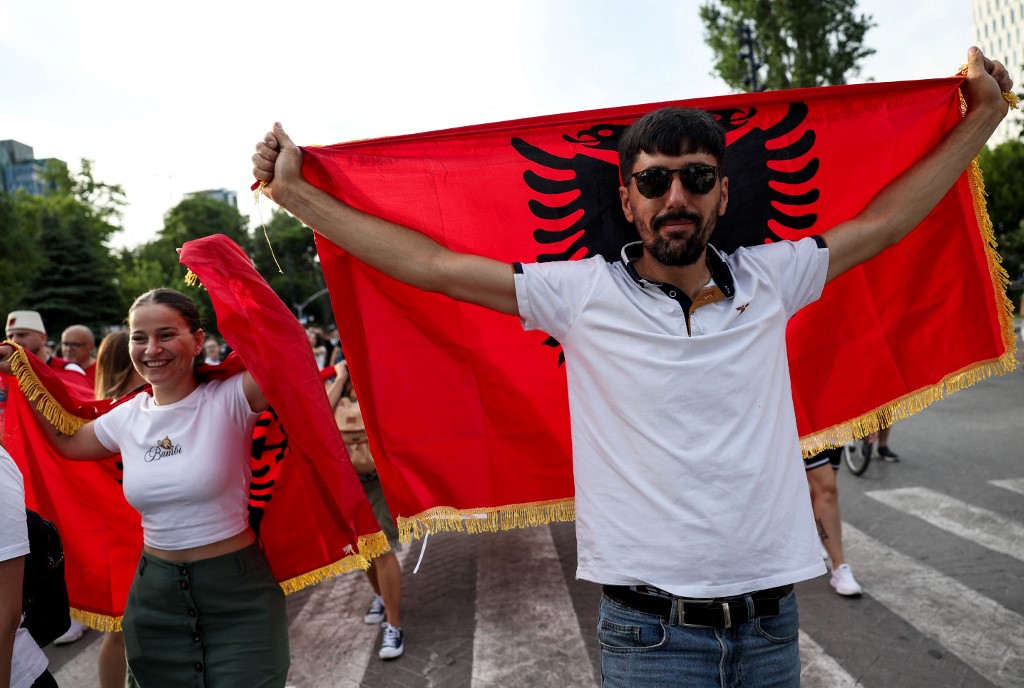
    As the clock strikes 6 p.m. on a midweek Wednesday, several hundred Albanian demonstrators assemble along the perimeter of Tirana’s central Skanderbeg Square. A small group of speakers steps forward to address the crowd, while new arrivals stream in, carrying hand-painted posters and national flags. Roughly 30 minutes after the first gathering, the crowd begins a coordinated march toward the residential compound of Albanian Prime Minister Edi Rama, located in the capital’s core. Along the route, informal street vendors do brisk business selling Albanian national flags, branded scarves, whistles, and traditional white wool qeleshe hats, a symbol of national identity. By the time the crowd reaches the prime minister’s office, their numbers have swollen to thousands, stretching nearly a full kilometer along the city’s central boulevard. Chants ring out across the thoroughfare, mixed with the sound of drumming, whistles, and defiant singing. One slogan, scrawled on signs and shouted in unison, translates plainly: “Edi Rama ka mbaru” — Prime Minister Edi Rama’s time is up. By 9 p.m., the march has spread through central Tirana, gridlocking traffic for blocks. But most stranded drivers do not express frustration; instead, many wave Albanian flags, cheer on the marchers, or lean on their horns in solidarity, with some even climbing onto the roofs of their vehicles to display their support. What began as a localized environmental demonstration against a controversial luxury development has erupted into a sustained national uprising, entering its 13th consecutive day of action by the end of last week. The unrest first ignited on May 30, sparked by plans for high-end resorts on Sazan, Albania’s largest island, and within the protected Vjosa-Narta nature reserve — a unique ecosystem home to flamingos, sea turtles, more than 200 bird species, and over 70 plants and animals classified as endangered. The multi-billion-dollar development project is led by Affinity Partners, the private investment firm founded by Jared Kushner, son-in-law of former U.S. President Donald Trump. Public scrutiny of the project intensified after Ivanka Trump, Kushner’s wife, claimed she “discovered” Sazan during a private yacht trip, a comment that drew widespread anger among Albanians. In 2024, the Rama administration oversaw amendments to legislation governing protected natural areas, a change critics say deliberately opened formerly off-limits conservation zones to private tourism development. Construction work on the project kicked off in late May, and local residents immediately began staging small protests around the fenced construction site, which was guarded by private security contractors. Tensions boiled over after a video went viral showing security guards dragging a protester across the ground, an incident that galvanized public anger and drew thousands of new demonstrators to the movement. In the opening days of the protest, demonstrators centered their opposition on the threat to Vjosa-Narta’s fragile ecosystem, with viral photos of marchers holding signs featuring the reserve’s iconic pink flamingos spreading across social media. But in less than two weeks, the movement has undergone a profound transformation: what started as a single-issue environmental campaign has evolved into a broad-based anti-government uprising targeting Rama’s administration and the entire Albanian political establishment. Rama has repeatedly dismissed the protests, dismissing the movement as “engineered digital hysteria,” accusing international media of exaggerating the scope of public anger, and drawing a hard line on the development project. “There is no chance for this investment to stop as long as I am here,” the prime minister said. For demonstrators, however, anger extends far beyond the proposed resort. Many have grown deeply frustrated with years of unaddressed public grievances, entrenched corruption, and policy decisions they say prioritize the interests of wealthy foreign investors over the basic needs of ordinary Albanian citizens. Oljam Dervishi, founder and CEO of Albanian environmental NGO Resu, explained that the project sets a dangerous precedent for the future of the country’s protected natural spaces. “If the resort gets built, that will mean that everywhere where there are protected areas, they are not protected anymore,” Dervishi told Middle East Eye. “This project shouldn’t happen. If they want to develop, they should develop somewhere else.” Dervishi added that the movement’s priorities have already shifted far beyond environmental protection: “I don’t think this is a question of protected areas or the environment anymore. People feel like decisions are not taken for the people, but for investors. And that’s why they are furious.” Jonida, a computer programming student who has joined every day of the protests since they began, echoed that sentiment, noting that opposition to the project is not rooted in anti-American sentiment or opposition to the Trump family specifically. “Even if it was another billionaire, we would still be here,” she said. “Because the real problem is the principle of selling the country.” For Jonida, the Albanian government should be prioritizing far more urgent domestic issues: improving the country’s underfunded healthcare and public education systems, and lowering skyrocketing fuel prices. “This needs to be fixed first. You can think about tourism for elites after. But even then, it has to be outside of protective areas. You cannot change laws through corruption.” Like many demonstrators, Jonida’s ultimate demand goes far beyond canceling the resort: she is calling for Rama’s resignation, and says she does not support the country’s traditional political opposition either. Instead, she hopes the protests will pave the way for a new grassroots people’s party that will prioritize the needs of Albanian citizens. “I hope there will be a party that cares about Albanian citizens; that there will be people who are in it for the country and not for the money.” Rezarta, a 21-year-old architecture student and fellow protester, laughed off Ivanka Trump’s comment about “discovering” the island, noting “Ivanka the explorer says she found our island, but it was ours to begin with.” While Rama has promoted the resort as a major driver of economic growth for Albania, Rezarta says ordinary Albanians will see none of the benefits. “We Albanians get nothing. Only Ivanka, her friends, our prime minister and his friends can enjoy it.” For her, the protests are a reflection of widespread anger at a political system that prioritizes elite luxury tourism over the basic needs of the Albanian public. “The healthcare is horrible and living here is very expensive compared to the wages we get. We cannot take it anymore.” Rezarta also joined calls for the removal of the entire top political leadership, including both Rama and opposition leader Sali Berisha, echoing the popular protest slogan “Rama to prison; Berisha to prison.” The 81-year-old leader of the Democratic Party, who previously served as prime minister and president, is widely accused by demonstrators of colluding with Rama to protect elite interests. “We know that they are working together,” Rezarta said. “We want them gone from our politics. We want new people and new faces.” She added that the large presence of young people at the protests reflects a last stand for the future of the country: “Many of the people here are Gen Z and Millennials. You can feel that they’re here to fix everything – or else we’re all leaving Albania.” That fear of a mass exodus of young people is what drove Hortensa, a mother of two, to join the protests. Her motivation is simple: “I don’t want my kids to leave Albania.” Her anxiety is well founded: roughly 1.2 million Albanians — a third of the country’s total population — currently live abroad. “What don’t we have that Italy or Germany have?” she asked. “Our youth should remain in Albania.” Redes, a dentist who has watched dozens of his relatives and friends emigrate “because of this corrupted government,” shares that frustration. Even with a stable professional career, Redes says daily life in Albania remains a struggle. “The wages are bad. Everyone is fed up.” He is also calling for Rama’s resignation, arguing the resort project is designed to line the prime minister’s pockets and curry favor with the U.S. “But at what cost?” he asked. “None of the working-class people would be able to go to the resort. It’s for billionaires, not for us. Even though this is our land.” Ilir, a long-time anti-government activist who has been demonstrating against Albanian administrations for years, notes this movement is different from previous small-scale protests. “In the past, it was just a couple of hundred people. This time is different. Most people here want both the government and opposition leaders in prison. We consider them traitors,” he said. Ilir accuses the government of “selling and destroying the most beautiful parts of Albania,” adding that the protected natural areas were “sold to foreigners under the table.” While the protests have already shifted far from their original environmental roots, they have notched early partial wins. Albania’s top anti-corruption judicial body, SPAK, has launched a formal investigation into the project and frozen assets and bank accounts linked to the developing company. Separately, the European Commission has issued a formal warning that the project could create significant complications for Albania’s bid to join the European Union — a goal that public polling shows is supported by 91% of Albanians. Earlier this week, a European Commission spokesperson confirmed that after the body raised formal concerns, Albania’s environment minister committed to pausing construction and ordering a full independent environmental impact assessment of the project. As of Friday, when the protests entered their 13th consecutive day, there is no sign of the movement winding down. For Dervishi, even the act of sustained public protest is already a victory. “One of my goals is to end this state of being scared of speaking out,” he said. “That’s why this protest is so meaningful for me and for all the people here. And I’m very positive that the protests will have good outcomes that will serve the people of Albania.”

  • Israeli spyware firm targeted Whatsapp users despite US court order

    Israeli spyware firm targeted Whatsapp users despite US court order

    Facebook parent company Meta has uncovered new unlawful activity by the notorious NSO Group, claiming the Israeli-founded spyware developer has repeatedly violated a permanent US court injunction by targeting WhatsApp users across Jordan and Lebanon, the tech giant confirmed earlier this week.

    Meta’s security investigation found that NSO Group carried out coordinated spear-phishing operations against a small number of WhatsApp accounts in the two Middle Eastern nations. The firm also created unauthorized test accounts and discussion groups on the messaging platform, according to Meta’s findings.

    Following the discovery, WhatsApp published the three domain names NSO Group used to facilitate one-click device infections: ikhwancast, ghazacast and fr24cast. John Scott-Railton, a senior researcher at University of Toronto’s cybersecurity watchdog Citizen Lab, has raised questions over whether the fr24cast domain was intentionally designed to impersonate respected international French news outlet France24, a common tactic in deceptive phishing attacks.

    A look at NSO Group’s history of controversial activity shows the firm is the creator of Pegasus, the world-famous (and widely condemned) spyware that can silently infiltrate WhatsApp accounts to extract sensitive personal data including private messages, photos, call logs and other user information. After years of legal and regulatory scrutiny, the company came under US ownership in 2024.

    The 2025 court battle between Meta and NSO Group resulted in a major ruling against the spyware firm. A US judge ordered NSO Group to pay Meta $167 million in damages, a figure that was later reduced to $4 million, but the most impactful outcome was a permanent nationwide ban that forbids NSO Group from accessing or targeting any WhatsApp services or its global user base.

    Meta says this newly uncovered campaign is clear proof NSO Group has blatantly violated that court order. The firm has a long-standing placement on a US Commerce Department blacklist that bars any American company from doing business with NSO Group, a designation the Biden administration implemented after determining the firm’s activities posed a threat to US national security and foreign policy interests.

    Recent industry reporting indicates NSO Group has been lobbying heavily to be removed from the US blacklist under the second Trump administration, a push that aligns with the firm’s 2024 appointment of David Friedman as executive chair. Friedman served as the US Ambassador to Israel throughout Trump’s first presidential term from 2017 to 2021, a high-profile pick widely interpreted as an effort to win favor with the current White House.

    This is not the first time NSO Group’s spyware has been linked to invasive surveillance of targets in the Middle East. A 2021 collaborative investigation coordinated by the journalism non-profit Forbidden Stories exposed how multiple Middle Eastern governments were using Pegasus to spy on journalists, human rights activists, and political opposition figures. Saudi Arabia, Morocco, Bahrain, and the United Arab Emirates were among the nations named in the investigation as clients of NSO Group. One high-profile incident from 2022, documented by independent regional outlet Middle East Eye, captured the human cost of this surveillance: Finsbury Park Mosque chair Mohammed Kozbar was filmed explaining to his son that the family’s devices had been compromised by Pegasus, a moment observers described as a heartbreaking illustration of the harm invasive spyware inflicts on ordinary people.

    As of this week, NSO Group has not issued any public response to Meta’s allegations, after declining to comment on the claims when approached by The Guardian. Meta has not yet announced what legal action it may pursue in response to the reported court order violation.

  • London judge sentences Palestine Action activists for raid at Israeli defense factory

    London judge sentences Palestine Action activists for raid at Israeli defense factory

    On a Friday ruling at Woolwich Crown Court, a London judge imposed multi-year prison sentences on four Palestine Action activists, convicting their 2024 raid on a British-based Israeli defense factory as a terror-connected act, amid widespread debate over protest rights and counter-terrorism policy in the United Kingdom.

    The targeted facility, operated by Israeli defense contractor Elbit Systems, is located in Bristol. On August 6, 2024, the activists carried out a coordinated break-in: 30-year-old Charlotte Head drove a van through the factory’s perimeter gates, and all four activists, clad in matching red jumpsuits, used sledgehammers and crowbars to destroy production equipment. Their stated goal was to halt manufacturing of drones that they argued would be used to kill Palestinian civilians in the Gaza Strip.

    The break-in caused an estimated £1.2 million ($1.6 million) in property damage, and escalated into a violent confrontation with on-site security and responding law enforcement. During the clash, 23-year-old defendant Samuel Corner struck responding police Sergeant Kate Evans twice in the back with a 3.2-kilogram sledgehammer, fracturing her spine. Corner was separately convicted of inflicting grievous bodily harm for the attack. In testimony to the court, Evans said she continues to suffer long-term physical and psychological harm from the incident, including persistent sleep disturbance, recurring panic attacks and distressing nightmares. She also told the court she has received abusive online messages accusing her of collaborating with what the senders called the “Zionist occupation of Britain.”

    In his ruling, Justice Jeremy Johnson found that the offense extended far beyond standard criminal damage, because the activists’ actions were intended to force Elbit Systems to cease operations in the U.K. and compel the British government to end arms production ties with Israel. Johnson ruled that this intent gave the crime a clear “terrorist connection.”

    “Each defendant agreed to take part in high-level actions, and did so with the shared aim of shutting down Elbit and ending what they regarded as British complicity in Israeli war crimes,” Johnson stated. “The action was designed to influence the U.K. government and also to intimidate a section of the public, and was for the purpose of advancing an ideological or political cause.”

    The sentencing handed down reflected the judge’s terror ruling: Corner received a sentence of seven years and eight months, Head and 30-year-old Leona Kamio each got five years, and 21-year-old Fatema Rajwani was sentenced to four years and eight months. The terror conviction also means all four activists must serve at least two-thirds of their sentences before becoming eligible for parole, and will require formal Parole Board approval to be released.

    The 2024 Bristol raid was a key event cited by the British government when it proscribed Palestine Action as a designated terrorist organization last year. Official Home Office data shows the ban led to more than 1,600 arrests of pro-Palestine protesters between July and September 2024 alone. While London’s High Court has since ruled the original proscription decision was unlawful, the ban remains in effect pending an appeal ruling scheduled for Monday. Even as Friday’s sentencing proceeded inside the Woolwich Crown Court, more than 100 pro-Palestine protesters were arrested outside the southeast London courthouse by law enforcement.

    The four activists were originally convicted of criminal damage during a May 2025 retrial. The case originated from an earlier trial where jurors acquitted six other defendants on charges of aggravated burglary and violent disorder, but could not reach a consensus on criminal damage counts. Two additional co-defendants were ultimately acquitted during the retrial.

    Human rights organizations have sharply criticized the ruling, warning it sets a dangerous precedent for the criminalization of political protest in the U.K. Amnesty International’s UK chief executive Kerry Moscogiuri called the sentencing “a new low” in what the group describes as a broader national crackdown on peaceful protest activity. “It is completely disproportionate to treat protest-related offending as terrorism,” Moscogiuri said in a post-sentencing statement.

  • ICE detains wife of US veteran in latest detention of military spouse

    ICE detains wife of US veteran in latest detention of military spouse

    A retired U.S. Army veteran is fighting to keep his family together after U.S. Immigration and Customs Enforcement (ICE) detained his Honduran-born wife during a routine scheduled immigration appointment in Dallas, Texas this week, marking at least the third high-profile detention of a U.S. military service member’s noncitizen spouse in recent months.

    Retired Staff Sergeant Wilmer Trujillo, 45, who served nearly 20 years in the U.S. Army and Texas National Guard including two combat tours in Iraq before retiring in 2021, accompanied his wife Arelys Barahona Martinez, 40, to the required check-in earlier this week. The couple, who married in 2020 after meeting at a local Texas nightclub in 2019, believed they were following all official protocols, having complied with every requirement of the immigration process since Barahona Martinez re-entered the U.S. in 2018.

    “To us, it was a regular check-up day, we were always doing everything by the book,” Trujillo told the BBC in an interview from the agency’s parking lot, where he waited for hours after being barred from seeing his wife following her detainment. “I told her to do everything by the book. I’m by-the-book, I’ve been brought up military. We thought everything was fine, until an officer came out and said, ‘Your wife is not leaving today.’”

    Following her arrest, ICE transferred Barahona Martinez to a detention facility in Oklahoma to await deportation, according to agency records. Barahona Martinez first crossed the U.S. southern border in 2005, after which an immigration judge issued a final order of removal. She left the country voluntarily later that year, but re-entered illegally in 2018, after which immigration authorities granted her supervised release. She has no criminal record in the U.S., public records and Trujillo confirm.

    After their 2020 marriage, the couple applied for the parole in place program, a federal initiative that allows undocumented spouses of U.S. service members to stay in the country and pursue permanent legal residency. The U.S. Citizenship and Immigration Services (USCIS) rejected the application in November 2024 during the Biden administration, on the grounds that the active 2005 removal order meant the request had to be processed through ICE rather than USCIS. Trujillo’s legal team has been working to rescind the 2005 order, which Barahona Martinez was unaware of when she re-entered the U.S. in 2018, to clear a path for her to stay.

    Attorney Mark Shmueli, who represents Trujillo and Barahona Martinez, confirmed this week he has filed an emergency motion in a Texas state court to halt Barahona Martinez’s deportation until a judge can hear the case. ICE confirmed receipt of the motion Friday and indicated the case could be eligible for a temporary stay of removal. Shmueli said the unanticipated detainment flies in the face of past precedent for military family immigration cases. “I didn’t expect this to happen to her yesterday,” Shmueli said. “I don’t understand why after all this time, why they detained her. Because I’ve seen the opposite with military folks.”

    For Trujillo, a naturalized U.S. citizen originally from Colombia who calls himself a proud American and Texan, the separation has been devastating. “I just don’t understand, we have a family here, and they’re breaking us up,” he said. “They’re breaking my family up. She’s my backbone.” The couple shares a blended family: Barahona Martinez has a 20-year-old son, and Trujillo has two adult daughters from a previous marriage.

    Barahona Martinez’s detainment is part of a growing pattern of immigration enforcement actions against military family members under the second Trump administration, immigration advocates and official records confirm. She is at least the third military spouse detained by ICE during a scheduled official appointment in recent months.

    In April, ICE detained Deisy Rivera Ortega, the wife of an active-duty U.S. Army soldier in El Paso, Texas, when the couple attended an interview for the parole in place program. Ortega was released shortly after the detainment sparked public outcry. Also in April, ICE detained Annie Ramos, the newlywed undocumented wife of an active-duty soldier, when the couple visited a federal facility to pick up her military dependent ID. Ramos, who came to the U.S. as a toddler, was held for five days before being released.

    The shift in enforcement follows a change to ICE policy rolled out in April 2025, after Trump took office for his second term. During the Biden administration, ICE issued a formal directive that classified immediate family members of active-duty and retired service members as a “significant mitigating factor” that should generally exempt them from arrest and enforcement actions except in extraordinary circumstances. The 2025 Trump-era memorandum replaced that policy, retaining protections for service members themselves but making no mention of their noncitizen immediate family members.

    In a statement to the BBC, a Department of Homeland Security (DHS) spokesperson defended the agency’s actions, confirming Barahona Martinez had been granted full due process and that the agency was adhering to the rule of law. “The Trump administration is not going to ignore the rule of law. She will remain in ICE custody pending removal from the US,” the spokesperson said. In a separate response to Senator Elizabeth Warren, DHS confirmed that between January 2025 and January 2026, USCIS issued 113 notices to initiate removal proceedings against immediate relatives of retired and active-duty U.S. service members whose parole in place applications had been denied. In total, 282 noncitizens including both former service members and their immediate family members have been placed in removal proceedings over that 12-month period, the agency confirmed.

    “US military service alone does not automatically grant lawful immigration status, or exempt aliens from the consequences of violating immigration laws,” the spokesperson added. The DHS spokesperson noted that USCIS does maintain provisions to expedite naturalization for military family members who qualify.

    Immigration attorneys say the policy change has left hundreds of military families in limbo, separating service members and veterans from their spouses and loved ones despite their service to the country. “Basically: You better have a good reason for arresting the spouse of a military member if you do,” said Rachel Girod, an immigration attorney, describing the Biden-era policy. That protection is now gone for military families.

    Trujillo says he knows he is not alone in this fight, and the uncertainty over his wife’s future has left him shocked. “It boggles me that they’re not giving us that chance,” he said. “She’s trying to be an example to all other immigrants that want a better life here.”


  • UK imam’s house firebombed and suspicious device found at mosque in Bolton

    UK imam’s house firebombed and suspicious device found at mosque in Bolton

    In a sequence of shocking, suspected coordinated attacks targeting local Muslim community figures in Bolton, northern England, a suspicious device was discovered outside a local mosque, followed hours later by a firebomb arson attack on the home of a prominent local imam. The discovery of the suspicious package, which contained a battery pack, was made early Wednesday morning outside Zakariyya Jaam’e Masjid, local outlet Manchester Evening News first reported.

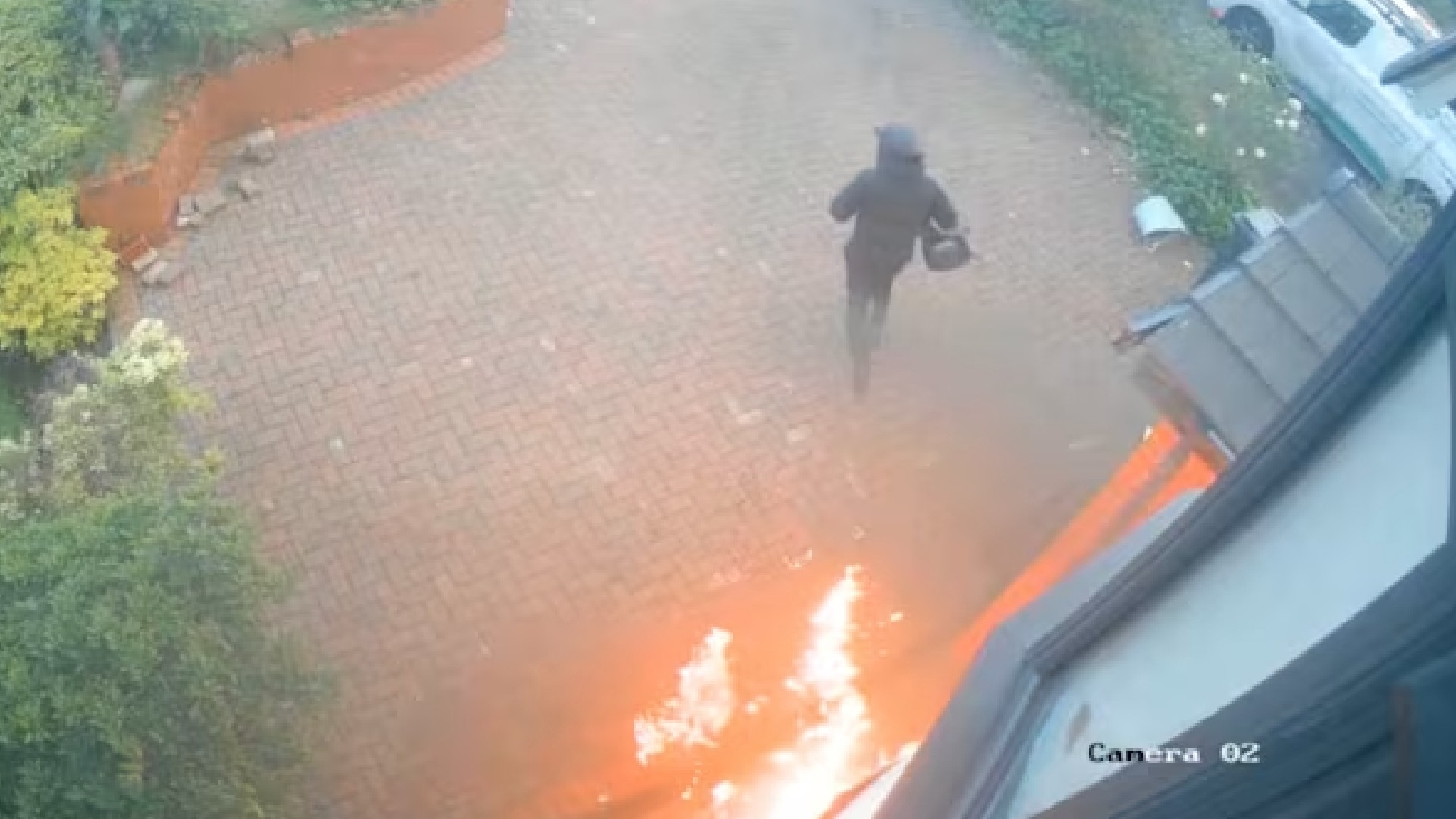
    By the end of the same day, the residential property of 42-year-old imam Hassan Patel, also located within Bolton, had been firebombed in a deliberate attack. Captured closed-circuit television footage documents a masked man, clad in a helmet and all-black clothing, approaching the driveway of Patel’s home. The footage shows the suspect lighting an accelerant-laden object, smashing a front window of the property and throwing the lit item inside.

    Patel resides in the home with his wife, four children, and nephew, bringing the total number of people in the property at the time of the attack to seven. Greater Manchester Police (GMP) confirmed that all seven residents managed to escape the attack without physical injury, and emergency services safely evacuated the entire family.

    In a statement following the attack, Patel expressed that his family has been left devastated by the brazen, cold-hearted act, which was carried out in broad daylight. He emphasized the attack was an intentional, dangerous act that deliberately put every member of his family at mortal risk. Patel, a long-time Bolton resident who has a track record of interfaith engagement with people across all religious and secular backgrounds, noted that law enforcement have so far not classified the incident as a hate crime. Even so, he argued that all potential motives must be examined thoroughly, with no lines of inquiry ruled out before investigations are complete.

    As of the latest update, GMP confirmed that a full criminal investigation is active and ongoing, and no arrests have yet been made. Detective Chief Inspector Mike Sharples of GMP released an official statement stressing that attacks of this nature have no place in the region, and no member of any local community should ever be made to feel unsafe, threatened or intimidated in their own home. Sharples acknowledged the understandable anxiety the incident has sparked across Bolton’s wider community, adding that officers are working at full speed to identify and prosecute the perpetrators. He confirmed that the attack is being treated as a deliberate, targeted act, and there is no ongoing threat to the general public. GMP has issued a public appeal for any members of the public with relevant footage or information about the attack to come forward to assist with the investigation.

    The dual incidents in Bolton have already sparked significant political fallout, with local leaders and party figures weighing in on the attack and the perceived lack of national response. Zack Polanski, leader of the Green Party, who was born in nearby Salford, publicly criticized Prime Minister Keir Starmer for failing to issue any public condemnation of the Bolton attacks. Writing on the social platform X, Polanski called the silence disgraceful, arguing that a troubling double standard has emerged: some attacks are met with widespread cross-party condemnation, blanket media coverage and urgent emergency response, while others are ignored entirely by senior national leaders.

    Local Labour MP for Bolton Yasmin Qureshi also spoke out, noting that the back-to-back targeting of a mosque and a local imam has left Muslim residents across the town feeling anxious about walking public streets and bringing their children to worship. Qureshi refused to downplay the nature of the attacks, stating that when a mosque and an imam’s home are targeted within hours of one another, the message to the local Muslim community is clear, and it is a message she recognizes too. “Islamophobia has no place in Bolton. None. Our Muslim community is part of the fabric of this town, and an attack on them is an attack on all of us,” Qureshi said.

    The Bolton incidents come one day after violent race riots broke out in Belfast, the capital of Northern Ireland, where hundreds of masked far-right rioters set fire to homes and vehicles owned primarily by ethnic minority residents. Rioters even set up informal checkpoints to stop and search vehicles for foreign nationals, following the arrest of a Sudanese asylum seeker charged with attempted murder earlier that same Tuesday. The suspect, Hadi Alodid, a 30-year-old who has been granted indefinite leave to remain in the UK, was filmed carrying out a knife attack on a man on a residential Belfast street, an act many political commentators have described as an attempted beheading.

    Following the Belfast attack, high-profile far-right activist Tommy Robinson (real name Stephen Yaxley-Lennon) and X owner Elon Musk both publicly called for anti-migrant protests across the UK. Anti-migrant demonstrations were subsequently held in Belfast, Glasgow and Southampton this week, raising tensions around interfaith and immigrant community safety across the country.

  • EU agrees to launch membership talks with Ukraine next week even as war with Russia drags on

    EU agrees to launch membership talks with Ukraine next week even as war with Russia drags on

    BRUSSELS – In a landmark decision with far-reaching geopolitical consequences for a war-ravaged Eastern Europe, the 27 member states of the European Union formally agreed Friday to launch full membership accession negotiations with Ukraine and neighboring Moldova, with the official opening ceremony scheduled to take place next Monday at an intergovernmental conference in Luxembourg.

    This move marks one of the most significant strategic choices the bloc has made in years, framing the future of the European continent amid Russia’s ongoing full-scale invasion of Ukraine. For Kyiv, which submitted its EU accession application barely five days after Russian forces crossed its border in February 2022, membership in the world’s largest single trading bloc is viewed as a critical cornerstone of long-term security and stability following the end of the current conflict. While Kyiv has also prioritized NATO membership for collective defense, that path remains blocked: the former Trump administration has repeatedly ruled out Ukrainian membership in the military alliance, other Western powers oppose accession while active hostilities continue, and Moscow cites NATO expansion as a core justification for its 2022 invasion. Notably, Russia has not publicly opposed Ukraine’s EU membership bid, unlike its fierce pushback against NATO integration.

    Moldova, like Ukraine, has long sought to escape Moscow’s sphere of influence, and Friday’s agreement brings the small Eastern European nation onto the same integration path as its larger neighbor.

    EU leadership praised the two countries for their progress on reform, even amid unprecedented wartime and political pressure. “This is a recognition of the determination, courage and hard work shown by both countries in advancing reforms, even in the face of immense challenges,” EU Council President António Costa and European Commission President Ursula von der Leyen said in a joint statement. The pair framed the decision as a strategic investment that will strengthen “peace, security and prosperity across our continent,” adding that it sends a clear message “that the EU’s offer of peace, stability and opportunity is unmatchable.”

    The accession process is a years-long, rigorous path that requires candidate countries to negotiate alignment with 35 distinct EU policy chapters, covering everything from agricultural regulation to internal trade standards. The opening conference on Monday will kick off negotiations on the first cluster of chapters, focused on the core founding values and principles that underpin the EU bloc. Every step of the process – from opening each individual chapter to closing it ahead of full accession – requires unanimous approval from all 27 existing EU members. For years, Hungary maintained a hardline blockade on opening negotiations, but the recent formation of a new government in Budapest has softened the country’s opposition, clearing the way for Friday’s unanimous agreement.

    While the EU has praised Ukraine for pushing through ambitious reforms even amid active war, deep concerns remain among member states about persistent corruption gaps and shortcomings in judicial standards. The path to full membership remains uncertain, with multiple European capitals pushing for alternative interim arrangements to bring Ukraine closer to the bloc faster without granting full membership rights immediately. Last month, German Chancellor Friedrich Merz called on EU partners to consider a new model of associate membership for Ukraine, a proposal designed to reinvigorate efforts to reach a resolution to the conflict more than two and a half years after Russia’s full-scale invasion. Under Merz’s framework, Ukraine would participate in EU meetings and hold non-voting observer positions in both the European Commission and European Parliament, stopping short of full membership. France and the Netherlands have also floated similar incremental models to accelerate integration while bypassing the full accession process’ slower timelines.

    Friday’s decision comes as the EU grapples with shifting global diplomatic dynamics: U.S.-mediated peace talks between Kyiv and Moscow remain stalled, with U.S. foreign policy attention increasingly diverted to escalating tensions related to the Iran conflict. Some European capitals are now weighing whether the bloc should pursue its own direct negotiations with Russian President Vladimir Putin to move the peace process forward, though no consensus on that step has yet emerged.

  • Plane trouble delays pope’s return after migrant-focused Spain visit

    Plane trouble delays pope’s return after migrant-focused Spain visit

    Pope Leo XIV’s seven-day visit to Spain, a trip defined by its laser focus on the global migrant crisis, concluded Friday with an unexpected twist: a last-minute technical fault with his chartered Iberia flight forced a three-hour delay to his return journey to Vatican City.

    The 70-year-old head of the global Catholic Church, which counts 1.4 billion adherents worldwide, had already boarded the aircraft at Tenerife’s airport and been formally waved off by Spanish King Felipe VI when the flight captain notified passengers of an unserviceable engine issue. Pope Leo immediately disembarked, and arrangements were quickly made to fly him back to Rome aboard the Spanish royal air force’s Falcon jet, which had carried King Felipe to the Canary Island earlier in the day. The rest of the papal entourage, including accompanying journalists and Vatican officials, were set to depart on a backup plane Iberia dispatched from Madrid.

    The departure delay capped a final day heavily focused on the migrant experience in the Canary Islands, which has become the primary entry point for thousands of people undertaking dangerous sea crossings from North Africa to reach European soil. Before traveling to the airport, Pope Leo led an open-air mass at the Port of Santa Cruz de Tenerife, drawing an estimated crowd of 40,000 worshippers and attendees.

    Earlier that morning, during a meeting with local migrant support organizations, the pontiff shone a light on the often-overlooked struggles migrants face after reaching European shores, warning of a “silent shipwreck” that leaves many isolated, unemployed, and disconnected from social support. “Too many arrive only to be left alone in a city, without a voice, without community ties, stable work or a sense of security,” he said. He also issued a forceful rebuke to human traffickers who profit from dangerous irregular migration routes, urging them to “stop and repent” — a comment that drew loud applause from the gathered crowd.

    During his public remarks, Pope Leo also laid out clear guidance for migrant integration, urging new arrivals to learn the language of their host country, respect local laws, and engage with national customs. He doubled down on a core message of his papacy earlier in the trip: “Human dignity has no passport,” a line he delivered after laying a wreath at sea in Arguineguín, Gran Canaria, to honor the thousands of migrants who have died attempting to cross to the Canary Islands. He also blessed a weathered blue wooden cross crafted from debris from a migrant boat that made landfall on the island.

    Attendees at the papal events praised the pope’s unwavering focus on migrant issues. Candida Feo, a 54-year-old local who brought her two children to see the pontiff, told Agence France-Presse that drawing global attention to the crisis was a critical step forward. “If people come here, it’s for a reason. Anything that helps focus attention on the issue seems very good to me,” she said. For 16-year-old Aliu Ceesay, a Gambian migrant who arrived in the Canaries by boat just one month prior to seek work to support his family, the pope’s message felt deeply personal. “He is so kind, so good. He doesn’t care if we are black or white, Muslim or Christian. He wants to help us,” Ceesay said while waiting to catch a glimpse of the pontiff.

    Data from the International Organization for Migration underscores the severity of the crisis: nearly 1,200 people died or went missing on the crossing from Africa to the Canary Islands last year alone, making it one of the deadliest irregular migration routes on the planet.

    Beyond his work highlighting migration, Pope Leo’s week-long visit included several major stops across mainland Spain. In Madrid, he addressed the Spanish parliament, where he repeated his call for “safe and legal pathways” for migration and a “respectful welcome and real opportunities for integration” for new arrivals. He also celebrated an open-air mass that drew more than one million attendees, and held a private hour-long meeting with six survivors of clerical sexual abuse — a longstanding priority for the modern papacy. In Barcelona, he marked the 100th anniversary of architect Antoni Gaudí’s death by blessing the final completed tower of Gaudí’s iconic Sagrada Família Basilica. The new tower, the tallest of the basilica’s 18 spires, brings the structure to its full planned height of 172.5 meters, making it the tallest church in the world.

    The pope’s focus on migrant issues will continue next month, when he is scheduled to travel to Lampedusa, the Italian island that has also emerged as a key entry point for migrants arriving in Europe, further cementing the issue as a defining priority of his early papacy.

  • Israel expels Palestinians from their homes to use them as military posts

    Israel expels Palestinians from their homes to use them as military posts

    For Mohammed Rahal, a Palestinian father who survived 18 months of displacement after Israeli forces drove him from his original home in Jenin Refugee Camp in the occupied West Bank, the dream of stability was short-lived. After pooling every resource he and his sons could gather to purchase a new home on the edge of the camp and working up to 20 hours a day for months to ready the space for his extended family, Israeli soldiers arrived at his door with a new order: evacuate the property immediately so it could be converted into an Israeli military outpost for a minimum of two months.

    Rahal’s story is far from an isolated case. The seizure of private Palestinian civilian homes for military use has become a rapidly growing practice across the occupied West Bank, a trend that has accelerated sharply since October 2023, amid a broad intensification of Israeli military crackdowns across the territory. When Israel launched a large-scale offensive across the northern West Bank districts of Jenin, Tulkarm and Tubas in early 2025, the operation left a trail of destruction across the region’s refugee camps: hundreds of structures were demolished, burned or seized by military forces, pushing nearly 40,000 Palestinians from their homes. The overwhelming majority of those displaced are residents of Jenin Refugee Camp.

    Human rights organizations and global policy experts have formally condemned the campaign, accusing Israel of committing war crimes, crimes against humanity, and ethnic cleansing in its West Bank offensive. Rahal was among the first to flee when the January 2025 offensive began; his original multi-family building, home to him, his five brothers and all their extended families, was partially destroyed in the operation. For 14 months, his entire clan crowded into overcrowded student housing at the Arab American University, a period he describes as marked by unrelenting hardship. Determined to rebuild a stable life, the family scraped together savings to buy their new property in Jabriyat, a hillside neighborhood overlooking Jenin Refugee Camp.

    The Rahal home sits on the edge of a seven-dunum plot of land that Israeli forces seized in May 2025, despite the area falling under Oslo Accords designation as Area A — territory formally administered by the Palestinian Authority. Just two months after the Rahal family moved in, Israeli soldiers arrived on a Tuesday and ordered them to evacuate within 10 minutes. After negotiations with the family, the deadline was extended to the following Thursday morning, giving Rahal just 48 hours to remove all the furniture and belongings he had spent weeks acquiring and arranging. Today, he waits for the evacuation order to expire on August 23, clinging to faint hope he will be allowed to return, but deeply skeptical of Israeli promises.

    “Even though the order is for two months, the occupation is unpredictable,” Rahal said. “They could extend the takeover for another period, and then another, until the house is seized permanently.”

    Down the street from Rahal, Fidaa Abu al-Haija received an identical evacuation order. Her home overlooks the newly seized land, a location that has fueled widespread local fears that the military takeover is intended to be permanent, with Israeli forces planning to build a full military camp across the confiscated plot, expanding seizures to encompass the entire neighborhood over time. Abu al-Haija lives in the home with her three children; her husband has been held in an Israeli prison for nearly four years. Her brother-in-law, also imprisoned by Israel for more than four years, received an evacuation order for his nearby home as well, forcing his family of four to leave their property too.

    Long before the formal evacuation order, Abu al-Haija said, Israeli forces carried out repeated raids on her home during the Jenin offensive, traumatizing her young children and damaging rooms so badly that much of her furniture is already unusable. She often was forced to abandon trips home from work mid-journey, when military checkpoints and deployments blocked access to the neighborhood. “I knew they wouldn’t leave me alone,” she said. The formal eviction order marks a dangerous new escalation, she added, and with her husband’s original family home inside Jenin Refugee Camp already destroyed, she has no safety net. As workers carried her belongings out of her home, she told reporters she was scrambling to find an affordable rental while trying to salvage what little remains of her family’s life.

    “The furniture is piled up outside because I want to save it before it’s destroyed,” she said. “We’ve been living through this tragic situation for more than a year.”

    Jabriyat’s vantage point overlooking Jenin Refugee Camp makes it strategically valuable to Israeli forces, and increasingly dangerous for the Palestinian residents who call it home. Mu’tasim Istaiti, a neighbor who already survived more than a year of displacement when soldiers seized his home during the initial offensive, returned to the neighborhood to protect his property only to find the area transformed. “Since we came back, it feels like we’re living in a ghost town,” he said. “All we hear are military vehicles. This used to be a vibrant neighborhood. Now it’s almost deserted.” Over safety fears, he rarely allows his children to leave the home unaccompanied, and Israeli forces have blocked the neighborhood’s main access road with barbed wire, forcing residents to take a dangerous, unpaved alternative route. “We know staying here is dangerous, but we want to protect our homes until the very last moment,” he said. “We don’t know what the future holds for our children and us after the decision to confiscate the land near us.”

    Mohammad Jarrar, mayor of Jenin, told Middle East Eye that Jabriyat is one of the city’s largest residential neighborhoods, home to roughly 10,000 Palestinian residents. At least 15 families have already been forced from their homes in the neighborhood since the early 2025 offensive began, and Israeli restrictions have blocked Jenin municipal crews from accessing areas near the camp to deliver basic services to residents who remain. In one case, a broken sewage pipe has flooded local streets, creating a severe public health hazard, but workers have not been permitted to reach the site to make repairs.

    “We fear the displacement of these families will become permanent,” Jarrar said. “The occupation appears intent on displacing as many residents as possible out of the neighborhoods surrounding the camp.” According to Jenin municipal data, approximately 800 families have already been displaced from neighborhoods across Jenin city, not counting the thousands more displaced from the Jenin Refugee Camp itself. “Even those who remain are being pressured through the withholding of services,” Jarrar added. “The aim is to make life so difficult that people leave on their own.”

    Global human rights advocates warn that the accelerating pattern of home seizures and forced displacement in northern West Bank marks a dangerous escalation of Israel’s decades-long occupation, with long-term consequences for the territorial and humanitarian status of the region.