A sharp public rift has erupted over the contours of a potential Iran peace deal after leaked supposed terms circulated by Iranian media drew a blistering rejection from former U.S. President Donald Trump, who declared that good-faith negotiation with Tehran is impossible.
The breakdown in public messaging comes weeks after a broad wave of U.S. and Israeli strikes on Iranian targets that launched the latest open conflict in February. Iran retaliated with attacks on Israeli positions and Gulf states aligned with Washington, and effectively shut down the Strait of Hormuz — the global economy’s critical chokepoint for oil and liquefied natural gas shipments. An April ceasefire paused large-scale hostilities, but intermittent tit-for-tat strikes have continued, including two back-to-back exchanges just this week.
The chaos erupted just 24 hours after Trump’s own volatile shift in messaging: on Thursday, he first threatened new military strikes on Iran, then hours later announced he had called off the attacks because negotiators had reached a “great settlement” that would be signed imminently. Iranian officials quickly pushed back, calling any claims of a finished agreement pure speculation.
On Friday, Iranian state media outlets published what they claimed were the finalized terms of the emerging agreement, laying out terms that aligned with longstanding public demands from Tehran. The leaked details included an immediate end to the U.S. naval blockade on Iran, the release of at least $300 billion in frozen Iranian assets to cover damage from the recent U.S. and Israeli strikes, and preconditions for full negotiations: half of all frozen assets must be unblocked, oil sanctions suspended, and the blockade lifted before formal talks on core issues begin. The leaked draft also calls for a final deal to be ratified by a United Nations Security Council resolution, with talks limited to enrichment activity, sanctions relief, and Iranian economic reconstruction. It also includes Tehran’s longstanding demand for an end to Israeli hostilities with Iran-backed Hezbollah in Lebanon.
Iran’s top diplomat Seyed Abbas Araghchi walked back the leak, however, acknowledging that a deal has never been closer but urging media to avoid unconfirmed speculation about the content of ongoing talks.
U.S. officials quickly pushed back against every core element of the Iranian leak. A senior Trump administration official told the BBC that the U.S. vision for any agreement requires the full destruction and removal of Iranian nuclear material and the permanent dismantling of Iran’s enrichment program. No Iranian assets will be released, the official said, until Tehran meets all U.S. demands, reopens the Strait of Hormuz permanently, and commits to cutting off funding for proxy groups including Hezbollah across the Middle East. The nuclear dispute has spanned decades: Western nations have long accused Iran of pursuing a nuclear weapons capability, a charge Tehran consistently denies, saying its program is exclusively for peaceful energy and scientific research.
U.S. Vice President JD Vance also issued a public correction Friday, noting “a couple of bizarre things” in the leaked reporting. “Iranians are not receiving any cash, and no funds are being released for simply signing a deal or attending a meeting,” Vance wrote in a post on X. He emphasized that the potential agreement is structured to prioritize U.S. and allied security concerns, with economic benefits only unlocked after Iran verifiably meets all its obligations.
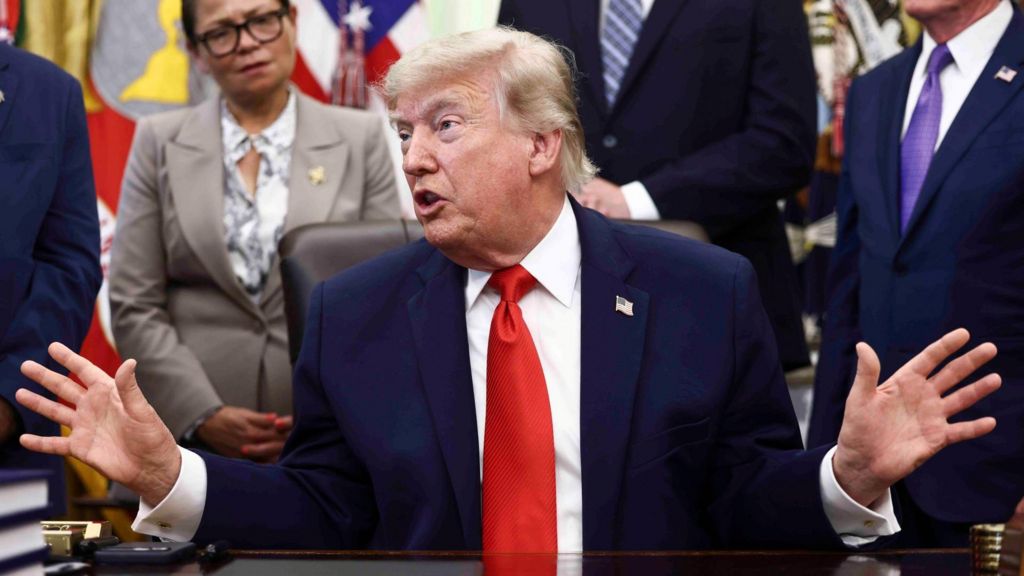
In his most blunt comments Friday, Trump rejected the leaked terms out of hand, saying the published details “bears no relation to the truth” and have “nothing to do with the terms that were agreed to” in private talks. “They were very dishonorable people to deal with,” Trump wrote of Iranian negotiators, urging Tehran to “get your act together, and FAST!” He added that there is “no such thing as dealing in good faith” when negotiating with the Islamic Republic.
The indirect talks between the U.S. and Iran, which do not include Israeli negotiators, have been mediated primarily by Pakistan. The goal of the current discussions is to extend the fragile April ceasefire and set a framework for future negotiations on core contentious issues, including Iran’s nuclear program.
Trump accuses Iran of leaking agreement details that ‘bear no relation to the truth’