博客

  • Ben Gvir set to unveil $20bn plan to ethnically cleanse Gaza within seven years

    Ben Gvir set to unveil $20bn plan to ethnically cleanse Gaza within seven years

    A high-profile far-right Israeli cabinet minister has announced plans to roll out a sweeping proposal this Thursday that would push millions of Palestinian residents out of the Gaza Strip, framing the ethnic cleansing-style initiative as a policy of ‘voluntary emigration’ that will anchor his election campaign and serve as a non-negotiable condition for joining any future Israeli governing coalition.

    Itamar Ben Gvir, leader of the overtly Jewish supremacist Otzma Yehudit (Jewish Power) party, has branded the mass displacement scheme ‘Disengagement 710’, a term that openly signals its goal of clearing Palestinian civilians from their ancestral land. According to reporting from multiple Israeli media outlets, Ben Gvir and his team have spent months refining the proposal, which targets an ambitious timeline for mass displacement: an initial 250,000 Palestinians would be forced out of Gaza within the first year of implementation, rising to 1.1 million by the end of the third year, and ultimately reaching roughly 1.8 million people displaced over seven years.

    This planned mass transfer comes on the heels of months of systematic destruction across Gaza that has already created the conditions for large-scale population movement. Israeli military operations have damaged or destroyed more than 80% of all residential structures, commercial spaces, educational institutions (from primary schools to universities), and medical facilities across the enclave. Israel has also imposed crippling restrictions on the entry of food, clean water, and basic humanitarian aid, creating a catastrophic humanitarian crisis that pushes many residents to consider leaving their homes despite generational ties to the land. Even with a nominal ceasefire in place that was agreed to in October, Israeli forces continue to carry out daily attacks that kill Palestinian civilians across Gaza, further escalating pressure to flee.

    Under the terms of Ben Gvir’s proposal, the Israeli government would actively coordinate to resettle displaced Palestinians in third countries, with initial targets including Turkey, Ethiopia, the Democratic Republic of Congo, and multiple unnamed Arab states. The plan explicitly requires international cooperation, relying on partner nations to agree to accept the expelled Palestinian population. Ben Gvir is also set to publicly release the projected price tag for the initiative, which is expected to draw fierce backlash and widespread condemnation from the international community. The proposal carries an estimated cost of over $3 billion for the first year of implementation, with a total seven-year price tag approaching $20 billion.

    For Ben Gvir, who currently holds a cabinet seat in Prime Minister Benjamin Netanyahu’s current right-wing coalition, the proposal will be a core demand to join any future governing coalition after upcoming elections. Beyond the displacement policy itself, he is also demanding that any future government create a dedicated cabinet position specifically tasked with overseeing the forcible transfer of Palestinians. This new minister would be supported by a director-general, a standalone national budget, sweeping executive powers, and a dedicated team to negotiate resettlement deals with foreign governments.

    Ben Gvir’s planned announcement comes just one day after a similar public statement from Israeli Defense Minister Israel Katz, who echoed the far-right minister’s calls for mass displacement. Speaking at a policy conference hosted by Israeli outlet Ynet in partnership with the Israel Democracy Institute, Katz argued that ‘there is no real solution for Gaza in the end without migration.’ He added that the only factor delaying the implementation of such a plan is a lack of U.S. backing for receiving nations, noting that ‘every country that is willing wants American backing.’ Katz also claimed that former U.S. President Donald Trump had not rejected the plan, only frozen it, under pressure from Arab nations.

    This push for mass displacement is not a new proposal from the Israeli government: back in late June, Israeli officials rebranded their existing forced transfer plan, dropping the explicit label of ‘voluntary migration’ in favor of the softer-sounding ‘Freedom of Movement Plan’. Critically, the rebranded framework includes no provisions or legal guarantees for Palestinian refugees to exercise their right of return to their homes in Gaza.

    This reporting draws on independent coverage from Middle East Eye, a media organization specializing in unrivaled, independent reporting and analysis of the Middle East, North Africa, and surrounding regions.

  • Pacific leaders at summit fail to reach unanimous condemnation of China’s ballistic missile launch

    Pacific leaders at summit fail to reach unanimous condemnation of China’s ballistic missile launch

    KOROR, Palau — At their annual regional summit held this year in Palau, Pacific island leaders have formally recorded collective concern over China’s recent ballistic missile test that landed in Pacific regional waters, but the body ultimately failed to secure the unanimous backing the bloc traditionally requires for official statements, falling short of issuing a harsher rebuke of Beijing’s actions, leaders announced Thursday.

    The effort to rally a unified regional response to the July missile launch had been widely framed as a key benchmark for measuring how intensifying great-power competition in the Pacific has strained cohesion among the bloc’s mostly small, low-lying island states. For years, rising geopolitical jockeying between Washington, Beijing and other major global actors has pulled Pacific nations in competing directions, creating growing rifts within the 18-member Pacific Islands Forum (PIF) over how to engage with major powers.

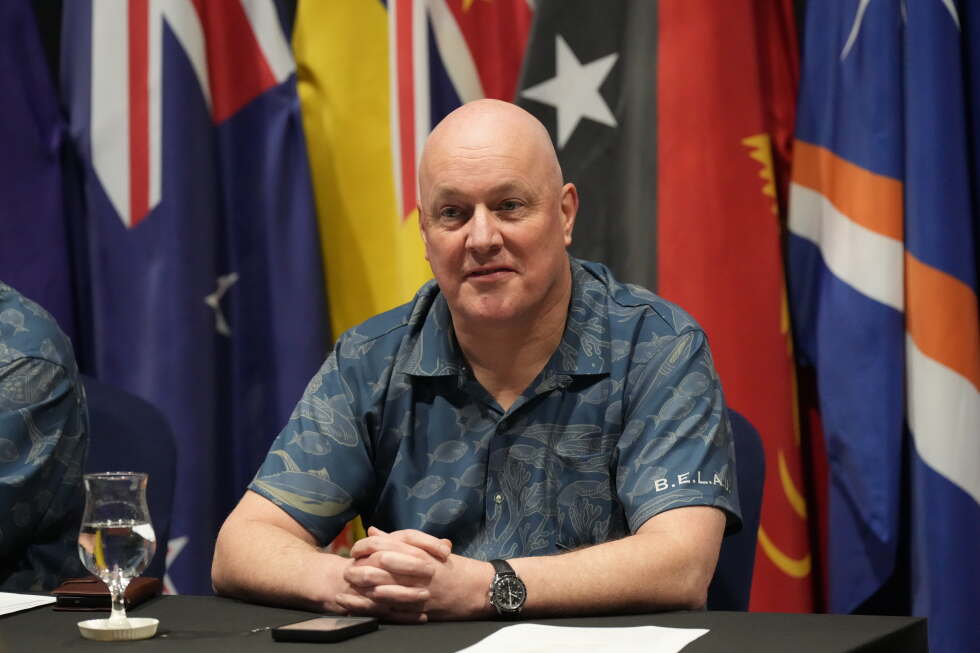
    According to New Zealand Prime Minister Christopher Luxon, who attended the closed-door leaders’ retreat where the statement was negotiated, only the Pacific island nation of Nauru publicly dissented from the agreed text of concern. Nauru has steadily deepened its diplomatic and economic ties with Beijing over the past four years, and formally cut official ties with Taiwan earlier in 2024 to align with China’s One China policy. A second China-aligned Pacific nation, Kiribati, was entirely unrepresented at the daylong closed retreat, after Kiribati’s president skipped the full summit and sent his country’s former ambassador to China as a delegate instead.

    Luxon sought to downplay the significance of both Nauru’s dissent and Kiribati’s absence from the retreat, arguing that the PIF had still reached a usable, meaningful collective position despite the split. The PIF has long operated on a norm of unanimous consensus for all official communiqué language, a tradition that reflects the bloc’s emphasis on collective regional decision-making, with closed-door retreat negotiations limited to just leaders and a small handful of senior aides.

    “I think we’ve got to a very good place,” Luxon told reporters after the retreat concluded. “Yes, Nauru has dissociated itself from that statement, but that shouldn’t be a reason for why we shouldn’t be able to express a PIF position or a consensus position.”

    Even as the New Zealand leader framed the outcome as a success, the breakdown in consensus signals that navigating competing great power demands will remain an increasingly complex challenge for the Pacific bloc. Over the past decade, the vast Pacific region has grown dramatically in geopolitical importance, driven by its strategic location for global trade and security, and its abundant untapped natural resources. Major powers have competed fiercely to build diplomatic and economic ties with Pacific island states, offering large-scale infrastructure funding, aid packages and other incentives to win influence, creating a tangled network of competing allegiances that have upended longstanding regional dynamics.

    Palau, this year’s summit host, is one of the 12 United Nations member states that still maintain official diplomatic recognition of Taiwan, a status that has put it at odds with Beijing. Some regional analysts had privately suggested that the absence of key leaders from China-aligned states could be tied to Beijing’s diplomatic pressure over Palau’s position on Taiwan, though there is no public evidence to support that claim. Attendees of the summit noted that most absences of top leaders, all of whom sent senior government delegates in their place, were tied to domestic political commitments or personal health issues.

    The failure to reach full consensus on the missile statement also highlights deeper, long-simmering divides within the PIF that have emerged as great-power competition has intensified. The joint statement itself was largely a symbolic gesture — most regional nations had already criticized China’s missile launch publicly when it took place in July. But the bloc’s inability to agree on a unified text mirrors a similar breakdown weeks earlier at a PIF foreign minister retreat in Suva, Fiji, where a planned statement on the launch was scrapped after Nauru and Kiribati rejected the language.

  • Canada unveils new $20 bill featuring portrait of King Charles

    Canada unveils new $20 bill featuring portrait of King Charles

    In a historic moment marking the first update to Canadian royal banknote imagery in over seven decades, the Bank of Canada has officially unveiled a new vertical polymer $20 banknote bearing the portrait of King Charles III, following the death of Queen Elizabeth II in 2022. The reveal took place at a formal Bank of Canada event Thursday, with central bank Governor Tiff Macklem describing the occasion as a very special milestone for the country.

    What sets this new banknote apart from Canada’s previous circulating currency is its vertical design orientation, a format that has grown in popularity for modern currency production. While the front centers the official portrait of King Charles III, it also incorporates an intricate floral and leafy tapestry pattern crafted to honor the King’s long-standing public commitment to environmental stewardship, according to the Bank of Canada’s official description. The reverse side of the note features a detailed image of the Vimy Ridge Memorial located in France, a lasting tribute to Canada’s critical military contributions during the First World War. In a nod to inclusive consultation, the central bank confirmed that several design elements of the new banknote were selected following input from an Indigenous advisory council.

    This new $20 note marks only the second vertical banknote released into Canadian circulation. The first was the $10 bill honoring Black Canadian civil rights advocate Viola Desmond, a design that earned international acclaim when it was named Bank Note of the Year by the International Bank Note Society in 2018. The new King Charles III $20 note is scheduled to enter general circulation across Canada early next year, Macklem confirmed.

    With this launch, Canada becomes the first Commonwealth country outside of the United Kingdom to place King Charles III on its circulating banknote since his ascension to the throne following Queen Elizabeth II’s 2022 passing. Other Commonwealth nations have taken different approaches to updating their currency: both New Zealand and Australia have introduced coins featuring the new monarch, but Australia has announced plans to skip placing the King on banknotes entirely. Instead, Australia will release a new $5 banknote celebrating the culture and history of Indigenous Australians, replacing the current Queen Elizabeth II design.

    Speaking at the unveiling ceremony, Liberal MP Wayne Long, who serves as Secretary of State for the Canada Revenue Agency, noted that the symbolic elements on the new banknote serve as a powerful reminder of Canadian national identity and core values.

    The launch comes amid ongoing domestic debate about Canada’s constitutional ties to the British monarchy. Public opinion polling consistently shows that a majority of Canadians support cutting formal ties to the monarchy, with support for republicanism particularly strong in the majority French-speaking province of Quebec. That said, the monarchy saw a small uptick in popularity in recent years amid rising trade and political tensions between Canada and the United States, including the lingering US-Canada trade dispute and former President Donald Trump’s provocative comments about potentially absorbing Canada as the 51st US state.

    Most recently, Canadian Prime Minister Mark Carney invited King Charles III to open the Canadian Parliament in May, a visit Carney framed at the time as a clear demonstration of Canada’s national sovereignty. Per Canada’s constitutional structure, King Charles III remains the country’s formal head of state, represented domestically by Governor General Louise Arbour.

  • How Israel armed Argentina to kill British soldiers during Falklands War

    How Israel armed Argentina to kill British soldiers during Falklands War

    Diplomatic relations between the United Kingdom and Israel are deteriorating at an accelerating pace, as the UK government prepares to unveil a package of harsh new measures targeting Israeli activity in the occupied West Bank. The centerpiece of the planned actions is a full ban on imports of goods produced in Israeli settlements that the UK and much of the international community deem illegal under international law.

    The proposed sanctions have already triggered fierce pushback from Israeli leaders. “If Britain acts against Israel, Israel will act against Britain,” Israeli Foreign Minister Gideon Saar issued a direct warning this week. The rhetoric has grown increasingly vitriolic: Prime Minister Benjamin Netanyahu has publicly labeled the UK the “Islamic Republic of Britain” in a deliberate insult. His son, Yair Netanyahu, who holds no official government position but remains a prominent public voice, has gone a step further, publicly claiming the Falkland Islands are rightfully Argentine territory, not British.

    Yair Netanyahu’s unprompted remarks have rippled across the Atlantic, drawing an unexpected intervention from former U.S. President Donald Trump. Trump has signaled that Washington could revisit its longstanding commitment to British sovereignty over the South Atlantic archipelago, going as far as telling GB News that he would refuse to back the UK if Argentina launched a new invasion of the islands. Trump tied the shift to his own grievance over the UK’s refusal to back the U.S. and Israel’s February 2025 strike on Iran, saying “Your country was not there to help me.”

    Argentine President Javier Milei, who has taken a hardline line on territorial claims since taking office, has pledged to release a formal statement on the sovereignty dispute this week. Earlier this month, he declared that Argentina’s national sovereignty had been “violated” and vowed his government would defend the country’s interests “tooth and nail, no matter who it bothers.”

    Beneath the current round of public taunts and threats lies a decades-long hidden history of covert conflict between the two nations, which have long been framed as close historical allies. Few today remember that during the 1982 Falklands War, Israel secretly armed Argentina against the UK — a decision that cost dozens of British soldiers their lives.

    The basics of the Falklands dispute remain unchanged: both Argentina and the UK claim full sovereignty over the remote South Atlantic archipelago, which is home to roughly 3,600 residents, the overwhelming majority of whom support continued British rule. On April 2, 1982, Argentine military forces invaded the islands, sparking a 74-day conflict that ended with a British victory. It was not until a decade after the war that declassified UK government files confirmed the long-rumored secret Israeli military support for Argentina during the conflict.

    According to the declassified documents and a 2011 investigative book by Argentine journalist Hernan Dobry, Israel organized a secret network of cargo flights through Peru to deliver a vast arsenal to Argentina. The shipments included 20 reconditioned Nesher fighter jets, air-to-air missiles, anti-tank mines, mortars, machine guns, fuel tanks and Skyhawk attack jets. The total value of Israeli arms exports to Argentina during the war is estimated at roughly $1 billion in modern terms. The Israeli Skyhawk jets were used in bombing raids against British positions, killing 48 British soldiers and sailors and sinking four Royal Navy warships.

    For years, the Israeli government repeatedly denied any arms sales to Argentina during the conflict. When British intelligence uncovered concrete evidence of the shipments — including documentation of an Argentine effort to open a $100 million letter of credit through a Panamanian intermediary at Credit Suisse in Zurich in favor of Israel Aircraft Industries — the British Foreign Office leaked the full details to the national press.

    Diplomatic cables from the time lay bare British frustration with Israeli deception. “We are having the worst of both worlds, with the Israelis apparently shipping aircraft to Argentina and at the same time fobbing us off with repeated denials,” one senior British official wrote at the time. Patrick Moverly, then UK ambassador to Tel Aviv, noted that “The Israelis have always had a special way of looking at the rest of the world,” and added that the Israeli government was making “a gigantic effort… to pull the wool over our eyes.”

    Why would Israel arm a belligerent against a close historical ally? Declassified records reveal two core motivations. First, as one Israeli diplomat openly acknowledged at the time, the war created “an extremely attractive opportunity to develop the arms market in Argentina and Latin America, with great potential long-term benefit to Israel.” Second, the UK and Israel were already locked in a bitter dispute over a British arms embargo imposed on Israel after its 1982 invasion of Lebanon.

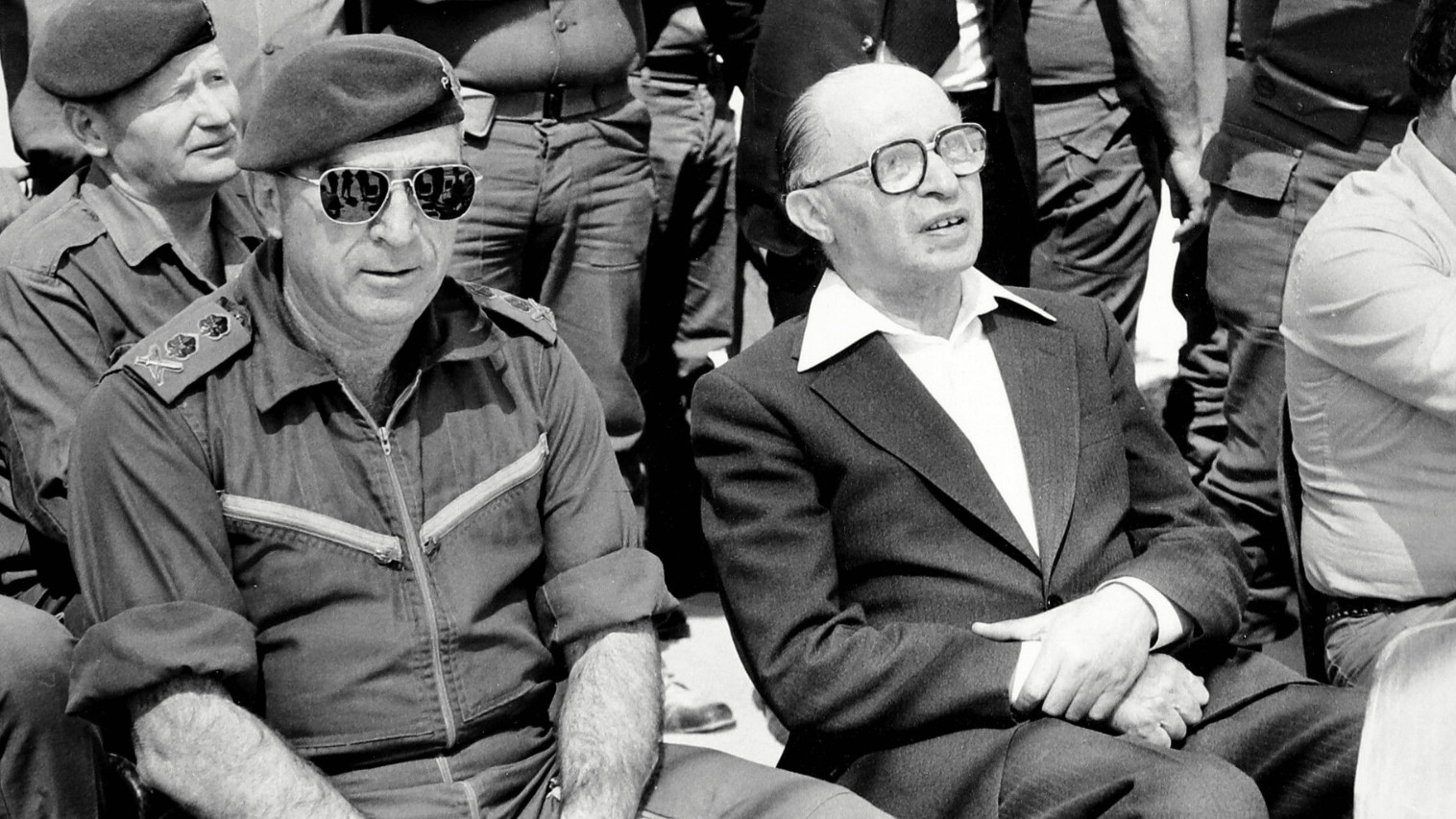
    Relations between Israeli Prime Minister Menachem Begin and British Prime Minister Margaret Thatcher were strained long before the Falklands War. Begin, as a young guerrilla leader fighting British rule in Mandatory Palestine, commanded the Irgun Zvai Leumi, which carried out two devastating attacks on British targets: the 1946 bombing of Jerusalem’s King David Hotel, the British administrative headquarters, which killed 91 people including 28 Britons, and an earlier bombing of the British Officers Club in Haifa that left dozens dead and injured.

    After Israel’s 1982 invasion of Lebanon, Thatcher pushed back against unlimited U.S. support for Israel, telling President Ronald Reagan that “unlimited support for Israel can only lead to growing polarisation and despair in the Arab world.” Britain imposed a full arms embargo on Israel that remained in place until 1994, and Thatcher publicly denounced the Sabra and Shatila massacres carried out by Lebanese Christian Phalangists with Israeli army complicity as “pure barbarism.”

    For Begin’s government, arming Argentina during the Falklands War was a deliberate tactic to pressure the UK into lifting the arms embargo and ending British arms sales to Arab states hostile to Israel. The gambit failed. Thatcher’s government went on to sign the 1980 Venice Declaration, where nine European nations formally expressed their shared concern over Israeli settlements in occupied Palestinian territories, and oversaw the founding of the Conservative Middle East Council, a group focused on promoting a balanced policy in the region.

    Decades later, the same fault lines that drove the 1980s rift have reopened, pushing UK-Israel relations to their lowest point in modern history. In 2024, the UK imposed a partial arms embargo on Israel over its conduct in the Gaza war, and is now preparing to expand that with new sanctions targeting illegal Israeli settlements in the West Bank. On Tuesday, UK Foreign Secretary Ed Miliband told Parliament that the government would roll out a “comprehensive” sanctions package in the coming weeks, warning that Israel’s planned expansion of settlements in the E1 area of the West Bank “risks making a Palestinian state unviable.”

    Israeli leaders have already made clear they will not accept the new measures quietly. Sa’ar retorted that “Israel will not be a passive victim of this policy” and will defend “its rights, its interests and its people.” Israeli media reports indicate that the government is actively weighing multiple retaliatory options, while the U.S. has reportedly mounted intense private pressure on the UK to abandon the sanctions plan entirely. A leaked April Pentagon memo even suggested Washington could use the Falklands sovereignty dispute as leverage to force the UK to back down.

    The decisions made by all three sides in the coming weeks are likely to shape the future of UK-Israel relations, and even UK-U.S. relations, for decades to come.

  • 5 challenges Congo faces in containing its fast-moving Ebola outbreak

    5 challenges Congo faces in containing its fast-moving Ebola outbreak

    In a sobering update on the escalating Ebola crisis ravaging eastern Democratic Republic of the Congo, the Africa Centers for Disease Control and Prevention (Africa CDC) announced Thursday that local health authorities are pivoting to a new village-centered strategy to curb transmission, after the virus outpaced existing containment and tracking efforts.

    According to the continental public health agency, the current outbreak has not yet reached its peak, marking a far more severe public health emergency than the devastating 2014–2016 West African Ebola epidemic, which remains the deadliest on record with more than 11,000 fatalities. Africa CDC data confirms the current outbreak has already recorded six times as many confirmed cases and five times as many deaths as that prior crisis.

    Since the outbreak was declared in mid-May, the virus has jumped from just three initial health zones to 60 across the country, with 6,250 total confirmed cases and 3,039 deaths as of the latest government count. Ongoing insecurity, mass population displacement, and frequent large-scale population movements have been the primary drivers of the virus’s rapid spread. The outbreak is concentrated in Ituri province, which is also the epicenter of a persistent rebel conflict in eastern Congo – a dual crisis that has complicated nearly every aspect of outbreak response.

    A new analysis this week from the U.S. Centers for Disease Control and Prevention (U.S. CDC) identifies five critical gaps that continue to undermine Congo’s Ebola response, even as authorities adjust their strategy.

    First, community-based surveillance systems remain drastically underdeveloped. Rapid investigation of potential cases, early detection, contact tracking, and transmission slowdown are all hampered by this gap. Delayed case detection, widespread community reluctance to report suspected infections, and insufficient engagement with local populations have all led to entirely preventable deaths. Recent Africa CDC data underscores this failure: at least 63% of all fatalities recorded in the past week occurred outside of dedicated Ebola treatment centers, meaning most infected people never accessed life-saving care.

    To address this foundational gap, authorities are now rolling out the new village-centered approach, which centers on partnering directly with local community leaders to build trust and improve collaborative work with residents. But Yap Boum, head of emergency preparedness and response at Africa CDC, noted that trust-building in the middle of an active conflict and outbreak is far from simple. “Building that trust in the middle of an outbreak is quite complex,” Boum explained, referencing the ongoing insecurity that leaves residents deeply suspicious of outside actors.

    The second critical gap is persistent failure to scale up effective contact tracing, an essential tool for stopping Ebola chains of transmission. While response teams have followed up with 81% of *officially listed* contacts of confirmed cases, this statistic hides a stark reality: thousands of unrecorded contacts have never been reached for monitoring. Africa CDC estimates that confirmed cases recorded in the three weeks prior to the update should have generated approximately 97,600 total contacts, based on an average of 60 contacts per confirmed case. To date, only 19% of these total expected contacts have successfully been traced, leaving hundreds of potential transmission chains unmonitored.

    Third, experts warn that existing treatment and isolation capacity remains insufficient to meet projected need. By late August, treatment centers had expanded their total capacity to more than 1,300 beds, with a current occupancy rate of 67% (holding 869 patients). However, public health teams are calling for additional treatment and isolation centers and beds across affected health zones to prepare for the wave of undetected cases that experts expect to emerge. Many high-risk health zones are located in areas inaccessible to response teams, while widespread community distrust of health authorities leads to many cases going unreported for weeks.

    Fourth, limited laboratory testing capacity continues to delay case confirmation and timely treatment. The World Health Organization reported last month that many treatment and transit centers in Ituri, the outbreak’s epicenter, are already operating at full saturation, while North Kivu – the second-most affected province – lacks enough specialized referral facilities for severe cases. Frontline health workers at existing treatment centers are also suffering from extreme burnout. Jeannot Krikeija, who works at an Ebola treatment center in Bunia, Ituri’s capital, described the relentless toll of the crisis: “Ebola is tiring us all the more because we don’t know when this scourge will end. This ordeal is unbearable for me.”

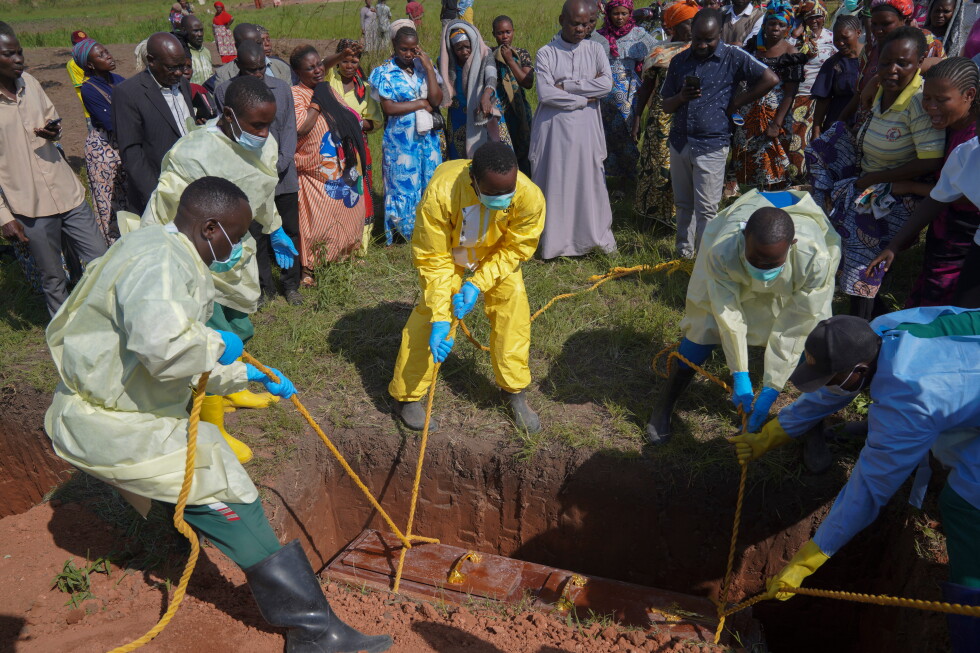
    The fifth and final gap identified by the U.S. CDC lies in safe burial practices, a critical intervention given that Ebola spreads through direct contact with bodily fluids, and the bodies of deceased victims remain highly infectious. While authorities have deployed safe burial teams to respond to the more than 3,000 Ebola deaths to date, major gaps remain in execution across affected health zones. In Ituri and other high-risk areas, burial teams have been attacked multiple times, often by grieving family members who wish to carry out traditional burial customs for their loved ones. It remains common for community members to gather within meters of Ebola victim coffins during burials, putting hundreds of people at risk of new infections.

    As the new village-centered strategy rolls out, public health agencies across the continent continue to warn that the outbreak’s trajectory remains unpredictable, with sustained transmission expected for the foreseeable future without targeted investment to close the remaining response gaps.

    AP writers Constant Same Bagalwa in Bunia, Congo and Mike Stobbe in New York contributed reporting to this article.

  • ‘Secretive’ UAE and Swiss-based firms found to be major crude suppliers to Israel, says report

    ‘Secretive’ UAE and Swiss-based firms found to be major crude suppliers to Israel, says report

    A joint investigation by two leading research organizations, Oil Change International (OCI) and the Centre for Research on Multinational Corporations (SOMO), has pulled back the curtain on a little-scrutinized network of oil traders that have become among the largest suppliers of crude oil to Israel during the ongoing military campaign in Gaza. The investigation identifies Swiss-based Vitol and Dubai-founded Heritage Petroleum FZCO as the key players in this supply chain, which collectively delivered around 22 million barrels of crude to Israel between October 2023 and June 2026, accounting for 11% of the nation’s total crude imports over that period.

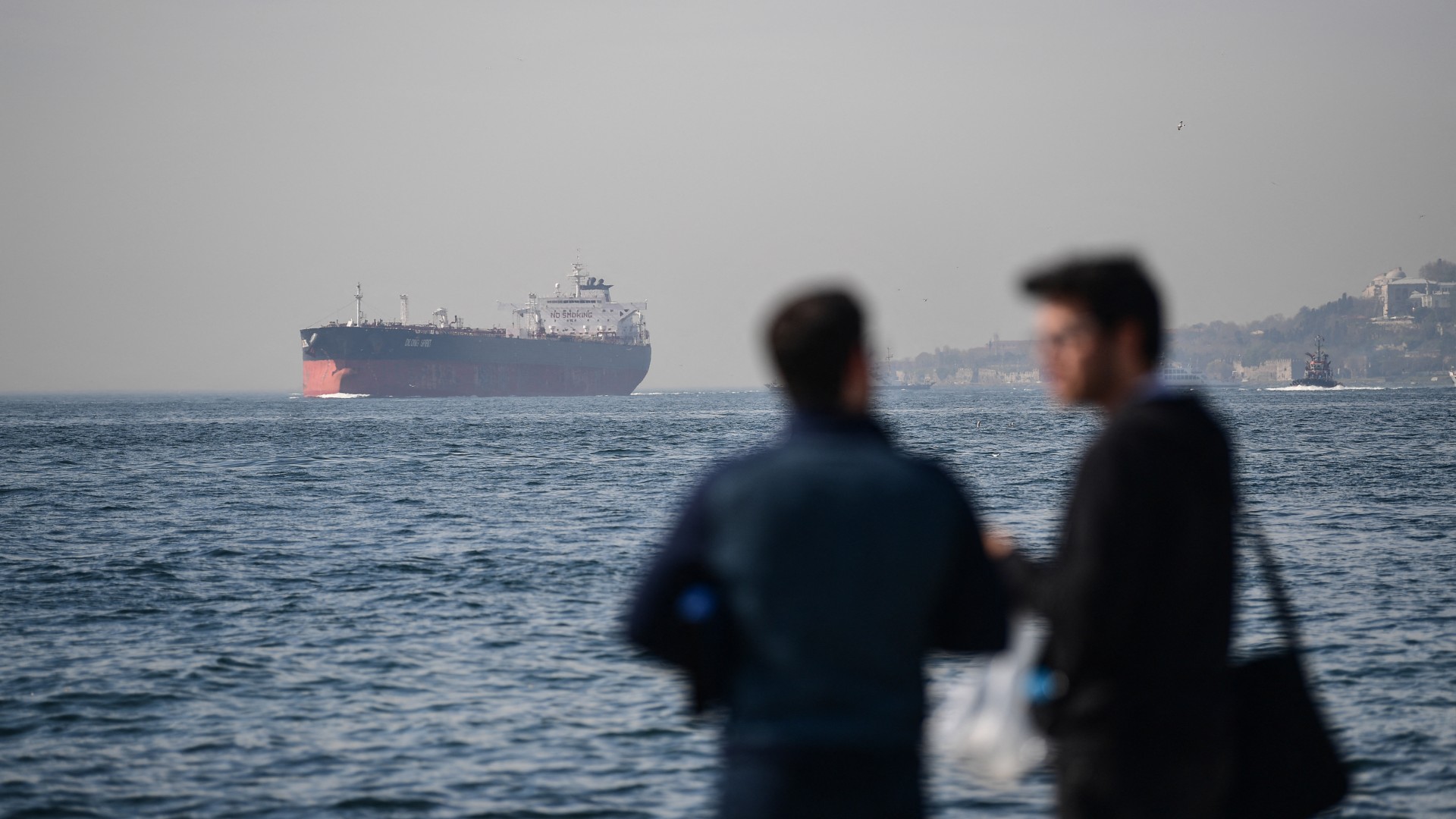
    What makes the findings particularly striking is that the vast majority of shipments from both traders passed through Ceyhan, a major Turkish Mediterranean port, despite Turkey’s official embargo on Israeli-bound oil trade imposed in May 2024. Researchers also confirmed that two Heritage subsidiaries, classified as shipping servicing firms, are formally registered in Turkey’s national trade registry. While major Western oil giants including BP, Chevron, ExxonMobil, and Shell have already faced widespread public backlash and scrutiny for their roles in supplying energy to Israel during the conflict, the activity of smaller, opaque trading networks in this supply chain has largely flown under the radar until now.

    The research team built its findings on trade and shipping data from analytics platform Kpler, cross-referenced with additional data from the London Stock Exchange Group and verified via satellite imagery confirming vessel arrivals at Israel’s Ashkelon port. Both Vitol and Heritage operate as dual charterers and traders, meaning they take full ownership of the crude they ship to Israel. Of more than 250 tracked shipments carrying over 200 million barrels of crude from 19 source countries to Israel, the two firms ranked among the largest charterers for Israeli-bound cargo.

    In response to the report’s findings, a Vitol spokesperson stated that the company conducts all its business activities in full compliance with applicable local and international laws. When Middle East Eye reached out to Heritage Petroleum for comment, no response was received prior to publication.

    Turkey’s foreign ministry has pushed back against suggestions that it is failing to enforce its own embargo, noting that all crude moving through the Baku-Tbilisi-Ceyhan (BTC) pipeline, which carries Caspian Sea crude from Azerbaijan to Ceyhan, is required to adhere to Turkey’s ban on trade with Israel. “No vessel loading from Ceyhan is authorised or executed with Israel designated as the delivery destination,” a ministry source told Middle East Eye. The source explained that once tankers leave the Ceyhan terminal, cargo ownership can transfer to third-party buyers while in transit, opening a loophole for changes to the final destination. The ministry also clarified that Turkish state energy firms hold only minority stakes in the BTC pipeline project, and the firm operating Turkey’s section of the pipeline has no commercial authority over the sale or routing of cargo, adding that any sale of Turkish state-owned crude to Israel is “entirely out of the question.”

    Vitol, one of the world’s leading independent oil traders with a global footprint including major offices in London, Geneva, and Houston, has a long history of controversy tied to unethical business practices. The company pleaded guilty to grand larceny charges in 2007 for paying $13 million in kickbacks to Saddam Hussein-era Iraqi officials to secure lucrative oil supply contracts. In 2026, it became the first firm to secure U.S. authorization to sell Venezuelan crude after the detention of Venezuelan President Nicolas Maduro. When approached by OCI and SOMO for comment, Vitol denied profiting from war and conflict in Venezuela, Ukraine, Iran, or Iraq, but declined to address its role as a charterer of Israeli-bound crude. Between October 2023 and June 2026 alone, Vitol shipped nearly 14 million barrels of crude to Israel, with its shipment volumes spiking sharply in 2023 after the outbreak of the Gaza conflict.

    Far less is known about Heritage Petroleum, which was only founded in December 2023 and sent its first chartered shipment of crude to Israel in November 2024, more than a year into the conflict. Despite its recent creation, it quickly rose to become Israel’s second-largest crude supplier, delivering a total of 8.3 million barrels, all of which departed from Turkish ports after the embargo was implemented. “Heritage has appeared out of nowhere to be a leading charterer of fuel to Israel, and its operations are very opaque,” noted Andy Rowell, contributing editor at OCI. “We still do not know who the board of the company are or who the people with significant control are.”

    Beyond the two registered Turkish subsidiaries, researchers found that little public information exists about the firms. Limosa Trading Logistics Inc., one of the two Heritage subsidiaries, took its website offline after SOMO’s strategic litigation lead Lydia de Leeuw reached out for comment, and phone calls went unanswered. The second subsidiary, Shiptech Maritime Ltd., initially provided a statement on behalf of both itself and Heritage, claiming the firms were not violating Turkey’s trade ban with Israel. When de Leeuw followed up with additional questions and presented corroborating data from LSEG and port control inspections confirming the shipments, Shiptech declined further comment. A conversation with Shiptech’s Turkish head of operations confirmed that Shiptech and Heritage are the same entity. No responses to Middle East Eye’s requests for comment were received from either subsidiary prior to publication.

    The investigation’s findings raise serious questions about how effectively Turkey is enforcing its embargo on Israeli energy trade. While researchers acknowledge that crude oil has legitimate civilian uses in Israel, they stress that the link between imported crude and Israeli military operations is unambiguous. “What we do know is that Israel relies heavily on imported crude oil,” Rowell explained. “In 2024, for example, the country imported 97 percent of its crude oil. The imported oil is refined in Ashdod and Haifa and both refineries have been clear that they are supplying the military. Bazan Group, which owns the Haifa refinery, has been clear that it supplies the Israeli military.”

    The report also highlights the enabling role that national governments hold over this ongoing energy flow, and puts forward clear policy recommendations. It calls on major oil-producing countries that supply the crude, including Azerbaijan, Kazakhstan, and Nigeria, to implement formal embargoes on Israeli-bound crude, and urges Turkey to strengthen enforcement against firms exploiting loopholes to facilitate shipments. It also notes that the countries hosting the traders’ headquarters – the United Arab Emirates for Heritage and the United Kingdom for Vitol – hold significant policy tools to restrict and halt these shipments.

    Rowell particularly emphasized the implications of the findings for the UK, given new Foreign Secretary Ed Miliband’s pledges to reset the UK’s relations with Israel. “This will be a real test – Vitol has huge operations out of London; will the government take action against them?” he said.

    The report also notes that the full scope of the two traders’ roles may be even larger than documented, as roughly half of all Israeli-bound crude shipments analyzed for the investigation did not list a named charterer, leaving open the possibility that additional undisclosed activity by the two firms is unaccounted for.

  • Watch: JD Vance ‘extremely sceptical’ over alleged strike on Iranian wedding

    Watch: JD Vance ‘extremely sceptical’ over alleged strike on Iranian wedding

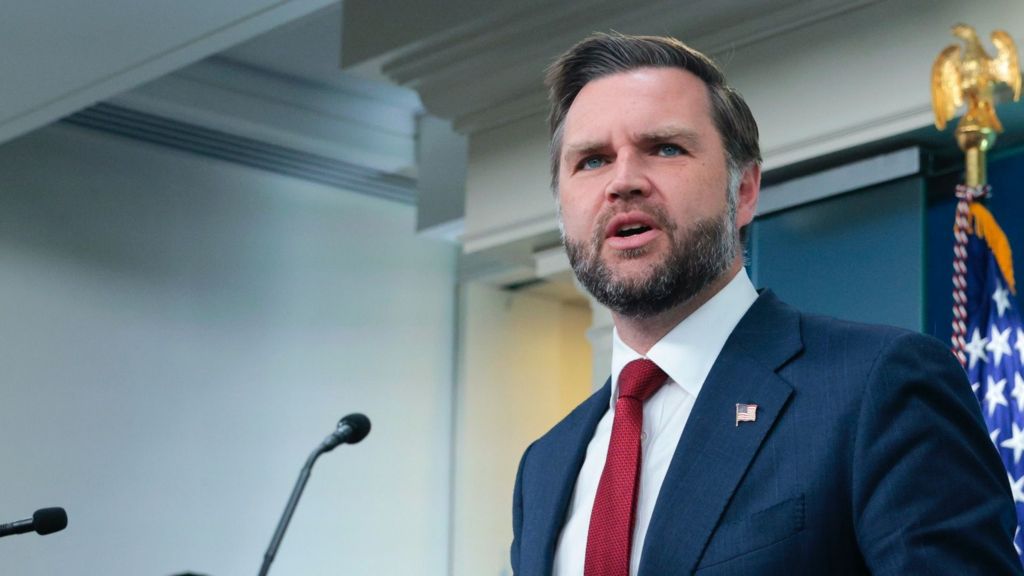
    A growing diplomatic and political controversy has emerged in recent days following Iranian allegations that a United States missile strike targeted a wedding gathering, leaving four dead including two young children – a claim that has now drawn public scepticism from prominent American political figure JD Vance, who says he remains “extremely sceptical” of the official Iranian account.

    Iranian government officials have directly leveled accusations against the U.S., framing the reported strike as a deliberate act of violence against civilians that qualifies as a war crime under international law. According to Iranian statements, the attack unfolded when a missile hit a venue hosting a wedding celebration, ending the lives of four attendees. Two of those killed were confirmed to be children, a detail that has amplified the anger and condemnation coming out of Tehran in the aftermath of the incident.

    The allegations come at a moment of already heightened tensions between the United States and Iran, with long-standing disputes over nuclear policy, regional military activity, and diplomatic relations creating a fragile geopolitical environment across the Middle East. Even as Iranian officials push their narrative of American culpability, Vance, a leading U.S. conservative voice, has pushed back against accepting the claim at face value, publicly stating that he doubts the official version of events that has been presented by Iranian authorities. Vance’s comments add a layer of domestic political conversation to the international controversy, as U.S. officials have not yet formally confirmed or denied involvement in the strike.

    Widespread international attention has turned to the incident amid competing claims, with global observers calling for a transparent, independent investigation to clarify who was responsible for the attack, confirm the details of the casualties, and determine what exactly took place at the wedding venue. The incident has already stoked new fears of further escalation between Washington and Tehran, at a time when the international community is already grappling with multiple ongoing conflicts across the Middle East.

  • Data centres are booming in Australia – but at what cost?

    Data centres are booming in Australia – but at what cost?

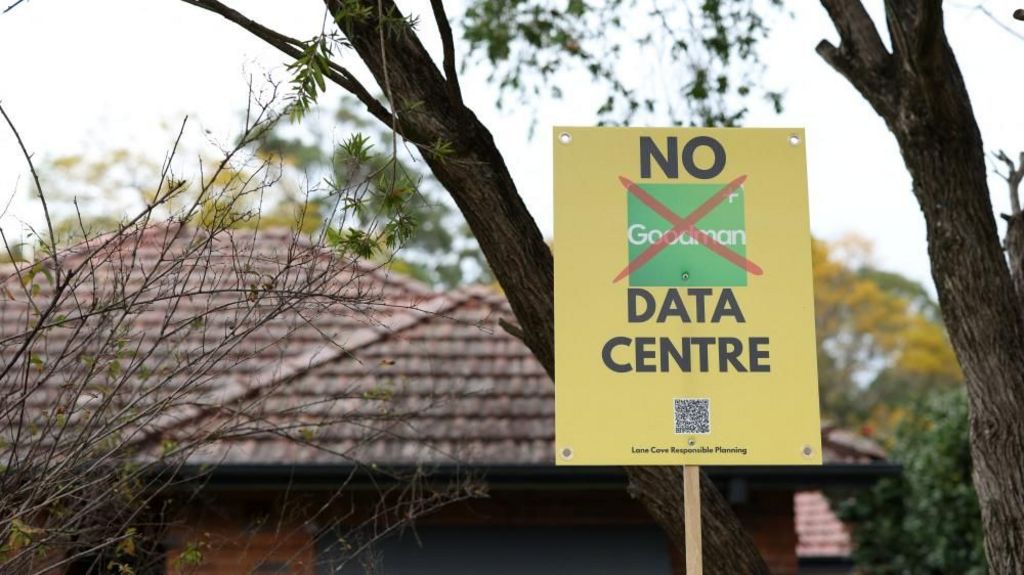
    Nestled in Sydney’s desirable lower north shore, the quiet suburb of Lane Cove has become the frontline of a growing national debate: can Australia deliver on its ambition to become a global data centre hub, while protecting the quality of life for local residents and meeting its environmental targets?

    For local mother Lucy, the reality of living near a data centre is already an unavoidable part of daily life. Just 350 meters from her front door, an existing facility emits a constant, low humming that seeps into her home every night as she tucks her child into bed. “I’ll hear it and think, ‘What is that? What is going on?’” she says. What Lucy and hundreds of her neighbors are now bracing for is far more disruptive: plans to build four additional large-scale data centres in Lane Cove’s local industrial park, which would turn the already affected suburb into one of Australia’s densest data centre clusters.

    Australia’s rapid rise as a top global destination for data centre investment did not happen by accident. Global investors are drawn to the country’s abundant available land, political stability, skilled workforce, established Five Eyes security framework, and untapped renewable energy potential. The AI boom that followed ChatGPT’s 2022 launch supercharged this trend: OpenAI CEO Sam Altman noted earlier this year that Australia has all the ingredients to become the world’s data centre capital if it chooses to pursue that goal.

    Right now, the country is moving full speed ahead to meet that demand. There are already 162 operational data centres across Australia, with 90 more in active planning stages, and more than AU$155 billion (£80 billion) in committed investment waiting to be deployed. If approved, a 1-gigawatt facility in western Sydney would become Australia’s largest single energy user and one of the biggest data centres on the planet. Just 100 meters from another western Sydney community in Marsden Park, the Southern Hemisphere’s largest data centre is already under construction.

    Industry leaders argue this growth is non-negotiable for Australia’s future digital and economic prosperity. Belinda Dennett, CEO of Data Centres Australia, points out that modern digital services from robotic surgery to air traffic control to streaming platforms demand minimal latency, requiring local data storage and processing to avoid dangerous or frustrating delays. With 13.6 million Australian AI users every month – ranking the country sixth globally for AI activity – local data infrastructure will lower barriers for homegrown Australian AI companies to emerge and compete. “If we don’t build infrastructure here, we get none of the value chain,” Dennett says. “We are just importing tools from someone else and we become just a user.”

    Leading business analysts add that the data centre boom has already been a critical economic buffer for Australia. Jon Whittle, a former digital research director at Australia’s national science agency CSIRO and a leading AI business advisor, notes that without the surge in data centre investment over the past two years, Australia would likely have slipped into recession. “There’s some very serious considerations around this, but my main message would be we need to lean into it,” he says. New South Wales Treasurer Daniel Mookhey echoes this view, arguing that data centre investment is driving a parallel boom in renewable energy development, helping the country phase out aging coal-fired power plants without passing the full cost on to households. “We don’t see the two as unrelated,” Mookhey says. “We see data centres allowing us to replace a lot of our old coal-fired power with clean, green renewable energy with the private sector picking up a large amount of the tab.” The investment, he adds, will create new industries that employ future generations.

    But critics and local communities are pushing back hard, raising urgent alarms about the massive environmental, infrastructure and social costs of the current unregulated growth. The most pressing concerns center on energy: the Australian Energy Market Operator projects that national data centre energy demand will triple by 2030. The independent Climate Council warns that without massive new renewable generation and storage capacity, data centre demand could push electricity prices up by 26% in New South Wales by 2035. Because data centres require uninterrupted, consistent power that variable wind and solar cannot yet deliver at scale, many operators are turning to fossil fuels: a recent Greenpeace Australia Pacific report found no major data centre operator has adequately proven its claims of driving renewable growth. In the U.S., many operators have opted to build new gas-fired power plants rather than wait for renewable capacity to expand, and Australian firm Cloud Carrier is already planning three gas-fired stations to power its existing and future data centres 90 minutes outside Sydney. If the grid fails, most data centres, including the existing one in Lane Cove, rely on polluting diesel backup generators.

    Water scarcity is an equally urgent concern in drought-prone Australia. Data centres require massive volumes of water to cool overheating servers, with some large facilities consuming up to 40 million liters per day – enough to supply 80,000 households. The Water Services Association of Australia already projects Sydney will need to expand drinking water supplies over the next decade to meet population growth, but Sydney Water estimates data centres could consume 25% of the city’s drinking water by 2035. If that happens, households will be forced to bear the cost of more expensive alternative water sources like desalination.

    For Lane Cove’s local leaders and residents, these national concerns have become a local crisis. Deputy Mayor Rochelle Flood says the four proposed data centres would force 50% of existing businesses in the industrial park to relocate, taking thousands of local jobs with them. Felipe Tanaka, a local business manager who has already been told he must relocate to make way for a new data centre, says the disruption will have long-term impacts on local workers. “We never knew that something like this would happen,” Tanaka says. “Thousands of jobs are going to be gone from this area in the next few years. Most of our 300 to 400 workers here are locals. Having to move will probably see half of my employees gone.” While data centres create hundreds of construction jobs, they only employ around 100 full-time workers once operational, far fewer than the existing businesses they displace. One proposed facility sits just 16 meters from the nearest residential home and 160 meters from a local primary school, and residents say they were never consulted about the plan to turn their suburb into a data centre hub. Locals also fear the development will threaten nearby Lane Cove National Park and the Parramatta River, core natural assets for the community.

    In July, Prime Minister Anthony Albanese announced new regulations that will require large-scale data centres to guarantee sufficient power supplies, cap water use, and cover the cost of any required new water infrastructure. But the legislation will not take effect until 2027, and will only apply to new proposals – leaving all currently planned and under-construction projects exempt. Community and environmental groups are now calling for a full moratorium on all new data centre development until stronger safeguards are in place.

    “We’ve got the government rolling out the red carpet saying we want to be the data centre capital of the world,” Flood says. “But can we actually do that sustainably or is it going to set us back in terms of net zero and our water storage targets?” Critics add that beyond environmental costs, the public has little clarity on what the data centres will actually be used for, with much of the capacity powering low-value AI activity that delivers little benefit to Australian communities. “They’re telling us this is essential… that we need to have these centres in our neighbourhood but they’re not saying what it’s for,” Flood says. “When our drinking water, energy and land is being used for generative AI slop, that is not giving any value back.”

  • US billionaire Leon Black defies summons and sues Epstein panel

    US billionaire Leon Black defies summons and sues Epstein panel

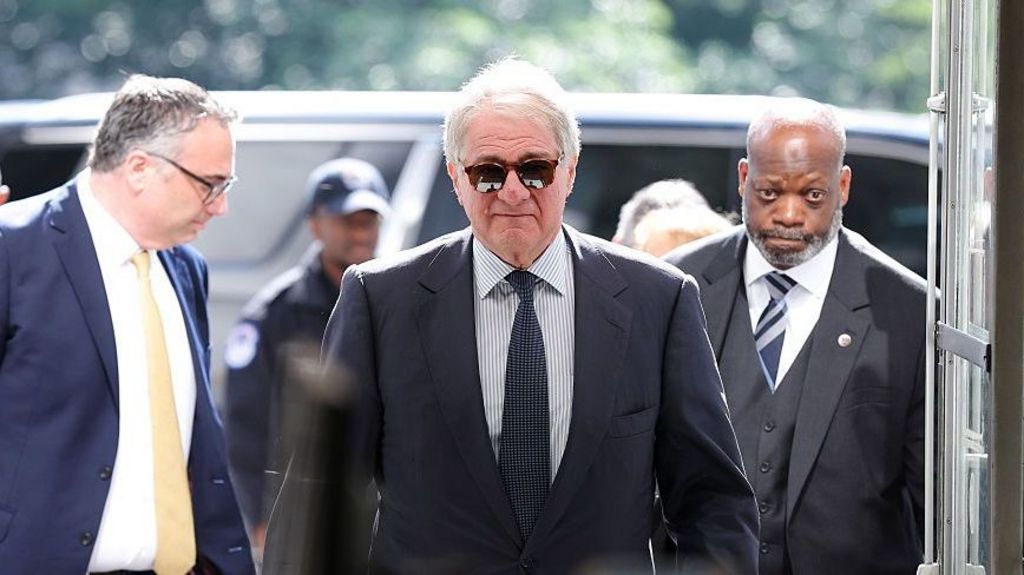
    A high-stakes conflict has erupted between billionaire investor Leon Black and a U.S. congressional committee probing the late convicted sex offender Jeffrey Epstein, after Black refused to comply with a subpoena and instead launched a legal challenge against the panel’s investigative demands.

    The House Oversight Committee had ordered Black to produce confidential nondisclosure agreements (NDAs) tied to his past dealings and sit for a sworn on-camera deposition, a series of demands that Black now calls illegitimate in his federal lawsuit, filed Thursday in Washington. In his legal filing, Black argues the subpoenas are invalid and bear no legitimate connection to any legislative goal the committee is tasked with pursuing. He also claims forcing the disclosure of the sealed NDAs would harm third-party women who negotiated for strict confidentiality, have no public ties to Epstein, and have never agreed to release their privacy protections.

    This confrontation is the latest escalation of a drama that first unfolded in June, when Black walked out of a voluntary testimony session mid-interview after lawmakers began asking questions about NDAs he had allegedly signed. Committee members confirmed the walkout at the time, and the subpoenas at the center of the current lawsuit were issued in the immediate aftermath of that incident.

    Black has repeatedly and vehemently denied any wrongdoing connected to his professional and personal ties to Epstein. In his June appearance, he told the committee he had employed Epstein as a wealth management advisor over decades of their relationship, and paid Epstein a total of $158 million for what he says were legitimate financial services. He maintains he had no knowledge of Epstein’s well-documented sex trafficking activities until Epstein was formally charged in July 2019. Black’s name and interactions appear in the trove of Epstein investigative files released by the U.S. Department of Justice, though officials have stressed that inclusion in the files does not amount to an accusation of criminal conduct.

    In a statement accompanying the lawsuit Thursday, Black’s attorney Susan Estrich blasted the committee’s actions as an overreach of congressional power. “This is no longer about finding the truth about Epstein. It is about trying to destroy Mr Black,” Estrich said. “We were left with no choice but to file this lawsuit in response to an abuse of Congressional power.”

    Committee members have pushed back hard on Black’s challenge, framing his refusal to appear as open defiance of congressional authority. “By refusing to testify today, Leon Black is now defying two Congressional subpoenas,” Representative Robert Garcia, a member of the House Oversight Committee, said in a post-deadline statement. “His connections to Epstein and his unwillingness to cooperate are unacceptable. We must hold him in contempt immediately.”

    A contempt of Congress citation would allow the committee to refer the matter to the Department of Justice for potential criminal prosecution, a step that could open Black up to new legal jeopardy. Committee Chairman James Comer echoed Garcia’s criticism, noting that Black’s testimony is a key piece of the panel’s broader Epstein investigation. “It’s a shame Leon Black is hiding behind litigation rather than provide answers to the American people,” Comer said. “Mr Black’s testimony is crucial to our investigation.”

    The fight over the NDAs stems in part from a years-old legal dispute between Black and Guzel Ganieva, a former Russian model with whom Black had a six-year extramarital affair. Court records show Ganieva filed a now-dismissed lawsuit against Black that included abuse allegations, claiming Black drafted an NDA in 2015 to force her to stay silent about their relationship. Released Epstein files show that Epstein advised Black on the situation, even suggesting in an email to Black’s assistant that Black hire former law enforcement officials to confront Ganieva. Black has denied Ganieva’s accusations, calling the claims an extortion attempt, and Estrich has dismissed the allegations as “demonstrably false.” A judge ultimately dismissed Ganieva’s lawsuit, citing the NDA she signed and the roughly $9 million she received in the years after entering the confidentiality agreement.

    Black stepped down from his leadership role at Apollo Global Management, the private equity firm he co-founded, in 2021. At the time, he cited the unrelenting public attention and media scrutiny surrounding his ties to Epstein as having taken a significant toll on his health.

  • Blair Institute denies former UK PM asked PA to remove ‘Palestine’ from school textbooks

    Blair Institute denies former UK PM asked PA to remove ‘Palestine’ from school textbooks

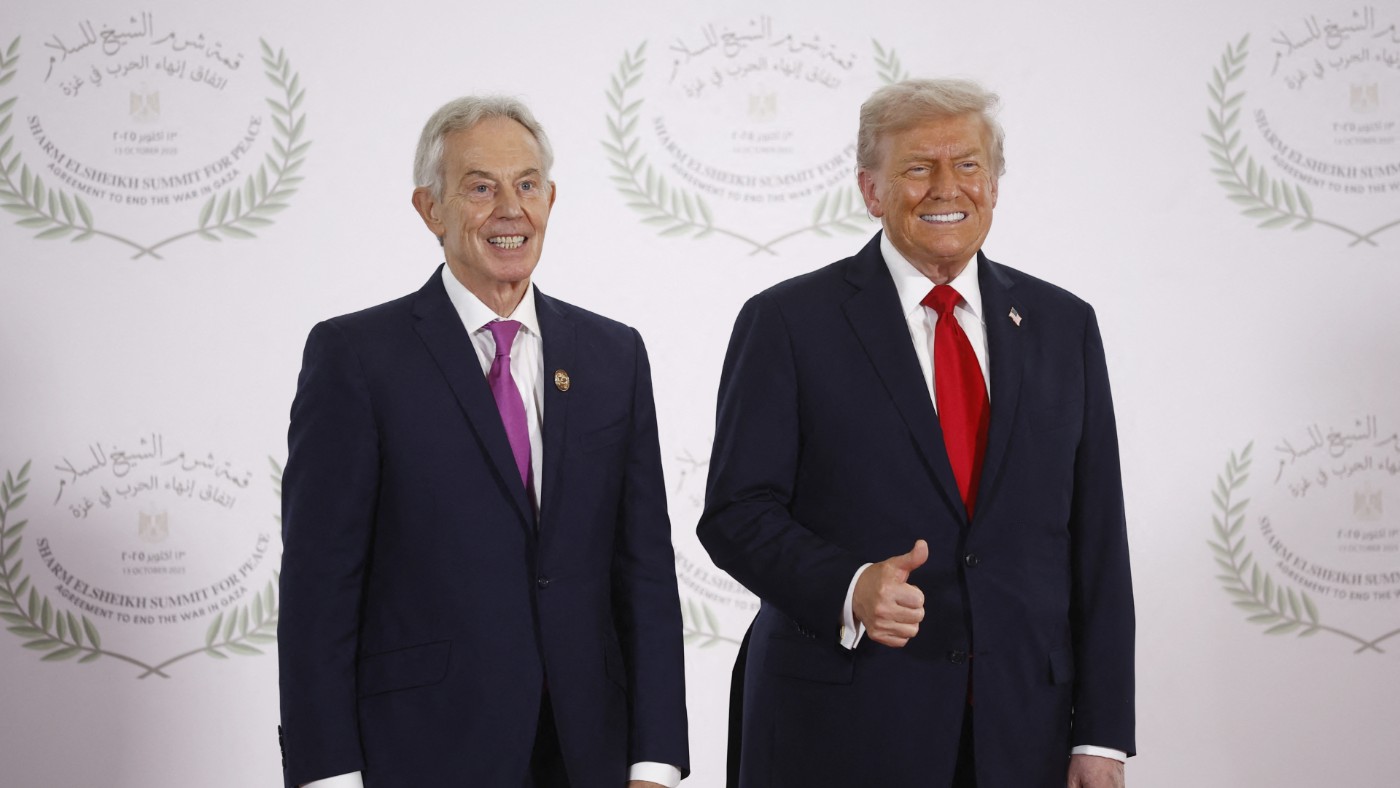
    A high-stakes controversy has erupted over allegations tied to the Trump administration’s newly formed Gaza-focused Board of Peace, after a former senior British diplomat accused former UK Prime Minister Tony Blair of carrying an extraordinary demand to the Palestinian Authority: scrub all references to “Palestine” from official school curricula and replace the term with the Jewish historical name “Samaria”. The claim, first published as an exclusive report by independent outlet Middle East Eye, has been forcefully and repeatedly denied by Blair’s Tony Blair Institute for Global Change, which calls the allegation a baseless fabrication.