博客

  • Death toll from Israeli settler attacks spirals in ‘most violent’ year for West Bank

    Death toll from Israeli settler attacks spirals in ‘most violent’ year for West Bank

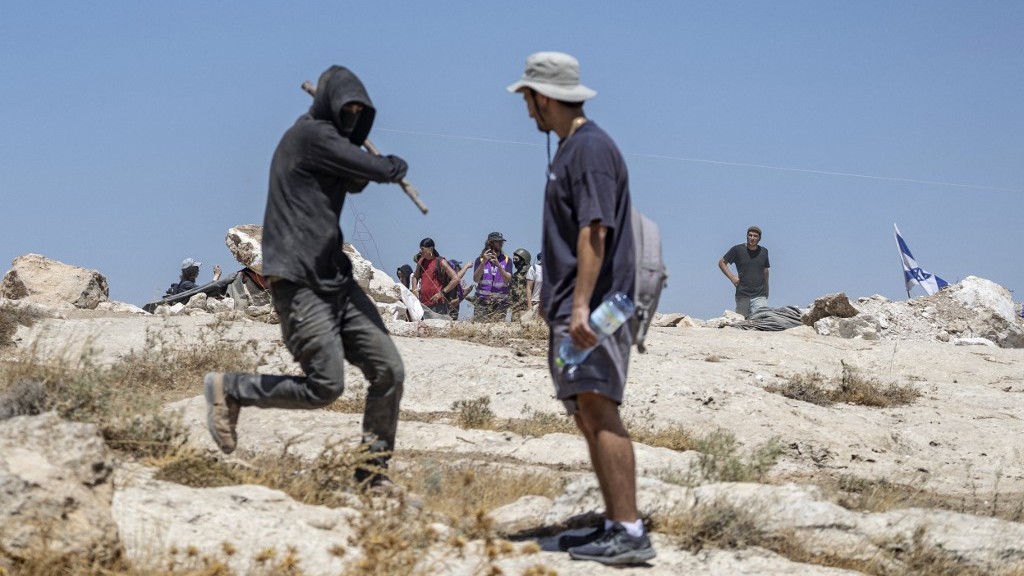
    On a Wednesday evening in the Palestinian village of Al-Mughayyir, located east of Ramallah in the Israeli-occupied West Bank, a violent settler incursion targeting sheep theft ended with two Palestinian civilians dead at the hands of Israeli soldiers, deepening longstanding concerns over systemic, state-backed settler violence in the region.

    According to official records from the Palestinian Ministry of Health, the two victims have been identified as 19-year-old Omar Muhammad Na’san and 16-year-old Khalil Rasem Shahada, both fatally shot by Israeli military personnel during the incident. Marzouq Abu Na’im, a village council member and local activist who has spent years documenting settler attacks in the area, detailed the sequence of events to Middle East Eye, confirming that armed settlers first launched an assault on a local residential property with the explicit goal of stealing the family’s livestock.

    Shortly after the incursion began, Israeli forces stormed the village to provide armed protection for the settlers, positioning troops and snipers on the roof of the targeted home. “The settlers stole the sheep and attacked the homeowners, who were unable to resist or object due to the heavy presence of soldiers and snipers on the roof,” Abu Na’im explained.

    Na’an, whose own home sits adjacent to the targeted property, stepped outside to investigate the commotion when an Israeli sniper positioned on the rooftop opened fire, killing him instantly. Minutes later, 16-year-old Shahada emerged from his home on the opposite side of the village after hearing residents screaming in alarm from their windows. Abu Na’im confirmed that the teenager had moved barely a few meters from his front door when Israeli soldiers also shot him.

    Tragically, both victims were left bleeding heavily for an extended period after the shooting, as Israeli forces blocked ambulances from reaching the scene. Though coordination was eventually secured through the military liaison office to allow medical transport, both civilians had already succumbed to their injuries by the time paramedics arrived. “Their blood filled the ambulance because of the severity of the bleeding. The paramedics tried to resuscitate them, but they had already passed away. Meanwhile, the settlers managed to steal the sheep and left under the protection of the army,” Abu Na’im added.

    This deadly incident is far from an isolated event: Al-Mughayyir has already seen five Palestinian residents killed since the start of 2026, three of those deaths at the hands of settlers. Human rights organizations have repeatedly warned that settler attacks across the occupied West Bank are escalating rapidly, and the violence has grown increasingly deadly with the explicit backing and protection of the Israeli military.

    New data from the Wall and Settlement Resistance Commission underscores the scale of the crisis: in August 2026 alone, the group recorded 2,030 total attacks across the West Bank, 1,402 carried out by Israeli soldiers and 628 by extremist settlers. Attacks were concentrated in the flashpoint regions of Ramallah and al-Bireh, which saw 157 incidents, followed by Nablus with 137 and Hebron with 120. The report also documented that settlers attempted to establish 32 new unauthorized settlement outposts in August, part of a broader pattern of land seizure. Joint soldier-settler raids on agricultural land damaged more than 21,500 trees, 19,375 of which were productive olive trees that form a critical livelihood for thousands of Palestinian families. Overall, 164 Palestinians suffered direct harm from settler violence in August, including 20 children and 17 women.

    A major August 20 report from Human Rights Watch, titled *West Bank: Israel-Backed Settler Violence Drives Displacement*, outlines the broader humanitarian impact of the ongoing escalation. The organization confirmed that rising settler attacks have forced complete or partial displacement of residents from 107 Palestinian towns and villages since January 2023. Data indicates 2026 is on track to become the deadliest year on record for settler violence, with attacks driving widespread displacement of Palestinian rural communities.

    Citing statistics from the United Nations Office for the Coordination of Humanitarian Affairs (OCHA), the report notes that the average number of daily settler attacks resulting in injury or property damage now stands at 6.6, the highest rate recorded in the agency’s history. As of July 24, OCHA had documented 15 Palestinians killed by settlers in 2026, including two children, putting the year on track to surpass the previous record of 16 settler killings set in 2023.

    Human Rights Watch has explicitly accused Israeli authorities of not only failing to uphold their obligation to protect Palestinian civilians from settler violence, but also actively providing financial, material, and legal support to the extremist settlers responsible for these attacks.

    International officials have echoed these warnings. The UN deputy special coordinator for the Middle East peace process warned in August that settler violence in the West Bank has reached unprecedented levels, stating that the occupied territory has “reached a breaking point.” He confirmed that the UN had recorded more than 1,430 separate incidents of settler violence since the start of 2026, impacting roughly 260 Palestinian communities. As of August 10, 76 Palestinians had been killed in the West Bank by either Israeli forces or settlers in 2026, and more than 3,800 Palestinians have been displaced since January as a result of settler violence, home demolitions, and forced evictions.

    Late last month, the European Union issued a formal statement condemning the ongoing violence, specifically highlighting the crisis in the village of Qusra, where Palestinian families were trapped in their homes for more than a week by a sustained settler siege. Even U.S. Ambassador to Israel Mike Huckabee labeled the settlers besieging Qusra as terrorists. The EU demanded an immediate end to intimidation, harassment, property destruction, and physical assaults against Palestinian civilians, calling on Israeli authorities to take decisive action and hold all perpetrators of violence accountable.

    Despite this international outcry, Palestinian leaders and activists argue that statements of condemnation are no longer sufficient to end the crisis or hold perpetrators accountable. Palestinian officials are now calling on the international community to move beyond rhetoric and take concrete legal action against the Israeli government and extremist settler groups.

    Salah Khawaja, director of the Wall and Settlement Resistance Commission’s central West Bank office, noted that all international statements and institutional responses have so far been limited to condemnation, which he says has effectively provided political cover for Israel to continue its expansion and aggression. “The fundamental problem is the absence of any effective international steps to hold Israel, as a government, and the settler groups accountable for their practices and support of terrorism and attacks in various areas of the West Bank,” Khawaja told Middle East Eye.

    Khawaja explained that while successive Israeli governments have prioritized settlement construction, expansion, and land seizure, the current Israeli administration has advanced these policies further than any preceding government. He added that Israel openly defies international norms and institutions, while the global community’s response remains limited to empty statements of condemnation.

    Data confirms 2026 is already the most violent year on record for settler violence: for comparison, only one Palestinian was killed by settler gunfire in 2019, two in 2020, and five in 2021. In the first half of 2026 alone, 20 Palestinians were killed by settler gunfire. “This escalation represents one aspect of a systematic approach…which enjoys the full support of the Israeli government and security apparatus,” Khawaja concluded.
  • Brazil considers reciprocal measures after EU halts imports of Brazilian goods

    Brazil considers reciprocal measures after EU halts imports of Brazilian goods

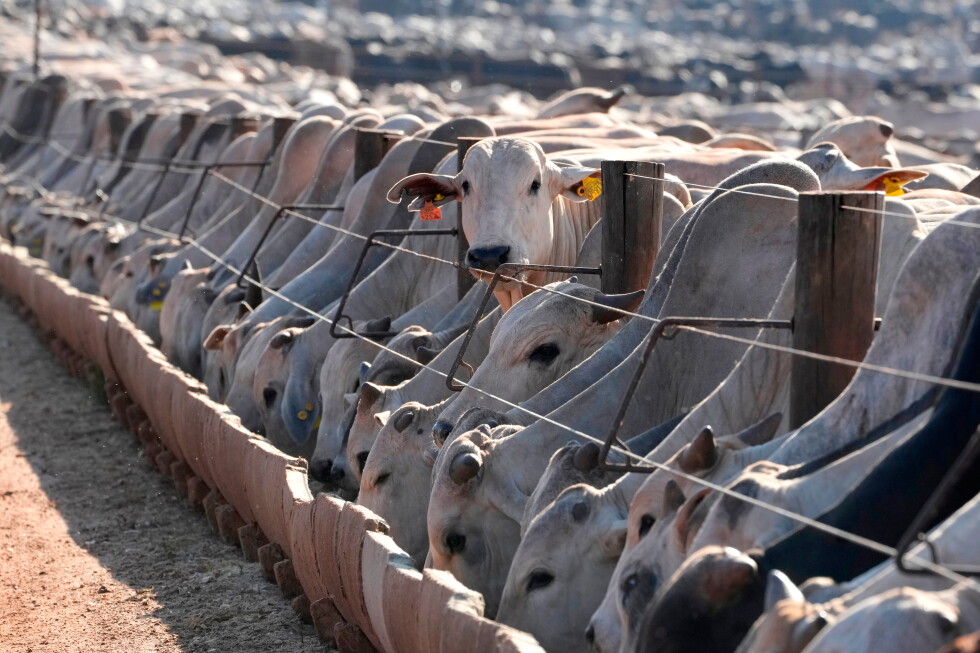
    On Thursday, a major trade dispute erupted between Brazil and the European Union after a Brussels-imposed deadline expired, triggering an immediate suspension of Brazilian imports of meat, poultry, eggs, honey and other animal-based products. The bloc’s move centers on longstanding concerns over unapproved antibiotic and antimicrobial drug use in Brazilian livestock production, leaving Brazil’s top agricultural exporters scrambling to adjust to the sudden market disruption.

    The suspension was first announced by EU authorities this Tuesday, and went into effect just 48 hours later, following a May notification that Brazil would be removed from the bloc’s list of authorized exporters for certain animal products. EU officials argued that Brazilian regulators had failed to provide sufficient assurances that local livestock production adheres to EU rules banning antibiotic growth promoters and other restricted antimicrobial substances. European Commission spokesperson Eva Hrncirova confirmed Tuesday that the updated list of rule-compliant exporting countries, which excludes Brazil, would take effect September 3, formalizing the import suspension. As of Thursday, the EU had not responded to additional requests for comment from the Associated Press.

    As the world’s leading beef exporter, Brazil sent roughly 108,000 tons of beef valued at approximately $1 billion to the EU in 2025, making the bloc one of the country’s most valuable export markets for animal products. Brazil’s federal agriculture ministry, led by the administration of President Luiz Inácio Lula da Silva, has openly condemned the EU’s action, calling it undiplomatic and out of step with the two sides’ deep strategic partnership. In an official statement released Thursday, Brazilian authorities expressed “indignation at the lack of dialogue before the measure was adopted”, and noted that the government reserves the right to implement reciprocal trade measures if a mutually acceptable resolution cannot be reached. The ministry added that it is prepared to use all appropriate trade tools, from reciprocal measures outlined in Brazilian domestic law to dispute settlement mechanisms established under both the Mercosur-EU free trade agreement and the World Trade Organization’s multilateral trading system.

    Brazil’s leading agricultural industry groups have echoed the government’s criticism, warning that the suspension will cause significant disruptions to local producers. The Brazilian Association of Meat Exporting Industries (ABIEC), which provides technical support to the Brazilian government in EU trade negotiations, called the bloc’s action deeply concerning for domestic producers, noting that it fails to recognize the established quality of Brazilian beef, which is already exported to 170 countries worldwide. “Brazilian beef will continue to be sold in the markets for which it is authorized, but there is no automatic substitute for the European market, since different destinations require distinct products and cuts,” ABIEC explained in its own statement. The Confederation of Agriculture and Livestock of Brazil similarly pushed back in a document submitted to Brazil’s foreign ministry late Wednesday, arguing that the EU suspension “results in the clear nullification and impairment of trade benefits legitimately expected by Brazil”. The confederation added that EU regulators ignored the rigorous standards of Brazil’s existing health inspection system, and called on Brussels to correct what it frames as an unfair trade imbalance.

    The import suspension comes at a particularly sensitive moment for the landmark free trade agreement reached in January between the EU and Mercosur — the South American trade bloc that counts Brazil, Argentina, Paraguay and Uruguay as its members. Meat imports from Mercosur have long been one of the most contentious points of opposition to the deal among European agricultural groups, and Brazil is the only Mercosur member affected by the current suspension. The agreement remains provisional, pending a final ruling from the European Court of Justice, and has not yet been fully implemented.

    Robson Goncalves, an economist and professor at Brazil’s Fundacao Getulio Vargas, argues that the EU’s current move is inherently political, tied to European efforts to shield domestic agribusiness from upcoming Mercosur competition ahead of the full implementation of the trade deal. “These are the last attempts to protect European agribusiness from competition with Mercosur agribusiness,” Goncalves explained, noting that the mechanism used to halt Brazilian exports functions as a deliberate political measure. He added that he expects additional similar restrictive measures from the EU before the Mercosur-EU agreement enters fully into force, predicting that more protectionist actions will follow over the next several years.

  • ICE agent charged with lying about shooting Venezuelan man during crackdown

    ICE agent charged with lying about shooting Venezuelan man during crackdown

    A long-simmering controversy over a January shooting involving a U.S. Immigration and Customs Enforcement agent has culminated in federal criminal charges, exposing deep intergovernmental tensions and raising fresh questions about accountability for federal law enforcement actions during high-profile immigration operations.

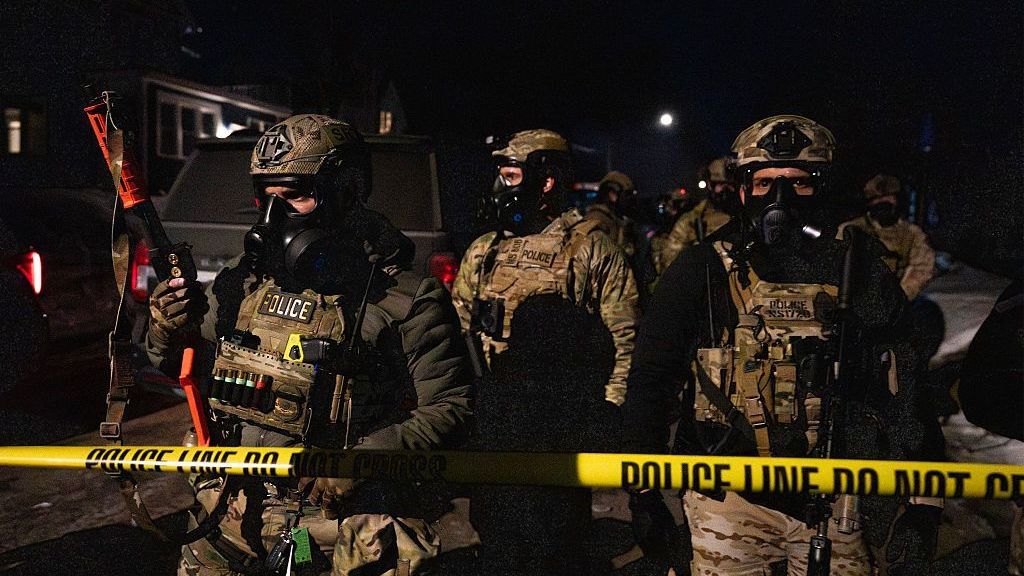
    The case centers on Christian Castro, an ICE officer who was part of Operation Metro Surge, a controversial mass deployment of hundreds of federal immigration agents to Minnesota that drew widespread public protests and left two local residents dead in confrontations with officers. On January 14, a shooting left Julio Cesar Sosa-Celis, a Venezuelan migrant, wounded in the leg. Initial accounts from the Department of Homeland Security claimed Castro had acted in self-defense, saying he opened fire after he was ambushed by three unauthorized migrants armed with a shovel and a broom handle.

    That official narrative quickly unraveled after surveillance footage emerged that contradicted the agents’ account of the incident. Minnesota state investigators have put forward a far different version of events: they allege Castro fired his weapon through a closed, locked door of a residence, after a group of people had run inside to escape. The bullet that struck Sosa-Celis in the leg ultimately came to rest in the wall of a child’s bedroom inside the home, according to state officials.

    Originally, Alfredo Alejandro Aljorna and Sosa-Celis were charged with attacking and obstructing federal agents. But those charges were swiftly thrown out by prosecutors after they cited newly uncovered evidence that undermined the initial official story. Back in February, ICE itself acknowledged that at least two agents involved in the incident may have provided untruthful statements about the shooting, and both were placed on administrative leave pending investigation.

    Castro was first taken into custody in Texas back in May, where he has remained in jail for three months. Minnesota’s top prosecutor formally requested that Texas governor Greg Abbott extradite Castro to Minnesota to face state charges of assault and filing a false police report related to the shooting. When Abbott refused to approve the extradition request last month, citing what he called “serious doubts” that Castro meets the legal definition of a fugitive, Minnesota officials responded by filing a lawsuit to force Abbott to act on the request.

    Last week, Castro was released from custody in Texas. On Wednesday, a federal grand jury returned a six-count indictment against him on federal charges connected to the shooting, with the most prominent charge being that he lied about the circumstances of the non-fatal shooting. Law enforcement officials have told media outlets that the indictment will remain under seal until Castro is taken into custody again.

    This federal prosecution marks a highly unusual development: it is extremely rare for the current U.S. Department of Justice to bring criminal charges against a federal law enforcement officer for actions taken while on official duty. The incident has amplified already fierce criticism of large-scale, federally led immigration operations, which have drawn pushback from local communities and legal advocates over aggressive tactics and lack of accountability for officer misconduct.

  • World Cup winner Marcos Llorente retires from Spain team

    World Cup winner Marcos Llorente retires from Spain team

    MADRID – In a sudden announcement that has caught the global football community off guard, 31-year-old Atletico Madrid right back Marcos Llorente, a key contributor to Spain’s 2024 World Cup triumph, has confirmed his retirement from international football. The decision, which he describes as a deeply personal, extensively deliberated choice, was made public via his official Instagram account on Thursday.\n\nLlorente, who earned 27 senior caps for Spain throughout his international career, shared the announcement alongside a poignant photo of himself lifting the World Cup trophy that Spain secured back in July. He revealed in the post that he had finalized his choice to step away from the national setup even before the 2024 World Cup tournament kicked off.\n\n“I know I am still at an age where I could continue playing, and if I maintained my current form, I likely would have had several more years of representing my country in this jersey,” Llorente wrote in his statement. “I understand that many of my fans and followers will not understand this call, and I admit that I would probably feel the same way if I were looking at this decision from the outside. But this is a personal choice, one that I have thought through for a long time, and most importantly, one that feels right for me deep down.”\n\nThe defender went on to express overwhelming gratitude for the opportunities he received during his time with the Spanish national team, emphasizing that the experiences he shared with his teammates will stay with him forever. “I can never thank all the people I have met over these years enough for giving me and my family the chance to live through these one-of-a-kind, unforgettable moments,” he said. “I will treasure every experience I had, but nothing will compare to these last 52 days, getting to play alongside an incredible group of teammates that fought all the way to the end to put Spain on top of the world. And we did it.”\n\nLlorente earned his first senior call-up to the Spanish national team back in 2020. He was included in the Spanish squad for the 2022 Qatar World Cup, though he was not part of the side that claimed the 2024 European Championship title ahead of this summer’s World Cup run.\n\n“Representing my country and getting to be a part of this historic achievement has been the greatest honor of my career,” Llorente added.

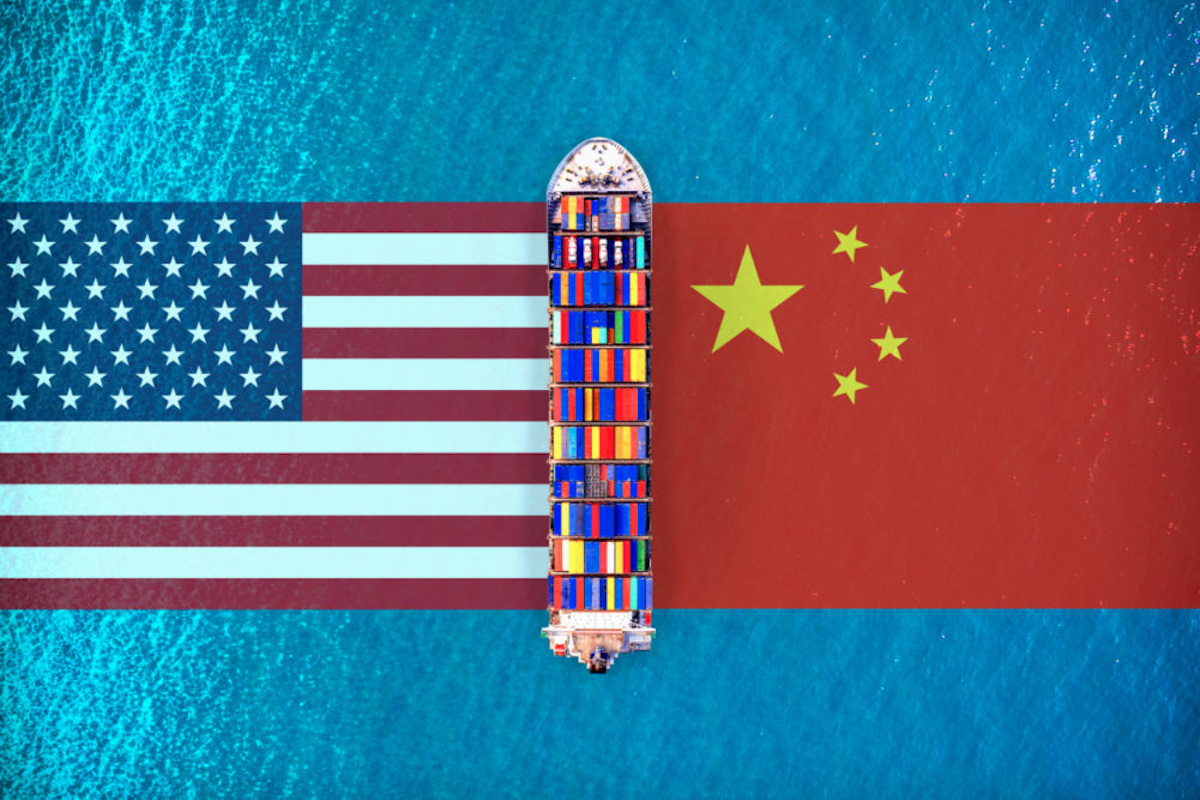
  • US-China economic rivalry transforming into a battle for leverage

    US-China economic rivalry transforming into a battle for leverage

    Recent reports have revealed that multiple major Chinese technology firms—including Alibaba, ByteDance, and Tencent—have gained remote access to computing power powered by Nvidia’s cutting-edge GB300 chips via third-party data centers located in Thailand, Malaysia, and Japan. The incident comes just days after a White House accusation against Chinese AI startup Moonshot AI for using advanced Nvidia processors, laying bare a critical flaw in Washington’s long-running strategy of restricting China’s access to top-tier semiconductor technology.

    This case underscores a simple but consequential truth in an era of deeply interconnected global technology: blocking direct shipments of advanced chips to China does not equate to cutting off Chinese access to their computing power. As digital infrastructure and tech networks grow increasingly cross-border, controlling the physical movement of hardware has failed to control how that hardware’s capabilities are used.

    For years, the United States and China have implemented parallel strategies to reduce mutual economic and technological dependency. Washington has imposed steep tariffs on Chinese goods, coordinated with allied nations to enforce sweeping export controls targeting China’s strategically critical sectors, and restricted Beijing’s access to cutting-edge American technologies. In response, Beijing has prioritized building greater financial and technological self-reliance, reduced its dependence on U.S.-dominated global payment systems, and leveraged its dominant position in key global supply chains—most notably rare earth materials—to protect its core economic and national security interests.

    Data from the 2026 Stanford AI Index illustrates just how far China has advanced in artificial intelligence development despite U.S. restrictions. The report finds that the performance gap between the world’s leading U.S. and Chinese AI models has narrowed significantly in recent years. While the U.S. still outpaces China in producing the highest-tier AI models and high-impact research patents, China now leads the world in the volume of AI academic publications, total citation counts, overall AI patent output, and annual installations of industrial robots.

    These trends confirm two key developments: China is rapidly building its capacity to develop indigenous AI technology, and U.S. efforts to slow China’s technological progress have hit inherent limits. Beyond that, the global semiconductor and AI ecosystem itself undermines Washington’s restrictive approach. The U.S. hosts more than 5,400 data centers—over 10 times the number hosted by any other single nation—and nearly all of the world’s most advanced chips are manufactured by Taiwan Semiconductor Manufacturing Company (TSMC), leaving the U.S. AI supply chain dependent on a single major foundry. In short, America’s own ambition to maintain global leadership in AI relies heavily on interconnected international production networks.

    The current state of U.S. semiconductor policy toward China traces back to a decision by the Trump administration to resume sales of Nvidia’s previous-generation H200 AI chips to “approved Chinese customers,” while maintaining a full embargo on the latest Blackwell architecture chips. The policy was designed as a calculated gamble: by granting access to an older chip generation while blocking cutting-edge options, Washington sought to shape China’s AI development trajectory and strengthen its bargaining hand in broader trade talks with Beijing.

    But this strategy has not delivered the intended results. By deploying H200 chips within mainland China to train domestic AI models, China has continued to advance its homegrown AI sector while drawing benefits from existing American technology, all without building long-term dependence on Washington. This has effectively neutralized the leverage the Trump administration aimed to gain.

    Worse for U.S. containment efforts, the perception in Beijing that Washington is actively trying to stifle China’s technological rise has only accelerated its push to build a fully self-reliant domestic semiconductor industry. Even Nvidia CEO Jensen Huang has acknowledged that U.S. withdrawal from the Chinese semiconductor market has accelerated growth of China’s domestic chip sector.

    The limits of U.S. economic and trade pressure extend far beyond semiconductor technology. In August, the White House released a report titled “The Great Transplant Scam,” which accused Chinese exporters of routing goods through more than 40 third-party countries to evade U.S. tariffs. The report, while highlighting what Washington frames as evasion, inadvertently reveals the inherent limits of Washington’s goal to reduce U.S. economic dependence on China. While the U.S. can erect trade barriers to cut direct imports of Chinese goods, it cannot stop China-linked global supply chains from adapting to the new rules. The report itself even acknowledges that much of the production shift across third countries stems from “legitimate changes” in manufacturing, investment, and sourcing, meaning that not all China-connected goods entering the U.S. via intermediates represent illegal activity—many companies are simply relocating production to mitigate geopolitical risk.

    Independent analysis backs up this reality. Research from the Peterson Institute for International Economics, a Washington-based think tank, shows that even after years of U.S. tariffs, Chinese goods and services remain deeply integrated into U.S. imports from third-party countries. While direct bilateral trade between the two nations has fallen, Chinese inputs have not been removed from global supply chains. A separate survey from Nikkei Asia also found that Chinese companies have expanded their global market share even amid U.S. tariff barriers.

    At the same time, China remains closely tied to U.S. consumer and industrial demand. As direct bilateral trade has fallen under U.S. trade barriers, China’s exports of electronics, computing hardware, and circuit board assemblies to neighboring Asian economies have actually increased. Much of this production feeds into the ongoing U.S. AI boom, meaning Chinese manufacturers are indirectly benefiting from Washington’s own investments in AI development. This does not amount to illegal transshipment of goods into the U.S.; it simply demonstrates that the core economic ties between the two nations remain intact, even as trade routes have shifted.

    With multiple studies confirming that Chinese inputs still reach the U.S. via intermediaries like Vietnam and Mexico, the Trump administration appears to have accepted that a full economic “divorce” between the world’s two largest economies is not feasible in the near term. Its policy has thus shifted away from the earlier goal of full decoupling, toward a new strategy focused on extracting economic concessions from Beijing—including securing Chinese commitments to address U.S. concerns over critical mineral supply chains, purchase large quantities of Boeing commercial aircraft, and reopen markets to American agricultural goods.

    This shift does not mean the U.S. has abandoned pressure tactics entirely. Washington is now pursuing what it frames as selective engagement: maintaining open trade with China in non-sensitive sectors while continuing to restrict access to technologies deemed critical to national security. The emerging strategy is designed to increase non-sensitive trade with Beijing to preserve broader economic leverage, while continuing to block technology access in sensitive areas. For its part, Beijing has doubled down on building domestic technological capacity, reducing its exposure to foreign suppliers, and building its own counter-leverage against Washington.

    The Trump administration’s clear policy shift from full decoupling to selective engagement has reshaped the U.S.-China economic and technological standoff. Washington continues to deploy tariffs and technology restrictions to secure benefits for American manufacturers and farmers, while China uses its supply chain dominance and reduced reliance on American semiconductors to strengthen its negotiating position. In this carefully calibrated standoff, both sides are leaning into their respective strengths: Washington applies targeted economic pressure, while Beijing finds workarounds to blunt that pressure. All eyes now turn to the upcoming summit between Chinese President Xi Jinping and U.S. President Donald Trump in Washington later this month, where the two sides will determine whether this current dynamic paves the way for a major new bilateral trade agreement.

  • Watch: Trump $1 commemorative coin goes on sale

    Watch: Trump $1 commemorative coin goes on sale

    The United States Mint has officially launched sales of a new gold-toned commemorative $1 coin that bears the likeness of former U.S. President Donald Trump, created to celebrate the upcoming 250th anniversary of the founding of the United States. Priced at approximately £0.74 in the United Kingdom, the release of this collectible piece has drawn attention from both collectors and political observers alike. As the nation prepares to mark this major historical milestone, the U.S. Mint’s decision to feature a former president on the anniversary coin has positioned it as a sought-after item among Trump supporters and coin enthusiasts across the country. The launch marks one of the few high-profile commemorative releases centered on a former U.S. leader in recent years, generating early interest ahead of the official anniversary celebrations scheduled for 2026.

  • Trump raises doubts over support for Britain in Falklands dispute with Argentina

    Trump raises doubts over support for Britain in Falklands dispute with Argentina

    In a bombshell interview with UK broadcaster GB News that aired Thursday, former U.S. President Donald Trump has thrown the decades-long Falkland Islands sovereignty dispute back into the global diplomatic spotlight, leaving the international community uncertain about whether a future U.S. administration would uphold Washington’s long-held neutral stance on the conflict between Britain and Argentina.

    The South Atlantic archipelago, located 300 miles off Argentina’s coast, is currently under British de facto control, but Argentina has formally claimed sovereignty over the territory it calls the Malvinas for nearly two centuries. The dispute erupted into open armed conflict in 1982, when Argentina’s collapsing military dictatorship ordered an invasion of the islands. Then-British Prime Minister Margaret Thatcher deployed a massive naval task force across the Atlantic to retake the territory, resulting in a 10-week war that claimed nearly 900 lives total: 649 Argentine soldiers, 255 British service members, and three civilian islanders.

    When asked directly whether the United States would intervene to support Britain in the event of a new conflict over the islands, Trump declined to give a clear, affirming answer. He referenced watching the 1982 conflict closely, noting “You comported yourselves very well. You took it back pretty strongly,” before shifting sharply to criticism of Britain’s refusal to contribute military support to a U.S.-led bombing campaign against Iran. Recalling a conversation with former British Prime Minister Keir Starmer, Trump claimed Starmer told him Britain had no available ships to deploy to the campaign, calling the situation “pretty sad.”

    This is not the first time hints of a policy shift have emerged from Trump-aligned circles. An internal Pentagon email leaked in April already raised the possibility of Washington reconsidering its long-standing Falklands position as leverage to punish NATO allies that declined to join a U.S. war against Iran.

    For more than half a century, every successive U.S. administration has maintained formal neutrality on the competing sovereignty claims, while formally recognizing Britain’s de facto rule over the territory. Any shift away from this established posture would represent a major diplomatic slap in the face to London, and dramatically escalate already strained trans-Atlantic tensions.

    Trump first fueled speculation of a policy shift earlier this week, when he told reporters his administration was reviewing the U.S. stance on the dispute, saying “I always review every position. That’s just one of many.”

    Trump’s comments landed as Argentine President Javier Milei, a libertarian conservative and ideological ally of Trump, prepared to deliver a nationally televised address on what his administration calls new diplomatic progress on the Falklands issue. Milei, who has faced domestic criticism in Argentina for failing to prioritize the sovereignty claim early in his term, leapt to praise Trump’s remarks, framing them as a landmark breakthrough for Argentina’s position. He called the development “something major happened regarding the most sacred cause we Argentines have.”

    For Argentina, the Falklands/Malvinas claim holds extraordinary symbolic and political weight: Buenos Aires argues it inherited the territory from Spanish colonial rule, and that Britain seized the islands through illegal occupation in 1833. The cause remains one of the only unifying political issues in Argentina’s deeply divided domestic landscape, with nationalist fervor flaring most recently during the 2022 FIFA World Cup, when the Argentine men’s national team displayed a banner reading “Las Malvinas son Argentinas” after defeating England in a semifinal match.

    British officials have pushed back firmly on any discussion of shifting sovereignty, reaffirming the country’s unwavering long-standing position. A spokesperson for the British government emphasized that a 2013 referendum held among the Falkland Islands’ roughly 4,000 residents delivered an overwhelming majority vote in favor of remaining a British overseas territory. “Sovereignty rests with the U.K., and the islanders’ right to self-determination is paramount,” the spokesperson stated. “The U.K.’s position is clear. The islanders have repeatedly expressed their wish to remain a British overseas territory.”

    Diplomatic analysts warn that Trump’s remarks have already upended decades of quiet consensus on the dispute, creating new uncertainty for regional stability and trans-Atlantic relations as the United States approaches a presidential election that could see Trump return to office.

  • Volkswagen board approves cutting 50,000 more jobs and ending production at 4 plants

    Volkswagen board approves cutting 50,000 more jobs and ending production at 4 plants

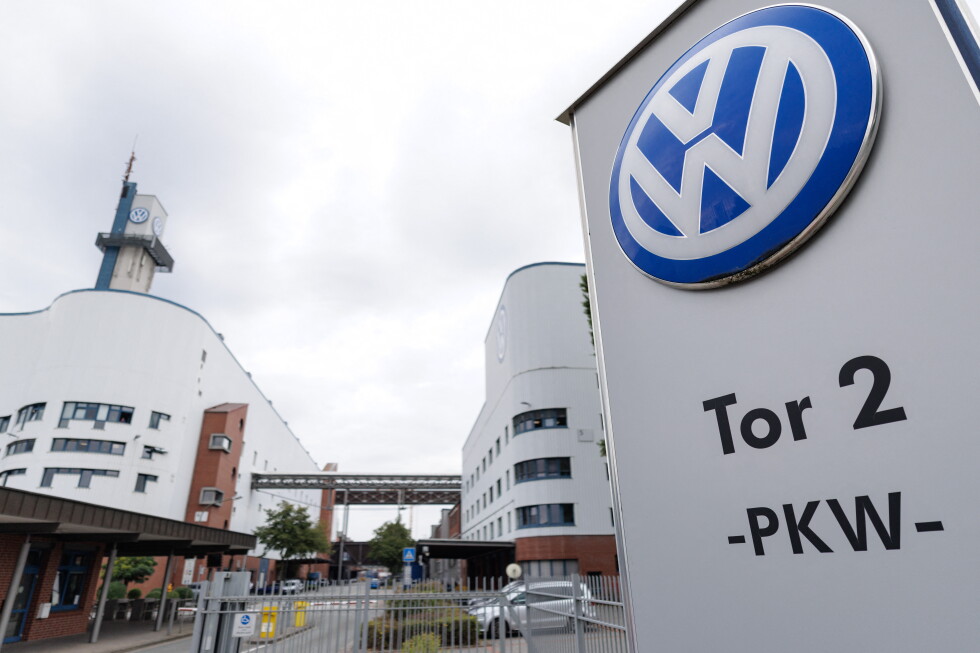
    FRANKFURT, Germany – After weeks of internal debate and pushback from labor and regional stakeholders, Volkswagen’s supervisory board has formally approved a landmark corporate restructuring plan led by Chief Executive Oliver Blume, designed to shore up the automaker’s competitiveness against mounting global market pressures. The wide-ranging cost-cutting initiative includes cutting 50,000 positions across the company, slashing its current model portfolio by roughly half, and ending passenger vehicle production at four major manufacturing sites across Germany. The restructuring addresses growing challenges the German automaker has faced in recent years, including rising low-cost competition from Chinese electric vehicle makers and ongoing trade headwinds spurred by United States import tariffs. Blume’s proposal overcame significant opposition from employee representatives and the regional government of Lower Saxony, which maintains a formal ownership stake in Volkswagen and holds seats on the company’s board. In a post-approval statement, Blume framed the plan as a critical turning point for the century-old automaker. “This is a strong signal for the future of Volkswagen Group,” he said, adding that the changes would “make our iconic brands even more attractive, stronger and competitive.” The company has confirmed it carries 500,000 units of excess production capacity across its European manufacturing network, a surplus that has dragged on profitability for multiple quarters. Under the plan, current vehicle production cannot be guaranteed long-term for the four plants in Emden, Zwickau, Hanover and Neckarsulm, though company leaders have said they will explore alternative industrial uses for the facilities to preserve as many local jobs as possible. The 50,000-position reduction includes both frontline manufacturing roles and senior management positions, part of a broader push to streamline corporate operations beyond just production cuts. By reducing the number of distinct vehicle models offered across its brand portfolio, Volkswagen aims to increase production volume per individual model, which will spread fixed production and development costs across more units and drive down per-vehicle overhead. The plan also targets bureaucratic bloat, calling for flatter leadership hierarchies and more direct, faster decision-making processes to improve the company’s agility in a fast-changing global auto market. The agreement marks a compromise after months of tension between management, labor leaders and regional officials. Daniela Cavallo, Volkswagen’s top employee representative, whose caucus holds half of all seats on the company’s supervisory board under German co-determination rules, acknowledged that the restructuring was unavoidable. In a joint statement released alongside the board’s approval, Cavallo noted the plan was “a necessity for our company to move successfully into the next decade without the associated undertakings coming only on the side of the employees.” Cavallo had publicly and sharply criticized the initial draft of the plan when it was first proposed over the summer, arguing that workers should not bear the full burden of the company’s needed transformation. Olaf Lies, governor of Lower Saxony – Volkswagen’s home region, which holds two board seats and a blocking minority stake in the company – also backed the final compromise. Lies noted that the automaker is facing “enormous” competitive and market challenges, and that the approved plan represents “a shared path toward the necessary transformation” for the company. Volkswagen, which employs roughly 650,000 workers across its global operations, owns a portfolio of 10 major automotive brands including core volume marque Volkswagen, along with luxury nameplates Audi and Porsche, and mainstream brands Skoda and SEAT. The company posted a 30% drop in after-tax net profits for the first half of 2024, a decline driven largely by plummeting sales and market share loss in China, the company’s single largest market, where local electric vehicle makers have undercut Volkswagen on price and technology in recent years.

  • Hope for survivors in Nepal as tunnel rescue efforts continue

    Hope for survivors in Nepal as tunnel rescue efforts continue

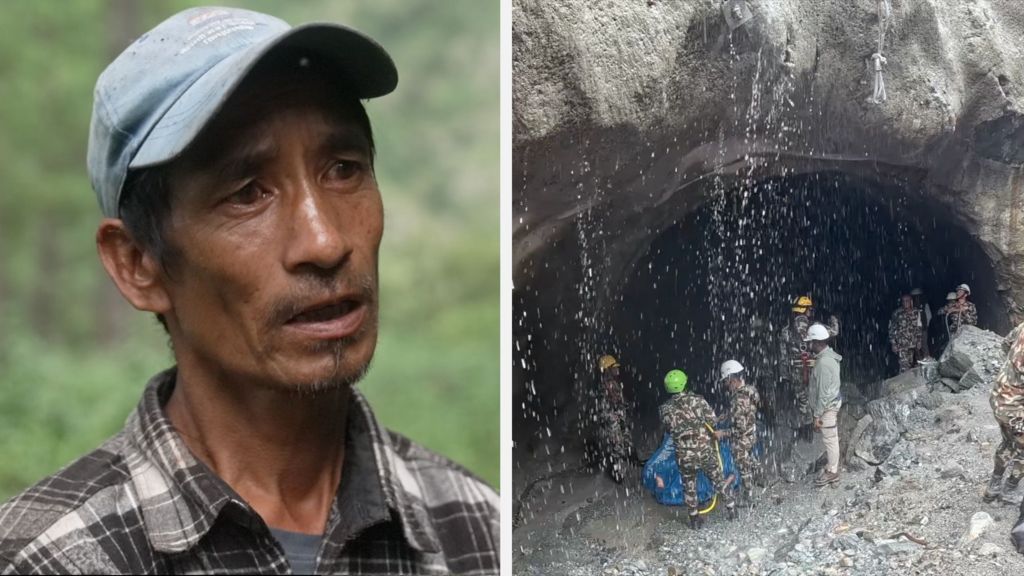
    Days after catastrophic flash floods swept through cross-border regions between Nepal and Tibet, rescue operations are still underway at a collapsed tunnel in Nepal, where search and rescue teams refuse to abandon hope of finding survivors trapped inside.

    The devastating natural disaster, which triggered landslides and washed out critical infrastructure across the Himalayan border area, left dozens of people missing after the floodwaters inundated road construction sites and rural settlements, including the tunnel that was under expansion when the disaster hit. According to initial on-site reports, a number of workers were trapped inside when the tunnel’s entrance collapsed under the force of the surging flood and subsequent debris flow.

    Azadeh Moshiri, a seasoned South Asian correspondent for international media, has been reporting live from the disaster zone, providing on-the-ground updates on the pace and challenges of the rescue mission. Rescuers from Nepal’s national armed police force, alongside specialized mountain search teams, have been working around the clock to clear tons of rock and mud blocking the tunnel’s access point, hampered by unstable terrain and ongoing risks of secondary landslides in the flood-ravaged area.

    Even as the window for finding living survivors narrows in the days after the disaster, first responders and official spokespeople have confirmed that operations will continue as long as there is a possibility of locating people alive. Local authorities have also mobilized additional heavy machinery and emergency supplies to the site to support the sustained search effort, as the international community watches closely for updates on the high-stakes rescue operation.

  • Watch: Defence calls for one juror to be dismissed in Lindsay Clancy case

    Watch: Defence calls for one juror to be dismissed in Lindsay Clancy case

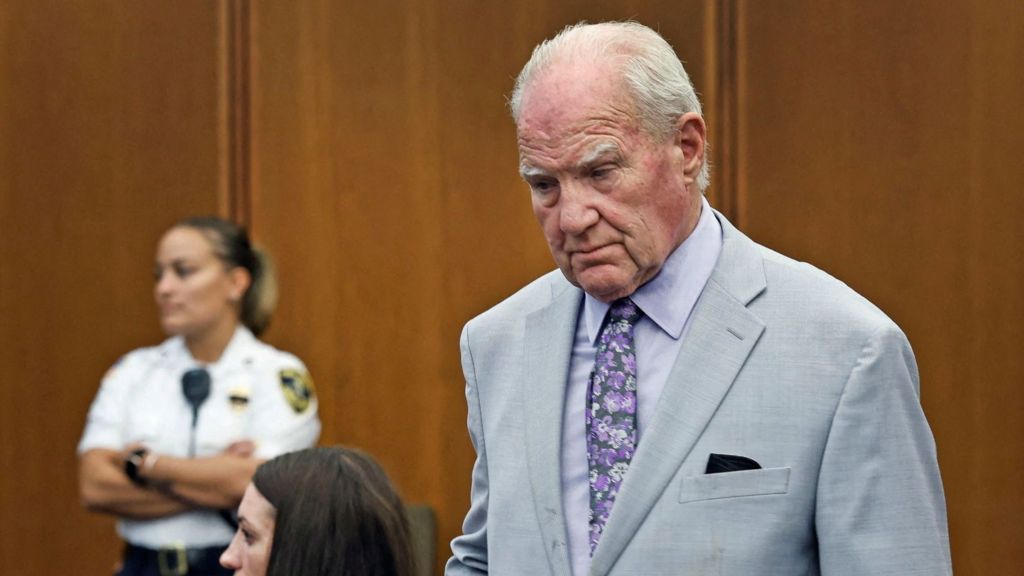
    The high-profile criminal case involving Lindsay Clancy has taken a new procedural turn this week, as legal teams and the court navigate a key request from the defense that could shape the outcome of the trial. Defense attorneys formally moved to have one individual juror removed from the panel that has been weighing the facts of the case, prompting a pause in proceedings to address the motion before the court could move forward. After the request was brought before the presiding judge, the court conducted necessary proceedings to resolve the defense’s application, and ultimately opted to send the full jury back to the jury room to continue their closed-door deliberations. Before the jurors withdrew to resume their discussions, however, the judge issued updated, clarifying instructions on points of relevant law to ensure all panel members have a clear understanding of the legal standards they must apply when reaching a verdict. This procedural step comes as the case has drawn significant public attention, with observers closely following every development in the court proceedings as the jury works toward a final decision. While details of the defense’s specific reasoning for requesting the juror’s dismissal have not been fully expanded on in the latest update, the action marks a notable moment in the trial, highlighting the careful procedural checks that guide criminal jury trials to safeguard the rights of the defendant.