KOROR, Palau — At their annual regional summit held this year in Palau, Pacific island leaders have formally recorded collective concern over China’s recent ballistic missile test that landed in Pacific regional waters, but the body ultimately failed to secure the unanimous backing the bloc traditionally requires for official statements, falling short of issuing a harsher rebuke of Beijing’s actions, leaders announced Thursday.
The effort to rally a unified regional response to the July missile launch had been widely framed as a key benchmark for measuring how intensifying great-power competition in the Pacific has strained cohesion among the bloc’s mostly small, low-lying island states. For years, rising geopolitical jockeying between Washington, Beijing and other major global actors has pulled Pacific nations in competing directions, creating growing rifts within the 18-member Pacific Islands Forum (PIF) over how to engage with major powers.
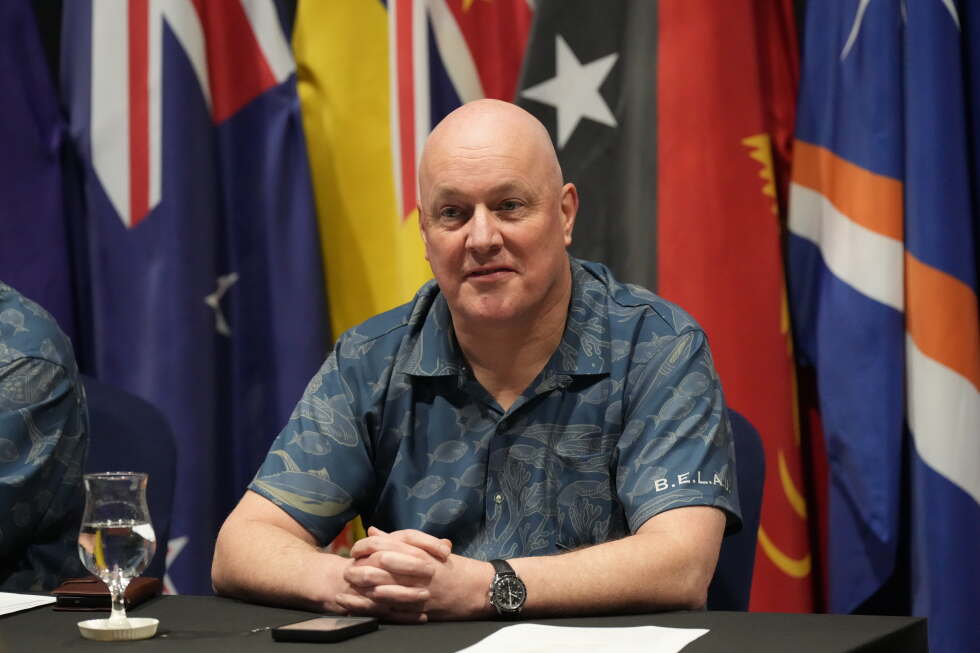
According to New Zealand Prime Minister Christopher Luxon, who attended the closed-door leaders’ retreat where the statement was negotiated, only the Pacific island nation of Nauru publicly dissented from the agreed text of concern. Nauru has steadily deepened its diplomatic and economic ties with Beijing over the past four years, and formally cut official ties with Taiwan earlier in 2024 to align with China’s One China policy. A second China-aligned Pacific nation, Kiribati, was entirely unrepresented at the daylong closed retreat, after Kiribati’s president skipped the full summit and sent his country’s former ambassador to China as a delegate instead.
Luxon sought to downplay the significance of both Nauru’s dissent and Kiribati’s absence from the retreat, arguing that the PIF had still reached a usable, meaningful collective position despite the split. The PIF has long operated on a norm of unanimous consensus for all official communiqué language, a tradition that reflects the bloc’s emphasis on collective regional decision-making, with closed-door retreat negotiations limited to just leaders and a small handful of senior aides.
“I think we’ve got to a very good place,” Luxon told reporters after the retreat concluded. “Yes, Nauru has dissociated itself from that statement, but that shouldn’t be a reason for why we shouldn’t be able to express a PIF position or a consensus position.”
Even as the New Zealand leader framed the outcome as a success, the breakdown in consensus signals that navigating competing great power demands will remain an increasingly complex challenge for the Pacific bloc. Over the past decade, the vast Pacific region has grown dramatically in geopolitical importance, driven by its strategic location for global trade and security, and its abundant untapped natural resources. Major powers have competed fiercely to build diplomatic and economic ties with Pacific island states, offering large-scale infrastructure funding, aid packages and other incentives to win influence, creating a tangled network of competing allegiances that have upended longstanding regional dynamics.
Palau, this year’s summit host, is one of the 12 United Nations member states that still maintain official diplomatic recognition of Taiwan, a status that has put it at odds with Beijing. Some regional analysts had privately suggested that the absence of key leaders from China-aligned states could be tied to Beijing’s diplomatic pressure over Palau’s position on Taiwan, though there is no public evidence to support that claim. Attendees of the summit noted that most absences of top leaders, all of whom sent senior government delegates in their place, were tied to domestic political commitments or personal health issues.
The failure to reach full consensus on the missile statement also highlights deeper, long-simmering divides within the PIF that have emerged as great-power competition has intensified. The joint statement itself was largely a symbolic gesture — most regional nations had already criticized China’s missile launch publicly when it took place in July. But the bloc’s inability to agree on a unified text mirrors a similar breakdown weeks earlier at a PIF foreign minister retreat in Suva, Fiji, where a planned statement on the launch was scrapped after Nauru and Kiribati rejected the language.