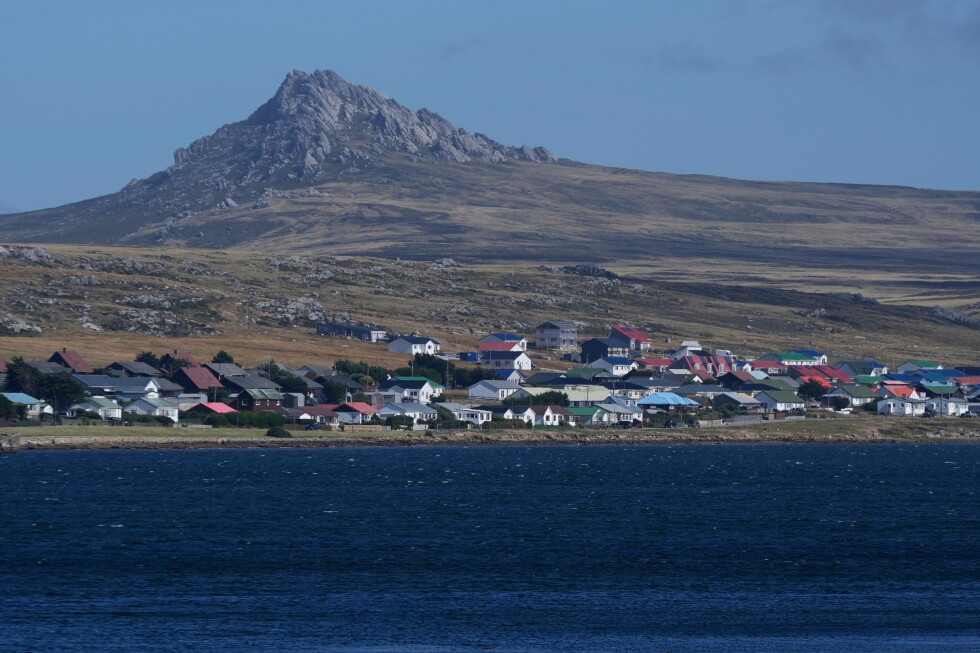
In a bombshell interview with UK broadcaster GB News that aired Thursday, former U.S. President Donald Trump has thrown the decades-long Falkland Islands sovereignty dispute back into the global diplomatic spotlight, leaving the international community uncertain about whether a future U.S. administration would uphold Washington’s long-held neutral stance on the conflict between Britain and Argentina.
The South Atlantic archipelago, located 300 miles off Argentina’s coast, is currently under British de facto control, but Argentina has formally claimed sovereignty over the territory it calls the Malvinas for nearly two centuries. The dispute erupted into open armed conflict in 1982, when Argentina’s collapsing military dictatorship ordered an invasion of the islands. Then-British Prime Minister Margaret Thatcher deployed a massive naval task force across the Atlantic to retake the territory, resulting in a 10-week war that claimed nearly 900 lives total: 649 Argentine soldiers, 255 British service members, and three civilian islanders.
When asked directly whether the United States would intervene to support Britain in the event of a new conflict over the islands, Trump declined to give a clear, affirming answer. He referenced watching the 1982 conflict closely, noting “You comported yourselves very well. You took it back pretty strongly,” before shifting sharply to criticism of Britain’s refusal to contribute military support to a U.S.-led bombing campaign against Iran. Recalling a conversation with former British Prime Minister Keir Starmer, Trump claimed Starmer told him Britain had no available ships to deploy to the campaign, calling the situation “pretty sad.”
This is not the first time hints of a policy shift have emerged from Trump-aligned circles. An internal Pentagon email leaked in April already raised the possibility of Washington reconsidering its long-standing Falklands position as leverage to punish NATO allies that declined to join a U.S. war against Iran.
For more than half a century, every successive U.S. administration has maintained formal neutrality on the competing sovereignty claims, while formally recognizing Britain’s de facto rule over the territory. Any shift away from this established posture would represent a major diplomatic slap in the face to London, and dramatically escalate already strained trans-Atlantic tensions.
Trump first fueled speculation of a policy shift earlier this week, when he told reporters his administration was reviewing the U.S. stance on the dispute, saying “I always review every position. That’s just one of many.”
Trump’s comments landed as Argentine President Javier Milei, a libertarian conservative and ideological ally of Trump, prepared to deliver a nationally televised address on what his administration calls new diplomatic progress on the Falklands issue. Milei, who has faced domestic criticism in Argentina for failing to prioritize the sovereignty claim early in his term, leapt to praise Trump’s remarks, framing them as a landmark breakthrough for Argentina’s position. He called the development “something major happened regarding the most sacred cause we Argentines have.”
For Argentina, the Falklands/Malvinas claim holds extraordinary symbolic and political weight: Buenos Aires argues it inherited the territory from Spanish colonial rule, and that Britain seized the islands through illegal occupation in 1833. The cause remains one of the only unifying political issues in Argentina’s deeply divided domestic landscape, with nationalist fervor flaring most recently during the 2022 FIFA World Cup, when the Argentine men’s national team displayed a banner reading “Las Malvinas son Argentinas” after defeating England in a semifinal match.
British officials have pushed back firmly on any discussion of shifting sovereignty, reaffirming the country’s unwavering long-standing position. A spokesperson for the British government emphasized that a 2013 referendum held among the Falkland Islands’ roughly 4,000 residents delivered an overwhelming majority vote in favor of remaining a British overseas territory. “Sovereignty rests with the U.K., and the islanders’ right to self-determination is paramount,” the spokesperson stated. “The U.K.’s position is clear. The islanders have repeatedly expressed their wish to remain a British overseas territory.”
Diplomatic analysts warn that Trump’s remarks have already upended decades of quiet consensus on the dispute, creating new uncertainty for regional stability and trans-Atlantic relations as the United States approaches a presidential election that could see Trump return to office.