博客

  • E-commerce giant Alibaba sues US government over defence blacklist

    E-commerce giant Alibaba sues US government over defence blacklist

    One of the world’s largest e-commerce and technology giants, Alibaba Group, has initiated a high-profile legal battle against the U.S. Department of Defense, moving to overturn its placement on a Pentagon blacklist that bars the firm from any U.S. government contracting work over unsubstantiated claims of military ties.

    The DoD’s controversial designation rests on a single argument: because Alibaba adheres to China’s domestic technology regulatory requirements, it qualifies as an extension of the Chinese military, classifying the company as a contributor to “military-civil fusion” within China’s defense industrial base. The blacklisting came as part of a recent expansion of the DoD’s restricted entity list, which now also adds other major Chinese technology and manufacturing firms including Baidu, electric vehicle makers BYD and Nio, with restrictions set to take full effect on June 30.

    In its formal complaint filed in the U.S. District Court for the Northern District of California, Alibaba forcefully rejects the Pentagon’s findings, arguing the designation has no foundation in either fact or federal law. The company emphasizes that none of its independent board members hold any affiliation with the Chinese military, pointing out that every multinational corporation operating in China—including major U.S.-headquartered firms—are required to comply with the same set of local regulatory rules. Alibaba also clarifies that its core business lines, spanning consumer e-commerce and cloud computing services, have no connection to weapons development or intelligence gathering activities.

    While the blacklist does not impose immediate financial sanctions or asset freezes, the upcoming June 30 enforcement carries severe operational consequences for Alibaba. Starting next week, not only is the Pentagon barred directly from entering into any contracts with blacklisted firms, but the restriction also extends to any U.S. government contractor that shares a lobbying team or legal representation with a designated entity. In its complaint, Alibaba argues that this broad rule creates a de facto economic and political blockade: the company’s long-standing American advisors are being forced to cut ties to protect their own profitable defense contracts, stripping Alibaba of its legal and advocacy voice in Washington D.C. at the exact moment it requires representation to challenge the designation.

    Alibaba also outlines that it attempted to resolve the issue through administrative channels before turning to the courts. The company says it previously requested a meeting with DoD officials to address the military affiliation concerns, even submitting detailed evidence of its significant economic contributions to the U.S. economy. Despite these submissions, Alibaba claims the DoD never raised specific concerns with the company, nor did it request additional supporting information. Instead, the agency designated Alibaba for the blacklist “without notice or a fair hearing,” according to the complaint.

    When approached by the BBC for comment on the ongoing legal action, the Department of Defense declined to make any public statement, citing standard policy of not commenting on active litigation. Alibaba also has not yet issued a formal public response to the BBC’s request for comment on the suit.

  • Kunal Shah: The Indian entrepreneur taking charge of WhatsApp

    Kunal Shah: The Indian entrepreneur taking charge of WhatsApp

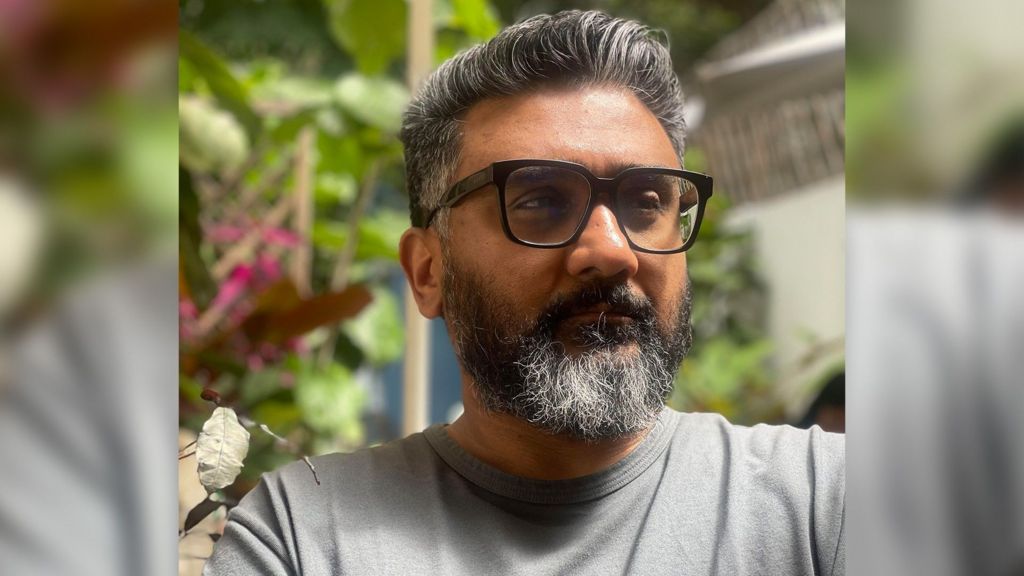
    For years, Kunal Shah, the founder of Indian fintech unicorn Cred, was a well-respected figure mostly confined to India’s tight-knit startup and investment communities. Beyond building his own companies, he built a broad following through public appearances: his podcast conversations dive into nuanced topics from behavioral economics and incentive structures to wealth creation, while his social media commentary spans everything from artificial intelligence development to philosophical thought. Now, a surprise appointment from Meta has catapulted the Indian entrepreneur straight onto the global tech stage, after Meta named him the new head of its 3-billion-user messaging giant WhatsApp.

    The leadership move comes on the heels of Meta’s $900 million investment in Cred, a deal that values the Indian fintech at approximately $4.5 billion — a modest step up from its previous funding round valuation, though still below the peak valuation it hit in 2022, per Reuters reporting. The appointment also aligns with WhatsApp’s ongoing strategic push to expand far beyond its core consumer messaging function, into new high-growth areas including digital payments, small and medium business tools, and AI-powered customer products.

    What makes this appointment notable for the global tech industry is its break from recent trends. While a growing number of Indian-origin executives have risen to lead top global technology firms, Shah is rare in that he built his entire career within India’s domestic startup ecosystem before taking the reins of a massive global consumer platform of WhatsApp’s scale.

    Shah’s path to leading WhatsApp started long before Meta reached out. Born and raised in Mumbai, he took an unconventional route to tech entrepreneurship, unlike many of India’s most high-profile tech founders who graduated from elite engineering and business schools. Instead, Shah studied philosophy in college — a choice he once shared with Indian entrepreneur Sanjeev Bikhchandani was driven by practicality: the discipline’s early morning class schedule let him work full-time to support his family after their business hit financial trouble. He worked a string of odd jobs while completing his degree, experiences that shaped his later approach to building businesses.

    His first major industry breakthrough came in 2010, when he co-founded FreeCharge, a digital mobile recharge platform, at the very moment India’s consumer internet economy was starting to take off. The startup grew rapidly, and just five years later it was acquired by e-commerce firm Snapdeal in one of the largest Indian startup acquisitions of that era.

    After stepping away from FreeCharge, Shah spent half a decade investing in early-stage Indian tech startups and advising founding teams, including stints as an advisor to legendary startup accelerator Y Combinator and leading venture capital firm Sequoia Capital. Through these roles, he became a deeply influential figure in the rapid expansion of India’s startup ecosystem, mentoring a whole generation of emerging tech founders.

    In 2018, Shah launched his second major venture, Cred, built around a deceptively simple core value proposition: reward consumers for paying their credit card bills on time. Shah has repeatedly framed the company’s origins around his longstanding interest in trust and incentive structures, and over the years Cred expanded far beyond its core use case to add lending, insurance, e-commerce, and wealth management products. The brand became a household name across India, in large part thanks to viral ad campaigns that blended humor, nostalgia, and surprise celebrity appearances that resonated with young, digitally active consumers.

    But Cred’s rapid growth has not come without controversy. For years, the fintech has drawn praise for its strong brand traction and user growth, while also facing persistent scrutiny over its path to profitability. Critics have argued that the company’s high valuations and investor enthusiasm outpace its actual financial performance, while supporters counter that many of the world’s most successful technology companies spent years operating at a loss to build scale and market presence. The debate reignited last year after a social media post questioned why unprofitable founders still receive widespread acclaim; Shah responded by acknowledging that profitable businesses deserve full recognition, but argued that entrepreneurship itself should be celebrated for the jobs it creates and the inherent risk founders take on.

    To his supporters, Shah is the face of a generation of entrepreneurs that built India’s modern internet economy from the ground up, starting with early digital payments and maturing into world-class fintech. Shweta Rajpal Kohli, CEO of the Startup Policy Forum, who has collaborated with Shah on policy issues for years, described him to the BBC as having “a rare ability to bring a product lens to regulatory complexity, and a regulatory lens to product design,” adding, “His creativity and problem-solving instinct have been consistently fascinating.”

    Industry observers note that Shah’s appointment is a natural fit for WhatsApp’s current strategic priorities: the platform is prioritizing expansion into payments, commerce, and business services — exactly the areas where Shah has spent 15 years building products, investing, and advising companies. India, which is already WhatsApp’s largest single market by user count, has been the center of Shah’s entire career, and he will make history as the first Indian to lead the global platform.

    Yet Nikhil Pahwa, founder and editor of Indian tech publication MediaNama, argues that framing the appointment as purely a fintech play misses the bigger picture. “There’s a tendency to assume Shah was chosen for this role because of his background in fintech and payments. I think that’s too narrow a view,” Pahwa told the BBC. “He’s someone who has spent years thinking about products, consumer behaviour, incentives and growth. And in his businesses, payments have been a mechanism for consumer acquisition, so that products can be marketed to them. This looks less like a payments appointment and more like Meta choosing a founder with experience in scaling the business side of a consumer business.”

    Meta has not shared full details on its decision to pick Shah for the role, but in the official announcement of the appointment, Meta CEO Mark Zuckerberg highlighted Shah’s “builder mentality” and “global perspective” as key factors in the choice. Those qualities will face a major test as Shah takes the helm: WhatsApp is aiming to deepen its footprint in payments, business tools, and AI products while serving more than three billion global users across every income and demographic group. The challenge is far different from anything Shah has faced before: at Cred, he built products for a niche audience of financially active consumers, with a secondary following among founders, investors, and tech enthusiasts. At WhatsApp, he will now lead a product used by billions of people across every walk of life.

  • Temperatures hit record levels in western Europe

    Temperatures hit record levels in western Europe

    An extreme heatwave is currently sweeping across Western Europe, bringing temperatures that have surged to all-time record levels across multiple nations. Among the regions affected, three major Southern European economies—France, Spain, and Italy—have borne the brunt of the dangerous high-temperature event so far, according to early meteorological assessments. Climatologists link this intense heat event to broader patterns of global climate change, which have increased the frequency and severity of extreme weather events across the European continent in recent decades. The record-breaking heat has already triggered multiple public health warnings, with local authorities urging vulnerable populations including the elderly, children, and people with pre-existing medical conditions to stay hydrated and remain indoors during the hottest hours of the day. In some affected areas, infrastructure including road networks and power grids have begun to show strain as demand for electricity for cooling skyrockets. Tourism operators across the Mediterranean coastlines of the three hardest-hit nations have also had to adjust operations, implementing new safety protocols to protect visitors from heat-related illness. While national meteorological services are monitoring the situation closely, forecasts indicate the extreme heat could persist for several more days before a gradual cool-down sets in.

  • UK failed to stop el-Fasher massacre because it feared the UAE, MPs told

    UK failed to stop el-Fasher massacre because it feared the UAE, MPs told

    A leading human rights researcher has delivered explosive testimony to a British parliamentary committee, alleging that the United Kingdom failed to prevent a documented genocide that killed an estimated 60,000 civilians in Sudan’s el-Fasher after bowing to behind-the-scenes political pressure from the United Arab Emirates.

    Nathaniel Raymond, founding director of the Humanitarian Research Lab (HRL) at the Yale School of Public Health, told the House of Commons International Development Committee on Tuesday that the UK – as the official penholder for Sudan affairs at the United Nations, tasked with coordinating the international community’s response to the crisis – was uniquely positioned to avert what he calls one of the worst mass casualty events of the 21st century. Instead, he says, more than two dozen private warnings and evidence-based recommendations were dismissed, sidelined or ignored to protect London’s strategic economic and diplomatic ties with Abu Dhabi.

    The crisis in el-Fasher began unfolding long before the October 2025 massacre. In the summer of 2023, the UAE-backed Rapid Support Forces (RSF) carried out a genocide that killed tens of thousands of Masalit civilians in el-Geneina, another major Darfur city – a atrocity the U.S. government and multiple leading human rights organizations have officially classified as genocide. Within weeks, researchers and analysts confirmed that el-Fasher, home to long-standing displacement camps for survivors of the 2003–2005 Darfur genocide, was the RSF’s next primary target.

    Raymond first briefed the UK’s Foreign, Commonwealth and Development Office (FCDO) on the looming threat in July 2023, where he called for urgent UN peacekeeping intervention to stop the impending violence. By April 2024, HRL monitoring confirmed the RSF had begun its full siege of el-Fasher, a city with a population roughly three-quarters the size of the Gaza Strip. HRL leadership concluded that engaging the British government, given its UN mandate, represented the best possible chance to prevent catastrophe.

    In mid-May 2024, as the UK drafted UN Security Council Resolution 2736 – a text calling for an unconditional ceasefire in Sudan – Raymond met with FCDO officials in London to present newly compiled evidence: an analysis of public phone records showing regular travel between RSF-held territory in Sudan, UAE locations, Somalia’s Bosaso port, and Ethiopia’s Addis Ababa. Subsequent reporting has confirmed that Bosaso’s military base and Ethiopian transit routes serve as key logistics hubs for the UAE to supply the RSF with weapons, military equipment and mercenary fighters. The phone travel data traced directly to Abdel-Rahim Dagalo, brother and second-in-command of RSF leader Mohamed Hamdan Dagalo, widely known as Hemedti.

    During those meetings, Raymond told MPs, FCDO officials admitted they were facing intense private diplomatic pressure from the UAE that limited London’s ability to act on the crisis. He said British officials asked his independent American research lab – not UK intelligence agencies like GCHQ or MI6 – to publicly release the sensitive phone data to counter the UAE’s covert support for the RSF. Raymond declined the request, noting that public release would expose the tracking system, allow the RSF and UAE to close the security loophole, and eliminate the lab’s ability to predict future attacks. The tracking mechanism was eventually exposed months later when Human Rights Watch published reporting on Colombian mercenaries being trained in the UAE for RSF service.

    In follow-up meetings with NGO representatives, FCDO officials made clear that Resolution 2736 was the maximum action the UK was willing to take, and that the text would not include any consequences for foreign state backers of Sudan’s warring parties – including the UAE. Officials also told humanitarians they would only issue one public warning that el-Fasher was on the brink of collapse, for fear of being accused of “crying wolf” if an attack was delayed.

    After Resolution 2736 was adopted on June 13, 2024, the RSF paused its attacks on el-Fasher for a brief period. Raymond told the committee that HRL obtained intelligence from a source with direct access to RSF internal operations: the UAE had ordered Hemedti to halt the assault so Abu Dhabi could assess whether the UN resolution would trigger any meaningful political consequences for its support of the RSF. HRL shared this intelligence with the FCDO and urged the UK to prepare punitive measures if the RSF resumed attacks. According to Raymond, the FCDO made explicitly clear that no unilateral or multilateral consequences would be imposed for violating the resolution. Once the UAE confirmed there would be no repercussions, the siege and attacks resumed.

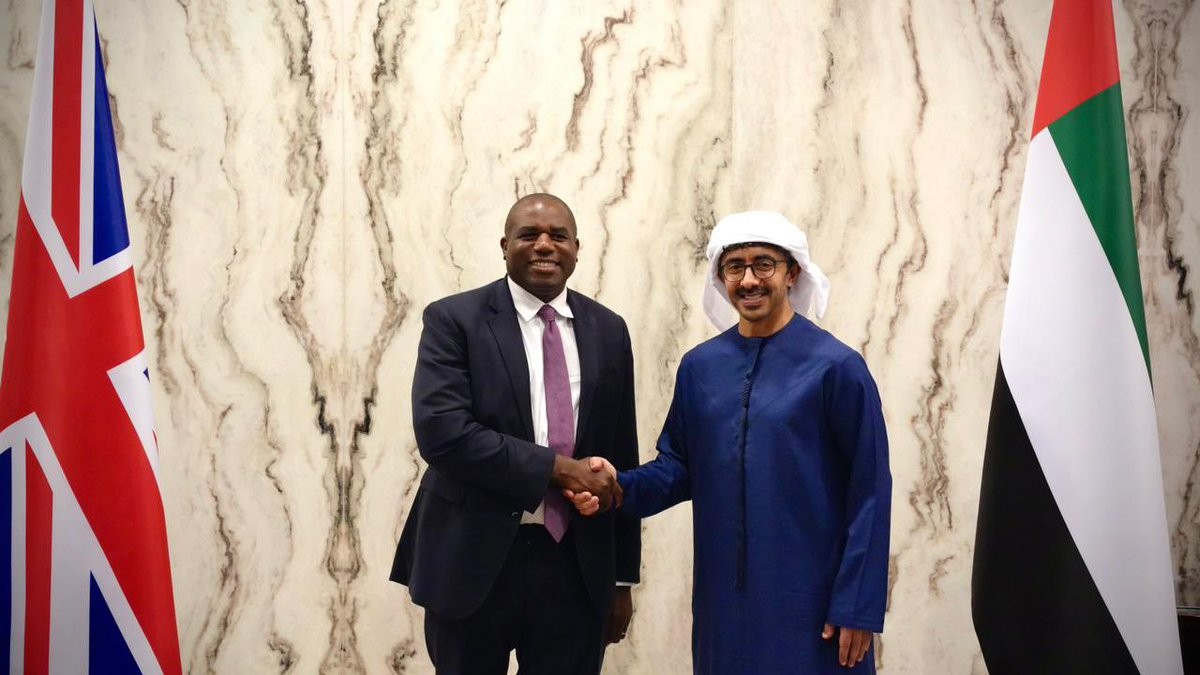
    Later that month, Raymond confirmed, the UAE blocked him from speaking about RSF bombing damage in an official UN chamber. In January 2025, he was contacted by staff for then-UK Foreign Secretary David Lammy, who was visiting Sudanese refugee camps in Chad. Lammy’s team only asked Raymond for a U.S. National Security Council phone number, but he used the call to warn them that the large Zamzam internally displaced persons camp outside el-Fasher – home to more than 500,000 people already facing famine conditions, most from ethnic groups targeted in the 2003 Darfur genocide – was being bombarded with advanced UAE-supplied weapons, and that the attack was a precursor to a full RSF seizure of the camp.

    In April 2025, as Lammy hosted a high-profile multinational donor conference for Sudan in London, the RSF stormed and captured Zamzam. Raymond described graphic atrocities: humanitarian and healthcare workers were executed on camera after begging for mercy, women and girls were kidnapped as sexual slaves and systematically tortured, and large sections of the camp were burned to the ground. Despite hosting the donor conference as the massacre unfolded, the FCDO issued no public statement on the fall of Zamzam, and Raymond says HRL is aware of no official UK comment on the atrocity.

    By September 2025, HRL satellite imagery analysis confirmed the RSF had built 31 kilometers of earthen berms around el-Fasher, encircling the city to create what Raymond calls a “kill box” to trap and slaughter the civilian population. That same month, a senior FCDO official privately expressed to Raymond that the Starmer government had no intention of taking meaningful action as the city neared collapse. One month later, the RSF launched its final assault and seized full control of el-Fasher. Verified eyewitness accounts, video footage, photos and satellite imagery confirm widespread massacres of unarmed civilians, with survivors reporting summary executions, systematic sexual violence and routine torture at the hands of RSF fighters. Hours before el-Fasher fell, ceasefire talks in Washington collapsed after the UAE refused to address the 18-month crippling siege of the city.

    HRL’s analysis estimates that at least 60,000 civilians were killed in the final assault and its aftermath. Raymond told the committee that after the massacre, a senior FCDO Atrocity Prevention official contacted him via encrypted chat to question whether the 60,000 death toll was inflated, then followed up with a phone call. During that conversation, Raymond said, he concluded the death estimate represented a political problem for the FCDO, given its ties to the UAE. The official requested a formal briefing for FCDO and UN officials on the casualty data, but the FCDO never scheduled the briefing, and it never took place.

    Raymond emphasized to MPs that the el-Fasher massacre was “arguably the most accurately predicted mass atrocity in human history.” The real-time intelligence provided by HRL and other independent researchers was detailed, timely, granular and actionable enough to allow the UK to develop robust policy interventions that could have prevented the slaughter entirely. He pointed to targeted sanctions against UAE officials responsible for arming the RSF as one minimal intervention that could have disrupted the covert weapons pipeline flowing to the paramilitary group.

    The researcher warned that the same pattern of inaction is already repeating itself in el-Obeid, a city in southern Sudan’s Kordofan region that is currently under siege and attack by the RSF. He also called for grassroots accountability for the UAE’s role in the atrocities, urging a public consumer boycott of UAE-linked businesses – including stopping purchases at Dubai and Abu Dhabi airport duty free shops, and highlighting public pressure on Abu Dhabi-owned Manchester City football club as a potential catalyst for change.

  • Trains halted across Germany because of communication system problem

    Trains halted across Germany because of communication system problem

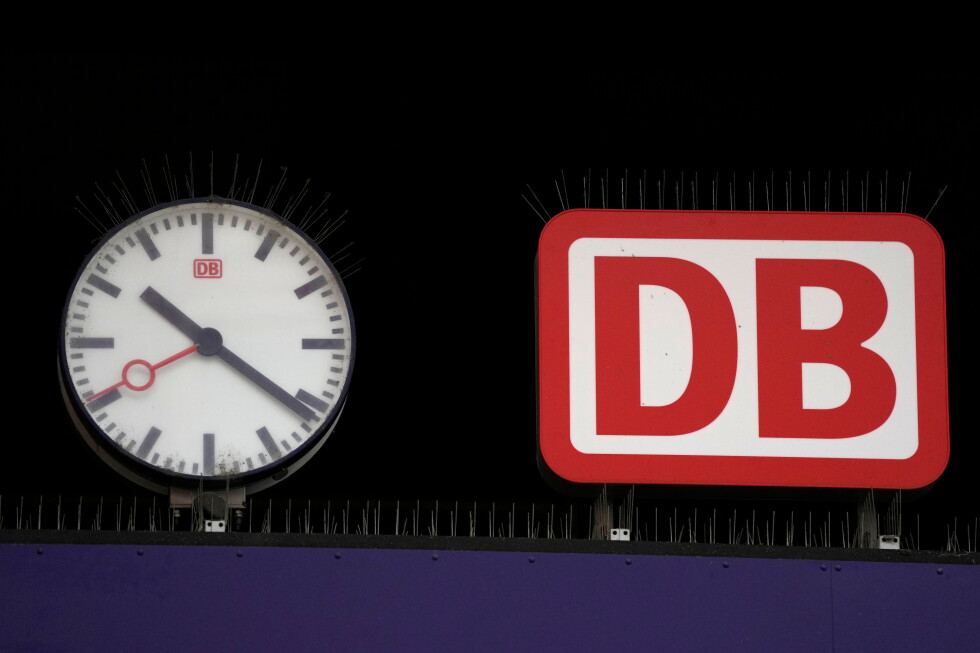
    BERLIN – A widespread technical failure of Germany’s critical railway communications infrastructure brought the entire national rail network to a sudden standstill on Tuesday evening, leaving thousands of travelers trapped and stranded at stations and on tracks across the country.

    Deutsche Bahn, Germany’s primary state-owned railway operator, confirmed that the complete shutdown of services was triggered by a systemic failure of the GSM-R digital communications network, the dedicated infrastructure that supports all internal operational communications across the country’s rail system. The disruption first came to light around 10:30 p.m. local time, when the operator initiated an immediate halt to all moving trains as a safety precaution.

    By midnight, one and a half hours after the initial outage was announced, Deutsche Bahn released an update confirming that technical teams had successfully identified the root cause of the failure. However, the company declined to share specific details about what triggered the problem, noting only that technicians were “working intensively on a solution” to restore full network functionality. The operator also did not release official figures on the total number of affected trains or stranded passengers, leaving the full scale of the disruption unconfirmed in the immediate aftermath of the outage.

    In comments to German tabloid *Bild*, Deutsche Bahn Chief Executive Evelyn Palla outlined the operator’s first priority: “we are now trying to get the trains into stations so that travelers can disembark.” To mitigate the impact on affected passengers, the company has announced it will cover the cost of hotel accommodations and taxi fares for those unable to complete their journeys. Where feasible, stationary trains parked at stations are also being kept open to give stranded passengers a warm, sheltered space to wait while repairs are completed. Deutsche Bahn has issued a formal public apology for the major inconvenience caused by the outage.

    GSM-R, short for Global System for Mobile Communications–Railway, is a purpose-built mobile communications standard that delivers the critical voice and data services required for safe rail operations, including seamless communication between train drivers and network control centers. The standard was rolled out across the European Union starting in 2000 as a unified interoperability standard for cross-continental rail operations, and it now forms the backbone of communications for most major European national rail networks.

    While total shutdowns of Germany’s entire rail network are extremely rare, this outage marks an unusual deviation from past disruptions, which have almost always been triggered by severe weather events such as major storms, rather than systemic technical failures of core infrastructure.

  • China-US youth pickleball tournament builds cross-cultural ties

    China-US youth pickleball tournament builds cross-cultural ties

    On a crisp Tuesday in Beijing, young athletes from China and the United States traded serves, laughed over quick points, and built unexpected friendships at the 2026 China-US Youth Pickleball Friendship Tournament, hosted by the University of International Business and Economics. The one-day event brought together 42 American high school students from an Iowa study tour delegation alongside Chinese student players from Shijiazhuang Foreign Language School, turning a casual recreational sport into a powerful platform for people-to-people diplomacy between the two nations.

    Organizers of the tournament framed the gathering as more than just a athletic competition: they designed the event to position pickleball as an accessible, informal bridge for cross-cultural exchange, nurturing the next generation of informal ambassadors for China-US relations and laying small, solid groundwork for the long-term development of bilateral ties. Unlike formal diplomatic summits, the mixed doubles format paired Chinese and American players as teammates, forcing collaboration over competition and creating natural opportunities for connection beyond language barriers.

    For 18-year-old Zuo Yining, a graduating senior from Shijiazhuang Foreign Language School, that collaboration worked far better than any formal exchange activity he had joined before. Teamed up with a teenage American partner during his matches, he recalled seamless on-court coordination that required barely any verbal communication. “We barely needed verbal communication amid intense rallies. A simple eye contact or gesture was enough for us to figure out when to run and catch the ball together,” Zuo explained.

    The experience, he said, has already forged lasting personal bonds that extend far beyond the tournament court. “A single match, a casual meal or small talk can easily bring teenagers close. The US students I met are warm, sincere and outgoing,” he noted. As someone who regularly hosts foreign visitors at his school, Zuo has long kept in touch with international friends he met through past exchange programs via social media, and one of his former American guests is set to return to China this August — Zuo has already extended an invitation for him to stay at his family home. “We have cultural differences, but every teenager here, regardless of nationality, has a warm and open heart,” he added.

    Laura Michelle Kelly, the high school teacher leading the Iowa student delegation, shared that every one of the 42 American teenagers on the trip is visiting China for the first time. Following the tournament, the group will spend seven days traveling across both Beijing and Shanghai, exploring the country’s cultural and urban landscapes for themselves. Kelly said she and her students have already been deeply impressed by the warmth of their reception across the capital. “Everyone here has been incredibly welcoming, making this journey fantastic,” she said.

    She also echoed organizers’ praise for pickleball as the perfect activity to bring young people from different countries together. The sport has exploded in popularity across American schools and community parks over the past five years, making it a common pastime for teenagers on both sides, and its low barrier to entry makes it an ideal icebreaker. “Pickleball creates a relaxed atmosphere that combines healthy competition and teamwork. It is a lighthearted way for young people from different countries to get to know one another,” Kelly explained.

    Past exchange groups from Iowa that have traveled to China have returned home with glowing reports of their trips, Kelly said, and those positive accounts have sparked growing curiosity about China among more Iowa teenagers, leading to rising demand for similar exchange opportunities. She also called for continued reciprocal exchange, extending an open invitation for Chinese student groups to visit Iowa in the future to build their own connections.

    For 15-year-old Iowa student Carrigan Grace Rasmussen, the entire trip has already exceeded her expectations. An avid pickleball player herself, she said the sport is ubiquitous in her home community, where she and her friends gather regularly to play between classes and on weekends. Like Zuo, she emphasized that shared participation in sport cuts through cultural and political differences to create genuine closeness. “Competitions help us build close bonds. When either side makes mistakes, we can cheer each other up and offer support,” she said, summing up the event’s core spirit: that common ground is easier to find than many think, when you start with a ball and a shared love of play.

  • Lebanon-Israel talks overshadowed by new US-Iran diplomatic track

    Lebanon-Israel talks overshadowed by new US-Iran diplomatic track

    On Tuesday, the fifth round of direct negotiations between Lebanon and Israel kicked off in the U.S. capital, marking a new chapter in efforts to end ongoing hostilities even as a parallel diplomatic track between the United States and Iran threatens to complicate and overshadow the bilateral process. This three-day round of talks follows four earlier negotiating cycles that failed to deliver a lasting ceasefire or close the deep ideological and territorial divides separating the two neighboring states.

    As talks get underway, Lebanese negotiators are arriving in Washington with a clear set of core priorities: pushing for a binding timetable for a full Israeli withdrawal from occupied southern Lebanon, securing the safe return of hundreds of thousands of internally displaced Lebanese civilians, negotiating the release of Lebanese prisoners held by Israel, and laying the groundwork for large-scale post-conflict reconstruction. For its part, Israel has repeatedly linked any territorial withdrawal to the full disarmament of Lebanese armed group Hezbollah, and insists that Israeli forces maintain control over a wide security buffer zone inside southern Lebanon until Israeli officials are satisfied that the Lebanese army can fully prevent Hezbollah from reestablishing a military presence in the area.

    Unlike the four prior rounds held earlier this year, this latest negotiating session unfolds against a drastically shifted regional diplomatic landscape. A recent memorandum of understanding between the U.S. and Iran has folded the Lebanese-Israeli conflict into a broader regional ceasefire framework, and follow-up discussions held near Switzerland’s Lake Lucerne produced a blueprint for a new multilateral mechanism designed to de-escalate tensions between Israel and Hezbollah. This development means the bilateral Washington talks are no longer the sole diplomatic forum addressing the Lebanon conflict, creating new questions about who ultimately holds decision-making power over Lebanon’s negotiating path – a particularly sensitive issue for the Lebanese presidency, which has framed the direct bilateral talks as a critical step to restore state control over issues of war, peace and national sovereignty.

    Lebanese President Joseph Aoun has repeatedly stressed that no foreign power has the authority to negotiate on Lebanon’s behalf. “We welcome any assistance to end the war, but we are a sovereign country and no one negotiates on our behalf,” Aoun stated ahead of the fifth round of talks. Lebanese officials have described the decision to open direct negotiations with Israel as a historic step that allows the Lebanese state to reclaim full responsibility for the country’s foreign and security policy, in line with Article 52 of the Lebanese constitution, which grants the president authority to negotiate international agreements in coordination with the prime minister, with final approval required from the cabinet and, depending on the terms of any deal, parliament. Still, well-placed sources confirm that the launch of direct talks came in large part from intense U.S. diplomatic pressure on Beirut, and that talks have proceeded even as Israel has continued its airstrikes and ground operations across southern Lebanon.

    After four rounds of talks since April failed to secure a durable end to fighting, the longest pause in Israeli airstrikes came not from an agreement between Lebanon and Israel, but after the U.S.-Iran memorandum was signed – a reality that has strengthened Hezbollah’s argument that Iran’s diplomatic track with Washington is far more effective at securing an Israeli ceasefire than the Lebanese government’s bilateral negotiations.

    The fourth round of Washington talks, held June 2 and 3, concluded with a joint statement from the U.S., Lebanon and Israel that outlined a framework requiring a full halt to Hezbollah attacks and the withdrawal of Hezbollah operatives from the area south of the Litani River as preconditions for a ceasefire. The statement also announced plans to establish “pilot zones” where the Lebanese Armed Forces would exercise full exclusive control, with all non-state armed groups excluded from the areas. The framework also emphasized that the future of Lebanese-Israeli relations must be determined by the two national governments, and rejected any attempts by external actors to hold Lebanon’s future hostage.

    This joint statement drew sharp criticism from Hezbollah, which argued it imposed one-sided obligations on the group while offering no binding Israeli commitment to withdraw from occupied Lebanese territory. Hezbollah officials have labeled the direct bilateral talks a grave mistake that grants Israel long-sought political gains without requiring it to end its occupation or halt military operations. Parliament Speaker Nabih Berri, who led Lebanon’s indirect negotiating channels with Israel in prior talks, has also argued that Beirut should rely on the existing ceasefire monitoring mechanism established after the 2024 hostilities agreement, and has publicly rejected limited pilot zones, calling instead for a full comprehensive ceasefire, full Israeli withdrawal, and parallel implementation of commitments by both sides.

    A senior source close to the Lebanese delegation revealed that the pilot zone proposal nearly caused the fourth round of talks to collapse entirely. Initially, Israel rejected the proposal, prompting Lebanese negotiators to threaten to walk away from the session. U.S. officials stepped in to broker a compromise, persuading Israel to accept the principle of pilot zones, but the two sides remain deeply divided over where the zones will be located and what specific obligations will apply to each party.

    Lebanese negotiators proposed the southern Lebanese city of Bint Jbeil as the first pilot zone, a city that falls within what Israel calls the “Yellow Line” – a self-declared military boundary Israel has marked inside Lebanese territory to demarcate areas under its operational control. By nominating Bint Jbeil, Beirut aimed to push back against the risk that Israel’s current controlled area would gradually become a permanent buffer zone. Under Lebanon’s proposal, Israel would withdraw from Bint Jbeil, the Lebanese army would deploy to the city, Hezbollah would dismantle its military infrastructure, and displaced residents would return to their homes. But Israel rejected Bint Jbeil as the initial test site. “The Israelis appeared as though they had been dragged into the negotiating room by the Americans. You could see it on their faces. They did not want to be there,” the source close to the negotiations noted.

    Instead of accepting Lebanon’s proposal, Israel has demanded that it retain full control over the entire Yellow Line, while retaining the right to monitor Lebanese army operations targeting Hezbollah both south and north of the Litani River. Israel has stated that it will only consider further territorial withdrawals after it assesses the Lebanese army’s performance and confirms that the army has fully dismantled Hezbollah’s military positions. For Lebanon, this framework risks cementing Israel’s current positions as a semi-permanent security zone, and makes withdrawal conditional on an open-ended, unregulated Israeli assessment of the Lebanese army’s actions.

    In this fifth round of talks, the Lebanese delegation plans to revisit the pilot zone proposal and push for a broader geographic scope, moving beyond the small individual villages and narrow sectors discussed in prior rounds. A presidential source close to the talks says a new broader framework covering entire districts has been proposed, which would include multiple towns and villages on both sides of the Litani River, rather than testing the arrangement in isolated localities. The source added that this approach has even been discussed by Berri, despite his public rejection of limited pilot zones. Under this broader framework, Israeli withdrawal, Lebanese army deployment, civilian return, and the removal of Hezbollah military infrastructure would be implemented across a much larger contiguous area. Even with this new proposal, core fundamental differences between the two sides remain unchanged: Lebanon demands that withdrawal begin the process, while Israel demands concrete proof of Hezbollah’s disarmament before it gives up control of occupied territory.

    The biggest uncertainty hanging over the Washington talks, however, stems from the new parallel diplomatic mechanism emerging from U.S.-Iran talks in Switzerland. U.S. Vice President JD Vance confirmed that the Swiss talks produced a framework for a body designed to reduce tensions in Lebanon and prevent renewed escalation. Details of the proposed body, which has been called both a deconfliction cell and a tension-reduction committee, have not been released to the public. A source close to the Lebanese presidential palace told Middle East Eye that Lebanese officials have not yet received a full explanation of the body’s membership, authority, or relationship to the existing Washington negotiations.

    Current indications suggest the mechanism will include Lebanon, Iran, and the U.S., with Pakistan and Qatar potentially joining as mediators. The working model appears to have the U.S. communicating directly with Israel, Iran communicating directly with Hezbollah, and the Lebanese state participating as a formal direct party. Under this arrangement, neither Israel nor Hezbollah would have formal representation, but both would have indirect access through their main international backers.

    Israel has already raised concerns that the mechanism grants formal recognition to Iran’s role in Lebanese affairs, while potentially restricting Israel’s freedom of military action. For Lebanese officials, the key concern is that Iran could use the process to speak for Hezbollah and negotiate matters involving Lebanese territory independent of the internationally recognized Beirut government. Still, the Lebanese presidency has indicated it is willing to engage with the new mechanism as long as the U.S. leads the process and the Lebanese state retains formal representation.

    According to the presidential source, U.S. recognition of the Pakistan-backed diplomatic initiative does not mean the Washington and Swiss tracks have to be mutually exclusive. The two processes could eventually converge: the direct bilateral talks would resolve core Lebanese-Israeli territorial and political disputes, while the Swiss mechanism would work to enforce calm between Israel and Hezbollah through guarantees from the U.S. and Iran. But no framework has yet been established to clarify where one process’s authority ends and the other’s begins. “The Washington and Swiss tracks do not have to remain separate,” the source said. “The question is how they will intersect. At this stage, that is still not clear.”
  • Messi and Mbappe romping through World Cup in dazzling display of history-making goals

    Messi and Mbappe romping through World Cup in dazzling display of history-making goals

    The early stages of the current World Cup have erupted into a historic showcase of attacking brilliance, headlined by two of the game’s biggest global superstars whose record-breaking goal sprees have captured the attention of even casual soccer fans across the United States. Argentina’s Lionel Messi has bagged five goals through his team’s opening two group stage matches, pushing his all-time World Cup career goal total to 18 – a new outright record for the tournament. Not far behind is France’s Kylian Mbappe, who has notched four goals in this edition alone, bringing his own career tally to 16, which ties him for second place on the all-time scoring list.

    The dynamic between the two forward icons stretches back to the iconic 2022 Qatar World Cup final, where the pair combined for five unforgettable goals – two from Messi, three from Mbappe – before Argentina claimed the trophy in a tense penalty shootout, a title match still hailed as one of the greatest in the tournament’s history. Today, both men are pushing that legacy forward, and their friendly rivalry has turned the 2026 iteration of the World Cup into a personal masterclass of finishing. What makes Messi’s historic run all the more remarkable is that it is coming at an age when most elite strikers have long retired from top international competition. The Inter Miami forward, formerly of Barcelona, will turn 39 just three days before Argentina plays its final group stage match against Jordan, and 12 of his 18 World Cup goals have come after he turned 35. Contrary to expectations for a player of his age, Messi still displays the signature pinpoint touch, clinical passing in congested defense, and unexpected full-match stamina that defined his decades-long career. His match-sealing second goal against Austria exemplified this enduring quality: after Julián Álvarez’s initial shot was blocked, Messi tracked down the loose rebound and slid a finish past two defenders to lock in a 2-0 win, leaving opposing manager Ralf Rangnick full of praise. “We knew that he is on a level of his own, and Lionel Messi showed us today that he’s one of the best, and he is the best,” Rangnick said.

    At 27, Mbappe is in the peak of his physical powers, with the blistering speed and ruthless finishing from both feet that has made him the most feared young striker in the game, perfectly positioned to chase down Messi’s record both in this tournament and in future competitions. Mbappe’s World Cup legacy was already secure by 19, when he led France to the 2018 title in Russia, becoming just the second teenager alongside Pele to score in a World Cup final. He took home the Golden Boot as top scorer with eight goals in 2022, and his scoring rate far outpaces that of Messi: 16 goals in just 16 World Cup matches since 2018, compared to Messi’s 18 goals across 28 matches spread over six tournaments dating back to 2006. Despite his own historic form, Mbappe has remained humble in the face of Messi’s achievement, saying after his latest goals, “Leo always scores. He’ll always score. If I want to look at what Leo’s doing, I’ll have to do even more.” Later, when asked to name the best player in the world, he reiterated that title belongs to Messi.

    Messi and Mbappe are not the only forwards tearing up the scoreboard in this tournament. Norway, making its first World Cup appearance since 1998, has seen its star striker Erling Haaland bag four goals in two opening matches, two in each of Norway’s wins to clinch a spot in the elimination round. The 25-year-old Manchester City standout has been the most dominant striker in European club soccer for years, and he enters Friday’s group stage finale against Mbappe’s France with a chance to win the group – a matchup that has already become one of the most anticipated matches of the entire group stage. While Haaland downplayed his expectations for the fixture, saying “We’re through (to the next round), which is incredible, so I couldn’t care too much about that game now. They (France) are probably going to win against us, they’re probably going to win the whole tournament,” his manager Stale Solbakken made clear the impact Haaland has already had on Norway’s historic return to the World Cup. “He is the best striker,” Solbakken said. “He’s not playing for France or Argentina. He scores for Norway.” If Norway can advance deep into the tournament, Haaland stands a real chance of overtaking both Messi and Mbappe to claim the Golden Boot as this tournament’s top scorer. Portugal’s Cristiano Ronaldo also added to his career total this week, notching two goals against Uzbekistan to push his all-time World Cup tally to 10.

    With Argentina and France both having already secured their spots in the knockout round, both Messi and Mbappe will have plenty of matches left to add to their record goal totals, and both sides remain among the top favorites to lift the World Cup trophy at the end of the tournament.

  • Congress passes war powers measure for first time, rebuking Trump’s war with Iran

    Congress passes war powers measure for first time, rebuking Trump’s war with Iran

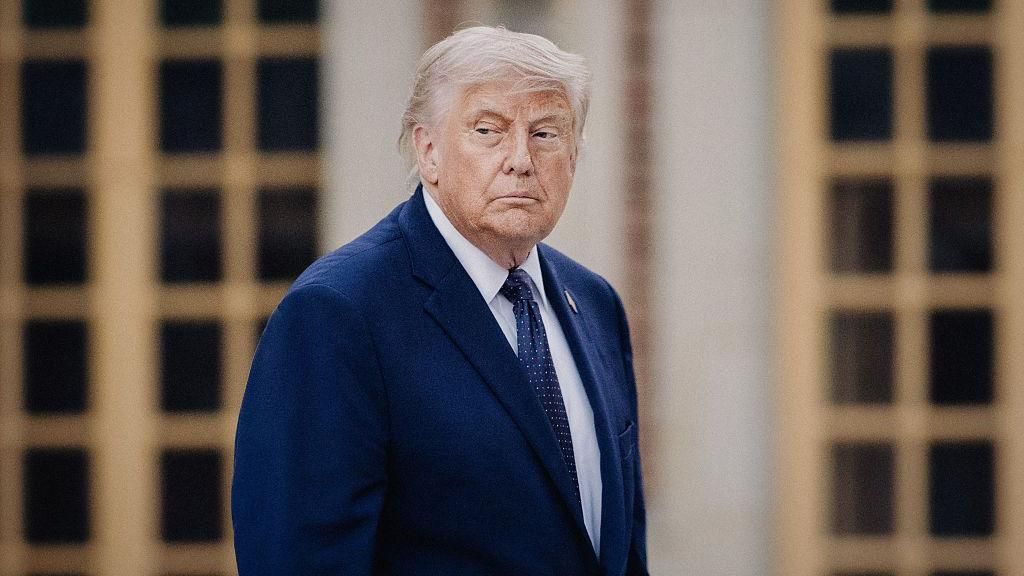
    In a historic bipartisan rebuke of the ongoing military conflict between the United States and Iran that launched in late February, the Republican-controlled U.S. Senate has passed a concurrent resolution ordering President Donald Trump to either halt all military operations against Iran or secure formal congressional authorization to continue any offensive action. The final vote tally stood at 50 to 48 on Tuesday, with four sitting Republican senators breaking ranks with their party leadership to join Democrats in supporting the measure. The outcome marks the first public, bipartisan show of opposition to the war since hostilities began four months ago, following an earlier House of Representatives vote in June that also saw cross-party support for the same resolution.

    Despite its passage in both chambers of Congress, the measure carries no legal weight and will not be forwarded to the White House for Trump’s signature, rendering it largely symbolic in its current form. Legal scholars note that the resolution could still face court challenges, however, and its passage marks an unprecedented milestone: this is the first time since the 1973 War Powers Resolution was enacted that both chambers of Congress have approved a concurrent resolution directing a sitting president to end an active military engagement.

    The resolution’s approval comes amid growing national and international pressure on the Trump administration to wrap up the conflict, which has sent global energy markets into turmoil. Iran’s closure of the Strait of Hormuz — a critical global shipping chokepoint that carries roughly 20% of the world’s crude oil and liquefied natural gas supplies — has caused petrol prices to spike sharply across the United States, while public polling shows steadily rising opposition to the war among American voters.

    Just one week before the Senate vote, leaders from both Washington and Tehran signed a memorandum of understanding to extend an existing ceasefire and work toward a full end to hostilities. Clashes over the fine details of the interim agreement continue, however, leaving the final status of the conflict uncertain.

    The vote also lays bare deep internal divisions within the Republican Party, which currently holds a narrow majority in the Senate. Four GOP senators — Rand Paul, Lisa Murkowski, Susan Collins, and Bill Cassidy — crossed the aisle to vote with Democrats, while two additional Republican senators, including Senate Republican leader Mitch McConnell, were absent from the vote. Only one Democratic senator, John Fetterman, broke with his party to vote against the resolution. The combination of defections and absences created the narrow margin needed for the resolution to pass.

    Under existing U.S. federal law, the president is required to secure congressional approval for any military engagement that lasts longer than 60 days. The U.S., alongside Israel, launched the initial strikes against Iran on February 28. The Trump administration has argued that multiple ceasefire agreements have reset the 60-day clock, and the president can also extend the deadline by an additional 30 days on national security grounds.

    To recap the timeline of the conflict: After the U.S.-Israeli strikes in February, Iran launched retaliatory attacks against Israel and U.S. allied states in the Persian Gulf, before closing the Strait of Hormuz to global shipping. In April, Washington announced a full naval blockade of all commercial traffic moving to and from Iran’s coast. An initial ceasefire reached in April collapsed almost immediately, leading to last week’s interim MoU aimed at securing a permanent end to fighting. The BBC has reached out to the White House for comment on Tuesday’s Senate vote, with no immediate response as of publication.

  • Inside the surreal UK parliament debate on pro-Israel influence dominated by lobby group members

    Inside the surreal UK parliament debate on pro-Israel influence dominated by lobby group members

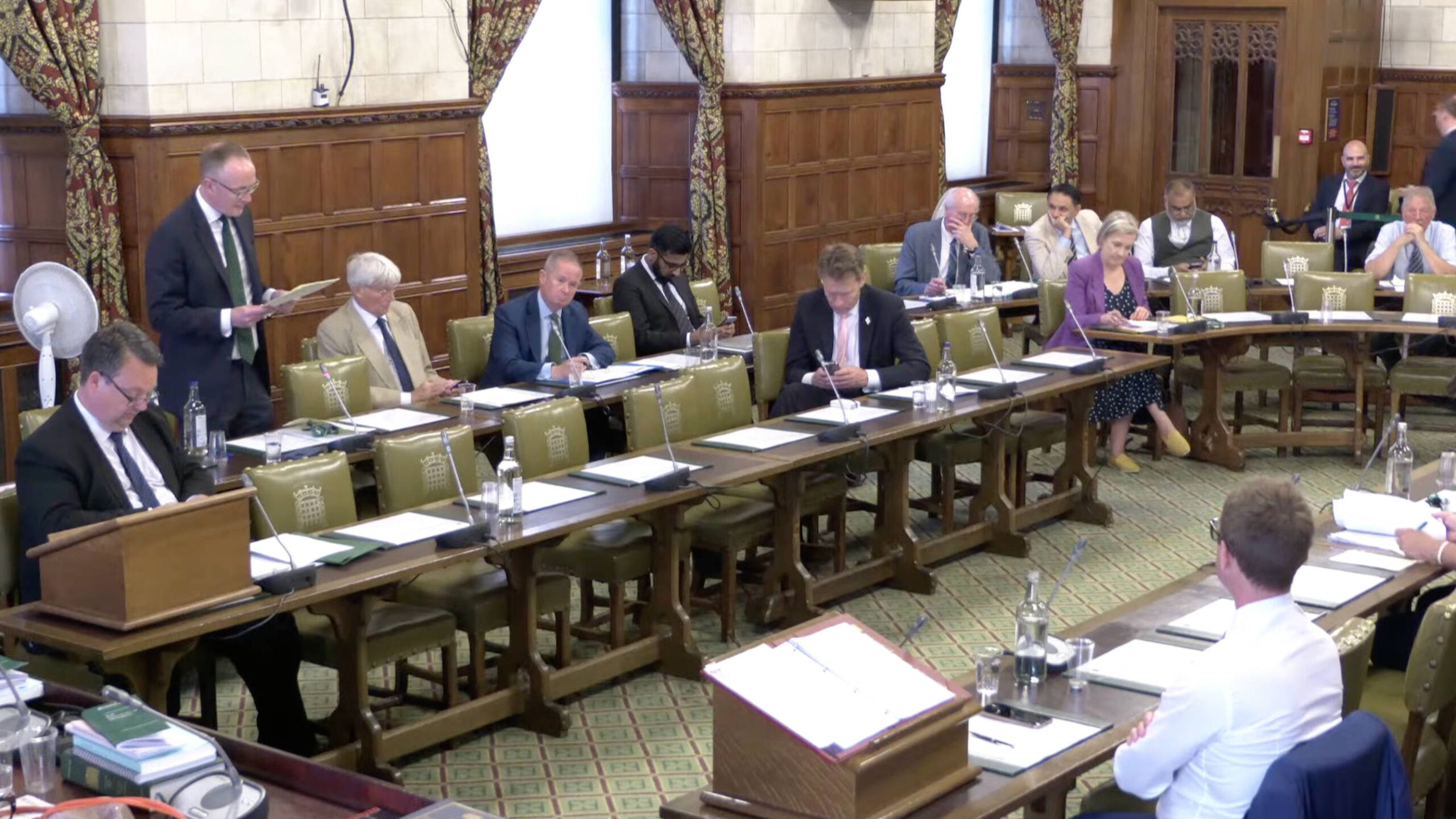
    On a Monday evening at the UK Parliament’s Westminster Hall, a deeply contentious and rarely seen debate unfolded, centered on a public call for a formal inquiry into foreign lobbying linked to the Israeli state and pro-Israel advocacy groups in British politics. The debate was triggered by a public petition that gathered over 118,000 signatures – a threshold that guarantees parliamentary discussion under UK rules – where signatories expressed growing concern over unreported influence campaigns connected to Israel, arguing the public has a right to know the full scope and impact of such activity on British democratic processes.

    What followed was a sharp split along largely partisan and ideological lines. The majority of participating MPs from both the Conservative and Labour parties, most of whom hold membership in prominent pro-Israel parliamentary lobby groups, immediately labeled the petition itself as inherently antisemitic, dismissing its demands as a rehash of outdated anti-Jewish conspiracy theories. Meanwhile, a small bloc of independent and backbench MPs who supported the inquiry’s premise raised detailed, pointed questions about lobbying transparency and foreign influence that were never addressed by the government front bench.

    Opening the government’s official response, James Frith, parliamentary under-secretary of state for digital government and a longstanding member of Labour Friends of Israel (LFI) – who has previously participated in LFI-organized trips to Israel – rejected calls for a targeted public inquiry. Frith emphasized that the UK maintains a deep, long-standing bilateral relationship with Israel, marking 76 years since British recognition of the Israeli state, and reaffirmed the UK’s unwavering commitment to Israeli security. He further argued that singling out pro-Israel influence unfairly holds the UK’s 300,000-strong Jewish community collectively responsible for the actions of the Israeli government.

    That claim drew an immediate rebuke from independent MP Adnan Hussain, who challenged the minister’s deliberate conflation of the Jewish faith and Jewish people with the actions of the Israeli state. Hussain stressed the petition never made that association, before pressing Frith on whether he would acknowledge that the state of Israel stands accused of genocide in its military campaign in Gaza. Frith flatly rejected the accusation.

    Former Conservative foreign office minister Andrew Mitchell, a member of Conservative Friends of Israel (CFI) who traveled to Israel on a CFI-funded trip in May 2025, echoed the antisemitism claims, questioning why Israel was being targeted for scrutiny when other foreign states also lobby in UK politics. Mitchell argued the entire petition amounted to an antisemitic conspiracy theory. He was joined by other CFI and LFI-linked MPs, including Conservative John Lamont, who has also taken CFI-funded trips to Israel, who claimed that modern antisemitism often hides behind rhetoric about a secret pro-Israel “lobby” controlling political life, replacing explicit anti-Jewish language with coded attacks on Zionism and Israeli influence.

    Supporters of the inquiry pushed back by pointing to existing official assessments of foreign interference in UK politics. They referenced the Rycroft Review, an April 2025 official investigation into foreign financial influence in British politics that concluded the UK faces persistent, ongoing risks of foreign interests seeking to skew domestic politics – a review that exclusively focused on Russian and Chinese influence without any mention of Israel, a point independent MP Iqbal Mohamed highlighted to underscore the double standard in how foreign influence is scrutinized.

    Independent MP Ayoub Khan, one of the most prominent advocates for the inquiry, stressed that the debate was never an attack on Jewish communities or Jewish identity, nor a challenge to the right of any person to advocate for either Israel or Palestine. Instead, Khan argued the core issue is transparency: lobbying itself is a legitimate part of democratic politics, but when large sums of money are spent out of public view, the public is right to question whether the government is genuinely committed to rooting out undisclosed foreign influence, or only blocking donations that do not align with its interests.

    Khan drew specific attention to recent reporting that LFI, an organization that counts multiple sitting cabinet ministers among its members, has been referred to the UK Electoral Commission over concerns about its opaque funding structures. He noted that while many senior government officials openly identify as LFI members, the group is not registered as a members’ association, allowing it to avoid mandatory public disclosure requirements that would apply to other similar political groups. Khan also emphasized that public electoral records already confirm the Israeli Ministry of Foreign Affairs has provided direct financial support to UK parliamentarians, information that should be fully disclosed to the voting public.

    The debate included contributions from MPs with direct connections to unreported pro-Israel travel, including Labour MP Peter Prinsley, who was found in breach of UK parliamentary rules earlier in 2026 for failing to declare an LFI-funded trip to Israel. Prinsley condemned the petition as a shameful revival of ancient antisemitic tropes, citing the long, dark history of anti-Jewish persecution in British history, from medieval massacres to the 1290 expulsion of all Jews from England.

    Reform UK deputy leader Richard Tice, who visited Israel and met senior Israeli ministers on a November 2025 trip funded by Reform Friends of Israel, echoed the antisemitism claims, calling for the petition to be fully rejected. Tice argued that the UK should welcome closer cooperation with Israel on artificial intelligence expertise to benefit British industries, a comment that drew a sharp intervention from Mohamed, who asked if Tice was also referring to AI-powered weapons that Israeli forces have used against Palestinian civilians in Gaza. Tice responded with a general claim that preparation for deterrence is the path to peace, declining to address the specific question.

    Labour MP Tahir Ali, one of the most vocal supporters of the inquiry, laid out extensive evidence of Israeli meddling in UK politics, referencing a 2017 Al Jazeera investigation that exposed a senior Israeli embassy official plotting to force the resignation of a Conservative minister who had been critical of Israeli policy – a scandal that ultimately forced a public apology from the Israeli ambassador to the UK. Ali noted that pro-Israel lobby groups have poured hundreds of thousands of pounds in political donations to UK politicians, citing a 2024 Declassified UK report that found 13 out of 25 members of the then-Labour shadow cabinet had received six-figure donations from pro-Israel donors, with roughly 1 in 4 of all 650 UK MPs having accepted such funding over their careers. He also drew attention to a December 2024 private meeting between executives from Israeli arms manufacturer Elbit Systems and senior UK Home Office officials, a meeting that came as Elbit holds hundreds of millions of pounds in British defense contracts.

    Fellow independent MP Shockat Adam expanded on that point, noting that freedom of information requests have confirmed repeated private meetings between Elbit executives and Home Office leadership, with internal briefing papers showing UK ministers were preparing to reassure the company amid growing public protests from the activist group Palestine Action. Adam argued the double standard is staggering: while ministers meet privately with executives from a company whose weapons are cited in international genocide investigations against Israel, anti-arms trade protestors who challenge Elbit’s activities are increasingly labeled as terrorist sympathizers. Last summer, the UK government officially proscribed Palestine Action as a terrorist organization, a move that Adam said raises urgent questions about whose interests the government is prioritizing.

    In the end, minister James Frith declined to answer any of the specific questions raised by proponents of the inquiry, and did not agree to move forward with a public investigation, sticking instead to the government’s line reaffirming the close UK-Israel bilateral relationship. Even so, the debate marked a rare moment where detailed, on-the-record claims about pro-Israel lobbying, undisclosed funding, and links between UK ministers and Israeli arms manufacturers were aired in an official parliamentary setting, topics that are rarely discussed publicly in Westminster.

    The debate unfolded against the backdrop of the ongoing Israeli military campaign in Gaza, which has killed more than 73,000 Palestinians since the October 7 2023 Hamas attack that killed 1,200 Israelis. More than 173,000 Palestinians have been wounded in the campaign, with thousands more still missing and presumed dead under rubble. The UK has maintained ongoing military cooperation with Israel throughout the campaign, including sharing intelligence from surveillance flights over Gaza, a move the Ministry of Defence has claimed is exclusively for hostage rescue purposes.