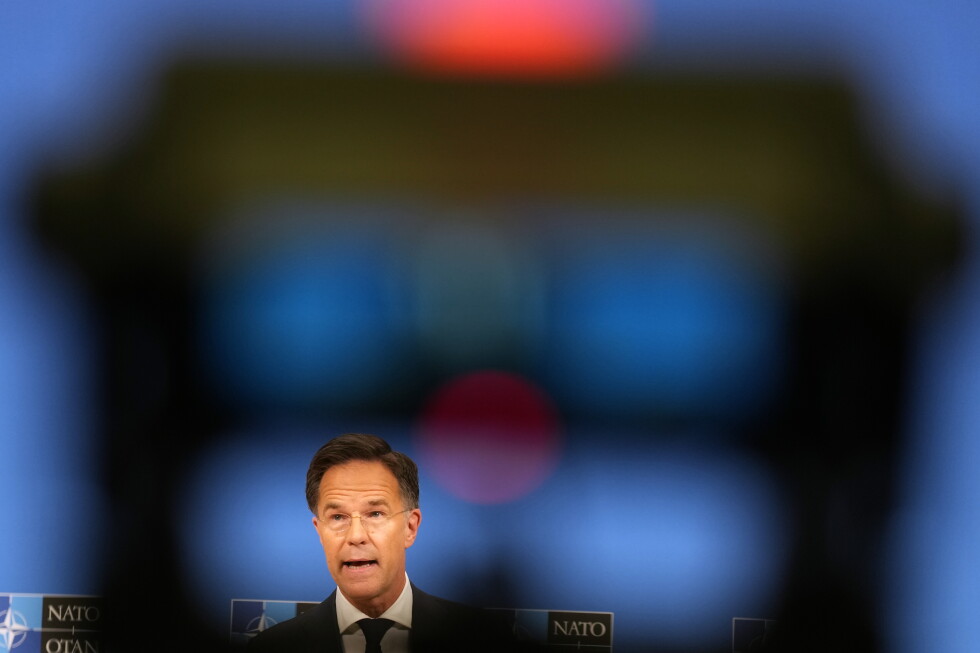
Two weeks before NATO’s annual leadership summit in Turkey, the transatlantic military alliance is facing one of its most significant internal challenges in modern history: convincing a second-term U.S. President Donald Trump to reverse threats to withdraw from the 76-year-old bloc. At the center of this diplomatic push is NATO Secretary-General Mark Rutte, who will meet Trump face-to-face at the White House on Wednesday, leaning on his reputation as a skilled negotiator who has repeatedly defused tensions with the unpredictable American leader.
Trump’s criticism of NATO is not new. For years, he has argued that the United States bears an unfair share of the alliance’s collective defense burden, claiming European nations have long underfunded their militaries while relying on Washington for security. But his grievances have grown far sharper in recent months following the outbreak of the U.S.-Israel led war against Iran, which NATO allies were not consulted on prior to its launch in late February. Trump has openly fumed that many member states rejected his request to support U.S. efforts to reopen oil trade through the Strait of Hormuz, and several allies have publicly criticized his military strategy in the region. Most recently, U.S. Defense Secretary Pete Hegseth amplified these criticisms during a visit to NATO headquarters in Brussels last week, where he announced the Pentagon would launch a six-month review of the size of the American military footprint across Europe. Hegseth also echoed Trump’s complaint that European allies have refused to allow the U.S. to use bases on their territory for strikes against Iran, deepening the rift between Washington and the bloc.
Founded in 1949 to counter Soviet threats to European security during the Cold War, NATO is built on the core principle of collective defense: an armed attack on one member is considered an attack on all. To date, the mutual defense clause has only been invoked once, when the alliance rallied to support the United States immediately after the September 11 terror attacks in 2001. Today, the 32-member bloc is facing unprecedented uncertainty following Trump’s return to the White House, with the Pentagon already signaling it may cut troop numbers in Europe to reallocate resources to other global threat hotspots. This is not the first time Trump has unsettled NATO allies: last year, his surprise threat to annex Greenland, a semi-autonomous territory belonging to alliance member Denmark, sparked widespread diplomatic alarm across the continent.
Rutte, who has earned the nickname “Trump whisperer” for his unique ability to charm and placate the U.S. president, has made keeping the United States in NATO his top priority. Over the past months, he has leaned heavily on a strategy of deliberate flattery to ease Trump’s frustrations, repeatedly crediting the president for pushing NATO member states to increase their collective defense spending. Last year, Trump pressured alliance leaders to commit to spending 5% of their annual GDP on defense by 2035, a target far higher than the existing 2% goal many countries have yet to meet.
Ahead of Wednesday’s White House meeting, Rutte doubled down on this approach during a primetime interview on Fox News – a network Trump is known to watch closely. Rutte openly threw his support behind Trump’s Iran strategy, telling viewers, “I’m completely behind him on this.” He also sought to downplay the dispute over European military bases, framing the issue as a handful of “isolated cases” rather than a widespread rejection of Trump’s agenda.
Rutte’s willingness to cater to Trump’s style has at times raised eyebrows among diplomatic circles. During last year’s NATO summit, he drew attention for referring to Trump as “daddy” in a private exchange, before sending a fawning text message that echoed the president’s characteristic capitalization of key phrases: “Europe is going to pay in a BIG way, as they should, and it will be your win.” Trump, in a move that surprised even Rutte, shared the private message publicly on his social media channels for the entire world to see. The NATO secretary-general repeated the gesture in January, sending another warm personal note that closed with “Can’t wait to see you. Yours, Mark” – which Trump once again shared publicly.
As the alliance prepares for its summit in Turkey next month, all eyes are on Wednesday’s meeting to see if Rutte’s charm offensive can once again soften Trump’s threats of withdrawal, and stave off the most existential challenge NATO has faced in decades.