A 6.9-magnitude seismic event shook the offshore area of Japan’s northern Iwate Prefecture on Thursday morning, prompting routine safety checks and emergency preparedness protocols across the country’s northeastern region, with no immediate reports of casualties or widespread destruction confirmed. The Japan Meteorological Agency (JMA) quickly issued an initial assessment, placing the quake’s depth at approximately 50 kilometers, or 31 miles, below the ocean floor. The United States Geological Survey matched JMA’s magnitude reading, aligning on the key details of the seismic activity.
This tremor hit during the bustling morning commute, a time when millions of Japanese residents were traveling to work and school, and light shaking was even felt as far south as the capital city of Tokyo. Critically, the JMA confirmed immediately after the quake that there was no threat of a tsunami following the seismic shift.
The epicenter sits in a seismically active zone that has seen multiple significant tremors in recent months. In December alone, a separate quake in the same broader region triggered a seven-day national advisory warning for potential large-scale seismic activity.
Top Japanese government officials moved quickly to coordinate response efforts. Chief Cabinet Secretary Minoru Kihara, the country’s top government spokesperson, confirmed that as of initial assessments, no injuries or structural damage had been documented. Prime Minister Sanae Takaichi told reporters in Tokyo that the government’s emergency response task force had activated immediately, placing public safety as its top priority. The prime minister added that teams are actively collecting on-the-ground data and standing by to launch relief operations if any damage is reported. She also issued a public warning for residents across affected northeastern prefectures to remain alert for possible aftershocks in the coming hours and days.
On-the-ground reports from local communities echoed the official assessment of no major harm. Tomoko Nagane, principal of a public elementary school in the Aomori Prefecture town of Hashikami, spoke to public broadcaster NHK about the experience. She said she was en route to the school when the national earthquake early alert system activated on her phone, and she felt sustained moderate lateral shaking while driving. All students who had already arrived at the campus were unhurt, she confirmed, though a number of young children cried out of fear during the tremor. School officials canceled classes for the remainder of the day, and all students were safely returned to their families by mid-morning.
NHK correspondents reporting from two of the closest major population centers, Sendai and Morioka, told viewers they felt shaking that lasted roughly two minutes, but had not observed any visible damage to infrastructure during initial checks. Broadcast footage from the region showed commuters continuing their daily routines as normal shortly after the tremor passed.
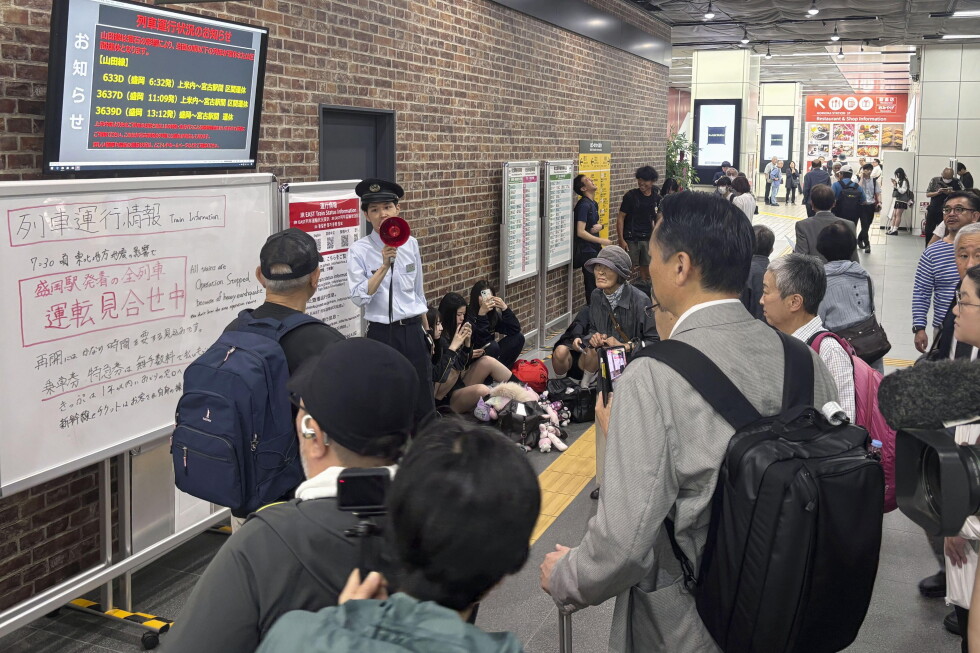
In line with standard safety protocols, East Japan Railway Co., which operates intercity and local rail services across the Tohoku region, temporarily halted service on several bullet train and local commuter lines to allow structural and safety inspections of tracks and infrastructure.
One key reassurance came for facilities with major seismic risk: government spokesperson Kihara confirmed that all nuclear facilities in the affected area, including the Fukushima Daiichi Nuclear Power Plant – the site of the 2011 meltdown following a massive quake and tsunami – and a spent fuel reprocessing facility in Aomori Prefecture, had not recorded any abnormalities from Thursday’s tremor.
Japan sits along the Pacific Ring of Fire, an active tectonic boundary that makes it one of the most earthquake-prone nations on Earth, with a highly developed early warning and emergency response system designed to reduce harm from regular seismic activity.