博客

  • Mother dies saving daughter in Venezuela earthquakes

    Mother dies saving daughter in Venezuela earthquakes

    Deadly twin earthquakes that rocked central Venezuela near the capital Caracas this week have left hundreds dead, thousands injured, and countless families shattered by grief—including that of Venezuelan professional footballer Héctor Bello, whose partner Andrea gave her own life to protect their young toddler.

    Bello first shared the devastating news of Andrea’s death in a heartfelt Instagram post that quickly spread across social media, confirming that Andrea pushed their small child out of harm’s way as buildings collapsed around them during the two powerful tremors. In his emotional tribute, Bello wrote that he will one day share the full story of Andrea’s bravery with their surviving daughter: how she chose to sacrifice herself to save the little girl’s life, how she stayed by her side until her final breath, and how her courage never wavered even in the face of catastrophe.

    The disaster, which struck on Wednesday, has been one of the deadliest seismic events to hit Venezuela in recent decades. As of the latest updates, official death tolls have climbed to at least 589 people, with more than 2,980 others injured. Rescue teams continue to sift through collapsed rubble in search of additional survivors, three days after the quakes hit, and hundreds of people remain unaccounted for. Multiple foreign nationals are among those confirmed dead: four Spanish citizens, one Portuguese national, and two Brazilian citizens, according to statements from their respective governments. An estimated 106 Spanish nationals are still missing, Spanish media reported, citing the country’s foreign ministry.

    Portuguese President António José Seguro issued a formal message of solidarity to the Venezuelan people and to Portuguese residents affected by the disaster, extending condolences to all those who have lost loved ones.

    After the quakes, Bello traveled immediately to Caracas to be with his daughter, who was hospitalized for observation alongside her aunt, who was also in the building when it collapsed. In an overnight update posted Friday, Bello shared that both his daughter and her aunt were in stable condition, though they would remain in the hospital for further monitoring. He thanked supporters for their messages of comfort as he navigated what he called “immense pain,” leaving him “all alone” to raise their daughter.

    In a raw, vulnerable Instagram story shared after the tragedy, Bello opened up about his overwhelming grief and uncertainty, asking, “How do I explain to your daughter that you lost your life to save hers, and that I wasn’t there to do anything? How do I explain it? Give me strength now.”

    Local Venezuelan football media organization Cumaná de Campeones also confirmed Andrea’s death in a separate tribute, noting that she was recovered from the rubble of the family’s residential building while their daughter emerged alive from the collapse. U.S.-based Spanish-language news outlet Univision also independently verified the tragedy.

    As identification of victims continues and rescue operations stretch into their fourth day, communities across Venezuela and the international community are rallying to support affected families, while stories of extraordinary sacrifice like Andrea’s have drawn an outpouring of sympathy from people around the world.
  • Greece is paying fishermen to catch toxic toadfish invading the warming Mediterranean

    Greece is paying fishermen to catch toxic toadfish invading the warming Mediterranean

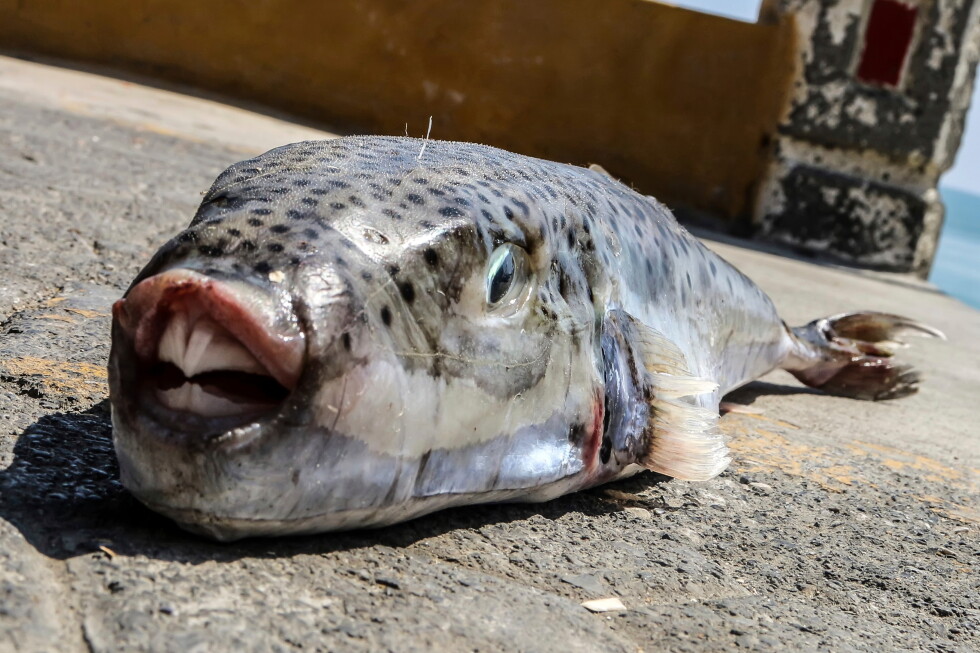
    Climate change has triggered an unprecedented biological shift in the Mediterranean Sea, pushing a toxic, invasive species northward into Greek waters—and prompting Athens to roll out an unusual solution to contain the disruption: a cash-for-catch bounty program targeting the dangerous invader.

    The species in question is the silver-cheeked toadfish, a member of the pufferfish family native to tropical marine ecosystems. Identified by its streamlined torpedo frame and distinct human-like teeth, the creature carries an extremely potent neurotoxin in its skin and internal organs that can trigger fatal heart failure if ingested by humans.

    While Greek authorities have confirmed no sightings of the toadfish in popular resort bathing zones around Greek islands, the invasive species has already caused severe economic damage to fishing communities operating off the coast of Crete and other nearby island groups. Local fishermen report that the toadfish routinely tear through commercial fishing nets to feed on already caught target species, leaving gear destroyed and catches depleted.

    Giorgos Kyriakakis, a representative of a Cretan fishermen’s association, explained the scope of the problem in an interview with Greek public broadcaster ERT on Friday. “It’s got to the point where we might go out fishing one day and then spend the next three days fixing our nets,” Kyriakakis said. “They eat our catch and damage our nets — that’s very costly.”

    Ecologists trace the toadfish’s arrival in the Mediterranean to two interconnected factors: the species originally entered the sea via the Suez Canal from the Red Sea, and rapidly expanding northward as ocean temperatures rise due to human-caused climate change. The invasion of this toxic species is not unique to Greece; neighboring Cyprus launched an identical cash bounty program earlier this year to address its own toadfish infestation.

    Greece’s formal program launched Friday, with the government offering a payout of 5.33 euros per kilogram (equivalent to roughly $2.75 per pound) for every toadfish turned in by fishermen. According to Agriculture Minister Margaritis Schinas, a former vice president of the European Commission, this is the first time Greece has implemented a targeted eradication measure of this kind.

    All collected toadfish will be frozen at local government facilities before being incinerated to prevent the neurotoxin from entering the food supply, Schinas confirmed. He also noted that the program, which initially covers only the currently affected island regions, will likely be expanded to all Greek territorial waters in the coming months to stop the species from spreading further.

    Public anxiety around the toadfish has grown in recent weeks after Greek fishing crews shared viral videos online showing the species biting through solid objects including soda cans and wooden planks, highlighting the strength of its jaws. In response to rising public concern, the Greek Red Cross issued an official public health advisory, outlining first aid procedures for bite-related bleeding and warning the public of the lethal risk posed by the neurotoxin stored in the fish’s organs.

    Despite the valid concerns of fishing communities, medical and tourism stakeholders on Crete have urged the public to avoid overreaction. In a joint statement released Friday by 16 local medical and tourism associations, leaders emphasized that the presence of the toadfish in Mediterranean waters has been documented by scientists for years, and there is no immediate or hidden threat to recreational swimmers.

    “Marine predators do not threaten the safety of visitors and residents,” the statement read. “Exaggeration is often a feature of public debate.”

  • Canada’s rat and asbestos plagued official residence gets a lifeline

    Canada’s rat and asbestos plagued official residence gets a lifeline

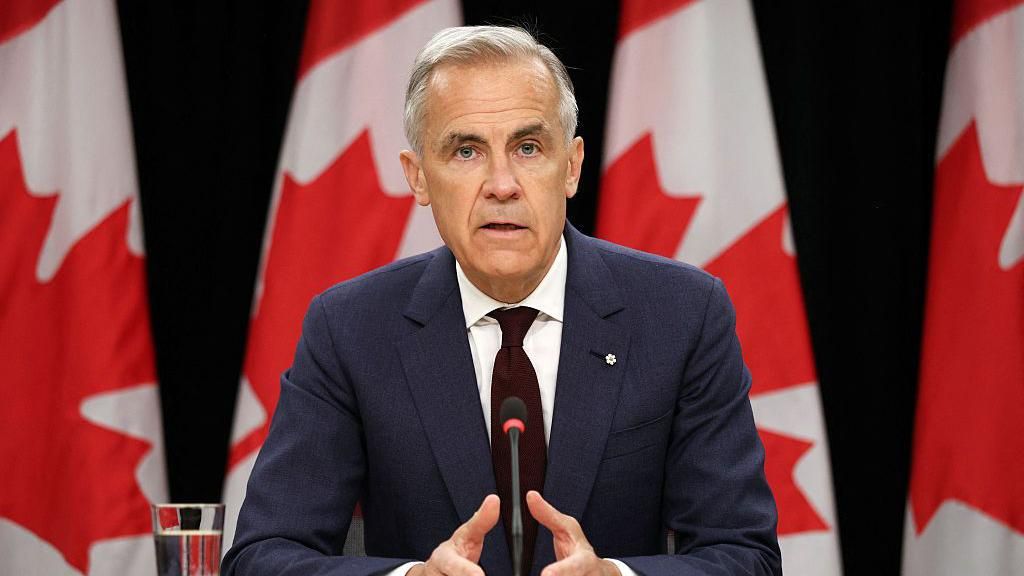
    After more than a decade of sitting abandoned and crumbling into disrepair, Canada’s iconic prime ministerial official residence at 24 Sussex Drive is finally set to be restored, after Prime Minister Mark Carney unveiled a long-awaited, community-focused national restoration plan on Friday.

    Widely recognized as Canada’s equivalent to the White House in the U.S. or 10 Downing Street in the UK, the 19th-century property has been uninhabitable since the 2010s, plagued by systemic neglect. Years of deferred maintenance left the building with severe hazards including asbestos-contaminated walls, toxic mould infestations, and widespread rodent problems, earning it the label of a “national embarrassment” from industry experts. Preliminary remediation work completed in 2024 cleared the site of asbestos, mould, and pests, but major structural and cosmetic renovations remain needed to make the residence safe and usable again.

    The price tag for full restoration is currently estimated at over C$100 million (US$71 million). For years, this cost has deterred successive Liberal and Conservative governments from moving forward with taxpayer-funded repairs, as successive administrations chose to prioritize other policy areas over restoring the historic property.

    Under the new plan outlined by Carney, the federal government will not draw on public funds for the majority of the project. Instead, the Rideau Hall Foundation will lead a national crowdfunded fundraising campaign to cover a large portion of the costs. To prevent corporate influence and ensure transparency, Carney announced strict rules for the campaign: only individual Canadian residents and registered philanthropic organizations will be eligible to donate, donation amounts will be capped, and a full public list of all contributors will be released once the campaign concludes.

    Alongside the fundraising push, the government will launch a national design competition open exclusively to Canadian architecture firms. Teams will submit renovation proposals that honor the building’s historic character while updating it to meet modern accessibility, security, and sustainability standards. An independent jury will review all submissions and select a winning design by July 2025.

    In remarks announcing the plan, Carney emphasized that 24 Sussex Drive holds deep national significance. Over its history, the residence has housed 10 Canadian prime ministers and hosted global leaders including Queen Elizabeth II and Winston Churchill. Carney acknowledged that the property had “not been cared for with the respect that it deserves” for decades, noting that while he is unlikely to ever move into the residence himself during his premiership, his government is committed to leaving a functional, respected national asset for future Canadian leaders.

    Explaining the decision to avoid full taxpayer funding, Carney said his administration has prioritized pressing domestic policy goals, including expanding the supply of affordable housing across Canada and strengthening national economic growth. He added that the project aligns with a broader public commitment to shared national heritage, noting that Canadians hold a collective sense of ownership over the iconic property. “This is their house,” Carney said. “It is a symbol of the nation.”

    Joseph Clark, an associate professor of architecture at the University of Toronto, noted that while 24 Sussex Drive is far more modest in scale and grandeur than its global counterparts like the White House, its cultural and political importance to Canada remains unmatched.

  • Four men held over child-marriage in Sierra Leone set to appear in landmark court case

    Four men held over child-marriage in Sierra Leone set to appear in landmark court case

    Two years after Sierra Leone implemented a full national ban on child marriage, the West African nation is moving forward with its first ever criminal trial against individuals accused of violating the landmark law, marking a watershed moment for gender equality and the protection of minor girls’ rights.

    Four men are scheduled to appear before a court to face charges linked to the forced marriage of a 17-year-old girl. The accused group includes the victim’s own father and the man who purportedly married her; their identities are being withheld by media outlets to safeguard the underage survivor’s privacy and safety.

    If found guilty, the four defendants face a minimum prison sentence of 15 years, a fine of roughly $4,000, or both penalties combined. Under the 2024 Prohibition of Child Marriage Act, even guests and organizers who attend an underage wedding can be arrested and prosecuted for their involvement.

    Sierra Leone’s deeply patriarchal cultural norms have normalized forced child marriage for generations, with many families routinely coercing young daughters into early unions. Though the law now sets 18 as the legal minimum age of marriage, child marriage cases remain widespread across the country, with many such ceremonies still being officiated by local religious leaders. This specific forced marriage was found to have taken place in Grafton, a suburban community on the outskirts of Sierra Leone’s capital, Freetown.

    Alpha Sesay, Sierra Leone’s Attorney General and Minister of Justice, confirmed in an interview with the BBC that these charges represent an unprecedented turning point for the enforcement of the 2024 child marriage ban. “This marks the first time that any individual has faced criminal charges for entering into, consenting to, or facilitating a child marriage in our country,” Sesay explained.

    Prior to the 2024 legal reform, Sierra Leone had conflicting national legislation that left a harmful loophole: the Customary Marriage Act still permitted parents to consent to marriage for underage daughters. Two years ago, that outdated customary law was formally struck from the books, establishing a clear legal framework that allows authorities to prosecute any person who participates in the marriage of anyone below the age of 18.

    In addition to the charges against the father and the purported husband, the two other accused face counts of contracting child marriage, consenting to the union, and aiding and abetting the illegal ceremony. Court documents detail that the victim’s father actively facilitated the union, taking key steps during the wedding ceremony to ensure the illegal marriage was completed successfully.

    Gender equality and women’s rights activists across the country have celebrated the unprecedented legal action, framing it as proof that years of advocacy for legal reform are delivering tangible results. Menisa Sesay, president of Legal Access through Women Yearning for Equality Rights and Social Justice — an all-female advocacy group made up of legal professionals — told the BBC she felt “extremely happy” about the milestone.

    Sesay noted that the trial confirms the legal reforms that activists spent years campaigning for are finally being put into practice, validating the movement’s core mission to protect vulnerable women and girls from exploitation.

    Recent data from Human Rights Watch underscores the scale of the crisis that remains: an estimated 30% of all girls in Sierra Leone are married before they turn 18, and in remote rural regions, some brides are as young as 14. For years, activists warned that even after the ban was passed, weak enforcement meant perpetrators faced no consequences for violating the law. But Menisa Sesay says the new charges are a hopeful sign for the future. “The charges brought against the four… is reassuring that there is light at the end of the tunnel for women and girls in Sierra Leone,” she said.

  • Israel releases classified documents detailing 1976 Entebbe raid to free more than 100 hostages

    Israel releases classified documents detailing 1976 Entebbe raid to free more than 100 hostages

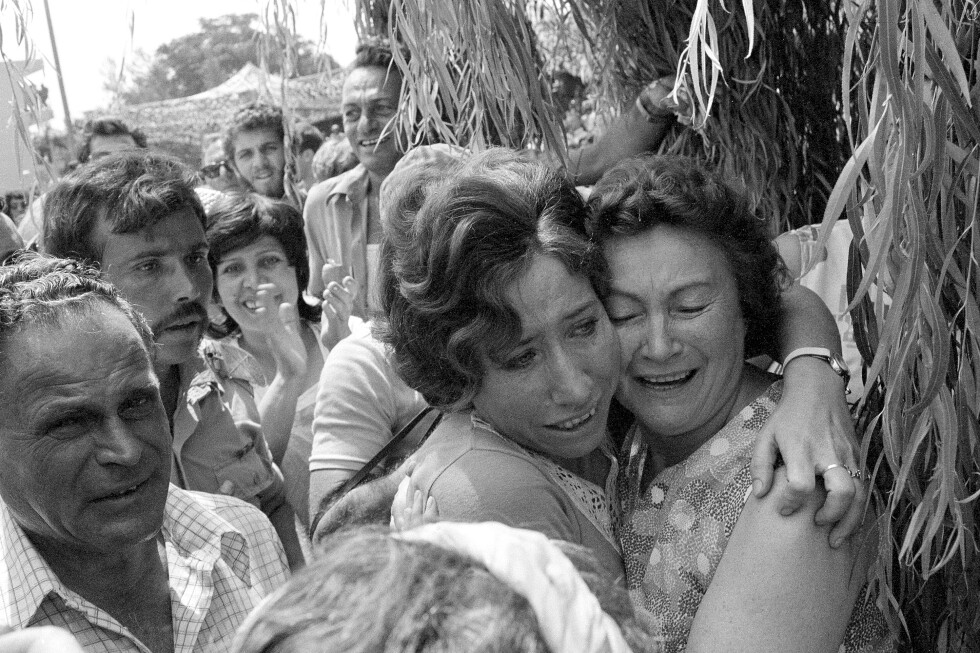
    JERUSALEM — On Friday, Israel made public a vast collection of long-classified government documents that lay bare the internal deliberations and high-stakes decision-making behind one of the most legendary operations in Israeli military history: the 1976 Entebbe hostage rescue mission, whose 50th anniversary will be marked on July 3. The declassification comes at a deeply resonant moment for Israel, which is still navigating the fallout from the October 7, 2023, attack by Hamas-led militants that killed approximately 1,200 people and abducted 251 hostages to the Gaza Strip, casting a new shadow over decades of Israeli policy on hostage crises.

    The operation itself remains a defining feat of military daring: On June 27, 1976, militants from the Popular Front for the Liberation of Palestine and West Germany’s Revolutionäre Zellen hijacked an Air France flight traveling from Tel Aviv to Paris, diverting it to Entebbe Airport in Uganda, where they received backing from then-Ugandan dictator Idi Amin’s government. The hijackers held 106 passengers, the vast majority of whom were Israeli or Jewish, threatening to execute them unless dozens of imprisoned militants were released by multiple countries. In a mission that took under an hour to complete, 29 Israeli commandos flew more than 2,500 miles over hostile territory to storm the airport, rescuing all but three hostages killed in crossfire. All seven hijackers and roughly 45 Ugandan soldiers were killed in the operation, and only one Israeli commando died: Yonatan Netanyahu, older brother of current Israeli Prime Minister Benjamin Netanyahu. The operation’s low casualty count and audacious scope cemented its place as a foundational myth of Israeli military prowess.

    Longstanding popular narrative has framed Entebbe as a turning point where Israel rejected negotiation with hostage-takers in favor of a bold military strike. The newly released files from the Israel State Archives upend that simplified telling, revealing that Israeli leaders under then-Prime Minister Yitzhak Rabin pursued a deliberate two-pronged strategy, only greenlighting the raid when diplomatic efforts showed no signs of progress. For the first six days of the crisis, Rabin’s ad hoc national crisis team took a hard line, refusing any negotiations with the hijackers. But as the militants’ execution deadline drew near and pressure mounted from the hostages’ families, the cabinet shifted position, opening the door to conditional talks.

    “The zero hour is approaching … We believe that a supreme effort must be made and break the ultimatum,” Rabin’s crisis team wrote in one newly released memo, which authorized negotiations on portions of the hijackers’ demands. While pushing forward France-brokered talks with Amin’s government, Israeli military planners simultaneously worked in secret: they built full-scale mockups of the Entebbe terminal to practice the raid, mapped flight routes through African airspace controlled by hostile states, and prepared transport planes for the overnight strike.

    Only when negotiations stalled did leaders give the final order for the mission. Even before the release of these files, much was already known about the broad outlines of the Entebbe operation, but the new documents provide granular, unprecedented insight into the weight of the choices facing the Israeli cabinet. For decades, Israel has maintained a formal policy of occasionally exchanging imprisoned Palestinian detainees for hostages held by militant groups, a practice that has drawn repeated criticism from those who argue it incentivizes future kidnappings. The Entebbe documents confirm Rabin’s administration was willing to test diplomacy before turning to force, contradicting the popular framing of the operation as an outright rejection of negotiation.

    The operation drew international condemnation at the time from Idi Amin and the Organization of African Unity, the predecessor to the modern African Union, which argued the raid violated Ugandan national sovereignty at a time when diplomatic efforts were still ongoing. For Israel, the mission stood as a rare high-profile victory after the trauma of the 1972 Munich Olympics massacre, where all nine Israeli hostages were killed during a failed German-led rescue attempt. Even in the immediate aftermath of the operation’s success, however, Rabin warned against overstating its impact on the long-term fight against terrorism, a prescient observation that carries new weight today amid the ongoing Gaza hostage crisis.

    “Let us not deceive ourselves,” Rabin wrote in one personal memo included in the declassified files. “It was an extraordinary operation and achievement. However, the problem is not over. Terrorism continues to operate. What other problems terrorism will pose to us and what lessons we must learn from this matter, it is too early to say. We have finished one battle, but the war continues.”

  • Ex-Trump adviser John Bolton pleads guilty to mishandling classified documents

    Ex-Trump adviser John Bolton pleads guilty to mishandling classified documents

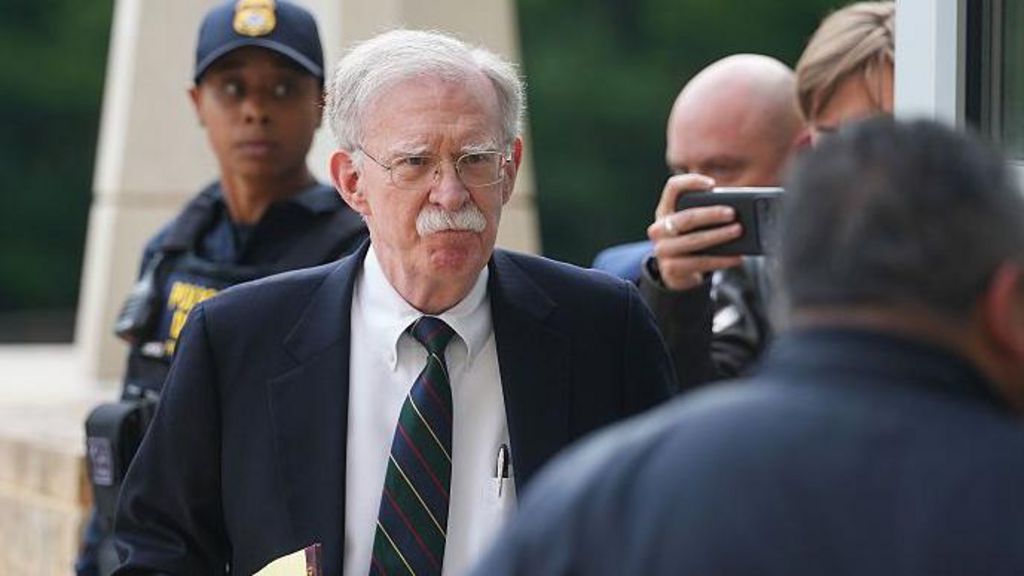
    In a stunning legal development that cuts through the heart of U.S. national security accountability, John Bolton, one of former President Donald Trump’s most high-profile former aides and persistent critics, has entered a guilty plea to a single charge of illegally retaining classified national security materials tied to notes he compiled for his 2020 memoir.

    Bolton, who served as Trump’s White House national security adviser before being fired in 2019, originally faced 18 felony counts related to improper handling of sensitive government information and had pleaded not guilty following his indictment. Friday’s court proceeding marked a dramatic reversal, with the 75-year-old former diplomat acknowledging the accuracy of all allegations against him, including that he shared diary entries containing top-secret national defense data with family members. When asked by the judge whether he committed the acts in question, Bolton confirmed his guilt and issued a public apology for his actions. “I did, your honor,” he told the court, adding “I am sorry for it.”

    Under the terms of the plea deal reached with federal prosecutors, Bolton faces a maximum potential prison sentence of up to five years behind bars. He has already agreed to pay $2.25 million in financial penalties, complete 100 hours of court-ordered community service, and participate in a full debriefing with senior national security officials to account for all improperly retained classified information, according to U.S. reporting from CBS News, the BBC’s U.S. partnership affiliate. Bolton’s formal sentencing is scheduled for October 28, as confirmed by multiple U.S. media outlets.

    Speaking to reporters immediately following Friday’s hearing, U.S. Attorney Kelly Hayes emphasized that Bolton was far from an inexperienced official when it came to handling sensitive government data. As a decades-long national security figure who previously served as U.S. Ambassador to the United Nations under George W. Bush, Bolton knew full well the protocols for handling classified materials and who was cleared to receive them, Hayes said. “He also knew the damage to national security that could be caused by mishandling that sensitive information,” Hayes added. “Nevertheless, as Mr. Bolton just admitted, he put our national security at grave risk in violation of the law.”

    The roots of the legal case stretch back to the release of Bolton’s tell-all memoir, *The Room Where It Happened*, which hit bookshelves in 2020. The book offered a scathing insider portrait of Trump’s tenure in the White House, depicting the then-president as deeply uninformed on key global geopolitical issues. The Trump White House immediately moved to block publication, filing a lawsuit that argued the manuscript contained classified information that had never gone through mandatory pre-publication review. A federal judge rejected the White House’s injunction request, and the book was released to the public just days later.

    The U.S. Department of Justice launched a formal investigation into Bolton’s handling of classified materials shortly after the book’s publication, probing whether he improperly disclosed sensitive information in his memoir. Beyond the book-related counts, prosecutors also accused Bolton of transmitting classified materials from his time as national security adviser to two of his relatives. In a previously undisclosed detail included in the indictment, investigators found that a hacker once gained access to an online account where Bolton stored the classified documents, and issued a threat to unleash what would be “the biggest scandal since Hillary [Clinton]’s emails were leaked.”

    In the years since leaving the White House, Bolton has remained one of the most vocal Republican critics of Trump, who is now the 2024 Republican presumptive presidential nominee. Trump has repeatedly hit back at Bolton, publicly calling for him to be jailed and labeling the former adviser a “sleazebag.”

    Bolton’s indictment comes as part of a string of high-profile criminal cases targeting prominent Trump critics, including former FBI Director James Comey and New York Attorney General Letitia James. However, legal experts and former federal prosecutors told the BBC that Bolton’s case is distinct from other political prosecutions due to the overwhelming weight of evidence gathered by investigators. A source familiar with the plea deal explained that Bolton chose to plead guilty in part because he recognized a continued trial would require the release of additional classified information as part of his defense, a step he refused to take to avoid further harm to U.S. national security. “The ambassador has admitted to what he has done,” the source said.

    Carrie Cordero, a senior fellow at the Center for a New American Security, noted that while bringing charges against such a high-ranking former official for classified material mishandling is rare, it is not without precedent. “Cases that involve classified information present challenges to prosecute, but they can and are brought against both low-level and high-level officials, from time to time,” Cordero explained. Earlier this year, in January, Bolton was among a group of high-profile former Trump administration critics who had their lifetime Secret Service protection stripped by the Trump-aligned House of Representatives.

  • The woman leading Cameroonian cricket’s ‘Roger Milla’ generation

    The woman leading Cameroonian cricket’s ‘Roger Milla’ generation

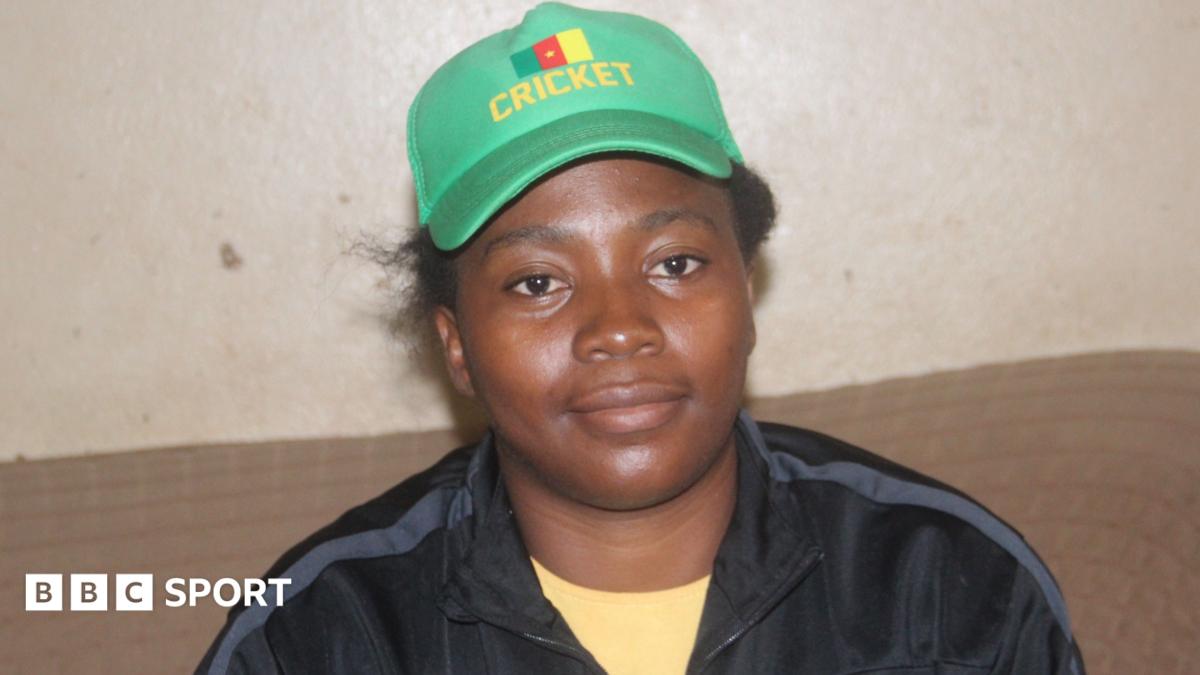
    When 29-year-old Madeleine Nseke Sissako first stepped onto an informal cricket pitch in Yaounde at the age of nine, she and her young teammates faced widespread ridicule. Neighbors, unfamiliar with the sport, mocked the group for carrying the cricket bats they called sticks, drawing an unlikely comparison to the pop-culture Ninja Turtles. Few locals believed the little-known sport could ever take root in the Central African country, where the word ‘cricket’ is most often associated with the common insect rather than a global team sport.

    Against that backdrop of skepticism, Nseke Sissako has emerged as one of Cameroon’s most accomplished and ambitious professional cricketers, leading a quiet revolution to grow the sport from its humble grassroots origins. Cricket runs deep in her family: eight members of the Nseke clan have represented Cameroon at the senior or youth international level, and it was her older brother Abanda Protais who first convinced the reluctant youngster to give the sport a chance. ‘I grew up always by his side, going with him to every practice,’ Nseke Sissako recalls. ‘At first, I had no real love for the game, but he talked me into it and taught me all the fundamentals.’

    Today, Nseke Sissako wears two pivotal hats: she serves as both captain and head coach of the Yaounde-based Emergence Ladies Cricket Club, which she has led to multiple domestic titles, and has represented Cameroon’s senior women’s national team, the Cricket Lionesses, since 2021. Ranked 67th out of 79 global sides in the ICC Women’s T20 rankings, Cameroon’s national program has marked steady progress in recent years, notching wins over Lesotho, Eswatini and Mozambique in 2024. ‘We’ve come so far,’ Nseke Sissako says. ‘When we first started competing internationally, we were the obvious underdogs, always the weakest team. Back then, we mostly traveled just for the experience, to get photos, and see new places. That’s changed now.’

    Her father, Eugene Nseke Toube, a former professional footballer, has supported his daughter’s work in cricket but keeps her grounded. ‘I always tell her she still has a lot to learn, and she has to keep putting in the work if she wants to reach her goals,’ he explains. ‘We encourage her to keep pushing, but where she is now isn’t the finish line.’

    Cricket’s journey in Cameroon began only in 2003, when a development project spearheaded by Victor Agbor-Nso — now president of Cameroon’s national cricket governing body Fecacricket — introduced the sport to the country. ‘We started from absolutely nothing,’ Agbor-Nso says. ‘No one knew what cricket was. It was just a joke, a laughing stock.’ The sport grew steadily enough for Fecacricket to earn affiliate membership with the International Cricket Council (ICC) in 2007, and the federation officially recognized by Cameroon’s ministry of sports two years prior, in 2005.

    Agbor-Nso credits the Nseke family, which received a special award from Fecacricket in 2024 for their contributions, with transforming the sport’s profile in the country. ‘The Nsekes have been absolutely critical to turning our dream for Cameroonian cricket into reality — starting from scratch to building a respected sport that people can look up to,’ he says. Today, the country counts 22 registered clubs (12 men’s, 10 women’s) with more than 550 top-level registered players, and Agbor-Nso estimates that roughly 70,000 Cameroonians across the country are learning the sport, mostly through school-based outreach programs.

    Still, major barriers remain. A lack of specialized cricket infrastructure and equipment is one of the biggest hurdles; Cameroon currently has no international-standard cricket venue. ‘If we had a proper stadium with the right playing surface, Cameroon could compete with the best in the world,’ Nseke Sissako says. Fecacricket also faces persistent funding shortfalls: the body only raises roughly a third of its annual budget target, even with support from the ICC and the Cameroonian government, slowing the federation’s progress. ‘We have huge ambitions, but the resources we have right now are nowhere near enough,’ Agbor-Nso explains. ‘We’re working to attract new sponsors to come and support our growth.’

    In recent years, Fecacricket has prioritized expanding women’s cricket, shifting from allocating just 20% of its resources to the women’s game to working toward a 50-50 split between men’s and women’s programming. Agbor-Nso points to Nseke Sissako as the perfect role model for this new era. Beyond leading her domestic club, she also served as head coach of Cameroon’s Under-19 women’s national team during recent qualifiers for the 2026 Women’s Under-19 T20 World Cup, working to inspire the next generation of female players. ‘All we can do now is keep working and believe in ourselves,’ Nseke Sissako says. ‘We need to boost the sport’s visibility, and keep planting the seed in schools through targeted development programs.’

    As the 2026 Women’s T20 World Cup unfolds across England, Wales and South Africa, Nseke Sissako is rooting for the tournament’s only African competitor — the two-time defending runners-up South Africa, who remain the only African nation to ever qualify for the tournament. ‘I will always support South Africa, because it’s because of their success that the rest of the world is paying more attention to African cricket,’ she says. ‘A South African win would give a huge boost to the sport across the whole region, including here in Cameroon.’ Drawing inspiration from Cameroonian football icon Roger Milla, who broke barriers for African football on the global stage, Nseke Sissako says she and her teammates see themselves as the trailblazers of Cameroonian cricket — and she holds an unshakable ambition to turn Cameroon into ‘one of the biggest cricket-playing nations in Africa and the world.’

  • Tallest building in Beijing is damaged after small airplane reportedly crashed into it

    Tallest building in Beijing is damaged after small airplane reportedly crashed into it

    On Friday, visual evidence posted to social media platforms sparked widespread concern after it suggested that debris from a small aircraft was found near CITIC Tower, Beijing’s tallest skyscraper, showing visible signs of exterior damage to the building.

    While the geolocation metadata and visual context of the shared photos and clips aligned with the iconic 528-meter structure’s location in Beijing’s Central Business District, independent third-party verification of the content’s authenticity has not been possible. The user-uploaded materials were also swiftly taken down from Chinese internet platforms shortly after being posted, limiting public access to the original imagery.

    Hong Kong-based English-language outlet South China Morning Post was the first major media outlet to publish a report claiming that the small aircraft had collided directly with the tower, which is commonly known by its local name China Zun. Published photos accompanying the early report showed what observers identified as a broken section of glass or a punctured hole on one of the skyscraper’s facades.

    Multiple witness accounts confirmed a large-scale emergency response at the scene: significant numbers of law enforcement officers, fire trucks, and ambulances were deployed to the area outside the supertall building, blocking off nearby access points as first responders assessed the situation.

    As of the latest updates, no official public statement has been released by Chinese national or municipal authorities regarding the nature, cause, or casualty toll of the incident. Investigations into what exactly occurred near the iconic Central Business District landmark are still ongoing, with no official confirmation of a crash available to the public.

  • Canada eligible to join Eurovision competition

    Canada eligible to join Eurovision competition

    The world’s biggest live music competition, the Eurovision Song Contest, is opening its doors to a new North American contender: Canada. This historic change comes after the country’s national public broadcaster, CBC/Radio-Canada, secured full membership status in the European Broadcasting Union (EBU) – the non-negotiable requirement for any nation that wants to compete in the iconic annual contest.

    The shift follows months of coordinated work between the Canadian government and the public broadcaster, dating back to Prime Minister Mark Carney’s 2025 national budget. Since taking office last year, Carney has prioritized deepening political and economic connections between Canada and European nations, and adding Eurovision participation was framed as a key cultural pillar of that outreach strategy. By November, the Carney administration confirmed it was collaborating with CBC to explore the logistics of entering the competition, and the 2025 budget allocated C$150 million (£80 million) to the public broadcaster to support this and other cultural initiatives.

    While Canada will be the latest non-European nation to join the contest’s lineup, it is far from the first. Israel and Australia have been regular competitors for years, and Morocco made a single appearance in the 1980 contest. EBU Director General Noel Curran welcomed the change, noting that adding Canada’s unique cultural voice to the Eurovision community strengthens the entire event.

    Interestingly, Canadian talent has already left an indelible mark on Eurovision history decades before the nation gained formal eligibility. In 1988, Quebec-born global superstar Céline Dion claimed the contest’s top prize when she competed on behalf of Switzerland. That unexpected victory became the launching pad for Dion’s decades-long, record-breaking career that has made her one of the best-selling artists of all time. Other Canadian artists have followed in her footsteps, representing competing European nations: Acadian singer Natasha St-Pier from New Brunswick represented France in 2001, and Montreal-born performer La Zarra represented France at the 2023 contest.

    With full membership now confirmed, Canada is on track to field its first official national entry when the next Eurovision Song Contest kicks off next year, marking one of the most significant changes to the competition’s participation rules in recent memory.

  • Sergei Ivanov, Russia’s ex-defense minister once seen as Putin’s likely successor, has died at 73

    Sergei Ivanov, Russia’s ex-defense minister once seen as Putin’s likely successor, has died at 73

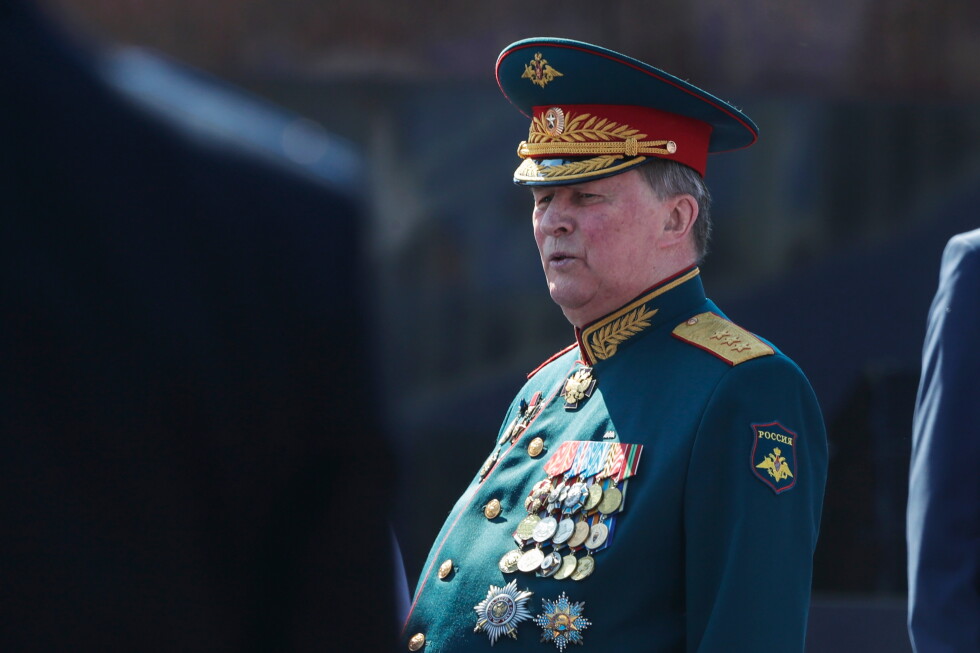
    In a formal announcement from the Kremlin, Russia has confirmed the passing of Sergei Ivanov, a towering figure in domestic politics and one-time close confidant of President Vladimir Putin, at the age of 73.

    The statement released Friday confirmed Ivanov’s death but offered no further details regarding the cause of his passing, and Putin has since delivered official condolences to Ivanov’s surviving family.

    A fellow veteran of the Soviet-era KGB, like Putin himself, Ivanov rose to national prominence in 2001 when he was appointed to the role of defense minister by Putin. He held that cabinet post through 2007, a period that included his oversight of the Second Chechen War, the brutal conflict that ultimately defeated separatist efforts to break the region away from Russian control.

    The highest point of public speculation around Ivanov’s political career came in 2008, when Putin faced mandatory constitutional term limits that barred him from seeking re-election immediately, leading the incumbent president to move into the role of prime minister instead. At that time, political observers across Russia and the international community widely tipped Ivanov as Putin’s chosen successor to the presidency. In a surprise turn, however, Putin selected another long-time ally, Dmitry Medvedev, to fill the role as a temporary placeholder before Putin reclaimed the presidency in 2012. Many independent analysts have since argued that Putin passed over Ivanov due to concerns over the former defense minister’s open ambition, with fears that Ivanov would seek to hold onto the presidency rather than step aside for Putin’s return.

    Despite being passed over for the top job, Ivanov remained a core member of Putin’s ruling circle for years after the 2008 decision. He served as deputy prime minister from 2007 to 2011, before moving into the influential post of Kremlin chief of staff, a position he held from 2011 to 2016.

    In 2016, Ivanov was reassigned to the role of presidential envoy for environmental protection and transport, a post widely regarded as a ceremonial honorary retirement that carried little actual political influence. He stepped down from that position earlier in 2024.

    Like many senior Russian officials, Ivanov was targeted with coordinated economic and travel sanctions by the United States and the European Union following the launch of Moscow’s full-scale military operation in Ukraine in 2022.