博客

  • Trump’s face is added to select US passports for America’s 250th birthday

    Trump’s face is added to select US passports for America’s 250th birthday

    Ahead of the United States’ 250th anniversary of independence, the Trump administration has unveiled a highly unusual limited-edition U.S. passport design that features an official likeness of incumbent President Donald Trump, drawing immediate attention across the nation. Former President and current officeholder Trump first shared images of the redesigned internal passport pages via his Truth Social platform on Friday. One prominent spread shows Trump standing with his fists resting on the Resolute Desk in the Oval Office, with the Declaration of Independence displayed in the background and Trump’s personal signature added below the portrait.

    The U.S. State Department confirmed this week that the special commemorative passports will officially go on sale starting July 6, and will only be issued while limited supplies last. This launch marks the latest in a string of high-profile moves by the Trump administration to place the president’s name or likeness on core federal American institutions, ranging from official government websites to federal building markers and now critical national identity documents.

    In his Truth Social post, Trump captioned the reveal, “The U.S.A.’s New Passport, which says, ‘Welcome, but be good!’” Notably, the phrase does not actually appear on the passport page images Trump shared publicly. The White House subsequently reposted the photos to its official X (formerly Twitter) account, framing the new document as a “patriot passport” celebrating national heritage.

    Access to the special edition passport is heavily restricted from the start, with eligibility limited exclusively to U.S. citizens. Per State Department guidelines, applicants cannot submit requests via online portals or traditional mail. To obtain the commemorative document, individuals must schedule an in-person appointment at the Washington D.C. passport agency, or attend one of a small number of invitation-only special acceptance events hosted specifically for the launch. As of the latest update, only two such events are listed on the State Department’s official website, both held at the Washington D.C. facility, with additional events to be added at a later date once details are finalized.

    Standard-issue U.S. passports currently feature historically significant American scenes, such as the 1969 Apollo 11 Moon landing, paired with iconic national symbols including the Statue of Liberty. It remains unclear as of publication whether applicants requesting an in-person passport at the Washington D.C. agency will be able to decline the special edition and receive a standard document instead.

    The commemorative passport was first announced to the public in April, with an earlier iteration that differed slightly from the final design: the initial draft only featured a close-up portrait of Trump, carried his signature in gold ink rather than the final black ink, and did not include the “250” anniversary marking on the spread. This launch makes history as the first time a sitting, living U.S. president has been featured on an official American passport.

    The addition of Trump’s likeness to national commemorative items extends beyond passports. The U.S. Mint recently confirmed plans to release a commemorative gold coin featuring Trump as part of this summer’s 250th anniversary celebrations, and the president is also set to become the first sitting U.S. president to have his official signature added to American banknotes.

    Beyond official documents and currency, the Trump administration has long sought to leave a lasting physical imprint on Washington D.C.’s institutional landscape. In a previous high-profile move, the administration added Trump’s name to a wing of the Kennedy Center for the Performing Arts, a decision that was later reversed. The administration has also announced long-term plans to construct the “Arc de Trump,” a massive triumphal arch modeled after Paris’ iconic Arc de Triomphe, to be built in the U.S. capital.
  • As survivors are pulled from rubble of Venezuela earthquakes, relatives of missing hold out hope

    As survivors are pulled from rubble of Venezuela earthquakes, relatives of missing hold out hope

    Three days after back-to-back powerful earthquakes of magnitude 7.2 and 7.5 rocked northern Venezuela, exhausted rescue teams and civilian volunteers are locked in a frantic race against time to pull survivors from the ruins of collapsed buildings across the hardest-hit coastal state of La Guaira. Even as the rising death toll brings crushing grief to hundreds of families, the rare, dramatic rescues that have emerged from the rubble have kept a flicker of hope alive for those still waiting for news of missing loved ones.

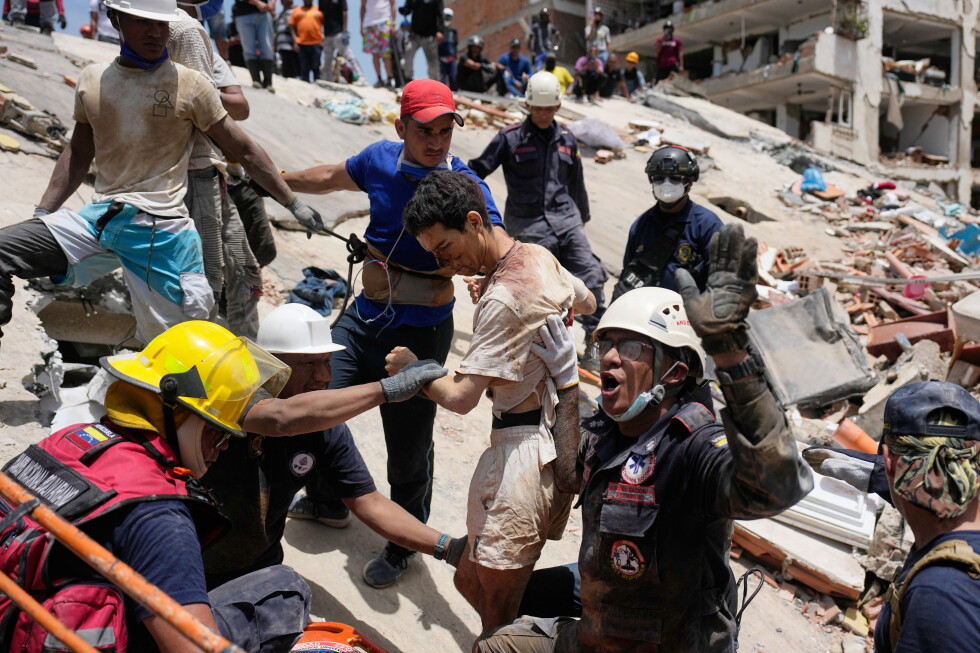
    On Friday, the most striking moment of rescue came in Catia La Mar, when Daniel Cordero, with blood on his face, was pulled out from under a fallen building. Surrounded by emergency workers who guided him onto a stretcher, Cordero’s survival came as a much-needed boost to morale for search teams and grieving communities alike, following the devastating tremors that struck Wednesday. His rescue, alongside that of a 4-year-old child and an injured elderly man who was pulled alive to cheering crowds, reminded searchers that miracles remain possible even in the disaster’s third day.

    But for far too many families, the news coming out of the rubble has been unrelentingly tragic. As of Saturday, Venezuelan government officials confirmed the death toll has climbed to at least 1,430, with thousands more injured and tens of thousands still unaccounted for. Authorities expect the number of fatalities to continue rising as search crews clear more debris.

    In La Guaira, the region that bore the brunt of the earthquakes’ destruction, stories of loss have become a daily occurrence. Daritza Polo confirmed her mother’s death on Friday, saying simply, “I have no words,” as she processed her grief. For the Rojas family, the pain came when 3-year-old Leyder and 10-year-old Leymar Rojas were pulled from the rubble wrapped in a funeral sheet. Their mother collapsed in anguish, fainting as onlookers tried to steady her, while their uncle Ramón Eduardo fought back tears speaking to reporters. “It’s horrible, we have seen way too much,” he said. Their 4-year-old brother Adrián survived the collapse, but “not all of them, we could not get them,” Eduardo added.

    Search operations continued through Saturday, led largely by local civilians who have worked nonstop under the scorching tropical sun, with a growing contingent of international rescue teams arriving to reinforce the effort. Emergency responders hold that the first 48 to 72 hours after a disaster are the most critical window for rescuing people alive, though survival windows can stretch longer if trapped people have access to clean water and food.

    Across La Guaira, many families remain in limbo, clinging to the fragile hope that their missing relatives will be the next to be pulled alive from the rubble. For Noribel Mendoza, who lived in a collapsed La Guaira building with her two adult sons, 21-year-old Andrés David and 19-year-old Ángel Eduardo, the family has had no word since the earthquakes struck. Ángela Molina Castro, the boys’ aunt, told reporters by phone from her home in Anzoátegui State that, “We don’t know if they were there, they weren’t there, if they’re in the hospital or a clinic, still nothing.” One of the boys’ aunts has camped outside the collapsed building waiting for updates, Molina Castro said, but no professional rescue teams have reached the site yet. Neighbors have tried to move heavy debris by hand, but much of the wreckage is too large for civilian crews to move on their own. After a friend and his pregnant wife were confirmed dead earlier this week, the family holds out hope their nephews’ story will be different. “It’s a tragedy that I’m living for the first time in my life,” Molina Castro said.

    Flor María González, who has waited for news since Wednesday, shares that same fragile hope. Her 33-year-old daughter Dilinyer and three grandchildren, ages 6, 8, and 10, were in their collapsed La Guaira apartment building when the earthquakes hit. González had just returned to her home in Maracaibo, in western Venezuela, after a visit to her daughters near Caracas when the tremors struck, and she has watched the search unfold from afar. Her other daughter is camped outside the rubble, waiting for any update. “We still have faith,” González said.

  • Smell of death hangs over areas devastated by Venezuela quakes as rescuers race to find survivors

    Smell of death hangs over areas devastated by Venezuela quakes as rescuers race to find survivors

    A frantic race against time is unfolding across Venezuela’s coastal state of La Guaira, where back-to-back massive earthquakes have left a trail of unprecedented destruction, leaving thousands dead, missing, and trapped beneath crumbling infrastructure. On Wednesday, a magnitude 7.2 quake was followed just hours later by a 7.5 tremor — one of the most powerful seismic events recorded in Venezuela in the past 100 years — turning entire neighborhoods into mounds of concrete and twisted metal debris. To date, national officials have confirmed at least 1,430 fatalities, a number that climbs steadily with every passing hour, and the United Nations estimates that roughly 50,000 people remain unaccounted for.

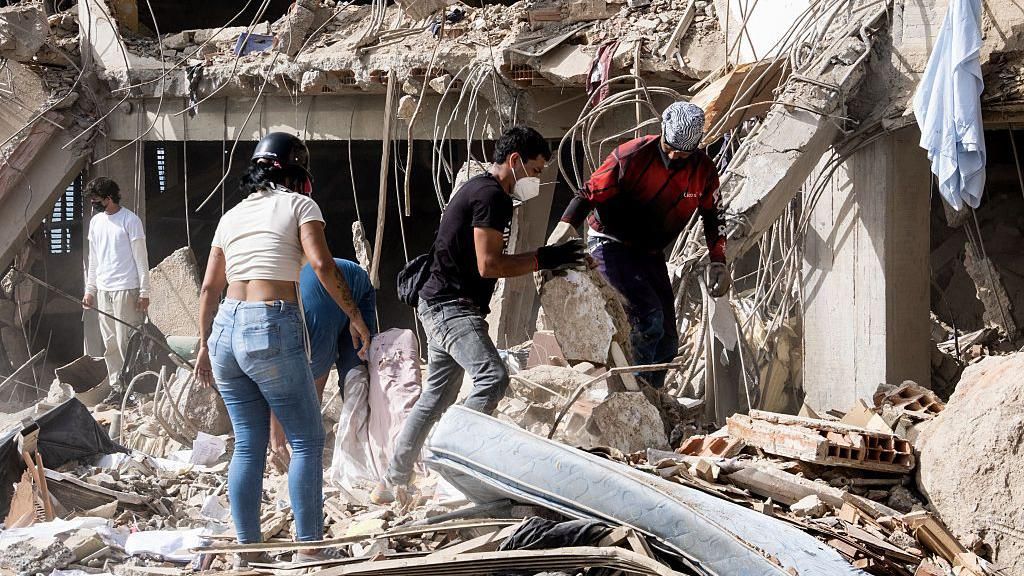
    Against this backdrop of ruin, untrained residents are leading much of the initial search effort, digging through rubble with bare hands, rusted shovels, and whatever makeshift tools they can scrounge up, with little to no heavy rescue equipment to aid their work. Drones operated by local volunteers scan hard-to-reach sections of collapsed structures from above, while crowds of anxious relatives huddle around live video feeds, scanning the rubble for any small, familiar trace of a missing loved one: a fragment of clothing, a personal belonging, any sign that might confirm they are still alive. Soldiers and international rescue teams repeatedly call for silence across search zones, pausing all activity to listen for faint taps, voices, or groans that could signal a survivor trapped beneath the wreckage.

    Stories of heartbreak and desperate hope are scattered across the disaster zone. Jesús Suárez traveled more than 200 kilometers from his home to Catia La Mar, one of La Guaira’s hardest-hit coastal towns, to search for his 20-something son Jean, who he believes remains trapped under a fallen apartment building. “There’s no information at all. People who know him say they didn’t see him come out or anything,” Suárez explained, gesturing toward the unstable pile of rubble. “I believe he might be in there. But it’s impossible to rescue him… There is no sophisticated equipment here. A human being alone cannot do it – it’s too dangerous.”

    For the family of 31-year-old Carlos Eduardo, who is also trapped, there is a fragile thread of hope: an hour and a half before they spoke to reporters, they heard him groan from beneath the debris, a sign he was still alive after similar moments of sound followed by silence the day before. “And so here we are, waiting for help, hoping we can get him out alive,” his cousin told BBC News Mundo.

    Humanitarian experts warn that the first 48 to 72 hours after a major seismic event are the most critical window for rescuing survivors alive, though that window can extend if trapped people have access to clean water and food. Venezuelan national assembly president Jorge Rodríguez emphasized the government’s commitment to transparency in the wake of the disaster, saying “Every person saved is a miracle. We will not hide anything about the scale of this tragedy.” Interim President Delcy Rodríguez said the government has deployed all available resources to the region, and has distributed emergency food and water to displaced survivors. But the scale of the disaster has overwhelmed local and national rescue capacity, even with the arrival of international assistance.

    By Friday, 861 volunteer rescuers from Mexico, the United States, Spain, the United Kingdom, El Salvador, Switzerland, Colombia, and other nations had arrived to join the effort, with more teams and supplies en route. Interim President Rodríguez confirmed she had spoken with U.S. President Donald Trump and U.S. Secretary of State Marco Rubio, who reaffirmed their commitment to sending additional rescue teams and critical aid supplies. Even with this growing international support, however, many remote neighborhoods in the hardest-hit region have yet to receive any official assistance.

    As days pass, new public health risks are emerging. Many survivors report a strong odor of decaying bodies across search zones, raising fears of outbreaks of disease that could put local residents and children at particular risk. “There’s a smell… the dead are already being felt. That’s going to make us and the children sick,” said Glendys Delgado, a La Guaira resident whose neighborhood has not received any government support, even as private volunteers from the capital Caracas have stepped in to bring donated food.

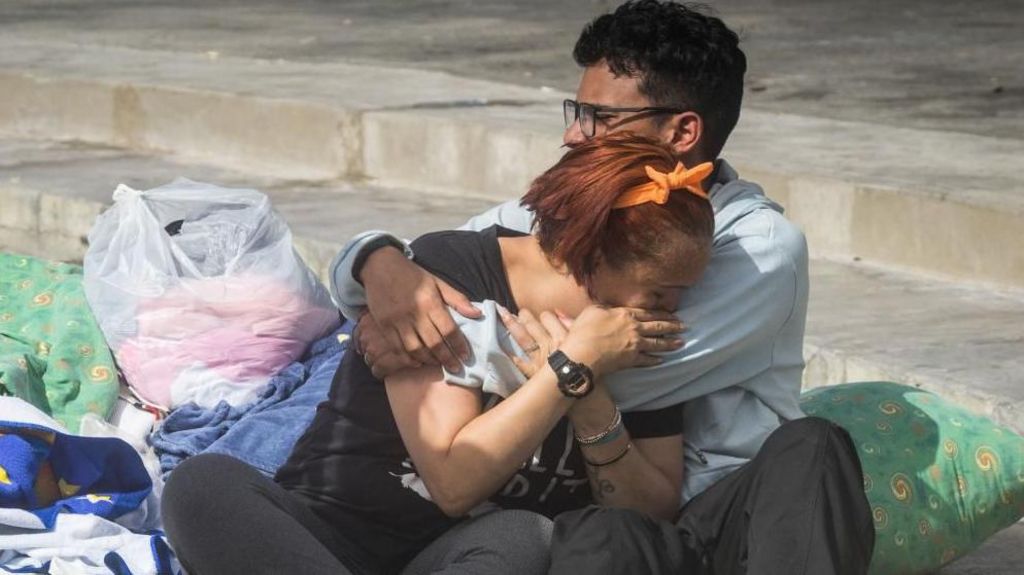
    For thousands of displaced survivors, the disaster has erased decades of hard work in an instant. Many are now sleeping in open, public spaces like the damaged but still usable closed Simón Bolívar International Airport car park, where families can avoid the risk of falling debris from damaged structures. Alexandra Gabino, a 28-year-old mother of two young children aged two and seven, lost her entire home in the quake, and is now sleeping in her family’s car alongside her husband and kids. “It’s painful to be left with nothing. My mother lost her home, we lost our home, we have nothing. You try to stay strong for your children,” she said. “Everyone says what matters is that you’re alive – and yes, but everything you’re going through hurts: seeing people suffer, hearing people scream, seeing children trapped, and the helplessness of not being able to do anything because you have to stay and look after your own children. You try to be strong, but it hurts.”

    Across the disaster zone, survivors echo the same desperate plea: more help, more equipment, and faster action to pull their loved ones out alive before the critical window for rescue closes. As one survivor put it, after returning to the ruins of her home to retrieve just a single usable appliance: “It’s a very difficult situation, we’re not prepared for this. The sacrifices and efforts you make to achieve things – and in the blink of an eye, everything collapses. But what matters is life. We are waiting for humanitarian aid – we need them to come to help us.”

  • Watch: A race against the clock for Venezuela earthquake rescuers

    Watch: A race against the clock for Venezuela earthquake rescuers

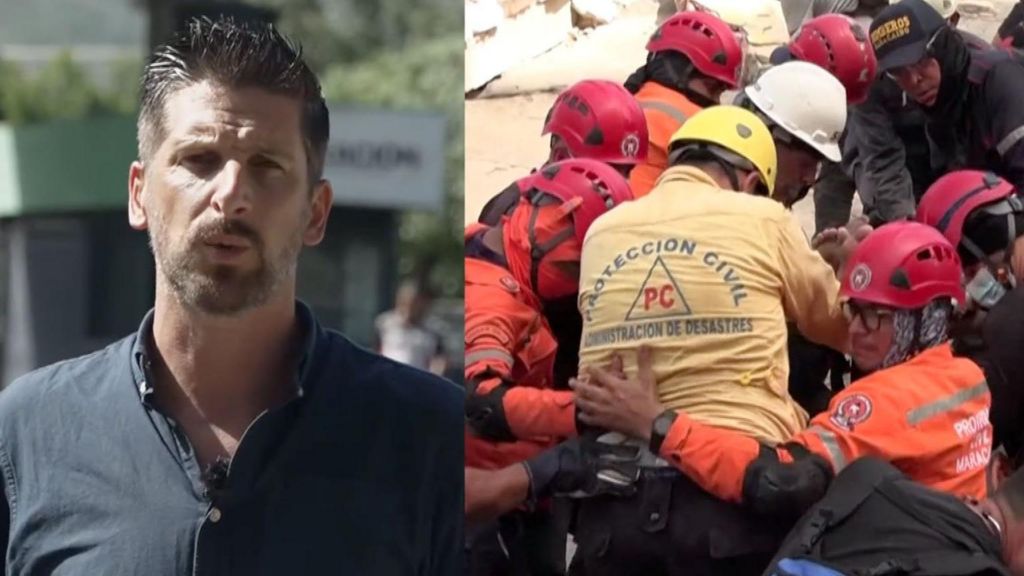
    Rescue teams operating across Venezuela’s earthquake-stricken regions have entered the most high-stakes phase of their operation, with rescue workers and senior correspondents warning that the coming hours will prove decisive in the search for any survivors still trapped beneath rubble.

    BBC correspondent Dan Johnson, reporting directly from the shared border between Venezuela and neighboring Colombia, has underscored the acute urgency of the ongoing mission. The narrow window of survival for anyone trapped following a major seismic event narrows rapidly as time passes, making each passing minute critical for extraction teams working to clear debris and reach affected areas. Cross-border coordination between Venezuelan emergency services and Colombian response teams has already been activated, as authorities work to mobilize all available resources to the disaster zone before the critical survival window closes.

    Disaster response experts note that after major earthquakes, the first 72 hours are widely considered the ‘golden period’ for rescue operations, when the chances of pulling trapped survivors alive remain highest. With that window rapidly winding down, all available personnel and equipment are being pushed to their limits in this high-stakes race against the clock.

  • Hezbollah supporters protest in Beirut against Israel deal

    Hezbollah supporters protest in Beirut against Israel deal

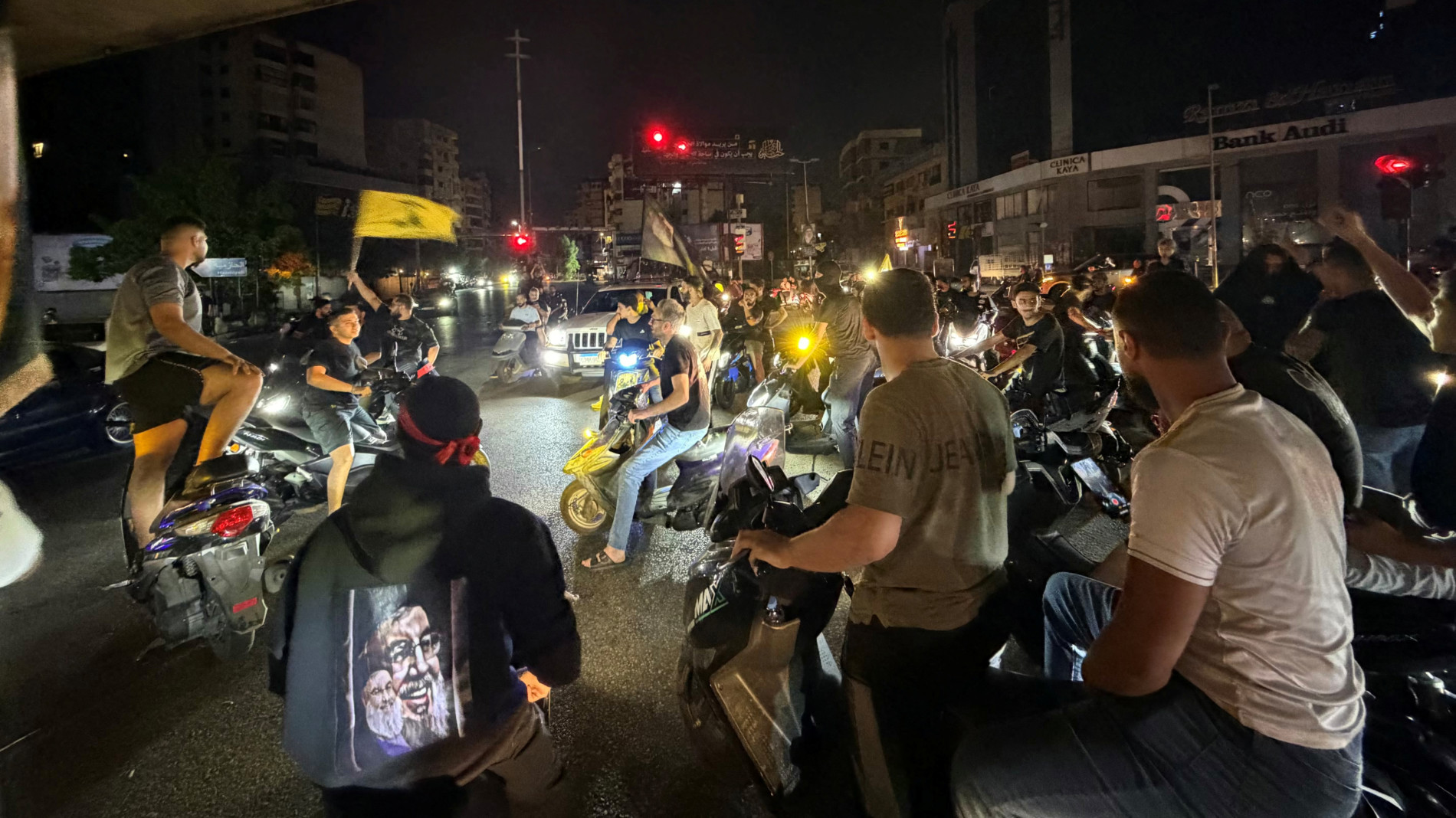
    Fresh turmoil has erupted in Lebanon’s capital Beirut after hundreds of Hezbollah supporters launched mass street demonstrations opposing a landmark framework agreement brokered by the United States between Beirut and Jerusalem to end months of cross-border fighting. The protests, which stretched from late Friday into Saturday, saw demonstrators cruise through central Beirut, near the national parliament building, and along the key airport highway on motorbikes and mopeds, just hours after the deal was formally announced in Washington.

    Local media and social media footage captured crowds of protesters gathering in Dahieh, Hezbollah’s stronghold in southern Beirut — a neighborhood that was heavily damaged by Israeli airstrikes during the recent escalation of hostilities. Lebanon’s state-run National News Agency (NNA) confirmed that some demonstrators blocked a major arterial road near the prime minister’s office, while other groups used burning tires to shut down the airport road. Lebanese military forces intervened to disperse the blockading protesters, reopened the route, and deployed temporary security checkpoints across multiple districts of Beirut to contain unrest.

    The framework deal, hammered out over five rounds of direct negotiations between Israeli and Lebanese delegations in the U.S. capital, outlines a pilot plan that would see Lebanese armed forces take control of two small parcels of territory currently held by Israeli troops, alongside a formal process aimed at disarming Hezbollah, the Iran-aligned militant group that has long operated as a de facto military force independent of the Lebanese state. Critically, the agreement leaves the timeline and conditions for a full Israeli withdrawal from all occupied areas of southern Lebanon undefined, tying any pullout to improved security conditions and the elimination of what Israel defines as threats to its territory — effectively making full withdrawal dependent on the completion of Hezbollah’s disarmament.

    Hezbollah has repeatedly rejected any demand to surrender its weapons as long as Israeli occupation of Lebanese territory remains in place and the country faces security threats from Israel. Hassan Fadlallah, a senior Hezbollah member of Lebanon’s parliament, issued a stark warning Friday, arguing that Lebanese national authorities would only be able to enforce the Washington-brokered deal if they launched a civil war against the group with backing from the U.S. He added that the agreement was an intentional effort to undermine a prior U.S.-Iran understanding designed to prevent a full-scale regional war that would engulf Lebanon, and that no provision of the deal would be implemented without Hezbollah’s acquiescence.

    Even as protests unfolded in Beirut, cross-border activity continued Saturday: the NNA reported that an Israeli military drone carried out a strike in the Nabatieh region of southern Lebanon, and a second drone dropped an explosive sound device near a Lebanese army checkpoint in the town of Nabatieh al-Fawqa.

    Fadlallah reaffirmed that Hezbollah would actively resist all attempts to enforce the deal, and that the group would only strengthen its hold on its weapons stockpiles. He emphasized that Hezbollah’s opposition is uncompromising and would block the Lebanese government from meeting any of its commitments under the framework, but stressed that the group has no intention of clashing with the Lebanese national army. “The army will remain, the resistance will remain and the people will remain,” Fadlallah said.

    Israeli Prime Minister Benjamin Netanyahu welcomed the deal, framing it as a diplomatic victory that allows Israeli forces to maintain their occupation of southern Lebanon until Hezbollah is fully disarmed. He positioned the agreement as a significant setback to Iran, which has long backed Hezbollah as a proxy force. “Iran is trying to force us into a withdrawal from southern Lebanon by force. In effect, Israel, Lebanon, and the United States are telling them: this is none of your business,” Netanyahu said.

    A senior anchor on Israel’s Channel 12 echoed a common strategic reading of the deal, noting that sowing internal division in Lebanon has long been a core Israeli policy goal. “It seems we’re leading Lebanon to a civil war. Maybe it’s not so bad for us, let the Lebanese government fight Hezbollah… That’s been the goal from the start,” the anchor said.

    The emerging standoff over the framework agreement has already raised fears of renewed domestic unrest in Lebanon, a country already grappling with a years-long economic collapse and the lingering fallout of months of cross-border conflict between Israel and Hezbollah.

  • Iran and US trade attacks in worst escalation since peace deal

    Iran and US trade attacks in worst escalation since peace deal

    Tensions between Iran and the United States have surged to their most dangerous level since the two parties signed an interim peace deal to end a four-month conflict, after a pair of consecutive days of reciprocal strikes that have threatened stability across a critical global waterway.

    The spiral of violence was triggered by an attack on a cargo vessel on Thursday, after which both sides traded accusations that the other had broken the terms of the ceasefire agreement. Washington immediately pinned responsibility for the assault on Tehran.

    Just two days later, the United Kingdom’s leading maritime security watchdog, UK Maritime Trade Operations (UKMTO), confirmed another incident: a commercial tanker was hit by an unguided projectile while transiting the Strait of Hormuz. The strike caused significant damage to the vessel’s bridge, but official updates confirmed that all crew members escaped unharmed, and no leakage of fuel or cargo has resulted in environmental damage to the strait’s waters.

    In response to the string of recent hostile incidents, the Joint Maritime Information Center — a multinational naval coalition tasked with safeguarding commercial shipping in the region — has announced an upward adjustment to its regional security threat level, stepping up defensive patrols and alerting commercial operators to increased risks.

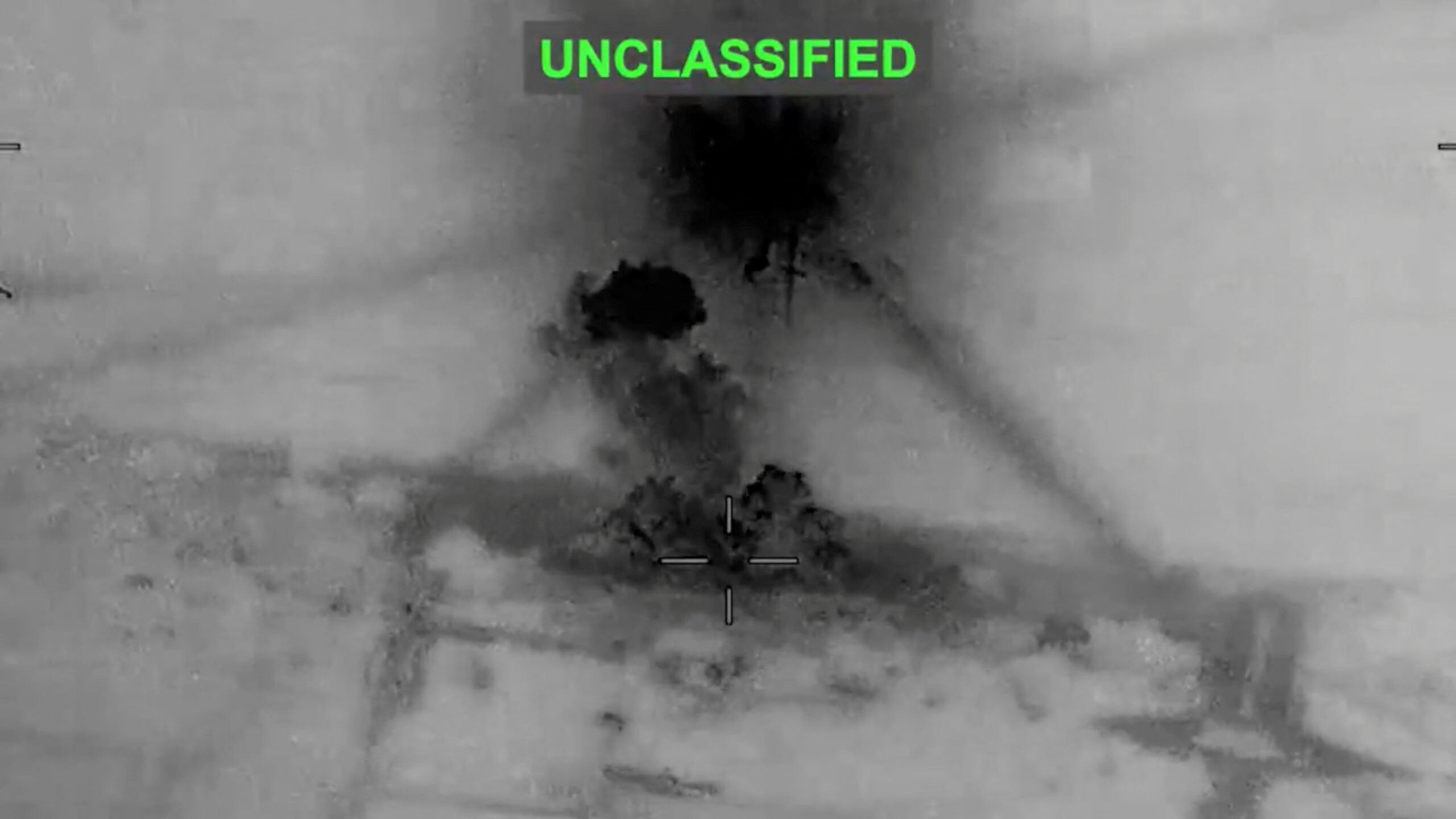
    On Saturday, Iranian officials confirmed that they had launched what they described as “defensive” strikes against military targets with links to the United States. The operation was framed as a direct response to US airstrikes that hit Iranian facilities on the country’s southern coast the previous day. Tehran condemned the US attack as a “barbaric air strike” that targeted coastal surveillance outposts, arguing that the action violated core principles of the United Nations Charter.

    While Iran’s foreign ministry declined to disclose the exact locations of its retaliatory strikes, Bahrain — which hosts the US Navy’s Fifth Fleet — issued a formal condemnation of what it called an Iranian drone strike on Bahraini territory.

    For its part, the US military defended its own pre-emptive strikes, saying they were carried out in direct response to an Iranian drone attack on the cargo vessel in the Strait of Hormuz.

    The Strait of Hormuz, one of the world’s most vital chokepoints for global energy supplies, has seen a resumption of regular commercial traffic over the past two weeks after months of disruptive tensions. In that period, Iran has moved aggressively to assert its sovereign authority over shipping transiting the waterway, requiring vessels to obtain Iranian approval to use designated transit channels. While Tehran has not issued an official comment on specific reports of attacks on commercial ships, Iranian state television reported that the Islamic Revolutionary Guard Corps had fired warning shots at vessels that attempted to use unapproved channels. The incident has pushed a growing number of commercial shipping operators to apply for Iranian transit permits before entering the strait.

    US Vice President JD Vance issued a public statement reaffirming that Washington had fully abided by the terms of the ceasefire agreement, and placed sole blame for the renewed escalation on Iran. “Iran signed a ceasefire agreement. We have honored it. If they have disagreements about how the MOU is being applied, they can pick up the phone. But violence will be met with violence,” Vance wrote in a post on the social platform X.

  • England end New Zealand’s reign of Women’s T20 World Cup and Ireland finally win

    England end New Zealand’s reign of Women’s T20 World Cup and Ireland finally win

    The 2024 Women’s Twenty20 World Cup delivered a dramatic day of group-stage cricket at London’s iconic Oval and Bristol’s County Ground on Saturday, as defending champion New Zealand saw their title defense end in a nine-wicket defeat to host England, while Ireland pulled off two historic upsets to end a 12-year winning drought.

    Heading into the final round of group matches, New Zealand’s path to the semifinal was already a long shot: the White Ferns had dropped three of their previous five matches, and only stayed in contention when Ireland defeated the West Indies by six wickets earlier the same day. That result set up a do-or-die clash between New Zealand and England, with the winner claiming the group’s second semifinal spot behind the already-qualified hosts.

    New Zealand won the toss and opted to bat first, getting off to a promising start with a 70-run opening partnership between Isabella Gaze and Melie Kerr. But a sudden mid-innings collapse turned the tide: Gaze, Kerr and Izzy Sharp were all dismissed in the space of just four deliveries. A 74-run stand between Brooke Halliday and Sophie Devine steadied the innings, only for both batters to be out in the same over just a few overs later. Late hitting from Maddy Green and Suzie Bates pushed New Zealand to a final total of 163 for six, a score that ultimately proved too small to defend.

    England’s chase got a lucky break early, when Danni Wyatt-Hodge was dropped behind the stumps before she had scored, then missed a stumping opportunity when she was on 13. She made New Zealand pay dearly for those mistakes, bludgeoning an unbeaten 89 off just 53 balls, decorated with 15 fours and one six. Wyatt-Hodge shared an unbroken 128-run opening partnership with stand-in Sophia Dunkley, who contributed 49 not out off 38 balls, filling in for injured England captain Nat Sciver-Brunt. England reached the target of 164 for the loss of just one wicket with 16 full overs balls to spare, in front of a crowd of 21,018 spectators — a new tournament record for attendance at a group-stage match.

    With the win, Wyatt-Hodge also cemented her place in T20 World Cup history: she now sits atop the tournament’s run-scoring rankings with 282 runs, breaking the previous record of 259 runs set by Australia’s Beth Mooney at the 2020 edition, with potentially two more matches still to play. Speaking after the match, Wyatt-Hodge paid tribute to the Oval pitch and her batting partner, saying: “I knew it was a beauty of a pitch, and I loved batting out there with Dunks.”

    For New Zealand, the defeat marked the end of an era: star veterans Sophie Devine, Suzie Bates, and bowler Lea Tahuhu, who have accumulated a combined 900 international appearances for the White Ferns, played their final matches in a New Zealand uniform. England honored their careers with a traditional guard of honour as they walked off the field for the final time.

    Ireland’s victory over the West Indies earlier in the day was equally historic, ending a 12-year, 21-match losing streak across five T20 World Cup tournaments for the Irish women. It also marked a landmark 24 hours for Irish cricket, coming just one day after the Irish men’s team secured their first ever T20 win over India in Belfast.

    Batting first, the West Indies struggled to find momentum on a slow, tricky pitch in Bristol, finishing their 20 overs at 128 for seven. Irish spinners Cara Murray and Aimee Maguire kept the West Indies batters pinned down, with only captain Hayley Matthews (22), Deandra Dottin (21), and a late quickfire 27 not out from Chinelle Henry reaching double figures. Three dropped catches by Irish fielders did gift the West Indies three unnecessary boundaries, but the total remained within reach for the Irish side.

    Orla Prendergast led Ireland’s chase, anchoring the innings with an aggressive 63 off 44 balls that included her second fifty of the tournament. She survived an early lbw dismissal after a successful review, and shared a 62-run partnership with opener Amy Hunter before being caught in the 16th over, just 21 runs short of the target. Lower-order batters Rebecca Stokell and Louise Little finished the job, with Little hitting the winning boundary to seal a six-wicket win with 11 balls remaining. A visibly relieved Prendergast said after the match: “We have had the belief throughout but it had not come together just yet. Just so much relief to have that win and so much happiness.”

    In the final match of the day in Bristol, Pakistan picked up their first win of the tournament, beating debutant Netherlands by 37 runs in a clash between two previously winless sides. The Dutch had high hopes for their first ever World Cup win, and restricted Pakistan to 126 for six after a strong bowling performance, led by Iris Zwilling, Heather Siegers and Hannah Landheer. Only opener Gull Feroza prevented an even lower total: dropped on 10, she made the most of her second chance to carry her bat through the innings, scoring an unbeaten 52-ball 63 — her first T20 World Cup half-century — and shared a 79-run stand with Ayesha Zafar (32).

    Pakistan’s bowlers responded with a dominant performance, dismissing the Netherlands for just 89 runs in 18 overs. Zafar starred with the ball, taking a career-best three wickets for just 13 runs, before captain Fatima Sana wrapped up the win by taking three wickets in the final over, including the dismissal of Dutch top-scorer and captain Babette de Leede (30).

    The remaining two semifinal spots will be decided on Sunday, when Australia, South Africa and India face off to claim their places in the knockout stage of the tournament.

  • Tens of thousands march in the first Budapest Pride since Viktor Orbán was voted out

    Tens of thousands march in the first Budapest Pride since Viktor Orbán was voted out

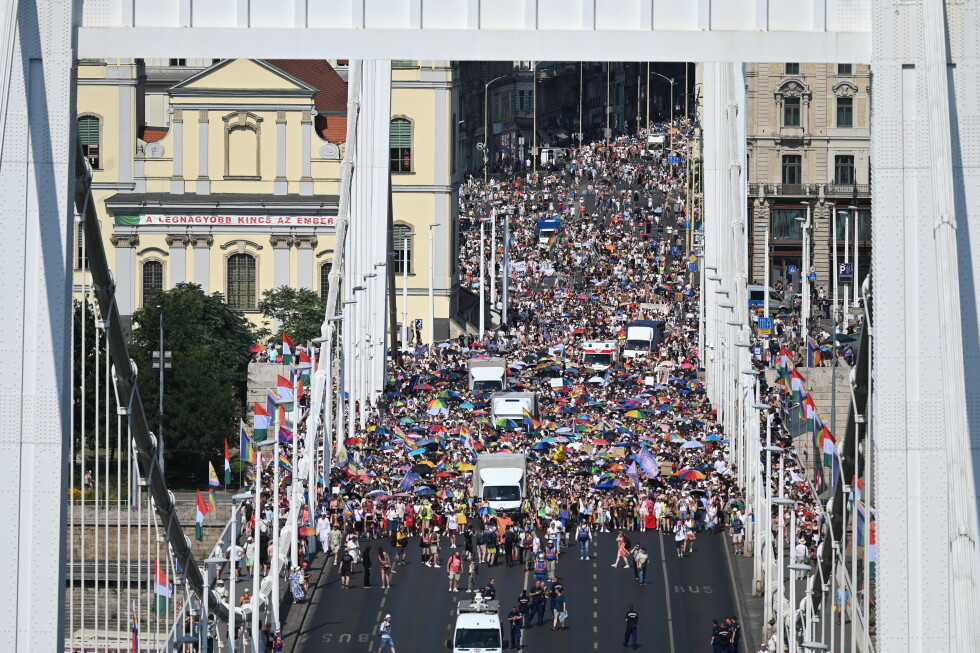
    BUDAPEST, Hungary — Tens of thousands of Hungarians and their allies defied a record-breaking European heat wave to gather in the nation’s capital Saturday, marking the 31st annual Budapest Pride parade — the first fully authorized demonstration of its kind since populist former Prime Minister Viktor Orbán, who spent 16 years pushing anti-LGBTQ+ policies and attempted to ban the event entirely, was removed from power in April’s general election.

    As temperatures climbed to a sweltering 38 degrees Celsius (100 Fahrenheit) amid the ongoing heat dome sweeping across most of the continent, event organizers made sure attendees stayed safe by distributing free bottled water, while Budapest’s public water utility activated additional public fountains along the entire parade route to offer constant access to cool water.

    The procession kicked off at Budapest’s world-famous Hungarian State Opera House, winding through the bustling central streets of the capital before crossing the iconic Erzsébet Bridge spanning the Danube River that cuts through the heart of the city. LGBTQ+ Hungarians and their supporters danced to upbeat music, cheered, and waved vibrant rainbow flags as they marched, creating a mood of celebration and cautious optimism not seen at recent Pride events in the country.

    Luca Új, a participant attending her third Budapest Pride march, noted a palpable shift in atmosphere compared to events held under Orbán’s administration. “There used to be a lot of tension when we marched. But now I see people as being somehow happier, and there are more older people joining too, which is a really nice change,” she shared.

    Saturday’s event comes just over a year after Orbán’s nationalist-populist government pushed through both formal legislation and a constitutional amendment to outlaw Pride parades entirely, a move that sparked widespread condemnation from global human rights organizations and political leaders across the European Union. Even with the ban in place, 2024’s Pride event went forward as scheduled in open defiance of the government, drawing a record 350,000 attendees to become the largest demonstration in the event’s history. That massive turnout, which came despite months of government insistence the march would never be permitted, was widely seen as a major rebuke that weakened Orbán’s political standing ahead of the April election.

    Orbán and his Fidesz party were handily defeated in the April vote by center-right challenger Prime Minister Péter Magyar and his opposition Tisza party. While Hungary’s new governing coalition has not yet formally repealed the Orbán-era ban on Pride events, national police granted full official authorization for this year’s march and deployed uniformed officers to provide security along the entire route.

    Kristóf Györgyi, a first-time Pride attendee who traveled to the capital from the southern Hungarian city of Szeged, said he holds significant hope that the new government will move to expand equal rights for LGBTQ+ Hungarians, bringing the country into line with protections common across most of the European Union.

    He pointed to ongoing parliamentary debate over adoption rights for same-sex couples — a debate that would have been unthinkable under the previous administration, which implemented a full ban on same-sex adoption and same-sex marriage. “The fact that there’s already a debate in Parliament about whether an orphaned child is better off with a loving same-sex couple or in an orphanage is a positive sign,” he explained. “Obviously, the laws haven’t changed yet, but there are already many signs of hope for our community.”

    For more than a decade, Orbán’s government framed Pride celebrations — which are held globally to honor LGBTQ+ visibility and advance demands for equal legal and social rights — as a threat to children’s moral and spiritual development, a claim that has been repeatedly rejected by independent human rights groups and child development experts across the continent.

    Just months before the election, in April 2025, the European Court of Justice — the EU’s highest judicial body — ruled that a 2021 Orbán-era law banning access to LGBTQ+ inclusive content for minors violates core European Union law, and breaches the bloc’s foundational treaty guarantees for human rights and legal equality.

  • World Cup final day of group play will set the field for the round of 32

    World Cup final day of group play will set the field for the round of 32

    As the 2026 FIFA World Cup co-hosted by the United States, Canada, and Mexico enters its final day of group-stage competition, eight national sides remain locked in a tight battle for the four remaining spots in the tournament’s round of 32. So far, the three co-host nations have all secured their place in the knockout rounds, joining pre-tournament favorites and top-ranked sides including France, Germany, Spain, Portugal, Brazil, and Norway, among other successful qualifiers.

    With group-stage play winding down, the knockout bracket is already taking clear shape. The host United States, whose two-game winning streak was brought to a halt by a defeat to Turkey, will open their knockout campaign against Bosnia-Herzegovina on July 1 in Santa Clara, California. Ranked 62nd in the FIFA world rankings, Bosnia-Herzegovina earned its knockout spot as the third-place finisher in Group B with four points from one win, one draw, and one loss. The match marks a welcome return to full contention for U.S. star Christian Pulisic, who came off the bench in the second half against Turkey after recovering from a calf injury that forced him out early in the opening win over Paraguay. “We play every game like a knockout game,” said U.S. midfielder Sebastian Berhalter, who found the back of the net against Turkey. “You saw that in our intensity and the way we worked. For us, it’s keep doing what we’ve been doing.”

    Canada, which made history by reaching its first World Cup knockout stage as Group B runner-up with four points, will face South Africa, another historic qualifier that also earned four points as Group A runner-up including a stunning upset win over South Korea, in Southern California on June 28. This marks the first time both nations have progressed to the knockout round of a men’s World Cup.

    Other confirmed high-profile round of 32 fixtures are already set across the three host countries. Five-time World Cup champion Brazil will face Japan on June 29. Japan secured its place as Group F runner-up with a hard-fought 1-1 draw against Sweden, a matchup that carries extra narrative: Brazilian football legend Zico was brought in by Japan’s football association in 1991 to professionalize the nation’s domestic league and support its successful co-host bid for the 2002 World Cup, making this clash a full-circle moment for Japanese football to show how far the program has come against the global gold standard. After an opening draw against Morocco, Brazil bounced back to win its next two group games 3-0, with Vinícius Júnior silencing early critics and star forward Neymar returning to form after a minor injury. Japan, for its part, earned two draws and a dominant 4-0 rout of Tunisia to book its knockout spot.

    Also on June 29, the Netherlands, who topped Group F after outscoring opponents Sweden and Tunisia by a combined 8-2, will face Morocco, the 2022 World Cup semifinalists that finished unbeaten in Group C and are chasing history to become the first African nation to lift the World Cup trophy. That same day, four-time champion Germany will face Paraguay. Like the U.S., Germany clinched its group spot early and rested key players in its final group game, resulting in a late low-stakes defeat, but enter the knockout round as heavy favorites against Paraguay, who lost 4-1 to the U.S. in its opener but recovered enough to claim a knockout spot.

    On June 30, tournament favorite France, who won all three of its group matches to live up to pre-tournament expectations, will face Sweden, which holds a 5-1 win, 5-1 loss, and one draw from group play. That same day, Norway, which rested star striker Erling Haaland and nearly all of its starting lineup in its final group game after failing to catch France at the top of Group I, will face Ivory Coast at the home of the Dallas Cowboys in Arlington, Texas.

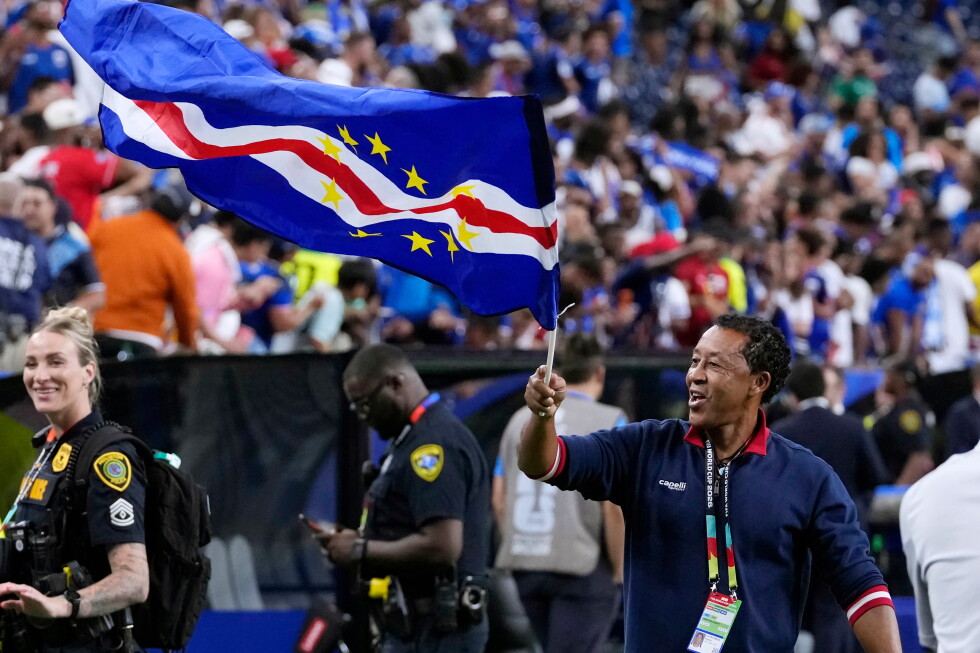
    Two more round of 32 matches are set for July 3. Australia, which picked up one win, one loss, and one draw in group play, will face Egypt, who advanced as Group G runner-up after a late late equalizer from Iran was ruled out for offside. In the other July 3 fixture, defending World Cup champion Argentina, who already sealed top spot in Group J, will face Cape Verde, the smallest nation ever to qualify for a World Cup knockout stage, who enter the match as massive underdogs.

    The path to the round of 32 for third-place teams follows a specific format: only the top eight third-place finishers across all groups advance, with tiebreakers decided first by goal differential, then by total goals scored if needed. So far, any team that has earned four points from three group games has secured a knockout spot, with Bosnia-Herzegovina, Sweden, Ecuador, and Paraguay all advancing via this route. Scotland, by contrast, is a long shot to qualify with three points, and needs multiple favorable results to break into the knockout stage, leaving its passionate fanbase waiting on a series of unlikely outcomes.

    On the final day of group play, three key matchups will decide the last remaining qualification spots. At 5 p.m. ET, Group L will wrap up with Panama facing England and Croatia taking on Ghana. Panama has already been eliminated, while England and Ghana will advance with any result other than a lopsided loss, and can still progress even in defeat if the margin is small. Croatia advances with either a win or a draw. In Group K kicking off at 7:30 p.m. ET, Colombia faces Portugal and Congo takes on Uzbekistan. Colombia has already advanced, and will finish top of the group with a win or draw against Portugal, who will advance with a draw and claim first place with a win. Congo advances with a win or draw and is eliminated with a loss, while Uzbekistan is a long shot that needs a dominant victory to qualify. Finally, at 10 p.m. ET in Group J, Algeria faces Austria and winless Jordan takes on already-qualified group winners Argentina. Jordan has been eliminated, and barring a multigoal Croatia defeat to Ghana, the winner of Algeria-Austria will advance, while the loser retains an outside chance. A draw would see Austria qualify, and would likely send Algeria through as well.

  • In Caracas, this feels like the hardest moment in Venezuela’s modern history

    In Caracas, this feels like the hardest moment in Venezuela’s modern history

    Venezuela is grappling with the devastating aftermath of back-to-back earthquakes that have left thousands homeless, scores missing, and communities across the capital Caracas and coastal regions reeling from widespread destruction. Days after the tremors hit, survivors wake each morning to a grimmer reality, as hopes of finding trapped missing loved ones alive continue to dwindle. Many have spent nights sleeping rough in public spaces, traumatized by nightmares of collapsing structures and haunted by their sudden loss.

    For 50-year-old former police officer Jan Carlos Roa Garcia and his family, life has been upended overnight. While their Caracas apartment building did not fully collapse, severe structural damage has rendered it unsafe to reoccupy. Speaking through tears, Garcia said he feels lost about how to rebuild his family’s life after the disaster. “If I were 30 instead of 50, maybe I could start over. But I have no idea where to begin, and up until now, no government official has reached out to us,” he explained. Though exhausted and frustrated, the longtime public servant refrained from harsh public criticism of the official disaster response.

    Local musician Zaira Castro, who lives just a block from two leveled buildings in the heavily damaged Chacao district of Caracas, had no such hesitation. “Everyone is deeply frustrated because the government has not delivered the urgent, serious support we need right now,” Castro said from a neighborhood plaza. “Right now, it is ordinary Venezuelans helping each other. We have learned to rely on one another because the government does not exist for us in moments like this.”

    When interim president Delcy Rodriguez visited the Chacao area alongside the local mayor to assess the damage, she was met with open anger from displaced residents. One resident yelled at the delegation that officials were “campaigning in the middle of a tragedy” while the government did nothing to support affected families.

    The reporter has a personal connection to the damaged area, having lived in Los Palos Grandes, one of the hardest-hit neighborhoods in Chacao, during their time as BBC Venezuela Correspondent. Their former apartment building sits just meters from the collapsed Petunia building, where rescue crews have worked around the clock to reach people trapped under the rubble. A friend recently shared on social media that her mother is among those still missing at the Petunia site. It was a small relief to find the reporter’s former apartment building, Alheli, still standing, with its friendly long-time caretaker Pedro still greeting residents on the front porch. Even among unharmed buildings, residents are shaken: one elderly resident twisted her ankle fleeing during the tremors, and all said they had never experienced a disaster of this scale in Venezuela in their lifetimes.

    The desperation is far more acute in the worst-hit regions, particularly the coastal town of La Guaira, where more than 100 buildings have been completely flattened, leaving an apocalyptic landscape. As rescue efforts stretch past the critical 72-hour window, fading hopes have fueled growing public anger. “There are still people trapped under that concrete, we need heavy machinery to reach them,” pleaded Eileen Lada, a La Guaira resident who lost her home. “Please, send help.”

    Amid the widespread despair, moments of hope have emerged: rescue teams, both local and international, have pulled several survivors out of the rubble, including a newborn baby rescued in a widely shared operation. Videos circulating on social media show rescue workers celebrating small victories with the characteristic determination and warmth of Venezuelan people, moments that have moved viewers across the country.

    Local hospitals along the northern coast are already stretched to breaking point. Venezuela’s healthcare system has suffered from decades of systemic underfunding, and it is now being forced to respond to a disaster that would overwhelm even better-resourced nations. Doctors and nurses are working tirelessly in impossible conditions to treat the injured, but survivors’ accounts of their experiences paint a grim picture. “It was horrific – so many people dead, so many family members missing,” Maria Vargas, a survivor recovering from her injuries in a hospital bed, told AFP. “I lost my entire home, but we are alive, thank God.”

    The first 48 hours after an earthquake, widely considered the most critical window for rescuing trapped survivors, has long passed. For a country that has already endured years of political and economic crisis, this disaster now stands as one of the darkest moments in Venezuela’s modern history.