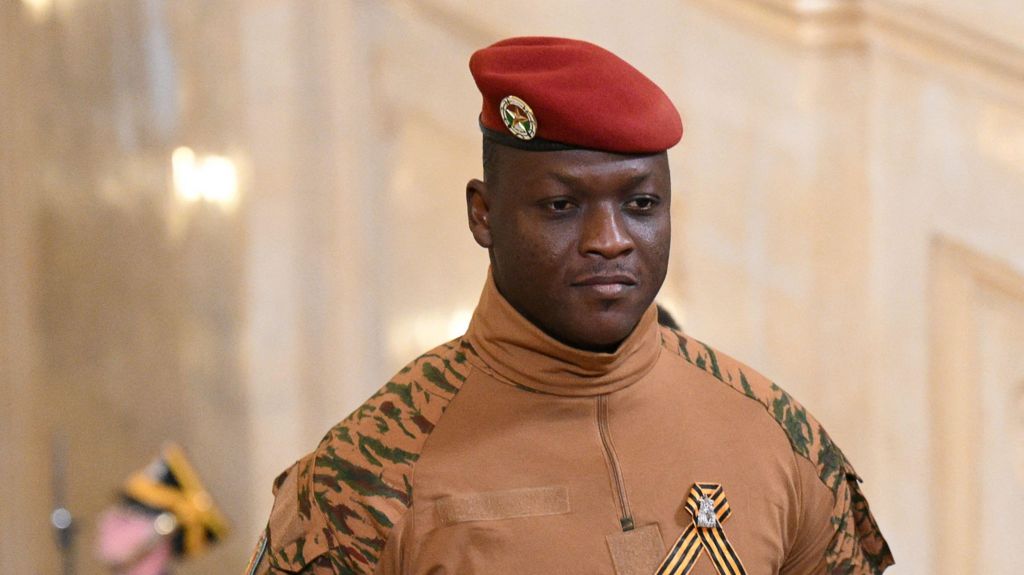
In a sharp escalation of tensions that have been simmering for more than two years, Burkina Faso’s military-led government has formally severed all diplomatic relations with France, marking one of the most significant breaks between the West African nation and its former colonial ruler in modern history. The split comes after years of escalating friction that began when Captain Ibrahim Traore seized control of the country in a 2022 coup, after which the new junta quickly pivoted away from longstanding Western alliances and toward alternative partners including Russia and China. The announcement was delivered in a nationally televised address Friday by Communications Minister Pingdwendé Gilbert Ouédraogo, who laid out the junta’s full slate of grievances against Paris. Ouédraogo accused France of engaging in “ceaseless activism” that directly undermines Burkina Faso’s national interests, leveling fresh claims that France continues to harbor overt neo-colonial ambitions for the Sahel region nation. The statement further alleged that France provides covert support to subversive networks operating within Burkina Faso and actively works to marginalize the country in global diplomatic forums. After more than two years of escalating disagreements, Ouédraogo emphasized that the fundamental conditions for mutually respectful bilateral relations no longer exist between the two governments. In a carefully worded clarification, the minister added that the severance of ties applies only to official institutional diplomatic relations, and does not challenge the deep historical, cultural, social and people-to-people ties that connect the populations of both countries. The French Ministry of Foreign Affairs quickly pushed back against the decision, dismissing the junta’s claims as “hostile and unfounded.” In a formal response, the French foreign ministry argued that the move underscores what it called a “troubling drift” by Traore’s administration, and issued an urgent advisory urging all French citizens currently residing in Burkina Faso to exercise extreme vigilance amid the rising diplomatic uncertainty. This formal break in relations is the culmination of a steady deterioration of ties that began immediately after Traore’s 2022 coup. Within months of taking power, Traore expelled all French combat troops that had been deployed to the country to support counter-insurgency operations, marking an end to a partnership that had stood for years. France has not had a sitting ambassador in Ouagadougou since January 2023, and in 2024, Burkina Faso expelled three senior French diplomats over unsubstantiated claims of subversive activity—claims that Paris immediately and categorically denied. Like its neighboring military-ruled states Mali and Niger, Burkina Faso has been locked in a brutal decade-long battle against Islamist insurgent groups across its territory, a conflict that once saw French forces fighting alongside Burkinabe troops to counter extremist expansion. Since taking power, Traore’s government has repeatedly accused France of pursuing a hidden “secret agenda” in the Sahel, justifying its decision to reorient the country’s foreign policy toward Moscow and Beijing. Beyond its split with France, the Traore administration has overseen a series of major shifts in Burkina Faso’s regional and political standing. The junta initially pledged to restore civilian democratic rule by 2024, but later backed out of that commitment and formally dissolved all national political parties in January 2025. Just weeks after that move, Burkina Faso joined Mali and Niger in officially withdrawing from the Economic Community of West African States (ECOWAS), the region’s leading political and economic bloc, to launch a new alternative regional alliance called the Alliance of the Sahel States.
博客
-

Newborn baby rescued from Venezuela earthquake rubble
A stunning story of survival has emerged from the wreckage of catastrophic seismic events that struck Venezuela this Wednesday, as rescue teams pulled a newborn baby alive from collapsed building rubble. The remarkable rescue comes in the wake of a devastating natural disaster that shook the South American nation: two massive earthquakes struck mere seconds apart, leaving a trail of death and destruction across affected regions. As of the latest official updates, the confirmed death toll from the twin quakes has climbed to at least 920 people, with many more still missing or injured amid the flattened structures and broken infrastructure. Emergency response teams have been working around the clock to dig through debris, searching for any signs of life trapped beneath the ruins, and the successful extraction of the newborn has provided a glimmer of hope to communities shattered by the disaster. Local authorities and international aid organizations have mobilized resources to support search and rescue efforts, deliver emergency medical care, and provide basic supplies to thousands of people displaced by the quakes.
-
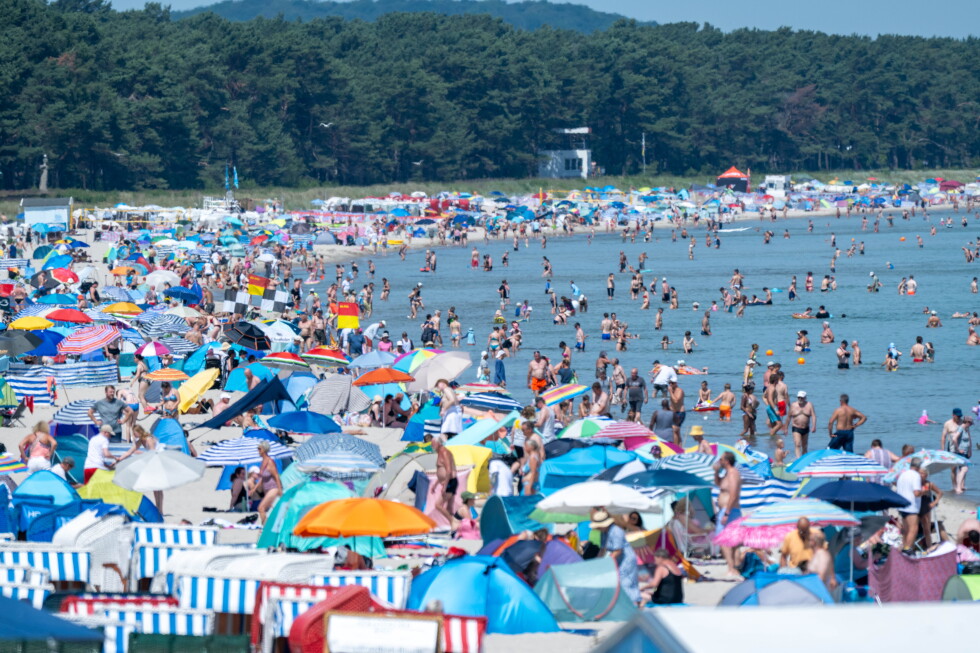
German highways are buckling under extreme heat as Central Europe sizzles
A crippling heat wave that earlier scorched Western Europe has shifted east and central across the continent this weekend, bringing widespread disruption to critical infrastructure, overwhelming healthcare systems, and causing multiple fatalities across the region. Climate scientists have confirmed that this extreme heat event is directly tied to human-caused climate change, reinforcing global calls for urgent climate action.
In Germany, where peak temperatures are forecast to reach 40 degrees Celsius (104 degrees Fahrenheit), the country’s iconic Autobahn highway network has already suffered heat-related damage. According to German daily newspaper Bild, concrete pavement on the A2 highway buckled in two sections outside Berlin, forcing complete closures of those stretches, with other damage reported across the country’s road network. National rail operator Deutsche Bahn and other regional rail companies have urged the public to cancel all nonessential long-distance and regional travel this weekend, noting that the country’s entire transportation network is buckling under the record heat.
In the western German city of Dormagen, dangerous indoor temperatures forced the evacuation of dozens of nursing home residents for emergency medical care. Local fire departments reported indoor temperatures at the facility hit 35 degrees Celsius (95 degrees Fahrenheit) — a particularly dangerous level for vulnerable elderly residents. Unlike many warmer regions, air conditioning is not standard in most German and European buildings, as the continent has historically rarely experienced such sustained extreme heat. A city spokesperson confirmed to German news agency dpa that one resident died overnight, though officials have not yet confirmed whether the heat contributed to the death.
Across the border in France, temperatures began to slowly decline Saturday after two days of extreme heat that put three-quarters of the country under red heat alerts, with temperatures topping 40 Celsius in multiple locations including Paris. While the peak of the crisis appears to be passing for now, hospitals remain under extreme pressure from a surge of heat-related medical emergencies, including heatstroke, dehydration, and heat-triggered heart attacks. Paris’ public hospital network AP-HP activated its full emergency response protocol across all 38 city hospitals to handle the unrelenting increase in patient volume. Over the 24 hours ending Friday, AP-HP emergency departments treated nearly 3,000 patients — a 35% increase from normal volumes, with more than a third of those patients hospitalized patients over the age of 75. Calls to medical dispatch centers rose nearly 80% compared to the same period last year.
The strain on healthcare systems forced the cancellation of two major public events: the annual Saturday Paris Pride march for LGBTQ+ rights and a three-day music festival, both postponed to avoid putting additional stress on emergency services. This heat wave has already recorded higher peak temperatures than the historic 2003 European heat wave, which killed an estimated 15,000 people in France, most of them elderly. AP-HP director Nicolas Revel noted that improved heat-related treatment protocols mean officials do not expect the same catastrophic death toll seen in 2003, after more than 5,700 heat-attributed deaths recorded in France during the 2024 extreme heat event. Revel noted that, while death totals are unlikely to reach 2003 levels, the country should still prepare for hundreds of additional heat-related fatalities.
In the United Kingdom, the heat wave broke all-time June temperature records three days in a row, with a provisional 37.3 Celsius (99 Fahrenheit) recorded in eastern England on Friday — more than 1 degree higher than the previous 1976 June record. While temperatures are forecast to gradually cool this weekend, an amber heat warning remains in effect through Saturday night. Police confirmed Saturday that the body of a 22-year-old man was recovered from a river after he got into trouble while cooling off during the heat. This death joins roughly 40 heat and swimming-related fatalities recorded in France over the past week, prompting repeated official warnings to avoid unregulated swimming in rivers and lakes.
In Italy’s capital Rome, which remains under a top-level red heat alert, tourists have sought any available relief from sweltering temperatures, crowding into shade near historic buildings and cooling off in public fountains. Street vendors have reported booming sales of bottled water, sun protection, and cooling accessories, with many tourists turning to local favorites like gelato and cold fruit for relief. Italy’s Ministry of Health extended red alerts to 18 major cities Saturday, including top tourism hubs Venice, Florence, Bologna and Milan.
As the heat wave cripples much of Western and Central Europe, a new rapid analysis from climate research collaboration World Weather Attribution confirms that this extreme heat and humidity event would not have been possible without human-induced climate change. The study found that such a heat wave was virtually impossible 50 years ago, and is 200 times more likely to occur today than it was just two decades ago. André Corrêa do Lago, president of the UN COP30 climate talks, said the widespread disruption and danger of this heat wave has underscored the urgent need for global climate action. “The fact that we are living with this amazing heat in London is a strong argument… we need to take action as soon as possible,” do Lago told the Associated Press.
-

Brook hits unbeaten half-century for England but New Zealand on top in Trent Bridge test
NOTTINGHAM, England — The third and final Test between England and New Zealand remains finely poised at the lunch break on Day 3, with the visiting side holding a clear upper hand after a devastating morning session that saw New Zealand claim four key England wickets. Entering Saturday’s play already in a strong position, having posted 438 runs in their first innings, New Zealand’s bowling attack turned the screw as England resumed their first innings on 223 for 2. The breakthrough for New Zealand came early, when veteran batsman Joe Root fell leg before wicket for 21 to a swinging full delivery from seamer Nathan Smith. Not long after Root’s departure, rising England star Jacob Bethell followed him back to the pavilion. Bethell, who had crafted a solid 74, was snapped up at second slip by New Zealand captain Tom Latham off the bowling of Will O’Rourke, leaving England reeling. Wickets continued to tumble for the hosts: young batter Jamie Smith was caught low at first slip by Daryl Mitchell off Nathan Smith’s bowling after adding just one run to the scoreboard, making his total 1. England’s captain Ben Stokes survived a major scare early in his innings, when Devon Conway dropped a difficult low diving chance to his right off Nathan Smith’s bowling when Stokes had only scored 1. But Stokes, who returned to the England side alongside fast bowler Gus Atkinson after missing the second Test due to disciplinary sanctions, could not capitalise on his reprieve. The England captain was dismissed for 15 by Zak Foulkes, the concussion substitute in for injured paceman Blair Tickner, who trapped Stokes with another sharp inswinging delivery that brought the wicket. When the players left the field for the lunch interval, England’s first innings stood at 314 for 6, with Harry Brook holding firm on an unbeaten 51 and Gus Atkinson not out on 8 at the other end. Before the close of the session, Atkinson survived an lbw appeal after a Decision Review System overturn showed the ball would have cleared the stumps. By the lunch break, Nathan Smith had claimed 3 wickets for 85 runs, while O’Rourke had notched 2 wickets for 49 runs. The match remains on a knife’s edge, with the series locked at 1-1 after the first two Tests were split between the two sides. New Zealand’s first innings was built on a historic opening partnership that put the visitors in their strong early position: captain Tom Latham scored 151 and Devon Conway hit 157, combining for a mammoth 317-run opening stand that anchored New Zealand’s total of 438.
-
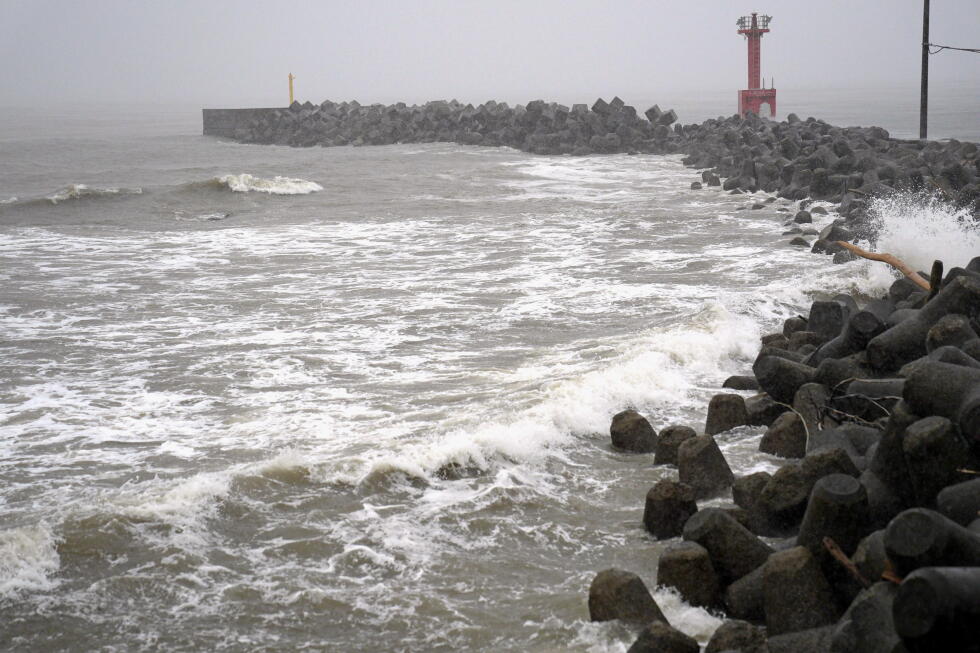
Two tropical storms pound Japan, causing flooding and landslides
Two powerful tropical storm systems have swept across Japan over the weekend, unleashing catastrophic torrential downpours that triggered widespread landslides and flash flooding, leaving at least one person dead and multiple others injured, according to official statements and national media reports.
The successive storms, named Mekkhala and Higos, hit amid Japan’s annual mid-year rainy season, a period that routinely brings elevated precipitation to the archipelago, but this year’s systems dropped record volumes of rain that overwhelmed local infrastructure across large swathes of the country’s western regions.
The first fatal impact was documented in Yamaguchi Prefecture, where a landslide tore through a residential area on Friday, collapsing a private home. Kyodo News Agency confirmed that a man in his 70s was killed in the incident, while three additional residents suffered injuries of varying severity.
Visual footage broadcast on Japanese national television captured the Kamo River in Kyoto swollen to dangerous levels, churning with thick, sediment-laden muddy water that spilled close to riverbank infrastructure. Local disaster management authorities issued urgent level-three flooding alerts for multiple districts across Kyoto, Osaka, and neighboring prefectures in western Japan, urging residents to evacuate to higher ground in high-risk zones.
Official data from Japan’s Fire and Disaster Management Agency confirms that more than 30 residential properties suffered major flood damage across Nara and Hiroshima Prefitures on Friday, in addition to the fatal landslide in Yamaguchi. The extreme weather also disrupted regional transportation networks: several local and intercity train services suspended operations to avoid risk, while a number of commercial flights departing and arriving at regional airports were delayed or canceled to ensure passenger safety.
-

Rome and Persia history lessons for US-Iran peace deal
Against the backdrop of fragile ongoing ceasefire talks between the United States and Iran, a striking historical parallel drawn by an ancient history scholar offers a stark warning: reaching a lasting peace may prove just as destabilizing and painful as enduring open conflict. As the future of any potential US-Iran agreement remains uncertain, with no clear consensus on its terms or longevity, Peter Edwell, an associate professor of ancient history at Australia’s Macquarie University and a specialist on ancient Persia (the historical predecessor to modern Iran), argues that the current diplomatic gridlock facing the Trump administration should come as no surprise.
For centuries, the two great competing powers of the ancient world — the Roman Empire and the Persian Empire, ruled first by the Parthian dynasty from 247 BCE to 224 CE, then by the Sasanian dynasty until 651 CE — cycled endlessly between open war and fragile peace deals that rarely resolved core disputes, and often left underlying tensions worse than before. For these ancient rivals, peace treaties were rarely tools of lasting reconciliation; instead, they were most often just strategic pauses to buy time for military rearmament and preparation for the next conflict.
The first major military clash between Rome and Parthia came in 53 BCE, when Roman general Marcus Crassus launched a disastrous invasion of Parthian territory. The campaign ended in catastrophic defeat on the plains of Carrhae, in modern-day southern Turkey, where Crassus himself was killed and thousands of Roman troops lost their lives. The defeat emboldened Parthia, and by 20 BCE, Rome was forced to accept a peace agreement that formalized the Euphrates River as the official border between the two empires — a major concession for a power that had previously known unbroken territorial expansion.
Conflict reignited in the mid-first century CE, this time over control of strategically located Armenia, a buffer state nestled between the two empires in what is now modern Armenia and eastern Turkey. After the conclusion of hostilities, Roman Emperor Nero and Parthian King Vologases I agreed to the Treaty of Rhandeia in 63 CE, which allowed Parthia to nominate Armenia’s king, on the condition that the coronation be performed by the Roman emperor in Rome. While the treaty resolved the immediate crisis, its awkward power-sharing structure proved unworkable over time. When Parthia ultimately disregarded the agreement’s terms, Roman Emperor Trajan launched a full-scale invasion of Parthia in 114 CE. Though Trajan’s forces won early victories, including capturing the Parthian capital, the invasion ultimately collapsed, and all Roman territorial gains were lost within just three years, by the time of Trajan’s death in 117 CE.
After the Sasanian dynasty replaced the Parthians as rulers of Persia in 224 CE, tensions with Rome escalated dramatically, with control of Armenia once again at the center of most disputes and peace agreements. When Roman Emperor Gordian III died during an invasion of the Sasanian Empire in 244 CE, the two powers struck a new treaty that imposed heavy financial reparations on Rome and included a clause banning any Roman interference in Armenian affairs. Within just a few years, however, Rome violated the agreement, triggering a wave of devastating Sasanian invasions of Roman territory that culminated in the capture of Roman Emperor Valerian by Sasanian forces in 260 CE. A famous rock relief from the period, which depicts Valerian kneeling in submission to Sasanian King Shapur I, remains a lasting symbol of this humiliating Roman defeat.
Rome won a major victory over Sasanian King Narseh in the late 290s CE, and the resulting 299 CE Treaty of Nisibis extended Roman influence deep into the east and gave Rome full control of Armenia. But the lopsided agreement planted deep seeds of resentment among the Sasanians. By the 350s CE, Sasanian King Shapur II launched a major invasion of Roman territory explicitly to overturn the 60-year-old treaty. The conflict escalated when Roman Emperor Julian launched a counter-invasion of the Sasanian Empire in 363 CE, a campaign that ended in devastating Roman defeat and Julian’s death on the battlefield.
While conflict between the two empires cooled slightly in the fifth century CE, it intensified dramatically again in the sixth and seventh centuries CE, when Rome and Persia were almost continuously at war. Dozens of peace treaties were negotiated during this period, but none endured. The most infamous example was the so-called Eternal Peace of 532 CE, which collapsed completely in less than eight years.
Edwell notes that history repeatedly demonstrates that even highly celebrated peace agreements, celebrated as breakthroughs at the time of signing, often lay the groundwork for future discord and renewed conflict. It took more than 400 years of intermittent war and dozens of failed negotiations before Rome and Persia finally reached a lasting agreement to partition Armenia between the two powers in the 380s CE.
Centuries of cyclical conflict, broken treaties, and stalemate preceded even that partial resolution. Today, as the US pursues a peace deal with Iran against the backdrop of a shaky ceasefire, the question lingers: will the current negotiations follow the same fraught path as the ancient clashes between Rome and Persia? Only time will reveal the answer — but the scholar’s hope is that a lasting resolution will not take centuries this time around.
-
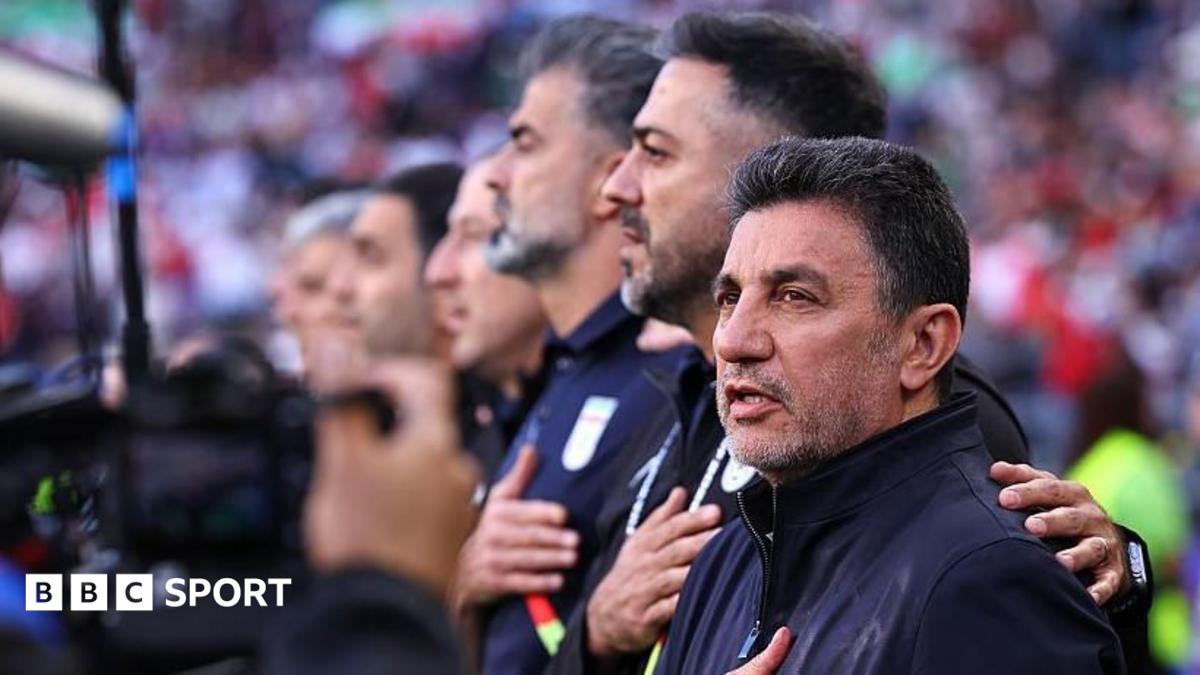
We have been treated unfairly by USA – Iran
Against the high-stakes backdrop of the 2026 FIFA World Cup Group G stage, Iran’s national football team has found itself at the center of a growing controversy, with head coach Amir Ghalenoei publicly accusing the United States of unfair treatment and calling on global football’s governing body FIFA to implement new protections for visiting teams in future tournaments.
Iran’s participation in this World Cup has been complicated from the start by long-running geopolitical tensions between the Islamic Republic and both the United States and Israel. Long before the team kicked off its first group match, logistical disruptions upended their pre-tournament preparations: their original pre-tournament training base, planned in Arizona, had to be relocated to Tijuana, Mexico, and persistent travel restrictions imposed by U.S. authorities hampered their ability to prepare for matches held on U.S. soil.
For Iran’s opening two group fixtures hosted in Los Angeles, visa restrictions forced the entire squad to enter the U.S. only 24 hours before kickoff and depart immediately after the final whistle, leaving no time for post-match recovery or on-site acclimatization. While restrictions were slightly loosened for their decisive final group match against Egypt in Seattle, allowing the team to arrive two days ahead of game day, they were still required to return to their Mexican base immediately after the final whistle.
The already tense situation boiled over after a dramatic late twist in the Egypt match that ended Iran’s knockout stage hopes. With the game tied 1-1 in stoppage time, defender Shoja Khalilzadeh fired a loose ball into the back of the net, a goal that would have secured Iran a guaranteed spot in the tournament’s round of 32. Jubilant celebrations among Iranian players and fans in the stadium were cut short when video assistant referee (VAR) review chalked the goal off for offside, leaving the final score locked at 1-1.
The result sent Egypt through to the knockout stage and left Iran’s qualification hopes hanging by a thread, depending on results from remaining groups. Speaking after the final whistle, Ghalenoei expressed immense pride in his squad’s resilience while leveling harsh criticism at the host nation’s treatment of his team. “What these young players have achieved against all odds deserves to be written into history, because the host country treated us very unfairly,” Ghalenoei said. “Despite every obstacle placed in our path, we have performed well, and the entire world can see the quality of Iran and our team. I urge FIFA: do not allow host nations to treat visiting players and teams this way in any future World Cup.”
The coach added that the disallowed late goal compounded the team’s struggles, saying “I used to think we were just an oppressed side facing unfair treatment, but after these three matches, I see we have also had terrible bad luck.”
Iran captain Mehdi Taremi echoed his coach’s frustrations, describing the entire tournament experience for the squad as a “logistical disaster.” While Taremi emphasized he and his teammates held great affection for the people of Tijuana and Mexico, he noted that the constant cross-border travel was incompatible with professional football competition.
FIFA has yet to publicly respond to the criticisms, with BBC Sport confirming it has contacted the governing body for comment. This is not the first time FIFA’s handling of Iran’s participation has come up: prior to the tournament, FIFA President Gianni Infantino defended the organization’s work, saying he had personally guaranteed Iran would be allowed to compete despite widespread claims it would not be possible. “When people said it would be impossible for Iran to come to the World Cup, I promised them they would be here,” Infantino said before the tournament, adding that he did not believe any other organization could have secured Iran’s participation under the difficult circumstances. Infantino also visited the Iranian dressing room after the team’s opening draw with New Zealand earlier in the group stage.
As of the time of reporting, Iran sits sixth among all third-placed group teams, with only three group stages remaining to be completed and the top eight third-placed sides advancing to the knockout round, leaving Iran’s qualification chances all but eliminated.
-

Ukraine strikes industrial facility in Russia’s Volgograd as Russian drone attack kills 1
In a significant escalation of Kyiv’s cross-border military campaign, Ukrainian President Volodymyr Zelenskyy confirmed Saturday that Ukrainian forces have struck a critical military-industrial complex in the southwestern Russian city of Volgograd. The assault comes as part of Kyiv’s expanded strategy to disrupt Russia’s war production machine, just one day after one of the largest single drone offensives against Russian territory since the full-scale invasion began more than four years ago.
According to Zelenskyy’s statement posted on social platform X, the attack was carried out using FP-5 Flamingo missiles, targeting the Titan-Barrikady facility—a major industrial site that produces core military hardware for the Russian military. Ukraine’s General Staff elaborated on the strike, noting that the complex manufactures key components for Russian missile systems, including self-propelled launchers and transport-loading vehicles for the Iskander-M short-range ballistic missile system—the same platform Russia has repeatedly deployed to strike civilian and military targets across Ukrainian cities.
Local Russian governor Andrei Bocharov confirmed the attack on an industrial site in Volgograd’s Krasnooktyabrsky district, reporting that 10 people were wounded in the strike and transported to local medical facilities. Bocharov acknowledged that production infrastructure at the site sustained damage, but declined to publicly confirm the identity of the targeted facility, matching the pattern of limited official disclosure following recent Ukrainian strikes on Russian military sites.
The Volgograd strike was not the only cross-border attack carried out by Ukrainian forces Saturday. Ukraine’s state security service announced that Ukrainian troops also hit an oil pumping station in Russia’s Vladimir Region, a facility that supplies fuel to the Moscow area. This marks the second time this month the same type of infrastructure in the region has been targeted, a sign of Kyiv’s consistent focus on disrupting Russian energy supply chains that support the Kremlin’s military operations.
Saturday’s strikes follow a massive one-day drone assault that targeted more than a dozen Russian regions, Russian-occupied Crimea, and adjacent maritime areas on Friday. Russia’s Ministry of Defense claimed that its air defense systems intercepted 660 incoming Ukrainian drones during the attack, marking one of the largest single interception operations Moscow has reported since the start of the full-scale invasion.
The stepped-up campaign of long-range strikes is part of a deliberate 40-day escalation ordered by Zelenskyy last Thursday. The Ukrainian leader stated that the operation is intended to increase pressure on the Kremlin to force it into meaningful peace negotiations, after 12 months of U.S.-led diplomatic efforts to end the conflict failed to produce any tangible breakthrough. Western defense officials and independent analysts say the campaign has already produced measurable impacts: it has constrained Russian fuel distribution networks, slowed military equipment deliveries to frontline units, hampered Moscow’s offensive operations on Ukrainian battlefields, and piled unprecedented domestic political pressure on Russian President Vladimir Putin. Kyiv’s broader strategic goal with these strikes is to erode Russia’s war revenue streams and bring the tangible costs of the invasion home to Russian populations, who have largely been shielded from direct impacts of the conflict for most of its course.
While Ukraine pressed its cross-border offensive, Russia continued its own air attacks on Ukrainian territory overnight. In Ukraine’s northeastern Sumy Region, a 66-year-old civilian man was killed when a Russian drone struck a private residential property, regional governor Oleh Hryborov confirmed Saturday. The death marks the latest civilian casualty in the relentless cross-border exchange of strikes that has characterized the fifth year of the ongoing conflict.
This development comes alongside parallel European Union moves related to the war, with Brussels advancing plans to extend temporary protection status for displaced Ukrainians, while excluding new arrivals eligible for military service from the coverage. The EU also recently disbursed a 3 billion euro loan package earmarked for Ukraine’s post-invasion reconstruction, part of a broader two-year commitment to support Kyiv’s economic and infrastructure recovery efforts.
-
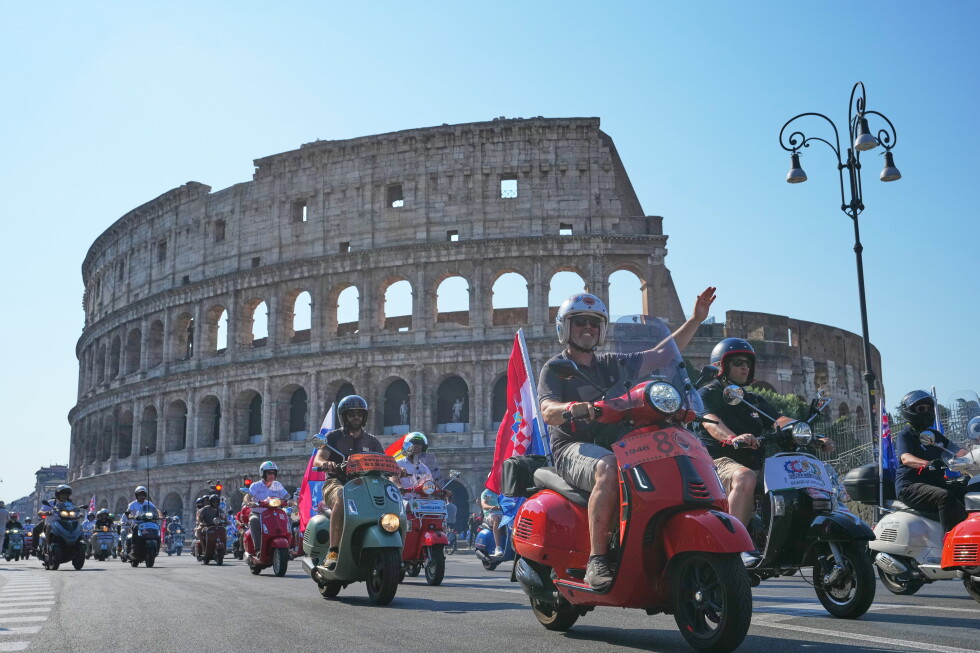
Thousands of Vespas swarm Rome’s historic center to mark iconic scooter’s 80th anniversary
On a sun-drenched Saturday in June 2026, the historic streets of Rome echoed with the distinctive soft putter of more than 10,000 Vespas, as enthusiasts from every corner of the globe gathered to celebrate eight decades of Italy’s most beloved two-wheeled icon. The parade wound past the ancient arches of the Colosseum and the weathered ruins of the Roman Forum, turning the Eternal City’s cobblestone lanes into a rolling tribute to a design that has transcended transportation to become a global cultural symbol.
Devotee traveled thousands of miles to join the celebration: the Associated Press spoke to attendees from across continental Europe, northern England, San Francisco, Australia’s Gold Coast, the Philippines and beyond. For one weekend, high-performance Italian automotive marques like Ferrari and Ducati took a backseat, as the compact, charming Vespa claimed the spotlight as the star of the city. For Natalie Dunand, a French retiree marking her own 61st birthday at the event, the draw of Vespa runs deeper than mechanics. “The passion for Vespa is for the Italian style, freedom, the ’60s,” she said. “I love it.”
The story of Vespa begins in post-World War II Italy, born from unexpected necessity. Piaggio, once a leading aircraft manufacturer, saw its Pontedera factory reduced to rubble by Allied bombing. Forced to pivot away from aviation, the company shifted gears to develop an affordable, accessible mode of transport for a war-torn nation, rolling the first scooter off production lines in 1946. From its earliest days, the scooter was designed with intentional inclusivity: Piaggio marketing executive vice president Davide Zanolini explained that women were among the brand’s core initial target audiences. The scooter’s low frame and step-through design allowed riders to wear long skirts without exposing their legs, a detail that shaped Vespa’s signature elegant curved silhouette. “The shape, the elegance. This very charming attitude of Vespa is much more of a lady than a man,” Zanolini told the AP.
It didn’t take long for the scooter to conquer Italy, and then the world. By 1950, an Associated Press report noted Vespas were so ubiquitous in central Rome that their collective “staccato exhaust racket” made the downtown sound like the Indy 500. “Scooters darting loudly around Rome are said to impress motor-minded Americans as strongly as St. Peter’s or the Colosseum,” the 1950 article read. Global stardom arrived in 1953, when Gregory Peck gave Audrey Hepburn a iconic ride through Rome’s city center in *Roman Holiday*, cementing the Vespa’s reputation as a symbol of Mediterranean romance and adventure. The scooter has since appeared in dozens of films, from *The Talented Mr. Ripley* to Pixar’s 2021 animated hit *Luca*. Often compared to the Volkswagen Beetle for its timeless, approachable design, the Vespa has a universal ability to draw smiles from onlookers even 80 years after its launch.
In the days leading up to Saturday’s parade, the city was flooded with Vespa aficionados, who gathered in groups in matching branded t-shirts and filled public squares across Rome. Outside Rome’s Stadium of the Marbles, rows of Vespas spanning eight decades of production were lined up for display, ranging from pristine original 1940s models to modern limited-edition releases. Some were decorated with flowers and stuffed toys; others carried personal mementos from their owners’ cross-continental journeys. Dunand brought her West Highland terrier, who rode along on the back, clipped short to cope with Rome’s summer heat. A Japanese enthusiast from Tokyo swapped his local club banner with an Italian Vespa group, while a German attendee showed off a tattoo of the Vespa logo paired with the iconic phrase “La Dolce Vita” on his calf.
For many enthusiasts, the appeal of Vespa lies in its simplicity compared to larger, higher-powered motorcycles. Many riders trade in bulkier bikes for the nimble, lightweight automatic Vespa, which operates with a simple hand-twist accelerator. “You get on, twist, go. Doddle. Easy,” explained Andrew Walton, a 59-year-old truck driver from Newcastle who bought his first Vespa nearly 20 years ago. Walton rode for eight days from his home in northern England, taking a ferry to Rotterdam, following the Rhine through Germany and along Austria’s Romantic Road, before cruising down the Italian coast to reach Rome.
After Rome’s mayor cut the opening ribbon for the celebration’s Vespa Village at the Stadium of the Marbles, crowds streamed in singing, chanting and waving national and club flags. Thousands headed straight for the official merchandise tent, where limited-edition helmets emblazoned with “80 Years of an Icon” were the most sought-after item, alongside a full range of branded goods from jackets and hats to blankets, water bottles and umbrellas. A photo retrospective traced Vespa’s cultural history, from classic mid-century shots of couples picnicking in Mediterranean meadows and seaside getaways to unexpected feats, like explorer Soren Nielsen’s 1963 trip to the Arctic Circle on his Vespa. Piaggio also displayed its private collection of pristine rare Vespas, drawn from 80 years of production.
Today, Zanolini confirmed, Vespa has sold nearly 20 million units worldwide since 1946, and is available in 110 countries. While the brand remains niche in the United States, it has a strong following in Florida and California, and is growing in popularity in markets like Austin, Texas. Burke Sandman, whose family owns a century-old car dealership in Indiana, caught the Vespa bug nearly 20 years ago, after buying his first model for its sidecar. He became an official dealer after discovering there were no local resellers in his region, and has since moved more than 1,000 Vespas across the U.S., keeping 15 for his personal collection. “No one ever says anything bad about a Vespa. You know, it’s crazy,” Sandman said from the celebration in Rome. “Everyone that trades other brands for a Vespa, they never go back. It’s just something about it. And everyone likes Italian stuff. I get a lot of people that come back from Europe, and they’ve got the bug.”
-
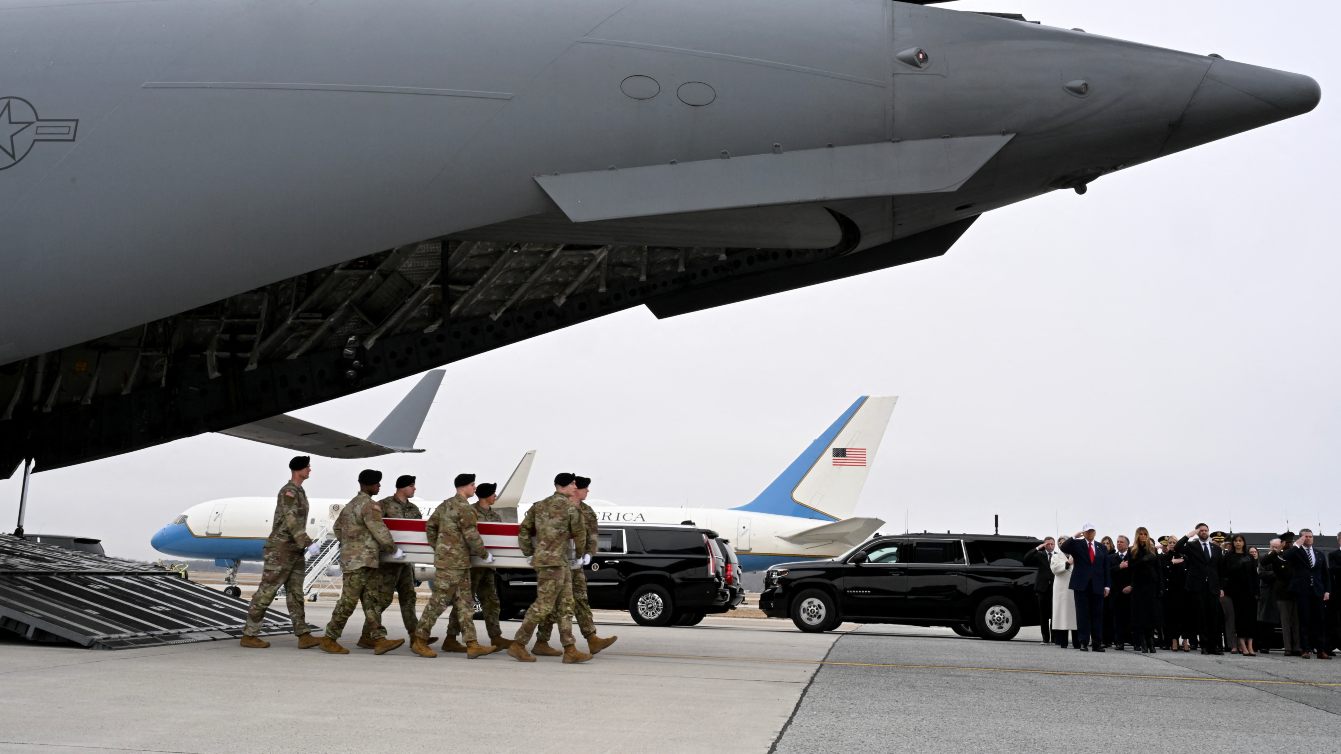
US-Iran MoU ‘conditional surrender’ signed by America, analyst says on Tucker Carlson’s show
In a recent appearance on Tucker Carlson’s political talk show, prominent American author and geopolitical analyst Brandon Weichert has delivered a scathing assessment of the US-Iran ceasefire memorandum of understanding, reached after months of joint US-Israeli military action against Iran, calling the document nothing less than a formal conditional surrender by the United States.
Weichert’s core argument centers on the massive drawdown of American missile stockpiles over the course of the conflict, which he says left the Trump administration with no viable option but to enter negotiations and accept a deal that ultimately handed Iran a strategic victory.
“Ultimately, this is a conditional surrender document,” Weichert stated during the interview. “The United States started a war and it promptly lost. The Iranians have, unfortunately, at a strategic level, achieved victory.” He added that while the Trump administration had no other choice given the pressing timeline of looming resource shortages that left it backed into a corner, the end result remains a surrender regardless of the administration’s reasoning.
Weichert’s controversial remarks land amid intense ongoing partisan and policy debate over the text of the memorandum, which establishes a foundational framework for sustained diplomatic negotiations between Washington and Tehran and codifies the ceasefire that halted months of open military confrontation between the two sides. Citing only unclassified, publicly available data on American weapons usage throughout the conflict, Weichert laid out staggering figures for depleted US munitions inventories.
According to his analysis, roughly half of the United States’ total stockpile of Patriot ballistic missile interceptors were fired during the war, alongside between 50% and 80% of the nation’s Terminal High Altitude Area Defence (THAAD) interceptors. Weichert also claimed that more than 1,000 Tomahawk cruise missiles — approximately one-third of the entire US stockpile — were expended in the conflict. He added that large numbers of JASSM air-to-surface standoff missiles were used, and that nearly the entire pre-war inventory of newly produced Precision Strike Missiles was completely consumed in military operations.
Beyond ground and air-launched munitions, Weichert argued that US naval forces faced far greater and more underreported threats during the kinetic phase of the war than the White House has publicly acknowledged. “The Navy reports that they expended large quantities of their SM-3 and SM-6 naval interceptors,” he said. “That indicates to me, if I may conjecture here, that there must have been one hell of a fight over the security of our ships when the war was in its kinetic phase.” From these figures, he concluded that the White House deliberately misled the public when it claimed US naval vessels operating in the region remained completely safe throughout the conflict, arguing the high interceptor expenditure proves American ships faced severe, unacknowledged risks.
One of the most alarming parts of Weichert’s assessment is his projection of multi-year delays to replenish these drained arsenals. According to his timeline, Precision Strike Missiles can be fully restocked by the end of this year, while JASSM inventories will not be fully replaced until the middle of 2026. Naval SM-3 and SM-6 interceptors, he estimates, will not be back to pre-war levels until 2028. Patriot and THAAD interceptor stockpiles could take until roughly 2030 to fully replenish, and Tomahawk cruise missile inventories may require another five years to restore.
“So, we’d better hope that the Chinese or some other area of interest is no longer requiring our assistance because we have depleted ourselves,” Weichert warned.
Weichert’s analysis aligns with a recent bombshell report from *The New York Times*, which revealed that former President Trump and senior Pentagon leaders have been pressuring major defense contractors to speed up weapons production, while simultaneously pushing Congress to approve an extra $70 billion in funding to cover war costs and restock depleted arsenals. The *Times* reporting confirms that defense companies have told the Trump administration that expanding production capacity will require massive new capital investment, and the administration’s funding request is already projected to face fierce bipartisan opposition on Capitol Hill. The *Times* also independently verified the broad scope of US munitions depletion, confirming that the military used roughly 1,100 long-range stealth cruise missiles, more than 1,000 Tomahawk missiles, over 1,200 Patriot interceptors, and more than 1,000 Precision Strike and ATACMS missiles throughout the conflict.
Beyond the immediate military implications of drawn-down stockpiles, Weichert argued that the conflict has accelerated an irreversible long-term geopolitical shift across the Middle East, moving the region rapidly toward what he calls a “post-American” order that diminishes the central role Israel has played for decades as the anchor of Washington’s regional security architecture.
“There is now going to be a new Middle East,” he said, outlining his prediction that five regional powers will shape the future balance of power in the area: Saudi Arabia, Iran, Pakistan, Egypt, and Turkey. Weichert argued that Turkey’s rapidly expanding domestic defense industry, Pakistan’s established nuclear capabilities, and the competing regional influence of Saudi Arabia, Iran, and Egypt will combine to form a new regional order that is far less dependent on Washington for security and governance. “Those greater Middle East powers are gonna form a new post-American order,” he said. “Where it goes from here really is up to Mr Netanyahu and his government.”
To date, the White House and senior US military officials have publicly defended the memorandum, framing it as a favorable deal that advances US national interests. Even so, the Trump administration has faced widespread criticism from across the US political spectrum for failing to achieve the core stated objectives it laid out at the start of the conflict, including removing the Iranian government, permanently weakening Iran’s regional influence, and decimating its military capabilities.