博客

  • Europe’s record heat has overwhelmed Paris mortuaries and left families in distress

    Europe’s record heat has overwhelmed Paris mortuaries and left families in distress

    PARIS (AP) — For mortuary owner Zouhaeir Hertelli, business has taken an unthinkable turn amid Europe’s record-shattering 2022 heat wave: every few minutes, his phone buzzes with a desperate question from funeral directors and grieving families alike: do you have any cold storage space left for another body?

    With all 32 spots in his refrigerated mortuary already occupied, Hertelli has been forced to turn away hundreds of families, repeating the devastating word “No” again and again. “We’re facing a really catastrophic situation,” he told reporters. “I’m getting hundreds of calls.”

    As the blistering heat dome drifted eastward across Europe over the weekend, leaving a trail of fatalities in its wake, France has begun the grim work of counting the human cost of the extreme temperatures that first settled over the country in mid-June.

    Full official mortality counts will take weeks or months to compile, as public health teams cross-reference death certificates and verify heat as a contributing cause. But even the earliest data makes clear the unprecedented toll of this unrelenting heat event, which has hit older and isolated populations particularly hard.

    France’s national public health agency released its first preliminary assessment of the crisis, confirming a dramatic spike in deaths during the heat wave’s peak last week. Temperatures soared above 40 degrees Celsius (104 degrees Fahrenheit) across most of the country, and record-breaking overnight highs left vulnerable bodies with no chance to cool down and recover — a deadly one-two punch that overwhelmed natural defenses.

    On the nation’s all-time hottest day, which broke a record set just 24 hours earlier, more than 1,200 deaths were recorded across France. That number climbed to more than 1,400 the following day, and stayed at that elevated level on the third day of peak heat. For comparison, the average daily death toll in April and May 2022, before the heat wave arrived, ranged between 900 and 1,000.

    The agency estimates that at least 1,000 excess deaths occurred over just those three days, but warns the final toll will be higher. Many deaths occurred in private homes and elderly care facilities, where death registrations are often processed manually rather than electronically, leading to delays in official counting. “Mortality will as a consequence be higher than these first figures,” the agency stated.

    Eighty-five percent of the deaths registered so far from the three-day peak are people aged 65 and older, and deaths at home have jumped by roughly 40% compared to pre-heat wave levels, with the Paris region seeing the sharpest increase.

    Hertelli and other funeral industry professionals across the capital report that all municipal and private mortuary cold storage filled within days of the heat peak. Paris City Hall has responded by installing two temporary cold storage units with 20 spots each at municipal mortuaries, and local hospitals have made an additional 50 spaces available.

    Even with the extra capacity, the shortage remains acute. Hertelli says funeral directors he has spoken with are transporting bodies as far as Chartres, 50 miles southwest of Paris, to find available storage. He has submitted a request to local authorities for permission to park temporary refrigerated shipping containers outside his mortuary, located near Paris Orly Airport, but has not yet received approval. “Families are suffering,” he said. “We have no solution to offer them, because the funeral homes are full. So we are deeply affected, we have empathy for them, but there’s nothing we can offer. We are really facing a problem, a big problem.”

    This heat wave has already surpassed the 2003 European heat event that killed an estimated 15,000 people in France and sparked a national reckoning over the care of vulnerable elderly populations. A 2021 heat wave also killed more than 5,700 people across the country. Many funeral and public health professionals worry that the hard-won lessons of past heat crises have been forgotten as record heat becomes more common.

    Véronique Bertrand, a funeral director based in Paris, notes that most of the recent fatalities she has handled were isolated seniors who lived alone at home. “Given the circumstances in which they were found, there can be no other conclusion than that these were deaths caused by the heat,” she said.

    Bertrand called for a renewal of the community solidarity that emerged after the 2003 tragedy, when neighbors began checking in on isolated older residents to ensure they were staying hydrated and cool. “I think people absolutely need to wake up, that solidarity needs to come back, that what happened in 2003 led to a movement in that direction, with people thinking about their neighbors, of those around them who live alone and perhaps checking from time to time that they’re drinking water and are being looked after,” she said. “With the passing years, we’ve perhaps forgotten that it could happen again and that things would even perhaps be worse.”

  • How population decline is exposing Germany’s old divides

    How population decline is exposing Germany’s old divides

    Thirty-five years after the fall of the Berlin Wall and German reunification, the five former East German states outside of Berlin are grappling with a demographic crisis that has reshaped communities, shifted political landscapes, and defied repeated policy interventions. For Jan-Niklas Hustedt, a 36-year-old “wendekind” – a child born in East Germany just weeks before the Wall collapsed – the transformation of his hometown Oschersleben, in the hardest-hit state of Saxony-Anhalt, is a deeply personal experience. He still recalls the spontaneous techno raves held in the abandoned canteen of a local pump factory, one of thousands of East German businesses that collapsed overnight when the inefficient, centrally planned GDR economy was suddenly thrust into the competitive global capitalist system.

    In the three and a half decades since reunification, Germany as a whole has grown by 3.8 million people, a 5% increase fueled by immigration. But the former East German states have lost 16% of their population, with Saxony-Anhalt recording a catastrophic 26% drop, according to 2025 official statistics. Government demographic projections show that this decline is set to continue, with the steepest losses concentrated in rural eastern regions, where decades of post-reunification brain drain have combined with Germany’s persistent nationwide low birth rate to hollow out communities. Only Brandenburg, the state that surrounds Berlin and benefits from capital city spillover, has escaped this trend. Long-term forecasts from Germany’s federal statistics office project that all eastern states outside Berlin will see further population decline by 2070 across every modeled scenario.

    This demographic collapse did not happen overnight. Two major waves of out-migration reshaped eastern Germany after 1990. The first began immediately after the Wall fell, as thousands of workers and young people moved west for better opportunities. A second, smaller but more impactful wave peaked in the early 2000s, and it disproportionately drew away the region’s most vital residents: young, highly educated people, and especially women. Dr. Katja Salomo, a Kassel University sociologist who grew up in rural East Germany, explains that during the reunification process, the existing East German female workforce was treated as an afterthought in privatization restructuring, pushing many to seek stable employment in West Germany. The loss of women of childbearing age sent fertility rates plummeting, creating a generational gap that persists today.

    Today, the demographic shortage has spawned a new term unique to eastern Germany: “Kitasterben”, or “dying daycare”. During the GDR era, the region built an extensive network of universal childcare to support its full female workforce. Now, that system is collapsing for lack of children. Hustedt, who returned to Oschersleben after 13 years away to work as a corporate recruiter, says his daughter’s kindergarten now actively solicits new families to fill empty spots – a reversal that would have been unthinkable a generation ago. Walking through Oschersleben’s town center on a weekday, empty storefronts are easy to spot, and the population is overwhelmingly older. Including surrounding villages, the municipality now counts just 19,000 residents, down from more than 25,000 at reunification.

    Hustedt is one of a growing number of local advocates working to reverse the outflow, drawn by a desire to protect the home they love. Even as he calls reunification an overall success story, he has made it his mission to attract young families and skilled workers back to the region. Another initiative, Heimvorteil Harz (Home Advantage Harz), run by Katy Löwe from the Saxony-Anhalt town of Halberstadt, is funded by local businesses desperate to fill vacancies and matches job seekers with open positions while promoting the region’s low cost of living, well-maintained infrastructure, and scenic rural landscapes. While living standards have improved dramatically since 1990, Löwe acknowledges that campaigns like hers can only do so much against a crisis of this scale. “The problem is too big,” she says, noting that regions across Germany are now competing for a shrinking pool of young workers. She points to a lasting collective trauma from reunification: many eastern Germans share a deep-seated fear of further loss that shapes both out-migration and voting patterns.

    This demographic malaise has opened the door for a dramatic political shift. The far-right Alternative for Germany (AfD), classified as a right-wing extremist movement by German domestic intelligence in Saxony-Anhalt due to documented racist ideology that violates the country’s constitution, is currently polling above 40% ahead of September 2025 state elections, putting it on track to win an outright majority and form Germany’s first far-right state government since World War II. AfD leaders reject the extremist designation, framing themselves as a conservative libertarian movement and rejecting comparisons to Nazism.

    Sociological research links the party’s surge directly to the region’s demographic decline. “Electoral support for far-right parties like the AfD tends to be higher in the regions most affected by population loss,” Salomo explains. While a direct causal link is hard to prove, communities facing stagnation and crumbling public services often feel that the established national political system has abandoned them. Paradoxically, these same regions are also the most skeptical of immigration, even though increased immigration would be the most direct short-term solution to stabilizing the population. The AfD’s Saxony-Anhalt manifesto rejects immigration as a solution to local population decline, instead proposing cash baby bonuses to incentivize larger families among existing residents. Critics warn that the party’s broader anti-immigration and mass deportation policies would cripple Germany’s already strained economy and violate constitutional law, but the party has now become the most popular nationally in opinion polling, with support heavily concentrated in the east.

    While some argue that depopulation brings minor benefits – less traffic, more affordable housing, and a slightly reduced ecological footprint – population researchers warn that the overall impact is deeply damaging. Professor Martin Bujard of Germany’s Federal Institute for Population Research notes that low birth rates create an unsustainable imbalance between a shrinking working-age population and a growing cohort of retirees, while depopulation erodes social services and community cohesion. Bujard points out that Germany’s low birth rate is not unique: the United Nations has recorded an unprecedented global decline in fertility rates driven by housing costs, economic insecurity, and shifting social norms. The COVID-19 pandemic and the fallout from Russia’s full-scale invasion of Ukraine have further pushed German birth rates down to their lowest level since 1946, with both native-born and immigrant women falling well below the 2.1 fertility rate needed to replace the existing population.

    German reunification is widely celebrated as a historic moment of freedom that unified a divided people, but 35 years later, its demographic legacy remains deeply complicated. The old border is gone, but the demographic, economic, and political divides it created still cast a long shadow over eastern Germany, shaping the country’s future in ways few could have predicted in the euphoric days of 1989.

  • Pakistan launches deadly strikes along Afghan border

    Pakistan launches deadly strikes along Afghan border

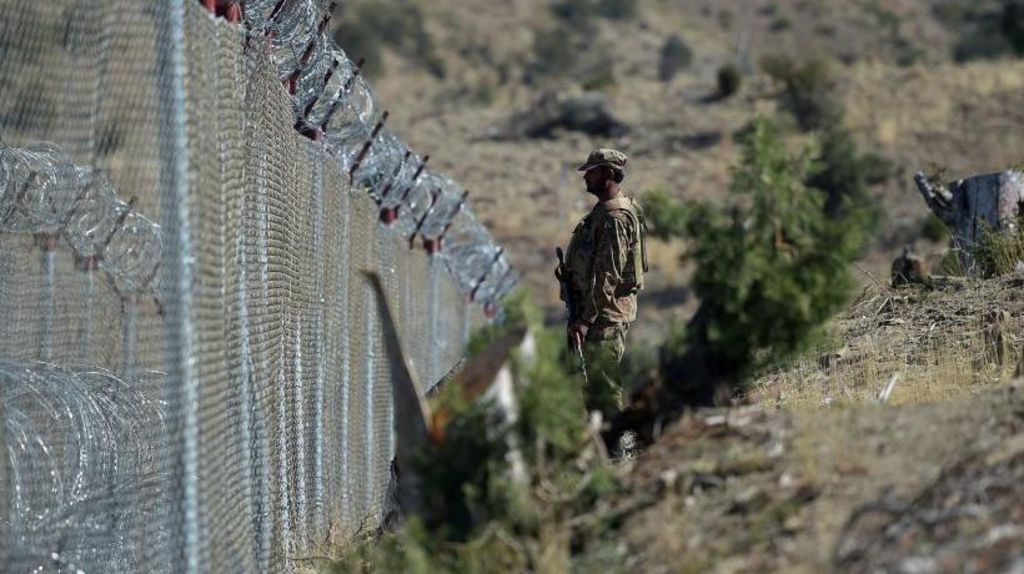
    Long-simmering cross-border tensions between Pakistan and Afghanistan erupted into open conflict Sunday, when Pakistan launched coordinated airstrikes and deployed ground forces into three Afghan provinces near their shared border, leaving a disputed number of casualties and drawing sharp condemnation from Kabul’s Taliban government. The military incursion marks the breakdown of a ceasefire brokered between the two nations just eight months earlier, and brings to a head a years-long dispute over militant safe havens that has repeatedly destabilized the border region.

    Pakistan’s top officials frame the operation as a necessary response to escalating terrorist attacks on its territory. Information Minister Attaullah Tarar confirmed that the strikes targeted known militant hideouts in Afghanistan’s Paktia, Paktika and Kunar provinces, reporting that 29 militants were killed in the operation. He added the action was carried out in retaliation for recent attacks that killed Pakistani civilians and security personnel.

    The attack came just 24 hours after a suicide assault on a Sindh Rangers paramilitary headquarters in Pakistan’s southern city of Karachi left three Rangers dead and killed three attackers. A fourth attacker, an Afghan national, was taken into custody after the incident. Jamaat-ul-Ahrar, a banned splinter faction of the Tehrik-i-Taliban Pakistan (TTP, or Pakistan Taliban), claimed responsibility for the Karachi attack. Both the TTP and Jamaat-ul-Ahrar are designated terrorist organizations by Pakistan and the United Nations for their history of large-scale attacks on civilian and government targets.

    Pakistan has for decades maintained that the Afghan government allows TTP and other anti-Pakistan militant groups to operate training camps and safe havens from Afghan territory, a charge the ruling Taliban government in Kabul has consistently rejected. Afghan officials counter that repeated Pakistani incursions into their territory deliberately target civilian populations, a claim Islamabad has repeatedly denied, insisting it only strikes militant positions.

    In the aftermath of Sunday’s strikes, Taliban officials have denounced the incursion as a “cowardly act” that constitutes a deliberate “crime and atrocity.” Speaking to BBC Pashto, Taliban officials confirmed that at least 100 people were killed or injured in the attacks, most of them civilians. Local Taliban sources added that the majority of casualties were recorded in Mandikhel, a rural village in Paktika province, where residential homes were directly hit in the airstrikes.

    Sunday’s attack is only the latest in a string of deadly clashes between the two neighbors that have killed hundreds of people since the start of 2025. A ceasefire was agreed in October 2024 after weeks of intense border skirmishes, but like previous internationally mediated truces, the agreement quickly collapsed. Deadly violence has resumed repeatedly in recent months: February saw large-scale border clashes that killed dozens, a March Pakistani strike on a Kabul drug rehabilitation center left hundreds dead, and earlier this June another Pakistani air operation killed 26 militants, with Taliban officials reporting 13 civilian bystanders, most of them children, also died in that attack. Intermittent skirmishes and air strikes have left dozens of people dead on both sides of the border so far this year, according to official counts from both governments.

    At press time, the BBC has not been able to independently verify the conflicting casualty figures released by Pakistani and Taliban officials, leaving the full human cost of Sunday’s incursion unconfirmed.

  • Nvidia’s AI chip sales in China stall, as local chipmakers like Huawei take the lead

    Nvidia’s AI chip sales in China stall, as local chipmakers like Huawei take the lead

    The global race for artificial intelligence supremacy has increasingly centered on access to cutting-edge hardware and processing power, and the competition between U.S. and Chinese industry players in the world’s second-largest economy tells a story of shifting market dynamics shaped by geopolitics and policy.

    When Nvidia CEO Jensen Huang visited Beijing earlier this year during a high-profile summit between then-U.S. President Donald Trump and Chinese President Xi Jinping, he drew crowds of adoring onlookers while stopping to try a popular local street dish, zhajiangmian. But the tech executive’s celebrity in China has not translated into continued market success for his company’s top-tier AI chips, a transformation he has openly acknowledged.

    Washington’s export restrictions on advanced AI technology, imposed over stated national security concerns, first blocked Nvidia’s powerful H200 chips from entering China. By the time Huang secured a temporary reprieve that allowed H200 sales under the Trump administration, Beijing had already shifted its policy to prioritize domestic chips produced by local competitors, with Huawei at the forefront.

    Huang told the Associated Press in a recent interview that after three decades operating in China, the U.S. has lost its competitive edge in the country’s advanced AI chip market, with Chinese rivals emerging as major industry giants. Before the export controls took effect, he noted, Nvidia controlled roughly 95% of China’s AI chip market and competed successfully alongside local players. Huang argued that while safeguarding U.S. national security remains a priority, U.S. policymakers should also support American tech firms competing globally and expanding exports.

    The push for domestic AI chip development in China gained urgency after Washington cut off Huawei’s access to cutting-edge foreign chips and chipmaking equipment starting in 2019. Since then, Chinese semiconductor firms have raced to build domestic self-sufficiency, developing homegrown chip designs and manufacturing expertise.

    While Nvidia and fellow U.S. chipmaker AMD continue to dominate the global AI chip market and most of the global industry’s high-end segment, Huawei has rapidly expanded its footprint across China’s domestic market. This growth has been fueled by demand from Chinese AI developers — including large language model providers like DeepSeek — that are prioritizing both improved performance and lower costs from domestic suppliers.

    Analysis from global equity research firm Bernstein projects that Huawei will overtake Nvidia as the leader in China’s AI chip market this year. The firm estimates the two companies held roughly matching 40% market shares in 2025, but predicts Nvidia’s share will plummet to around 8% by the end of 2026, while Huawei’s share will climb to approximately 50%.

    Antonia Hmaidi, a semiconductor analyst at the Mercator Institute for China Studies, confirmed that “Nvidia has definitely lost significant ground to Huawei, which (now) leads domestically.” Industry analysts note that Huawei’s top commercial AI chip line, the Ascend 950 series, delivers performance roughly on par with Nvidia’s widely acclaimed H200 chip by many key metrics.

    He Hui, director of semiconductor research at global advisory firm Omdia, points to a broader policy shift underpinning this market change: “China now believes in its own self-sufficiency and supply capabilities.” In September 2025, Huawei announced it was deploying some of the world’s most powerful AI computing clusters, which combine processing power from thousands of domestic chips to match the scale of clusters built by global competitors, despite being forced to rely entirely on Chinese-made semiconductors due to U.S. controls.

    When asked how Huawei’s chip technology stacks up against U.S. competitors, He Tingbo, head of Huawei’s semiconductor business, noted that the company has “found pretty good solutions” and added, “Who can walk faster? Huawei or other companies? I don’t know the answer. I think only time will tell.”

    Despite Huawei’s rapid gains, industry analysts emphasize that Nvidia remains an indispensable player in China’s AI ecosystem, thanks to the deeply global nature of the semiconductor supply chain. No single country currently has the capacity to produce the most cutting-edge AI chips entirely independently, and Chinese demand for advanced AI chips still outpaces domestic supply.

    High-profile smuggling cases, in which Nvidia chips have been illegally brought into China to bypass export restrictions, underscore the ongoing unmet demand for the U.S. firm’s technology. Nvidia still designs the world’s most powerful AI chips, which rely on Dutch firm ASML’s extreme ultraviolet lithography (EUV) machines — themselves dependent on U.S. components and technology — and are manufactured by Taiwanese semiconductor giant TSMC. Chinese firms are barred from purchasing both Nvidia’s top-tier chips and ASML’s EUV manufacturing equipment.

    Huawei’s highest-performance chips still trail Nvidia’s most advanced offerings in multiple key technical areas, and cutting-edge Chinese AI development work — including the training of large models like DeepSeek’s latest generative AI system — still relies heavily on Nvidia hardware, analysts say. Chinese universities and major tech firms also continue to seek access to chips like the H200 for research and development purposes.

    Even with its declining market share in China, Nvidia continues to see explosive global revenue growth fueled by soaring worldwide AI demand. The company projected revenue of roughly $91 billion for the second quarter of 2026, up from nearly $82 billion in the prior quarter — a figure that excludes any potential data center chip revenue from China. Nvidia’s full-year 2025 revenue hit almost $216 billion, compared to Huawei’s $126 billion in annual revenue over the same period.

    The growing alignment between Chinese AI developers and domestic chipmakers is visible in recent partnerships. DeepSeek, the fast-growing Chinese competitor to OpenAI’s ChatGPT and Anthropic’s Claude, confirmed that its latest V4 large language model, launched in April 2026, was specifically adapted to run on Huawei’s Ascend chips.

    Paul Triolo, a partner at global advisory firm DGA-Albright Stonebridge Group, said there is likely “significant effort going into collaboration between DeepSeek and Huawei” to train future DeepSeek models entirely on domestic Chinese hardware. Phelix Lee, a semiconductor analyst at Morningstar, noted that this collaboration proves domestic Chinese chips can replace Nvidia products in many use cases, but added, “We don’t expect an abrupt switch toward (Huawei’s) Ascend.”

    To work around U.S. export rules, Nvidia developed a lower-power modified chip called the H20 that was allowed for sale in China. Counterpoint Research senior analyst Brady Wang, based in Taipei, says the company continued selling H20 chips in China through 2025, though shipments declined steadily over time. Beijing’s official position on allowing imports of the full-power H200 chip remains unannounced, and Nvidia has confirmed it has not yet sold any H200 chips in China. Speaking at the company’s recent annual shareholders meeting, Huang said the H200 “has yet to generate any revenue, and we are uncertain whether any imports will be allowed into the country.”

    Beyond its domestic market gains, Huawei has broader global ambitions for its chip business. Already the world’s largest supplier of telecommunications network infrastructure, Huawei operates in 170 countries and regions with a stated mission of “bringing digital to every person, home and organization for a fully connected, intelligent world.”

    While international demand for Huawei’s chips may exist, China’s current domestic production capacity for advanced chips is still insufficient to meet domestic demand alone. Counterpoint’s Wang projects that as China expands its advanced chip manufacturing capacity and brings down pricing, Huawei could gain market share in regional markets including Southeast Asia and beyond. Wang notes that “China’s strategy of pursuing technological self-sufficiency — and eventually exporting its technologies — is unlikely to change regardless of whether Nvidia can sell its chips in China.”

  • Anger directed at Venezuela’s official response to earthquake recovery

    Anger directed at Venezuela’s official response to earthquake recovery

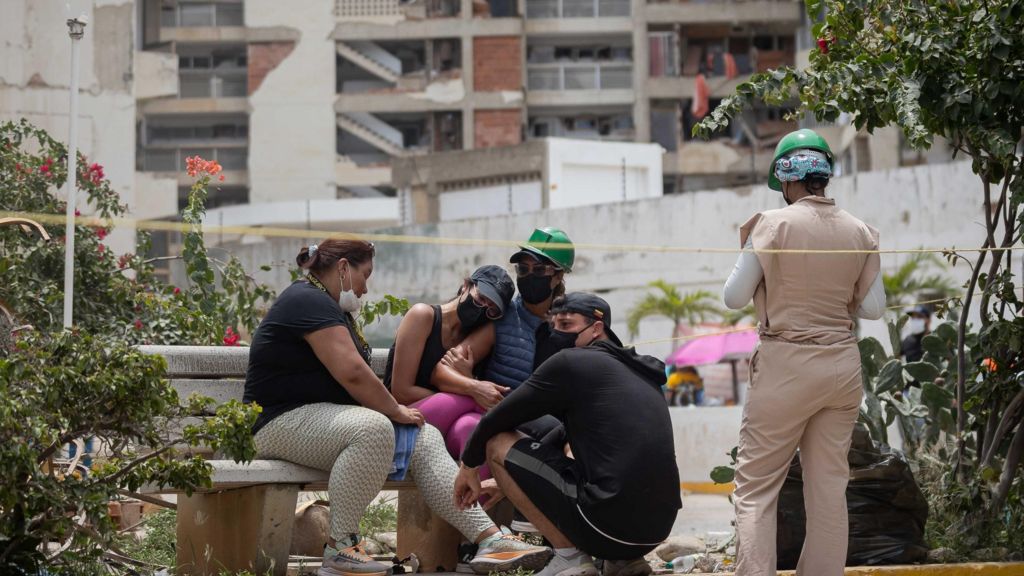
    In the wake of a destructive earthquake that left communities across Venezuela reeling, widespread public fury has erupted over the national government’s lackluster response to recovery and survivor assistance efforts, according to senior BBC correspondent Orla Guerin’s on-the-ground reporting from affected regions.

    Residents whose homes and livelihoods were destroyed by the seismic event say that state-led teams have moved far too slowly to reach trapped or displaced survivors, leaving vulnerable people waiting days for basic supplies, medical care, and support to locate missing loved ones. Many affected community members have spoken out publicly, sharing accounts of unmet needs and broken promises from government officials that have compounded the trauma of the natural disaster.

    The public backlash underscores deep existing frustrations with institutional capacity in Venezuela, where ongoing economic and political instability has already stretched public services thin. For communities already grappling with systemic challenges, the botched recovery effort has amplified calls for greater accountability and faster, more effective support from national authorities.

  • South Korea football coach quits as president calls for probe into World Cup loss

    South Korea football coach quits as president calls for probe into World Cup loss

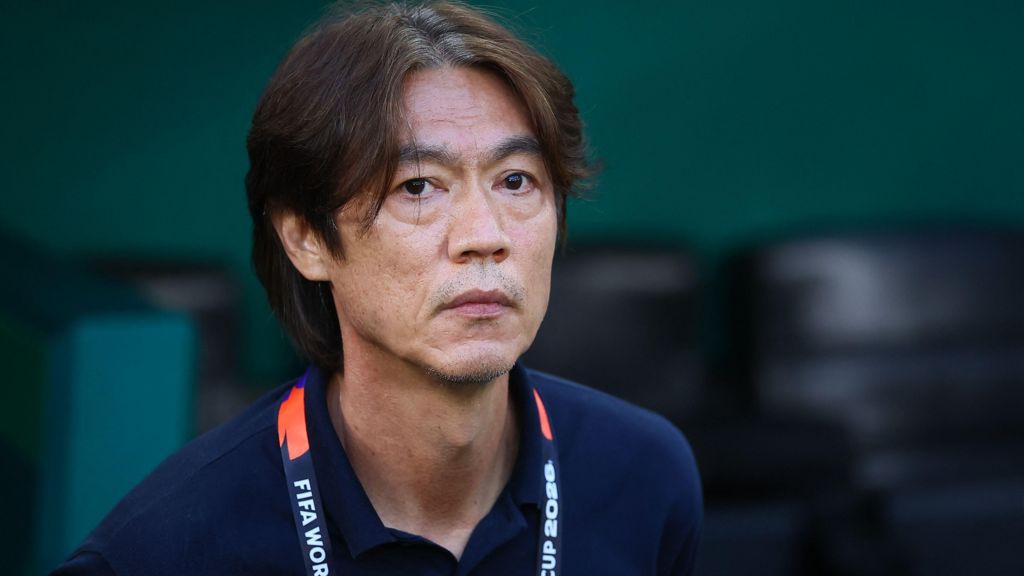
    Just days after South Korea’s men’s national football team saw their hopes of advancing to the 2026 FIFA World Cup knockout stage dashed, head coach Hong Myung-bo has stepped down from his post, taking full accountability for the team’s underwhelming performance that has sent shockwaves through South Korean football. This marks Hong’s second tenure leading the national side, a role that was mired in controversy from the moment he was appointed in 2024.

    Ranked 32nd in the world and led by star talisman Son Heung-min, South Korea wrapped up Group A play with one win and two losses, finishing behind 15th-ranked Mexico and 60th-ranked South Africa. Their 1-0 defeat to South Africa in the final group match on Thursday left them third in the group standings. With the 2026 World Cup expanding from 32 to 48 teams, a new rule allows the eight best third-placed teams from the group stage to progress to the knockout round, leaving South Korea with a narrow shot at qualification. That faint hope was fully extinguished on Saturday, eliminating the team from the tournament before the knockout round even began.

    The early exit triggered immediate and widespread criticism across South Korea. South Korean President Lee Jae-myung has called for a full investigation into what he described as a deeply disappointing performance, saying he felt “not just confusion but utter bewilderment at the unexpected outcome” in a post on social platform X. Lee pointed to structural issues, arguing that “When favoritism and cronyism take precedence over competence in selecting a commander, the result is as predictable as fire burning paper,” a direct reference to the contentious circumstances of Hong’s appointment.

    Hong formally announced his resignation during a press conference held in western Mexico on Sunday, where he apologized unreservedly to the Korean public and took sole responsibility for the result. “We didn’t deliver the results that our fans expected,” Hong said. “The responsibility rests entirely with me as head coach.” He added that while he was stepping away from the national team role, he remained committed to Korean football. “Even though I am leaving the national team, I am not abandoning Korean football altogether. I will cheer for the national team from the bottom of my heart and hope that the team will be trusted and loved by the people once again.”

    Addressing the long-running controversy around his appointment, Hong pushed back on claims that he did not act in the best interest of the sport. “Accepting the job was not an easy choice,” he said. “I cannot say every decision has been the right one, but I can tell you that I have made every decision with Korean football in mind.”

    Hong’s history with South Korean football goes back decades: as a player, he captained the 2002 co-hosted South Korean side to a historic semi-final finish, cementing his status as a national hero. But his first stint as head coach ended in disappointment in 2014, when the team failed to win a single match or advance out of the group stage at that year’s World Cup. When the Korea Football Association (KFA) appointed Hong again in 2024, it sparked widespread public uproar. Critics argued that the KFA had passed over multiple foreign candidates that had completed a rigorous vetting process, choosing instead to hand the top job to an ally connected to the association’s old guard.

    As Hong prepares to return to South Korea this weekend, local media outlets report that South Korean police have stepped up security at Incheon International Airport and other key locations after an online death threat was made against the outgoing coach. Law enforcement have stated they are monitoring for potential security risks surrounding Hong’s arrival.

  • Australia to double potential fines for Facebook and Instagram over child social media accounts

    Australia to double potential fines for Facebook and Instagram over child social media accounts

    CANBERRA, Australia — More than six months after Australia implemented its landmark world-first ban on social media use by children under 16, the federal government is moving to double maximum penalties for non-compliant platforms after widespread failures to block underage users, a development that is being closely watched by governments around the globe considering similar age restrictions.

    Communications Minister Anika Wells confirmed Sunday that the government will table draft amendment legislation in national parliament this week, which would lift the top fine for platforms that fail to take reasonable steps to block under-16 accounts from AU$49.5 million to AU$99 million (equivalent to US$68 million). Major platforms targeted by the original law include Meta-owned Facebook and Instagram, which have been the focus of ongoing criticism over weak enforcement.

    Speaking to Australian Broadcasting Corp. on Monday, Wells blamed deliberate intransigence from Big Tech for the need to strengthen the regulation that came into full effect on December 10 last year. “We can all agree we would like the scheme to work better than it is currently, but that is on Big Tech taking the Mickey,” Wells said, deploying the common Australian colloquialism for bad faith and deceptive conduct.

    Alongside steeper penalties, the proposed amendments would grant expanded regulatory authority to Julie Inman Grant, Australia’s eSafety Commissioner — the national body tasked with overseeing compliance with the ban. The new powers would allow Inman Grant’s office to compel relevant information and documentation from platforms, as well as from third-party stakeholders such as age verification technology providers. This access will allow regulators to independently verify platforms’ own claims about enforcement efforts, and shed light on the persistent gaps that allow under-16 users to circumvent age restrictions.

    The push for tougher rules comes after official data revealed deep failures in the initial phase of the ban. The federal government initially reported that more than 5 million underage accounts had been removed, deactivated, or restricted shortly after the ban entered into force. But a March progress report from eSafety found that 70% of children who held accounts on major platforms on December 10 still retained access to those accounts on leading services including Facebook, Instagram, Snapchat and TikTok.

    Inman Grant publicly revealed in April that her office was actively considering court action against the underperforming platforms alongside YouTube, over allegations that they had not fulfilled their legal obligation to take reasonable steps to exclude underage users. The commissioner has already publicly acknowledged satisfactory progress from a smaller group of other platforms covered by the ban, including X (formerly Twitter), Kick, Reddit, Threads and Twitch.

    Wells noted that monthly compliance updates from eSafety since March have shown no meaningful improvement in enforcement from the major platforms, prompting the legislative overhaul. “These changes ensure that the eSafety Commissioner has the tools and powers she needs to hold platforms to account and we’re making sure that she can do just that,” Wells added.

    The amendment has already garnered early cross-party support. Senior opposition lawmaker Jane Hume announced that the center-right coalition would review the proposal with an openness to supporting it, noting that the original 2024 legislation was flawed from the start. Hume argued that the initial law failed to grant the eSafety Commissioner sufficient authority to hold major tech companies accountable, resulting in the stalled implementation. “The legislation was clearly undercooked in the first place,” Hume said.

    The original under-16 social media ban passed parliament with overwhelming bipartisan support in 2024, giving targeted platforms more than 12 months to prepare and roll out enforcement measures ahead of the law’s entry into force. As one of the first national mandatory bans on underage social media use in the world, Australia’s regulatory experiment is being closely monitored by dozens of other countries that have either implemented or are planning similar age restrictions to protect minor children online.

  • A rights group warns Vietnam is ramping up arrests under broad laws to crush dissent

    A rights group warns Vietnam is ramping up arrests under broad laws to crush dissent

    BANGKOK – A new analysis from a prominent international human rights organization has uncovered a sharp, multi-year rise in politically motivated arrests in Vietnam, where authorities are leveraging broadly worded national legislation to target activists, dissidents, and ordinary critics seen as challenging the ruling Communist Party’s authority.

    Released Monday by The 88 Project, a group that monitors human rights conditions across Vietnam, the report documents 56 confirmed name-verifiable, trackable arrests for political reasons in 2025. This figure marks the third consecutive annual increase, and is exactly double the total number of confirmed political arrests recorded by the group in 2022. Ben Swanton, co-director of The 88 Project, emphasized that the actual number of politically motivated detentions is almost certainly far higher, as the report only includes cases where defendants can be publicly identified and legal proceedings can be tracked independently.

    The report centers its criticism on the administration of Vietnam’s new top leader To Lam, a former national security chief who assumed the role of General Secretary of the Communist Party in 2024 and was elected to the country’s presidency earlier this year. Under To Lam’s leadership, the report concludes, Vietnamese authorities systematically “weaponize criminal law” to eliminate all forms of public dissent.

    The core driver behind this expanding crackdown, the report notes, is the ruling party’s deep-seated fear of mass pro-democracy uprisings labeled “color revolutions” — such as the 2004 Orange Revolution in Ukraine and the 1986 People Power Revolution in the Philippines, often referred to as the Yellow Revolution. This anxiety is shared by the Communist Party of China, which has faced widespread international criticism for deploying identical legal tactics to suppress political opposition and critical speech. Despite periodic bilateral tensions over competing maritime claims in the South China Sea, the two communist governments reached an agreement earlier this year to jointly “prioritize political security and enhance efforts to prevent and resist color revolutions,” according to state-run Chinese news outlet Xinhua News Agency.

    Swanton argued that To Lam’s rise to power has transformed Vietnam into an outright police state that refuses to tolerate any form of public disagreement. “This represents a serious regression from the period of relative openness in the 2010s when some dissent was tolerated and civil society groups were able to engage in policy activism,” Swanton added.

    Vietnam’s Foreign Ministry has not issued any response to multiple requests for comment on the report’s findings.

    The 88 Project’s analysis highlights that Vietnamese authorities increasingly rely on Article 331 of the country’s penal code, a vaguely worded provision that criminalizes “abusing democratic freedoms to infringe upon the interests of the state” and carries a maximum penalty of seven years’ imprisonment. Once a rarely enforced statute, Article 331 has been expanded in both scope and application in recent years, extending far beyond high-profile democracy and human rights activists to target any person who voices criticism of national or local party and government officials, according to a 2024 report from New York-based Human Rights Watch.

    “The Vietnamese authorities’ increased use of Article 331 is a little known facet of the government’s expanding crackdown on ordinary people who are seeking to use social media and other peaceful means to publicly raise important social issues, including religious freedom, land rights, rights of Indigenous people, and government and Communist Party corruption,” Human Rights Watch found last year.

    Among the 2025 arrests prosecuted under Article 331 documented by The 88 Project are three administrators of the popular YouTube channel “Nguoi Da Tin — The Messenger,” who were detained on allegations that their uploaded content constituted “distorted content” in violation of the penal code.

    The report includes detailed case notes for every confirmed politically motivated arrest in 2025. Other notable cases include a Montagnard ethnic minority activist who was arrested in Thailand and extradited back to Vietnam to face charges, a dissident writer accused of spreading “propaganda against the state,” and a local man who assisted residents of Ha Tinh province in filing formal complaints demanding fair compensation for land seized for the construction of a new highway.

    “The Vietnamese government has dealt alarmingly severe punishments to longstanding targets like journalists and human rights activists, while displaying an increasing willingness to attack groups previously thought safe, such as political exiles and legal petitioners,” the report concluded.

  • ‘You are Canadian heroes’ – the forgotten hosts making World Cup history

    ‘You are Canadian heroes’ – the forgotten hosts making World Cup history

    As the final whistle echoed across Los Angeles Stadium on Sunday, a new chapter of Canadian football was officially written. A last-gasp winner from midfielder Stephen Eustaquio secured a 1-0 knockout victory over South Africa, sending the co-host nation through to the Round of 16 at the 2026 FIFA World Cup for the first time in its history. Immediately after the full-time whistle, head coach Jesse Marsch pulled his entire squad and coaching staff into a tight, jubilant huddle, addressing his players as nothing less than “Canadian heroes.” \n\n”The future of the sport in this country is huge because of you,” Marsch told the group, words that carried far more weight than the coach’s famously impassioned rhetoric. For a nation long defined by ice hockey as its national sporting obsession, this breakthrough run has already shifted the cultural conversation around the game. Long referred to as “soccer” in Canadian public life, fans now openly embrace the global term “football” — a small linguistic shift that signals a far larger cultural change. \n\nWhen Marsch took charge of the Canadian national team two years ago, his goal of turning Canada into a recognized football nation sounded like a distant dream. As one of three North American co-hosts for this 2026 tournament, Canada spent much of the pre-World Cup buildup overshadowed: Mexico took the spotlight for the opening match, the United States claimed attention for hosting the final, and Canada was widely dismissed as the forgotten co-host. But the squad and its growing fanbase built momentum steadily, quietly cultivating domestic passion ahead of the tournament. \n\nThat growing enthusiasm has not gone unnoticed by the team’s star captain, Alphonso Davies, a veteran of packed stadiums playing for European giants Bayern Munich in the Champions League. Even Davies was overwhelmed by the shift in domestic support ahead of the tournament. Ahead of Sunday’s knockout clash, he recalled crying after watching thousands of Canadian fans pack viewing events in Toronto, clad in the national red and white, for the team’s opening draw against Bosnia-Herzegovina. \n\n”It was surreal because I’ve never seen so many Canadians at a football match before,” Davies said. “It brought tears to my eyes.” \n\nCanada’s historic run has already defied every pre-tournament expectation. Before this 2026 World Cup, the nation held a winless record across six previous World Cup matches, never picking up so much as a single point or victory. That drought ended in their opening fixture, with a hard-fought draw against Bosnia-Herzegovina that secured Canada’s first ever World Cup point. The team followed that breakthrough with a stunning 6-0 rout of Qatar, the tournament’s defending champions, to lock in their knockout stage spot — the first ever for Canada. \n\nA final group stage defeat to Switzerland forced the knockout match against South Africa to be played on American soil, marking the first time in World Cup history that a host nation has played a knockout match outside its own borders. That did nothing to dampen Canadian support, however: thousands of fans crossed the border to pack the stands, turning Los Angeles into a de facto home ground with chants and cheers that drowned out South Africa’s supporters. \n\nFor most of the 90 minutes, South Africa set out to grind out a result and force the game to penalties, putting Canada under persistent pressure to find a breakthrough. The Canadian side stayed composed, though, and it was Eustaquio who delivered the moment of magic in stoppage time, slotting home the winner to spark wild celebrations. \n\nMarsch later defended his decision to gather the entire squad for a full-time huddle on the pitch, a move some critics dismissed as performative. For Marsch, the moment was about pausing to celebrate the historic milestone together, amid the chaos of post-match media requests that pull players and staff in dozens of directions. \n\n”All I care about is our team and what we do together,” Marsch said. “I wanted to be able to voice to them how important a moment this will prove to be for the sport in the country. It is a shame we couldn’t do it in Vancouver, in front of our fans, but nevertheless I think you saw the character of the team, the quality of the team, the mentality of the team and the togetherness of the team.” \n\nUp next, Canada faces a stiff test in the Round of 16, with a clash against either Morocco — ranked 6th in the world — or the Netherlands, ranked 7th. But fans and players alike agree that regardless of the result of that upcoming match, the landscape of Canadian football has already changed forever. \n\nLong-time fan Harry, who attended matches in the 1990s when Canadian fans were often the minority at even home fixtures, marvelled at the turnout of supporters for the South Africa match. “It is incredible to see how many fans have come down into the USA to watch us, hopefully that energy can help improve us back home,” he said. \n\nFellow supporter Sean added that while large urban centers like Toronto have long held a dedicated soccer following, the hope now is that this World Cup run will expand interest across smaller cities and provinces, where ice hockey has long reigned supreme. \n\nWhile advancing past the Round of 16 will be no easy feat for Canada, the team has already surpassed every expectation placed on it heading into the tournament, making a upset far from unthinkable. Marsch echoed that confident mindset ahead of the next clash, framing the match as a free opportunity to test the team against global giants. \n\n”Given Morocco’s last six years they are a modern giant and given the success of the Dutch team for what feels like centuries that is a traditional giant,” Marsch said. “I feel like it is a free hit and we will go after it and do whatever we can to get a win.”

  • Loved and loathed: The making of India’s viral liver doctor

    Loved and loathed: The making of India’s viral liver doctor

    In the sun-dappled waiting room of Rajagiri Hospital’s hepatology clinic in Kochi, southern India, the air hangs thick with unspoken tension. Here, families grip tattered stacks of medical reports, their hopes pinned on the specialist inside, while patients weakened by end-stage liver disease wait quietly for a path forward. Few who enter this space would guess that the soft-spoken clinician greeting them is the same man who has upended India’s massive traditional medicine industry, sparked federal government inquiries, and become one of the most polarizing public figures in Indian healthcare.

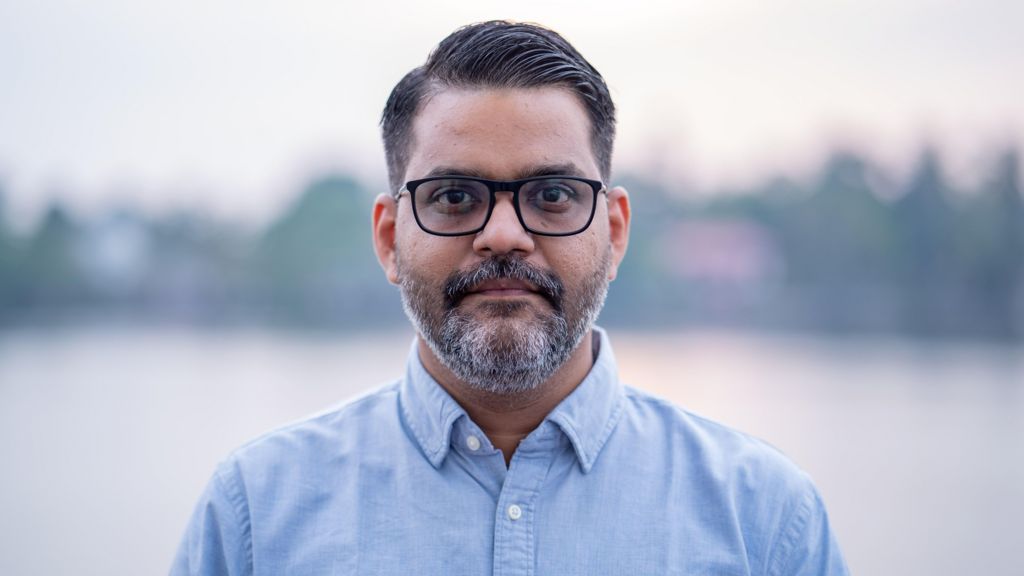
    Dr. Cyriac Abby Philips, known to over 300,000 followers on X as the outspoken “Liver Doc”, has built a reputation as a lightning rod for controversy since he began publicly challenging the safety and scientific validity of alternative and traditional Indian medicine. To his loyal supporters, he is a fearless defender of evidence-based care, shining a light on unregulated products that harm vulnerable patients. To his critics — which include thousands of alternative medicine practitioners, high-profile celebrities, and even India’s federal Ayush Ministry, which oversees traditional medicine — he is an abrasive, attention-seeking provocateur who disrespects India’s centuries-old cultural medical heritage.

    Over the past six years, the backlash against Philips has been severe: he has faced 16 ongoing legal cases, been interrogated by police who traveled two days by train to question him over a social media post, and been the subject of two formal federal committee meetings convened solely to discuss his public criticism. Yet the man who confronts opponents with blunt, often uncompromising language online presents a far different face in person: calm, gentle, and deeply focused on the patients sitting across from his desk.

    This combative online persona, Philips explains, is a deliberate choice, not a reflection of his true character. “They hate me. But they cannot invalidate the information I give,” he says without apology. “Sometimes you must make loud noises to be heard. I specially go after trolls, so they cannot deviate the attention from the message I am trying to give. If people think I’m rude or ill-tempered, even though it isn’t true, I’m willing to pay that price.”

    Philips’ journey to this high-stakes public role was not one he ever planned for. Born into a medical family in Kerala — his father is one of the state’s most celebrated gastroenterologists — Philips initially dreamed of a career in writing and film, not medicine. He failed his first medical entrance exam, spent nine miserable months in a cramped residential coaching center, and only entered the field after a second attempt. It was not until his residency at a under-resourced 3,500-bed public hospital in Kolkata that he found his calling: watching overworked, under-resourced clinicians deliver compassionate care to desperate patients, he saw the profound human impact of medicine that he had never recognized before.

    After training in hepatology in Delhi and returning to Kerala to help rebuild his family’s medical practice following a corporate takeover, Philips began to encounter a pattern of preventable harm that would shape the rest of his career. Time and again, he treated patients with severe liver damage caused by unregulated herbal remedies and homemade alternative treatments, marketed as safe and natural to millions of trusting Indians. One case that haunts him still: a six-year-old child brought to his clinic with acute liver failure after her family gave her a homemade herbal concoction to treat a common cold and fever.

    That tragedy pushed Philips to formalize his research into the harms of unregulated traditional medicine. He immersed himself in the scientific and historical background of Indian alternative systems, published dozens of peer-reviewed studies documenting the link between traditional remedies and liver injury, and began sharing his clinical findings and research on social media to educate the public. When the Ayush Ministry disputed one of his published studies, he responded with a detailed, evidence-based rebuttal and continued his work. He has also led crowdfunded independent investigations into contaminated protein powders and low-quality generic drugs sold across India, and recently published a book documenting his experiences as a clinician.

    Today, Philips limits his practice to just 25 patients a day — a fraction of the volume most of his peers see, a choice he made after the emotional toll of constantly caring for terminally ill liver patients and a near-fatal car crash while taking an urgent work call. Four years ago, he gave up drinking entirely, explaining that he could not ask his patients with alcohol-related liver disease to stop drinking if he continued the habit himself. Away from the clinic and social media, he is an avid gamer who prioritizes time with his wife and children, a far cry from his combative online image. His wife Teena, who has been with him since his residency in Kolkata, puts the difference simply: “He’s very patient… He’s not like that on social media. As a person, no.”

    The personal and professional cost of Philips’ activism has been steep. He has spent millions of rupees on legal defense, despite some pro bono representation from sympathetic lawyers. A close colleague left India after being detained for questioning over a co-authored paper, and many researchers now refuse to be named on studies he publishes. He has received threats against his family, a burden that brings the fierce advocate to tears when he speaks of it, and he now takes constant safety precautions to protect his loved ones.

    Still, Philips refuses to step back. For him, the work of informing the public about the risks of unregulated alternative medicine is worth any personal sacrifice. “Even before I started paying for legal expenses, I was already paying from my own pocket to analyse these medications,” he says. “The whole aspect of somebody being there for the public, letting them know the truth they would never know about — I think this is much more important than looking at your own safety and comfort.” “I want my children to remember me as somebody who stood for what he believed was right,” he adds.