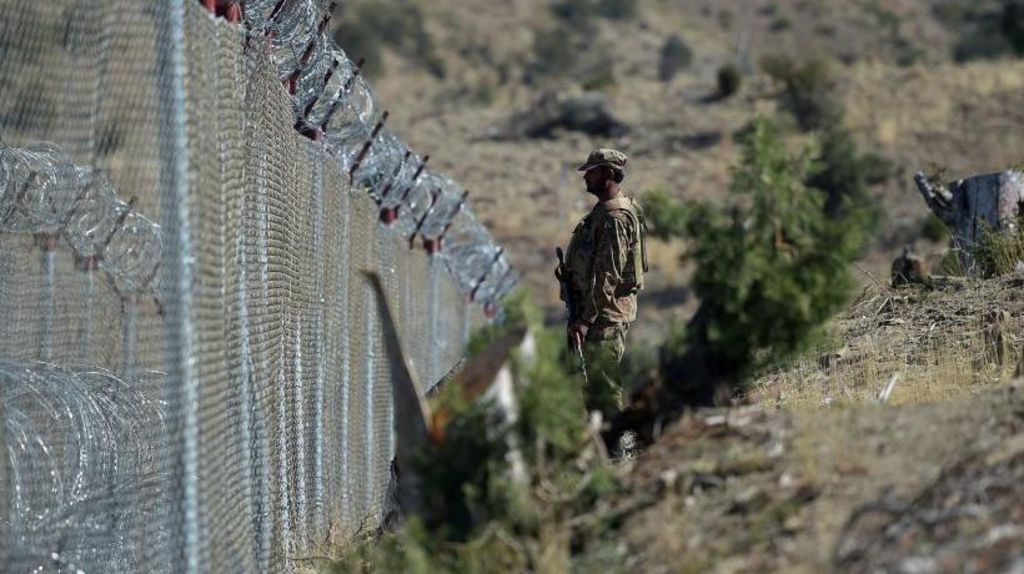
Long-simmering cross-border tensions between Pakistan and Afghanistan erupted into open conflict Sunday, when Pakistan launched coordinated airstrikes and deployed ground forces into three Afghan provinces near their shared border, leaving a disputed number of casualties and drawing sharp condemnation from Kabul’s Taliban government. The military incursion marks the breakdown of a ceasefire brokered between the two nations just eight months earlier, and brings to a head a years-long dispute over militant safe havens that has repeatedly destabilized the border region.
Pakistan’s top officials frame the operation as a necessary response to escalating terrorist attacks on its territory. Information Minister Attaullah Tarar confirmed that the strikes targeted known militant hideouts in Afghanistan’s Paktia, Paktika and Kunar provinces, reporting that 29 militants were killed in the operation. He added the action was carried out in retaliation for recent attacks that killed Pakistani civilians and security personnel.
The attack came just 24 hours after a suicide assault on a Sindh Rangers paramilitary headquarters in Pakistan’s southern city of Karachi left three Rangers dead and killed three attackers. A fourth attacker, an Afghan national, was taken into custody after the incident. Jamaat-ul-Ahrar, a banned splinter faction of the Tehrik-i-Taliban Pakistan (TTP, or Pakistan Taliban), claimed responsibility for the Karachi attack. Both the TTP and Jamaat-ul-Ahrar are designated terrorist organizations by Pakistan and the United Nations for their history of large-scale attacks on civilian and government targets.
Pakistan has for decades maintained that the Afghan government allows TTP and other anti-Pakistan militant groups to operate training camps and safe havens from Afghan territory, a charge the ruling Taliban government in Kabul has consistently rejected. Afghan officials counter that repeated Pakistani incursions into their territory deliberately target civilian populations, a claim Islamabad has repeatedly denied, insisting it only strikes militant positions.
In the aftermath of Sunday’s strikes, Taliban officials have denounced the incursion as a “cowardly act” that constitutes a deliberate “crime and atrocity.” Speaking to BBC Pashto, Taliban officials confirmed that at least 100 people were killed or injured in the attacks, most of them civilians. Local Taliban sources added that the majority of casualties were recorded in Mandikhel, a rural village in Paktika province, where residential homes were directly hit in the airstrikes.
Sunday’s attack is only the latest in a string of deadly clashes between the two neighbors that have killed hundreds of people since the start of 2025. A ceasefire was agreed in October 2024 after weeks of intense border skirmishes, but like previous internationally mediated truces, the agreement quickly collapsed. Deadly violence has resumed repeatedly in recent months: February saw large-scale border clashes that killed dozens, a March Pakistani strike on a Kabul drug rehabilitation center left hundreds dead, and earlier this June another Pakistani air operation killed 26 militants, with Taliban officials reporting 13 civilian bystanders, most of them children, also died in that attack. Intermittent skirmishes and air strikes have left dozens of people dead on both sides of the border so far this year, according to official counts from both governments.
At press time, the BBC has not been able to independently verify the conflicting casualty figures released by Pakistani and Taliban officials, leaving the full human cost of Sunday’s incursion unconfirmed.