The global race for artificial intelligence supremacy has increasingly centered on access to cutting-edge hardware and processing power, and the competition between U.S. and Chinese industry players in the world’s second-largest economy tells a story of shifting market dynamics shaped by geopolitics and policy.
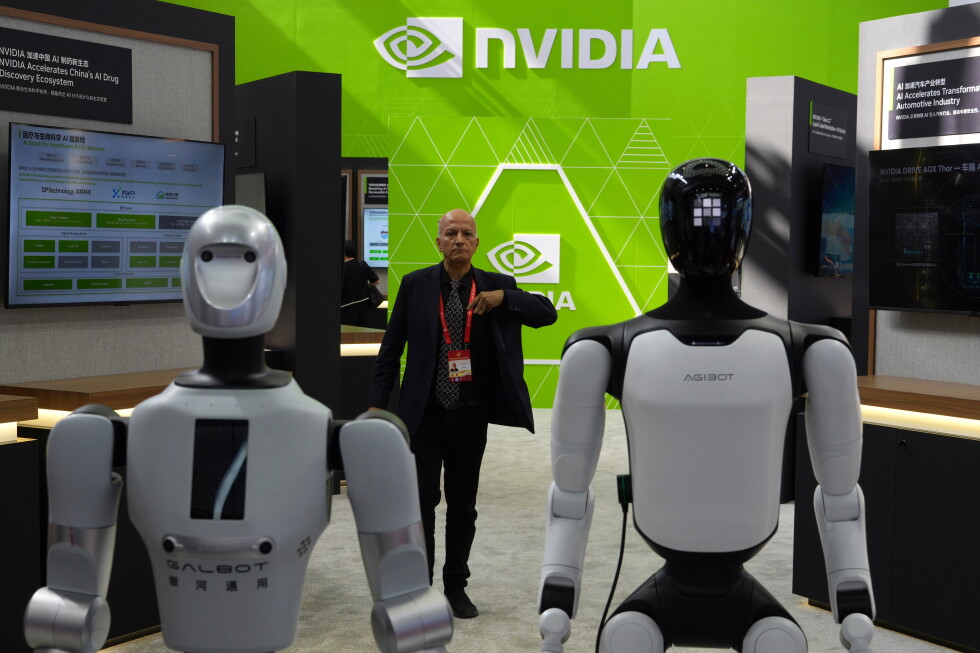
When Nvidia CEO Jensen Huang visited Beijing earlier this year during a high-profile summit between then-U.S. President Donald Trump and Chinese President Xi Jinping, he drew crowds of adoring onlookers while stopping to try a popular local street dish, zhajiangmian. But the tech executive’s celebrity in China has not translated into continued market success for his company’s top-tier AI chips, a transformation he has openly acknowledged.
Washington’s export restrictions on advanced AI technology, imposed over stated national security concerns, first blocked Nvidia’s powerful H200 chips from entering China. By the time Huang secured a temporary reprieve that allowed H200 sales under the Trump administration, Beijing had already shifted its policy to prioritize domestic chips produced by local competitors, with Huawei at the forefront.
Huang told the Associated Press in a recent interview that after three decades operating in China, the U.S. has lost its competitive edge in the country’s advanced AI chip market, with Chinese rivals emerging as major industry giants. Before the export controls took effect, he noted, Nvidia controlled roughly 95% of China’s AI chip market and competed successfully alongside local players. Huang argued that while safeguarding U.S. national security remains a priority, U.S. policymakers should also support American tech firms competing globally and expanding exports.
The push for domestic AI chip development in China gained urgency after Washington cut off Huawei’s access to cutting-edge foreign chips and chipmaking equipment starting in 2019. Since then, Chinese semiconductor firms have raced to build domestic self-sufficiency, developing homegrown chip designs and manufacturing expertise.
While Nvidia and fellow U.S. chipmaker AMD continue to dominate the global AI chip market and most of the global industry’s high-end segment, Huawei has rapidly expanded its footprint across China’s domestic market. This growth has been fueled by demand from Chinese AI developers — including large language model providers like DeepSeek — that are prioritizing both improved performance and lower costs from domestic suppliers.
Analysis from global equity research firm Bernstein projects that Huawei will overtake Nvidia as the leader in China’s AI chip market this year. The firm estimates the two companies held roughly matching 40% market shares in 2025, but predicts Nvidia’s share will plummet to around 8% by the end of 2026, while Huawei’s share will climb to approximately 50%.
Antonia Hmaidi, a semiconductor analyst at the Mercator Institute for China Studies, confirmed that “Nvidia has definitely lost significant ground to Huawei, which (now) leads domestically.” Industry analysts note that Huawei’s top commercial AI chip line, the Ascend 950 series, delivers performance roughly on par with Nvidia’s widely acclaimed H200 chip by many key metrics.
He Hui, director of semiconductor research at global advisory firm Omdia, points to a broader policy shift underpinning this market change: “China now believes in its own self-sufficiency and supply capabilities.” In September 2025, Huawei announced it was deploying some of the world’s most powerful AI computing clusters, which combine processing power from thousands of domestic chips to match the scale of clusters built by global competitors, despite being forced to rely entirely on Chinese-made semiconductors due to U.S. controls.
When asked how Huawei’s chip technology stacks up against U.S. competitors, He Tingbo, head of Huawei’s semiconductor business, noted that the company has “found pretty good solutions” and added, “Who can walk faster? Huawei or other companies? I don’t know the answer. I think only time will tell.”
Despite Huawei’s rapid gains, industry analysts emphasize that Nvidia remains an indispensable player in China’s AI ecosystem, thanks to the deeply global nature of the semiconductor supply chain. No single country currently has the capacity to produce the most cutting-edge AI chips entirely independently, and Chinese demand for advanced AI chips still outpaces domestic supply.
High-profile smuggling cases, in which Nvidia chips have been illegally brought into China to bypass export restrictions, underscore the ongoing unmet demand for the U.S. firm’s technology. Nvidia still designs the world’s most powerful AI chips, which rely on Dutch firm ASML’s extreme ultraviolet lithography (EUV) machines — themselves dependent on U.S. components and technology — and are manufactured by Taiwanese semiconductor giant TSMC. Chinese firms are barred from purchasing both Nvidia’s top-tier chips and ASML’s EUV manufacturing equipment.
Huawei’s highest-performance chips still trail Nvidia’s most advanced offerings in multiple key technical areas, and cutting-edge Chinese AI development work — including the training of large models like DeepSeek’s latest generative AI system — still relies heavily on Nvidia hardware, analysts say. Chinese universities and major tech firms also continue to seek access to chips like the H200 for research and development purposes.
Even with its declining market share in China, Nvidia continues to see explosive global revenue growth fueled by soaring worldwide AI demand. The company projected revenue of roughly $91 billion for the second quarter of 2026, up from nearly $82 billion in the prior quarter — a figure that excludes any potential data center chip revenue from China. Nvidia’s full-year 2025 revenue hit almost $216 billion, compared to Huawei’s $126 billion in annual revenue over the same period.
The growing alignment between Chinese AI developers and domestic chipmakers is visible in recent partnerships. DeepSeek, the fast-growing Chinese competitor to OpenAI’s ChatGPT and Anthropic’s Claude, confirmed that its latest V4 large language model, launched in April 2026, was specifically adapted to run on Huawei’s Ascend chips.
Paul Triolo, a partner at global advisory firm DGA-Albright Stonebridge Group, said there is likely “significant effort going into collaboration between DeepSeek and Huawei” to train future DeepSeek models entirely on domestic Chinese hardware. Phelix Lee, a semiconductor analyst at Morningstar, noted that this collaboration proves domestic Chinese chips can replace Nvidia products in many use cases, but added, “We don’t expect an abrupt switch toward (Huawei’s) Ascend.”
To work around U.S. export rules, Nvidia developed a lower-power modified chip called the H20 that was allowed for sale in China. Counterpoint Research senior analyst Brady Wang, based in Taipei, says the company continued selling H20 chips in China through 2025, though shipments declined steadily over time. Beijing’s official position on allowing imports of the full-power H200 chip remains unannounced, and Nvidia has confirmed it has not yet sold any H200 chips in China. Speaking at the company’s recent annual shareholders meeting, Huang said the H200 “has yet to generate any revenue, and we are uncertain whether any imports will be allowed into the country.”
Beyond its domestic market gains, Huawei has broader global ambitions for its chip business. Already the world’s largest supplier of telecommunications network infrastructure, Huawei operates in 170 countries and regions with a stated mission of “bringing digital to every person, home and organization for a fully connected, intelligent world.”
While international demand for Huawei’s chips may exist, China’s current domestic production capacity for advanced chips is still insufficient to meet domestic demand alone. Counterpoint’s Wang projects that as China expands its advanced chip manufacturing capacity and brings down pricing, Huawei could gain market share in regional markets including Southeast Asia and beyond. Wang notes that “China’s strategy of pursuing technological self-sufficiency — and eventually exporting its technologies — is unlikely to change regardless of whether Nvidia can sell its chips in China.”