博客

  • Trump sons set to profit from tax-funded Kazakh tungsten mine deal

    Trump sons set to profit from tax-funded Kazakh tungsten mine deal

    A newly published investigative report has ignited fierce demands for government accountability after exposing that former President Donald Trump’s two eldest sons stand to gain significant personal profits from a federal-backed tungsten mining deal brokered by their father during his second term in the White House. Democratic congressional leaders have framed the taxpayer-supported project as the latest example of unprecedented, unregulated corruption spreading through the current administration.

    According to reporting from The New York Times, Donald Trump, alongside members of his inner circle—including billionaire Commerce Secretary Howard Lutnick—secured a formal agreement with Kazakhstan’s head of state that granted a little-known U.S. firm exclusive access to one of the planet’s largest untapped deposits of tungsten. This critical rare metal is deemed strategically essential by the U.S. government, as it is a core component in the manufacturing of missile warheads, military fighter aircraft, advanced semiconductors, and a wide range of other defense-critical and industrial products.

    Months before the deal was finalized in September of last year, the Trump administration gave preliminary approval for up to $1.6 billion in federal financing to back the project, which is being developed by the U.S.-registered firm Kaz Resources, with construction planned for a rural mining site in northern Kazakhstan.

    The investigative investigation documents direct financial ties between top Trump and Lutnick family members and the mining venture. Within just weeks of high-level negotiations held at the St. Regis Hotel, the report confirms that investors linked to Dominari Securities—a New York-based firm based out of Trump Tower that is partially owned by the president’s eldest sons, Donald Trump Jr. and Eric Trump—teamed up with other stakeholders to acquire a 20% ownership stake in a corporate entity connected to the Kazakh project. This stake puts the first family’s eldest children in line for massive windfalls as the project moves toward production.

    For the Lutnick family, Commerce Secretary Howard Lutnick’s two sons, Brandon and Kyle Lutnick, who lead the major investment firm Cantor Fitzgerald, also stand to profit significantly. The pair assisted one of the lead investors in the Kazakh deal raise $210 million in new capital for a separate linked business entity, a move that is projected to deliver multimillion-dollar gains to Cantor Fitzgerald, according to the report.

    The investigation further uncovered that at least 14 separate companies working on federally backed critical mineral mining projects have confirmed financial ties to either the Trump family or Cantor Fitzgerald—beyond the Kaz Resources deal, these include major mining firms Perpetua Resources and USA Rare Earth.

    This potential mining profit windfall is not an isolated case for the Trump family during their current return to the White House. A public “Trump Family Digital Grift Wealth Tracker” maintained by Democratic members of the House Oversight Committee estimates that cryptocurrency ventures spearheaded by the president’s two eldest sons have already generated more than $2.4 billion in cumulative profits for Trump and his immediate family since he retook office in 2025.

  • World Cup what to know: US looks to win first knockout match in 24 years against Bosnia-Herzegovina

    World Cup what to know: US looks to win first knockout match in 24 years against Bosnia-Herzegovina

    For nearly a quarter-century, the United States men’s national soccer team has carried the weight of a stubborn, unwanted label: perennial underperformers in World Cup knockout matches. That narrative is set to face its biggest test on Wednesday night, when the Americans take on Bosnia-Herzegovina at Levi’s Stadium in Santa Clara, California, aiming to secure their first win in an elimination round fixture since 2002.

    The U.S.’s sole knockout victory in modern history came 24 years ago on June 17, 2002, when the team downed Mexico 2-0 in the round of 16 during the co-hosted tournament in South Korea and Japan. In the three knockout appearances the Americans have made since that upset over their regional rivals, they have walked away winless, a dry spell the entire squad is determined to break this time around.

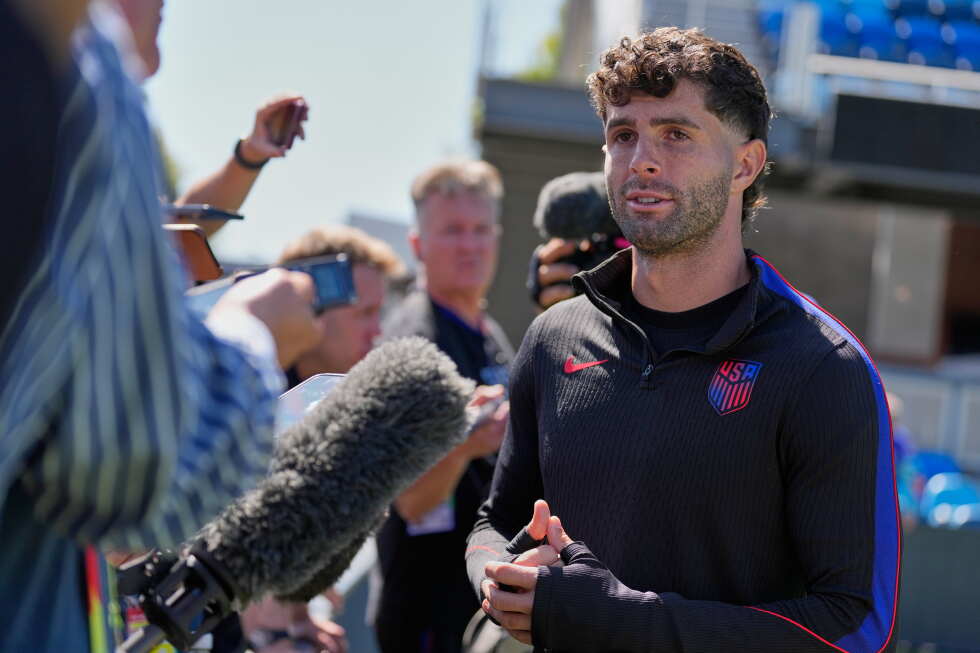
    A major boost for the U.S. camp comes as star playmaker Christian Pulisic confirms he is fit and ready to start. Pulisic was sidelined for the team’s second group stage match with a minor calf injury, and only saw 33 minutes of play off the bench in the final group fixture against Turkey, a 3-2 loss that saw the U.S. still clinch the top spot in their group. “I feel good and ready to go for tomorrow,” Pulisic told reporters ahead of Wednesday’s clash. “We understand what it means, you win or you go home. There definitely needs to be a lot of focus and attention to detail this week. But I think the vibe feels good. We’ve still kept it light and we still are going to be ready to battle once the whistle blows.”

    For head coach Mauricio Pochettino, the build-up to the match included a public apology to the media for his sharp tone following the Turkey loss. Pochettino opened his Tuesday press conference by acknowledging his frustration got the better of him after the defeat, when he called out reporters for failing to celebrate the team’s already locked-in group title. “I want to apologize to the guys that were in my last press conference,” he said. “I was so frustrated. I was disappointed. I thank you and am sorry. It was my problem, not your problem. I was upset after the defeat.”

    Geographically, Wednesday’s match carries a subtle layer of history for U.S. World Cup soccer. The 1994 U.S. host squad advanced out of the group stage and faced eventual champions Brazil at Stanford Stadium, just 15 miles north of Santa Clara, where they fell 1-0. Oddsmakers have installed the Americans as favorites to advance this time around, despite the team’s long-running poor record against European opposition: since returning to the World Cup in 1990 (their first appearance in 40 years), the U.S. has only one win in 21 matches against European sides, with seven draws and 13 losses.

    Wednesday’s round of 32 slate features two other high-stakes fixtures: England will square off against first-time knockout qualifiers Congo in Atlanta at noon EDT, while Belgium will take on Senegal in Seattle at 4 p.m. EDT before the U.S.-Bosnia kickoff at 8 p.m. EDT.

    England heads into their match facing mounting injury trouble at the right back position, with first-choice Reece James sidelined by a hamstring injury and backup Jarrell Quansah picking up an ankle twist in the team’s 2-0 group stage win over Panama. Head coach Thomas Tuchel, however, remains calm under early tournament pressure, confirming that winger Bukayo Saka—who entered the tournament carrying a minor injury—will be fit to start. Tuchel added that both injured defenders are close to returning, a goal that depends on England getting past Congo first. “They’re getting closer and closer,” Tuchel said. “The race was close even to make it into my squad this time. So we need to make sure that we have more matches. That is the main focus, and then that will be very soon.”

    For Congo, this marks the first time the nation has ever advanced to the knockout round of a men’s World Cup. The side pulled off an impressive group stage run, holding powerhouse Portugal to a 1-1 draw before beating Uzbekistan to secure their spot in the round of 32. Head coach Sébastien Desabre said his team is not intimidated by the challenge facing them. “It is true we are looking at a difficult match, but in no way insurmountable,” Desabre said. “We have proven this against teams that were supposed to be superior to us, that we could actually put in a good performance. So we are focusing on our strengths, we are walking our path and once you get to this point in the competition, it’s difficult for everyone.”

    Belgium, meanwhile, is looking to recapture the magic of its 2018 World Cup run, where the side claimed a historic third-place finish before crashing out in the group stage in Qatar four years ago. By topping Group G this year, including a 5-1 blowout of New Zealand in the final group match, Belgium has already exceeded its coach’s minimum expectations. “We wanted to finish first in the group stage and we succeeded,” head coach Rudi Garcia said. “Of course we wanted to win more — we know the story of our World Cup so far. Now it is time for the knockout phase. Senegal is a big team. But, you have to beat them, too, if you want to go far in a World Cup.”

    The round of 32 will continue on Thursday with three more matches: Spain vs. Austria, Portugal vs. Croatia, and Switzerland vs. Algeria, before wrapping up on Friday with Australia vs. Egypt, Cape Verde vs. Argentina, and Colombia vs. Ghana. The round of 16 kick off will begin this Saturday.

  • Iran, Oman to jointly charge fees along Strait of Hormuz: Report

    Iran, Oman to jointly charge fees along Strait of Hormuz: Report

    Tensions around the strategically critical Strait of Hormuz have escalated sharply, after multiple sources confirmed that Iran and Oman are advancing a proposal to collect joint service fees for commercial vessels transiting the waterway — a move that directly contradicts the United States’ public opposition and threatens to upend centuries of precedent for free passage through one of the world’s busiest maritime chokepoints. The New York Times first reported the ongoing discussions on Tuesday, citing an anonymous Iranian official and four diplomatic insiders with direct knowledge of the negotiations.

    The push for a joint fee framework emerges from a 14-point preliminary agreement between Washington and Tehran reached earlier this month, which enshrines a commitment to free, uncharged commercial passage through the strait for the 60-day window set aside for wider permanent negotiations. As a mandated component of that ceasefire-era deal, Iran and Oman have been tasked with developing a long-term regulatory plan for the waterway, opening the door to a paradigm shift that would end hundreds of years of toll-free transit as part of a post-war regional economic framework.

    Inside the bilateral talks, key divides remain between the two Gulf nations over how the fee would operate, according to the unnamed sources who spoke to the NYT. Oman has pushed for a voluntary payment model, where contributions would go toward covering the costs of maintaining navigation safety infrastructure — a structure modeled on the existing system used for the Straits of Malacca and Singapore. Iran, by contrast, has taken a harder line, demanding that the fee be mandatory for all transiting vessels. Last week, Iranian Deputy Foreign Minister made clear Tehran’s position: if no mutually acceptable agreement is reached with Muscat, Iran will unilaterally implement its own transit fees.

    The proposal has already triggered extreme pushback from the United States, which has been waging a widespread war against Iran alongside Israel. Last month, former President Donald Trump issued an extraordinary public threat against Oman, a longstanding U.S. Gulf ally, saying Washington would “blow up” the country if it moved forward with the joint toll plan with Iran. In his remarks, Trump asserted the Strait of Hormuz constituted international open waters, claiming no nation had the right to impose controls or charges on passage, and warned Oman that it must align with U.S. demands or face devastating consequences.

    Multiple Arab and U.S. officials previously told Middle East Eye that Trump’s unprompted outburst forced U.S. diplomatic teams to launch urgent damage control to preserve bilateral ties with Muscat, while pressing Omani officials to issue a public statement rejecting Iran’s toll proposal — a demand that went unfulfilled. Oman, which has held the role of neutral mediator in multiple regional conflicts over decades, has not issued any public response to Trump’s threat. However, in a closed-door meeting between a senior Omani diplomat and U.S. Treasury Secretary Scott Bessent, Muscat privately gave assurances that it currently held “no plans” to implement tolling for the strait, according to reports.

    Oman’s position on the current conflict has long set it apart from other Gulf Cooperation Council states. When the U.S.-Israeli war on Iran launched, most neighboring Gulf states opened their military facilities to U.S. forces and joined the offensive against Tehran, but Oman openly criticized the war and refused to participate, earning a reputation as a regional outlier at the time. That decision has since been validated by the current ceasefire, which is broadly seen across the region as a strategic victory for Iran.

    As the oldest U.S. treaty partner in the Gulf, with diplomatic and commercial ties dating back to 1833, Oman’s ongoing negotiations with Iran over the Strait of Hormuz toll plan underscores the deep rift between Washington and its longstanding ally over the future of the post-war Gulf. With the 60-day negotiation window still ongoing, the standoff over transit fees has emerged as one of the first major flashpoints in efforts to solidify a lasting ceasefire and new regional order.

  • Afghan Taliban launch strikes on border with Pakistan as tensions escalate

    Afghan Taliban launch strikes on border with Pakistan as tensions escalate

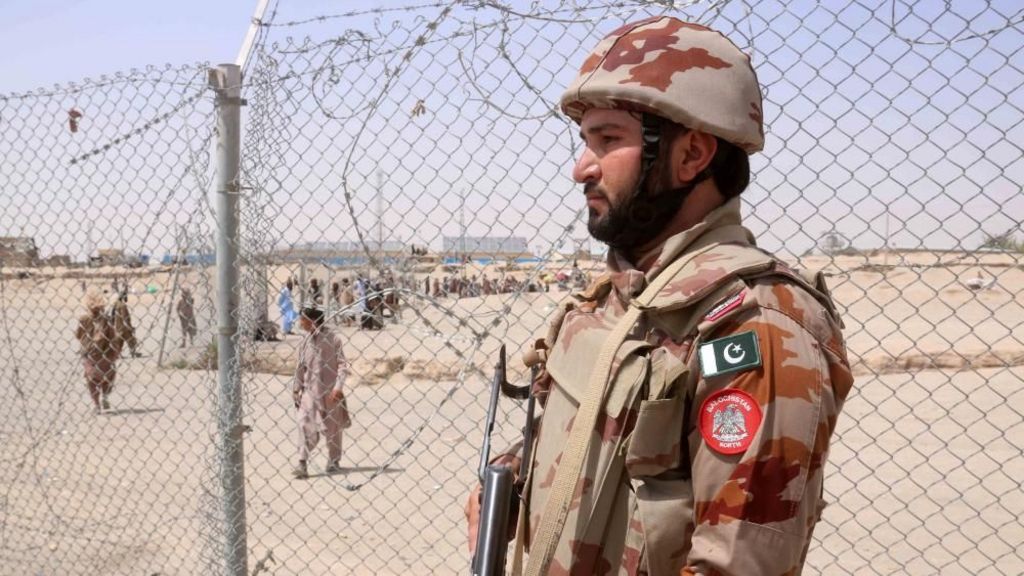
    Tensions that had simmered for months along the shared border of Pakistan and Afghanistan have boiled over once again, after Afghanistan’s ruling Taliban regime announced it had launched cross-border strikes targeting positions inside Pakistan. The assault, which the Taliban confirmed Wednesday, left multiple people injured in Pakistan’s restive southwestern Balochistan province, according to initial reports.

    In response to the incursion, Pakistan’s military issued a statement confirming it had intercepted and downed four crude unmanned aerial vehicles launched from the Afghan side of the border. The statement carried a sharp warning, noting that any additional acts of provocation from Afghan territory would be met with a firm and appropriate response. To date, the BBC has not been able to deploy independent observers to verify the details of the Taliban’s strike on Pakistani soil.

    This latest exchange of hostilities comes just days after Pakistan launched its own large-scale air operations inside Afghan territory on Sunday, a strike that the United Nations says killed 28 civilians. The Taliban administration in Kabul has put the civilian death toll from Sunday’s Pakistani strikes far higher, at 36, with more than 160 people injured, labeling the operation a “cowardly act” and an “atrocity” that targeted residential civilian homes.

    Pakistan has pushed back on the criticism, saying its Sunday operations only targeted militant hideouts in the eastern Afghan provinces of Paktia, Paktika and Kunar. Information Minister Attaullah Tarar confirmed the operation killed 29 militants, framing the strike as a necessary response to recent deadly terrorist attacks targeting Pakistani civilians. Like the Taliban’s claims, Pakistani casualty figures have not been independently verified by third-party media.

    The renewed clashes break a period of tentative calm that followed a bilateral ceasefire agreed by both sides in October, which ended weeks of violent back-and-forth hostilities. Cross-border violence has plagued the region for much of this year, with intermittent clashes and air strikes leaving dozens, and in some cases hundreds, of people dead. In February alone, border skirmishes killed dozens of people on both sides. A March Pakistani strike on a Kabul drug rehabilitation centre left hundreds dead, according to local reports. As recently as early June, another round of Pakistani air strikes killed 26 militants; the Taliban government confirmed at the time that 13 additional civilians, most of them children, also died in the operation.

    At the core of the long-running dispute between the two neighbors is Pakistan’s consistent accusation that the Taliban administration harbors militant groups that carry out fatal attacks inside Pakistan. The Taliban has repeatedly rejected these claims, and in turn accuses Islamabad of launching unprovoked strikes that intentionally kill innocent Afghan civilians, a charge Pakistan denies, maintaining it only targets militant infrastructure and personnel along the shared border.

  • Supreme Court keeps birthright citizenship, overruling Trump order

    Supreme Court keeps birthright citizenship, overruling Trump order

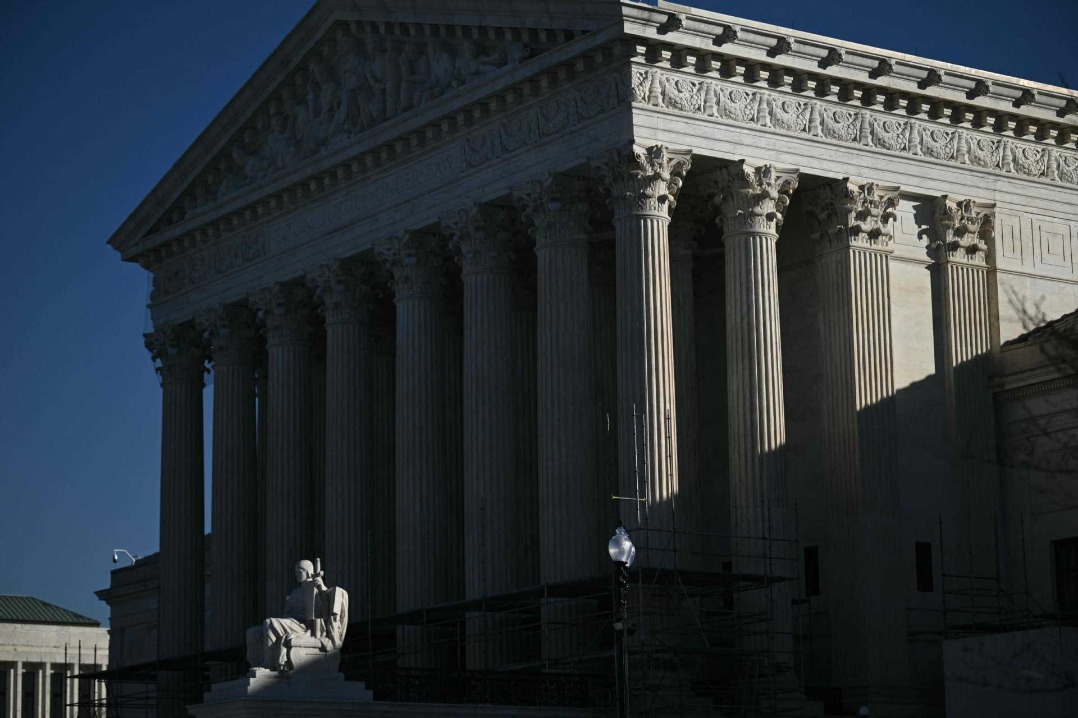
    On a Tuesday in Washington D.C., the U.S. Supreme Court delivered a landmark rejection of former President Donald Trump’s controversial effort to rewrite the longstanding interpretation of birthright citizenship enshrined in U.S. constitutional law. The 6-3 vote delivered a decisive victory for established constitutional interpretation, with a majority of justices reaffirming the century-old principle of automatic citizenship for anyone born on U.S. soil, no matter the immigration status of the newborn’s parents.

    Writing the majority opinion for the court, Chief Justice John G. Roberts Jr. made clear that Trump’s executive order directly contravened the text and intent of the 14th Amendment to the U.S. Constitution. “Arguments for limiting birthright citizenship to those domiciled in the United States fail,” Roberts wrote in his opinion. “Children born in the United States to parents unlawfully or temporarily present are ‘subject to the jurisdiction’ of the United States and are citizens at birth under the Fourteenth Amendment’s Citizenship Clause. Under the Constitution, they are citizens at birth.”

    This policy push originated on the first day of Trump’s second presidential term, when he signed the executive order aimed at stripping automatic birthright citizenship from children born in the U.S. to parents without permanent legal status, including those holding temporary visas or living in the country without formal authorization. Legal analysts and policy experts had repeatedly warned that allowing the order to stand would create a large new class of stateless people, triggering widespread administrative chaos for U.S. hospitals and local government agencies tasked with recording births and issuing key documentation.

    In a break from typical presidential precedent, Trump made the rare move of attending oral arguments for the case in person ahead of the ruling. Ahead of the decision, Trump acknowledged he would abide by the court’s final call, while still making his preference clear: “It’s up to them, but in terms of for the good of the country, it’d be great if they … didn’t allow it,” he told reporters from the Oval Office. The White House had not issued an immediate formal response to the ruling when contacted by States Newsroom shortly after the decision was announced.

    The ruling marks a significant setback for Trump, who positioned the redefinition of birthright citizenship as a core plank of his broader hardline immigration policy agenda, which seeks to restrict entry and reshape who qualifies as a U.S. citizen. Notably, the defeat comes on the heels of two recent high court rulings that expanded presidential authority over immigration policy: one that curbed asylum seeker claims at the U.S. Southern border, and another that removed deportation protections for approximately 350,000 Haitian migrants and 6,000 Syrian migrants living in the U.S.

  • A plane crashed into a tower in Beijing but China is not saying what happened

    A plane crashed into a tower in Beijing but China is not saying what happened

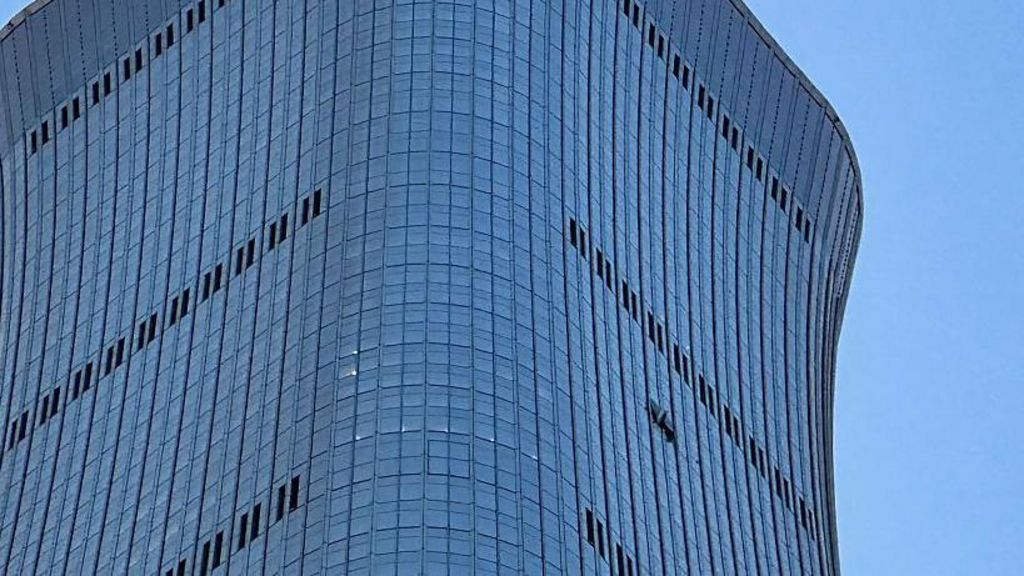
    Four days after a small, single-engine aircraft crashed into Beijing’s tallest skyscraper, CITIC Tower, fundamental questions about the incident remain unanswered. The crash, which occurred just a few kilometers from Zhongnanhai — the compound housing China’s top Communist Party leadership — killed the sole person on board, the pilot, and left 13 other people injured. To date, the only official public statement from Chinese authorities has been a 60-word brief factual report published by state-run Beijing Daily.

    Friday’s collision tore visible holes in the side of the 109-story landmark building, which have since been covered with boarding to block public view. Dramatic user-shared footage of the aftermath and impact has been systematically removed from domestic Chinese internet platforms, part of a broader crackdown on discussion of the incident. Multiple aviation companies across China confirmed to the BBC that they have received official orders to suspend all light aircraft operations, but all declined to provide further details, citing instructions not to speak publicly about the order. A receptionist at a Beijing-based flight training institute summed up the widespread silence: “We were told to not speak about it. Please ask others.” A light aviation firm in Chengdu similarly cut off conversation after refusing to name which authority issued the grounding order.

    This information vacuum has fueled growing speculation, particularly over how a small aircraft managed to penetrate Beijing’s airspace, which is governed by some of the world’s strictest airspace control and security regulations. Beijing maintains a permanent 100-square-kilometer no-fly zone covering its core political district, including Tiananmen Square and the heavily guarded Zhongnanhai compound. Authorities recently tightened drone regulations as well, requiring all drones to be registered before entering or exiting the capital, over stated security concerns.

    China has long practiced strict online censorship, particularly for content that touches on political sensitivity or criticism of the government or ruling party. But the scope of censorship in the wake of this crash has extended far beyond discussion of the incident itself: even unrelated photos, memes, and casual social media posts featuring CITIC Tower have been deleted from Chinese platforms. The skyscraper, shaped like a traditional Chinese wine vessel, is a popular local landmark, and many young Beijing residents visit or share photos of it online to pray for good fortune on exams, job searches, and other life events.

    Manya Koetse, editor of the *Eye on Digital China* newsletter, argues that the unusually rapid and broad censorship likely stems from uncertainty among top leadership about what actually caused the crash. “This is a highly unusual incident,” she noted, adding that the crash undermines public confidence in government competence and threatens key narratives the Communist Party promotes around its governance and national security.

    China analyst Bill Bishop described the incident as a “massive security breach” in a post on X, warning that the aircraft only missed striking Zhongnanhai itself by seconds. “Not many more seconds of flying and [the crash] could have been at Zhongnanhai… [That would have been] an earthquake in Beijing’s security system,” Bishop wrote.

    Raymond Kuo, vice president of research at the Chicago Council on Global Affairs, echoed that assessment, calling the incident “both politically embarrassing and a major security lapse.” “The fact that a small plane, considerably larger than most drones, was able to fly across much of the city and get quite close to Zhongnanhai” cannot be overlooked, Kuo said. While the crash could be the result of mechanical failure or simple pilot error, Kuo also acknowledged that it “could also potentially have been intentional.”

    Flight tracking service Flightradar24 has identified the aircraft as an Aurora SA60L, a two-seat, single-engine light plane built by Chinese manufacturer Sunward Aircraft. Designed for recreational flying, aerial photography, and tourist flights, the plane measures just 6.9 meters long with an 8.6-meter wingspan.

    International observers have drawn comparisons to historic aviation security breaches to frame the incident. Some social media users outside of China drew immediate parallels to the September 11, 2001 terrorist attacks, when hijacked passenger planes crashed into New York’s World Trade Center. “This was exactly the same news alert I received when a plane hit the first tower during 9/11,” one Reddit user wrote.

    Chong Ja Ian, a non-resident scholar at Carnegie China, argues that a closer historical parallel is the 1987 Mathias Rust incident, when a West German amateur pilot flew a small plane through Soviet air defenses and landed directly in Moscow’s Red Square near the heart of Soviet power. That incident exposed gaping flaws in Soviet air security and ultimately led to the firing of dozens of senior defense and security officials. Chong says a similar shake-up could follow the Beijing crash.

    “His flight and landing highlighted serious gaps in the Soviet air defence system. That incident led to the removal of several high-ranking officers responsible for air defence and security,” Chong explained. “Similarly… some officials may be removed from their posts over the Beijing crash. A small plane hitting CITIC Tower means that a drone or missile might be able to as well. This is a bit of an embarrassment to the security services responsible for Beijing.”

  • Great-grandson of Wong Kim Ark praises Supreme Court ruling affirming birthright citizenship

    Great-grandson of Wong Kim Ark praises Supreme Court ruling affirming birthright citizenship

    In a landmark, ideologically divided decision Tuesday, the U.S. Supreme Court has reaffirmed the century-old constitutional guarantee of birthright citizenship, striking down a sweeping executive order from second-term President Donald Trump that sought to deny citizenship to children born in the United States to non-citizen parents residing in the country illegally or on a temporary basis. The 6-3 ruling upholds a foundational 1898 high court decision rooted in the Fourteenth Amendment, drawing praise from civil rights advocates and sharp backlash from the former president, while placing a 76-year-old great-grandson of the 1898 case’s plaintiff at the center of the national fight over core American constitutional principles.

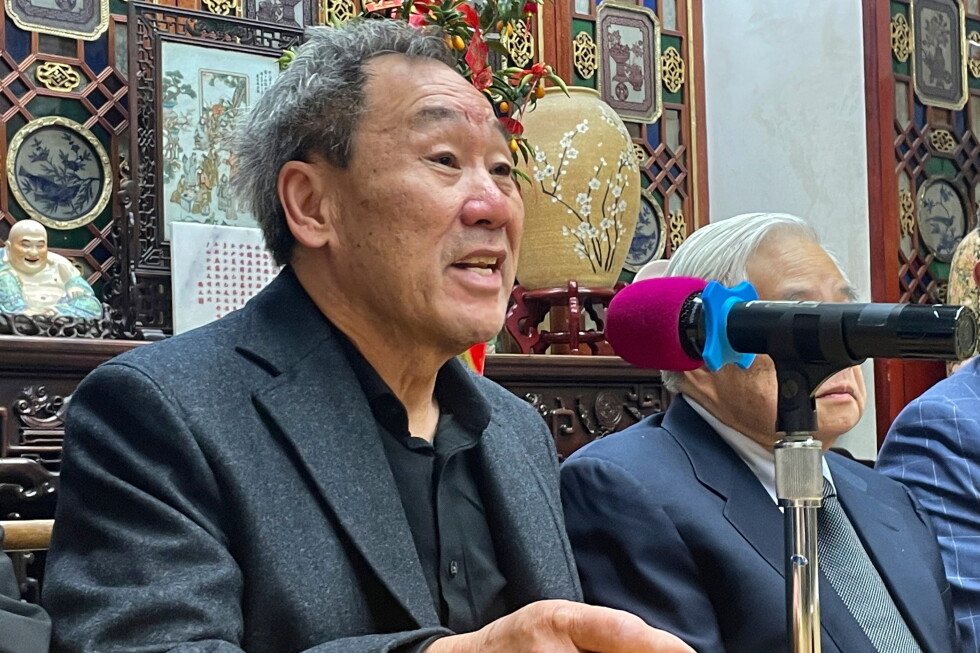
    Norman Wong, whose great-grandfather Wong Kim Ark was the Chinese American plaintiff at the heart of the 1898 case that first established birthright citizenship as a constitutional right, framed the ruling as a win not just for immigrant communities, but for every person living in the United States. Speaking to The Associated Press shortly after the decision was released, Wong emphasized that the battle over this precedent was never about protecting the rights of a single ethnic group. “It’s an obligation and a duty for every American to care about this because ultimately we’re not fighting for the rights of Chinese or Japanese or whatever. We’re fighting for rights for all Americans because these are fundamental rights,” he said, rejecting the idea that the victory was personal to him or his family.

    Wong’s unlikely turn as a public face of the movement to protect birthright citizenship began in early 2025, just days after Trump signed the executive order on his first day back in office. That order sought to unilaterally redefine citizenship to exclude children born to people without permanent legal status in the U.S. A lifelong social justice advocate who cut his teeth as a student activist with the multiracial Third World Liberation Front at the University of California, Berkeley in the 1970s, Wong did not even learn of his family’s connection to the historic Supreme Court case until his 50s, when his father was tracked down by Chinese-language journalists digging through old court records. When the Chinese Consolidated Benevolent Association — the same group that funded his great-grandfather’s 1890s legal battle — asked him to speak at a press conference last year, he stepped into the role, eventually traveling to Washington D.C. in April to hear the Supreme Court’s oral arguments in person.

    Writing for the court’s majority, Chief Justice John Roberts reaffirmed the longstanding interpretation of the Fourteenth Amendment, which was ratified in the years following the U.S. Civil War. The court held that the amendment’s text makes clear that nearly every person born on U.S. soil is automatically an American citizen, with only a handful of extremely narrow exceptions established by decades of legal precedent. The ruling directly rejected Trump’s legal argument that the Fourteenth Amendment was never intended to grant birthright citizenship to children of non-citizens.

    The three dissenting justices — Samuel Alito, Neil Gorsuch, and Clarence Thomas — aligned with Trump’s position, arguing that the amendment’s original purpose was limited to securing equal rights for formerly enslaved Black people after the Civil War, and that it had been improperly expanded to cover a policy goal never envisioned by the Reconstruction Congress that passed the amendment.

    In response to the ruling, Trump released a statement calling the outcome “too bad for our Country,” and incorrectly claimed that Congress could reverse the decision through ordinary legislation. Because the court’s decision rested on constitutional interpretation, overturning it would require a full constitutional amendment, a high bar that requires approval from two-thirds of Congress and three-quarters of U.S. states. Wong called Trump’s executive order an unconstitutional “decree,” noting that its contradiction of existing constitutional text led directly to the high court’s rejection. “That’s unfortunate that we have a leader that wants the United States to be in his image, but that’s not what we’re supposed to be. He’s supposed to conform to what we the people believe in,” Wong said.

    For Wong, protecting the precedent of his great-grandfather’s case is both a constitutional cause and a family legacy. Born in 1873 in San Francisco to Chinese immigrant parents, Wong Kim Ark was denied re-entry to the U.S. when he returned from a trip to China in 1895, based on the U.S. government’s argument that he could not be a citizen because his parents were not citizens. His 1898 Supreme Court victory first established that citizenship is determined by place of birth, regardless of a parent’s immigration status.

    In a statement after the ruling, the U.S. Department of Justice pushed back against what it called “illegal birth tourism schemes,” saying it remained committed to cracking down on actors who exploit legal loopholes to secure citizenship for children born in the U.S., claiming such activity poses a national security risk.

    Cecillia Wang, national director of the American Civil Liberties Union, who argued the case in favor of upholding birthright citizenship before the Supreme Court, celebrated the ruling as a reaffirmation of a core American promise. “The court reaffirms a fundamental American promise — if you are born here, you are a citizen,” she said, adding that “a president cannot change the Constitution by executive fiat.” Wang, a U.S.-born child of Taiwanese immigrants who came to the country legally as graduate students, called the outcome a victory for all who cherish equal rights under the law.

    Norman Wong noted that Wang’s role as lead counsel in the case, coming nearly 130 years after his great-grandfather won his original legal battle, made the victory even more meaningful, especially amid a recent rise in anti-Asian hate across the country. “It’s kind of sweet because — especially for Chinese Americans — they were at the forefront of all this anti-Asian hate,” Wong said. “There are certain aspects of my life where I think what happened actually prepared me for what’s happening now.”

    Wong said he sees his role in the fight as an honor aligned with the core promises of American citizenship. “I consider myself lucky enough to actually have a meaningful role. All that citizenship grants is the stuff that was the promise of America, which is life, liberty and the pursuit of happiness,” he said.

  • Why India’s cockroach protesters are still on the streets in over 40C heat

    Why India’s cockroach protesters are still on the streets in over 40C heat

    Beneath the relentless 40-plus-degree Celsius heat of Delhi’s summer, hundreds of young protesters have occupied Jantar Mantar, the Indian capital’s historic 18th-century astronomical observatory and most iconic protest ground, for 10 consecutive days and nights. Surrounded by heavy yellow metal police barricades and watched over by uniformed officers and paramilitary troops, students, young professionals and activists gather in clusters: some chant, some sit against the scorching pavement, and even sleep on the sun-baked asphalt as protest leaders cycle through speeches and the crowd belts out rebellious Bollywood hits. What makes this demonstration stand out, however, is the protesters’ chosen identity: they call themselves “cockroaches”, the core of a viral satirical-turned-grassroots movement named the Cockroach Janta Party (CJP).

    The movement traces its unexpected origins to mid-May, when India’s Chief Justice Surya Kant sparked widespread public fury by comparing unemployed young people entering journalism and activism to “cockroaches” and “parasites”. Though the judge later clarified his remarks were targeted only at people holding fake degrees, not young people as a whole, the damage was done — and the backlash birthed a movement.

    It started with a throwaway social media post from Abhijeet Dipke, a 30-year-old public policy postgraduate at Boston University who was back in India at the time. “I had just come back from the gym and was playing FIFA on my PS5 when I saw the chief justice’s comment,” Dipke recalled to reporters at the protest site. Disappointed and confused by the remark, he posted a single question to X: “What if all cockroaches come together?”

    The post went viral, racking up hundreds of thousands of views and responses, particularly from Generation Z. Flooded with comments suggesting a collective platform, Dipke leaned into the absurdity: an AI tool generated a logo featuring a cockroach in a formal suit, and the Cockroach Janta Party — a name that parodies Prime Minister Narendra Modi’s ruling Bharatiya Janata Party (BJP) — was officially launched. What began as a space for memes and jokes quickly evolved into a outlet for young Indians to air long-simmering frustrations over scarce job opportunities and a persistent pattern of exam paper leaks that have derailed countless young lives, demanding accountability from ruling officials.

    “None of this was intended or planned. It was just meant to be satire, but as millions began signing up, people started saying we also want to turn this into a serious movement because no other political party is talking about our needs or hopes and aspirations. I was kind of forced into it by our supporters,” Dipke explained. As a youth-led movement, the group centered its first demands on the NEET-UG, the national entrance exam for aspiring medical students, which was canceled in early May after a major paper leak. Protesters are calling for Education Minister Dharmendra Pradhan to step down, claiming he bears moral responsibility for the scandal and systemic failures in India’s education assessment system.

    Unlike traditional political groups, the CJP has no ambitions to register as an official political party, even as it boasts 22 million followers on Instagram. After Dipke returned to India from Boston, the CJP held its first major protest at Jantar Mantar on June 6. Dipke said he expected to be arrested upon exiting the plane at the airport, but police allowed him to leave, and he led the demonstration hours later. The movement has since rallied in half a dozen Indian cities before returning to Delhi’s Jantar Mantar last week to escalate its demands, with protesters vowing they will not disband until Pradhan resigns.

    The protest gained new momentum on Sunday when prominent Himalayan climate and education activist Sonam Wangchuk — whose life story inspired a hit Bollywood film — joined the camp and launched an indefinite hunger strike in support of the movement. Speaking from the protest ground in sweltering heat, Wangchuk said he was standing with young people to demand accountability for India’s failing education system, criticizing the government for being unresponsive and insensitive to young people’s struggles. When asked how long he could sustain the hunger strike in extreme temperatures, he said: “It’s the early days, so no issues. But I don’t think much about health. It’s either death or this series of indefinite hunger strikes, whichever comes first.”

    Top government and ruling party officials have pushed back hard against the movement. Pradhan has rejected calls to resign, dismissing the CJP and its supporters as “the B-team of disruptive elements” who “do not have faith in the country’s progress”. BJP president Nitin Nabin went further, framing the group as a “new virus” of “cockroach-like parties” seeking to destroy and divide India. The government’s June 21 retest of the NEET-UG did nothing to ease protester anger.

    At the protest site, a haunting memorial wall stands under a yellow tarpaulin, honoring nearly 20 students who, according to their families, died by suicide after the initial NEET-UG cancellation derailed their academic plans. Many of these students came from low-income, marginalized backgrounds that had taken on debt to fund their exam preparation, said schoolteacher Sheetal Choudhary, who works with similar students. “These are the sort of students that I teach in my class,” she explained.

    Hundreds of messages of solidarity are scrawled beneath the students’ photos, one reading in Hindi: “If we don’t fight, who will? If we don’t speak, who will?” For young participants like Tamannah Kumari, an undergraduate preparing for police recruitment exams, the movement is the first time anyone has elevated the concerns of young Indians. “I’m preparing for the police recruitment exam, but I worry about a paper leak which would spoil my future,” she said, holding both a CJP flag and the Indian national flag. “The education minister must resign.”

    As evening falls each day, the crowd at Jantar Mantar grows larger. CJP chief spokesperson Saurav Das says the movement gains new supporters daily, with backing from student unions, civil society groups, and ordinary citizens who drop off food and water and reach out to volunteer. For the CJP, Pradhan’s resignation is only the first step in a longer fight. “Pradhan’s resignation is just one battle and battles can be won in days, weeks or months,” Das said. “But everyone here who’s on the ground and who’s supporting us online knows that this is a war. And wars cannot be won in a short time. That goal is to get a transparent, accountable, answerable system — and that’s a fight for the long run.”

  • Mbappé scores twice to tie Messi for World Cup lead with 6 goals, France beats Sweden 3-0

    Mbappé scores twice to tie Messi for World Cup lead with 6 goals, France beats Sweden 3-0

    On a sweltering, low-air-quality Tuesday afternoon at MetLife Stadium in East Rutherford, New Jersey, Kylian Mbappé delivered a career-defining performance that secured France a 3-0 victory over Sweden and etched his name deeper into World Cup history, booking Les Bleus a spot in the tournament’s round of 16 against Paraguay.

    The match kicked off at 5 p.m. with temperatures hitting 32 degrees Celsius (90 degrees Fahrenheit), with thick humidity and poor air quality testing the stamina of every player on the pitch. France dominated possession and chances from the opening whistle, outshooting Sweden 25-7 overall and 15-3 in the first half alone. Mbappé came close to breaking the deadlock in the 32nd minute, his effort clattering off the goalpost, and four minutes later, Michael Olise’s acrobatic bicycle kick from inside the penalty area also hit the woodwork, leaving the French side frustrated going into the final minutes of the first half.

    It was Mbappé who finally broke through in first-half stoppage time, netting a superbly crafted opening goal. After Sweden goalkeeper Jacob Widell Zetterström tipped Olise’s original shot just wide of the post, Olise played a short corner to Ousmane Dembélé, who threaded a pass to Mbappé near the byline. The French superstar pulled off a clinical crossover step to shake off Sweden’s Viktor Gyökeres, then curled a precise diagonal shot from just outside the six-yard box into the far corner of the net, putting France ahead 1-0 going into halftime.

    Les Bleus extended their lead just eight minutes into the second half. When Sweden’s Gustaf Lagerbielke gave away possession deep in his own half, Aurélien Tchouaméni found Olise, who nutmegged Lagerbielke before playing the ball through to Bradley Barcola. Barcola took a calm controlling touch and slotted the ball past Zetterström’s outstretched right hand to make it 2-0.

    Mbappé capped off the win in the 74th minute, putting the final stamp on a masterclass performance. The build-up featured a clever backheel from Mbappé to Barcola, who shifted the ball to Olise, who then played a through ball into the penalty area for the onrushing Mbappé. He settled the ball with one touch and fired it into the far post to secure the 3-0 final score.

    With that goal, Mbappé claimed a new World Cup record: his 10 knockout stage goals are two more than the previous shared record held by Brazilian legends Leonidas and Ronaldo. The two-goal haul was his third in four matches at this tournament, bringing his total goal count at this World Cup to six, tying him with Argentina’s Lionel Messi for the golden boot lead. His career World Cup goal total now stands at 18, just one goal behind Messi’s all-time record of 19.

    After the match, Mbappé deflected praise away from himself, emphasizing the importance of the entire French squad. “I’m very aware of who I am, how I play, what I shall do, but it’s not just about me,” he said via a translator. “The entire team is aware of what should be done. It is a new competition that has started today. We did play well, but we were timid. We could have done better at the beginning.”

    The French star also spoke out in support of head coach Didier Deschamps, who recently returned to the team’s camp after traveling back to France for his mother’s funeral. When Mbappé was substituted in the 85th minute, Deschamps greeted him with a bow to the standing star. “He knows that he will never be alone with us and we will support him,” Mbappé said of the coach.

    As for the brutal playing conditions, Mbappé joked that his immediate focus after the match was not the upcoming round of 16 fixture, but the changing room’s air conditioning: “I’m looking forward to the changing room and the AC.”

    Sweden captain Victor Lindelöf paid tribute to France’s quality after the final whistle, acknowledging his side had fallen to one of the best teams in the tournament. “They are skilled at knowing when to change the pace and increase it, when to possess the ball, when to fall back,” he said via a translator. “If we look at where we were not so long ago — we’re here and we’ve played in the World Cup. We lost against one of the best countries in the world.”

    France, the 2018 World Cup champion and 2022 runner-up, enters this tournament as one of the favorites to lift the trophy, and is now targeting a third consecutive final appearance. They will face Paraguay in the round of 16 on July 4 in Philadelphia, with the winner advancing to a quarterfinal fixture against either Canada or Morocco five days later in Foxborough, Massachusetts. Through four matches, France has outscored its opponents 13-2, with Olise notching five assists to anchor the team’s attack.

    Tuesday’s match at MetLife — the venue for this tournament’s July 19 final — also helped the expanded 104-match World Cup hit a new milestone: the total attendance for the tournament surpassed 5 million, with 80,663 fans filling the stands for the fixture, the majority backing France in blue, with a section of supporters cheering Sweden in yellow at one end of the ground.

  • US Supreme Court rules against Trump’s order to limit birthright citizenship

    US Supreme Court rules against Trump’s order to limit birthright citizenship

    In a landmark decision that reaffirms a core tenet of American citizenship law, the US Supreme Court has formally rejected former (second-term) President Donald Trump’s executive order that sought to strip birthright citizenship from children born to undocumented immigrants and temporary residents in the United States. The ruling, handed down Tuesday in Washington D.C., upholds the long-standing constitutional guarantee of birthright citizenship that has stood for nearly 160 years.

    Writing the majority opinion for the court, Chief Justice John Roberts emphasized the enduring purpose of the nation’s citizenship framework. “Citizenship, then and now, was the right to have rights — to freely participate in our political community. The Framers of the Fourteenth Amendment extended that promise to ‘every free-born person in this land’ … We keep that promise today,” Roberts wrote. The final vote split 6-3, an unusual alignment that saw three of the court’s conservative justices join all three liberal justices to form the majority supporting the ruling.

    The constitutional guarantee at the center of the case dates back to 1868, when the Fourteenth Amendment was ratified in the aftermath of the American Civil War. Drafted primarily to secure citizenship for formerly enslaved Black people, the amendment’s Citizenship Clause clearly states: “All persons born or naturalized in the United States, and subject to the jurisdiction thereof, are citizens of the United States and of the State wherein they reside.”

    Trump’s controversial executive order was signed on January 20, 2025, the very first day of his second presidential term. The order argued that children born to people living in the U.S. without legal authorization or on temporary visas do not fall under the “jurisdiction” requirement laid out in the Fourteenth Amendment, and therefore do not qualify for automatic citizenship under either the Constitution or the federal Immigration and Nationality Act.

    The policy faced immediate legal pushback: multiple affected parents filed suit against the order, both on their own behalf and as representatives of their children. All lower courts hearing the case ruled in favor of the plaintiffs, and the executive order was never allowed to go into effect while legal challenges moved through the court system.

    Following the Supreme Court’s ruling, Trump issued a statement on his social media platform Truth Social criticizing the decision. “[This is] too bad for our country,” he wrote. He went on to call for congressional action to advance his policy goal, claiming that “we can easily make it up in Congress through Legislation … Congress should start TODAY to work on ending expensive and unfair to our Country, Birthright Citizenship.”

    The ruling marks a major resolution to one of the most high-profile immigration policy clashes of Trump’s second term, cementing the legal status of birthright citizenship for the foreseeable future while reigniting debate over the role of Congress in revisiting America’s century-old citizenship rules.