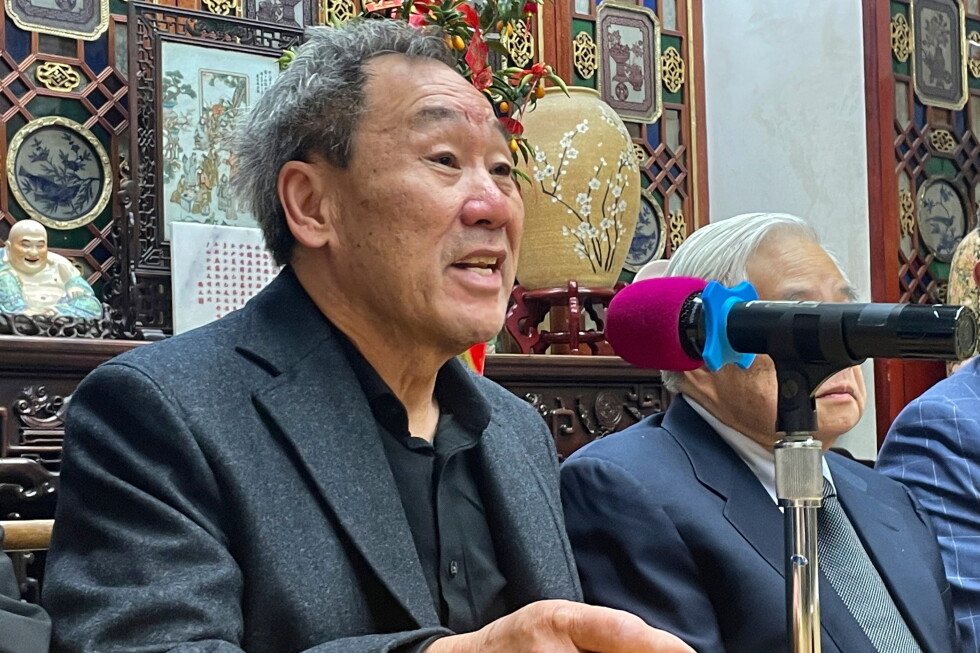
In a landmark, ideologically divided decision Tuesday, the U.S. Supreme Court has reaffirmed the century-old constitutional guarantee of birthright citizenship, striking down a sweeping executive order from second-term President Donald Trump that sought to deny citizenship to children born in the United States to non-citizen parents residing in the country illegally or on a temporary basis. The 6-3 ruling upholds a foundational 1898 high court decision rooted in the Fourteenth Amendment, drawing praise from civil rights advocates and sharp backlash from the former president, while placing a 76-year-old great-grandson of the 1898 case’s plaintiff at the center of the national fight over core American constitutional principles.
Norman Wong, whose great-grandfather Wong Kim Ark was the Chinese American plaintiff at the heart of the 1898 case that first established birthright citizenship as a constitutional right, framed the ruling as a win not just for immigrant communities, but for every person living in the United States. Speaking to The Associated Press shortly after the decision was released, Wong emphasized that the battle over this precedent was never about protecting the rights of a single ethnic group. “It’s an obligation and a duty for every American to care about this because ultimately we’re not fighting for the rights of Chinese or Japanese or whatever. We’re fighting for rights for all Americans because these are fundamental rights,” he said, rejecting the idea that the victory was personal to him or his family.
Wong’s unlikely turn as a public face of the movement to protect birthright citizenship began in early 2025, just days after Trump signed the executive order on his first day back in office. That order sought to unilaterally redefine citizenship to exclude children born to people without permanent legal status in the U.S. A lifelong social justice advocate who cut his teeth as a student activist with the multiracial Third World Liberation Front at the University of California, Berkeley in the 1970s, Wong did not even learn of his family’s connection to the historic Supreme Court case until his 50s, when his father was tracked down by Chinese-language journalists digging through old court records. When the Chinese Consolidated Benevolent Association — the same group that funded his great-grandfather’s 1890s legal battle — asked him to speak at a press conference last year, he stepped into the role, eventually traveling to Washington D.C. in April to hear the Supreme Court’s oral arguments in person.
Writing for the court’s majority, Chief Justice John Roberts reaffirmed the longstanding interpretation of the Fourteenth Amendment, which was ratified in the years following the U.S. Civil War. The court held that the amendment’s text makes clear that nearly every person born on U.S. soil is automatically an American citizen, with only a handful of extremely narrow exceptions established by decades of legal precedent. The ruling directly rejected Trump’s legal argument that the Fourteenth Amendment was never intended to grant birthright citizenship to children of non-citizens.
The three dissenting justices — Samuel Alito, Neil Gorsuch, and Clarence Thomas — aligned with Trump’s position, arguing that the amendment’s original purpose was limited to securing equal rights for formerly enslaved Black people after the Civil War, and that it had been improperly expanded to cover a policy goal never envisioned by the Reconstruction Congress that passed the amendment.
In response to the ruling, Trump released a statement calling the outcome “too bad for our Country,” and incorrectly claimed that Congress could reverse the decision through ordinary legislation. Because the court’s decision rested on constitutional interpretation, overturning it would require a full constitutional amendment, a high bar that requires approval from two-thirds of Congress and three-quarters of U.S. states. Wong called Trump’s executive order an unconstitutional “decree,” noting that its contradiction of existing constitutional text led directly to the high court’s rejection. “That’s unfortunate that we have a leader that wants the United States to be in his image, but that’s not what we’re supposed to be. He’s supposed to conform to what we the people believe in,” Wong said.
For Wong, protecting the precedent of his great-grandfather’s case is both a constitutional cause and a family legacy. Born in 1873 in San Francisco to Chinese immigrant parents, Wong Kim Ark was denied re-entry to the U.S. when he returned from a trip to China in 1895, based on the U.S. government’s argument that he could not be a citizen because his parents were not citizens. His 1898 Supreme Court victory first established that citizenship is determined by place of birth, regardless of a parent’s immigration status.
In a statement after the ruling, the U.S. Department of Justice pushed back against what it called “illegal birth tourism schemes,” saying it remained committed to cracking down on actors who exploit legal loopholes to secure citizenship for children born in the U.S., claiming such activity poses a national security risk.
Cecillia Wang, national director of the American Civil Liberties Union, who argued the case in favor of upholding birthright citizenship before the Supreme Court, celebrated the ruling as a reaffirmation of a core American promise. “The court reaffirms a fundamental American promise — if you are born here, you are a citizen,” she said, adding that “a president cannot change the Constitution by executive fiat.” Wang, a U.S.-born child of Taiwanese immigrants who came to the country legally as graduate students, called the outcome a victory for all who cherish equal rights under the law.
Norman Wong noted that Wang’s role as lead counsel in the case, coming nearly 130 years after his great-grandfather won his original legal battle, made the victory even more meaningful, especially amid a recent rise in anti-Asian hate across the country. “It’s kind of sweet because — especially for Chinese Americans — they were at the forefront of all this anti-Asian hate,” Wong said. “There are certain aspects of my life where I think what happened actually prepared me for what’s happening now.”
Wong said he sees his role in the fight as an honor aligned with the core promises of American citizenship. “I consider myself lucky enough to actually have a meaningful role. All that citizenship grants is the stuff that was the promise of America, which is life, liberty and the pursuit of happiness,” he said.