博客

  • Rima Hassan denounces ‘political and judicial harassment’ over Israel criticism

    Rima Hassan denounces ‘political and judicial harassment’ over Israel criticism

    When French-Palestinian politician Rima Hassan made history in June 2024 as the first person of Palestinian heritage elected to the European Parliament from France, she did not anticipate the coordinated campaign of targeting that would quickly follow. Just months after taking office, the Left Group MEP, affiliated with France’s left-wing La France Insoumise (LFI) party, is set to stand trial on Tuesday on charges of “apology for terrorism” — a French criminal offense that penalizes speech deemed to endorse or glorify terrorist acts.

    In an exclusive interview with Middle East Eye on the eve of her trial, Hassan framed the prosecution as nothing less than an organized effort to muzzle her for speaking out against Israel’s occupation of Palestinian territory and allegations of genocide. Her case is far from an isolated incident: over the past two years, 16 separate judicial proceedings have been launched against the outspoken advocate, 13 of which have already been thrown out for lack of merit.

    The current charges stem from a post Hassan shared on the social platform X back in April 2025. The post featured a quote from Japanese militant Kozo Okamoto, convicted of involvement in the 1972 Lod Airport attack in Israel that left 26 people dead. It read: “Kozo Okamoto: I gave my youth to the Palestinian cause. As long as there is oppression, resistance will not only be a right, but a duty,” alongside images of the Japanese and Palestinian flags.

    In a pre-trial statement, Hassan’s team clarified that the quote was intended to highlight a long-recognized principle of international law: the right of occupied peoples to resist foreign colonial rule. To avoid any misinterpretation of her words, Hassan deleted the post shortly after publishing it. The complaint that led to prosecution was filed by far-right National Rally MP Matthias Renault, France’s interior minister, the European Jewish Organization (OJE), and the League Against Racism and Anti-Semitism (Licra), with public prosecutors — who operate under the oversight of France’s executive branch — moving forward with the case.

    Hassan alleges that the pressure she has faced extends far beyond routine legal proceedings, with what she describes as grossly disproportionate investigative tactics that violate her status as an elected representative. When she was taken into police custody in April, authorities violated her parliamentary immunity — a legal protection designed to shield MEPs from state interference and protect their freedom of speech — holding her for more than 13 hours. During questioning, she was subjected to invasive, irrelevant interrogation about her identity, ethnic origins, and religion.

    “This way of proceeding is part of a political climate in which Palestinians, or people perceived as such, are too often regarded as suspects before they are regarded as citizens,” Hassan told MEE. “This reflex, fuelled by Islamophobia and anti-Palestinian racism, constructs the dangerous figure of the ‘enemy within’,” she added, echoing the label already applied to her by much of France’s established political class.

    Through her legal team and independent French outlet Mediapart, Hassan has uncovered details of sweeping surveillance measures mobilized against her. Authorities ordered retroactive surveillance of her mobile phone starting at the beginning of the year, and requested full travel data from French rail operators SNCF and Thalys, airline Air France, and Europol to map every movement she made between January and early March. Hassan notes that such invasive tactics are typically reserved for investigations into the most serious organized crime, not alleged speech offenses.

    Compounding the abuse, false claims that Hassan possessed illegal narcotics were leaked to the press during her detention, in a deliberate violation of investigation confidentiality. French investigative outlet Le Canard Enchainé reported that the leak was directly coordinated by Sacha Straub-Kahn, spokesperson for France’s Ministry of Justice. “The objective was clear: to divert the political debate, tarnish my reputation, and plant suspicion in public opinion,” Hassan said. After her release, she clarified that she only carried CBD for medical purposes, framing the leak as a coordinated disinformation operation designed to undermine her standing. “When rumor replaces facts, democracy itself is weakened,” she added.

    Following Hassan’s complaint over the breach, Paris prosecutors opened an investigation into the leak, and France’s justice minister referred the matter to the General Inspectorate of Justice. Straub-Kahn has since filed a defamation suit in response to the allegations.

    Hassan’s case is not an anomaly, but the most high-profile example of a broader crackdown on pro-Palestine speech in French politics, particularly targeting members of the left-wing LFI party. In 2024 alone, left-wing politician Anasse Kazib was summoned by police as part of an anti-terror probe over pro-Palestine tweets; LFI Member of Parliament Sebastian Delogu was suspended from the National Assembly for 15 days and had his pay cut in half for two months after waving a Palestinian flag during a session; and Mathilde Panot, LFI’s leader in the National Assembly, was summoned for questioning over the party’s October 7 statement on the Israel-Gaza war, with a probe into alleged “apology for terrorism” that was ultimately dismissed. Ahead of 2024 municipal elections, three LFI mayoral candidates who publicly supported Palestine were targeted in a smear campaign linked to an Israeli private intelligence firm.

    Official data from France’s Ministry of Justice confirms the sharp escalation in crackdowns: the number of “apology for terrorism” prosecutions tripled between October 2023 and November 2024, compared to the nine months prior. Marc Trevidic, a former anti-terrorism investigating judge with nine years of experience in Paris, has publicly denounced what he calls a widespread “misuse of anti-terrorism legislation” by French magistrates. “We are witnessing a genuine abuse, a completely perverted use of the law,” Trevidic stated in a 2024 interview with TRT France.

    For Hassan and her legal team, the trial exposes a dangerous inversion of accountability: “Those who denounce a genocide are being prosecuted, rather than those responsible of committing it,” the team argues. “This judicialisation of public debate seeks to make any criticism of the policies pursued by the Israeli government politically costly. It is a way of silencing a political voice rather than responding to it democratically,” Hassan said. “All these measures follow the same logic: creating a climate of intimidation in order to discourage civic engagement.”

    Hassan has filed multiple legal challenges to the alleged investigative abuses, and is pushing for a full acquittal in her July 7 trial. Beyond her own case, she says she hopes the high-profile proceeding will spark a broader public reckoning with the crackdown on pro-Palestine speech in France. “The facts alleged against me do not justify this procedure,” she said, “but beyond my personal situation, I hope this trial will lead to a collective awakening.”

  • Birmingham University weakens restrictions on investing in arms companies

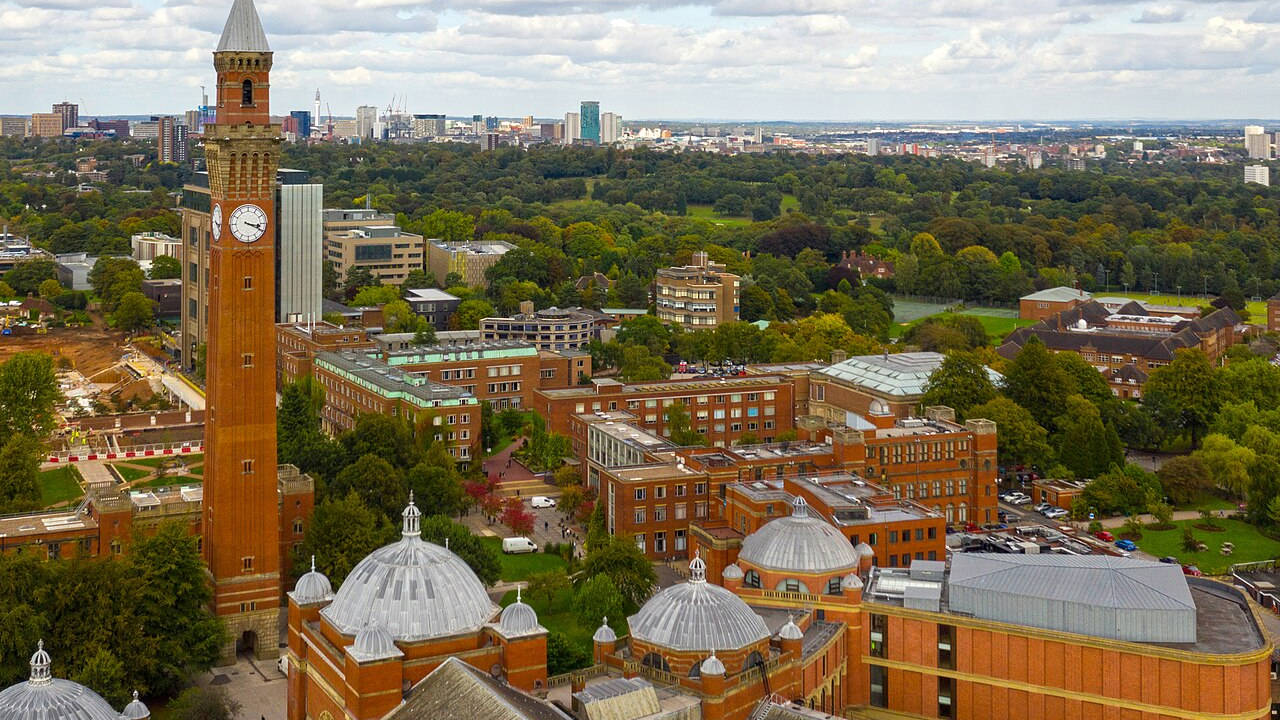
    Birmingham University weakens restrictions on investing in arms companies

    In a move that has ignited widespread criticism across UK higher education, the University of Birmingham has become the first major British university to roll back ethical restrictions on weapons industry investments, amid growing global scrutiny of commercial ties to Israel’s military campaign in Gaza, Middle East Eye can exclusively reveal.

    The West Midlands-based institution has abandoned its 2022 responsible investment framework, which included formal exclusion criteria for arms firms and other high-polluting or harmful industries. Under the old policy, any company deriving more than 10% of its revenue from weapons system development, as well as all manufacturers of entire weapon systems, cluster munitions and anti-personnel landmines, were barred from the university’s investment portfolio. Tobacco, oil and mining companies were also excluded, with the university committing to minimize indirect investments in firms that failed to meet its ESG standards.

    That policy has now been replaced with a softer set of so-called “investment principles”, adopted in June and obtained by Middle East Eye, that removes all formal exclusion lists. The new framework only requires that “financially material” environmental, social and governance (ESG) factors be integrated into investment selection, monitoring and stewardship processes. As part of the policy update, the university has also tapped global banking giant JP Morgan to serve as its outsourced chief investment officer (OCIO), handling day-to-day investment decision-making.

    The new rules only mandate compliance with existing UK legal restrictions: bans on anti-personnel mines and cluster munitions, and UK obligations prohibiting trade in chemical and biological weapons, alongside general adherence to international sanctions regimes. Beyond that legal baseline, the policy states that for any investment with material exposure to high-risk activities, the OCIO simply needs to provide a rationale for the holding, outline existing risk controls, and explain its approach to managing ESG risks. No automatic exclusion applies to arms firms, tobacco, or fossil fuel companies that were previously barred.

    University administrators have pushed back against criticism, arguing the policy update does not represent a weakening of responsible investment standards. In a statement, a university spokesperson said no changes have been made to the institution’s actual investment portfolio following the rule change, and that the university still sets all core objectives and constraints for its holdings, with the OCIO only managing routine day-to-day decisions within those boundaries.

    The spokesperson added that the revised framework strengthens oversight and transparency, shifting from a rigid fixed exclusion list to clear, principle-based expectations that cover legal compliance, ESG integration, stewardship, voting, climate action, human rights and governance. They noted the university has been a signatory to the United Nations Principles for Responsible Investment (UNPRI) since 2019, and the update merely aligns policy with the practical operation of its current delegated, pooled-fund investment model.

    That explanation has done little to appease student leaders, who have condemned the rollback as a betrayal of institutional commitments to human rights. Antonia Listrat, president of the university’s official Guild of Students, called the decision a devastating signal to the campus community. “This sends a devastating message to students and staff who believe our university should uphold human rights and invest in education, not the arms trade,” Listrat said. “Students voted for their university to strengthen its ethical standards, not make it easier to profit from companies connected to armed conflict.”

    The rollback is not the first time the University of Birmingham has faced backlash over its ties to the arms trade linked to Israel’s campaign in Gaza. Even under the previous stricter investment rules, the institution maintained a formal partnership with Rolls-Royce, a manufacturing giant that produces primarily civilian goods but also supplies military equipment to the Israeli army. In 2019, Birmingham also joined four other UK universities to launch a strategic partnership with BAE Systems, the UK’s largest arms manufacturer, which produces components for F-35 fighter jets that the Israeli military has deployed extensively in its Gaza operations.

    Across the UK higher education sector, the University of Birmingham’s move runs counter to a growing trend of institutions tightening arms investment restrictions in response to mass student protests calling for divestment from firms linked to Israeli human rights violations in Gaza. Most recently, Queen’s University Belfast announced it would divest all holdings tied to Israel in June 2025, joining a growing list of institutions adopting stricter ethical rules.

    Instead of loosening restrictions, Birmingham has taken a hardline approach to pro-divestment and pro-Gaza student activism on campus: the university launched legal action against student protesters occupying campus ground to demand divestment in July 2024. That hardline stance mirrors actions taken by the London School of Economics, which evicted its own pro-Gaza encampment of protesters the same year.

    Investigations by Middle East Eye in recent months have exposed extensive hidden investments in arms and firms linked to Israeli human rights violations across other top UK institutions. In October 2024, MEE revealed that the University of Oxford held indirect investments in at least 49 companies flagged by the United Nations and leading human rights organizations for their role in illegal Israeli activities in occupied Palestinian territories. A February 2025 investigation further found that the University of Cambridge’s endowment fund had more than £140 million ($189 million) invested in a fund that held shares in firms linked to Israeli human rights abuses, including tech firm Palantir Technologies, construction giant Caterpillar and aerospace manufacturer GE Aerospace.

    The policy shift at Birmingham also comes amid conflicting actions by the UK national government, which imposed a partial arms embargo on Israel in September 2024, but simultaneously approved $169 million in new military exports to the country, including more than 8,600 separate munitions categorized as “bombs, grenades, torpedoes, mines, missiles and other similar munitions.”

    Since the 7 October 2023 Hamas attack that killed 1,200 people in southern Israel, Israeli military operations in Gaza and the West Bank have killed more than 73,000 Palestinians and wounded an additional 170,000, according to latest health authorities in the region, triggering a widespread humanitarian crisis and global calls for a ceasefire and an end to arms sales to Israel.

  • Dangerous US heatwave looms over 4 July holiday, World Cup and Swift wedding

    Dangerous US heatwave looms over 4 July holiday, World Cup and Swift wedding

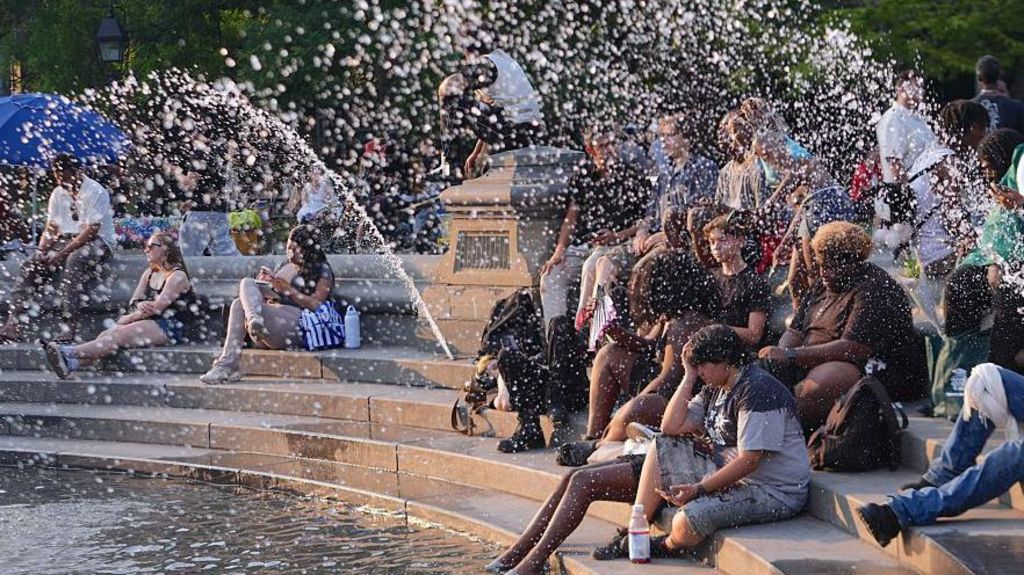
    A relentless, dangerous heatwave has settled across the eastern half of the United States, bringing stifling, life-threatening heat and humidity that will affect millions of residents through the Independence Day holiday weekend. Forecasters confirm high temperatures will climb to 100°F (38°C) and hold at that level for several consecutive days, with the National Weather Service (NWS) warning that heat index values— which combine air temperature and humidity to calculate how conditions actually feel to the human body— could surge as high as 115°F in major population centers including Washington D.C., Philadelphia, and New York City.

    The current heat event is building out of a stifling blast of heat that already gripped the U.S. Midwest, and is rapidly intensifying as it spreads into the Northeast and mid-Atlantic states starting Thursday and Friday. Extreme heat warnings already stretch continuously from the Upper Midwest all the way to the Northeastern seaboard. The NWS emphasized the unique risk of this event, noting that this rare, long-duration heat event offers little to no cooling relief even overnight, putting anyone without access to consistent cooling or sufficient hydration at severe risk of heat-related illness. By 9 a.m. EST Thursday, temperatures were already pushing 90°F in both New York City and Washington D.C., signaling what was to come through the rest of the day.

    The timing of the heatwave, landing over the U.S. July 4 holiday weekend, has disrupted dozens of planned public events, including high-profile celebrations and high-stakes sports matches. President Donald Trump is set to host a large public celebration Saturday marking the 250th anniversary of American independence, and has insisted he will deliver his remarks outdoors despite the dangerous forecast. In a public comment, Trump joked that with forecast temperatures around 107°F, he would deliver an especially long speech to prove his resilience. In Washington D.C., U.S. Capitol Police announced Thursday that only essential personnel would be allowed to attend a scheduled July 4 concert rehearsal, canceling public access to avoid the risk of heat-related emergencies among large crowds. The nation’s capital is on track to hit 100°F for four consecutive days, a milestone that has only occurred twice in the city’s recorded history.

    In New York City, forecasters predict Central Park will hit 100°F on both Thursday and Friday, a mark not seen in the city in 12 years. New York Mayor Zohran Mamdani issued a public warning urging all residents to stay indoors and keep cool during the peak heat. In a lighthearted nod to widespread reports that pop superstar Taylor Swift and NFL star Travis Kelce will host their wedding celebration Friday at the indoor Madison Square Garden arena, Mamdani noted the couple’s indoor venue sets a good example for the rest of the city.

    The extreme heat is not limited to the U.S. This event follows an unprecedented early summer heatwave that broke temperature records across much of Europe earlier this season. Canada, America’s northern neighbor, is also facing its own dangerous heat this week, with temperatures forecast to approach 99°F in Ontario. Heat warnings cover most of Quebec, including major cities Montreal and Quebec City. The extreme heat forced organizers to cancel a public outdoor World Cup watch party in Toronto ahead of the Portugal vs. Croatia match.

    Meteorologists explain the current heat event is being driven by a persistent high-pressure system trapped over central and eastern North America, a weather pattern commonly called a “heat dome”. Conditions on the ground are amplifying the heat: the coastal Northeast has been gripped by drought this year, leaving soil dry. Without moisture to evaporate and create mild cooling, all incoming solar energy goes directly into heating the ground, pushing temperatures even higher.

    Climate scientists confirm that heat events like this are becoming more common, more intense, and longer-lasting due to human-caused climate change. Since the start of the industrial era, global average temperatures have risen roughly 1.1°C, and temperatures will continue to climb unless national governments implement deep cuts to greenhouse gas emissions.

    Temperatures are set to drop slightly across the Northeast on July 4, with a chance of severe thunderstorms bringing temporary relief, though temperatures will still remain well above the seasonal average. A more significant cool-down will arrive Sunday and Monday, when a mass of cooler air pushes south from Canada.

  • Wimbledon kept its courts lush green as other London lawns browned in record heat

    Wimbledon kept its courts lush green as other London lawns browned in record heat

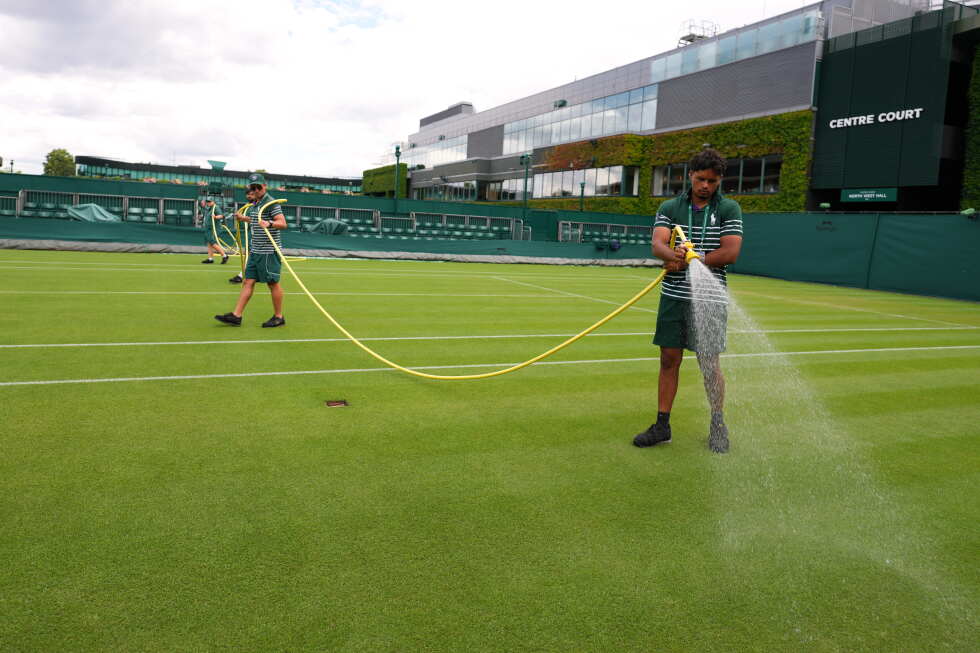
    As a record-breaking heat wave swept across Western Europe last month, turning vast swathes of grass across London brown and pushing regional water suppliers to issue urgent calls for steep cuts to outdoor water use, one unexpected patch of lush greenery has stood out: the 18 competition grass courts of the Wimbledon Championships, the only Grand Slam tennis tournament played on a natural grass surface. For the hundreds of thousands of spectators and top-ranked players competing this year, the perfectly manicured lawns have looked as immaculate as ever, a level of consistency most competitors never think to question.

    “I have not once ever considered the watering of the grass,” American top player Madison Keys told reporters after securing her place in the tournament’s third round, echoing the unspoken assumption shared by most athletes and fans. That assumption is no accident: it is the product of decades of targeted research, daily data-driven adjustment, and relentless work from a 31-person team of groundskeepers led by Neil Stubley, head of courts and horticulture at the All England Club.

    Stubley, who monitors shifting weather conditions across the city across nearly 25 separate weather applications, checking updates every few minutes to adapt to changing conditions, credits his team’s success in withstanding rising summer temperatures to a 40-year-long research project testing grass species for tennis courts. The goal? Identify strains that offer the ideal balance of heat and drought tolerance, hard-wearing durability against constant play, and the smooth, consistent bounce players demand.

    Since 2001, all 18 competition courts and 20 practice courts at the All England Club have been planted with specially selected perennial ryegrass, a species chosen for its proven performance in the face of rising heat. To keep soil conditions consistent across every court, technicians have installed specialized monitoring tubes on Centre Court and four other major show courts, allowing probes to measure real-time soil moisture levels – a measurement that directly impacts court hardness, percentage of living grass cover, and the consistency of ball bounce, the most critical factor for professional competition.

    These monitoring tools proved particularly valuable during the record-breaking heat peak last week, when Britain smashed three consecutive all-time June temperature records. UK’s national weather service the Met Office confirmed that this June was the warmest ever recorded in England, with overnight temperatures also remaining far above seasonal averages, amplifying heat stress on vegetation. While the early-June heat wave broke over the country last weekend, bringing current temperatures down to a mild maximum of 26 degrees Celsius, forecasts predict a return of hotter, drier conditions for the tournament’s middle weekend and closing week. Notably, there has been no rain at all during the 2024 tournament, and no precipitation is expected in the coming days – a dry pattern that follows an unusually parched spring, with April recording just 20% of London’s average rainfall, according to regional supplier Thames Water.

    Unlike most residential and commercial properties across the capital, the All England Club does not have an independent private water source, but organizers have prioritized water conservation alongside the need for immaculate playing conditions. “Every time we do a project, part of the remit is how can we conserve things, whether that be energy, whether that be water,” Stubley explained in an interview. The club has repeatedly tested new water systems, from recapturing drainage water for reuse to exploring access to groundwater from boreholes and nearby lakes, though plans often shift alongside changing environmental regulations that govern water use across the UK. Stubley noted that drought and more frequent extreme heat waves are an inevitable consequence of a changing climate, and the club continues adapting its practices to meet this new reality.

    Extreme heat has become a growing challenge for all four Grand Slam tournaments in recent years, from the sustained extreme temperatures at the Australian Open to an unexpected heat wave that disrupted this year’s French Open, and stifling humidity at the U.S. Open. But what makes Wimbledon unique is its dependence on a living playing surface: the other three majors are played on hard courts or red clay, which are far less vulnerable to heat and drought stress than natural grass.

    To ensure consistency across every playing surface, the All England Club partners with the independent Sports Turf Research Institute (STRI) based in Yorkshire, which conducts regular third-party verification of court conditions. Technicians from STRI measure moisture and hardness across all courts, and even count individual grass blades on high-traffic baselines to track how quickly the grass wears down from constant play. Every day, the team receives this granular data, allowing them to adjust irrigation for each court, which has its own unique microclimate. If readings show Court 14 is firmer than Centre Court, for example, the team can increase water to the smaller court to maintain consistent playing conditions across the entire venue.

    Heat and drought are not the only threats to Wimbledon’s iconic lawns. Top players like defending champion Jannik Sinner and seven-time Wimbledon winner Novak Djokovic often slide across the baseline to reach wide shots, and the textured pimples on the soles of modern grass-court tennis shoes act surprisingly like a cheese grater, shredding grass leaves as players slide. While the service boxes typically turn brown later in tournaments from heavy foot traffic during serves, this sliding damage is more spread out across the baseline. Stubley noted that different players bring different playing styles that impact the courts differently, and the team simply adjusts its maintenance to account for the unique wear each year brings.

    As the tournament progresses into its second week, Stubley and his team will continue their daily routine of monitoring, adjusting, and maintaining the lawns, ensuring the iconic green courts continue to live up to the high expectations of players, fans, and broadcasters around the world.

  • Plaza Accord 2.0 talk won’t fix anybody’s China problem

    Plaza Accord 2.0 talk won’t fix anybody’s China problem

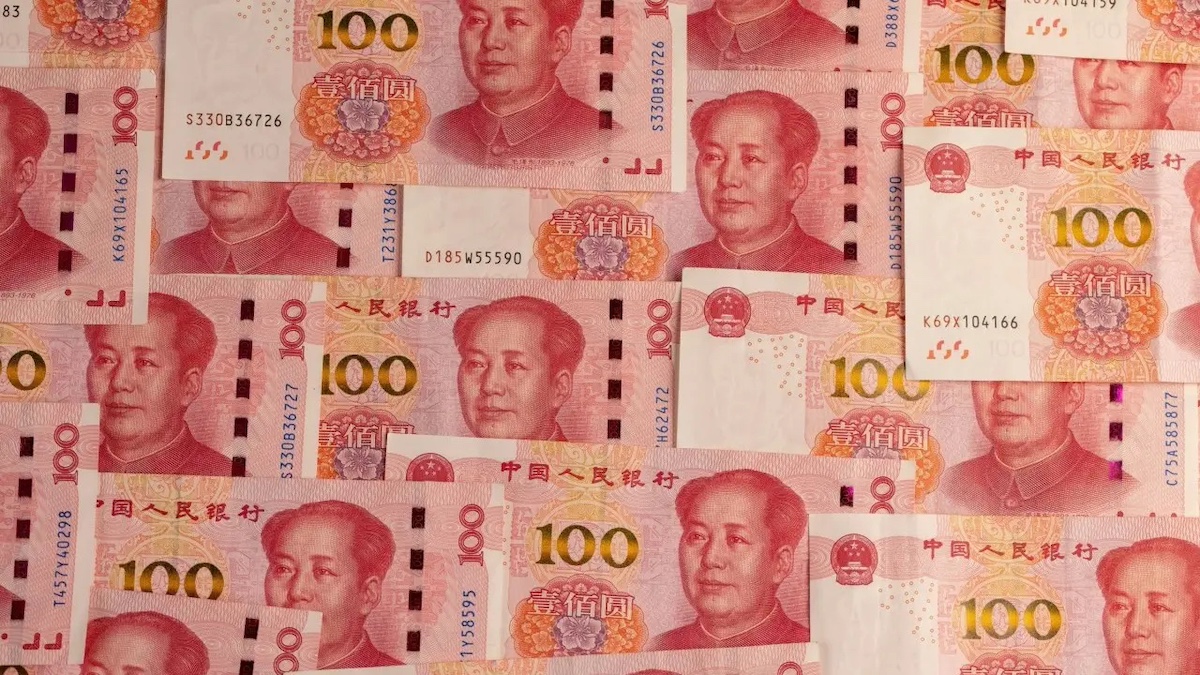
    In a recent call for coordinated global action on trade imbalances, German Chancellor Friedrich Merz has emerged as the most high-profile advocate for a second Plaza Accord, a scheme designed to deliberately push up the value of China’s yuan to erode what he frames as the country’s unfair export advantage. Merz claims the Chinese currency is undervalued by roughly 30%, alleging Beijing deliberately keeps it cheap to flood global markets with artificially low-priced goods. He warns that state-subsidized overcapacity in key Chinese manufacturing sectors is destabilizing a global economy still recovering from years of successive shocks. Merz’s grievances are far from isolated in European leadership: European Central Bank President Christine Lagarde has previously estimated the yuan’s undervaluation at around 16%, while European Commission President Ursula von der Leyen has publicly described China’s current export competitive edge as fundamentally unsustainable for the global trading system.

    Despite this broad European criticism of China’s currency and trade practices, economic analysts broadly agree that a 1985-style currency pact modeled after the original Plaza Accord – which forced a sharp appreciation of Japan’s yen to correct US trade imbalances – is deeply unlikely to resolve the grievances European leaders have raised, and carries major risks of unintended consequences. There are two core structural flaws in the proposal from the outset: first, China is not a member of the Group of Seven, the bloc that orchestrated the original 1985 agreement among major advanced economies. Second, the 2026 global financial system is unrecognizable from the mid-1980s landscape, making a four-decade-old framework a poor fit for modern challenges.

    Attempting to force a sharp, rapid appreciation of the yuan would carry significant downside risks for the global economy, experts warn. A sudden revaluation would exacerbate China’s already persistent deflationary pressures, deepen long-running structural imbalances in the country’s economy, and worsen the ongoing crisis in its struggling property sector. Many analysts argue that the economic damage from a forced yuan revaluation would ultimately outweigh any perceived benefits from reducing China’s export competitiveness, for both China and its global trading partners.

    History also directly undermines the case for Merz’s proposal, as the original Plaza Accord failed to deliver long-term benefits and triggered severe economic harm for Japan. Bill Mitchell, a leading currency expert at Australia’s University of Newcastle, points out that the United States is highly unlikely to succeed in bullying China into accepting a currency deal on the terms it forced on Japan in the 1980s. Mitchell notes the original accord was extremely economically disruptive, directly contributing to Japan’s massive 1980s asset bubble and the decades of stagnation that followed, with little to no lasting economic gain for the United States.

    Another major complication is that Merz’s proposal puts it on a potential collision course with US President Donald Trump’s own competing trade plan, the self-named “Mar-a-Lago Accord”, which attempts to revive a global trade framework that no longer exists in modern markets. Neither leader’s political track record suggests a coordinated US-Eurozone effort to pressure China on currency would proceed smoothly. Trump has long favored unilateral transactional pressure over multilateral coordinated diplomacy, making joint action unlikely.

    For its part, Beijing has closely studied the economic fallout of the 1985 Plaza Accord, which it views as the starting point of Japan’s decades-long stagnation. Chinese leaders have repeatedly made clear they have no interest in repeating Japan’s experience, a position that shapes the country’s ongoing tight management of the yuan via daily central bank fixings and strict capital controls. Chinese officials have also stressed that meaningful, externally forced revaluation is completely off the table until the yuan becomes fully convertible under Beijing’s policy timeline.

    Merz and Trump also underestimate the significant political and economic leverage Chinese President Xi Jinping holds to resist external pressure, a stark contrast to the position of Japanese Prime Minister Yasuhiro Nakasone in the 1980s. Xi also has a factually defensible argument: Chinese authorities have actively intervened to prop up the yuan’s value in recent months, even as domestic deflationary pressures would normally drive the currency lower.

    Today’s global power dynamics also make the original Plaza Accord playbook unworkable. The 1985 agreement succeeded because the US held overwhelming dominance over the then-Group of Five, and Japan relied heavily on access to American consumers to fuel its export-led growth. Today, US global economic influence has eroded significantly: years of Trump-era tariffs and ongoing geopolitical tensions over Iran have left the US more isolated internationally and its domestic economy more exposed to global shocks. By contrast, China is now the world’s largest trading nation, while the European Union’s 27 member states remain deeply divided on China policy and are still grappling with post-pandemic economic fragility. Germany alone runs a roughly 90 billion euro ($102 billion) annual trade deficit with China, leaving Berlin with very little bargaining leverage to force concessions from Beijing.

    Beyond currency dynamics, Merz faces far more pressing structural challenges to European industrial competitiveness. The real “China Shock 2.0” is not driven by exchange rates, but by the rapid rise of Chinese technology leaders in cutting-edge strategic sectors, from electric vehicle giant BYD to artificial intelligence innovator DeepSeek. These companies’ growing global market share is already reshaping Europe’s industrial landscape: German automaker Volkswagen is reportedly considering closing four domestic factories and cutting 100,000 jobs as Chinese brands expand their global footprint.

    Analysts stress that European industrial weakness cannot be blamed solely on Chinese competitiveness. Europe’s own weak domestic demand and longstanding industrial complacency are major contributing factors. As Volkswagen shareholder Ingo Speich noted in comments to Reuters, “The high costs are merely a symptom, not the cause… the root cause is weak sales.” His point underscores a core reality: unless European manufacturers develop products that global consumers actually want, debates about currency valuation and cost-cutting will do little to reverse declining market share. Volkswagen’s predicament is a microcosm of Europe’s broader challenge in an era of rising Chinese industrial power. While a stronger yuan might have boosted European manufacturers decades ago, China’s rapid ascent up the global value chain has completely altered this calculation. Today, China’s competitive advantage in electric vehicles, batteries, solar energy and advanced manufacturing stems from industrial policy, economies of scale and technological innovation, not cheap labor or undervalued exchange rates. Even a 10 to 20% yuan appreciation would not erase these competitive advantages, though targeted higher trade barriers might alter market dynamics at the margin.

    China is now accelerating structural shifts that are reshaping the entire global economy. When China joined the World Trade Organization in 2001, it unleashed a wave of low-cost, subsidized exports of basic goods like textiles, furniture and entry-level electronics. Today’s phase of Chinese export growth is far more consequential: China is now targeting high-value growth sectors including electric vehicles, clean energy and advanced manufacturing, reshaping competitive dynamics in the industries that will define the 21st century global economy.

    Addressing this new wave of Chinese industrial competition requires far more than symbolic currency diplomacy, analysts argue. Chris Bradley, an analyst at the McKinsey Global Institute, notes that advanced economies need to pursue a deep transformation of domestic productivity, invest in innovation, specialize in less cost-sensitive high-value sectors, and implement policies that create a more level global playing field. Bradley’s analysis finds that a 30% boost to domestic productivity, combined with cost convergence in equipment, energy and raw materials, and faster execution of industrial projects modeled on China’s “speed to market” could close between 30 and 80% of the current cost gap between Western and Chinese manufacturers. Bradley adds that achieving a sustainable new global trade equilibrium requires advanced economies to specialize in future-defining industries, revive domestic innovation, and overhaul outdated industrial policy frameworks to address modern competitive distortions. In short, Europe’s core challenge is not just China’s economic rise – it is Europe’s own need to adapt to a new global economic order.

    For the euro area, China’s current deflationary pressures and manufacturing glut create unique spillover risks. Valentina Aprigliano, an economist at the Bank of Italy, explains that “For the euro area, the most immediate transmission channel operates through import prices.” Weak domestic price growth in China, combined with robust manufacturing output, is exported abroad via lower-priced imported goods. This channel is particularly impactful for the euro area, which imported more than 430 billion euros in manufactured goods from China in 2025. Import volumes from China grew across most product categories in 2024 and 2025, while per-unit import values declined sharply, especially in 2025.

    This dynamic has led many analysts to warn that Europe is at risk of misdiagnosing its trade problems with China. Focusing on currency valuation only addresses surface-level symptoms, not the underlying competitiveness gap between European and Chinese manufacturers. Given China’s ongoing industrial policy momentum, it is no longer credible to argue that yuan appreciation would halt China’s ascent up the global value chain, nor would exchange rate shifts suddenly restore Western Europe’s industrial dominance. A currency agreement alone cannot rebalance EU-China trade, or US-China trade for that matter.

    Scott Kennedy, an economist at the Washington-based Center for Strategic and International Studies, notes that China’s high-tech industrial drive has made enormous, uneven progress across key sectors over the past few decades. “These advances have directly translated into enhanced international power and influence for China. The United States and like-minded countries need to respond pragmatically to maximize the opportunities and minimize the risks resulting from these developments,” Kennedy said.

    Exchange rate shifts will not slow the momentum behind China’s Made in China 2025 industrial strategy. Chinese firms like BYD, which now outsells Tesla globally, and AI firm DeepSeek, which has upended competitive dynamics among Silicon Valley’s leading technology giants, demonstrate that Beijing’s top-down industrial strategy is delivering tangible results. These successes stem not from an undervalued currency, but from coordinated long-term investment to dominate strategic growth sectors.

    Beijing’s latest Five-Year Plan pledges to accelerate China’s technological development and its ongoing structural pivot toward a consumption-led growth model. Keyu Jin, an economist at the Hong Kong University of Science and Technology, explains that this shift is “not only about rebalancing growth, but also about anchoring it more firmly at home. Domestic demand offers insulation from external shocks, and along with developed capital markets, it can go a long way toward strengthening autonomy.”

    Jin notes that China currently faces a striking paradox: it is among the world’s most dynamic technological powers, delivering accelerating breakthroughs in artificial intelligence, electric vehicles and advanced manufacturing, yet overall economic growth continues to slow. The reason is no mystery: as China’s latest Five-Year Plan recognizes, the country is undergoing a broad structural transition, not a temporary cyclical slowdown. The old investment and export-led growth model is giving way to a new consumption and innovation-led model that has not yet fully taken hold, and the transition is proceeding more slowly than many global investors would like. Economists broadly agree that Xi must accelerate the transition to convince global markets that technological self-sufficiency and ambitious industrial policy are not just core priorities, but achievable long-term goals.

    The yuan’s value plays a complex role in Xi’s current strategic priorities. A stable or gradually appreciating yuan serves three key Beijing policy goals: it reduces the risk of offshore defaults among heavily indebted Chinese property developers, supports the long-term goal of yuan internationalization to establish it as a major global reserve currency, and helps manage trade tensions with Washington, where the Trump administration remains highly sensitive to any hint of competitive devaluation. A firm yuan also helps China avoid importing additional inflation from global commodity markets: in May, Chinese producer prices rose 3.9% year-on-year, a “bad inflation” dynamic also being felt in Japan as Middle East geopolitical conflict drives up global commodity prices.

    Still, Beijing is increasingly sensitive to global perceptions that it is boosting American living standards at the expense of Chinese domestic growth. Premier Li Qiang’s recent “China Opportunity 2.0” branding at the Summer Davos forum reflects this sensitivity, a narrative that would be far harder to sell if Beijing allowed the yuan to weaken significantly while pursuing its 4.5 to 5% annual economic growth target.

    The yen’s recent dramatic slide to a 40-year low against the dollar adds another layer of complexity to the situation. With the Trump administration taking a largely hands-off approach to the yen’s decline, Beijing may feel it has greater political cover to allow the yuan to drift lower gradually. The yen’s 3.1% drop against the dollar has created broader regional currency ripples, and could tempt Chinese policymakers to test the limits of their currency management just as Merz and other European leaders push for a new Plaza Accord.

  • Killers of British couple in South Africa sentenced to life

    Killers of British couple in South Africa sentenced to life

    Six years after a British-South African botanist couple was kidnapped and murdered while conducting field research in South Africa’s KwaZulu-Natal province, three perpetrators have received the maximum penalty for their crimes. In a ruling delivered Thursday at the KwaZulu-Natal division of Durban High Court, the three convicted individuals were each sentenced to two consecutive life terms for the 2018 killings of 64-year-old Rachel Saunders and 73-year-old Rodney Saunders.

    The Saunders, who held dual South African and British citizenship, ran a specialized seed business based in Cape Town. In February 2018, the pair traveled north to KwaZulu-Natal to collect indigenous plant and seed samples, carrying research equipment and camping supplies for their field trip. They were last seen alive on February 10 in Ngoye Forest, a protected reserve roughly 93 miles north of the coastal port city of Durban, when they were abducted by the three perpetrators.

    Days after the couple went missing, searchers found their abandoned vehicle covered in blood evidence. Investigators later confirmed that the suspects drained roughly 734,000 South African rand, equivalent to around $44,700, from the couple’s bank accounts. They also used the couple’s stolen bank cards to buy goods in areas surrounding Durban. Rodney Saunders’ body was recovered by fishermen in the Tugela River several weeks after the abduction, while Rachel Saunders’ remains were not identified until June 13, 2018.

    The three convicted are 46-year-old Saffydeen Aslam del Vecchio, his 35-year-old wife Fatima Patel, and Malawian national Ahmad Mussa. All three were found guilty of murder, aggravated robbery, and theft last month, following a years-long legal process. Law enforcement took del Vecchio and Patel into custody just five days after the Saunders disappeared, when a search of their property turned up multiple personal items belonging to the slain couple. Mussa was arrested three weeks later.

    Alongside the life sentences for murder, the court added 15 years of imprisonment for aggravated robbery and four years for theft for each defendant. Del Vecchio received an additional five-year sentence for an unrelated charge of malicious damage to property. All sentences will run concurrently. The case carries additional context: Patel was previously detained in a 2016 anti-terrorism raid near Johannesburg alongside her brother, though no charges were filed in that incident. Court documents also allege that del Vecchio and Patel raised an Islamic State group flag at the Ngoye Forest reserve the same year the Saunders were killed.

  • Top EU official visits Armenia and offers economic support to help counter Russian pressure

    Top EU official visits Armenia and offers economic support to help counter Russian pressure

    During a high-profile visit to Yerevan, Armenia on Thursday, European Commission President Ursula von der Leyen unveiled a new package of EU support for the South Caucasus nation, as Armenia accelerates its geopolitical reorientation away from long-time ally Russia and toward deeper integration with the European bloc.

    The announcement comes on the heels of a pivotal parliamentary election last month that solidified the grip on power of Armenian Prime Minister Nikol Pashinyan’s ruling party, a vote widely interpreted as a public mandate for the country’s ongoing Western pivot. Just weeks before Armenians headed to the polls, Russia imposed sweeping trade restrictions on Yerevan, banning imports of key Armenian goods including flowers, brandy, wine, and a range of fresh fruits.

    Von der Leyen did not mince words in characterizing Moscow’s actions during her visit, noting that “Armenia is still facing significant economic pressure from Russia,” and calling the measures “nothing short of economic coercion.” She reaffirmed the EU’s commitment to standing by partners facing external pressure, stating clearly: “But rest assured: when pressure mounts on our partners, the EU steps up.”

    Under the terms of the new support, Armenia will receive an additional €18 million ($20.5 million) in aid, earmarked for strengthening and diversifying the country’s trade partnerships. This tranche marks the final payment of a broader €52 million ($59.4 million) support package the EU pledged to Armenia back in early June. Beyond direct financial aid, von der Leyen announced that the EU will grant full tariff-free access to the European single market for nearly 80 percent of all Armenian exports bound for the bloc. The EU chief explained that the tariff elimination is specifically designed to help Armenia “re-route products that currently still rely heavily on the Russian market.”

    Pashinyan welcomed the EU’s new assistance, emphasizing the urgent need to resolve remaining technical barriers to get Armenian agricultural products onto EU store shelves ahead of the country’s ongoing harvesting season.

    Russia, which maintains a permanent military base on Armenian territory, has repeatedly issued warnings that Yerevan’s Western shift could carry severe political and economic repercussions. Russian President Vladimir Putin has drawn explicit parallels between Armenia’s current course and Ukraine’s pre-2022 push for closer EU ties, a comparison widely interpreted by international observers as a thinly veiled threat. Putin has repeatedly framed Russia’s full-scale invasion of Ukraine as a response to Kyiv’s bid to sign an association agreement with the EU.

    The breakdown in relations between Moscow and Yerevan traces back to the 2023 Azerbaijani offensive that retook full control of the Karabakh region, a mountainous territory that had been held by ethnic Armenian forces backed by Yerevan for nearly three decades, as part of a decades-long conflict between the two neighboring South Caucasus states. Armenia has accused Russian peacekeeping forces deployed to Karabakh of failing to intervene to stop Azerbaijan’s military advance, a charge Moscow has rejected, with Russian officials pointing to their overstretched resources amid the ongoing war in Ukraine.

    Most recently, in August 2025, U.S. President Donald Trump hosted both Pashinyan and Azerbaijani President Ilham Aliyev to broker a landmark peace deal aimed at ending the decades-long Karabakh conflict. The agreement includes provisions for establishing a new strategic transit corridor connecting mainland Azerbaijan to its southwestern exclave of Nakhchivan.

    Von der Leyen’s stop in Yerevan followed a one-day visit to neighboring Azerbaijan, where she announced a new €200 million ($228.6 million) EU Global Gateway infrastructure package for Baku. She noted that working alongside European financial partners, the bloc aims to mobilize up to €2 billion ($2.3 billion) for strategic transport, energy, and digital connectivity projects across the entire South Caucasus region.

  • A local’s guide to Ankara ahead of the Nato summit

    A local’s guide to Ankara ahead of the Nato summit

    Long maligned as a dull, lifeless hub by many Turks—particularly Istanbul residents who dismiss the Anatolian capital as a “gray, soulless desert”—Ankara is stepping onto the global stage next month, when it plays host to the 2024 NATO Summit scheduled for July 7-8. For delegates, journalists, and visitors descending on the city for the high-stakes gathering, this will be their first chance to see whether Ankara really lives up to its unflattering reputation. As a long-time resident who has called Ankara home since 2019, I have a deeply biased take: this underappreciated capital is full of hidden surprises, with thousands of years of history and a booming culinary scene waiting to be explored beyond the summit conference rooms.

    Ankara’s roots stretch all the way back to the ancient Hittite civilization, and centuries later it grew into a vital Roman trade hub, renowned across the Mediterranean for its luxurious goat wool. For centuries, the trade sustained the city, but legend holds that 19th-century European smugglers managed to transport Ankara’s prized goats to South Africa and North America, collapsing the local wool industry and leaving the city overlooked by the Ottoman Empire for generations. That changed when Mustafa Kemal Atatürk, the founder of modern Turkey, selected Ankara as the new republic’s capital in the 1920s. Over the following two decades, Atatürk oversaw the construction of a purpose-built capital: grand tree-lined boulevards, world-class schools, grand theaters, government ministries, and sprawling public parks, most of which still stand and shape the city’s character today.

    For visitors with free time to explore the city ahead of or after summit events, here is my curated guide to the best of Ankara, from traditional Turkish fare to modern cultural hotspots.

    ### Culinary Highlights by Neighborhood
    If you are staying near the Cukurambar district, home to the JW Marriott and other major summit hotels, you will find no shortage of standout dining options:
    – **Muslum Kebap**: A favorite gathering spot for Ankara’s conservative politicians and senior bureaucrats, this spot is slightly higher-priced than local kebab chains, but its exceptional Adana kebab and melt-in-your-mouth kusleme (tender slow-cooked lamb cut) are well worth the cost. For dessert, walk next door to Sitki Usta to try the signature moist “islak baklava.”
    – **Bayram Usta Yaprak Kebap**: For a unique grilled meat experience, travel a short distance to this restaurant, famous for its yaprak kebab—thinly sliced marinated meat cooked slowly over open flame.
    – **Taka**: This Black Sea-region themed restaurant, located just steps from the ruling AKP party headquarters and popular with top government officials, serves stellar doner kebab, traditional bean stew, and fluffy Black Sea pide flatbread, but its standout dish is rich sea bass stew. For even more authentic Black Sea cuisine, don’t miss Niyazi Kesim, a beloved local hidden gem.
    – **1071 Manti Cukurambar**: Just a 10-minute walk from the Marriott, this spot serves solid Kayseri-style Turkish dumplings (manti), making it a great stop if you want to sample this iconic dish without traveling across the city.

    If your accommodation is near Tunali, where the Grand Ankara Hotel, Sheraton, and Hilton are located, you will have even more diverse options to explore:
    Turkey’s famous meze—small shareable plates of vegetables, seafood, and cured meat—are the centerpiece of the traditional meyhane (Turkish tavern), and pair perfectly with either anise-flavored raki (what many Turks consider the national drink, a label President Recep Erdogan famously argues belongs to yogurt-based ayran). For one of the best meyhane experiences in the city, visit Afitap Tunus, which serves more than 50 different meze using everything from cured pastirma to eggplant, yogurt, and fresh shrimp. Incir is another excellent option, while Ege Restaurant offers a more budget-friendly, laid-back experience with outdoor evening seating.

    Contrary to what many first-time visitors assume, Ankara boasts some of the best fish restaurants in all of Turkey, thanks to daily fresh shipments from the Black, Marmara, and Aegean Seas—all within easy driving distance of the landlocked capital. Trilye, located on a scenic uphill spot, is widely considered the city’s top fish restaurant, serving delicious Black Sea kalkan turbot and a range of standout hot appetizers. Chef Bros, Yelken Balik, and Deli Yengec are all great alternatives if Trilye is fully booked.

    For other local favorites near Tunali and Cankaya:
    – Masa Başı Kebapcisi serves reliably delicious traditional kebab
    – Mutlu Lokantası on Guvenlik Street offers what many locals call the best doner kebab in the entire city
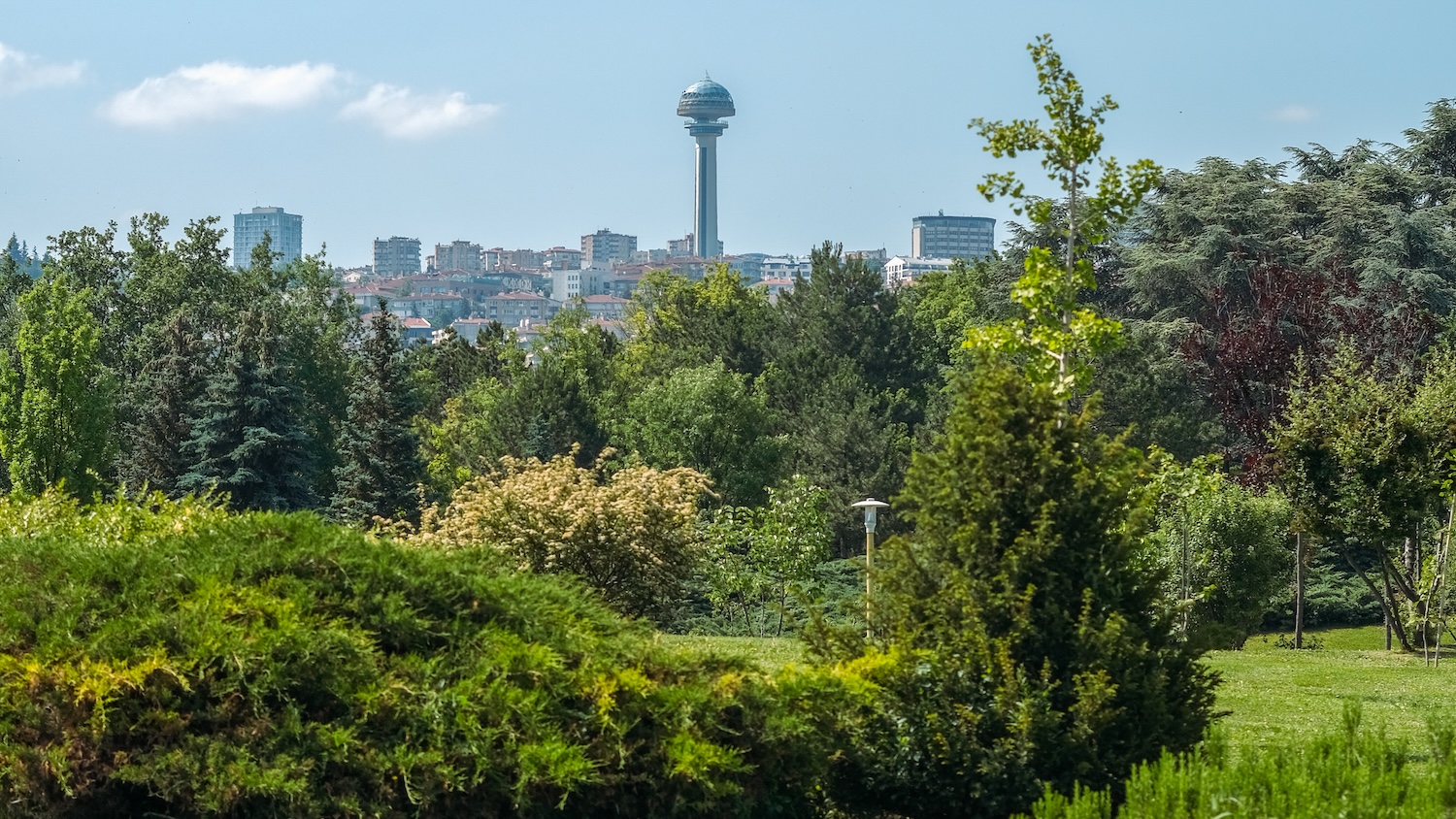
    – Cankaya Lokantasi, located near Ankara’s iconic Atakule observation tower, was founded by a former personal chef for Turkish President Ismet Inonu, and serves a classic presidential-style feast
    – For pizza, try Studyo Pizza, where renowned local chef Murat Artukmac creates pies with fresh Anatolian ingredients. Unica on Simsek Street also serves exceptional crispy pizza, and its creamy hummus is a must-order.
    – Kokorec—grilled lamb intestines, a classic Turkish hangover cure and staple street food dating back to Byzantine times—can be enjoyed at Kitir, near Kugulu Park, one of the only spots in the country that serves the hearty dish alongside cold beer.
    – For a leisurely Turkish breakfast, don’t miss Vina Bakery on Cinnah Street and Kakule Bakery on Buklum Street, both long-favored by locals.

    ### Trendy New Hotspots and Cultural Attractions
    Beyond traditional dining, Ankara has a fast-growing modern scene, and one of the most popular new hubs is the recently renovated Esat Hal market district near Tunali. This trendy space hosts boutique shops, cafes, community projects, and some of the city’s best modern dining:
    – Poche, a modern sandwich shop inspired by the flavors of northeastern Kars, serves rich cheesy and meaty sandwiches, but its signature sutlac (Turkish rice pudding) is the real star
    – The Log Burger is widely agreed to serve the best burger in Ankara, no competition
    – Celebrity chef Tolgar Mireli recently opened Halden, a restaurant highlighting innovative modern Turkish cuisine; don’t miss the sea bass ceviche, half-baked chicken, Cafe de Paris burger, and silky chocolate mousse
    – After a meal, grab a coffee at the sleek, modern Kakule Coffee, or walk next door to the lush Amelie’s Garden
    – Soul Kitchen combines an independent apparel and gift boutique with a casual cafe, serving great pizza and tiramisu for shoppers stopping for a break.

    For visitors looking to stretch their legs during the summit—including a certain French president who has sparked local speculation about where he will go for his daily morning run—Ankara has no shortage of green space. Botanik Park, Portakal Cicegi Parki, and Segmenler Park offer shaded, hilly trails perfect for running or hiking, while Dikmen Vadisi, a man-made urban valley, offers sweeping scenic views, and Kurtulus Park is ideal for runners who prefer flat terrain. The best option for a casual walk or run, though, is the sprawling Genclik Parki, which was commissioned by Ataturk himself in the 1920s.

    No trip to Ankara is complete without a trip to Atakule, the iconic observation tower that offers unrivaled panoramic views of the entire city center. History and culture buffs will also want to add these spots to their itinerary:
    – The Museum of Anatolian Civilizations, an award-winning museum housing thousands of priceless ancient artifacts from across Anatolia, is an absolute must-visit
    – The Ankara Art and Sculpture Museum, Rahmi M Koc Museum, and CerModern (one of Turkey’s top modern art spaces) are all worth a stop
    – To learn about the early years of the Turkish Republic, visit the Is Bankasi Museum, housed in a stunningly preserved early republican-era building
    – In the historic Ulus district, don’t miss the ancient ruins of the Temple of Augustus, the nearby Haci Bayram Veli Islamic shrine, and the Column of Julian, a Roman monument erected in 362 CE to mark the visit of Emperor Julian to the city.

    As NATO’s summit draws thousands of global visitors to this often-overlooked capital, there has never been a better time to discover everything Ankara has to offer beyond its unfair reputation as a boring government town.

  • Pubs in England can stay open until 5 a.m. on Monday to show Mexico game at World Cup

    Pubs in England can stay open until 5 a.m. on Monday to show Mexico game at World Cup

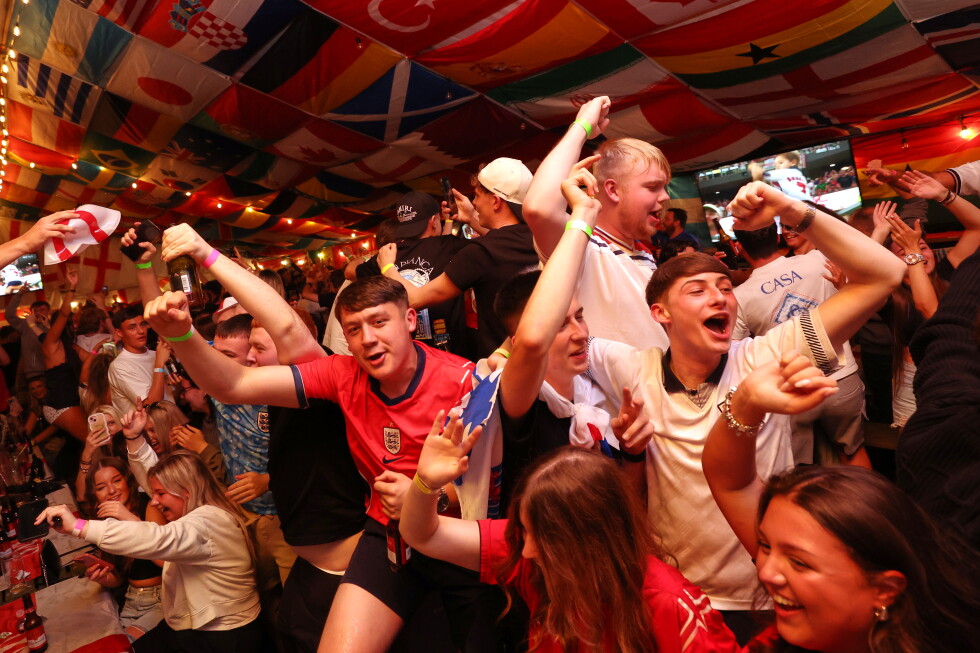
    LONDON – As England advances to the World Cup round of 16, the British government has announced a sweeping policy change to grant licensed pubs across England and Wales permission to operate until 5 a.m. during the team’s upcoming match against Mexico, responding to growing public and industry demand for extended viewing hours.

    The push for flexible licensing rules gained immediate momentum Thursday, just 24 hours after captain Harry Kane scored two late game-winning goals to secure England a 2-1 knockout round victory over Congo in Atlanta. The round of 16 fixture is scheduled to kick off at 1 a.m. UK time at Mexico City’s iconic Azteca Stadium, with a potential finish time pushing close to 4 a.m. if the match requires extra time and a penalty shootout. Under existing UK licensing legislation, pubs were only permitted to serve patrons until 2 a.m., which would have forced venues to cut off viewing before the final whistle for millions of fans planning to watch the match together.

    Speaking on the policy change, Prime Minister Keir Starmer framed the extension as a win for both supporters and local communities. “Football might be coming home but we’re making sure fans don’t have to,” Starmer said. “Pubs staying open till the final whistle is good news for supporters and good news for the pubs and venues that bring our communities together. The whole country will be backing the team. Come on England!”

    Unlike one-off extended licensing arrangements that require individual venues to submit separate applications for approval, this blanket government exemption eliminates all administrative barriers for operators in England and Wales. The policy change does not extend to pubs in Scotland or Northern Ireland, which retain their existing local licensing rules for the match.

    The announcement has been broadly welcomed by Britain’s hospitality and pub industry, which has already seen a major revenue boost from live broadcasts of the World Cup, held across venues in North America. Michael Kill, chief executive of the Night Time Industries Association, praised the government’s pragmatic approach. “Major sporting occasions like this deliver a significant boost to hospitality businesses while creating an atmosphere that unites the country,” Kill noted. “This allows venues to focus on what matters most: bringing communities together to support the national team.”

    Emma McClarkin, chief executive of the British Beer and Pub Association, echoed that enthusiasm, saying “pubs and fans will be over the moon about this decision, because we all know the best place to watch the match is down the local.”

    In a secondary move aligned with public excitement for the fixture, the government has also confirmed that schoolchildren will be allowed to watch the early-morning match while still meeting attendance requirements for Monday classes. The call to accommodate young fans came from England’s German head coach Thomas Tuchel, who publicly urged schools and parents to grant children an excused absence adjustment to watch the game.

    “It’s a late game, but children can be in school the next day,” Education Secretary Bridget Phillipson confirmed, backing Tuchel’s appeal. Tuchel had previously encouraged parents after England’s win over Congo to “write an excuse for school and let them watch football. Come on. There’s so much school to go to, but the World Cup is every four years. Let them watch. There will be a big, big match on in four days and we need the support of everyone, and especially of the children.”

  • Israel’s largest oil refineries to undergo years of repairs after Iranian strikes, report says

    Israel’s largest oil refineries to undergo years of repairs after Iranian strikes, report says

    For months, Israeli officials and the operator of the country’s largest oil refining complex downplayed the impact of Iranian missile attacks on the strategic Haifa Bay facility. But new reports from multiple Israeli media outlets have pulled back the curtain on far more extensive destruction than was originally disclosed to the public, revealing a years-long reconstruction timeline that will reshape the site’s operational capacity for the foreseeable future.

    The revelation comes amid longstanding Israeli military censorship that has restricted the flow of information about damage from Iranian strikes during ongoing US-Israeli military conflict with Iran, raising new questions about government transparency around the economic and security costs of regional hostilities.

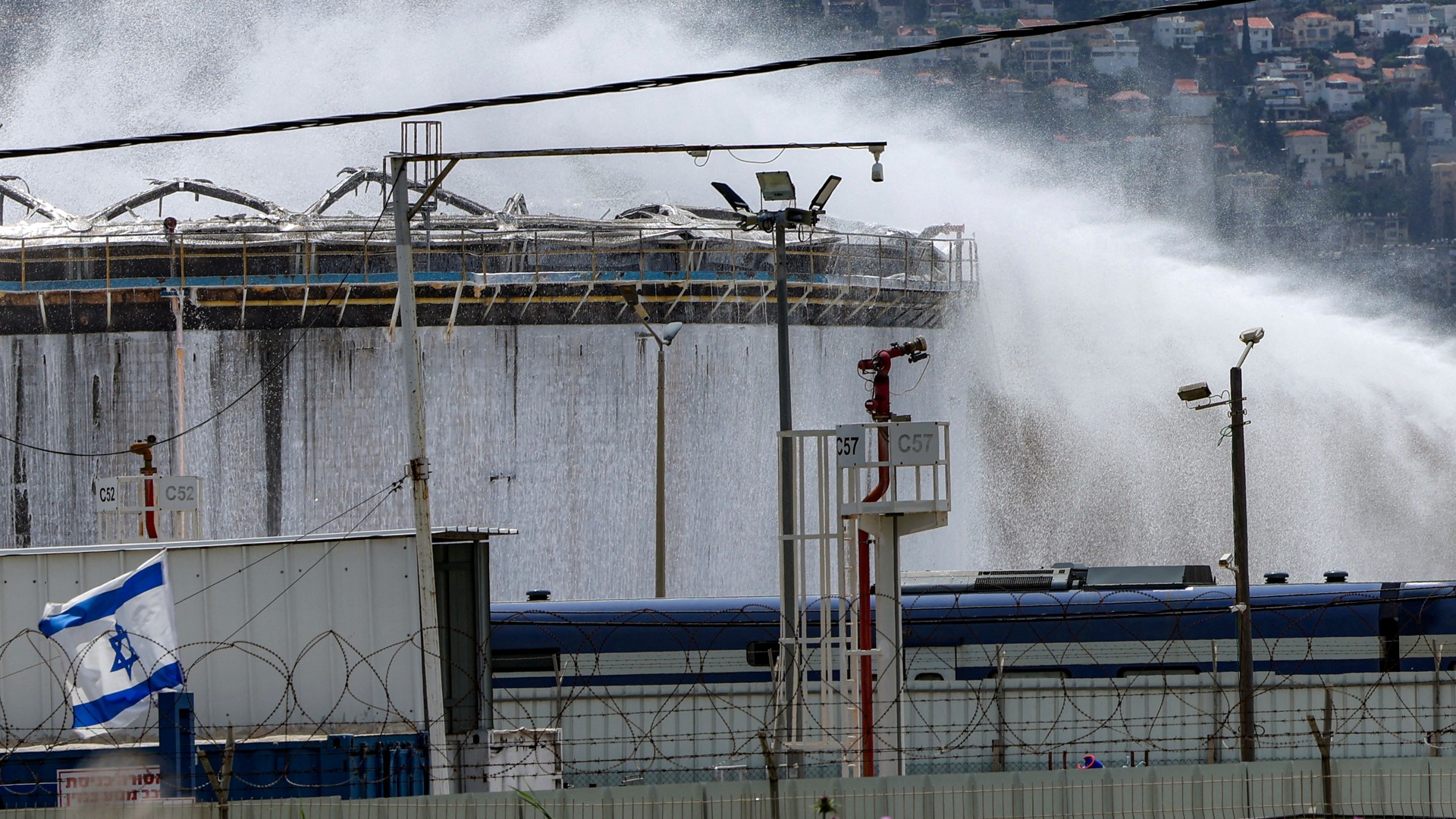
    Israeli Channel 12 News first broke the revised account of the damage on Monday, confirming that two separate Iranian strikes carried out earlier this year inflicted critical harm to the refinery complex, directly contradicting prior statements from Energy Minister Eli Cohen and Bazan, the private company that manages the site. Just months ago, in a formal filing to the Tel Aviv Stock Exchange in March, Bazan sought to downplay the incident, acknowledging only “localised damage” to the roof of a single distillate storage tank, and insisting all production infrastructure remained fully operational. “The company estimates that the damage is not significant. As of the time of this announcement, all the company’s facilities remain operational,” the company stated at the time.

    But an unreleased official internal report from Israel’s Ministry of Interior, cited by Israeli outlet Yeshiva World, documents harm to critical infrastructure that was never made public: gas turbines, steam boilers, and central electrical rooms all sustained heavy damage that was hidden from public view. The Interior Ministry has now approved a massive reconstruction project that is not scheduled to reach full completion until 2028, a timeline that would have been unthinkable based on the original, minimal damage assessment.

    Worse still, one large oil derivatives storage tank hit in the March 2025 strike is completely beyond repair, and cannot be salvaged or returned to service. The damage did not begin this year, either: Channel 12 confirmed the refinery also sustained significant damage during the 12-day 2024 Israel-Iran war. In that June 2025 strike, three Bazan employees were killed after Iranian missiles successfully penetrated the US-backed Iron Dome mobile air defense system, a defensive barrier that Israeli officials have long claimed provides near-total protection against incoming projectile attacks. After that earlier strike, Bazan publicly pegged losses at only $150 million to $200 million, and officials insisted domestic fuel supplies would remain completely unaffected, a claim that can now be reexamined in light of the new disclosures.

    The Haifa Bay refineries are far more than a standard industrial site: they are one of Israel’s most strategically critical energy assets, meeting the majority of domestic demand for refined oil products that power manufacturing, agriculture, national infrastructure, and household consumption across the country. Per Bazan’s own public data, the complex processes roughly 26,000 tonnes of crude oil per day, and has an annual throughput capacity of 9.8 million tonnes of crude oil.

    The facility also carries deep historical significance: it was originally constructed during the British Mandate for Palestine, when British authorities built the complex to receive crude oil transported from Iraq via the historic Kirkuk-Haifa pipeline. When Israeli forces seized control of Haifa during the 1948 Arab-Israeli war and established the State of Israel, the new government nationalized and took full control of the refineries, and the site’s iconic Bazan cooling towers have since become one of the most recognizable landmarks of the northern port city.

    The underreporting of damage to the refinery is not an isolated incident: for years, Israel has enforced strict military censorship to conceal the full extent of damage caused by Iranian missile attacks across the country. Data collected by independent Israeli outlet +972 Magazine, which has tracked military censorship trends since 2011, shows that censorship reached a 13-year peak in 2024, when roughly 8,000 articles were either fully banned from publication or partially redacted. While the total number of censored articles declined slightly in 2025 to around 5,000, that still marks the second-highest annual censorship total recorded since +972 began its tracking.

    Iran has targeted a wide range of high-value strategic sites across Israel during the ongoing conflict, beyond the Haifa Bay refineries: reported targets have included the Kirya, Israel’s central military headquarters in Tel Aviv, the prestigious Weizmann Institute of Science, the Nevatim Airbase in southern Israel, and the commercial port of Haifa. Earlier this month, the Times of Israel published confirmation of additional damage at the Ramat David airbase, based on analysis of low-resolution satellite imagery of the site.

    This story was originally published by Middle East Eye, an independent outlet specializing in original, on-the-ground coverage of the Middle East and North Africa region.