博客

  • Putin shrugs off fuel shortages in Russia as he ramps up attacks on Ukraine

    Putin shrugs off fuel shortages in Russia as he ramps up attacks on Ukraine

    As Ukraine ramps up long-range strikes on Russian energy infrastructure that have triggered widespread fuel shortages across the world’s second-largest oil exporter, Vladimir Putin has remained defiant, dismissing the disruptions as non-critical and rejecting all ceasefire proposals to continue his full-scale invasion of Ukraine. The Russian leader’s unflinching stance comes amid escalating tit-for-tat strikes that have pushed the conflict to new levels of intensity, with a massive 11-hour Russian aerial assault on Kyiv overnight Thursday killing at least 30 people, marking one of the deadliest single attacks on the Ukrainian capital since the 2022 full-scale invasion began.

    Since the start of March, Ukraine has launched more than 50 documented strikes against oil refineries, storage depots, and other energy facilities across mainland Russia and illegally annexed Crimea, a strategic campaign Kyiv says is designed to bring the costs of the war home to ordinary Russians and pressure the Kremlin to negotiate an end to the conflict. The campaign has already succeeded in undermining Putin’s long-held narrative that the war does not disrupt daily life for Russian citizens, breaking through the controlled narrative most Russians consume through state media.

    Industry analysts estimate that roughly one-third of Russia’s total oil refining capacity has been taken offline by the strikes, with damage that will cost billions of rubles to repair. Even Moscow’s top domestic refinery, protected by layers of advanced air defense systems, has been hit twice; the second strike in mid-June sparked a large fire that damaged critical infrastructure, with repairs expected to last through the end of 2025. Official Russian government data confirms domestic gasoline production has dropped by 17% to 850,000 barrels per day, forcing regional authorities to implement fuel rationing that has left motorists waiting in multi-hour lines to refuel across large swathes of the country. To alleviate immediate shortfalls, the Kremlin has authorized the sale of lower-quality gasoline with elevated sulfur content through the end of the year. The illegally annexed Crimean Peninsula has faced the most severe shortages, with authorities periodically halting all gasoline sales to civilian consumers entirely.

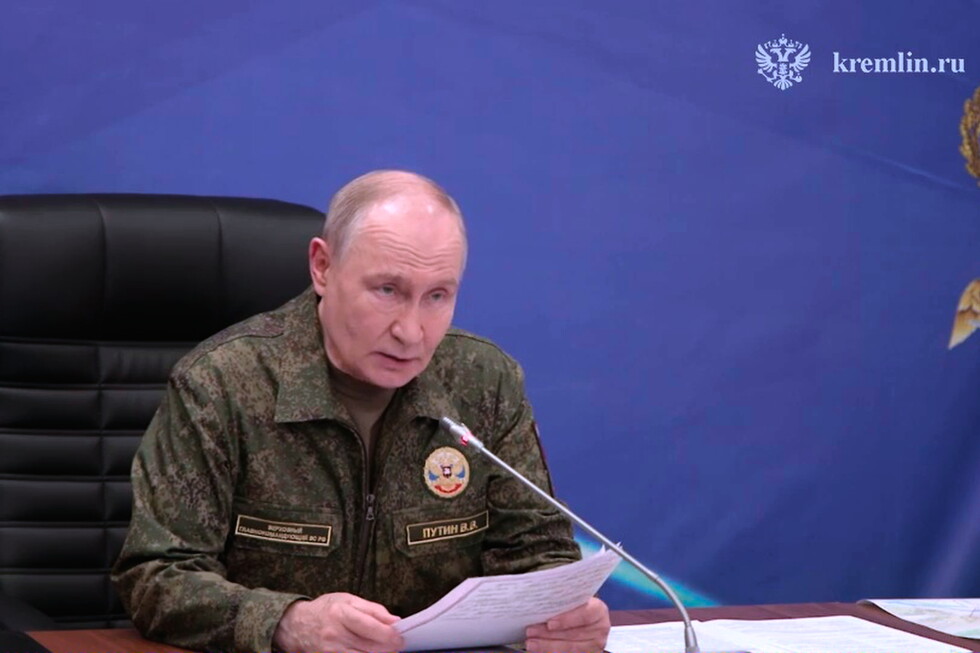
    During a televised meeting with senior government officials last weekend to address the growing fuel crisis, Putin acknowledged the country is navigating a “difficult period” but downplayed the long-term impact of the strikes, framing the shortages as strictly temporary. He outlined a series of emergency steps to address the gap: accelerating repair work on damaged energy facilities, exploring gasoline imports to boost domestic supply, and ramping up production of air defense systems to prevent future strikes on key infrastructure. Putin characterized Ukraine’s energy strike campaign as a deliberate attempt to split Russian society, disrupt Moscow’s battlefield offensive, and force the Kremlin into negotiations on terms favorable to Kyiv.

    “We will not give them that chance,” Putin stated firmly.

    While Putin claims Ukrainian strikes on Russian energy facilities have “absolutely no effect on the situation at the front,” Western military analysts disagree, noting that midrange strikes on Russian logistics and supply lines over recent months have hampered military operations and slowed the pace of Russian advances, leaving most of the frontline locked in a tense stalemate. On Friday, Putin visited the Russian military command center overseeing operations in Ukraine to receive what Russian state media called an update on the capture of Kostyantynivka, a key industrial and transportation hub in the Donetsk region after weeks of brutal street fighting. Dressed in military fatigues, Putin hailed the capture as a major strategic step toward seizing Sloviansk and Kramatorsk, the last major heavily fortified Ukrainian strongholds in Donetsk’s forest belt.

    Ukrainian officials have not confirmed Russia’s claim of seizing Kostyantynivka, and earlier Friday the Ukrainian General Staff reported that its forces had repelled 24 separate Russian assaults in the Kostyantynivka area and surrounding settlements. Putin also issued new warnings Friday, arguing that increased Ukrainian strikes on Russian civilian infrastructure will force Russia to expand a “security zone” inside Ukrainian territory to prevent future attacks. He also issued a veiled threat to Western countries supplying military aid to Ukraine, saying Russia would complete an analysis of Western “engagement in hostilities” to guide future “responsible decisions.”

    Putin has also flatly rejected multiple ceasefire proposals put forward by Kyiv and its Western allies, responding to Ukrainian President Volodymyr Zelenskyy’s offer of direct talks by demanding Zelenskyy travel to Moscow — a non-starter for the Ukrainian government. Putin argues any truce would only allow Ukrainian forces time to rest, rearm, and regroup, making any ceasefire conditional on full Ukrainian withdrawal from the remaining territory Ukraine holds in Donetsk region, a demand Kyiv has already rejected outright. He also said any final peace agreement must require Ukraine to abandon its bid for NATO membership, demilitarize its armed forces, and enshrine legal protections for the Russian language and Russian cultural identity within Ukraine.

    In a recent interview, Putin claimed Ukrainian officials had tabled a confidential proposal to limit active fighting to the four regions Russia illegally annexed in 2022 — Donetsk, Luhansk, Kherson, and Zaporizhzhia — none of which Russia controls fully. Putin said he rejected the proposal, arguing it would allow Ukraine to reposition troops from other fronts to reinforce defensive positions in the four regions. “Faced with a catastrophic shortage of personnel, the armed forces of Ukraine apparently believe this could be their salvation,” Putin said. “Saving the Kyiv regime is not part of our plans.” The Kremlin has said the offer was communicated through backchannel diplomatic routes, but Ukrainian officials have never publicly acknowledged any such proposal.

    Putin also dismissed a separate Ukrainian proposal for a mutual moratorium on deep strikes into each other’s territory, noting that Russian deep strikes are “much more powerful, sensitive and, frankly speaking, destructive” than those Ukraine carries out. Thursday’s massive barrage on Kyiv followed that pattern, with Russian missiles and drones striking multiple residential neighborhoods despite Russian claims that all attacks targeted military infrastructure. Unlike Russian strikes, which regularly hit civilian residential areas and infrastructure, the vast majority of Ukrainian strikes inside Russia have targeted energy facilities, weapons production plants, and other military-related infrastructure.

    More than three years into the full-scale invasion, United Nations data records that more than 16,000 Ukrainian civilians have been killed since the war began, with tens of thousands more injured and millions displaced from their homes.

  • Hind Rajab Foundation calls on top prosecutor to investigate Ben Gvir ahead of NYC visit

    Hind Rajab Foundation calls on top prosecutor to investigate Ben Gvir ahead of NYC visit

    Two prominent human rights organizations have formally called on New York’s top law enforcement official to open a criminal probe into a far-right Israeli government minister ahead of his scheduled public appearance in Manhattan next week.

    The Hind Rajab Foundation (HRF), a two-year-old accountability group focused on pursuing legal action against Israeli officials and military personnel accused of involvement in atrocities against Palestinians, joined forces with the New York-based Center for Constitutional Rights (CCR) to deliver an official letter to New York State Attorney General Letitia James this Thursday. The filing urges James to launch a criminal investigation into Itamar Ben Gvir, Israel’s Minister of National Security, who is set to attend the Chief of Police Summit in Manhattan from July 7 to 8.

    Ben Gvir has long been a controversial figure, known for his overtly hostile, violent rhetoric targeting Palestinians and Muslim communities globally. He was previously sanctioned by the Biden administration over his documented role in encouraging deadly violence carried out by Israeli settlers in the occupied West Bank, a punitive measure that former President Donald Trump reversed in one of his first actions after taking office last year.

    Beyond his history of incitement, the groups outline multiple allegations of misconduct tied to Ben Gvir, including his direct role in distributing firearms and gun permits to Israeli settlers in the occupied West Bank as part of what the letter frames as Israel’s state-led policy of apartheid and forced dispossession of Palestinian land. The letter also accuses Ben Gvir of direct incitement to genocide against Palestinian people in Gaza, where Israeli military operations have killed more than 73,000 Palestinians since the October 7, 2023 Hamas attacks.

    The organizations claim there is credible, reasonable evidence that Ben Gvir has violated at least nine separate provisions of the New York Penal Code, creating legal standing for an investigation within the state. They are also calling on James to meet directly with local New York-based victims who say they have been harmed by Ben Gvir. These survivors include a Palestinian American who was subjected to torture and starvation while detained in an Israeli prison, as well as 10 participants in the 2025 and 2026 Global Sumud Flotillas who allege Ben Gvir directly ordered or oversaw their abuse.

    HRF’s U.S. representative Jake Romm told Middle East Eye in an interview Thursday that the attorney general has a clear legal and ethical obligation to act. “The ball is in her court; she needs to meet with these people. They are New Yorkers. They deserve the protection of the law, and she has an obligation to bring justice,” Romm said. The groups are additionally pushing James to establish a specialized Atrocity Crimes Accountability Task Force within the state criminal justice division, focused specifically on investigating claims against Israeli officials and crimes stemming from Israeli state policy.

    While James’ office operates independently from New York’s executive political leadership, she maintains a close political alliance with New York City Mayor Zohran Mamdani, one of the most prominent U.S. political voices critical of Israeli government policy toward Palestinians. Romm noted that this political context, paired with shifting public opinion across the U.S. and particularly in New York, creates a more favorable opening for the request to gain traction.

    “In New York, I do think there’s more of a political will,” Romm said. “We saw with the primaries these candidates’ stances on Palestine played a major role in this election. It also played a major role in the mayoral election. And I mean truthfully, the majority of the country is against Israel’s actions in Palestine and Lebanon.”

    Brad Parker, associate director of policy at CCR, emphasized that growing impunity for Israeli officials at the federal level makes state-level action all the more critical. CCR, a progressive legal advocacy non-profit, has already taken on high-profile cases representing pro-Palestine students targeted by the Trump administration, and has a long history of human rights advocacy related to the Israeli-Palestinian conflict. “Israeli officials like Ben Gvir enjoy near complete impunity. When [US President Donald] Trump is complicit and works to foster that impunity, it is imperative that New York State officials act to challenge it,” Parker said in the organizations’ joint press release.

    HRF, for its part, has already built a track record of legal action against Israeli actors, bringing cases against senior state officials, military commanders, and lower-ranking soldiers accused of complicity in what the group frames as ongoing genocide against Palestinians in Gaza.

  • Trump’s ties to Erdogan sold him on this year’s NATO summit. Turkey may win big in other ways

    Trump’s ties to Erdogan sold him on this year’s NATO summit. Turkey may win big in other ways

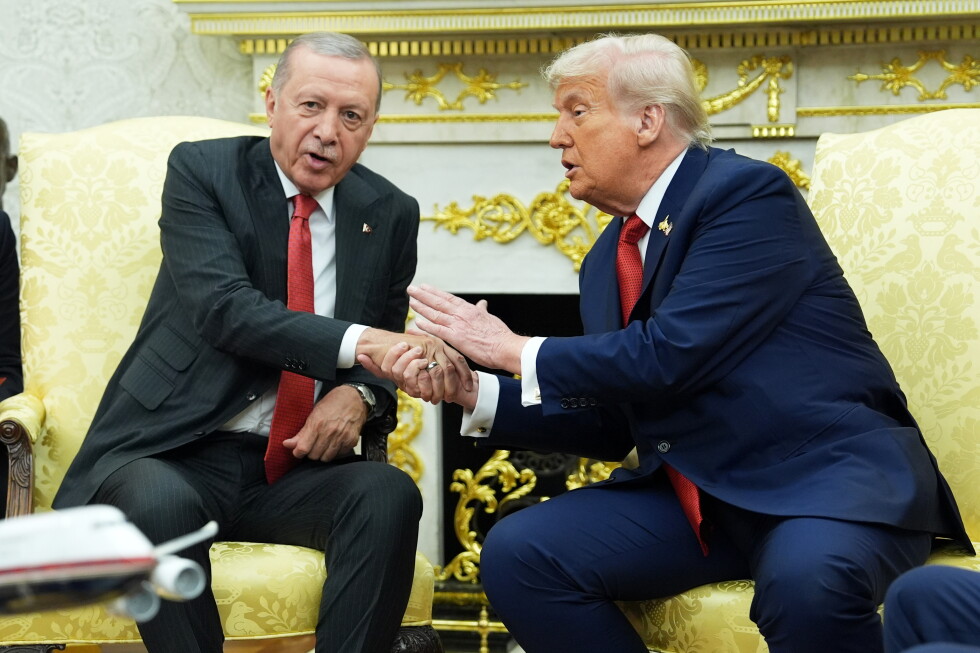
    As next week’s NATO summit in Turkey approaches, a unique dynamic between U.S. President Donald Trump and Turkish President Recep Tayyip Erdogan has reshaped expectations for the alliance gathering, with the Turkish leader turning his close personal ties to the American president into both a guarantee of Trump’s attendance and the prospect of a landmark U.S. defense sale.

    Unlike many European NATO leaders who have faced repeated public criticism and scorn from Trump in recent years, Erdogan has cultivated a warm rapport that has convinced Trump to make the trip to Ankara. Trump, who has openly admitted he would skip the event for most other heads of state, confirmed his attendance out of personal respect for Erdogan, who personally reached out to lobby for his presence.

    The Turkish president’s successful push to secure Trump’s attendance has averted a major crisis for the 31-nation alliance. For years, Trump has repeatedly threatened to withdraw U.S. military forces from Europe and scale back Washington’s longstanding commitment to NATO’s collective defense framework, stoking deep uncertainty among allies. He has also regularly chastised fellow NATO members for failing to meet alliance-mandated defense spending targets, and has more recently clashed with European counterparts over their refusal to back his administration’s hard-line stance against Iran. A Trump no-show would have amplified already existing fears about the future of U.S. engagement with the bloc.

    Beyond securing his attendance, Erdogan stands to gain a far more concrete reward: Trump has openly hinted that he will announce progress on long-blocked sales of U.S. defense technology, including F-35 stealth fighter jets and F-110 jet engines, during his visit.

    Turkey was removed from the F-35 program in 2019 after moving forward with a purchase of Russia’s S-400 air defense system. U.S. defense officials have long warned that operating the Russian S-400 alongside American stealth aircraft would give Moscow access to sensitive data that could compromise the F-35’s stealth capabilities. Still, Trump suggested as early as last September that he was open to reversing that ban, and confirmed last week that he expects to make an announcement that will please Erdogan on the issue.

    On the jet engine front, the Trump administration has already moved to advance a $700 million sale of F-110 engines that Turkey plans to use to power its domestically developed KAAN fighter jet. The State Department recently notified key congressional leaders that it plans to bypass existing bipartisan opposition to the sale, a move that drew swift condemnation from top lawmakers. House Foreign Affairs Committee ranking member Gregory Meeks accused the administration of failing to provide any legal or strategic justification for the move, and of ignoring concerns over Turkey’s continued possession of the S-400 system and broader regional security risks. Bipartisan opposition to F-35 sales remains entrenched on Capitol Hill, with even influential Republican leaders like Senate Foreign Relations Chairman Jim Risch opposing the move as long as Turkey retains the Russian missile system.

    Analysts say Erdogan’s close relationship with Trump fits a broader pattern of the U.S. president’s well-documented affinity for authoritarian strongman leaders. Erdogan, who has consolidated power over 13 years as Turkey’s president following his tenure as prime minister, has faced widespread international criticism over democratic backsliding, increased restrictions on freedom of expression, and the widespread prosecution of opposition figures, journalists, and human rights activists. During the Biden administration, Washington kept Erdogan at arm’s length over these human rights and governance concerns, a posture that stands in stark contrast to Trump’s warm embrace of the Turkish leader.

    “His relationship with Erdogan, which is pretty strong, is consistent with what seems to be a pattern of his preference,” said Philip Gordon, a former national security adviser to Vice President Kamala Harris and current senior fellow at the Brookings Institution. “It has often been pointed out he seems to have better relationships with adversaries and autocrats, and he certainly says nicer things about them than with allies.” Gordon added, “Erdogan is taking full advantage of it.”

    The personal chemistry between the two leaders first developed during Trump’s first term in office, according to Soner Cagaptay, a Turkey expert at the Washington Institute. Cagaptay noted that when the Biden administration invited Erdogan to Washington in 2024 after Turkey approved Finland and Sweden’s accession to NATO, Erdogan declined the invitation — a deliberate snub of the sitting Democratic president that he framed as a gesture of support to Trump ahead of the 2024 U.S. election. Cagaptay said Trump interpreted the move as a significant show of support.

    Trump will become the first sitting U.S. president to visit Turkey since Barack Obama’s 2015 trip, and he is scheduled to hold a one-on-one bilateral meeting with Erdogan on the sidelines of the summit. The warming of ties between the two leaders under Trump’s second term extends beyond defense: earlier this year, the U.S. Justice Department dropped a major sanctions-evasion case against Turkey’s state-owned Halkbank, a longstanding point of friction between the two countries. Trump has also appointed his longtime close ally Tom Barrack, who chaired his inaugural committee, as U.S. ambassador to Ankara, a move that Erdogan has welcomed.

    The two leaders have maintained steady contact through regular phone calls, covering a range of regional issues including the conflict in Syria, the war in Gaza, and tensions with Iran. Turkey joined Trump’s Gaza Board of Peace, a body tasked with overseeing the ongoing ceasefire in the Palestinian territory. Trump has even publicly claimed that he convinced Erdogan to stay out of the recent conflict between Israel and Iran, a request Erdogan honored, though there is no public evidence that Turkey ever planned to join the fighting.

    Erdogan has publicly praised the speed and openness of his communication with Trump, noting that any call between the two leaders is returned within 24 hours. “With my friend Trump, we are opening the door to a new era in Turkish-American relations,” Erdogan said last year after meeting Trump at a previous NATO summit in The Hague. “The process of telephone diplomacy between us has never exceeded 24 hours so far. When we call, the other side responds within 24 hours.”

    Even during meetings with other world leaders who have tense relations with Ankara, Trump has made his admiration for Erdogan clear. Last year, during a joint press conference with Israeli Prime Minister Benjamin Netanyahu — whose government is locked in a bitter dispute with Turkey over regional influence — Netanyahu hoped to win Trump’s support for pushing back against Turkish activity in Syria. Instead, Trump publicly lavished praise on Erdogan and urged Netanyahu to take a more conciliatory approach to Ankara.

  • Hong Kong bookseller Lam Wing-kee, seized by Chinese authorities in 2015, dies in Taiwan at 70

    Hong Kong bookseller Lam Wing-kee, seized by Chinese authorities in 2015, dies in Taiwan at 70

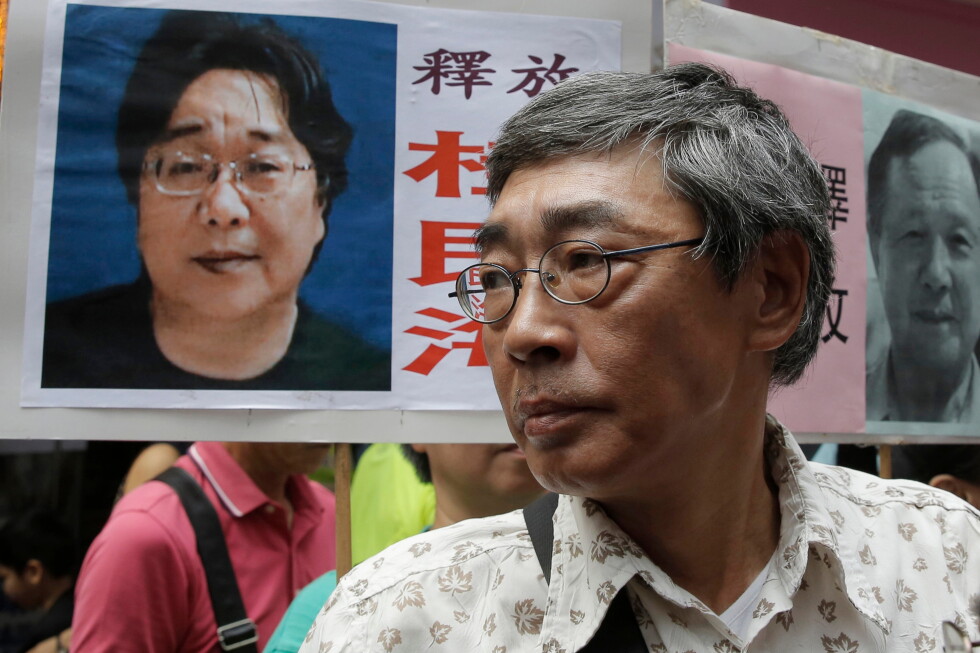
    Veteran Hong Kong bookseller Lam Wing-kee, who became a globally recognized symbol of resistance against Beijing’s tightening restrictions on free speech after his 2015 abduction by Chinese authorities, has passed away in Taipei, Taiwan, Taiwan’s official Central News Agency reported Friday, citing an anonymous familiar source.

    No official cause of death has been released, but details shared by the outlet indicate the 70-year-old had experienced a recurrence of cancer last year, and was admitted to Taipei’s MacKay Memorial Hospital earlier this week. After slipping into a coma on Wednesday, Lam died on Thursday evening, the report added.

    Lam, who spent years working at Hong Kong’s iconic Causeway Bay Books, fled to Taipei in 2019 amid growing fears that he would face politically motivated legal charges under Hong Kong’s new national security law. A year after relocating, he fulfilled his long-held goal by reopening the iconic bookstore under the same name in the Taiwanese capital. Earlier this year, in June, Lam told the Central News Agency he had been forced to temporarily shut down the Taipei store due to his declining health, and could not confirm when or if the shop would welcome customers again.

    News of Lam’s death drew immediate condolences from Taiwanese leadership. President Lai Ching-te shared a statement on his official Facebook page honoring Lam’s legacy. “The passing of Mr Lam Wing-kee is deeply saddening, but the courage he left behind would not fade,” Lai wrote. “Taiwan will remember that a Hong Kong bookstore worker once told us in the most ordinary yet most steadfast way how precious freedom is and reminded us that democracy requires the efforts of generation after generation to defend it.”

    Lam’s rise as an international figure for free expression began in late 2015, when he became one of five people connected to Causeway Bay Books who disappeared within a span of months. The bookstore had long drawn the ire of Chinese authorities for selling texts that alleged to expose unreported details of Chinese Communist Party leadership’s personal lives and alleged political scandals. Among the five missing booksellers was publisher Gui Minhai, who vanished from his vacation home in Thailand before ultimately being sentenced to 10 years in prison in China on charges of illegally providing state intelligence overseas.

    In a bold act of defiance that shocked Beijing’s official narrative, Lam spoke publicly in 2016 to share a firsthand, explosive account of his abduction that directly contradicted the Chinese government’s official version of events. He told reporters that plainclothes Chinese agents seized him in October 2015, immediately after he crossed the border from Hong Kong into the mainland city of Shenzhen. He was blindfolded for a 13-hour train ride to Ningbo, a coastal city in eastern China, where he was held in solitary confinement in a small room for five months, with two-person surveillance teams rotating around the clock to monitor his every move, Lam said. He added that after months of detention, he was forced to deliver a scripted televised confession to criminal charges to be broadcast across mainland China.

    Lam’s death comes as authorities in Beijing and Hong Kong have continued to ramp up restrictions on political and press freedom in the semi-autonomous territory, following mass pro-democracy protests that swept Hong Kong in 2019. Just this past June, Hong Kong police arrested two individuals under the sweeping national security law, accusing them of selling seditious publications and receiving funding from foreign political organizations, marking the latest in a years-long crackdown on independent speech in the city.

  • Instagram running ads promoting child sexual abuse material in India, BBC finds

    Instagram running ads promoting child sexual abuse material in India, BBC finds

    A groundbreaking undercover investigation by BBC Eye has exposed a disturbing criminal operation: paid advertisements promoting child sexual abuse material (CSAM) are actively circulating on Instagram, one of the world’s most popular social media platforms, across India.

    The investigation began after BBC researchers observed that Instagram’s algorithm was pushing sexually suggestive content to users even when no explicit search for such material had been conducted. To probe this issue further, the BBC created an anonymous alias account based in India, which followed 10 accounts featuring Indian women posting about daily life topics like food and weather, while using revealing clothing and sexual innuendo in their content. In less than seven days, the account started being served explicit ads, first for adult pornography and nude content, and soon after for CSAM that linked directly to paid channels on the messaging platform Telegram.

    Over the course of the investigation, roughly 30 unique CSAM advertisements appeared on the account’s feed, alongside an additional 20 ads for unregulated adult pornography. Both distribution of CSAM and adult pornography are classified as serious criminal offenses under Indian law, and Meta — Instagram’s parent company — has explicit public policies prohibiting ads that contain nudity, sexual exploitation, or content that endangers children. The ads included graphic, exploitative content: one depicted two pre-teen children estimated to be around 12 years old engaged in a sexual act, while another showed a 52-year-old man with a 12-year-old girl with text inviting viewers to click through to a Telegram channel to watch more content. When the BBC reported an ad featuring a crying young girl labelled as a sexual assault victim to Instagram’s moderation team, the platform replied 24 hours later that the ad did not violate its community guidelines and refused to remove it.

    All pre-publication ad reviews on Instagram are conducted via Meta’s moderation system, which the company says vets every ad before it goes live. The system relies primarily on automated technology to scan content, with uncertain cases escalated to human reviewers. In a March 2026 announcement, Meta said it would reduce its reliance on third-party human moderators and shift further toward AI-powered moderation, claiming that expert teams would oversee and refine the new systems.

    After the BBC shared its full findings with Meta, the company said it had disabled multiple violating ads, suspended the accounts behind them, and blocked offending URLs in line with its policies. Meta also pushed back against criticism, saying in an official statement: “Child exploitation is a horrific crime and Meta works aggressively to fight it on our apps.” The company denied claims that it prioritizes revenue over user safety, noting that it automatically disabled more than four million accounts in 2025 for suspicious behavior linked to child exploitation. Meta added that it complies with all legal requirements to report suspected CSAM to the U.S.-based National Center for Missing and Exploited Children (NCMEC), the global central clearinghouse for CSAM reports. When reached for comment by the BBC, Meta acknowledged that “no system is perfect” and that automated reviews may miss some policy violations.

    The CSAM ads direct users to Telegram channels where the exploitative content can be purchased for as little as 99 Indian rupees, equal to roughly $1. When the BBC reported two of these CSAM-selling channels to Telegram, one was removed for violating the platform’s terms of service, while the other remained active and continued posting new content for sale. Telegram has faced longstanding criticism for insufficient action against criminal content sharing, and it is not a member of either NCMEC or the Internet Watch Foundation, two leading global organizations that partner with platforms to detect and remove CSAM. In a response to the BBC, Telegram said it uses a combination of automated and human moderation to remove CSAM, and claimed it has “virtually eliminated the public spread of CSAM from its platform.” The company also noted that it removed more than 274,000 CSAM-linked groups and channels in 2026.

    The investigation has sparked sharp condemnation from legal and law enforcement experts in India. Retired Indian Supreme Court Justice Madan Lokur told the BBC he believes Instagram is “making money by participating in a criminal activity.” Lokur called the issue severe enough that India’s Supreme Court should initiate suo moto cognisance — an automatic legal proceeding without a formal complaint being filed — to force government action against the platform. He added that while Indian law shields platforms from liability for user-uploaded content in many cases, “the platform cannot, cannot shirk its responsibility.”

    Former Meta executive Brian Boland, who served as a vice president at Facebook (Meta’s predecessor brand) between 2009 and 2020 and helped build the company’s advertising business, told the BBC he was “horrified and unsurprised” by the investigation’s findings. Boland, who left Meta in 2020 because he believed the company did not prioritize user safety, explained that Instagram’s algorithm is intentionally designed to maximize user engagement and time on platform by serving increasingly extreme and titillating content. “It’s not like an algorithm that says ‘let’s make people paedophiles’, but because they’re not responsibly guiding and controlling it – and it’s just pursuing the goals of revenue and clicks – it will create these outcomes if people aren’t being truly, aggressively protective over these systems,” Boland said. He added that early in his tenure, he was authorized to remove a large share of revenue-generating scam ads to protect users, but over time the company began prioritizing revenue gains over user safety. Boland deleted his own Instagram account in 2025, and urged mass user action to force Meta to change its policies.

    Boland testified against Meta earlier this year in a trial in New Mexico, where the company was found liable for misleading the public about the safety of its platforms for children. The court ordered Meta to pay $375 million in damages, a ruling the company has said it will appeal.

    Advertising makes up nearly 98% of Meta’s total annual revenue, which hit $200 billion in the 2025 financial year, and analysts estimate advertising accounts for over 90% of Instagram’s standalone revenue.

    Indian law enforcement and child welfare organizations have long flagged Meta platforms as the most common source of CSAM reports in the country. Shikha Goel, director of the Cyber Security Bureau in the southern Indian state of Telangana, noted that Meta platforms generate more CSAM reports to the NCMEC tipline than any other provider operating in India. In 2025, India received 1.9 million CSAM reports via the NCMEC system, second only to the United States’ 2 million reports. Goel added that higher reporting volumes may reflect better detection systems, not simply more content. The Mumbai-based Rati Foundation, an NGO that runs a helpline for children affected by online harm, confirmed that the vast majority of CSAM reports it receives come from Meta platforms. Rati co-founder Siddharth Pillai told the BBC that criminals exploit the seamless connection between Instagram and Telegram to evade moderation: after one piece of content is removed, offenders simply reupload it to a new channel. Experts note that most CSAM in India is produced by organized criminal groups like human trafficking networks, though community and family members are sometimes responsible for exploitation. Many offenders go unreported, and Indian law enforcement is still building the technical expertise needed to tackle the transnational crime. Bhuwan Ribhu, founder of child welfare network Just Rights for Children, said cross-border international cooperation and intelligence sharing are critical to dismantling these criminal networks, saying “the entire chain of demand and supply needs to be tracked” to root out the crime. The BBC has formally shared all evidence of the ads and Telegram channels with Indian law enforcement authorities.

  • Possible super typhoon threatens US Pacific territories still recovering from last storm

    Possible super typhoon threatens US Pacific territories still recovering from last storm

    Residents across U.S. territories in the western Pacific entered a state of emergency preparation Friday as they brace for an approaching storm forecast to strengthen into a super typhoon, arriving just months after the region was battered by the most powerful tropical cyclone recorded on Earth this year. The U.S. Commonwealth of the Northern Mariana Islands is still picking up the pieces from April’s Super Typhoon Sinlaku, which brought destructive, gale-force winds and torrential, unrelenting rainfall that left lasting damage across the archipelago. As of Friday, full electrical service had not been restored across the islands, and dozens of residents whose homes were leveled by the storm continue to live in temporary tent shelters.

    Edwin Propst, a former legislator who now serves in the Saipan governor’s office, called the timing of the new storm nothing short of catastrophic. “We’re getting ready to do this all over again,” he said Friday, as the first outer bands of the system began to approach the island. “The timing is terrible.”

    Paul Stanko, senior meteorologist with the National Weather Service’s Guam office, told reporters that Typhoon Bavi was on track to intensify into a super typhoon by late Sunday or early Monday, when it is projected to make landfall in the Mariana Islands chain. The threshold for classification as a super typhoon is maximum sustained wind speeds of 150 miles per hour (241 kilometers per hour) or higher, a strength equivalent to an upper-tier Category 4 or Category 5 hurricane on the Saffir-Simpson scale, Stanko explained. As of Friday afternoon, Bavi was located 760 miles (1,223 kilometers) east of Guam, with measured sustained winds of 80 mph (129 kph), and continuing to gain strength as it moves west across the Pacific.

    Stanko noted that a growing number of Guam residents have expressed a quiet hope that the island will absorb the full force of Bavi, sparing the still-recovering Northern Marianas from another catastrophic blow. “That’s what we’re actually hoping for because then Saipan wouldn’t get it as bad,” he said. Propst confirmed that this sentiment is widespread across the region, calling the gesture a reflection of close-knit island community values. “That’s so island-style,” he said. “God bless them for saying that.”

    Guam, which lies west of the International Date Line, is nicknamed “Where America’s Day Begins” due to it being multiple hours ahead of Hawaii, Alaska, and the entire U.S. mainland. The island is also a key strategic outpost for the U.S. military, hosting two large active-duty bases.

    Propst reported that residents across the region have already begun prepping for the storm: covering home and business windows with plywood, stockpiling drinking water and non-perishable food, and queuing for gasoline at filling stations — a repeat of the long lines that lasted for weeks after Sinlaku knocked out power to most fuel infrastructure.

    The Rev. Francis Hezel, assistant pastor of Santa Barbara Catholic Church in Dededo, Guam, said he holds out hope that no island will suffer a direct hit. A long-time Guam resident who has weathered dozens of typhoons over decades, Hezel said he remains cautiously optimistic that Bavi will shift course before reaching populated areas. “Right now the pattern is heading towards us, but those patterns change,” he noted. Even so, he said, church staff and local residents have not cut corners on preparedness, adding that frequent typhoon drills have become a new way of life for the region. “This is getting to be the normal thing now, typhoon preparedness,” he said. “It’s happening more frequently.”

    Climate scientists link the increasing frequency of intense Pacific typhoons in part to the current El Niño event, a natural ocean warming cycle that amplifies tropical cyclone activity across the eastern and central Pacific. Experts warn that this natural warming is compounded by human-caused climate change driven by fossil fuel emissions, which has already raised global average ocean and atmospheric temperatures, creating conditions that supercharge extreme weather events across the globe.

    While Sinlaku did not claim any lives on land in the Northern Marianas, Propst said residents are still grieving six crew members who died when their cargo ship overturned during the storm. Search teams recovered the body of one crew member, but the U.S. Coast Guard ended a more than 100-hour search operation without locating the remaining five. Though recovery efforts after Sinlaku have made steady progress, Propst said the region is still not fully back on its feet. “A few more months would have been good,” he said of the time needed to fully rebuild.

  • Gaza’s breast cancer patients face immediate mastectomies as doctors plead for end to blockade

    Gaza’s breast cancer patients face immediate mastectomies as doctors plead for end to blockade

    On Thursday, medical practitioners and public health experts across the Gaza Strip marked a grim milestone: 1,000 days of unrelenting humanitarian crisis, issuing an urgent plea for the global community to impose targeted pressure on Israel to end its 16-year blockade of the enclave and lift a sweeping ban on life-saving critical medical and sanitation supplies—including basic chlorine bleach used to disinfect hospital facilities.

    The appeal came during a virtual briefing organized by Doctors Against Genocide, the global non-profit, where participating clinicians and sector leaders painted a catastrophic picture of a collapsed health system that can barely meet the needs of healthy Gaza residents, let alone vulnerable groups including elderly people, disabled individuals, and patients living with chronic pre-existing conditions. These conditions have drastically worsened following the October 7, 2023 Hamas-led attacks on southern Israel and the subsequent large-scale Israeli military campaign in Gaza.

    Official data from the Gaza Ministry of Health confirms the devastating toll on the enclave’s healthcare infrastructure: Israel’s military operations have killed more than 1,700 medical personnel, destroyed 38 hospitals either partially or completely, and damaged or destroyed nearly 200 ambulances across the blockaded territory.

    Dr. Ahmed Shatat, director general of International Cooperation and Planning in Gaza, explained that urgent, invasive procedures have become the standard of care for patients who would normally receive targeted, less radical treatment. “Women with breast cancer are undergoing immediate mastectomies because it’s the fastest way to save their lives when there are no deeper diagnostic tools or cancer drugs,” Shatat reported during the briefing. He added that the enclave has lost access to even the most essential diagnostic equipment: “Previously, we were holding seven MRI machines. Now we have not even one MRI machine – zero – in the Gaza Strip.”

    The crisis extends equally to cardiac care, a specialty that once served tens of thousands of chronic patients across Gaza. “Out of the cardiac catheterisation machines, we were handling seven. Now we are just working in one old machine… with no availability of a stent for catheterisation,” Shatat said. Cardiac catheterization is a common, life-saving procedure used to detect blockages that can trigger fatal heart attacks, making preventive care for heart disease all but impossible today.

    For a region that built a reputation for robust medical training and functional infrastructure even through 16 years of Israeli siege, preventive medicine is now an unattainable luxury. Vaccination rates across the enclave have plummeted from 96 percent to just 80 percent, opening the door to a surge in preventable infectious diseases. Cases of scabies, gastroenteritis, and Hepatitis A have skyrocketed, as the collapse of clean water access leaves residents unable to maintain basic personal hygiene.

    Dr. Munir al-Barsh, head of the water and environment sector in Gaza, reported that water output from local wells has fallen to just one-third of levels seen before October 7 2023, and even that limited supply is often contaminated by raw waste that has seeped into groundwater following infrastructure damage. Most large-scale desalination projects are non-operational, as chronic fuel shortages prevent running the machinery needed to deliver safe drinking water to residents. Most alarmingly, al-Barsh confirmed that even chlorine, a low-cost, essential disinfectant for water and medical facilities, is blocked from entering Gaza by Israeli restrictions.

    Israeli officials assert that between 600 and 800 aid trucks are cleared to enter Gaza daily. But independent analysis from the non-profit Refugees International contradicts this claim, finding that the vast majority of these trucks carry commercial goods for private traders rather than life-saving humanitarian and medical supplies.

    As of the briefing, the Gaza Ministry of Health puts the total number of Palestinians killed in the current campaign at 73,066, with more than 1,000 additional fatalities recorded since the United States announced a fragile ceasefire declaration on October 10. Counting both killed and injured residents, the total number of casualties reaches 250,000—equal to 12.5 percent of Gaza’s entire population. Dr. Mustafa Barghouti, president of the Palestinian Medical Relief Society, framed the scale of harm for a global audience: “Apply that number to the United States of America, and you will be talking about no less than 36 million people killed or injured. You can imagine what the United States would have done if one million Americans were injured or killed.”

    Beyond the visible physical damage and death toll, a growing mental health crisis has overwhelmed the enclave’s limited care system, where most providers have themselves lost at least one family member to Israeli fire. Abdullah el-Jamal, a psychiatric consultant based in Gaza, explained that widespread trauma far outstrips the capacity of local doctors and social workers. He shared the story of a 32-year-old woman struggling with severe depression and post-traumatic stress disorder (PTSD) who was referred to a local psychologist—only for the psychologist to turn the case away, as she herself had recently lost her own son in the conflict. “We don’t know how to deal with this situation,” el-Jamal said. “We need a lot of support.”

    Today, roughly two million of Gaza’s 2.3 million residents are displaced, with close to 500,000 buildings destroyed or rendered uninhabitable by bombardment. Despite the catastrophic conditions, Barghouti maintained a message of steadfastness. “We are steadfast,” he said. “Although we lost maybe almost 22,000 children in Gaza killed by the genocide… [there are now] 82,000 newborn children… These are signs of the resistance of the Palestinian people.”

    This reporting is based on independent original coverage from Middle East Eye, a publication focused on independent reporting and analysis of the Middle East, North Africa and broader global region.

  • Taylor Swift’s rumoured wedding celebrations begin with star-studded New York event

    Taylor Swift’s rumoured wedding celebrations begin with star-studded New York event

    On one of New York City’s hottest July days, with temperatures soaring past 100 degrees Fahrenheit, all eyes of global entertainment media have turned to Manhattan’s iconic Madison Square Garden, where pop superstar Taylor Swift and her fiancé, NFL star Travis Kelce, are widely rumored to kick off star-studded wedding festivities this Fourth of July weekend, coinciding with America’s 250th anniversary celebrations.

    Unconfirmed but widely circulated reports suggest the couple began their celebration on Thursday with an intimate pre-wedding gathering and rehearsal dinner, expected to host around 100 invited guests. A larger formal celebration on Friday is projected to draw up to 1,000 high-profile attendees, turning the multi-purpose sports arena into an exclusive A-list wedding venue. A permit obtained by the Associated Press confirms a “pre-party night” is scheduled for Thursday from 5:30 p.m. to 10:30 p.m. ET, matching initial media speculation.

    By Thursday evening, A-list guests had already begun arriving. A stream of black SUVs dropped guests off under a large white privacy canopy erected outside the venue’s entrance, with Swift, Kelce and other top-tier VIPs expected to use the arena’s underground entry tunnels to avoid public attention. Paparazzi and media spotted a slew of Swift’s inner circle arriving in formal wear, including Girls creator Lena Dunham, Swift’s long-time producer and collaborator Jack Antonoff, designer Rachel Antonoff, actor Bradley Cooper, model Gigi Hadid, and pop star Selena Gomez, who shared a cryptic Instagram post of herself in a black gem-adorned gown ahead of the event. Other noted attendees including singer Sabrina Carpenter and broadcaster Graham Norton were also spotted in Manhattan ahead of the rumored celebrations.

    Media crews from around the world have staked out the area outside Madison Square Garden for days, documenting every detail of event preparation. Gossip outlet TMZ even launched a continuous live feed focusing on the arena’s loading bay, where viewers watched workers unload event equipment ranging from large cardboard boxes to custom set pieces including a grand white staircase and a giant mirror ball. A large notice posted at the venue entrance advised all visitors between June 29 and July 3 that entry constitutes consent to being filmed and photographed for an unspecified “event”, further fueling rumors of wedding-related content capture.

    New York City officials confirmed an application for street closure permits in the surrounding area was approved, though they declined to name the applicant. The timing of the event, which falls over the holiday weekend celebrating America’s 250th birthday while New York also hosts matches for the 2026 FIFA World Cup, has added to the hype around the high-profile nuptials. New York Mayor Zohran Mamdani has playfully referenced the ongoing wedding speculation during recent press briefings, while city authorities deployed dozens of police officers to manage crowds and secure the perimeter, installing metal barricades around restricted zones.

    Despite an explicit official warning for the public to stay indoors to avoid the dangerous extreme heat, hundreds of loyal Swift fans have gathered outside the arena to catch a glimpse of their favorite star and celebrate the occasion. Ryan Weng, a fan who has followed Swift for more than 15 years, called the chance to be near the rumored wedding an “irreplaceable experience” for her. Rusty Carbaug, a 34-year-old pilot who wore a Kansas-themed shirt in honor of Kelce’s roots, shared that he has grown up with Swift’s music, adding that “the right man for her is whoever she chooses”. Two student fans from the University of Mississippi initially doubted Swift would choose Madison Square Garden as a wedding venue, but acknowledged that with her resources, “you’re gonna be able to make anything look pretty”. A Belgian tourist waiting outside added that the arena choice makes sense because it offers the couple much-needed privacy amid intense public interest.

    While the venue choice has raised some eyebrows — long-time New York observers note the 60-year-old sports arena, located atop one of the country’s busiest and most cramped transit hubs, is better known for hosting basketball and hockey games than luxury celebrity weddings — the intense public and media interest in the rumored nuptials has turned a routine holiday weekend in Manhattan into a global media event, with millions following along for updates on what many are already calling the wedding of the century.

  • Moment huge waterspout twirls over lake in Germany

    Moment huge waterspout twirls over lake in Germany

    On a recent day at Lake Constance, situated close to the southern German city of Friedrichshafen, onlookers captured a striking natural phenomenon unfolding on the water’s surface: a massive, rotating waterspout that twisted across the lake’s expanse.

    Waterspouts are rotating columns of air that form over bodies of water, typically connecting the surface of the water to the base of a cumulus cloud. While they are most common in tropical or subtropical regions, they can occasionally form over temperate lakes like Lake Constance when specific atmospheric conditions align, including sharp temperature contrasts between air layers and high humidity near the water surface.

    Local residents and tourists in the area who witnessed the event shared footage and photos of the towering vortex, which quickly drew attention online from weather enthusiasts and casual observers alike. While the waterspout remained over the open water and did not move inland toward populated areas, authorities reminded visitors to the lake that if similar weather phenomena are spotted in the future, they should maintain a safe distance and move inland quickly to avoid potential danger. Even waterspouts that appear weak can generate strong winds and toss debris, creating unexpected hazards for anyone too close to the shoreline.

    Meteorologists note that while sightings of large waterspouts on southern German lakes are relatively rare, they are not unheard of during the warmer months of the year when unstable weather systems move through the Alpine foothill region where Lake Constance is located.

  • Spain goalkeeper Unai Simón sets World Cup record with 519 straight scoreless minutes in net

    Spain goalkeeper Unai Simón sets World Cup record with 519 straight scoreless minutes in net

    INGLEWOOD, California — Unai Simón, Spain’s standout starting goalkeeper, has cemented his place in World Cup history after breaking one of the tournament’s most enduring records, posting the longest consecutive shutout streak across men’s World Cup competition. The historic milestone came during Spain’s dominant 3-0 Group Stage victory over Austria on Thursday, which marked Simón’s fourth consecutive clean sheet at the ongoing tournament.

    Across the last two editions of the World Cup, Simón has not conceded a single goal across 519 consecutive minutes of play. That two-game streak surpasses the 517-minute record set 36 years ago by iconic Italian goalkeeper Walter Zenga, who notched five straight shutouts while Italy hosted the 1990 World Cup. The 29-year-old, a lifelong starter for Spain’s Athletic Bilbao, has long flown under the radar compared to other global soccer stars — even within his own national squad — but his elite command of Spain’s backline, paired with the team’s standout defensive organization, has pushed him into the record books.

    Heading into the knockout round, Spain has yet to allow a single goal at this tournament, and Simón has only been called on to make four total saves through four matches. Against Austria, he did not need to make a single stop, as none of the Austrian side’s five shot attempts found their way on target.

    Spain head coach Luis De La Fuente, who has stood by Simón as his starter through years of calls to promote higher-profile backup goalkeepers, expressed nothing but pride for his goalkeeper after the record-breaking win. “I feel proud of him,” De La Fuente said. “I feel like he is a member of my family. I’m very happy for him.”

    Simón has served as Spain’s first-choice goalkeeper for the majority of the past five years, holding onto his starting spot despite fierce competition from two of the most successful keepers in top European club soccer: David Raya, who just claimed a Premier League title with Arsenal, and Joan Garcia, Barcelona’s breakout young starter. Unlike his two backups, Simón has spent his entire club career at the less prominent Athletic Bilbao, who only qualified for the Champions League for the first time in his tenure last season.

    Simón’s long-running trust with De La Fuente dates back nearly a decade, a bond that has been central to his continued place as the national team’s starter. The pair first worked together in 2015, when a then 18-year-old Simón helped De La Fuente’s Spanish squad win the European Under-19 Championship in Greece. They continued working together through Spain’s youth national team program, before reuniting in early 2023 when De La Fuente took over the senior men’s squad, kicking off one of the most successful runs in Spanish soccer history.

    Under De La Fuente’s leadership, Spain has dropped just one loss across 37 competitive matches, going unbeaten in 35 consecutive outings — a run that includes a penalty shootout defeat to Portugal in the 2025 Nations League. With Simón in goal, Spain claimed the 2023 Nations League title and the 2024 European Championship, and have now advanced to a World Cup knockout round for the first time in 16 years.

    Simón’s record-breaking shutout streak traces back to the 2022 Qatar World Cup, where Spain conceded just three goals in four matches before bowing out in an early upset. The streak began during Spain’s 2-1 group stage loss to Japan, and continued through a regulation scoreless draw with Morocco in the round of 16 — a match Spain ultimately lost on penalties, with Morocco converting three of four spot kicks against Simón.

    At this year’s tournament co-hosted in North America, no side has managed to put the ball in the back of the net past Simón. Among Spain’s four group stage opponents, only Uruguay managed to register more than one shot on target. De La Fuente was quick to emphasize that Simón’s historic milestone is a testament to the entire team’s defensive effort, not just individual brilliance. “(Simón) played a very big role in the victory, but it’s not just about individuals,” De La Fuente said after beating Austria. “It’s about the whole group coming together for that defensive effort.”

    Early in the second half against Austria, Simón also surpassed another iconic record: the consecutive World Cup shutout streak set by Spanish legend Iker Casillas across the 2010 and 2014 tournaments. His consistent elite performance has been more than enough to fend off his two high-profile challengers as Spain advances to the round of 16.

    Raya, who has won three consecutive Premier League Golden Glove awards for leading the league in clean sheets, backstopped Arsenal to their first top-flight title since 2004 and a Champions League final appearance this season — yet he remains confined to a backup role for La Roja. Garcia, meanwhile, has emerged as one of the most promising young goalkeeping talents in world soccer after taking over Barcelona’s starting job last season, but he is also expected to remain on the sidelines for the duration of the tournament.