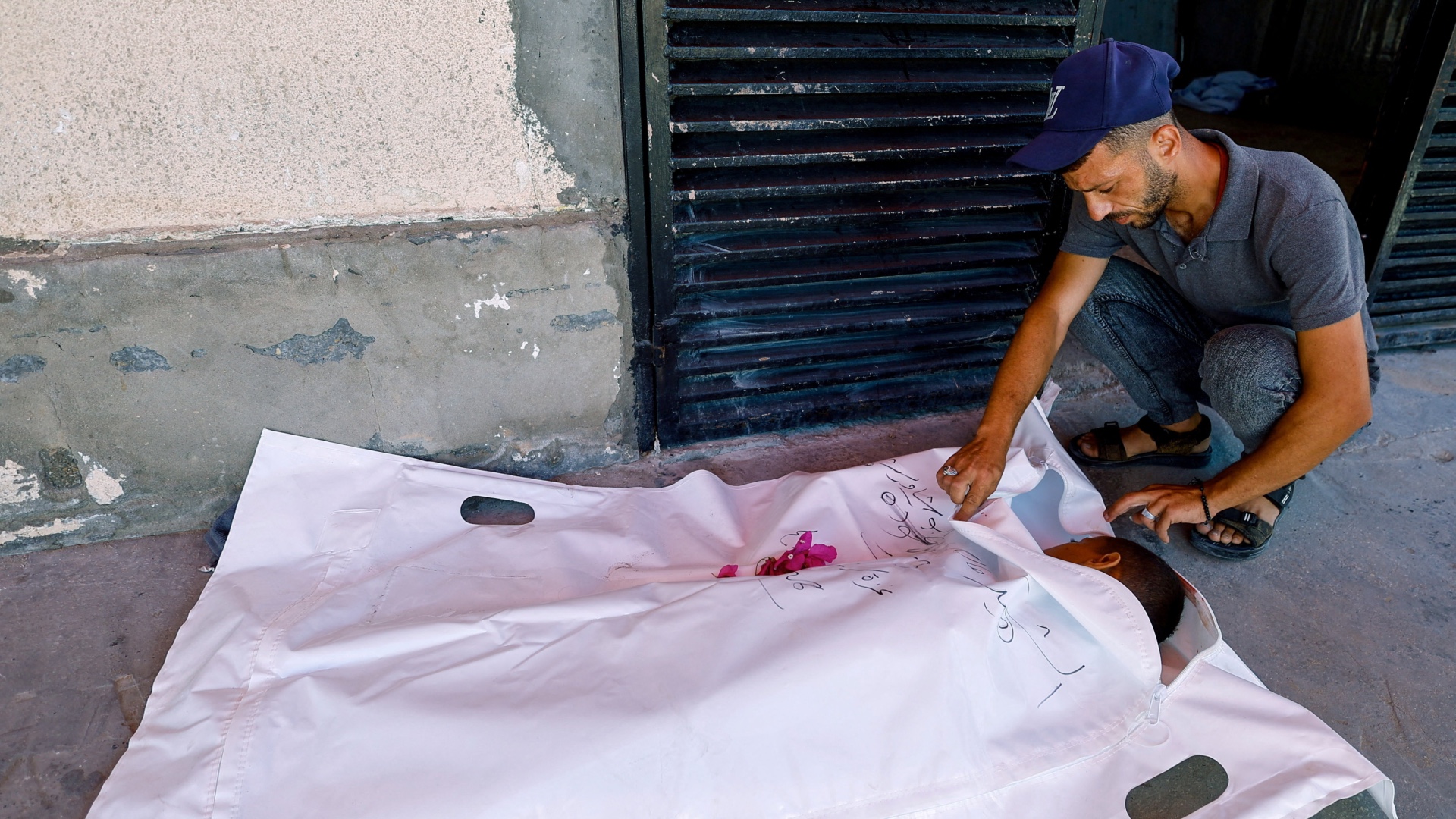
On Thursday, medical practitioners and public health experts across the Gaza Strip marked a grim milestone: 1,000 days of unrelenting humanitarian crisis, issuing an urgent plea for the global community to impose targeted pressure on Israel to end its 16-year blockade of the enclave and lift a sweeping ban on life-saving critical medical and sanitation supplies—including basic chlorine bleach used to disinfect hospital facilities.
The appeal came during a virtual briefing organized by Doctors Against Genocide, the global non-profit, where participating clinicians and sector leaders painted a catastrophic picture of a collapsed health system that can barely meet the needs of healthy Gaza residents, let alone vulnerable groups including elderly people, disabled individuals, and patients living with chronic pre-existing conditions. These conditions have drastically worsened following the October 7, 2023 Hamas-led attacks on southern Israel and the subsequent large-scale Israeli military campaign in Gaza.
Official data from the Gaza Ministry of Health confirms the devastating toll on the enclave’s healthcare infrastructure: Israel’s military operations have killed more than 1,700 medical personnel, destroyed 38 hospitals either partially or completely, and damaged or destroyed nearly 200 ambulances across the blockaded territory.
Dr. Ahmed Shatat, director general of International Cooperation and Planning in Gaza, explained that urgent, invasive procedures have become the standard of care for patients who would normally receive targeted, less radical treatment. “Women with breast cancer are undergoing immediate mastectomies because it’s the fastest way to save their lives when there are no deeper diagnostic tools or cancer drugs,” Shatat reported during the briefing. He added that the enclave has lost access to even the most essential diagnostic equipment: “Previously, we were holding seven MRI machines. Now we have not even one MRI machine – zero – in the Gaza Strip.”
The crisis extends equally to cardiac care, a specialty that once served tens of thousands of chronic patients across Gaza. “Out of the cardiac catheterisation machines, we were handling seven. Now we are just working in one old machine… with no availability of a stent for catheterisation,” Shatat said. Cardiac catheterization is a common, life-saving procedure used to detect blockages that can trigger fatal heart attacks, making preventive care for heart disease all but impossible today.
For a region that built a reputation for robust medical training and functional infrastructure even through 16 years of Israeli siege, preventive medicine is now an unattainable luxury. Vaccination rates across the enclave have plummeted from 96 percent to just 80 percent, opening the door to a surge in preventable infectious diseases. Cases of scabies, gastroenteritis, and Hepatitis A have skyrocketed, as the collapse of clean water access leaves residents unable to maintain basic personal hygiene.
Dr. Munir al-Barsh, head of the water and environment sector in Gaza, reported that water output from local wells has fallen to just one-third of levels seen before October 7 2023, and even that limited supply is often contaminated by raw waste that has seeped into groundwater following infrastructure damage. Most large-scale desalination projects are non-operational, as chronic fuel shortages prevent running the machinery needed to deliver safe drinking water to residents. Most alarmingly, al-Barsh confirmed that even chlorine, a low-cost, essential disinfectant for water and medical facilities, is blocked from entering Gaza by Israeli restrictions.
Israeli officials assert that between 600 and 800 aid trucks are cleared to enter Gaza daily. But independent analysis from the non-profit Refugees International contradicts this claim, finding that the vast majority of these trucks carry commercial goods for private traders rather than life-saving humanitarian and medical supplies.
As of the briefing, the Gaza Ministry of Health puts the total number of Palestinians killed in the current campaign at 73,066, with more than 1,000 additional fatalities recorded since the United States announced a fragile ceasefire declaration on October 10. Counting both killed and injured residents, the total number of casualties reaches 250,000—equal to 12.5 percent of Gaza’s entire population. Dr. Mustafa Barghouti, president of the Palestinian Medical Relief Society, framed the scale of harm for a global audience: “Apply that number to the United States of America, and you will be talking about no less than 36 million people killed or injured. You can imagine what the United States would have done if one million Americans were injured or killed.”
Beyond the visible physical damage and death toll, a growing mental health crisis has overwhelmed the enclave’s limited care system, where most providers have themselves lost at least one family member to Israeli fire. Abdullah el-Jamal, a psychiatric consultant based in Gaza, explained that widespread trauma far outstrips the capacity of local doctors and social workers. He shared the story of a 32-year-old woman struggling with severe depression and post-traumatic stress disorder (PTSD) who was referred to a local psychologist—only for the psychologist to turn the case away, as she herself had recently lost her own son in the conflict. “We don’t know how to deal with this situation,” el-Jamal said. “We need a lot of support.”
Today, roughly two million of Gaza’s 2.3 million residents are displaced, with close to 500,000 buildings destroyed or rendered uninhabitable by bombardment. Despite the catastrophic conditions, Barghouti maintained a message of steadfastness. “We are steadfast,” he said. “Although we lost maybe almost 22,000 children in Gaza killed by the genocide… [there are now] 82,000 newborn children… These are signs of the resistance of the Palestinian people.”
This reporting is based on independent original coverage from Middle East Eye, a publication focused on independent reporting and analysis of the Middle East, North Africa and broader global region.