博客

  • Klopp ‘signals willingness’ to take over as Germany coach Nagelsmann resigns after World Cup failure

    Klopp ‘signals willingness’ to take over as Germany coach Nagelsmann resigns after World Cup failure

    Germany’s men’s national soccer program is facing a leadership shakeup after a historic third straight early World Cup exit, with head coach Julian Nagelsmann stepping down and former Liverpool manager Jürgen Klopp emerging as the leading candidate to take over the role, the German Football Federation (DFB) confirmed in an official announcement Friday.

    Nagelsmann’s departure comes four days after Germany suffered a stunning penalty shootout defeat to Paraguay in the round of 32, a result that extended the country’s decades-long drought of knockout-stage success at the world’s biggest soccer tournament. Germany has not won a World Cup knockout match since claiming its 2014 title in a final against Argentina, with the latest early exit following group-stage eliminations at the 2018 Russia World Cup and 2022 Qatar tournament.

    The 38-year-old coach, who took the reins of the national side in 2023 and extended his contract last year through Euro 2028, initially said he would honor the remaining two years of his deal — which reportedly made him one of the highest-paid coaches at this year’s tournament — and insisted after the exit that he was “not one to walk away.” But after returning to Germany for crisis talks with DFB leadership Thursday, he reversed course, saying a clean break was in the best interest of the team.

    “In the days since we went out I’ve done a lot of thinking and spoken with trusted people in my personal life and at the federation,” Nagelsmann said in a public statement. “This decision was anything but easy for me. My main aim has always been the team’s success. After such a bitter disappointment, they’ve earned the chance for a completely fresh start.”

    Nagelsmann faced intense public and media criticism throughout the tournament over his tactical choices and squad selection. Controversial calls included recalling 40-year-old veteran goalkeeper Manuel Neuer to the starting squad ahead of the tournament after using Oliver Baumann for all qualifying matches, repositioning regular Bayern Munich midfielder Joshua Kimmich to right-back instead of fielding a specialist in the role, and consistently starting winger Leroy Sane — a former Bayern colleague of Nagelsmann’s. The fallout from these choices was visible in Germany’s loss to Paraguay: amateur stand-in Waldemar Anton, a natural central defender, was forced to cover Kimmich’s right-back position late in the match, while in-form striker Nick Woltemade — who played every minute of Germany’s qualifying campaign — remained benched until the final minutes of the knockout fixture.

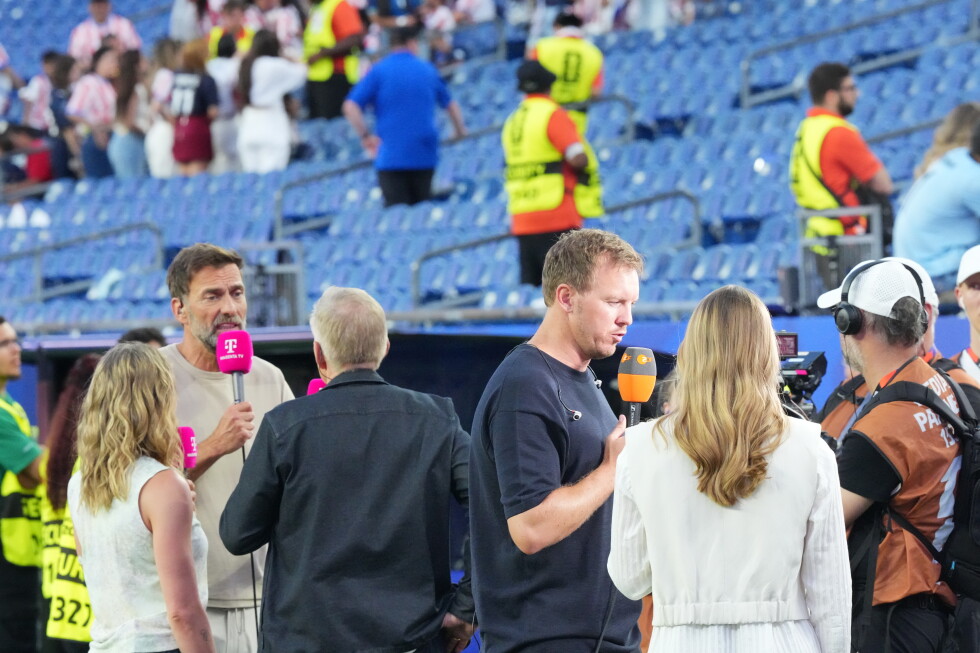
    The DFB confirmed Friday that it intends to open formal talks with Klopp, who has already privately signaled he is open to taking the national team job. This would mark Klopp’s first senior coaching position since he stepped down from Liverpool at the end of the 2023-2024 Premier League season. Currently, Klopp serves as global head of soccer for the Red Bull Group, and worked as a high-profile pundit for German television during this year’s World Cup, even conducting pitchside post-match interviews with Nagelsmann during the tournament. When asked about the vacancy earlier this week, Klopp downplayed the speculation, saying “I haven’t thought about it” and calling it “not the moment to really talk about it.”

    The news of Nagelsmann’s resignation drew a formal statement of recognition from German Chancellor Friedrich Merz’s office. “The chancellor thanks Julian Nagelsmann for his commitment and service in recent years as national team coach,” Merz spokesperson Stefan Kornelius told reporters during a scheduled press conference where the breaking news broke.

    Nagelsmann is far from the only high-profile men’s head coach to exit his post after an early elimination from this year’s World Cup. Just hours after Germany’s defeat to Paraguay, Netherlands manager Ronald Koeman stepped down following his own side’s surprise penalty shootout exit. Coaches leading Ecuador, South Korea, Scotland and the Czech Republic have all departed their roles after early exits, while Argentina legend Marcelo Bielsa moved forward with a pre-planned departure from Uruguay even before the team’s group-stage elimination was confirmed.

    Germany does not return to competitive action until a September 24 Nations League fixture against the Netherlands, giving the DFB time to finalize a deal for Klopp before the new national team cycle begins.
  • Pakistan syndicate allegedly smuggled human placentas, say police

    Pakistan syndicate allegedly smuggled human placentas, say police

    A sprawling international criminal syndicate that trafficked hundreds of kilograms of human placenta harvested from Pakistani hospitals for high-end black market anti-aging injections has been uncovered in a multi-agency law enforcement raid, marking the first documented case of an organized transnational network trading in this illicit human tissue in the country.

    Pakistan’s Federal Investigation Agency (FIA) has launched a full-scale investigation into the ring, which authorities say moved roughly 200 kilograms of processed human placenta out of the country each month. The organ is obtained illegally from maternity wards across Pakistan, processed locally, then smuggled abroad to be manufactured into cosmetic anti-aging treatments, FIA representatives told BBC Urdu.

    The operation unraveled last week during a targeted raid on an unlicensed processing facility in a converted residential property in Islamabad. Law enforcement officers seized 500 kilograms of suspected dried human placenta at the site and took five suspects into custody. Photographs released by the FIA show large trays of cured placenta stacked on rolling carts inside the clandestine facility, which was repurposed exclusively for storing and processing the illicit organ.

    In a separate interdiction just days later, on Wednesday, FIA teams stopped a 100-kilogram shipment of human placenta bound for Vietnam at Islamabad International Airport, halting another major smuggling attempt before the contraband could leave the country.

    According to Hina Kanwal, an official with Pakistan’s Human Organ Transplant Authority, the syndicate acquired each placenta from public and private hospitals in Islamabad and neighboring Rawalpindi for roughly 800 Pakistani rupees, equivalent to just $2.90. Once processed and turned into final anti-aging injections, each individual dose sells for as much as 700,000 rupees ($2,530) on the international black market, FIA data shows.

    Investigators have confirmed that the criminal network’s reach extends far beyond the Islamabad capital region, with documented operations in other major Pakistani urban centers including Lahore, Peshawar and Rawalpindi. The FIA is also currently probing potential complicity from immigration officials, private waste management contractors, and hospital administrative staff who may have facilitated the illegal harvesting and transport of the tissue.

    Under Pakistani law, commercial harvesting and trafficking of human organs carries severe criminal penalties: convicted offenders face up to 10 years of prison time and fines as high as 1 million rupees. While the FIA has conducted repeated crackdowns on illegal human organ trafficking networks in the country, this case marks the first time authorities have dismantled a large, organized international ring dedicated specifically to human placenta smuggling.

    Investigators added that the five arrested suspects initially attempted to conceal their activity by claiming the seized tissue was sheep placenta, a legally traded product used in some cosmetics. They confessed the material was of human origin only after extended interrogation.

    Medical professionals in Pakistan emphasize that strict protocols govern the disposal of placentas, which are classified as highly infectious medical waste after childbirth. Across most of the world, including Pakistan, placentas are routinely discarded as clinical waste following delivery, and only government-certified waste management firms are permitted to handle and dispose of this material, with hospitals required to maintain detailed, auditable records of every disposal. Sadaf Tariq, a leading Pakistani gynecologist, noted that unregulated handling of this biological waste poses major public health risks due to its potential to carry infectious pathogens.

    The placenta is a temporary organ that develops in the uterus during pregnancy, responsible for delivering nutrients and oxygen to a developing fetus and removing waste products throughout gestation. It is expelled from the mother’s body immediately after childbirth once it has fulfilled its biological function. Despite this, a growing unregulated wellness and cosmetic industry has promoted unproven claims that placenta, which naturally contains high concentrations of protein, iron and fat, offers nutritional and anti-aging benefits for human adults when consumed or injected. Proponents have marketed placenta-derived products ranging from oral supplements to anti-wrinkle injections that claim to boost tissue regeneration, but peer-reviewed scientific evidence supporting these claims remains inconsistent, and regulations governing placenta-based products vary wildly between countries.

  • At least 32 dead after overcrowded bus plunges into ravine in Pakistan

    At least 32 dead after overcrowded bus plunges into ravine in Pakistan

    A devastating highway accident has claimed the lives of at least 32 people in south-western Pakistan, after an overloaded passenger bus careened off a mountain road and fell into a deep ravine on Friday morning. Sixteen additional passengers were injured in the crash, which unfolded in the Dana Sar mountain range straddling the border of Pakistan’s Balochistan and Khyber Pakhtunkhwa provinces at approximately 8:00 a.m. local time, as the vehicle traveled north from Quetta to Peshawar.

    Local health authorities at Zhob Hospital confirmed that 48 people, including the bus driver, were packed onto the vehicle at the time of the collision. Initial reporting points to two key contributing factors to the disaster: a potential steering system malfunction that caused the driver to lose control of the bus, and severe overcrowding. Shahid Rind, spokesperson for Balochistan’s chief minister, noted that the bus had taken on extra passengers from a second bus that had suffered a breakdown earlier in the journey, pushing the passenger count well beyond the vehicle’s intended capacity.

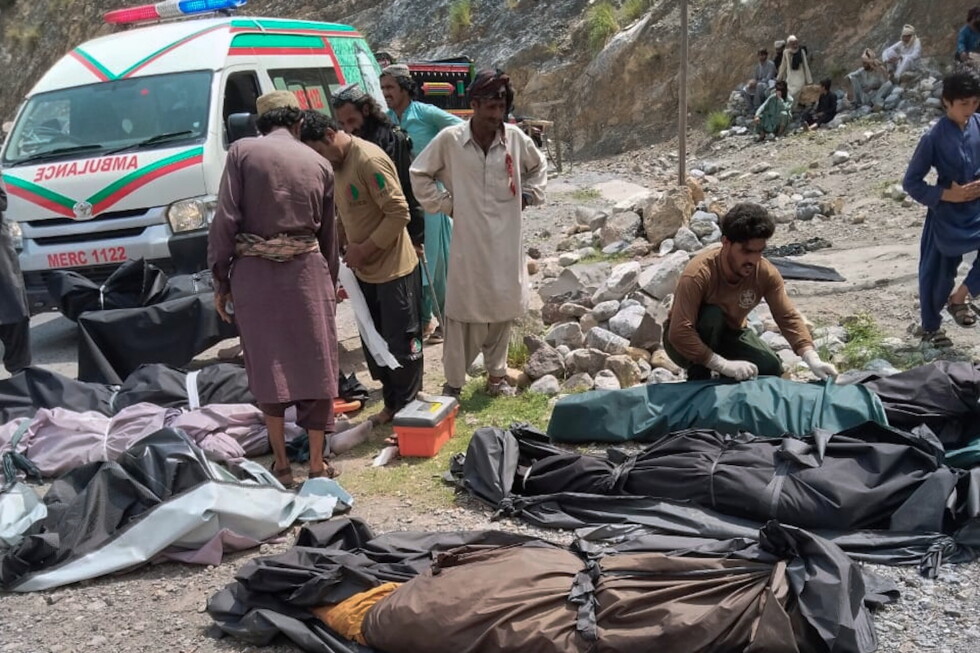
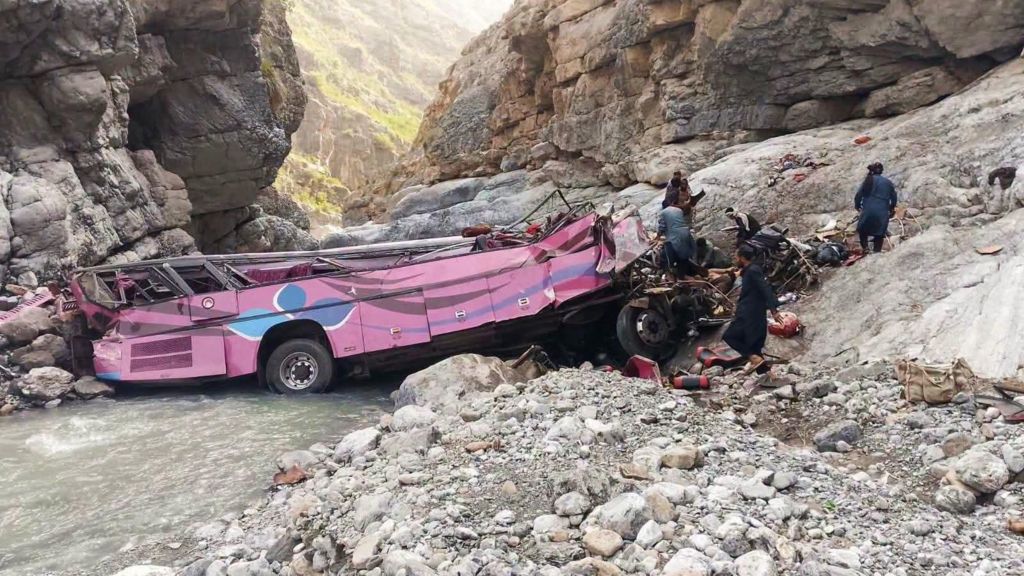
    Emergency response teams including dozens of first responders and ambulances were dispatched immediately to the remote crash site, but difficult, rugged mountain terrain slowed rescue and recovery operations significantly. Images captured at the scene show the passenger bus heavily mangled after the fall. All injured survivors have been transported to Tehsil Headquarters Hospital in Zhob, located roughly 68 kilometers from the crash site, and the bodies of deceased victims have also been moved to the facility, where they will be transferred to the victims’ home communities via ambulance.

    Top Pakistani political leaders have publicly expressed grief over the high loss of life. Both President Asif Ali Zardari and Prime Minister Shehbaz Sharif issued statements of condolence following the crash. Balochistan Chief Minister Sarfraz Bugti wrote on the social platform X that he was “deeply saddened” by the news of the accident. He extended his condolences to grieving family members of the deceased, offered prayers for a fast recovery for injured passengers, and ordered a formal inquiry into the root causes of the crash, confirming that emergency medical support was already being delivered to all hurt survivors. Official investigations into the crash remain ongoing to confirm the exact sequence of events that led to the disaster.

  • Interpol names suspect in Monaco bombing that reportedly targeted Russia-linked Ukrainian tycoon

    Interpol names suspect in Monaco bombing that reportedly targeted Russia-linked Ukrainian tycoon

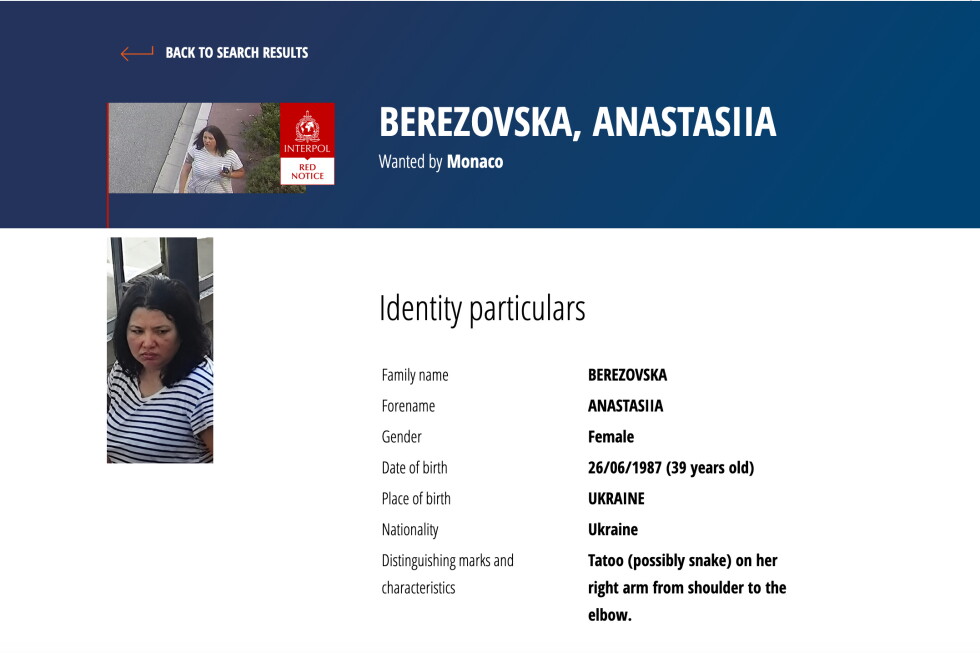
    PARIS – In a major update to the investigation into a deadly targeted bombing in Monaco last week, international police agency Interpol has publicly named a 39-year-old Ukrainian woman as the primary suspect and issued an urgent global Red Notice calling for her immediate arrest. The woman, identified as Anastasiia Berezovska, remains at large more than a week after the explosion that rocked a residential building in the small Mediterranean principality.

    The blast, which detonated at the entrance of a Monaco apartment building on Monday, wounded five people total. Three members of a single family were directly targeted in the attack, local authorities confirmed, among them prominent Ukrainian construction magnate Vadym Yermolaiev, multiple independent media outlets have reported. Yermolaiev, who gave up his Ukrainian citizenship roughly 10 years ago, was placed under Ukrainian sanctions in 2023 over his well-documented business and political ties to Russia. Alongside the tycoon, a woman and a young child were also injured in the explosion. As of Friday, one victim remained in critical, life-threatening condition, while two additional bystanders suffered minor injuries in the attack, Monaco’s prosecution team confirmed.

    Initial witness reports and early CCTV analysis led investigators to misidentify the suspect as a heavyset man wearing dark long sleeves, pale shorts and a black bucket hat. But a re-examination of surveillance footage from the days leading up to the attack, combined with new witness testimony, shifted the investigation’s focus: the suspect was actually a woman disguised as a man, authorities confirmed at a joint press conference Friday. According to Interpol’s Red Notice filing, Berezovska was born in Ukraine, has dark hair, speaks fluent German, and bears a distinctive snake tattoo that stretches from her right shoulder down to her elbow. The notice includes two public photos of the suspect: in one, she is pictured on a public street holding an electronic device with a trailing cable in her left hand, wearing a white t-shirt with dark vertical stripes.

    Monaco Deputy Prosecutor Morgan Raymond told reporters the explosive device was triggered remotely via a remote control, and residual fragments of the bomb have been sent to forensic experts across the border in France for detailed analysis. Berezovska is being sought on charges of attempted murder, unauthorized placement of an explosive device in a public space with criminal intent, and criminal conspiracy.

    Investigators say the complexity of the explosive and the operational planning behind the attack strongly suggests Berezovska did not act alone. “The relative sophistication of the explosive device and the modus operandi suggest that the person who planted the device did not act alone,” Raymond told reporters. Two men were detained earlier this week for questioning as potential accomplices, but both have since been released without charge.

    Authorities have already traced the suspect’s movements after the attack: she used a rented vehicle with German license plates to flee Monaco, traveling first from France into Italy before crossing through multiple other European countries to reach her last known country of residence. According to Raymond, Berezovska’s most recent confirmed address is in Germany, a nation that maintains robust, active judicial cooperation with Monaco on cross-border criminal cases.

    The brazen attack has sent shockwaves through Monaco, one of the world’s smallest sovereign states and a global hub for high-net-worth individuals. Prince Albert II, Monaco’s ruling monarch, called the bombing “an odious act” and confirmed that all of the principality’s public security services have been mobilized to assist the investigation and prevent further attacks.

    The bombing comes amid a growing pattern of targeted attacks linked to the ongoing war in Ukraine. While Ukraine has acknowledged carrying out targeted strikes against Russian-aligned figures during the conflict, most of these operations have been limited to Ukrainian or Russian territory. In December 2024, Ukraine’s security service claimed responsibility for the assassination of the head of Russia’s nuclear, biological and chemical military defense corps. Western intelligence agencies have also noted in recent months that Russia has significantly expanded its own global campaign of targeted killings against dissidents and opponents since launching its full-scale invasion of Ukraine in February 2022.

  • India arrest after allegations of crèche putting toddlers in washing machine

    India arrest after allegations of crèche putting toddlers in washing machine

    A shocking case of alleged child mistreatment has rocked India’s southern tech hub Bengaluru, after a crèche worker at an on-campus daycare facility for employees of global consulting firm Capgemini was taken into police custody, with multiple other staff members under investigation. The incident came to public attention when disturbing videos showing abusive behavior toward vulnerable toddlers circulated online, triggering widespread public outrage and official probes across multiple levels of government.

    According to law enforcement and child protection officials, the case was first flagged by an anonymous whistleblower, who contacted Bengaluru’s child protection unit with allegations of ongoing abuse at the crèche located inside Capgemini’s Brookfield campus, and shared the graphic footage as evidence. Child protection officer Thilakesh Kumar launched an immediate investigation following the tip-off, and found that the alleged assaults took place inside an on-site toilet, an area completely unmonitored by CCTV surveillance.

    The footage, which has been verified by investigating authorities, purportedly shows multiple female crèche workers physically and emotionally abusing young children, who are the offspring of Capgemini employees. The abuse documented includes locking crying toddlers in enclosed spaces such as toilets and washing machines, and spraying children with water from bidets to intimidate them. After Kumar filed an official complaint, local police registered a criminal case against all five crèche employees, charging the group under relevant sections of the Indian Penal Code and the country’s Juvenile Justice Act.

    Bengaluru Police Commissioner Seemant Kumar Singh confirmed to BBC Hindi that the first suspect taken into custody is a caregiver named Vijayalakshmi, who has since been remanded to judicial custody. An unnamed senior police official also told the outlet that two additional crèche workers had been brought in for questioning on the Thursday following the complaint, with investigators indicating that more arrests are expected in the coming days.

    In the wake of the allegations, Capgemini moved quickly to suspend operations at the facility, issuing an official statement emphasizing that the health, safety, and welfare of its employees and their families remain the company’s top priority. “We are cooperating fully with the relevant authorities and assisting them in their efforts to establish the facts,” the company said, adding that the temporary closure of the on-campus crèche is being implemented as a precautionary measure.

    The incident has thrown a harsh spotlight on a critical gap in India’s childcare regulation system. Over the past decade, a growing number of major Indian corporates have launched on-campus daycare facilities as a workplace perk to attract and retain skilled employees, especially working parents, in competitive sectors such as information technology. Unlike primary and secondary schools, which operate under clear, standardized national and state regulatory frameworks, daycare centers across India are governed by a patchwork of inconsistent state-level ordinances, municipal bylaws, and local licensing requirements. Safety and operational standards vary wildly across different states, and consistent enforcement of existing rules remains notoriously lax industry-wide.

    State and national authorities have moved quickly to respond to the public outcry over the case. Karnataka Home Minister Priyank Kharge confirmed that the state government is conducting a full review of the incident, and pledged that strict action will be taken against any individual or entity found to have violated child protection rules. Separately, India’s National Commission for Protection of Child Rights has launched its own independent probe into the abuse allegations, with commission officials scheduled to conduct an on-site inspection of the closed daycare facility the day after police made their first arrest.

  • Moldova’s prime minister steps down, triggering the government’s resignation

    Moldova’s prime minister steps down, triggering the government’s resignation

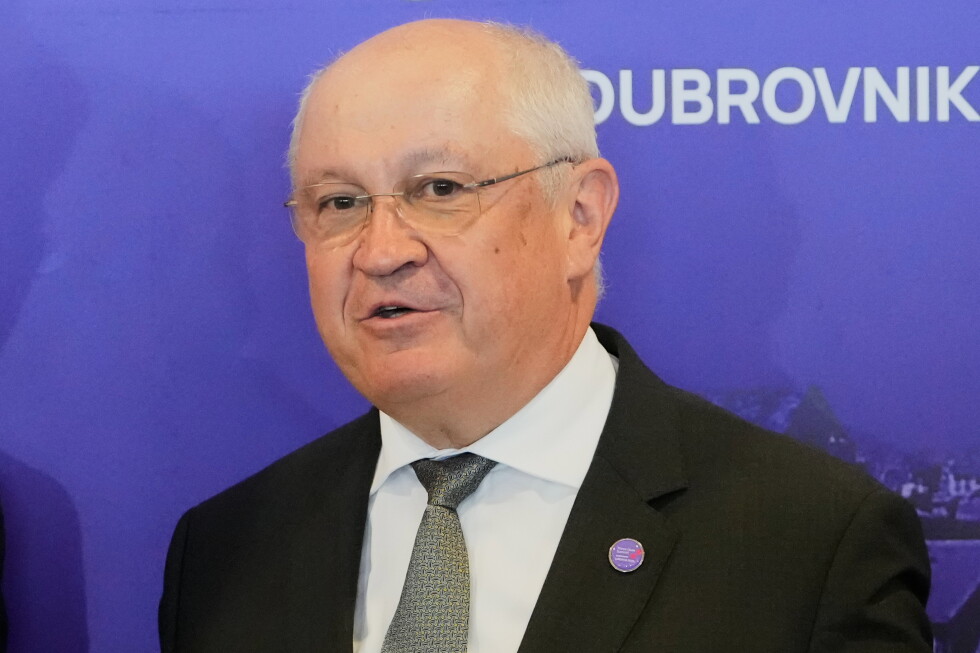
    CHISINAU, Moldova – In an unexpected announcement that has upended the pro-Western administration of this EU candidate nation, Moldovan Prime Minister Alexandru Munteanu revealed Friday he will resign from office — a step that automatically dissolves the entire sitting government. Munteanu took office less than 12 months ago, leading his pro-European bloc to power after a hard-fought national election framed widely as a defining geopolitical choice between alignment with the West or continued ties to Russia. In a departure that has sparked political uncertainty across the country, he offered no explicit explanation for his sudden exit.

    In a public statement shared via social media, Munteanu framed his decision as a matter of personal principle. “Today I end my term as prime minister,” he wrote. “The moment I understand that I can no longer exercise my mandate in accordance with my principles and beliefs, I choose to walk away.” He went on to note that he took on the role of prime minister with a deep sense of responsibility and unwavering confidence that he could help move Moldova toward meaningful, positive change.

    Under Moldovan constitutional rules, a prime minister’s resignation takes effect immediately upon announcement. While the cabinet remains in place to manage routine government business as a caretaker administration, all executive authority is limited until a new prime minister is nominated and a full new cabinet is approved by parliament.

    Shortly after Munteanu’s announcement, Moldovan President Maia Sandu, the leading architect of the country’s push for EU membership, released a statement acknowledging the resignation. She thanked Munteanu for guiding the country through what she described as a uniquely complex period for Moldova, but made clear that his leadership did not meet her expectations. Sandu stated she had sought greater engagement on tough policy decisions and more openness to public input from the prime minister.

    The president outlined her next steps, noting that she will meet with representatives of all parliamentary factions starting next week to begin consultations on nominating a new prime minister. “We must have a united, strong team in the Government that will fulfill our country’s objective,” Sandu said. “We are obliged to succeed in taking Moldova into the EU and helping the country.” She acknowledged the challenges ahead, noting that finding viable candidates for the prime ministership has grown increasingly difficult in recent Moldovan politics, and she could not predict how long the process of forming a new government would take. Even so, she stressed the urgent need to install a new administration in a timely manner.

    Nestled between war-torn Ukraine to the east and Romania — a member of both the European Union and NATO — to the west, Moldova has a unique and volatile geopolitical position. A former constituent republic of the Soviet Union, Moldova gained formal independence in 1991. Over the past three years, it has pursued an unambiguous path of Western integration, earning official EU candidate status in 2022. This shift has turned the small nation into a key front in the ongoing geopolitical standoff between Russia and the European bloc.

  • Mahrez retires from Algeria duty after World Cup exit

    Mahrez retires from Algeria duty after World Cup exit

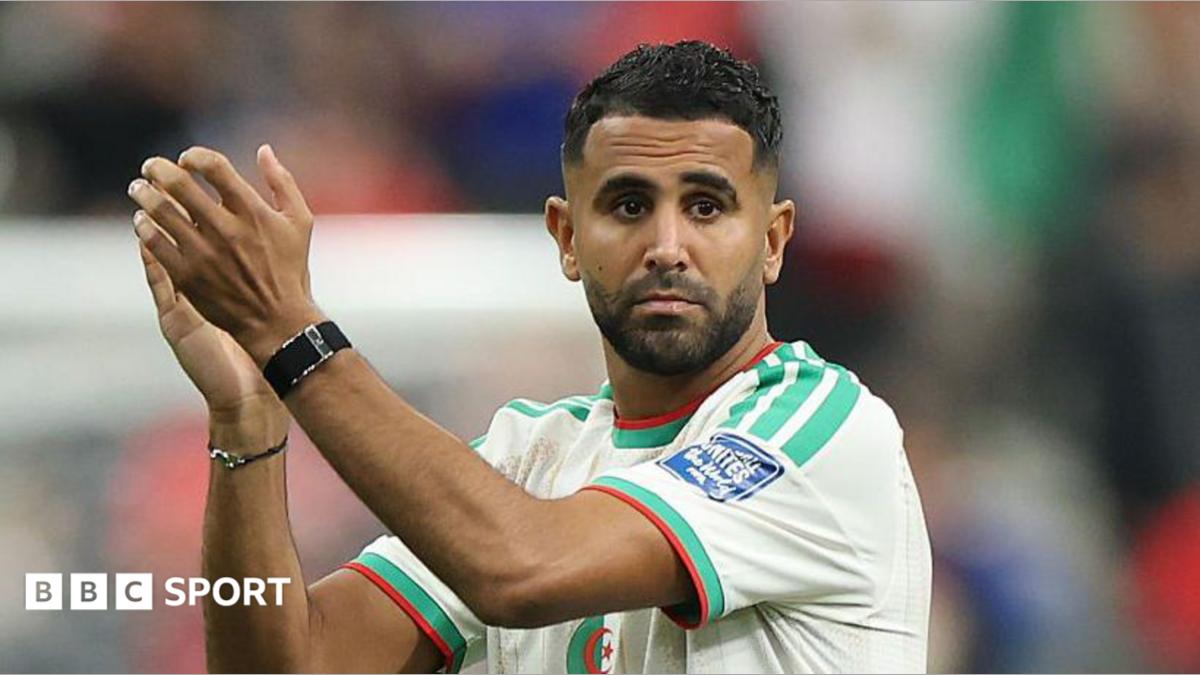
    One of the most decorated figures in Algerian football history has closed the book on his 12-year national team career. Riyad Mahrez, the long-serving captain of Algeria’s men’s national side, has formally announced his retirement from international football, just hours after his team crashed out of the 2026 FIFA World Cup with a 2-0 round of 32 defeat to Switzerland in Vancouver.

    At 35 years old, the winger made the confirmation directly to reporters following the final whistle, bringing an end to a storied international career that included 120 senior appearances and 40 goals for the North African side, nicknamed the Desert Foxes. Reflecting on the match that marked his final outing, Mahrez acknowledged that uncharacteristic errors cost his side a result they believed was well within their grasp. “The goal was to progress, and I think it was a game that was within our reach,” Mahrez said. “We conceded two goals on mistakes, and at this level, we pay dearly for that.” When pressed on whether the Vancouver clash would be his last World Cup appearance, he made his retirement clear: “It’s my last appearance even with the national team. It was my last game.”

    Mahrez leaves international football as one of the most statistically accomplished players in Algeria’s men’s football history. His 120 caps rank him second on the nation’s all-time appearance list, only three behind his current national team teammate Aissa Mandi, who has 123. On the scoring charts, his 40 international goals also place him second, just nine goals behind Islam Slimani’s all-time record of 49.

    The high point of Mahrez’s captaincy came at the 2019 Africa Cup of Nations, where he led Algeria to their first continental title in nearly three decades. His performance in that tournament remains one of the most iconic moments in Algerian sport: he scored a dramatic stoppage-time free-kick to defeat Nigeria in the semi-final, before the side overcame Senegal in the final to lift the trophy. It stands as the crowning achievement of his international career.

    Even in his final World Cup campaign, Mahrez turned in a record-breaking performance for Algeria. This tournament marked his most productive World Cup outing ever, with three direct goal contributions across four matches: two goals against Austria and one assist against Jordan. No other Algerian player has ever notched more goal involvements in a single World Cup edition. He also earned a place in the history books as the second-oldest African player to ever start a World Cup knockout stage match, with only Senegal’s Idrissa Gueye recording an older starting appearance earlier in this same tournament.

    Born and raised in France, Mahrez made the decision to represent his ancestral Algeria at the international level back in 2013. He earned his first senior cap for the side in early 2014, just ahead of that year’s World Cup in Brazil, where he helped Algeria reach the round of 16. Over the following 12 years, he cemented his status as one of the greatest footballers to ever wear the Algerian national jersey, becoming one of just a small group of Algerian players to hit the 100-cap milestone for his country. Off the international pitch, Mahrez also built a legendary club career in the English Premier League, winning a league title with Leicester City in 2016 before claiming multiple domestic and European honours during a spell at Manchester City. He currently plays for Saudi Pro League side Al-Ahli.

  • Alex Eala makes Grand Slam history for Philippines at Wimbledon

    Alex Eala makes Grand Slam history for Philippines at Wimbledon

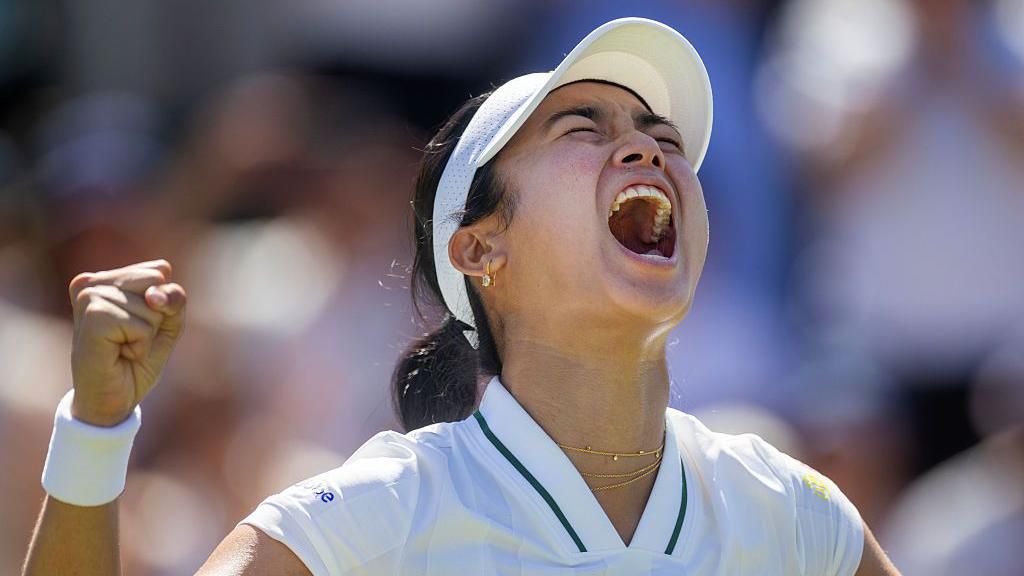
    Twenty-one-year-old Filipino tennis player Alexandra Eala has etched her name into the history books of Philippine sports after securing a spot in the third round of Wimbledon’s women’s singles, marking the deepest run any competitor from the Southeast Asian nation has ever made at a Grand Slam tournament. The trailblazing 29th seed, who is coming off a hard-fought victory over Australia’s rising star Maya Joint, is set to face off against defending champion Iga Swiatek of Poland this coming Saturday.

    Eala’s unprecedented breakthrough at one of tennis’ most prestigious majors has sent shockwaves of excitement across her home country, where basketball and boxing have long dominated the national sporting landscape. In a nation where tennis has traditionally remained a niche, marginal pastime, the young athlete’s success has reignited widespread public curiosity and enthusiasm for the sport.

    In remarks to reporters following her second-round win, Eala emphasized the profound meaning of her achievement, noting that representing the Philippines on the world’s biggest tennis stage is a privilege beyond measure. “I have been working extremely hard. My team has been working extremely hard. I really feel that it’s paying off. This win means a lot,” she shared. Throughout her 2026 Wimbledon campaign, Eala has deliberately honored her Filipino roots through subtle, meaningful details in her on-court attire: she wears a white Nike sun visor printed with a Tagalog phrase that translates to “once it grows, it cannot be stopped”, and sports a hair tie adorned with a white ornament shaped like sampaguita, the national flower of the Philippines also known as Philippine jasmine.

    According to a Reuters report, Eala spoke to the central role her heritage plays in her career and identity. “It’s a huge reason as to who I am. I think where I come from is a big part of who I am and a big part of who I want to become in the future,” she said. “It’s an amazing thing for me to be able to do that for my country, but I guess it’s also very emotional every time I’m able to pass a new step or break new ground, just because it’s also personal goals and personal achievements.”

    Eala’s rise to international prominence has been years in the making. After honing her craft at Spanish tennis great Rafael Nadal’s eponymous academy in Mallorca, she climbed steadily up the Women’s Tennis Association global rankings. It was not until last year, however, that she catapulted to global fame after pulling off a stunning upset victory over former world number one Swiatek in the quarterfinals of the Miami Open.

    Today, every one of Eala’s matches draws massive viewership across the Philippines, with organized viewing parties popping up across the archipelago and mainstream national media devoting extensive coverage to her run— a level of attention rarely afforded to tennis in the country. This shift in public interest has already yielded tangible progress for the sport: in January of this year, the Philippines hosted its first ever WTA-sanctioned event, the Philippine Open.

    Fans across the nation have flooded social media with messages of support for Eala. “Thank you for putting my first love tennis on the map and inspiring us all,” wrote Mafae Yunon-Belasco, an author and former Miss World finalist, in a comment on Eala’s Instagram post. Another commenter added, “I am crying with jubilation. Thank you, Lord God, this is for the Philippines’ pride.”

    As anticipation builds for Saturday’s high-stakes match against the defending champion, Eala struck a balanced, confident tone ahead of the showdown. “I think it’s going to be tough for me. I’m going to try to make it tough for her, as well,” she said. “I’m expecting a great challenge. But I think I’m ready for it.” Millions of Filipino fans will tune in from across the globe this weekend to see if Eala can pull off another historic upset and keep her Wimbledon championship dream alive.

  • Overcrowded bus plunges into ravine in southwest Pakistan, killing 40 passengers and injuring 8

    Overcrowded bus plunges into ravine in southwest Pakistan, killing 40 passengers and injuring 8

    A devastating early-morning road accident in southwestern Pakistan has left at least 40 people dead and 8 others injured after an overcrowded, speeding passenger bus careened off a major highway and fell into a deep rocky ravine, marking one of the deadliest traffic incidents the country has seen in recent years, regional government officials confirmed Friday.

    The crash unfolded in Dana Sar, a sparsely populated remote region that sits near the shared border of Pakistan’s Balochistan and Khyber Pakhtunkhwa provinces. According to Shahid Rind, spokesperson for the Balochistan provincial government, the bus lost control before plummeting into the ravine. Rind added that the overcrowding stemmed from the driver picking up additional passengers from a separate bus that had suffered a mechanical breakdown earlier in the trip, meaning the vehicle carried far more people than its authorized capacity. As of Friday, rescuers were still working to complete formal identification of all deceased victims.

    One injured survivor, speaking to local Pakistani media from his hospital bed, shared a harrowing account of the moments leading up to the crash. He explained that multiple existing passengers had protested the driver’s decision to pick up extra passengers from the disabled bus, which was also traveling to the city of Peshawar. The protest escalated into a heated argument, during which one angry passenger allegedly grabbed the driver by the neck. Just moments after the altercation, the driver lost control of the vehicle, leading directly to the fatal plunge. Local law enforcement noted that this survivor’s account has not yet been independently verified, and a full official investigation into the cause of the crash is still ongoing.

    Regional disaster and emergency management official Hazrat Wali Kakar confirmed that rescue teams from both provinces have completed the initial retrieval of victims and casualties, moving all injured survivors and deceased victims to nearby medical facilities. Rescue officials clarified the final passenger count: the bus was carrying 48 people total at the time of the crash. The eight injured people received stabilizing first aid at the accident site before being transferred to the district headquarters hospital in Zhob, while the 40 victims’ remains were moved to a local district mortuary for identification.

    Shah Fahad, director general of emergency rescue services for Khyber Pakhtunkhwa, said his agency has partnered closely with Balochistan’s emergency response teams to coordinate the entire rescue and recovery operation. To ease the burden on grieving families, Fahad added that any victim confirmed to be a resident of Khyber Pakhtunkhwa will have their remains transported via official ambulance back to their home district for burial.

    Top Pakistani political leaders have publicly expressed their grief over the tragedy. President Asif Ali Zardari issued an official statement offering his deepest condolences to the families of those killed, extended wishes for a full and speedy recovery for the injured, and ordered relevant government agencies to guarantee that surviving patients receive the highest quality of available medical care. Balochistan Chief Minister Sarfraz Bugti also released a message mourning the loss of life and echoed Zardari’s order to prioritize care for the injured.

    Fatal road accidents are an all-too-common occurrence across Pakistan, a trend transportation safety analysts attribute to a combination of poorly maintained infrastructure, weak enforcement of existing traffic regulations, and widespread high-risk driving practices — particularly in rugged, mountainous regions like the area where Friday’s crash occurred. Just two months prior, in May 2024, a separate crash in northwest Pakistan killed 17 people and injured 5 more when a minibus collided with a parked bus on a major motorway.

    This report includes additional reporting from Associated Press correspondents Riaz Khan and Rasool Dawar, who contributed on the ground from Peshawar.

  • Australian prime minister condemns delay of changes to child social media ban

    Australian prime minister condemns delay of changes to child social media ban

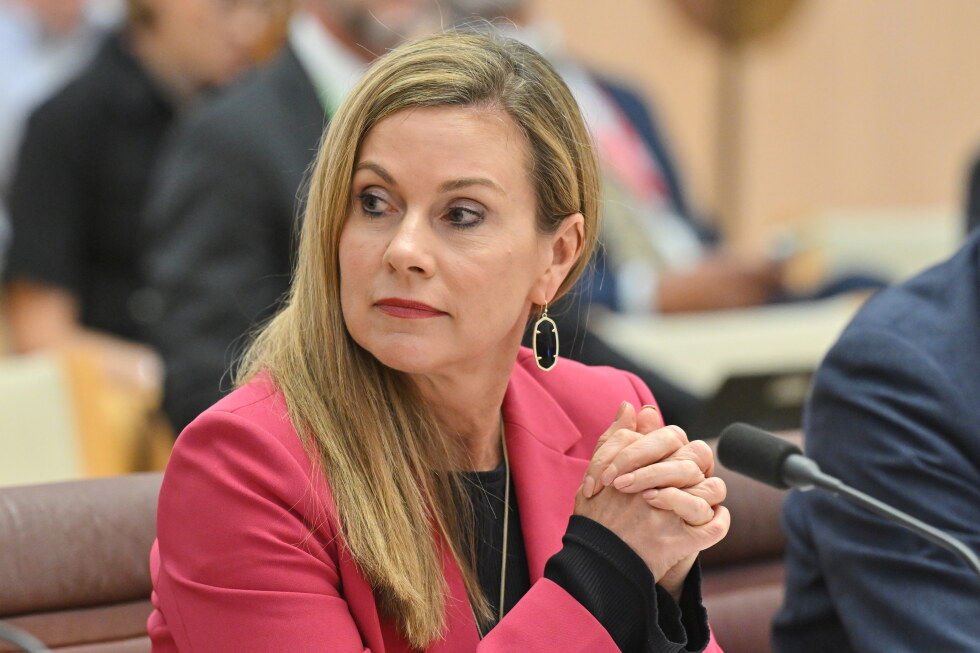
    MELBOURNE, Australia – Australia’s trailblazing ban on social media accounts for children under 16, a policy that has become a global benchmark for child online safety regulation, has been thrown into political gridlock after opposition and minor party senators joined forces to delay proposed enforcement reforms. Prime Minister Anthony Albanese has issued a fierce condemnation of the decision, warning the eight-week Senate inquiry will give big tech platforms time to erase critical evidence that could be used to hold non-compliant services accountable. The world-first under-16 ban came into full force this past December, after Australia’s Parliament passed the foundational legislation with broad bipartisan backing in 2024, giving 10 major platforms including Meta-owned Facebook and Instagram, Google’s YouTube, Snapchat and TikTok more than 12 months to adjust their systems to exclude underage users. The center-left Labor government this week tabled amendments to strengthen the powers of the country’s top online safety regulator, eSafety Commissioner Julie Inman Grant, who oversees implementation of the ban. Currently, Inman Grant can only request operational information from platforms about their compliance efforts. The proposed changes would expand her authority to compel the handover of internal documents and data, as well as grant her the power to seek information from third parties such as age verification technology providers to independently verify platforms’ claims about how they block underage users. The amendments also would double the maximum fine for repeated non-compliance from AU$49.5 million to AU$99 million (US$68 million), a major increase intended to incentivize meaningful action. But on Thursday, the conservative Liberal opposition and the minor Greens party joined to refer the draft legislation to an eight-month parliamentary inquiry – a move that stalled immediate consideration. The Labor government holds a majority in the lower house of Parliament but lacks control of the Senate, allowing the cross-party alliance to derail the reforms. Speaking to public broadcaster the Australian Broadcasting Corporation, Albanese called the delay “outrageous”, noting the eSafety Commissioner has explicitly warned the pause will enable platforms to delete documentation of their compliance shortcomings. If the bill had passed immediately, Albanese explained, the regulator could have launched formal information requests right away, opening the door to fines and legal action against platforms that fail to meet their obligations. Critics of the amendments have raised differing objections to the government’s plan. Greens Senator David Shoebridge, a longstanding opponent of the full under-16 ban, questioned the logic of doubling a maximum fine that has never once been issued since the original law passed. “Doubling penalties that they’ve never used doesn’t seem to me to be a meaningful measure,” Shoebridge told Sky News Australia. “Is that really going to be the thing that keeps kids safe online?” For their part, the Liberal opposition argues the amendments do not go far enough to fix the flawed original legislation. Opposition communications spokesperson Senator Sarah Henderson called the existing ban a “failing, half-baked law” that was rushed through Parliament, poorly designed and badly implemented. “We will interrogate this bill properly and, frankly, I think the amendments before the Parliament need to be tougher,” Henderson said. The policy’s flaws have already become apparent in official data. When the ban first took effect in December, the government initially reported that more than 5 million underage accounts had been removed, deactivated or restricted. But a progress update from eSafety in March revealed that seven out of 10 children who held accounts on major platforms on the day the ban came into force still remain active on Facebook, Instagram, Snapchat and TikTok. By April, Inman Grant confirmed she was actively considering legal action against those four platforms plus YouTube for failing to take reasonable steps to exclude underage users, noting she had only been satisfied with compliance progress from the other five platforms covered by the ban: X, Kick, Reddit, Threads and Twitch. Communications Minister Anika Wells confirmed this week that monthly updates from eSafety since March have shown no meaningful improvement in compliance from the major platforms caught non-compliant. The standoff in Canberra carries global implications: governments around the world that have either implemented or are planning similar age restrictions on social media for minors have been closely watching Australia’s experiment to judge its effectiveness and work out potential regulatory adjustments.