博客

  • Key bridge linking North Korea and Russia almost finished, satellite images show

    Key bridge linking North Korea and Russia almost finished, satellite images show

    New analysis of commercial satellite imagery conducted by BBC Verify has revealed that the first dedicated road bridge linking North Korea and Russia is in the final stages of construction, marking a tangible milestone in the rapidly deepening strategic partnership between the two nations against the backdrop of Russia’s full-scale invasion of Ukraine.

    Located just hundreds of meters from the existing Friendship Bridge – the only current cross-border connection between the two countries, which operates solely as a rail link – the new 1-kilometer Khasan–Tumangang Bridge spans the Tumen River. The latest satellite photos confirm that alongside the main bridge span, all required supporting infrastructure has been nearly finished: new access roads, a dedicated border checkpoint, paved vehicle parking areas, and service facilities are all in place, signaling the project is on track to meet its scheduled completion date of June 19, 2026. A ceremony to connect the two halves of the bridge was held on April 21 this year, as publicly confirmed by Russia’s embassy in Pyongyang.

    The agreement to construct the new crossing was first signed during Russian President Vladimir Putin’s 2024 official visit to Pyongyang, where he met with North Korean leader Kim Jong Un. Construction broke ground roughly one year after the agreement, and BBC Verify has tracked the project’s progress through routine satellite imagery updates throughout the build phase. According to Russia’s transport ministry, the bridge is engineered to accommodate up to 300 vehicles and 2,850 cross-border travelers per day. Russian state media reports put the total construction budget at more than 9 billion roubles, equivalent to roughly $120 million or £88 million.

    Regional security experts widely view the rapid construction of the bridge as clear evidence of expanding cross-border activity, driven primarily by deepening military cooperation tied to the war in Ukraine. “The speed of construction is a reflection of the volume of trade activity between the two sides,” explained Victor Cha, a senior analyst at the Washington-based Center for Strategic and International Studies (CSIS). Cha added that the surge in cross-border exchange is “spurred largely by North Korea’s provision of troops, weapons, munitions, and labourers for Putin’s war in Ukraine.”

    Prior to the start of the Ukraine war, this stretch of the North Korea-Russia border was one of the least active cross-border links in East Asia. But CSIS research finds that rail traffic through the existing Friendship Bridge has remained consistently high throughout the road bridge’s construction, as bilateral trade and military exchanges have expanded dramatically. Under current operational plans, analysts expect that Russian and North Korean truck drivers will transfer cargo loads at the new checkpoint, rather than being allowed to operate vehicles deep into each other’s territory.

    The new bridge is far more than an infrastructure project, according to both officials and analysts. Russia’s foreign ministry emphasized that the bridge’s opening will “become a truly landmark stage in Russian–Korean relations. Its significance goes far beyond a purely engineering task.” During the same 2024 summit that approved the bridge, Putin and Kim signed a sweeping mutual defense pact that pledges mutual assistance in the event of “aggression” against either country.

    According to estimates from South Korean intelligence, North Korea has deployed approximately 15,000 troops to support Russian operations in Ukraine, alongside large shipments of missiles and long-range artillery systems. Seoul estimates that roughly 2,000 of those North Korean troops have been killed in combat to date. Neither Pyongyang nor Moscow has officially confirmed these troop numbers, but just last week Kim Jong Un joined Russian Defense Minister Andrey Belousov to unveil a memorial in Pyongyang honoring North Korean service members killed in Ukraine. Russian state media reports that Belousov and North Korean officials held extensive talks on long-term military cooperation during the visit.

    Analysts say the bridge will solidify long-term bilateral ties beyond the current conflict in Ukraine. In exchange for North Korea’s military support for Moscow’s war effort, Western intelligence agencies assess that North Korea has received critical supplies including grain, fuel, and advanced military technology from Russia. “The construction of the bridge epitomizes how North Korea’s ties with Russia look to continue beyond any end to the Ukraine war,” noted Dr. Edward Howell, a Korea Foundation Fellow at the London-based Chatham House think tank. Howell added that the crossing will provide a critical new logistics route for moving military goods and munitions between the two countries, in both directions.

  • From ego-ridden team to complete package – why PSG pose ultimate test

    From ego-ridden team to complete package – why PSG pose ultimate test

    The UEFA Champions League semi-final second leg at the Allianz Arena delivered all the drama and high stakes football fans have come to expect from Europe’s premier club competition, but it was Paris Saint-Germain that walked away with a spot in the 2026 final, holding off a late Bayern Munich push to secure their place in back-to-back title deciders. The result sets up a monumental clash with Arsenal at the Budapest final on May 30, and cements Luis Enrique’s transformed PSG as overwhelming favorites to lift the trophy for a second consecutive season.

    Bayern Munich’s supporters set the tone for the night before a single ball was kicked, unfurling a giant banner emblazoned with the rallying cry “Shoot us into the final” as they sought to inspire their side to overturn a 5-4 first leg deficit from the classic opening encounter in Paris. But it was PSG who turned that slogan into action, striking a devastating early blow just three minutes into the tie. Georgian winger Khvicha Kvaratskhelia, whose dynamic form has been one of the stories of this Champions League campaign, burst down the flank before delivering a pinpoint pass to Ousmane Dembele, who lashed a clinical finish high past Bayern’s legendary goalkeeper Manuel Neuer.

    Bayern threw everything at PSG in search of the goals they needed to turn the tide, and ultimately grabbed a last-gasp equalizer on the night through England captain Harry Kane just seconds before the final whistle. But the late strike proved too little, too late, as the full-time whistle blew moments later to send PSG through to their second straight Champions League final, with the French side chasing back-to-back titles following their dominant 5-0 victory over Inter Milan in the 2025 decider. An ecstatic Luis Enrique celebrated on the Allianz Arena turf, just as he did 12 months earlier, after his side delivered yet another resounding performance that proves they deserve to be ranked among the greatest club sides of the modern era.

    For Arsenal, the moment is historic: the Gunners are contesting their first Champions League final in 20 years, and Mikel Arteta’s side will head to Budapest full of confidence. But there is no avoiding the scale of the challenge that awaits them, one that begins with outsmarting one of the game’s greatest tactical minds in Luis Enrique. When the Spanish manager took charge of PSG in the summer of 2023, he inherited a club fractured by the “superstar era” that saw superstars Lionel Messi, Kylian Mbappe and Neymar anchor a dysfunctional, ego-driven squad that never functioned as a cohesive unit. A proven winner who lifted the Champions League with Barcelona in 2015, Luis Enrique made an immediate promise: all egos would be left at the door, and any player who refused to comply would be moved on.

    What he has built in Paris is a near-perfect blend of world-class individual talent, relentless work rate and rock-solid defensive organization that makes them a nightmare for any opposition. The backbone of this new PSG is captain Marquinhos, the veteran Brazilian centre-half who arrived at the club from Roma back in 2013 and survived Luis Enrique’s clear-out of big names thanks to his consistent class and professional leadership. Now 31, Marquinhos remains peerless in the heart of defence, forming a formidable partnership with Willian Pacho, who successfully marked Kane out of the game until the England captain’s stoppage-time strike.

    Across the pitch, every department of PSG is firing. Kvaratskhelia and Dembele, who has now notched seven Champions League goals this season, combined for the tie’s defining goal, while 20-year-old winger Desire Doue, one of the exciting young talents spearheading PSG’s new era, tormented Bayern’s backline and went close to scoring on multiple occasions in the second half. The team’s midfield trio of Vitinha, Fabian Ruiz and Joao Neves acts as a well-oiled engine room that links defence to attack seamlessly: Ruiz produced a gorgeous pass to build up Dembele’s opening goal, then immediately dropped back to carry out the gritty defensive work that Luis Enrique demands from every player, a standard every member of the squad has fully embraced.

    Former Liverpool defender Stephen Warnock, speaking to BBC Match of the Day, argued that PSG are clear favourites to lift the trophy in Budapest, saying it is almost impossible to pick out a real weakness across their starting XI. “One of the issues Arsenal will have is trying to contain the PSG full-backs,” Warnock explained. “That means asking Bukayo Saka and Leandro Trossard, who will probably be on the wings, to then contain the full-backs and stick with them, and also go the other way and attack them as well. It is going to be very difficult for Arsenal to keep this PSG side out because you can’t sit back against them for long periods of time. If you sit off them, then Bradley Barcola, Doue and Kvaratskhelia are good enough in one-v-one situations, with Dembele as well, to be able to beat you individually. Whichever way you look at them, they are a brilliant team and you struggle to find any weakness.”

    PSG have proven their pedigree against top European opposition across this season’s Champions League run. Their 6-5 aggregate win over Bayern showcased all of their strengths: devastating attacking football in the first leg, followed by disciplined, well-drilled defending to soak up intense Bayern pressure at the Allianz Arena. They displayed exactly the same balance against Liverpool in the quarter-finals, winning at Anfield for the second consecutive season and digging in defensively to secure a comprehensive 4-0 aggregate win over the reigning English Premier League champions.

    The shift in culture that Luis Enrique has instilled is perfectly summed up by Dembele himself: once labeled an expensive misfit at Barcelona, he has been transformed into a Ballon d’Or-calibre player under the Spaniard’s management, and he celebrated winning a defensive tackle with just as much enthusiasm as he celebrated his opening goal. That team-first attitude runs through every level of the squad.

    Bayern, for their part, deserve credit for a valiant effort. roared on by a raucous home crowd that delivered an atmosphere worthy of a major rock concert, Vincent Kompany’s side never let up and pushed PSG all the way to the final whistle, but they ultimately came up against a side operating at a higher level. Former Liverpool captain Steven Gerrard, working as a pundit for TNT Sports, praised Luis Enrique’s transformative work: “A couple of years ago they had prima donnas, egos in the team but [Luis Enrique] wasn’t having it. He pushed them aside and built a team on work-rate and principles. This team could dominate for years to come. They are that good.”

    Right until the final whistle, every PSG player maintained the same relentless work rate they started with, blocking every dangerous cross into the box and throwing their bodies on the line to protect their advantage. Now, it is Arsenal that must find a way to crack this cohesive, well-drilled unit. For the Gunners, the task is simple in theory, but enormous in practice: they must beat the team that is widely regarded as the best in European football right now.

  • Trump says Iran deal ‘very possible’ but threatens strikes if talks fail

    Trump says Iran deal ‘very possible’ but threatens strikes if talks fail

    On Wednesday, U.S. President Donald Trump laid out a dual track of cautious optimism and stark warning for ongoing negotiations with Iran, saying a breakthrough agreement is “very possible” even as he threatened to resume devastating military strikes at far greater intensity if talks collapse.

    The latest diplomatic push comes after weeks of stalled dialogue between the two long-time adversaries, following an inconclusive first round of talks mediated by Pakistan last month. Negotiations gained a faint pulse last week when Trump paused a short-lived U.S. military operation designed to reopen the Strait of Hormuz — the world’s most critical oil chokepoint — citing emerging prospects for a negotiated settlement. Progress remains gridlocked, however: Iran has not yet formally responded to a new U.S. proposal put forward in recent days.

    “ We’ve had very good talks over the last 24 hours, and it’s very possible that we’ll make a deal,” Trump told reporters Wednesday. “If Iran agrees to give what has been agreed to, the war will be over. If not, the bombing will resume at a much higher level and intensity.” Trump also reiterated his demand that Iran hand over all its stockpiles of enriched uranium to the U.S., a major sticking point in negotiations that he offered no clear path to resolving.

    Iranian officials have pushed back against the U.S. framework, with top negotiator and Parliament Speaker Mohammad Bagher Ghalibaf accusing Washington of seeking to force Iran into unconditional surrender through a combination of economic pressure, naval blockades and targeted media manipulation. “Washington is seeking, through a naval blockade, economic pressure and media manipulation, to destroy the country’s cohesion in order to force us to surrender,” Ghalibaf warned. Foreign Ministry spokesman Esmaeil Baqaei confirmed Wednesday that the U.S. proposal remains under internal review, with Tehran set to share its formal position with mediator Pakistan once internal deliberations are complete.

    The military standoff around the Strait of Hormuz has remained tense despite the diplomatic pause. The U.S. military confirmed Wednesday that one of its warplanes targeted and disabled the rudder of an oil tanker that attempted to break the U.S. blockade of Iranian ports. Trump has maintained the full U.S. blockade will remain in place as long as Iran continues its own restrictions on shipping through the strait.

    Pakistani Prime Minister Shehbaz Sharif, a key broker in the initial talks hosted in Islamabad last month, has voiced public optimism for a lasting outcome. “We are very hopeful that the current momentum will lead to a lasting agreement that secures durable peace and stability for the region and beyond,” Sharif said in a post on X.

    U.S. news outlet Axios, citing two anonymous senior U.S. officials, reported Wednesday that both sides are nearing agreement on a one-page memorandum of understanding that would end active hostilities and establish a framework for future detailed negotiations over Iran’s nuclear program.

    On the diplomatic front, Iran’s top foreign diplomat Abbas Araghchi met with his Chinese counterpart Wang Yi in Beijing Wednesday to discuss the ongoing negotiations. Araghchi said after the meeting that Iran looks forward to Chinese support for building a new post-war regional framework that balances security and sustainable development for all nations in the Middle East.

    Trump’s conciliatory rhetoric came hours after U.S. Secretary of State Marco Rubio announced that the U.S. had concluded all active offensive operations against Iran. Global financial markets reacted positively to the signs of de-escalation, with the S&P 500 and Nasdaq both closing at all-time record highs on Wednesday as investors grew more optimistic about a breakthrough that would ease regional energy market risks.

    Not all reaction to the talks has been positive, however. Speaking to AFP from Tehran, 43-year-old translator Azadeh expressed deep fear about the prospect of a deal between the Trump administration and Iran’s current government, saying years of economic hardship and conflict have brought no tangible benefits to ordinary Iranian citizens. “We’ve gone through so much hardship and suffering, and no achievements for people? I honestly just hope they finish this regime,” she said.

    Tensions across the broader region escalated Wednesday on the Lebanese front of the ongoing conflict. Israel carried out an airstrike on Beirut’s southern suburbs, the first attack on the densely populated area in nearly a month. A source close to the Iran-backed Hezbollah group told AFP the strike killed a senior commander from the group’s elite fighting unit. Lebanon’s health ministry confirmed that at least 11 additional people were killed in a series of separate Israeli strikes across southern and eastern Lebanon Wednesday. Israel’s Army Chief Lieutenant General Eyal Zamir visited Israeli troops deployed along the southern Lebanon border Wednesday, vowing to “seize every opportunity to deepen the dismantling of Hezbollah.”

    U.S. Secretary Rubio also announced that Washington and its Gulf Arab allies have drafted a new United Nations Security Council resolution demanding that Tehran halt all attacks on commercial shipping, disclose the location of naval mines in regional waterways and end efforts to collect tolls from ships passing through the strait. A vote on the resolution is expected in the coming days, though its adoption remains uncertain amid expected divisions among Security Council member states.

  • Holders PSG edge Bayern Munich to reach Champions League final

    Holders PSG edge Bayern Munich to reach Champions League final

    Defending UEFA Champions League champions Paris Saint-Germain (PSG) have secured their place in a second straight continental decider, advancing past Bayern Munich on a 6-5 aggregate score after a 1-1 second-leg draw at the Allianz Arena on Wednesday. The French giants will now lock horns with England’s Arsenal in the May 30 final in Budapest, bidding to become just the second club since 1990 to win back-to-back Champions League titles, following in the footsteps of Real Madrid.

    The match got off to a blistering start, with PSG striking on a lightning-fast counterattack inside the opening three minutes. Forced into one starting lineup change by an injury to Achraf Hakimi, PSG slotted Fabian Ruiz into the side, and the Spaniard turned creator just moments in. Ruiz slipped a precision through ball down the left flank to Khvicha Kvaratskhelia, who beat his marker and cut the ball back for an unmarked Ousmane Dembele. The Ballon d’Or winner smashed the finish past Manuel Neuer, putting PSG ahead on the night and stretching their aggregate lead to two goals.

    Bayern, who already wrapped up the Bundesliga title ahead of the tie, entered the match brimming with confidence after a high-scoring 5-4 first-leg defeat in Paris that many hailed as one of the greatest Champions League matches in recent memory. But the six-time European champions struggled for rhythm early on, with key playmakers misplacing passes that ended promising attacking moves. Tensions boiled over in the first half over contentious refereeing calls from official Joao Pinheiro: Bayern players were furious when no penalty was awarded after a Vitinha clearance struck Joao Neves’s arm in the 18-yard box, and they were further incensed that PSG full-back Nuno Mendes escaped a second yellow card for an earlier handball offense.

    PSG came close to doubling their lead before the break, but Neuer produced a sharp reflex save to tip Neves’s close-range header just wide of the post. Bayern finally found their footing just before halftime, with Jamal Musiala forcing a brilliant low stop from PSG goalkeeper Matvey Safonov before firing a follow-up effort over the bar.

    The second half saw PSG adopt a more pragmatic approach, dropping deep to absorb wave after wave of Bayern pressure while retaining their cutting edge on the break. Neuer pulled off two more critical saves to deny Kvaratskhelia and substitute Desire Doue, keeping Bayern in touching distance of a comeback. Though the Bavarians dominated possession and territory for most of the second period, they could not find a breakthrough until stoppage time, when Harry Kane extended his incredible scoring run to seven consecutive Champions League matches with a late finish.

    The goal came too late to turn the tie around, however. The final whistle blew moments after the restart, confirming PSG’s place in the final and bringing an end to Bayern’s 2024-25 continental campaign. This defeat marks Bayern’s fourth loss across all competitions this season, and leaves the club still waiting for its first Champions League final appearance since it defeated PSG in the 2020 Lisbon showpiece.

    Post-match, Bayern manager Vincent Kompany struck a measured tone about the narrow defeat. “I don’t have the ability to be disappointed for long,” he said. “Of course, in the end we lost two very, very tight games against a very good opponent.” For PSG, the result adds another chapter to their growing Champions League legacy, returning to the scene of their 2024 final triumph over Inter Milan to secure another shot at the trophy they pursued for decades without success. Speaking to reporters after the match, Doue expressed the team’s joy at the result. “It was an exceptional match, another magical night in Munich against a great team,” the forward told Canal Plus. “These are the kinds of matches we’ve dreamt of playing since we were little. Now, we’re going to enjoy this as a team.”

    Heading into the final against Premier League leaders Arsenal, PSG enter the match as clear favorites to lift the trophy for a second straight year, capping a historic run in Europe’s most prestigious club competition.

  • Hantavirus-hit cruise ship leaves Cape Verde after three evacuated

    Hantavirus-hit cruise ship leaves Cape Verde after three evacuated

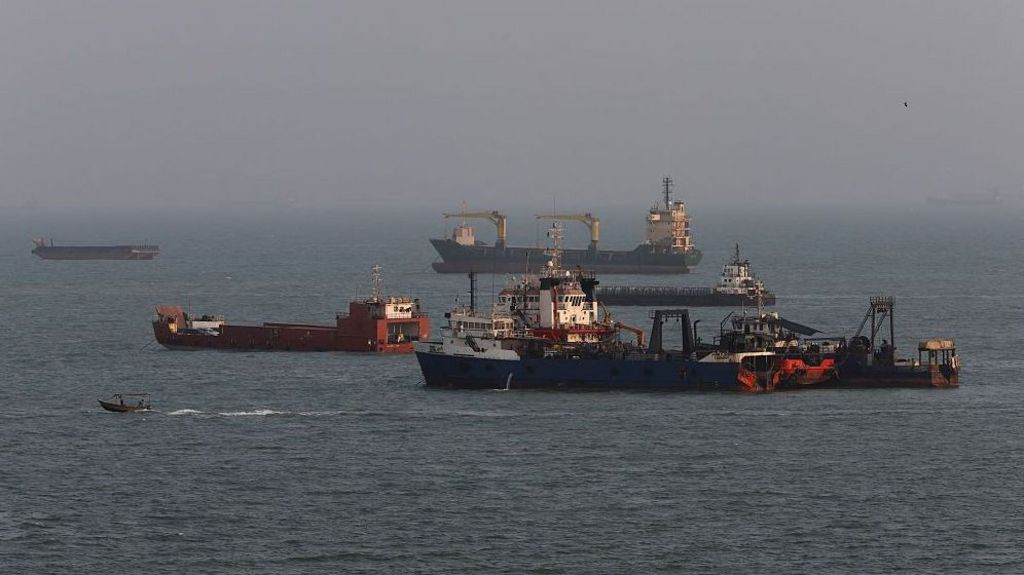
    A hantavirus outbreak aboard the Dutch cruise vessel MV Hondius has triggered an international public health response, after the ship left its anchorage off Cape Verde this week following the medical evacuation of three passengers and crew. The outbreak, which began after the ship set sail from Argentina one month ago, has already claimed three lives, with global health authorities racing to trace contacts and contain further spread.

    The three evacuated patients — a 56-year-old British national, a 41-year-old Dutch crew member, and a 65-year-old German passenger — are being transported to the Netherlands for specialized medical care, according to the ship’s operator, Netherlands-based Oceanwide Expeditions. As of the latest update, two of the three have already arrived at a Dutch hospital, while the third’s evacuation flight has been delayed. None of the evacuees have returned positive hantavirus tests to date, though two are exhibiting classic symptoms of the infection. Oceanwide Expeditions confirmed the German evacuee had close contact with a German woman who died aboard the vessel on May 2, one of the three fatalities linked to the outbreak.

    Three people who were on the MV Hondius have died since the voyage began. Only one death has been definitively linked to hantavirus so far, with the cause of the other two still under investigation. The timeline of fatalities traces back to April 11, when a Dutch man died aboard the ship; his cause of death has not been confirmed. His wife, also Dutch, disembarked at St Helena on April 24 and traveled to South Africa, where she died on April 26. Post-mortem testing confirmed she carried the Andes strain of hantavirus, a variant most commonly found in Latin America, the region where the cruise originated. The third fatality is the German woman who died on May 2; her cause of death is still unconfirmed, and her body remains aboard the ship.

    Contact tracing efforts are already underway across multiple countries. After the Dutch woman’s death, KLM Royal Dutch Airlines confirmed she had boarded a flight from Johannesburg to Amsterdam on April 25, but crew removed her from the flight after noticing her poor health condition. The World Health Organization (WHO) is currently tracing all passengers who shared the flight with her as a precaution. Separately, the UK Health Security Agency confirmed two British passengers who disembarked the MV Hondius earlier in the voyage are currently self-isolating at home in the UK after potential exposure, and neither has developed symptoms.

    As of the WHO’s latest public update, eight cases of hantavirus have been identified aboard the ship: three confirmed infections and five suspected cases. While hantavirus most commonly spreads to humans from rodent populations, public health experts believe human-to-human transmission through close physical contact is driving this outbreak. This matches patterns of previous outbreaks involving the Andes strain, which has been documented to spread between people in close contact. Testing for the virus among the 146 remaining people aboard the ship is still ongoing, though health officials have stressed that the risk of widespread transmission to the general public remains very low.

    Before the MV Hondius departed Cape Verde on Wednesday, three additional medical staff joined the vessel to monitor passengers and crew through the three-day voyage to the Canary Islands, a Spanish archipelago off the coast of northwestern Africa. The trip to the Canaries was approved by Spanish national health authorities, but the regional government of the Canary Islands has openly pushed back against the plan. Canary Islands President Fernando Clavijo told Spanish broadcaster Onda Cero that he could not allow the vessel to enter the region’s waters, arguing the central government’s decision lacked any supporting technical public health criteria and that regional officials had not been provided enough information about the outbreak. Clavijo has called for an urgent meeting with Spanish Prime Minister to address the dispute.

    Spanish Health Minister Mónica García has pushed back against regional concerns, saying all remaining people aboard the MV Hondius are currently asymptomatic, and the planned arrival protocol has been designed to eliminate any risk to Canary Island residents. A team of infectious disease specialists and WHO staff are now aboard the vessel, accompanying it to the Canary Islands and maintaining strict precautionary infection control measures for all people on board. When the ship docks in Tenerife, every passenger and crew member will undergo a full medical assessment. Passengers and crew from foreign countries will be repatriated directly to their home countries after clearing assessment, while Spanish nationals will be transferred to a military hospital in Madrid to complete quarantine. García emphasized that the entire process will be structured to avoid any contact between people on the ship and the general Canary Islands population.

    WHO technical lead Dr Maria Van Kerkhove has sought to ease public anxiety by clarifying how hantavirus spreads, noting it differs drastically from more transmissible respiratory viruses such as COVID-19 and influenza. “We’re not talking about casual contact from very far away from one another,” she explained, adding that transmission only occurs through close physical contact.

  • Legal complaint filed by Palestine activists against Met Police chief over synagogue remarks

    Legal complaint filed by Palestine activists against Met Police chief over synagogue remarks

    A coalition of major UK pro-Palestine advocacy groups has launched a formal complaint against Mark Rowley, Commissioner of London’s Metropolitan Police, over allegations he made false, stigmatizing claims that protest organizers intentionally route demonstrations near synagogues to stoke antisemitic tension. The legal action marks one of the most significant public challenges to UK policing’s handling of the ongoing pro-Palestine protest movement, which has drawn hundreds of thousands of participants to central London since the outbreak of the Israel-Gaza conflict in October 2023.

    Rowley made his controversial claims in two separate high-profile interviews with The Times and ITV News in recent weeks, stating that pro-Palestine protest organizers repeatedly planned to march near Jewish places of worship, framing this alleged intent as inherently antisemitic. “The fact that features as the organisers’ intent, I think that sends a message … that feels like antisemitism,” Rowley told The Times. Speaking to ITV, he added: “They set out with an intent to march near synagogues etc and every single time that we put conditions on to prevent that.”

    Lawyers from Hodge Jones & Allen submitted the official complaint on Wednesday to the Mayor’s Office for Policing and Crime (MOPAC), the body that oversees London’s police force, on behalf of the Palestine Coalition — an umbrella grouping that includes the Palestine Solidarity Campaign, the Palestinian Forum of Britain, the Stop the War Coalition, Friends of Al-Aqsa, the Muslim Association of Britain and the Campaign for Nuclear Disarmament.

    The complaint argues that Rowley’s matching claims across two interviews prove his remarks were no accidental misstatement, but a deliberate effort to discredit and stigmatize the long-running protest movement organized by the coalition. The document clarifies that the mass marches held since October 2023 have been organized to protest Israeli violations of international law in Gaza and the West Bank, as well as the British government’s ongoing political and military complicity in these actions.

    The complaint explicitly rejects Rowley’s factual claims, noting that while some pre-approved march routes have passed near major London landmarks that fall in the general vicinity of synagogues and other houses of worship, organizers have never intentionally targeted or routed protests near these sites specifically. All protest routes, the coalition emphasizes, have been formally agreed upon by Metropolitan Police officials in advance of every demonstration. On occasions where police requested route adjustments to move marches further from synagogues or public transit stations used by worshippers, the coalition says it willingly complied, even while rejecting the unsubstantiated claim that the protests posed any inherent threat to Jewish communities.

    “At no point during any negotiations has it been suggested that Metropolitan police officers believed that the objective of the march itself was to ensure that they went past a synagogue,” the complaint reads.

    Rowley’s remarks, the coalition argues, directly violate the 2020 Police Conduct Regulations, which require top police leaders to act with honesty and integrity, uphold fairness and impartiality, avoid abuse of authority, and maintain public confidence in the police service. “The Commissioner’s comments were in breach of those standards,” the complaint alleges. Beyond factual inaccuracy, the document accuses Rowley of abusive use of his power, and argues that his framing of pro-Palestine protests as antisemitic constitutes racial discrimination against protest participants.

    The complaint also highlights what it frames as unequal treatment of demonstrations by the Metropolitan Police, pointing out that the coalition’s upcoming 16 May Nakba Day march has faced severe route restrictions, while police have allowed space for a far-right demonstration led by controversial figure Tommy Robinson to proceed in central London. The coalition is demanding an immediate retraction of Rowley’s claims and a formal public apology to the movement.

    This complaint comes amid escalating political pressure to restrict or ban pro-Palestine protests across the UK, amplified by a recent stabbing attack in the heavily Jewish northwest London neighborhood of Golders Green. On Wednesday, a 45-year-old Somali-born British man was arrested in connection with the stabbings of two Jewish men, as well as an earlier fatal stabbing of a Muslim man in south London. Prime Minister Keir Starmer has publicly linked the attack to pro-Palestine marches, using the incident to call for tighter restrictions on protests, including potential full bans. In a BBC Today interview over the weekend, Starmer said offensive protest language should be actively policed and suggested there was a credible case for banning future demonstrations entirely.

    Last week, the same coalition groups already pushed back against coordinated efforts by politicians and mainstream media outlets to smear the protest movement and advance calls for bans. The legal complaint against Rowley marks a major escalation of that pushback, challenging the top UK police official’s claims at the heart of the growing campaign to restrict pro-Palestine speech and assembly.

  • Congo’s president warns next elections can’t take place unless the conflict in the east is resolved

    Congo’s president warns next elections can’t take place unless the conflict in the east is resolved

    KINSHASA, Democratic Republic of the Congo — In a nationally televised address that has sparked intense political debate across the country, Congolese President Félix Tshisekedi delivered a stark warning Wednesday: unless the long-running armed conflict rocking the nation’s eastern provinces is resolved and stability is restored, the country will not be able to hold constitutionally mandated general elections when his second and final term concludes in December 2028.

    Tshisekedi’s remarks came amid a devastating escalation of decades of unrest in eastern Congo that began earlier this year. In January 2025, Rwanda-backed M23 rebels launched a major offensive, capturing the strategic eastern city of Goma before seizing the key town of Bukavu the following month as the insurgency pushes to expand its territorial control. The renewed fighting has already claimed an estimated 3,000 lives and dramatically deepened one of the world’s worst humanitarian catastrophes, pushing the total number of displaced people across the country to roughly 7 million.

    Decades of instability in eastern Congo have long been fueled by competition over control of the region’s vast, lucrative mineral reserves, with more than 100 armed groups currently operating in the area, M23 among the most powerful and well-organized. U.S.-brokered peace negotiations and other diplomatic initiatives to halt the violence have so far failed to gain traction, leaving the conflict deadlocked.

    “If we cannot end this war, unfortunately we will not be able to organize elections in 2028,” Tshisekedi stated during the address. The president clarified that the inability to hold the vote would stem from the loss of state control over the two most conflict-affected eastern provinces, not a lack of willingness or resources to administer the poll. “It will not be because I refused to organize them, the resources are there we can do it, but we cannot organize them without North Kivu and South Kivu,” he added.

    In a surprise announcement that has reshaped the country’s political landscape ahead of 2028, Tshisekedi also signaled he would be open to seeking a controversial third term in office, a move that would require amending the nation’s constitution, which currently imposes a strict two-term limit on presidents. “I have not sought a third term, but I tell you: If the people want me to have a third term, I will accept,” he said, noting that any change to term limits would need to be approved by a national referendum first.

    Opposition figures and political critics immediately rejected the president’s comments, accusing Tshisekedi of using the ongoing eastern conflict as a pretext to extend his hold on power. Congolese opposition politician André Claudel Lubaya argued that Tshisekedi was invoking the will of the Congolese people “to justify a fraudulent intention.” Two-time former presidential candidate Seth Kikuni warned via social media platform X that if Tshisekedi follows through on plans to “threaten to seize power” in 2028, the opposition will have no choice but to take drastic action: “to cross the Rubicon and throw the dice.”

    The address also touched on other policy issues, including the ongoing deportation of Congolese migrants from the United States under a bilateral agreement reached with the Trump administration, though Tshisekedi’s comments on elections and the eastern conflict dominated public and political reaction to the speech.

  • Why is Japan rethinking its anti-war stance?

    Why is Japan rethinking its anti-war stance?

    Seventy-eight years after the end of World War II, one of the most defining pillars of Japan’s post-war national identity is facing the most significant challenge to its existence in modern history. The country’s long-standing pacifist constitution, drafted in the aftermath of the global conflict to embed anti-war principles into Japanese politics and society, is now at the center of a fierce national debate, as Prime Minister Fumio Kishida pushes forward an aggressive agenda to revise its iconic Article 9.

    Article 9, the clause that has shaped Japan’s security posture for nearly eight decades, formally renounces war as a sovereign right of the nation and bans the maintenance of offensive military capabilities for use in international conflict. For generations, this constitutional provision has served as both a domestic commitment to peace and a global signal of Japan’s rejection of the imperialist expansion that defined the early 20th century.

    But shifting regional security dynamics, including rising military assertiveness from China in the Indo-Pacific, persistent nuclear and ballistic missile threats from North Korea, and evolving security alliances with the United States, have pushed the ruling Liberal Democratic Party (LDP) to frame constitutional revision as a necessary step to adapt Japan to 21st century security realities. Proponents of the change argue that updating the constitution will allow Japan to play a more active role in collective security efforts with its allies, modernize its self-defense capabilities to deter regional aggression, and clarify the legal status of the country’s already expanding military forces.

    Despite these arguments from ruling party officials, the push for revision has sparked deep controversy across Japan and drawn sharp criticism from regional neighbors that suffered under Japanese imperial occupation during World War II. Domestic opposition groups argue that revising the pacifist constitution would break the long-standing national commitment to peace, drag Japan into potential foreign conflicts, and undermine the social consensus that has kept the country focused on diplomatic and economic development over military expansion. Critics across East Asia warn that the shift away from post-war pacifism could destabilize regional security and reignite historical tensions over Japanese militarism.

    As the debate continues to unfold, the future of Japan’s anti-war stance remains one of the most consequential political issues facing the country, with implications that stretch far beyond its borders and reshape the security architecture of the entire Indo-Pacific region.

  • ‘Integrity costs something’: Eurovision winners want Israel out of the contest

    ‘Integrity costs something’: Eurovision winners want Israel out of the contest

    For decades, the Eurovision Song Contest’s governing body has insisted that the annual cultural event is strictly apolitical, aiming to unite European artists and audiences through music rather than global conflict. Yet scratch beneath the surface of the glitzy performances and catchy melodies, and politics has been a persistent, defining presence, shaping the event’s history again and again through high-profile controversies rooted in global tensions. One of the most dramatic examples dates back to 1974, when Portugal’s entry *E depois do adeus* was broadcast across the country just as the Carnation Revolution — the uprising that toppled Portugal’s authoritarian dictatorship and cleared the way for independence for its African colonies — was getting underway, turning the song into an accidental revolutionary signal. More recent decades have brought repeated disputes: in 2009, Azerbaijani authorities interrogated 43 citizens who cast votes for neighboring rival Armenia’s entry, while Ukraine and Russia traded barbs for years over Russia’s invasion of Ukrainian territory before Moscow was expelled from the competition entirely in 2022. Today, however, no controversy looms larger than the fierce debate over Israel’s eligibility to compete in the 2026 contest, hosted this year in Vienna, which erupted after the start of Israel’s military campaign in Gaza in October 2023 that has sparked widespread accusations of genocide.

    Emmelie de Forest, the Danish singer who won Eurovision in 2013 with her hit *Only Teardrops*, is among the most prominent past winners speaking out against Israel’s inclusion. In an interview with Middle East Eye, de Forest framed her opposition as rooted first and foremost in the devastating humanitarian crisis unfolding in Gaza, where tens of thousands of civilian lives have been lost. “It’s also about what it means when cultural institutions try to completely separate themselves from political reality. I don’t think music exists outside the world around us,” she explained. De Forest is one of more than 1,000 global artists who have signed the *No Music For Genocide* petition, which calls for a widespread boycott of the 2026 contest. The list of signatories includes other high-profile names: 1994 Irish Eurovision winner Charlie McGettigan, as well as global music stars Peter Gabriel, Bjork, Massive Attack, Macklemore, Brian Eno and Mogwai, among others.

    While Ireland’s national broadcaster RTE has heeded calls to withdraw from the competition, de Forest’s home country of Denmark remains a participant — a decision she called disappointing, but not unexpected. The singer acknowledged that speaking out has cost her personally: she has cut ties with some friends and put her professional income at risk, but argues that standing by one’s principles requires sacrifice. “sometimes integrity costs something,” she said. “What I find most difficult is the idea that Eurovision can somehow be separated entirely from political reality. I simply don’t believe that is possible anymore. Keeping Israel in the competition is also a political decision.”

    The European Broadcasting Union (EBU), which oversees the Eurovision Song Contest, rejected widespread pressure to bar Israel from competing when it ruled in December 2024 that the country would remain eligible for the 2026 event. In response to that decision, Nemo — the non-binary Swiss artist who won the 2024 contest — announced they would return their winner’s trophy, arguing that Israel’s inclusion directly contradicts the core values Eurovision claims to uphold: unity, inclusion and dignity for all people.

    McGettigan, the 1994 Irish winner, quickly announced he would follow Nemo’s lead — until he realized he had never received a physical trophy to return. “So let’s say I returned a virtual trophy!” he joked to Middle East Eye. For McGettigan, the campaign to withdraw from Eurovision has been deeply personal: an avid lifelong fan of the contest, he joined pro-Palestinian campaigners in lobbying RTE to pull out of 2026, and his advocacy helped convince the broadcaster to vote to withdraw. “I’m a not a member of any organisation…it’s just me personally, and thankfully, the management at RTE decided after a vote that they weren’t going to take part and that’s admirable, I think,” he said.

    McGettigan said he could no longer stay silent after seeing relentless footage of the humanitarian catastrophe in Gaza, where official counts put the Palestinian death toll at more than 72,000, with thousands more still missing and presumed dead under rubble, and the vast majority of the enclave’s infrastructure reduced to ruin. Even after a US-brokered ceasefire took effect in mid-January 2025, hundreds more Palestinians have been killed, just one week before Israel was formally confirmed as a 2026 contestant. McGettigan added that his awareness of the link between Eurovision and Israeli policy dates back to 2018, when Israel won the contest just days after Israeli forces killed 62 Palestinian civilians, including six children, during the peaceful Great March of Return protests in Gaza. “Now if that had happened in our country, and if 62 people had been murdered like that, we certainly wouldn’t be celebrating winning Eurovision,” he noted.

    Like de Forest, McGettigan rejects the long-held claim that Eurovision should remain strictly apolitical, pointing to the centuries-long tradition of musicians using their platforms to advance social change and call out injustice. “When you look back at people like Pete Seeger from the 1960s, Woody Guthrie, Bob Dylan, Joan Baez, all these artists have used their music to promote peace, to draw attention to injustice,” he said. “There are two strains of thought there, some countries just see this as entertainment, and they don’t see entertainment as having any place for politics – but I do.”

    So far, Spain is the only member of Eurovision’s “Big Five” (the group of largest funding countries that automatically qualify for the final, including the UK, France, Germany and Italy) to announce its withdrawal. After Spain confirmed its exit, Middle East Eye requested comment from the UK’s Department for Culture, Media and Sport, which declined to comment and deferred to the BBC, the UK’s national Eurovision broadcaster. The BBC also declined to comment, and requests for comment from the representing artists for the UK, France and Germany had not been answered by the time of publication.

    As the 70th Eurovision Song Contest prepares to kick off in Vienna next Tuesday, protests are already planned to mobilize outside the competition venue. Austrian police confirmed at a recent press conference that they expect roughly 3,000 demonstrators, with both pro-Palestinian and pro-Israel groups planning gatherings, and anticipate attempts to blockade sites and disrupt the event. To maintain security, drones will be banned within a 1.5-kilometer radius of all contest-related sites, and the US FBI has established a dedicated cyber security task force that Austrian authorities can contact around the clock to address potential threats. Adding extra symbolic weight to the protests, the 15 May, the eve of the Eurovision grand final, also marks Nakba Day — the annual commemoration of the 1948 displacement and massacre of hundreds of thousands of Palestinians that accompanied the founding of the State of Israel.

    For her part, de Forest emphasized that her criticism is directed at the EBU and its institutional decision to allow Israel to compete, not at individual participating artists or ordinary Eurovision fans. She says she would not feel comfortable attending the 2026 event, but still values the sense of cross-cultural connection and community that the contest has long fostered for fans around the world. Still, she argues that audiences cannot ignore the ongoing crisis in Gaza: “At the same time, I think people should continue speaking openly, asking difficult questions and refusing to simply move on as if nothing is happening. Fans have more influence than they sometimes realise, especially collectively.”

  • ‘Enjoy the show. Ignore the war’: Venice Biennale faces backlash after including Russia

    ‘Enjoy the show. Ignore the war’: Venice Biennale faces backlash after including Russia

    One of the art world’s most prestigious global gatherings, the Venice Biennale, has been roiled by high-profile demonstrations and bitter political division ahead of its official public opening, centered on the controversial decision to allow Russia to return to the event for the first time since Moscow launched its full-scale invasion of Ukraine in 2022.

    Two prominent activist groups – Russian protest punk collective Pussy Riot and Ukraine-founded women’s rights movement FEMEN – teamed up for a dramatic, attention-grabbing demonstration outside the Russian national pavilion. Dressed head-to-toe in black with eye-catching fluorescent pink balaclavas, the activists charged through the Biennale’s iconic canal-side gardens, chanting loudly directly outside the glass-doored pavilion venue. As security personnel scrambled to slam the pavilion’s doors shut to block the protest, the demonstrators ignited colored smoke flares, raised their fists in defiance, and shouted slogans including, “Russia kills! Biennale exhibits!” One prominent protest poster carried a searing message: “Curated by Putin, dead bodies included.”

    Nadya Tolokonnikova, a founding member of Pussy Riot, framed Russia’s reinstatement to the Biennale as a deliberate component of Moscow’s broader hybrid warfare campaign against the West. “They’re drinking vodka and champagne inside their pavilion, soaked in the blood of Ukrainian children,” Tolokonnikova said in an interview. “This isn’t just about tanks, drones, murder and rape in Ukraine. It’s also about culture, art, language – it’s how Russia tries to conquer the West, and you all just opened the doors for them.”

    Controversy over Russia’s return has stretched far beyond the activist protest. The European Commission has issued a strong condemnation of the decision, threatening to withdraw €2 million in core funding for the Biennale. Brussels argues that allowing an aggressor state like Russia to showcase its art on this global platform directly violates the ethical standards tied to the grant. Italy’s national culture minister has also joined the boycott, announcing he will skip the opening of the fair this Saturday. However, high-profile Italian politician Deputy Prime Minister Matteo Salvini – who drew international attention in 2014 for visiting Moscow’s Red Square wearing a Vladimir Putin-branded t-shirt – has rejected calls for a boycott, stating that “No pavilion should be excluded.” Sources familiar with the European Commission’s position indicate Brussels is unimpressed by Rome’s refusal to back the exclusion.

    The political friction at the 61st Venice Biennale is not limited to Russia’s participation. Last week, the entire international jury for the event resigned in protest after a reference was made to countries whose leaders face arrest warrants from the International Criminal Court for suspected war crimes – a designation that covers both Russia and Israel. On Wednesday morning, a separate group of demonstrators targeted the Israeli pavilion, covering the entrance floor with rain-soaked leaflets branding the space a “Genocide Pavilion.” Israel’s foreign ministry has previously hit back, accusing a “political jury” of turning the Biennale into a venue for “anti-Israeli political indoctrination.”

    Venice Biennale president Pietrangelo Buttafuoco, a right-wing former journalist who has publicly expressed admiration for Russian President Vladimir Putin, has broken his near-silence on the growing controversy to push back against critics. He slammed calls for the exclusion of Russia and Israel as a “laboratory of intolerance,” dismissing the demands as censorship and exclusion. “If the Biennale began to select not works but affiliations, not visions but passports, it would cease to be what it has always been: the place where the world meets,” Buttafuoco told reporters before walking out of the press conference without taking questions.

    But critics say Buttafuoco’s argument ignores the harsh reality of the war in Ukraine, highlighted by a series of striking posters pasted across Venice this week. The advertisements promote an “Invisible Biennale,” featuring imaginary events by Ukrainian artists and writers killed during the Russian invasion. One entry highlights Volodymyr Vakulenko, a Ukrainian author shot by Russian troops after they occupied his village; each poster is stamped with the line: “Cancelled. Because the author was killed by Russia.”

    Held every two years, the Venice Biennale’s national pavilions are widely viewed as one of the most high-profile platforms for countries to project soft power globally, a role that is particularly significant for authoritarian states seeking to shape international perception. After Russia’s full-scale invasion in 2022, the curators of the Russian pavilion pulled out in protest, and the space was loaned to Bolivia for the 2024 edition. For this year’s event, a Russian team has filled the pavilion with an installation centered on an upside-down tree paired with experimental sound performances.

    When asked if Russia deserved a place at the Biennale amid its ongoing war in Ukraine, pavilion commissioner Anastasia Karneeva dismissed the question entirely. “This is our house, we come to our place,” she said. “I don’t think about the protests. I am very busy.” Karneeva is the daughter of a deputy head of Rostec, Russia’s massive state-owned weapons producer that is currently under international sanctions; she declined to comment on that connection and ended the interview shortly after.

    Notably, Russia’s participation this year is only partial: the pavilion is set to close after this week’s pre-opening events, and it remains unclear whether the early closure is a response to protests or the impact of ongoing international sanctions. The planned performances, however, have been recorded and will be screened on an outdoor screen for the duration of the fair. The audio from these screenings will carry just a short distance down the garden path – directly toward Ukraine’s official pavilion, located steps away from the main entrance.

    Ukraine’s contribution to the 2026 Biennale carries its own powerful, haunting message. Hanging suspended by thick steel straps from a crane just outside the entrance is a concrete cast of an origami deer, created by Ukrainian artist Zhanna Kadyrova. The sculpture was originally installed in Pokrovsk, a city in eastern Ukraine’s Donbas region, when the frontline with Russian forces was still 40 kilometers away. As Russian troops advanced on the city in 2024, Kadyrova made the decision to evacuate the work to save it from destruction or occupation.

    “We have a destroyed city that does not exist now. I hope this message is clear and people who visit the Biennale can understand it,” Kadyrova explained in a recent interview from her Kyiv studio. The deer has become a poignant symbol of displacement, mirroring the fate of millions of Ukrainians forced to flee their homes by the invasion. “Pokrovsk is now an occupied city. A lot of people were killed there. But we saved this artefact. The question is how many artefacts were not saved in this war? How many other kinds of heritage were destroyed?” she asked. “This was a lively city. And it does not exist now because Russia came.”