
Across continents and digital platforms, a quiet cultural movement is reshaping the relationship between people of African descent and their ancestral languages — languages long sidelined and pushed to the social and economic periphery by decades of colonial rule. Two distinct scenes, separated by thousands of miles, lay bare the scope of this growing revival: one in Lagos, Nigeria’s bustling commercial capital, where a primetime television game show penalizes contestants who speak English; and another 8,000 miles away in virtual learning spaces, where a Canadian teen connects with a Zimbabwean tutor to master the Shona language her parents once feared she would never learn. This grassroots resurgence is not just reclaiming cultural heritage — it is also spurring new entrepreneurial opportunities that meet rising demand for African language learning.
博客
-

Natalie Imbruglia on her worst audition: ‘I remember feeling icky’
Australian singer and actor Natalie Imbruglia is gearing up to release her seventh studio album, *Algorithm*, this September — and for the first time in her decades-long career, she is putting it out independently on her own label, Landgirl. The project marks a full-circle moment for the 51-year-old artist, who has navigated the highs of global stardom, the pressure of industry expectations, and a recent journey of unravelling and healing through midlife hormonal change.
When it comes to her creative process, Imbruglia says inspiration does not strike from a static spot behind a desk. To pull melodies from thin air, she relies on constant movement: pacing in endless circles around whatever space she is working in. “If I’m sat in a chair, I get nothing,” she explains. “So if I go and work with someone new and they have a shoebox-sized studio, I’m like, ‘How am I going to do my circles?’” While she cannot count the exact number of laps she logged during the album’s creation, she confirms it was far more than she can keep track of.
Sonically, the album draws inspiration from art-pop pioneers Talking Heads and Grace Jones, building shimmering, dancefloor-ready production that hides layers of raw, emotionally complex lyricism. One of the record’s most vulnerable tracks, *Who Dimmed The Lights*, pulls back the curtain on Imbruglia’s experience with perimenopause, a life stage that sent her mental health into a tailspin.
“It was really tough,” she says. “Perimenopause is not just about hormones. It’s to do with your mind. Your brain needs oestrogen to function, so when the levels fluctuate, it affects your spatial awareness. I’ve never walked into so many doorways. The brain fog’s quite jarring.” Beyond disorientation and memory lapses, perimenopause worsened her previously undiagnosed midlife ADHD, amplifying symptoms of severe anxiety and short temper. She recalls seeing confusion and frustration in the faces of people around her as she struggled to process everyday information, a shift that left her feeling unmoored.
The 51-year-old has lived with stage fright her entire life, but perimenopause pushed that anxiety to an unbearable level during touring. At its worst, even minor sensory input felt overwhelming: “I become sensitive to sound, so it feels like you’re screaming at me if you’re talking normally,” she says. “I can’t process questions very well. I act twitchy and weird, and it seemed to get worse with perimenopause.” Her uncharacteristic behaviour became a “nightmare” for her touring team. She recounts a trivial moment that laid bare how unmanageable her symptoms had become: when asked to choose between still or sparkling water, she snapped that she could not answer even that simple question in the moment.
The breaking point came after one particularly difficult show, when she told her co-writers David Sneddon and Anu Pillai that she was ready to quit music entirely, unable to cope with how she was treating her team before performances. Instead of accepting her decision, the pair helped reframe her experience: they pointed out that her effort to fight her anxiety with willpower was only making it worse, and that accepting her nervousness as a natural response to performing would take away its power. That impromptu moment of clarity became the inspiration for the album track *Upside Down*.
Today, Imbruglia is open about her frustration with how poorly understood perimenopause remains in mainstream healthcare, noting that countless women are turned away by their general practitioners when they seek hormone replacement therapy (HRT) for relief. She reflects that her own mother never spoke about her experience with perimenopause, but looking back, she recognizes the same severe anxiety her mother endured decades earlier, and feels a new level of compassion for what she went through raising four children.
Imbruglia’s path to *Algorithm* started long before her midlife journey, growing up in Sydney where she showed a precocious love for performing from childhood. She would lighten her hair with lemon juice and stage full Whitney Houston cover concerts for her neighbourhood, eventually landing gigs in Coca-Cola and Twisties commercials and singing Christmas carols in local shopping centres. By her mid-teens, however, performing felt uncool as she navigated teenage social life, and she pulled back from the industry, becoming what she calls “basically unparentable” — sneaking out to spend nights on the beach with friends, much to the frustration of her strict parents.
Music remained her constant escape. After dating a drummer, she expanded her musical taste from Houston to alternative artists like Tom Waits and Tori Amos, but never lost her hunger to perform on a big stage. A recently rediscovered 1992 photo from Imbruglia’s first ever concert, where she pressed against the barrier at an INXS show, captures that drive perfectly: while other fans screamed for the band, 15-year-old Imbruglia stares at frontman Michael Hutchence with quiet, unmistakeable determination, studying how he performed like she was already visualizing herself in his place.
That opportunity came just five years later, when she left her breakout role as Beth Brennan on the beloved Australian soap opera *Neighbours*, moved to London, and signed her first major label deal with RCA Records. Her debut single, a cover of “Torn”, became an instant global hit, and her debut album *Left of the Middle* went on to sell seven million copies worldwide, becoming one of the best-selling albums of the 1990s.
But while Imbruglia still calls “Torn” a “beautiful gift”, the constant focus on the fact that she did not write the track fueled deep insecurities about her identity as a songwriter, even though she penned every other track on her debut. That insecurity pushed her to rebel against industry expectations on her second album, where she released the free-verse, chorus-free lead single *That Day* as an act of defiance. “That was my rebellion against Torn,” she explains. “It doesn’t have a chorus. That was my way of going, ‘Can I get on with my life now? I’ve just started learning the craft of songwriting, I’m young, I didn’t ask for this’.”
In that chaotic period of her career, she also auditioned for the lead role of Satine in Baz Luhrmann’s *Moulin Rouge*, an experience she calls one of the strangest of her career. She stresses that Luhrmann’s process was never inappropriate, but the request to simulate an orgasm during her audition left her feeling uncomfortable and shaken.
Imbruglia eventually returned to more commercially accessible music with 2002’s *Wrong Impression* and 2005’s *Shiver*, but album sales declined over time, and her fourth record was ultimately shelved by her label. Over the next decade, she juggled a judging role on *The X Factor Australia*, a stint in a West End production, and a gradual return to music: first with the 2015 covers album *Male*, then the introspective 2021 original album *Firebird*. It was stepping away from music and coming back to it that helped her build a new appreciation for her own unique voice as an artist.
“It was quitting music and coming back to it that gave me an appreciation of my abilities,” she says. “I might not be the best songwriter, even now, but there’s only one me, and when I go inside myself and feel the emotion of what I’m writing about and deliver it, that’s what my fans resonate with, that’s enough.”
That unfiltered authenticity is front and centre on *Algorithm*. Beyond the conversation about perimenopause, the album’s title track explores Imbruglia’s own experience with the pull of online conspiracy theories, a compulsion she says is easy to fall into even when you know the content is harmful. She does not name the theories she explored, calling that irresponsible, but warns that the danger of harmful online content is omnipresent for everyone. “There’s a voice in my head that says, ‘You don’t want to click on that’, and I’ll click on it. It’s like this compulsion,” she says. “You have to change the settings. Don’t allow yourself to be in a situation where your stress relief is scrolling on a phone in bed. It’s just not healthy.”
Ultimately, the album closes on a note of radical acceptance. Closing track *Beautiful Love*, co-written with Snow Patrol’s Gary Lightbody, is an uplifting ode to embracing imperfection and making peace with life’s shifting highs and lows. The music video for the single, shot entirely on Imbruglia’s iPhone, even features the vintage Mercedes she bought with the proceeds from her debut 1997 album, a nod to her full journey from 1990s breakout to independent midlife artist.
Imbruglia says she has always rejected the idea of a calm, middle path through life. “I’ve always made the joke that I’ll never be a Buddhist because it’s a middle path,” she smiles. “I like the pendulum to swing. Whether it’s extreme joy or extreme pain, I like to feel the experience of life.”
-

‘He was a lifeline’ – Families at a loss after Haitian caregivers let go in US
For Linda Mancuso, a Long Island mother raising two children including 23-year-old nonverbal, disabled son Michael, Jean, a Haitian caregiver employed by a local nonprofit, was far more than just a support worker — he was a lifeline. For years, Jean handled every intimate, hands-on task Michael cannot complete on his own, from showering and eating to tying his shoes. When Mancuso made the agonizing decision to place Michael in residential care at 19, Jean’s compassionate connection with her son finally gave her the peace of mind she had longed for. That stability collapsed in late July, when Jean, along with 18 other Haitian coworkers at the nonprofit, was laid off after their Temporary Protected Status (TPS) expired.
TPS is a U.S. immigration program that grants eligible citizens from crisis-stricken, unsafe nations the right to live and work legally in the country. The termination of Haitian TPS was first announced by the Trump administration in June 2025, following Trump’s 2024 election victory, where strict immigration restriction was a central campaign promise. After a protracted legal battle that reached the U.S. Supreme Court, the nation’s highest court ruled in the administration’s favor, clearing the way for an estimated 350,000 Haitian TPS holders to lose their legal status by the end of July. Without active TPS, holders can no longer work legally and face immediate risk of deportation.
The impact of this policy change has hit the U.S. direct care and health care industry particularly hard, as Haitian immigrants make up one of the largest segments of the nation’s caregiving workforce. Kezia Scales, vice president of policy and research at the Paraprofessional Healthcare Institute, confirms Haiti ranks among the top five origin countries for immigrants in the U.S. direct care sector. Long before the TPS termination, the industry was already grappling with severe understaffing and years-long waitlists for critical services from home health care to assisted living. Scales emphasizes that when immigrant workers are excluded from the domestic labor market, there simply are not enough available U.S.-born workers to fill these critical, low-wage roles.
The staffing crisis is playing out at care organizations across the country. At AHRC Nassau, the New York nonprofit that employed Jean, CEO Stanfort Perry says the organization has already been forced to cut 19 Haitian workers this year alone, following 22 layoffs in 2025 amid broader immigration crackdowns. Perry explains that recruiting and training a single qualified care worker takes months, and the nonprofit cannot compete with higher wages offered by fast-food chains, grocery stores and retail outlets to attract replacement staff. In South Florida, Jewish Community Services, which serves a large population of senior clients including many Holocaust survivors, lost 18 Haitian TPS holders to layoffs. The organization has been forced to require remaining staff to work constant overtime, creating massive financial strain for the nonprofit. Sarah Katzenstein, the organization’s director of strategic communications, says the loss is particularly devastating for elderly clients, many of whom built decades-long trusting relationships with their Haitian caregivers — a bond especially critical for Holocaust survivors who struggle to connect with new people. These intimate care relationships cannot be easily replaced.
Advocacy groups and care organizations are pushing Congress to pass bipartisan legislation that would extend TPS for Haitian caregivers, but the bill has stalled in the Senate due to Republican opposition. The Trump administration has defended the policy: a Department of Homeland Security spokesperson rejected claims that the health care sector relies on TPS holders, calling the argument “grossly false and lazy” and reiterating that TPS is intended to be a temporary status. White House immigration czar Tom Homan defended ongoing deportations of Haitians in a recent CNN interview, saying the Supreme Court had ruled the removals were legal and that the administration was simply carrying out the will of the American voters who backed Trump’s immigration agenda.
Public opinion on the policy is divided. An AP-NORC poll conducted in recent weeks found that overall support for Trump’s immigration agenda has dropped 10 percentage points since the start of his second term, though it still remains stronger than support for his handling of issues like the economy. Around half of all U.S. adults surveyed say Trump has gone too far on deportations, a number unchanged since the start of 2026. A June 2025 Pew Research Center poll, conducted before the TPS termination took effect, found that 59% of Americans disapproved of ending Haitian TPS, while just 39% supported the move.
For families like the Mancusos, the policy change has created irreversible upheaval. Michael cannot articulate his loss, but Mancuso says he clearly misses Jean and does not understand why his trusted caregiver is gone. Her anxiety over her son’s care, already high, has spiked dramatically. She is not only fighting for her own son’s stability, but also for Jean and thousands of other Haitian TPS holders who now live in constant fear of deportation to gang-ravaged Haiti, even as they built careers and lives supporting vulnerable Americans. “I’m hoping against hope that this thing gets resolved,” Mancuso says. “I care about Jean as a human being — he needs a livelihood, he’s good at what he does, and he helped my son. And I want him back.”
-

Majority Russian-speaking city in Ukraine considers language ban in the arts
This week, a landmark and deeply divisive vote will take place in Odesa — Ukraine’s third-largest city, positioned on the country’s strategic Black Sea coast — to decide whether to enact sweeping new restrictions on the use of Russian in public arts and cultural spaces. The proposal under consideration by local city councillors would expand existing national-level restrictions on Russian, a measure that carries unique weight in a city where the vast majority of residents speak Russian as their first language. Critically, the draft legislation would only impact content and communication in public spaces, leaving private, everyday use of Russian completely untouched.
For millions of Ukrainians across the country, Russian is a native mother tongue, including for many frontline soldiers currently defending Ukrainian territory against Russia’s full-scale invasion. But Ukrainian holds status as the country’s only official state language, spoken by a national majority, and for many Ukrainians, Russian is seen as an instrument of ongoing Russian political and cultural influence. Even amid daily Russian drone and missile strikes that have devastated parts of the city, Odesa’s councillors are moving forward with the plan, which calls for a full removal of Russian-language content from public spaces including streets, parks, government institutions, and state-managed arts and entertainment venues. The proposal also includes a non-binding recommendation to extend the ban to privately owned public-facing spaces.
As a city long celebrated for its rich legacy of Russian-language literature, music and cultural production, the proposal has sparked fierce, impassioned debate across Odesa. If approved, the ban would even apply to beloved classic Odesa folk songs that have been widely known across the former Soviet Union for generations. In public libraries, all Russian-language books would be pulled from public display; under current rules, these works can be shown but not featured prominently.
Supporters of the ban frame it as a critical step in dismantling lingering Russian colonial influence over Ukrainian identity. Artem Kartashov, an Odesa-based lawyer who has advised local officials on a formal program to decolonize the city’s historic Russian cultural legacy, argues that Russian itself functions as a tool of Russian state power. “With Russian-speaking music and other things, Russians try to deconstruct Ukrainian identity and influence especially young people, because they grow up in a Russian-speaking environment,” Kartashov explained.
But opponents warn the ban divides Ukrainians who all share a deep commitment to defending their country, and erases a shared cultural heritage that transcends modern political conflict. Borys Barsky, one of Odesa’s most prominent comedic actors and the head of the city’s Mask Theatre, argues that the language is far more than a weapon of the Kremlin. “Russian isn’t [only] the language of Putin, it’s the language of [writers like] Dostoyevsky and Bulgakov,” Barsky said. “Who benefits from setting people against other people who love Ukraine just as deeply, only love it in a different language? Only Putin benefits from this.”
This debate comes amid context that Russian President Vladimir Putin has repeatedly and falsely cited the purported repression of Russian-speaking minorities in Ukraine as a core justification for his illegal 2022 full-scale invasion. Russian and Ukrainian are closely related but linguistically distinct; many Ukrainians regularly speak a mixed dialect of the two languages known as surzhyk. Notably, Ukrainian President Volodymyr Zelenskyy is a native Russian speaker, who relied heavily on the language during his 2019 election campaign but has since exclusively used Ukrainian for all public appearances.
National language policy has been shifting in Ukraine for years: a 2019 national law already mandates the use of Ukrainian in the vast majority of public and professional settings, including education, public administration, and customer service. Under the existing law, all public-facing workers from waiters to retail staff to doctors are required to greet clients and patients in Ukrainian first, though they may switch to Russian if the customer requests it. Barsky’s Mask Theatre has already been fined multiple times for violating these national rules, including for using Russian in promotional materials and keeping a cafe sign printed with the Russian word for coffee. Barsky has dismissed the enforcement as senseless, saying “This isn’t even like Orwell or Kafka, it’s just madness.” He has been allowed to continue performing in Russian for private audiences, as the current law does not restrict private performances.
The new Odesa proposal mirrors similar restrictions already implemented in Kyiv and other major Ukrainian cities. While the ban is not legally enforceable for private businesses and venues, Odesa’s official state-appointed language ombudswoman Anna Nerush, who conducts inspections for alleged language rule violations, says the proposal will create informal pressure for compliance. “All businesses interact in one way or another with local government. They rent premises, they need advertising permits, and so on. So for many entities it’s important to comply with a council decision, even if it doesn’t provide for sanctions for non-compliance,” Nerush explained.
Current national rules already ban public performances of songs by Russian citizens, with narrow exceptions for artists who have publicly condemned the invasion. Russian-language songs created or performed by Ukrainians are currently still permitted, but the new Odesa proposal would extend the ban to these works as well. Nerush emphasized that the ban would not target private conversation: a guest celebrating a birthday in Russian in a closed private restaurant room would not face any penalties, as the speech would not be audible to the general public. “But on the streets, [hearing] the Russian language can be a real trigger, for example to [former] prisoners of war and people who’ve come from occupied territories,” she noted.
In the years leading up to and especially following Russia’s 2022 full-scale invasion, many native Russian-speaking Ukrainians have voluntarily made the switch to Ukrainian. Natalia Mykhailenko, an Odesa-based photographer, switched decades ago and now leads public walking tours that highlight the city’s under-told non-Russian history, including landmarks like a Cossack cemetery that predates 1794 — the year Russian Empress Catherine the Great is traditionally credited with founding Odesa, a narrative that has been widely challenged by Ukrainian historians in recent years. Following a 2022 city council vote, a prominent statue of Catherine was removed from central Odesa’s main square, and dozens of streets have been renamed to honor Ukrainian writers and activists. “We must understand we were a colony,” Mykhailenko said. “And these [language] laws are very important. I understand it’s maybe sometimes not democratic. But without it, there will be no normal Ukraine in the future.”
Critics of the expanding restrictions, however, argue the policies undermine the very values of freedom and liberty that Ukraine is fighting to defend against Russian authoritarianism. Anthropologist Anastasia Piliavsky, a member of Ukrainian Cosmopolis, an organization that advocates for freedom of thought and speech in the country, says the policies push native Russian-speaking Ukrainians to be treated as second-class citizens stripped of their cultural heritage. “In Ukraine, the vast majority of people understand both Russian and Ukrainian. So the question is not really one of language, it’s one of liberty,” Piliavsky said. “Ukraine has been fighting for freedom. The point of this war is not to be under authoritarian rule. That’s what Russia has to offer. So when fines, or the threat of being fired [for breaking language laws] arrives, then people start wondering: what are we fighting for?”
As of this week, the level of support for the proposal among Odesa’s councillors remains unclear. The plan is openly opposed by an influential bloc of councillors tied to former Odesa mayor Hennadiy Trukhanov. Looking at broader national attitudes, a 2022 national poll found that 80% of Ukrainians supported Ukrainian becoming the dominant language in all spheres of public communication. Yet a more recent survey of Kyiv university students found that 82% still chose to speak Russian during informal break times, despite mandatory Ukrainian use in classrooms.
One high-profile Odesa resident who has found himself at the center of the national language debate is Pavlo Viktor, a physics teacher whose free online lessons have amassed millions of followers across the globe. Ukrainian language advocates initially criticized Viktor for publishing his lessons in Russian, his native language, though he later released Ukrainian-language versions. He faced additional backlash after saying he would speak to scared children in Russian during missile attacks if that was the language that made them feel most comfortable. Viktor advocates for a gradual, voluntary approach to expanding Ukrainian use across the country. Currently, only around 10% of Odesa residents speak Ukrainian in public street settings, Viktor noted. “But if we wait 50 years, maybe 90% will speak Ukrainian,” he said. “Ukrainianisation must be polite and soft… not to persuade children to move from Russian to Ukrainian, but to make an atmosphere when they want to do this. It’s the best way. And I hope that gradually we’ll move in that direction.”
-

Late penalty try for Australia clinches 28-28 draw against Argentina and a 1-0 series win
MENDOZA, Argentina – In a tense, physically demanding second rugby test that went down to the final seconds, a penalty try awarded to Australia with 10 minutes left on the clock locked in a 28-28 draw against Argentina Saturday. The result was enough for the Wallabies to secure a 1-0 series win, capping a match defined by dramatic momentum swings, disciplined defensive resilience from 13-man Argentina, and missed opportunities for Australia that left the side frustrated with its performance.
Australia dominated the opening half-hour of the match, jumping out to a commanding 14-0 lead that looked set to deliver a series sweep and a fifth consecutive test victory. Though Australia got off to a rocky start when winger Filipo Dauguna dropped the opening kickoff, gifting Argentina an immediate attacking chance, the Wallabies weathered the early pressure. Argentina dominated aerial play in the opening minutes, finding success with quick set-piece possession from lineouts and scrum second-channel plays, but Australia turned its first sustained opportunities into points.
Returning Australian captain Harry Wilson crossed the try line in the 20th minute, capitalizing on a scrum penalty and powerful forward carries from Rob Valetini, Len Ikitau and Angus Bell to open the scoring. Eight minutes later, the Wallabies added a second try after another penalty: working through forward phases near the goal line, Jorgensen received a sharp pass from Ryan Lonergan on the right wing and darted across the line to stretch the lead to 14 points.
That advantage evaporated in the final four minutes of the first half, sparked by the bold decision-making of Argentina captain Pablo Matera. With both teams down one lock due to sin bin rulings, Matera called for a scrum from a penalty instead of kicking for points, and the gamble paid off with his first try of the match. On the stroke of halftime, Argentina winger Ignacio Mendy leveled the scores after a well-executed lineout play: Argentina spread the ball wide first, before flyhalf Ignacio Moro shifted play back to an open gap for Mendy to score, making it 14-14 at the break.
Australia reclaimed the lead seven minutes into the second half, when industrious flanker Fraser McReight crossed the line after a tapped penalty. But from that point, Argentina began to take control of possession, forcing the Wallabies into increasingly deep defensive positions. Pumas hooker Ignacio Ruiz leveled the scores again at 21-21, attacking from another tapped penalty to cross the line. With 16 minutes remaining, Matera powered over for his second try, the result of a grueling 23-phase attacking sequence that saw Argentina take its first lead of the match at 28-21.
The match’s final turning point came in the 69th minute, when Argentina was reduced to 13 men: first center Lucio Cinti was sent to the sin bin for a deliberate knock-on, followed a minute later by fullback Santiago Carreras for the same offense. The repeated infringement led to a penalty try being awarded to Australia, leveling the scores at 28-28.
For the remaining 10 minutes of play, 13-man Argentina mounted a heroic defensive stand, holding off repeated Australian attacks that sought to break the deadlock. Despite having a numerical advantage, the Wallabies could not break through the Pumas’ forward pack in the closing moments, unable to force a match-winning score.
For Australia, the result means the side claims its first ever series win on Argentine soil, following a 27-21 victory in the first test. But the result left Australian head coach Les Kiss, who remains unbeaten through his first four matches in charge, disappointed that his side let a winnable match slip. “It’s difficult to come here and do what we did, but just talking to a couple of the lads, we let them off the hook a couple of times,” Kiss said post-match. “We were up two tries to nil in that first half and just gave them field position, gave them opportunity and that brought the crowd back in and brought energy back into their game. It was always going to be a dogfight from then on in.”
Argentina can take pride in the hard-fought draw, which denied the Wallabies both a fifth straight test win and a first series sweep in Argentina, in front of a raucous home crowd that lifted the Pumas through their late defensive stand.
-
UK tax agency threatened with legal action over Israeli settlement trade, says report
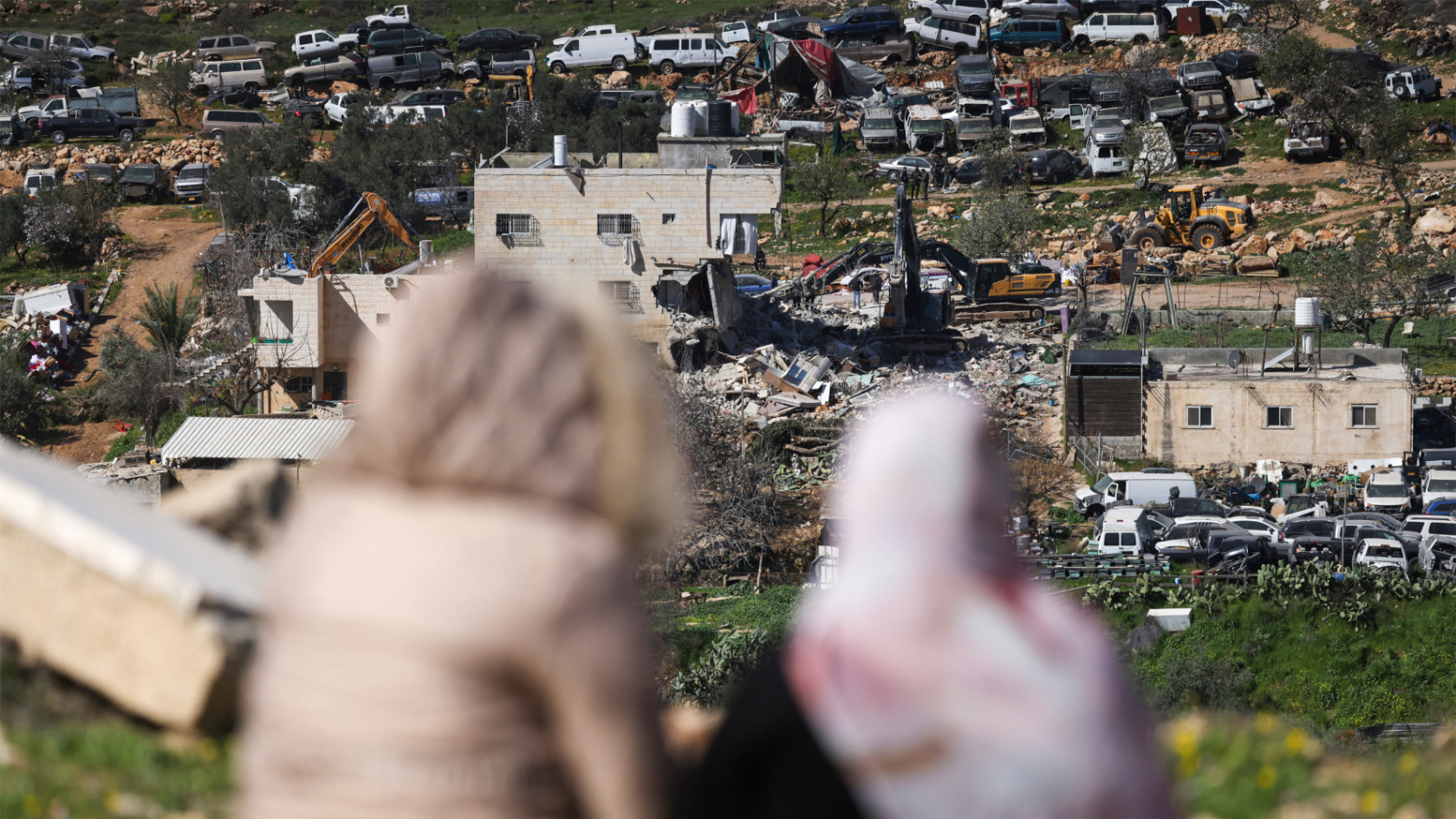
A U.S.-headquartered non-profit legal organization is moving forward with threatened litigation against the United Kingdom’s HM Revenue and Customs (HMRC), claiming the British tax body has systematically allowed agricultural goods produced in Israeli-controlled occupied territories to enter the UK market without required tariffs, according to an exclusive report from Sky News.
Leigh Day, the London-based law firm retained by the Global Echo Litigation Center, submitted a formal letter of claim to HMRC back in July laying out the organization’s allegations. The core complaint centers on the fact that goods grown in Israeli settlements established in the occupied West Bank, the Gaza Strip, and the Syrian Golan Heights have been flowing into the UK in direct violation of existing European and British trade regulations. The four-year investigation conducted by Global Echo uncovered widespread mislabeling: many products marked as originating from Israel were actually cultivated in illegal settlements located in occupied Palestinian and Syrian land, breaking UK rules that mandate clear labeling of settlement-origin goods to prevent consumer deception.
While the UK maintains a full free trade agreement with the State of Israel that grants preferential zero-tariff treatment to eligible Israeli goods, products manufactured or grown in Israeli settlements outside of Israel’s 1948 Armistice Lines do not qualify for these tariff breaks under both UK and international trade law. The letter, which has been reviewed by Sky News, argues that HMRC has failed to implement adequate protocols to verify the true origin of imports coming from Israeli entities, calling the existing verification system “fundamentally flawed.” This systemic failure, the complaint asserts, has allowed settlement-produced goods to unlawfully access the UK market with reduced or zero import duties, giving these products an unfair price advantage over legitimate imports.
The legal challenge comes amid growing public and political pressure on the British government to take a harder stance on Israeli settlement expansion, which is classified as illegal under international law, and rising levels of violence perpetrated by Israeli settlers against Palestinian civilians in the occupied West Bank. Public opinion among UK political actors reflects this pressure: earlier this year, polling of members of the UK’s opposition Labour Party found that 87% of respondents support a full ban on imports of goods from Israeli settlements, with only 6% opposed to such a measure. In a separate report last month from independent outlet Middle East Eye, the Greater Manchester Combined Authority led by Mayor Andy Burnham is preparing to unveil a new set of policies targeting Israeli settlement trade this September, including a local ban on the purchase of settlement goods.
Global Echo’s comprehensive 8-year investigation, published in July 2024, analyzed more than 30,000 export documents covering thousands of Israeli shipments bound for the UK and European Union. The investigation’s findings were stark: one out of every six shipments examined contained agricultural produce originating from illegal settlements, and at least 42% of those shipments were incorrectly labeled as grown within Israel’s pre-1967 borders. An in-depth review of 355 commercial invoice declarations led investigators to identify five Israeli companies that regularly source produce from settlements while falsely declaring Israel as the country of origin, the letter noted.
Global Echo’s report detailed multiple common tactics used by these companies to evade origin checks. These include mixing settlement-grown produce with legitimate Israeli-grown goods in a single shipment, listing a settlement postcode for the production site while still declaring Israel as the country of origin, and using fake proxy mailing addresses located within Israel’s recognized borders to obscure the true production location. One particularly common loophole exploited by companies is listing their corporate headquarters, which are usually located inside recognized Israel, as the origin of the goods, rather than the specific agricultural production site that is required to be disclosed under trade rules.
In addition to demanding that HMRC correct its flawed verification process, Global Echo is calling on the tax authority to reclassify all imports declared as originating from Israel as high-risk goods, requiring enhanced, mandatory origin checks for every shipment to ensure full compliance with UK trade and labeling rules.
-
Taylor crowns career in stylish Croke Park triumph
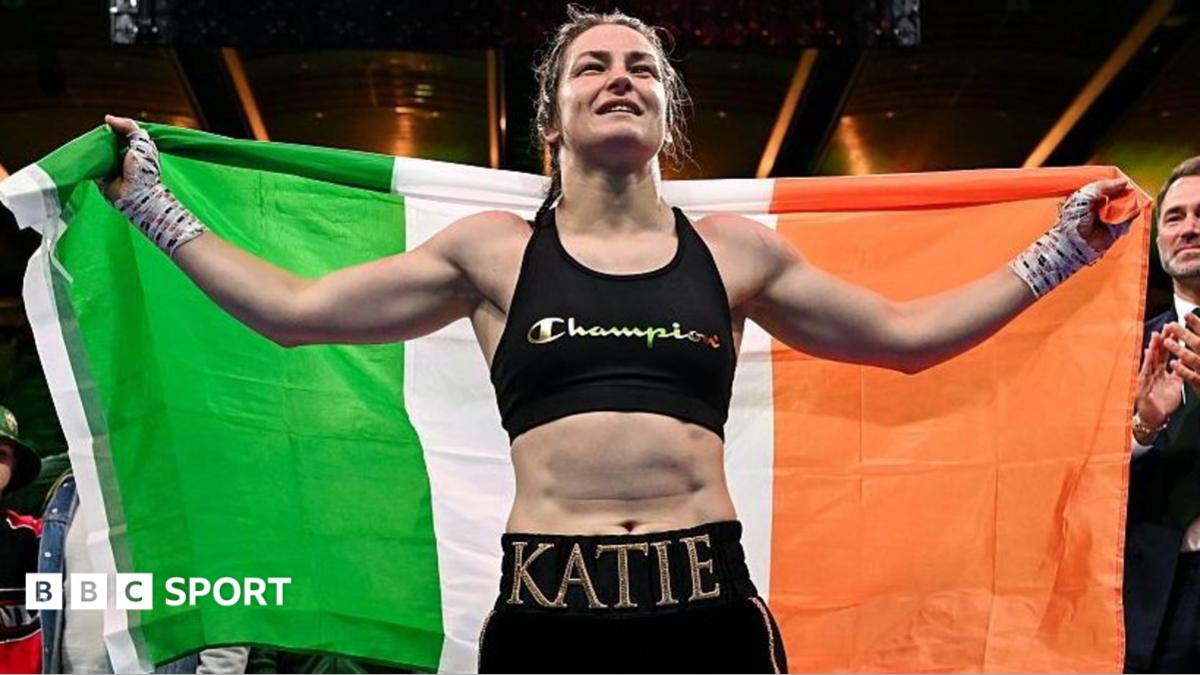
On an emotional, star-studded night in Dublin, Irish boxing icon Katie Taylor closed out one of the most transformative careers in sports history, securing a final unanimous decision victory over France’s Flora Pili at Dublin’s iconic Croke Park. The 40-year-old three-time undisputed world champion delivered a vintage performance in front of 80,000 roaring fans — a crowd that marks the sixth-largest post-war boxing attendance globally — capping a 25-year journey that redefined women’s boxing for generations.
Taylor entered her final walk to the ring to the hymn *All Hail King Jesus*, a nod to her well-documented public faith, stretching her arms wide to soak in the sea of green and white Irish tricolors that packed the venue’s towering stands. The night’s pre-fight entertainment was headlined by Irish pop supergroup Westlife, who led tens of thousands of singing fans through hits including *World of Our Own* and *You Raise Me Up*, before a hushed a cappella performance of the beloved Irish ballad *Grace* and a rousing rendition of the Irish national anthem. Chants of “Ole, Ole, Ole” from the crowd drowned out Pili’s entrance music, setting the tone for the heavily anticipated matchup.
From the opening bell, Taylor’s signature speed, pinpoint footwork and sharp, relentless pressure dominated the fight. After a measured first round, the 2012 Olympic gold medalist turned up the pace in round two, landing quick combinations before slipping out of Pili’s range. Though the 29-year-old French challenger — who entered the fight unbeaten in 12 bouts and a former European title holder — landed a brief flurry in the seventh round that snapped Taylor’s head back, the gulf in class was evident from the early stages. When the final bell rang, judges scored the fight 100-90, 100-90 and 98-91, all in favor of Taylor, granting her the vacant WBC light-welterweight belt to add to her existing WBA, WBO and IBF titles in the division.
Following the final decision, Taylor took a moment to scan the packed stands, holding back tears as she addressed the crowd that turned out to honor her. For context, the last professional boxing event held at Croke Park dated back to 1972, making Taylor’s farewell bout a historic homecoming for the sport in Ireland. “There’s nothing like an Irish mammy,” she said, opening her remarks with a lighthearted tribute to her family, before adding: “We did it. We brought boxing back to Croke Park. You were with me in London 2012, you were with me with the heartbreak of Rio. You stayed with me when I turned pro. I don’t know any other country that would sell 80,000 tickets for a female athlete. I’m convinced Ireland is the only country.”
Taylor retires with a professional record of 26 wins against just one loss — a 2023 defeat to Chantelle Cameron in Dublin that she avenged six months later to claim undisputed two-weight world champion status. Promoter Eddie Hearn called her “Ireland’s greatest sportsperson” in his pre-fight tribute, before Taylor completed the night’s ceremonial final lap of the ring, placing her gloves and championship belts in the center of the canvas as a symbolic closing to her career.
Beyond her staggering list of accolades, which include a trilogy of wins against rival Amanda Serrano, Taylor’s greatest legacy lies in her trailblazing work to expand opportunities for women in boxing. As a young athlete, she once disguised herself as a boy to compete at a time when women’s boxing was banned in Ireland. She went on to lobby successfully for the sport to be sanctioned nationally and added to the Olympic program, conquering both the amateur and professional ranks over the course of her career. Roughly 80% of the fans in attendance at Croke Park had never attended a boxing event before, turning out simply to honor a athlete who dragged women’s sport from the margins and carried an entire nation along on her journey. When the night drew to a close, it was clear: while her championship belts will one day fade, the path Taylor blazed for future generations of female athletes will remain unmatched.
-

Gaza’s destroyed sewage system linked to ‘rare’ algae bloom shutting Israeli desalination plants
An unprecedented large-scale algal bloom along Israel’s Mediterranean coastline has forced the temporary shutdown of five out of the country’s six major seawater desalination facilities, triggering a fresh discussion over environmental vulnerabilities in the region and the multiple factors that may have sparked the historic event, according to regional and international media reports.
Desalination is the backbone of Israel’s drinking water supply, meeting more than 65 percent of the nation’s demand, with nearly all major desalination infrastructure sited along the Mediterranean coast. Lior Gutman, a spokesperson for Mekorot, Israel’s national water utility, confirmed the scale of the disruption, noting that an event of this magnitude has never been recorded in Israeli history. “An event of this kind has never occurred before in Israel … it was an extremely rare event,” Gutman stated. The affected plants include key facilities at Ashkelon, Ashdod, Palmachim, Sorek A, and Sorek B.
In response to the shutdowns, Israeli water officials moved quickly to stabilize the national water supply by drawing increased volumes from the Sea of Galilee, underground groundwater reserves, and existing storage reservoirs, while implementing limited restrictions on agricultural and public irrigation. Even as supplies remain stable for the moment, the crisis has pulled back the curtain on a critical fragility: Israel’s heavy reliance on desalination leaves it exposed to unexpected large-scale environmental disruptions.
Israeli news outlet Ynet first reported that one leading potential cause being examined by researchers is the massive volume of untreated sewage flowing into the Mediterranean from the Gaza Strip, where the local wastewater treatment infrastructure has sustained severe damage during the ongoing conflict. Palestinian and Israeli data indicates roughly 40,000 cubic meters of untreated wastewater enters the sea from Gaza every day. A number of leading Israeli environmental researchers have pointed to this nutrient-rich runoff as a key contributing factor.
Algal blooms require two core conditions to proliferate: warm water and high concentrations of nutrients such as phosphorus and nitrogen, explained Avner Gross, head of Ben-Gurion University’s Climate Change Laboratory. While satellite data has detected similar algal masses near Egypt’s Nile Delta, where agricultural runoff enters the Mediterranean, Gross told Ynet that no other explanation currently fits the pattern of the bloom off Israel’s coast. “In our case, I currently have no other explanation except a pollution source in the southern Gaza Strip,” Gross said.
Gross added on the social platform X that human-caused climate change has transformed the Mediterranean into an ideal breeding ground for such events, writing: “global warming had turned the Mediterranean into ‘a bathtub in August.’ Add phosphorus and nitrogen pollution and you get a deadly algal bloom. Coincidentally, in recent days there were weak, steady winds that mixed the fertiliser from the sewage along Israel’s coast. A perfect storm.” Noga Armi, chief executive of Israeli environmental nonprofit Zalul, echoed this conclusion, telling Roya News that “the scientific link is well established. Untreated sewage discharged into the sea from Gaza was one of the factors that contributed to the incident.”
However, not all researchers agree that Gaza’s untreated sewage is the main driver of the bloom. Tamar Guy-Haim, a marine ecologist at Israel’s National Institute of Oceanography, argued that the probability of Gaza sewage being the primary cause is relatively low. Researchers have so far identified the organism behind the bloom as a cyanobacterium from the genus Synechococcus, but the exact species and the full set of triggers behind its sudden explosive growth are still the subject of active investigation.
In addition to nutrient pollution, scientists have pointed to a range of other possible contributing factors: unusually warm Mediterranean seawater, strong seasonal sunlight, natural ocean current patterns, and a recent storm that increased water turbidity along the coast. Or Bialik, a researcher at Israel Oceanographic and Limnological Research, told Haaretz he had never encountered a bloom of this scale in his decades of Mediterranean work. “I’ve worked in the Mediterranean Sea for a long time and have never seen anything like this. The water is green like a lake. The turbidity is such that you can’t see your instruments after half a metre,” Bialik said.
Multiple research teams have noted the bloom appears to have originated near the Nile Delta before drifting northward along the coast with prevailing ocean currents. Looking forward, many researchers warn that even as this event is unprecedented, it is unlikely to be a one-off occurrence as climate change continues to warm Mediterranean waters. “It’s a fair estimation that this will not be a once-in-a-lifetime kind of event … you can assume that this will occur more and more through climate change,” Edo Bar-Zeev, a water researcher at Ben-Gurion University, told CNN. To date, no definitive single cause has been confirmed, with most scientists acknowledging the bloom may have resulted from a combination of warming temperatures, natural ocean dynamics, Nile Delta agricultural runoff, and Gaza wastewater pollution.
-

Springboks, All Blacks go to US without Kolbe and Savea after brutal injuries in rugby test series
BALTIMORE — A blockbuster four-test rugby series between South Africa and New Zealand is set for its deciding clash next Saturday, but the decider will play out without two of the teams’ most impactful stars after a dramatic third test that saw the world champion Springboks claim a narrow 29-24 victory to move ahead 2-1 in the overall series.
Both teams flew to Baltimore together on Sunday, already reeling from key injuries sustained during Saturday’s physical encounter. Cheslin Kolbe, South Africa’s standout goalkicker who delivered near-flawless performances across the first three matches, suffered a broken jaw after a collision with New Zealand’s Luke Jacobson. All Blacks captain Ardie Savea is at high risk of a dislocated right shoulder sustained during a ruck clearout from Springbok Jasper Wiese, while All Blacks center Quinn Tupaea sustained MCL damage that will also rule him out of the final test. None of the three will be available for selection, and neither side has announced plans to call up replacement players for the closing match, which will be hosted at the Baltimore Ravens’ NFL stadium.
For Springboks coach Rassie Erasmus, the come-from-behind series lead — secured after a loss in the opening test — came as a significant relief. He described the contest as a grueling, high-stakes epic encounter, saying he was simply grateful to walk away with the win.
Erasmus pointed to his long-standing familiarity with the Springbok squad as the key edge that separated the two sides. The South African coach has overseen the national program since 2018, giving him nearly a decade of insider knowledge of his players’ strengths, communication styles, and resilience under pressure. In contrast, New Zealand coach Dave Rennie only took over the All Blacks setup this past June, still in the early stages of building team cohesion.
“Dave doesn’t have that luxury yet,” Erasmus explained. “He’s building a team and I know what that feels like; in 2018 I got the team 18 months before a World Cup. I know these players inside out. They know me. They know when to take me serious and when not. We’ve got the luxury of knowing each other for nine years, through tough times, and that’s not to say we’re always going to win because of that, but we’re just a little more used to navigating tough moments. Dave and his team will find that cohesion eventually, but for us, pushing through tight stretches is just that much easier.”
Erasmus noted the 29-24 scoreline was a fair reflection of the tightly matched contest, adding that the Springboks only grabbed their first lead of the test in the 60th minute after a grueling battle for dominance in set pieces. He also pushed back on any suggestions the result proved South Africa was far superior, acknowledging that good fortune played a role in the final outcome.
“We’re not sitting here thinking we are awesome,” he said. “We’re thinking there was also a lot of luck that went our way.”
For Rennie, the result was a disappointing one, as the All Blacks coach argued the gap between the two sides was razor-thin, and just two costly first-half errors ultimately shifted momentum against his team.
“It’s frustrating because there was a lot of effort out there but we just weren’t clinical in that first half and couldn’t wrestle momentum back when it mattered in that second half,” he said.
The first pivotal error came shortly after New Zealand scored to take a 17-12 lead in the second half. Young defender Leroy Carter failed to bring down South Africa’s Jesse Kriel, who broke free to score a critical try that leveled the score. Rennie defended Carter, noting the experienced defender was already beating himself up over the mistake.
“I feel for Leroy. He’s a good man, he’s a very good defender, I’m sure he’s hurting about that,” Rennie said. “Our job once they’ve scored was to bounce back, try and take control of possession but they were able to dominate the next 10 minutes and that was pivotal.”
The second turning point came when All Blacks star Will Jordan accidentally kicked the ball dead, gifting South Africa a scrum that quickly turned into a penalty, and eventually a rolling maul that led to a match-winning try for Springbok hooker Malcolm Marx.
“Just unlucky,” Rennie said. “It was a good option but you come back to a scrum, which is a penalty, which is a maul where they drive however many meters to score. We scrambled to try and get in front of it and they kept rolling through us. It was the only maul that troubled us today. It’s disappointing.”
The stage is now set for a highly anticipated decider next weekend, as the Springboks look to close out the series win while the undermanned All Blacks aim to pull off an upset draw against the world champions.
-
At the 9/11 museum, America remembers only its own
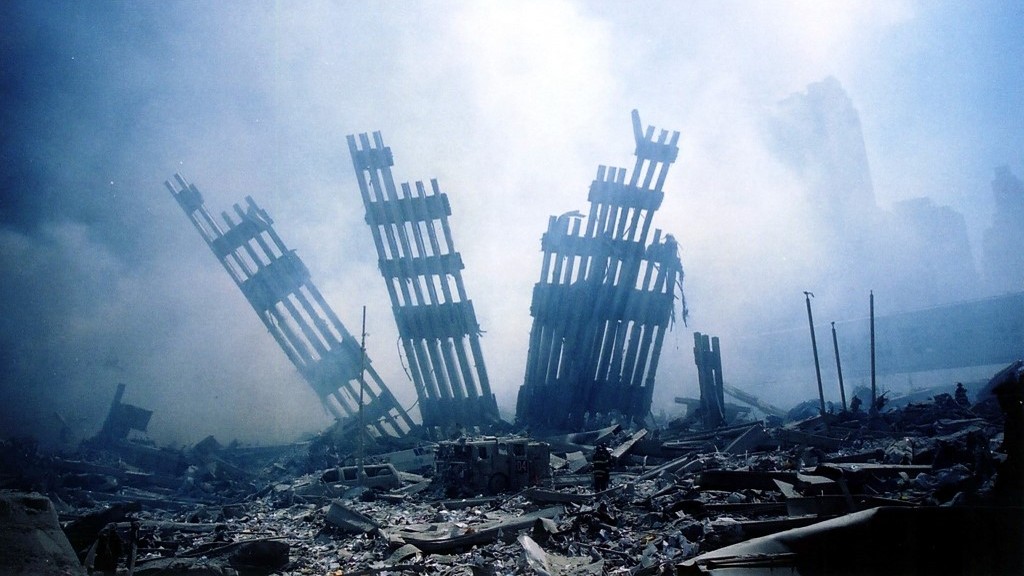
Ahead of the 25th anniversary of the September 11 attacks that claimed 2,977 lives across New York, Virginia, and Pennsylvania, a pre-anniversary visit to the 9/11 Memorial & Museum reveals sharp gaps in how the site frames one of the 21st century’s most defining global events. Since opening to the public in May 2014, the sprawling 110,000-square-foot institution, built into the original foundation of the World Trade Center complex and retaining a 1960s underground retaining wall that holds back the Hudson River, has amassed more than 83,000 artifacts recovered from the 2001 attack site. Seventy feet below street level at Ground Zero, every tangible trace of the tragedy is carefully preserved: charred fire trucks, twisted steel girders from the fallen towers, dented firefighters’ helmets, stopped watches recovered from victims, and the final, heartbreaking messages left by passengers aboard the four hijacked planes. Visitors can view footage of the planes striking the Twin Towers captured from multiple angles, listen to voice recordings from people on the flights who understood they would not survive, and walk through exhibits saturated with the visceral shock of that morning. After spending nearly three hours circling the displays, observing other visitors gasp and sigh at the harrowing imagery, studying exhibit captions, and absorbing the emotional weight of the collection, one critical observation emerges: the museum’s exhaustive documentation of the attacks themselves stands in stark contrast to its deliberate omission of key historical context and the far-reaching human costs of the United States’ post-9/11 response. The visitor experience is structured as an unrelenting loop of trauma, with core exhibits repeating the most graphic scenes of the attack in non-chronological order. Tight passageways and a constant barrage of sounds and images create a suffocating atmosphere that makes the 24-year-old tragedy feel immediate, as scholar Ross Poole has noted: “The shock of 9/11 becomes eternally present. And as we are invited to share the perspective of that day, we become as ignorant as those whom we observe dying or surviving, doing their best to help or simply to escape.” The museum does extend its narrative back to the 1993 World Trade Center bombing, framing the site as a longstanding symbol of American power targeted by adversaries, but it fails to provide meaningful, honest context for the rise of al-Qaeda, the group that carried out the 2001 attacks. Curators describe al-Qaeda as an “international Islamist extremist terrorist network” motivated almost entirely by religious ideology, but their account of the group’s origins during the 1980s Soviet-Afghan War is deliberately vague and evasive. The museum’s caption notes that the U.S. supported the Afghan rebellion through Pakistan-based funding and arms transfers, adding that the CIA recruited Afghan fighters but did not directly fund foreign militants. This framing omits the core reality of U.S. statecraft at the time: Washington intentionally routed support through Pakistan to maintain plausible deniability, and the anti-Soviet campaign it backed created the exact ideological and organizational conditions that allowed al-Qaeda to emerge. By sidelining this history and centering religious extremism as the sole driver of the attacks, the museum perpetuates narratives that fuel anti-Islam prejudice. Most striking is the museum’s near-total silence on the 20-plus-year global “war on terror” launched in response to 9/11 – a campaign that has killed an estimated 1 million people and displaced 37 million more worldwide. It makes no mention of the vast expansion of domestic surveillance targeting Muslim communities in the U.S., the use of torture at CIA black sites and facilities like Abu Ghraib and Guantanamo Bay, or the restructuring of U.S. immigration and security systems that created the Department of Homeland Security, ICE, and TSA. Ironically, the visitor entry process itself serves as an unplanned, living example of this post-9/11 security state: upon arrival, guests are processed through airport-style body scanners and pat-downs, mirroring the surveillance and screening infrastructure that 9/11 made permanent. Even the museum’s board underscores this bias: former U.S. President George W. Bush, who oversaw the launch of the war on terror, serves as an honorary trustee. One staff member privately shared reservations about the omission of the war on terror’s legacy but declined to comment further. While the museum meticulously records the names, faces, and stories of every person killed in the 2001 attacks, the hundreds of thousands of people killed in U.S. military action after 9/11 remain unmentioned, nameless, and faceless – a gap that is reflected in the visitor demographic, with almost no people of color observed among touring groups during the visit. As the 25th anniversary approaches, this incomplete narrative extends to current, 9/11-linked crises unfolding today. The visitor draws a striking parallel between the debris and public health disaster that followed the Twin Towers’ collapse, and the ongoing catastrophe in the Gaza Strip. In New York, more people have died from 9/11-related diseases like lung and blood cancer than were killed in the attacks themselves; just days before the visit, New York Mayor Zohran Mamdani released 170,000 previously undisclosed pages of documents confirming city officials knew the air around Ground Zero was toxic in the weeks after the attack. In Gaza, 78 percent of all homes and infrastructure have been destroyed with U.S. military and political backing, leaving more than 61 million tons of toxic debris to clear – a public health disaster on an unimaginable scale, with little access to medical care, clean water, or humanitarian aid. The gaps in the museum’s narrative also extend to the legal process for the accused 9/11 conspirators: just days before the visit, a U.S. military judge ruled that statements made by alleged plot mastermind Khalid Sheikh Mohammed to the FBI cannot be used at trial, because they were obtained through torture during his detention in CIA custody. His trial is not scheduled to begin until 2028 – nearly 25 years after his capture. Beyond the critique of its curation, the museum also frames the trauma of 9/11 as a commercial product. Upon exiting the exhibit halls, ushers explicitly direct visitors to the on-site museum store, where guests can purchase branded 9/11 merchandise: magnets, t-shirts, American flags, and “Never Forget” mugs imported from Thailand. Above ground, the 9/11 Memorial – composed of two massive sunken reflecting pools named *Reflecting Absence*, opened in 2011 – offers a far more evocative framing of the tragedy. The names of those killed in the attacks are carved into the stone edges of the pools, where water cascades into a deep central void that never fills. Architect Michael Arad designed the memorial to capture a “sense of rupture and continued absence,” a metaphor that ends up carrying unintended meaning: while the memorial asks the public to honor the void left by the attacks, the museum pulls visitors deeper into an incomplete, politically motivated narrative that perpetuates division and erases far more tragedy than it documents. Today, as younger generations increasingly question the official 9/11 narrative, framing the attacks as a convenient pretext for endless war and global resource extraction, the 9/11 Memorial & Museum stands as a time capsule of an old, contested story – one that still serves political ends 25 years on. This article was originally published by Middle East Eye, an independent outlet covering the Middle East, North Africa, and global affairs.