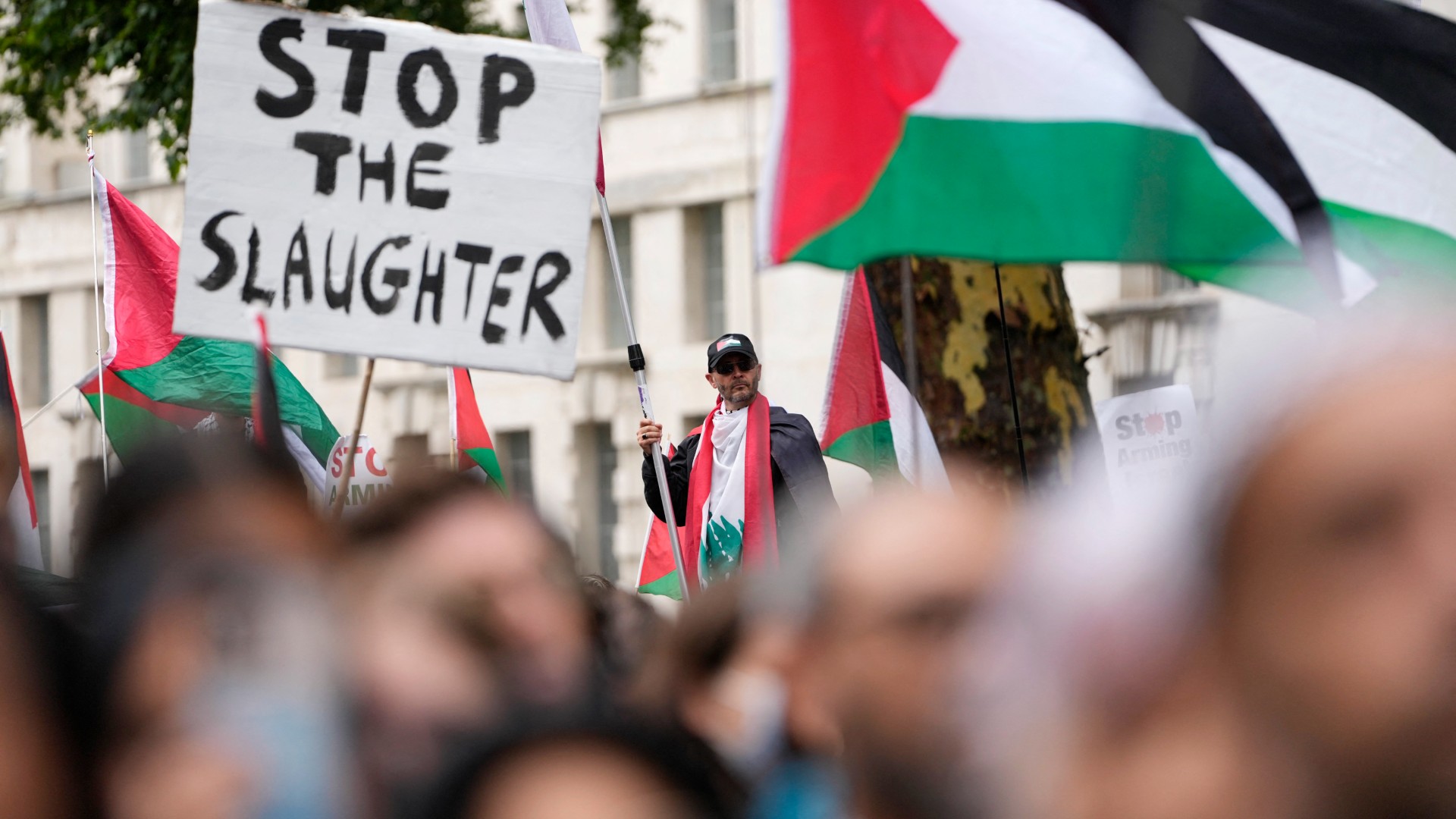
A coalition of major UK pro-Palestine advocacy groups has launched a formal complaint against Mark Rowley, Commissioner of London’s Metropolitan Police, over allegations he made false, stigmatizing claims that protest organizers intentionally route demonstrations near synagogues to stoke antisemitic tension. The legal action marks one of the most significant public challenges to UK policing’s handling of the ongoing pro-Palestine protest movement, which has drawn hundreds of thousands of participants to central London since the outbreak of the Israel-Gaza conflict in October 2023.
Rowley made his controversial claims in two separate high-profile interviews with The Times and ITV News in recent weeks, stating that pro-Palestine protest organizers repeatedly planned to march near Jewish places of worship, framing this alleged intent as inherently antisemitic. “The fact that features as the organisers’ intent, I think that sends a message … that feels like antisemitism,” Rowley told The Times. Speaking to ITV, he added: “They set out with an intent to march near synagogues etc and every single time that we put conditions on to prevent that.”
Lawyers from Hodge Jones & Allen submitted the official complaint on Wednesday to the Mayor’s Office for Policing and Crime (MOPAC), the body that oversees London’s police force, on behalf of the Palestine Coalition — an umbrella grouping that includes the Palestine Solidarity Campaign, the Palestinian Forum of Britain, the Stop the War Coalition, Friends of Al-Aqsa, the Muslim Association of Britain and the Campaign for Nuclear Disarmament.
The complaint argues that Rowley’s matching claims across two interviews prove his remarks were no accidental misstatement, but a deliberate effort to discredit and stigmatize the long-running protest movement organized by the coalition. The document clarifies that the mass marches held since October 2023 have been organized to protest Israeli violations of international law in Gaza and the West Bank, as well as the British government’s ongoing political and military complicity in these actions.
The complaint explicitly rejects Rowley’s factual claims, noting that while some pre-approved march routes have passed near major London landmarks that fall in the general vicinity of synagogues and other houses of worship, organizers have never intentionally targeted or routed protests near these sites specifically. All protest routes, the coalition emphasizes, have been formally agreed upon by Metropolitan Police officials in advance of every demonstration. On occasions where police requested route adjustments to move marches further from synagogues or public transit stations used by worshippers, the coalition says it willingly complied, even while rejecting the unsubstantiated claim that the protests posed any inherent threat to Jewish communities.
“At no point during any negotiations has it been suggested that Metropolitan police officers believed that the objective of the march itself was to ensure that they went past a synagogue,” the complaint reads.
Rowley’s remarks, the coalition argues, directly violate the 2020 Police Conduct Regulations, which require top police leaders to act with honesty and integrity, uphold fairness and impartiality, avoid abuse of authority, and maintain public confidence in the police service. “The Commissioner’s comments were in breach of those standards,” the complaint alleges. Beyond factual inaccuracy, the document accuses Rowley of abusive use of his power, and argues that his framing of pro-Palestine protests as antisemitic constitutes racial discrimination against protest participants.
The complaint also highlights what it frames as unequal treatment of demonstrations by the Metropolitan Police, pointing out that the coalition’s upcoming 16 May Nakba Day march has faced severe route restrictions, while police have allowed space for a far-right demonstration led by controversial figure Tommy Robinson to proceed in central London. The coalition is demanding an immediate retraction of Rowley’s claims and a formal public apology to the movement.
This complaint comes amid escalating political pressure to restrict or ban pro-Palestine protests across the UK, amplified by a recent stabbing attack in the heavily Jewish northwest London neighborhood of Golders Green. On Wednesday, a 45-year-old Somali-born British man was arrested in connection with the stabbings of two Jewish men, as well as an earlier fatal stabbing of a Muslim man in south London. Prime Minister Keir Starmer has publicly linked the attack to pro-Palestine marches, using the incident to call for tighter restrictions on protests, including potential full bans. In a BBC Today interview over the weekend, Starmer said offensive protest language should be actively policed and suggested there was a credible case for banning future demonstrations entirely.
Last week, the same coalition groups already pushed back against coordinated efforts by politicians and mainstream media outlets to smear the protest movement and advance calls for bans. The legal complaint against Rowley marks a major escalation of that pushback, challenging the top UK police official’s claims at the heart of the growing campaign to restrict pro-Palestine speech and assembly.