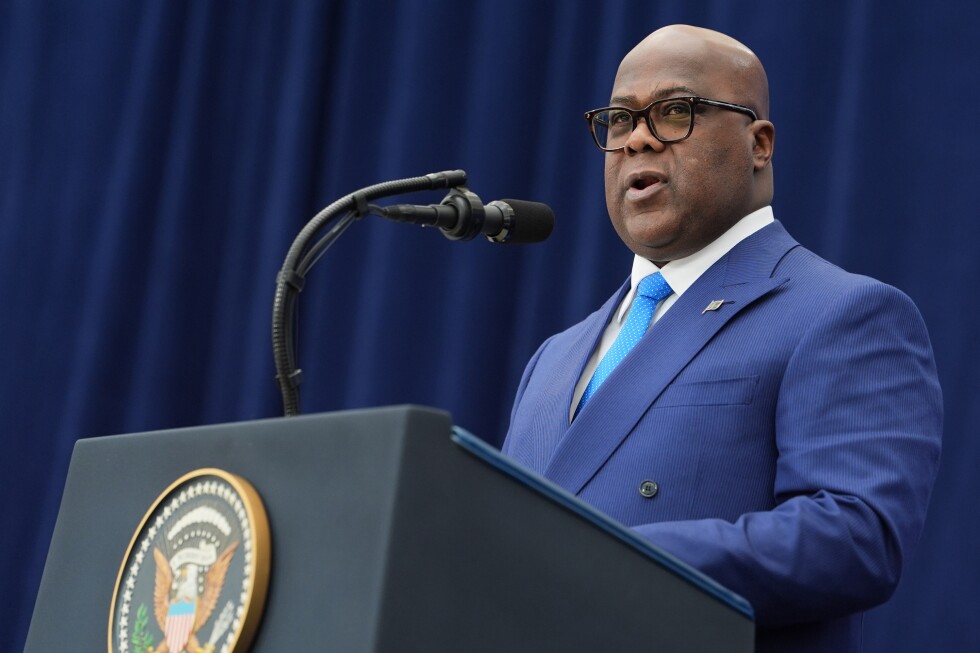
KINSHASA, Democratic Republic of the Congo — In a nationally televised address that has sparked intense political debate across the country, Congolese President Félix Tshisekedi delivered a stark warning Wednesday: unless the long-running armed conflict rocking the nation’s eastern provinces is resolved and stability is restored, the country will not be able to hold constitutionally mandated general elections when his second and final term concludes in December 2028.
Tshisekedi’s remarks came amid a devastating escalation of decades of unrest in eastern Congo that began earlier this year. In January 2025, Rwanda-backed M23 rebels launched a major offensive, capturing the strategic eastern city of Goma before seizing the key town of Bukavu the following month as the insurgency pushes to expand its territorial control. The renewed fighting has already claimed an estimated 3,000 lives and dramatically deepened one of the world’s worst humanitarian catastrophes, pushing the total number of displaced people across the country to roughly 7 million.
Decades of instability in eastern Congo have long been fueled by competition over control of the region’s vast, lucrative mineral reserves, with more than 100 armed groups currently operating in the area, M23 among the most powerful and well-organized. U.S.-brokered peace negotiations and other diplomatic initiatives to halt the violence have so far failed to gain traction, leaving the conflict deadlocked.
“If we cannot end this war, unfortunately we will not be able to organize elections in 2028,” Tshisekedi stated during the address. The president clarified that the inability to hold the vote would stem from the loss of state control over the two most conflict-affected eastern provinces, not a lack of willingness or resources to administer the poll. “It will not be because I refused to organize them, the resources are there we can do it, but we cannot organize them without North Kivu and South Kivu,” he added.
In a surprise announcement that has reshaped the country’s political landscape ahead of 2028, Tshisekedi also signaled he would be open to seeking a controversial third term in office, a move that would require amending the nation’s constitution, which currently imposes a strict two-term limit on presidents. “I have not sought a third term, but I tell you: If the people want me to have a third term, I will accept,” he said, noting that any change to term limits would need to be approved by a national referendum first.
Opposition figures and political critics immediately rejected the president’s comments, accusing Tshisekedi of using the ongoing eastern conflict as a pretext to extend his hold on power. Congolese opposition politician André Claudel Lubaya argued that Tshisekedi was invoking the will of the Congolese people “to justify a fraudulent intention.” Two-time former presidential candidate Seth Kikuni warned via social media platform X that if Tshisekedi follows through on plans to “threaten to seize power” in 2028, the opposition will have no choice but to take drastic action: “to cross the Rubicon and throw the dice.”
The address also touched on other policy issues, including the ongoing deportation of Congolese migrants from the United States under a bilateral agreement reached with the Trump administration, though Tshisekedi’s comments on elections and the eastern conflict dominated public and political reaction to the speech.