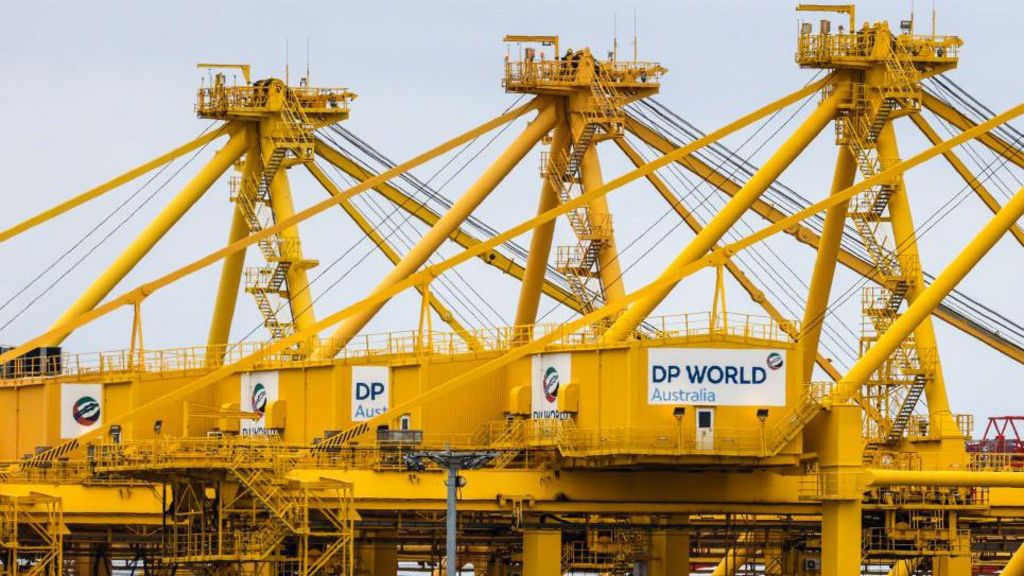
As global port logistics giant DP World rolls out artificial intelligence and automated systems across its Australian operations, dockworkers represented by the Maritime Union of Australia (MUA) have sparked a tense industrial debate by calling for a reduced 28-hour workweek with no corresponding cut to pay.
Headquartered in Dubai, DP World ranks among the world’s biggest port operators, employing more than 126,000 people globally and managing over 10 percent of the world’s total container shipping volume. In Australia alone, the firm controls port infrastructure in Sydney, Melbourne and other major coastal hubs, moving millions of containers annually and accounting for approximately 40 percent of all container shipments entering the country. That outsized market share means any changes to its operations carry major implications for Australia’s entire supply chain and logistics sector.
According to an MUA-commissioned study from the Centre For International Corporate Tax Accountability and Research, DP World has been ramping up testing of AI tools for workforce management and scheduling, with broader plans to introduce AI-assisted remote-controlled cranes and autonomous driverless vehicles across its Australian terminals. The research warns that this automation push is being rolled out without meaningful consultation with workers, and could threaten as many as 1,000 roles – more than 60 percent of DP World’s current Australian dock and maintenance workforce.
The MUA argues that the adoption of new AI technology should benefit workers rather than only boost corporate profits, framing the 28-hour workweek demand as a way to share the productivity gains from automation. Currently, DP World dockworkers average between 32 and 35 hours of work per week, with minor variations based on terminal location, according to the *Australian Financial Review*, which first broke news of the ongoing negotiations.
“If DP World wants AI and automation, then they must pay the social dividend. The new technology doesn’t have to cost our members their jobs or put their livelihoods at risk just so a terminal operator can boost profits,” the union stated. In a 3 July announcement formalizing the demand, the MUA added: “The technology should be used to improve workers’ lives, not destroy them.”
As of this reporting, the BBC has reached out to DP World for official comment on the union’s claims and the automation program, and has also requested additional details from the MUA. No responses have been released publicly, leaving the future of the negotiations and DP World’s Australian automation rollout unclear.