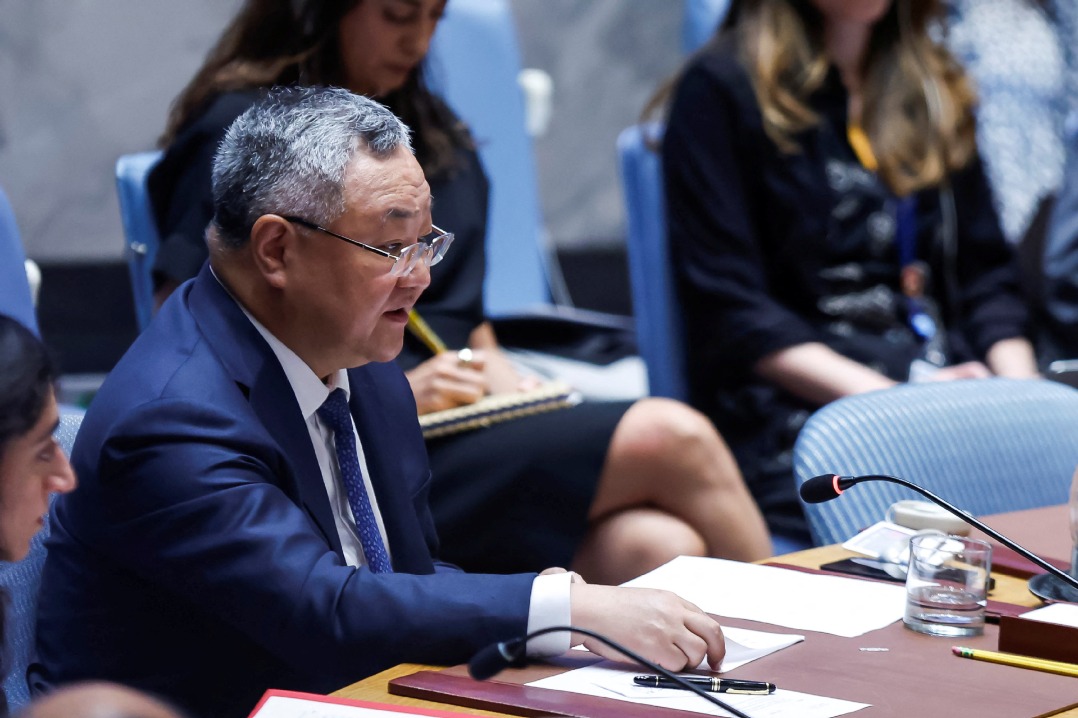
On Tuesday, the United Nations General Assembly moved forward with a long-awaited debate on Washington’s six-decade-old economic, commercial and financial embargo against Cuba, defying opposition from the United States after a preliminary vote saw 136 nations back the discussion, nine oppose it, and 30 abstain. The debate, which Cuba formally requested, centers on the urgent global demand to terminate the punitive US measures that have crippled the Caribbean island’s development for generations.
Speaking during the debate, Fu Cong, China’s permanent representative to the UN, confirmed Beijing’s full support for the meeting and for Cuba’s campaign to lift the blockade. He emphasized that the lopsided 136-9 vote in favor of holding the debate is a clear reflection of the international community’s collective aspiration for justice and rejection of unilateral coercive measures.
Fu detailed the staggering human and economic toll of the 60-plus-year embargo, noting that Cuba has accumulated more than $170 billion in direct losses from the blockade. Critical public infrastructure serving everyday Cubans — including hospitals, schools, public water systems, and grain storage facilities — have been pushed to the brink of collapse under the sustained pressure of the sanctions, he added.
Currently, Cuba is grappling with a cascading set of crises exacerbated by the embargo: severe acute fuel shortages, a worsening national energy and electricity crisis, and persistent blockages to the import of life-saving medicines, medical equipment, and other essential goods. Vulnerable populations, including children and pregnant women, have borne the brunt of these shortages, Fu said. According to Xinhua News Agency, Cuba, which relies almost entirely on fuel imports to keep its economy running, received only one oil tanker — the Russian-flagged Anatoly Kolodkin carrying 100,000 metric tons of crude — in the six months leading up to the debate. The country requires approximately eight fuel tankers per month to maintain normal economic and social operations.
Fu stressed that the US embargo directly violates the core purposes and principles of the UN Charter, including the fundamental norms of sovereign equality, peaceful resolution of international disputes, and the prohibition of the threat or use of force against other states. Beyond violating international law, the measures infringe on the basic rights of the Cuban people to subsistence and sustainable development, and erode the global international order rooted in international law and established multilateral norms, he added.
In a clear call to action, Fu reiterated China’s demand that the United States immediately end its blockade of Cuba, eliminate all forms of coercive pressure against Havana, and stop violating the Cuban people’s fundamental rights to survival and development. He also called on the wider international community to stand with Cuba in defense of its national sovereignty, equal standing in the global community, and national dignity, and to collectively push back against illegal blockades, unilateral sanctions, and military targeting of small states.
Fu emphasized that all nations must uphold the UN Charter’s core principles, adhere to the norm of sovereign equality, reject external interference in the internal affairs of sovereign states, prioritize peaceful dispute settlement, and oppose unilateral use of force. He added that all unauthorized unilateral sanctions — those imposed without explicit approval from the UN Security Council — have no basis in international law and systematically damage the sovereignty and security of targeted states.
“The international community must protect the Cuban people’s rights to subsistence and development, and pressure relevant parties to implement longstanding General Assembly resolutions calling for an end to the embargo,” Fu said. “All sanctions and secondary sanctions targeting Cuba must be terminated immediately, and frequent threats of additional punitive measures must end, so that the Cuban people can exercise their right to pursue a better life.”
Addressing the broader global implications of unilateral coercion, Fu noted that international fairness and justice are central to the survival and development of every nation, and no country can remain insulated from the harm of hegemonism and power politics. “No country has the right to anoint itself as the global police, nor can any nation claim to be the world’s sole judge of acceptable conduct,” he said.
Fu affirmed that the Chinese people deeply empathize with the suffering the Cuban people have endured for decades, and that China will continue to provide all possible support and assistance to Cuba within its means. He also called on UN member states and global UN agencies to scale up humanitarian aid to Cuba, help address critical shortages of fuel, food, and medicine, ease the ongoing humanitarian crisis on the island, and uphold the basic norms of international humanitarianism.
Cuban Foreign Minister Bruno Rodriguez Parrilla welcomed the General Assembly’s decision to proceed with the debate, pushing back against longstanding US claims that Cuba poses a national security threat to Washington. “Cuba is not a threat. Cuba is the nation that is under threat,” Parilla said, affirming Cuba’s unwavering commitment to peace, international law, multilateralism, truth, and justice, while condemning Washington’s decades-long policy of hostility and aggression toward his country.
Speaking on behalf of the Group of 77 developing nations and China, Laura Dupuy Lasserre, Uruguay’s permanent representative to the UN, echoed these calls, noting that the embargo harms every critical sector of Cuba’s economy, including public health, food security and nutrition, agriculture, trade, foreign investment, tourism, and banking. “The Group therefore calls for the immediate, complete and unconditional lifting of the embargo, including all measures with extraterritorial effects,” Lasserre said. “Ending these restrictions is essential not only for Cuba’s development and the well-being of its people, but also for upholding the UN Charter, international law and the credibility of multilateralism.”