A fresh wave of coordinated drone attacks carried out by Ukrainian forces targeted key Russian energy infrastructure across multiple regions and commercial oil tankers in the Sea of Azov on Thursday, coming just 24 hours after U.S. President Donald Trump announced a landmark agreement to grant Kyiv a manufacturing license for Patriot air defense systems. This new series of strikes builds on a sustained campaign against Russian fuel networks that has already sparked a growing domestic fuel crisis, with long lines at filling stations, widespread gasoline shortages, and mandatory fuel rationing in at least 10 Russian regions.
The first strike of the day was reported early Thursday at a large oil storage depot in Tver, a major city in western Russia roughly 100 miles northwest of Moscow. Acting regional governor Vitaly Korolyov confirmed that the attack ignited a significant blaze at the facility, though no immediate casualties were reported.
Further south, in Russia’s Stavropol Krai, regional governor Vladimir Vladimirov confirmed that multiple large oil storage tanks were set alight by drone assault in the town of Vyazniki. As the fire spread beyond initial containment efforts, local authorities ordered the emergency evacuation of residents from several nearby apartment blocks to protect public safety.
Offshore in the Sea of Azov, a strategically critical waterway connecting southern Russia to the occupied Crimean Peninsula, Ukrainian drones hit two Russian oil tankers, according to Rostov regional governor Yuri Slusar. Slusay reported that one of the two vessels remained engulfed in flames as of Thursday afternoon, and all crew members from both ships were evacuated before the fires reached critical sections. Thursday’s attack marks the third strike on oil tankers in the Sea of Azov in the past week, part of Ukraine’s intentional campaign to disrupt Russian fuel supply lines to occupied Crimea and frontline Russian military forces operating in southern Ukraine.
In a statement on the defensive actions taken during the strikes, Russia’s Defense Ministry announced that its air defense systems had intercepted and downed 73 Ukrainian drones across the country between late Wednesday and early Thursday. Ukraine, in turn, reported that Russia launched a massive overnight retaliatory drone and missile strike across Ukrainian territory, deploying 94 long-range attack drones and two ballistic missiles. Ukraine’s Air Force said that 72 of the incoming drones were either intercepted by air defenses or jammed and disabled before impact, but 19 remaining drones and both ballistic missiles caused damage to infrastructure and civilian sites across 13 locations.
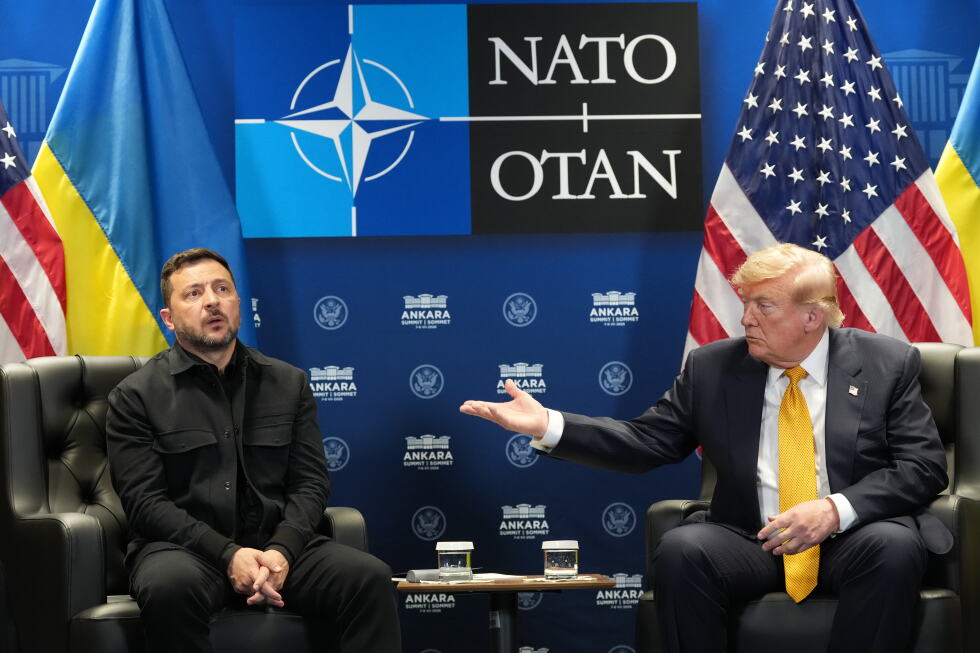
The strikes unfolded against a dramatic shift in U.S.-Ukraine relations, a day after Trump and Ukrainian President Volodymyr Zelenskyy held a high-stakes meeting on the sidelines of the NATO summit in Istanbul, Turkey. During that meeting, Trump announced the U.S. would approve a license allowing Ukraine to manufacture its own Patriot air defense systems, a capability Kyiv has requested for years to counter relentless Russian missile and drone strikes on its territory. This agreement marks a major breakthrough for Ukraine, which has relied on a limited number of donated Patriot systems from Western allies to date.
The collaborative tone of Wednesday’s meeting stood in stark contrast to a contentious meeting between the two leaders at the White House in February 2025, when Trump publicly berated Zelenskyy over the progress of the war and negotiations. During the latest encounter, however, Trump offered effusive praise for Zelenskyy, commending his willingness to engage in negotiations to end the more than four-year conflict. “He has done an amazing job and been very effective,” Trump told reporters following the meeting.