博客

  • Ireland grinds out a 36-20 win over Japan in Nations Championship

    Ireland grinds out a 36-20 win over Japan in Nations Championship

    NEWCASTLE, Australia – Ireland has maintained its perfect start to the newly-launched Nations Championship, grinding out a hard-fought 36-20 victory over Japan on Saturday to secure back-to-back wins following its dramatic 33-31 come-from-behind win against Australia a week prior. The result sets up a highly-anticipated clash against the unbeaten New Zealand All Blacks next weekend at Auckland’s iconic Eden Park, after the All Blacks notched their second consecutive win with a 47-17 rout of Italy on Saturday, following their narrow 34-32 opening-round win over France.

    Following their opening win against Australia, Irish head coach Andy Farrell made the rare call to reshuffle his side, turning over nine starting positions and handing test debuts to four young players on the neutral ground of Newcastle, located north of Sydney. The extensive roster changes showed on the pitch at times, as Ireland struggled for early cohesion against a motivated Japanese side that entered the match off a confident 27-10 win over Italy the previous week and put Ireland under pressure from the opening whistle.

    Japan struck first just three minutes into the contest, as winger Taira Main crossed the try line, with fullback Takuro Matsunaga adding the conversion to jump out to an early 7-0 lead. Ireland responded quickly, however, with flanker Nick Timoney crashing over for a try that flyhalf Ciaran Frawley converted to level the scores at 7-7. Matsunaga slotted a penalty three minutes later to put Japan back ahead 10-7, but Irish prop Tom O’Toole responded with his first career international try to put Ireland into a 14-10 lead.

    Matsunaga notched his second penalty of the half to retake the lead for Japan at 13-12, but Irish center Robbie Henshaw broke through the Japanese defense for a try after a sustained period of forward pressure from Ireland. Frawley’s conversion sent Ireland into halftime with a 19-13 advantage.

    The second half opened with a milestone moment for Irish debutant Sean Jansen, who scored a try in the 51st minute to secure the four-try bonus point for Ireland and push the lead out to 26-13. Japan did not wilt, though, hitting back shortly after the hour mark when replacement forward Hayate Era barged over for a try that Matsunaga converted to cut the deficit to just six points, keeping the upset bid alive.

    The narrow margin forced Ireland to respond, and replacement back Harry Byrne slotted a penalty in the 71st minute to push the lead back out to nine points, putting Ireland beyond the reach of a single converted Japanese try. Replacement hooker Tom Stewart, another of Ireland’s debutants, put the final stamp on the result with a try after the final siren, stretching the final score to 36-20.

    Following the final whistle, Irish captain Tadhg Beirne emphasized the toughness of the win against a persistent Japanese side, noting that the scoreline did not fully reflect how close the contest was. “Very happy with two from two,” Beirne told reporters. “The target is three from three, so we have a big challenge ahead of us in New Zealand next week at Eden Park. We’re going to have to step up our performance for sure.”

    “We had to fight hard for that one, we had to stick in it. Japan kept coming at us, coming at us but we held on well. We got a nice try at the end there to make the score look a little bit more comfortable than it was,” Beirne added. “We’re going to have to build on that and be better again next week.”

    In the next round of Nations Championship matches, Japan will return to Tokyo to face France, who pulled off a second-half comeback to beat Australia 42-26 in Brisbane earlier on Saturday.

  • Indian tourists among 15 killed as speedboat capsizes in Vietnam

    Indian tourists among 15 killed as speedboat capsizes in Vietnam

    A devastating maritime accident off the coast of southern Vietnam has left at least 15 people dead after a speedboat carrying mostly Indian tourists overturned in rough open seas on Saturday, local Vietnamese authorities and media have confirmed.

    The incident unfolded approximately 400 meters (1,312 feet) off the shore of Hon May Rut Ngoai, a small unspoiled island part of the An Thoi Archipelago in the Gulf of Thailand. Located just 10 kilometers south of Vietnam’s popular tourist destination Phu Quoc, the island is a frequent stop on international island-hopping tours that draw thousands of visitors annually.

    According to official statements, a total of 36 people were on board the capsized vessel: 32 Indian nationals and four local Vietnamese crew members. Within minutes of the boat overturning, multiple other commercial tourist vessels operating nearby launched an emergency rescue operation, rescuing 21 survivors from the capsized speedboat, many of whom were found trapped inside the hull.

    Nguyen Tien Hai, a senior local Communist Party official overseeing the region, told local outlet VnExpress that early investigations point to rough weather as the primary cause of the disaster. Strong gusting winds and unusually high waves that struck the area on Saturday likely overwhelmed the small speedboat, causing it to flip suddenly. As of Monday, rescue teams were still finalizing counts of casualties and survivors to confirm official numbers, Hai added.

    “Our absolute top priority right now is continuing rescue operations, getting all people ashore, and concentrating every available resource on delivering urgent emergency care to the surviving passengers,” Hai said in his statement.

    The Indian Embassy in Hanoi has classified the incident as a profound tragedy, and has moved quickly to support affected families. The diplomatic mission published a full list of the 32 Indian nationals that were confirmed to be on the speedboat, and has set up dedicated 24/7 telephone hotlines to share updated information and coordinate assistance for family members of those impacted by the accident.

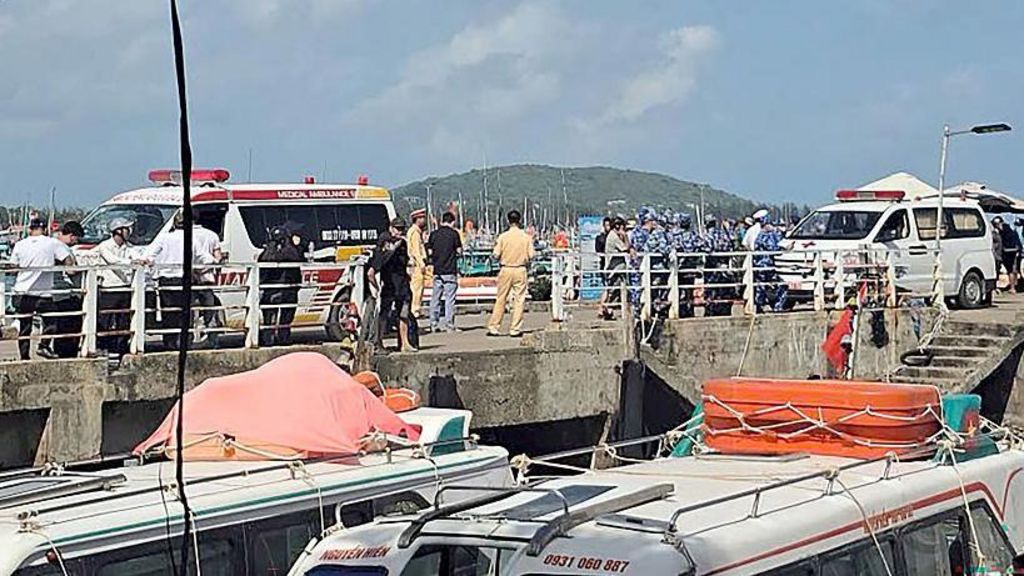
    Footage captured from the accident site shows emergency response ambulances lined up along the main Phu Quoc pier, waiting to transport casualties and survivors to local medical facilities as rescue teams bring people ashore.

  • Thousands attending Orange Order parade in Rossnowlagh

    Thousands attending Orange Order parade in Rossnowlagh

    Thousands of visitors from across Ireland have converged on the quiet seaside village of Rossnowlagh, County Donegal, for the long-standing annual Orange Order parade, a tradition held every year on the Saturday before Northern Ireland’s main Twelfth of July commemorations.

    The procession, which this year features participating lodges from across four counties – Donegal, Cavan, Leitrim and Monaghan – brought vibrant, rhythmic energy to the village streets as accordion bands, pipe troupes and drummers marched along the route. Beyond the parade itself, the event has been organized as a full day of community gathering, with local craft stalls, food vendors and family-focused activities set up across the village.

    For the Orange Order, the commemoration marks the 1690 Battle of the Boyne, where Protestant King William of Orange defeated Catholic King James II – a moment of deep historical and cultural significance for the order’s members. Donegal Grand Master David Mahon emphasized that the event is open to all members of the community, highlighting the long-standing positive relationship between the Orange Order and local Catholic neighbors in the county.

    “It’s very important because it’s part of our culture and part of our faith,” Mahon said. “We welcome everyone here from across the community.” He added that cross-community cooperation is a regular part of event planning: local Catholic residents often offer the use of their fields and land for event parking and other infrastructure needs. Mahon described the day’s atmosphere as distinctly relaxed and carnival-like, saying “lots of families here enjoying a really good time.” He also noted that the Orange Order continues to grow its presence and engagement across County Donegal.

    To manage the large influx of visitors to the small village, members of An Garda Síochána (the Republic of Ireland’s national police service) are deployed across the area, focusing primarily on traffic management to keep movement smooth for attendees.

    For many attendees, the parade has become a cherished annual tradition. Lorna Walker, a repeat visitor from Randalstown, County Antrim, shared her enthusiasm for the event: “I always love coming to this annual parade every year. I like supporting the lodges in County Donegal. Today the weather is going to make it as the sun is shining from early morning. Let’s hope everyone has an enjoyable day.”

    For the Bates family from Lisnaskea, Fermanagh, this year’s parade carries extra special meaning. “This is the first year our boys Matthew (13) and Jacob (7) are on parade with Cornafanog flute band so they are very excited and we are very proud as a family,” said Samantha Bates, the boys’ mother.

    The relaxed, community-focused event sets the tone for the main Twelfth of July commemorations that will take place across Northern Ireland in the coming days.

  • ‘Ring the bells’: residents recall escape from deadly Spanish wildfire

    ‘Ring the bells’: residents recall escape from deadly Spanish wildfire

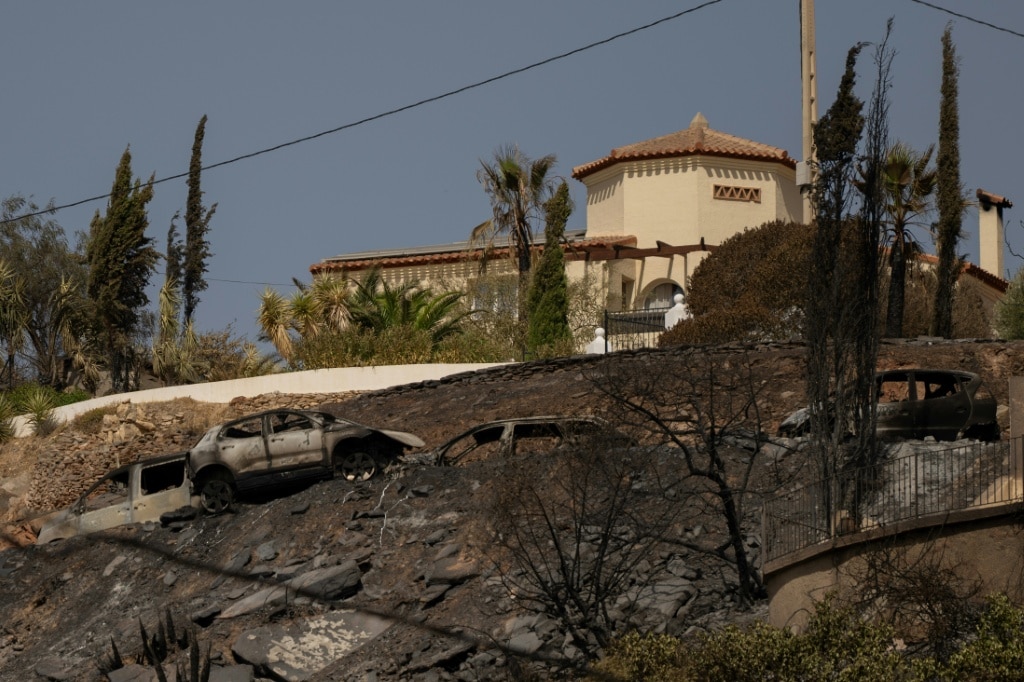
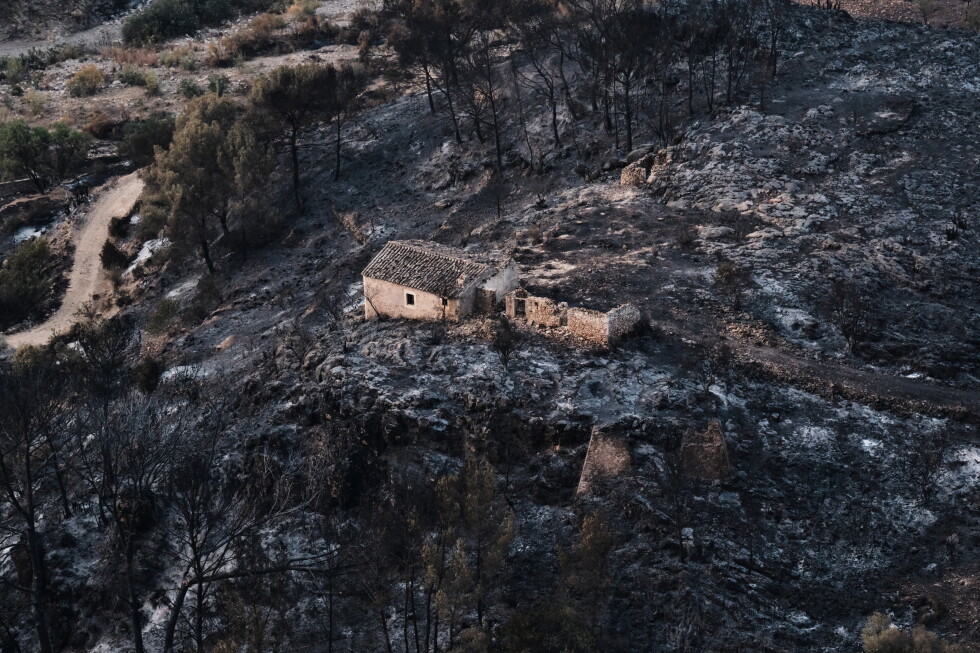
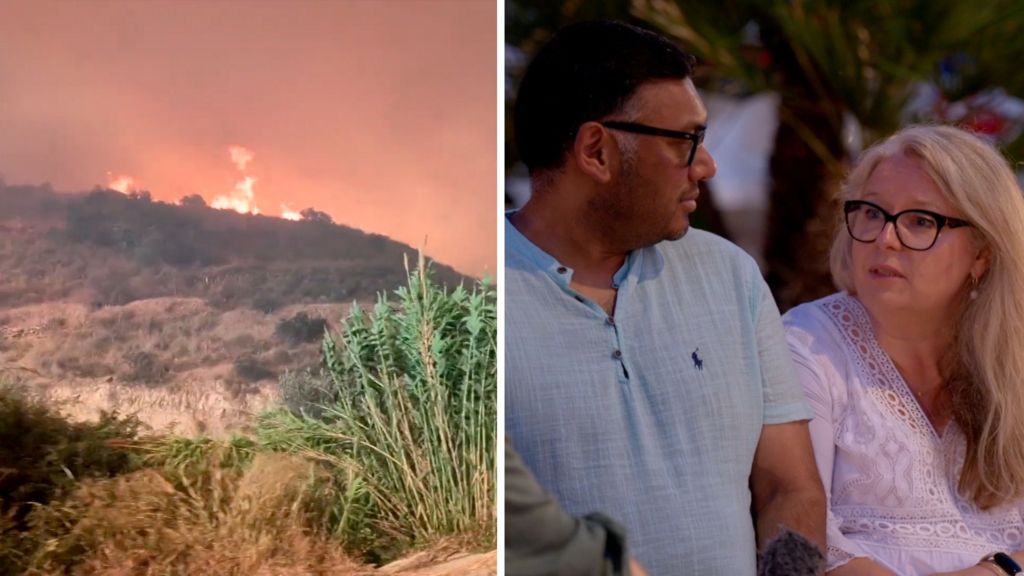
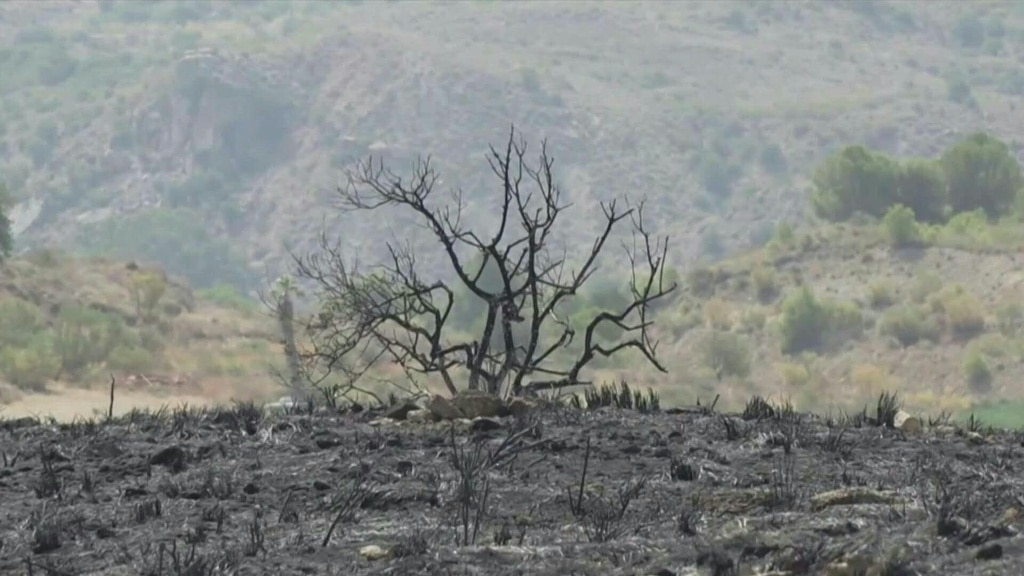
    The arid hills of southeastern Spain’s Mediterranean coast, long a quiet haven for retirees and holidaymakers from across Europe, have been reduced to ash by a devastating fast-moving wildfire that has claimed 12 lives and scorched more than 6,000 hectares of land. Survivors of the blaze, which broke out last Thursday amid record-breaking extreme heat that turned dry vegetation into a tinderbox, have shared harrowing accounts of sudden escape and narrow survival as flames advanced faster than many could outrun.

    When the fire’s edge began to encroach on the small village of Bedar, the epicenter of the disaster, 72-year-old local town councillor Manoli Ramos received an urgent, last-minute order from the mayor: race to the village church and ring its bells to sound the alarm for residents who had not yet received official evacuation alerts. “We rang the bells many times so people would know,” Ramos told AFP from her temporary refuge in nearby Los Gallardos, one of hundreds of displaced residents who fled their homes as the blaze moved through the region.

    Official preliminary investigations point to a broken power line as the likely ignition source, with the extreme heat wave that has gripped southern Spain creating ideal conditions for the fire to spread rapidly. Most of the 12 victims killed were foreign residents, many of whom died trapped in their vehicles or while attempting to escape on foot. Officials have noted that many of the foreign residents in the area live in scattered, isolated properties outside the core of Bedar, drawn by the privacy and quiet of the rural hillside — a choice that left many with slower access to emergency warnings and fewer clear escape routes as the fire advanced.

    “Foreigners live scattered outside Bedar,” Ramos explained. “They have beautiful homes and their belongings. They like living a little away from the centre.”

    For 52-year-old Moroccan resident Hassan Oulghazzi, who has called Bedar home for 16 years, the first sign of danger was not visible flames, but an ominous dark cloud hanging over the hills that quickly turned into thick, choking black smoke. Before he could spot the fire advancing, local police were pounding on his front door, ordering him to leave immediately.

    “How could you not be afraid?” Oulghazzi said. “When someone knocks on your door and tells you: ‘Get up, come on, leave here. This is real, you have to go.’” He fled with his wife and daughter with only the clothes they were wearing, leaving all their possessions behind. The family has since taken shelter at a municipal sports hall in the coastal town of Garrucha, where the Red Cross is providing food, medical care and support to hundreds of evacuees. For Oulghazzi, his own fear of displacement pales in comparison to the grief of losing neighbors and acquaintances in the blaze.

    “Everyone was afraid, but I am really touched by the dead and those who were burned. I really am,” he said. “There are some people I know.”

    Local officials have confirmed that some of the victims did not follow official orders to evacuate early or shelter in place once the flames reached their properties, a choice that proved fatal as the fire moved faster than many anticipated. For survivors who did escape, the scale of the destruction is still difficult to process, with many describing the scene as something out of a disaster film, not real life.

    Eighty-seven-year-old British evacuee Austin Crilly, who has lived in the region for years and says he has weathered no shortage of crises, told reporters that Thursday’s blaze was unlike anything he had ever experienced. Crilly was watching television at home when he spotted what he thought was an unusual large dark cloud on the horizon. Minutes later, police arrived at his door with a direct order to evacuate immediately. “Take your money, take your cards and get out,” he recalled officers telling him. Like many other evacuees, Crilly has been staying at the Garrucha sports hall, waiting for updates on when it will be safe to return to assess his home.

    British couple Martin and Elizabeth Smith, who were staying at a local campsite for a holiday, echoed that sense of surrealism. Martin Smith, 63, who has already had to cut his trip short and return to the United Kingdom, said the chaos of the escape was something he had only ever seen on screen. “It wasn’t good. Not good at all. I’d never seen anything like it. You see things like that in films, but never in real life,” he said. Despite the trauma of the disaster, Smith added that the fire has not dimmed his affection for Spain as a holiday destination. “It hasn’t put us off coming to Spain,” he said.

  • Paris landmarks shutter early as quarter of France swelters under heatwave

    Paris landmarks shutter early as quarter of France swelters under heatwave

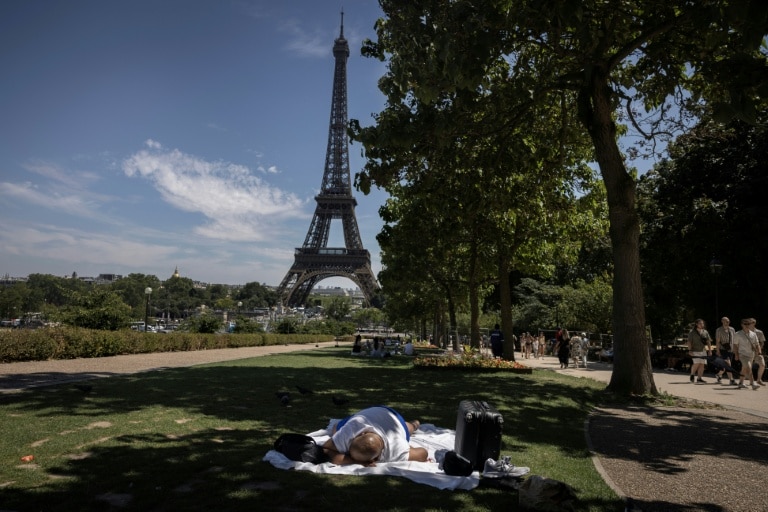
    As a record-breaking third heatwave bears down on France, a quarter of the nation’s mainland territory has been placed under the country’s highest heat warning, forcing iconic Paris landmarks including the Eiffel Tower, the Louvre, and the Musee d’Orsay to shut their doors hours earlier than their usual summer schedules.

    France’s national meteorological service Meteo-France placed 24 mainland departments — home to more than 22 million people, per an Agence France-Presse tally — on maximum red heat alert on Saturday. An additional 59 departments across mainland France remain under an orange heat warning, one tier below the highest emergency level. The extreme heat has hit during a busy national holiday weekend, with millions of travelers crowding national highways and rail networks ahead of the July 14 Bastille Day celebration.

    A spokesperson for the Eiffel Tower, the 324-meter steel monument that draws 7 million annual visitors and typically stays open past midnight during peak summer tourist season, confirmed that the landmark would implement extraordinary early closures at 4 p.m. (1400 GMT) both Saturday and Sunday, a measure put in place directly due to projected extreme high temperatures. Two of Paris’s other most visited cultural institutions have followed suit: the Louvre, the world’s most-visited art museum, will close at 4 p.m. from Friday through Monday, while the Musee d’Orsay will shut at 5 p.m. from Saturday through Wednesday in response to the extreme heat.

    Beyond disrupted tourist schedules, the heatwave has forced widespread cancellations of traditional Bastille Day firework displays across hundreds of French towns. Officials cited elevated wildfire risk and extremely dry vegetation conditions for the cancellations. A senior French official confirmed Friday that wildfires have already burned twice as much land across France in 202X as they did during the same period last year. Speaking on Saturday, President Emmanuel Macron urged the public to remain vigilant, noting that 9 out of 10 wildfires in the country stem from human activity.

    “One single moment of inattention can put families at risk, endanger the first responders who protect us, and destroy our natural landscapes,” Macron wrote in a post on social platform X.

    This heatwave marks the third extreme heat event to hit France since May. A record-shattering heatwave in June pushed official excess death figures above 2,000, with an additional 300 excess deaths recorded during a late May heat event, according to national public health data. The French government has faced growing public criticism in recent weeks, with opponents and climate experts accusing the administration of being unprepared for the rising frequency of extreme heat events, a trend climate scientists have directly linked to anthropogenic climate change. Meteo-France forecasts that high temperatures will persist across the country through Bastille Day on July 14.

  • China braced for second typhoon in a week as Bavi approaches landfall

    China braced for second typhoon in a week as Bavi approaches landfall

    A massive late-season Pacific storm, Typhoon Bavi, is moving toward the eastern coast of China after carving a destructive path across the western Pacific that has already claimed lives and forced tens of thousands of people from their homes. This marks the second powerful typhoon to strike East Asia in just seven days, arriving as communities in southern China still recover from the deadly impact of an earlier storm system.

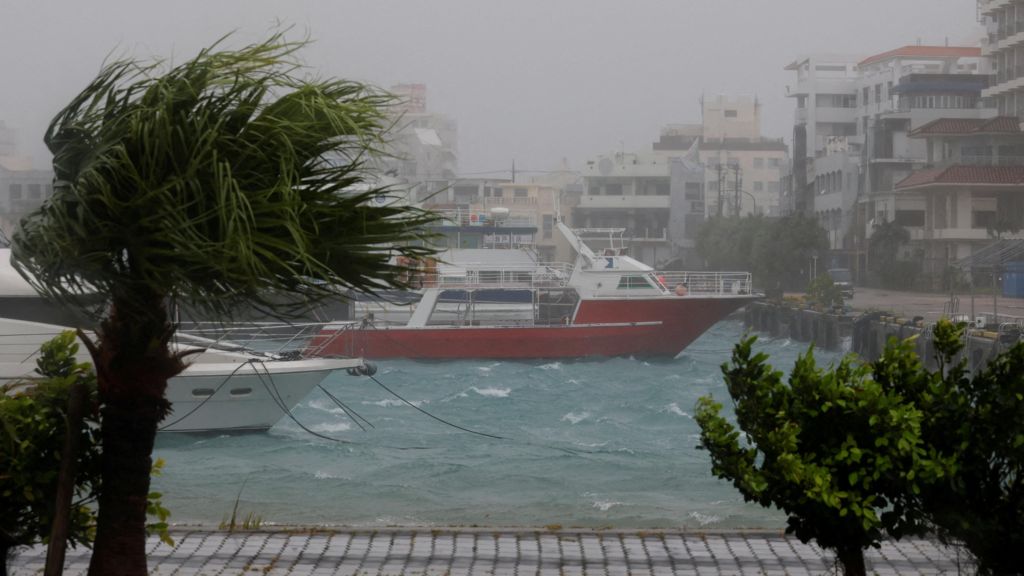
    Originating as a powerful super typhoon, Bavi first battered Guam and the Northern Mariana Islands last Monday, packing sustained wind speeds of up to 290 kilometers per hour. As the storm moved northwest across the Pacific, it gradually weakened, but retained enormous size that stretches 1,000 kilometers at its widest point, a span roughly equal to the entire width of mainland France. By the time it reached Japan’s remote Sakishima Islands, part of the Ryukyu chain between Japan’s main islands and Taiwan, sustained winds had dropped to 144 kilometers per hour, still strong enough to cause widespread disruption. Southern Japanese islands including Ishigaki bore the brunt of the storm’s impact, leaving at least five people injured and thousands of households without electrical power.

    After passing Japan’s southern island chain, Bavi brushed the northern tip of Taiwan, dumping extremely heavy rainfall across the island’s northern regions. While Taiwan avoided a catastrophic direct landfall, the storm’s intense downpours triggered widespread landslide warnings that forced thousands of residents to evacuate high-risk areas. Local authorities warned total rainfall could reach as much as one meter across worst-affected parts of the island, leading to widespread disruptions: dozens of commercial flights have been canceled, schools across multiple regions suspended classes, and residents rushed to stock up on emergency supplies, leaving supermarket shelves emptied of staple goods.

    Tragically, Bavi has already claimed lives before approaching East Asia’s major population centers. Earlier landslides triggered by the storm’s outer rain bands killed 17 people across the Philippines. No fatalities have been recorded in Japan or Taiwan to date.

    Currently, Bavi has weakened to a Category 1 typhoon, but meteorological and emergency authorities emphasize it remains an extreme hazard due to the enormous volume of moisture trapped in its extensive rain bands. Forecasters expect the storm to make landfall near the major eastern Chinese city of Wenzhou on Sunday morning. Wenzhou, a coastal metropolis with a population of roughly 10 million people, lies directly in the forecast path of the storm. Chinese officials have warned Bavi will bring “exceptionally heavy rains” to eastern Zhejiang province and neighboring northeastern Fujian province, and have ordered the mass evacuation of hundreds of thousands of residents from high-risk coastal and low-lying areas. Authorities note the preemptive evacuation order was implemented to prepare for the worst possible outcome, prioritizing public safety even if the storm’s impact ends up less severe than forecast.

    The arrival of Bavi comes as parts of southern China are still reeling from the widespread devastation left by Typhoon Maysak earlier this week. Maysak left at least 39 people dead, killed massive numbers of livestock, caused hundreds of millions of dollars in agricultural losses, and even spawned two rare tornadoes in central China’s Hubei province, compounding the damage to communities already strained by extreme weather.

  • Nigerian forces suffered casualties in kidnap rescue: army

    Nigerian forces suffered casualties in kidnap rescue: army

    Nigeria’s military has confirmed that security personnel sustained unspecified casualties during a multi-week operation that secured the freedom of more than 40 kidnapped schoolchildren and teachers held captive for nearly two months in the country’s southwest, a region long considered one of the nation’s safest. The hostages, who included toddlers as young as two and three years old, were abducted in late 2025 from three schools in Oyo State’s Oriire local government area, a kidnapping that triggered nationwide outrage, protests and a regional teachers’ strike just 14 months ahead of Nigeria’s January 2027 presidential election.

    The rescue operation, formally announced by authorities on Friday, was described by the Nigerian Army as a carefully coordinated campaign carried out jointly by military units, domestic intelligence agencies, state police and local community vigilante groups. While the operation successfully freed all hostages, the army confirmed Saturday that “there were some casualties on the part of the security forces,” offering no additional details on the number of personnel killed or injured.

    Nigerian President Bola Tinubu has attributed the mass abduction to Ansaru, a jihadist splinter faction of Boko Haram that has historically operated primarily in central Nigeria, marking a concerning expansion of the group’s operational reach into the southwest. Oyo State Senator Abdulfatai Buhari, who met with the freed hostages after their rescue, told reporters he was overcome with emotion after seeing the condition of the captives, saying, “I was almost shedding tears yesterday when I saw them. It was mental torture… They were so frail.”

    For more than a decade, Nigeria has battled an expanding jihadist insurgency that began in the country’s northeastern region. In recent years, armed Islamist factions and criminal gangs known locally as “bandits” have spread their influence across the north, increasingly adopting mass kidnapping as a tactic to generate millions of dollars in ransom payments and leverage political concessions from the federal government. The Oyo State abduction sent shockwaves across Nigeria, however, because it represented a major act of jihadist kidnapping in a region that had long been seen as insulated from the worst of the country’s ongoing security crises. Southwest Nigeria is home to Lagos, Nigeria’s economic and commercial capital, while Oyo State is one of the nation’s most populous sub-national regions, with its capital Ibadan ranking as a major center for education in the country.

    Nigeria’s Defence Minister Christopher Musa explained last week that the kidnappers had seized the students to use as bargaining leverage, after Nigerian security forces detained several of the group’s senior commanders. The faction threatened to kill all hostages if military forces launched an offensive against their positions, Musa added. Over the course of a more than month-long operation, military forces targeted the group’s broader criminal network, clearing multiple militant hideouts scattered across the forested terrain of Old Oyo National Park. Supporting arrest operations carried out across multiple Nigerian states disrupted the group’s command structure, the military said, leaving the faction disorganized and under overwhelming pressure, which ultimately forced the terrorists to unconditionally release all captives.

    Following their rescue, the freed schoolchildren and teachers are currently receiving medical assessment and treatment at a military medical facility based in Ibadan. Mass school kidnappings have long been a high-profile tactic used by armed groups in Nigeria, dating back to the 2014 abduction of 276 schoolgirls from a secondary school in Chibok, Borno State, an incident that drew global condemnation and sparked the international #BringBackOurGirls movement. A wave of mass abductions across northern Nigeria in late 2025, including the kidnapping of two dozen schoolgirls in Kebbi State and more than 300 students and teachers in Niger State, has renewed international scrutiny of Nigeria’s persistent insecurity and the federal government’s ability to contain the spread of violent extremism. Since the Oyo State kidnapping, public protests have repeatedly called on the Tinubu administration to implement sweeping reforms to end the country’s ongoing kidnapping crisis, which experts estimate has generated hundreds of millions of dollars in illicit ransom payments for armed groups over the past decade.

  • Hundreds of firefighters battle wildfire in southern Spain that killed at least 12

    Hundreds of firefighters battle wildfire in southern Spain that killed at least 12

    On a sweltering summer weekend in southern Spain, hundreds of firefighters supported by aerial firefighting assets including helicopters and fixed-wing planes fought to bring under control one of the country’s deadliest wildfires in decades, which has already claimed at least 12 lives. The blaze, which ignited late Thursday in a parched semi-arid region near the Sierra de Los Filabres mountains in Almeria province, has already consumed roughly 66 square kilometers of forest and agricultural land — an area nearly matching the total size of Manhattan.

    Antonio Sanz, chief of emergency services for the Andalusia region, reported that slightly milder conditions, including light winds and elevated humidity, have given firefighting crews a small opening to gain ground over the inferno. Still, the unprecedented scale of the blaze continues to present major operational obstacles. Overnight, teams carried out controlled back burns along the fire’s perimeter to starve it of fuel and prevent further spread.

    Authorities have confirmed that most of the victims are believed to be foreign nationals, and the majority lost their lives after disregarding official shelter-in-place orders as the fire advanced. Seven of the deceased died on foot after abandoning their vehicles to flee the flames. Regional officials say four victims are confirmed to be British citizens, after investigators noted the burned-out vehicle they were traveling in had a right-side steering wheel, consistent with UK vehicle standards. Autopsies have been completed, and DNA samples have been collected to formally identify all victims, Sanz confirmed Saturday. So far, officials have proactively evacuated 1,448 residents across 11 at-risk communities.

    The harrowing escape of one British couple, Jeffrey and Christine Kember, who own a farmhouse in Los Pinos, illustrates the chaos of the fire’s rapid advance. The pair were watching a television program when emergency sirens blared, warning of the approaching flames. Both jumped into their separate cars, stopping first to help a neighbor with two young children, but the couple became separated in the smoke and fire, and Jeffrey could not reach Christine because she had left her phone behind. “I was driving straight through the flames. I just thought, I can’t stop, I have to keep going,” Jeffrey Kember told the Associated Press in an interview outside a local evacuation center, with his unharmed wife beside him. “It was surreal — one minute I was surrounded by fire, and the next I came out into bright sunshine. It was ridiculous.”

    Per Spain’s state-run EFE news agency, local authorities have already arrested two people who defied evacuation orders and returned to the high-risk fire zone. Search and rescue teams are still conducting grid searches of the Bédar area to locate any additional missing people or victims.

    The deadly Almeria fire comes as Southern Europe grapples with a worsening climate-fueled heat crisis that has made extreme heat and large-scale wildfires the new normal. Spain has battled increasingly frequent and severe heat waves in recent years, with temperatures regularly topping 40 degrees Celsius. Hot, dry, windy conditions allow small ignition events to rapidly escalate into out-of-control blazes. Spanish Justice Minister Félix Bolaños said Saturday that the extreme ferocity of the Almeria fire is a direct consequence of the ongoing global climate emergency, noting that at its peak, the blaze advanced at a rate of 100 meters per minute.

    Earlier this June, Spain recorded multiple days of all-time record heat, which contributed to more than 1,000 excess deaths across the country. Data from the European Union’s Copernicus Climate Change Service confirms that Europe is warming faster than any other continent on Earth, with temperatures rising twice as fast as the global average since the 1980s. Much of Western Europe is currently facing its third intense heat wave in just six weeks, and 2025 ranks as the third-hottest year ever recorded globally.

    The crisis is not isolated to Spain. Neighboring France is also battling multiple active wildfires across the country as temperatures soar. French Interior Minister Laurent Nunez announced Saturday that 32 people have been arrested so far this summer in connection with human-caused wildfires across the country. “These unacceptable acts have disastrous consequences and force our firefighters to operate at great risk to their own lives, and now those responsible face justice,” Nunez said. “We will continue our determined action and will not tolerate this.”

    French President Emmanuel Macron recently reminded the public on social media platform X that nine out of 10 wildfires in France are started by human activity. Since the start of 2026, more than 25,000 hectares of land have burned across France — nearly double the total area burned over the same period last year. France is currently experiencing the peak of its third heat wave of the summer, with temperatures hitting 40 degrees Celsius across western and central regions, and reaching 37 degrees Celsius in Paris. Last month was the hottest June ever recorded in France, with mortality surging nearly 30% during the peak of the heat.

    Wildfires are not a new threat to the Iberian Peninsula. Last year alone, wildfires burned more than 393,000 hectares of land across Spain — an area twice the size of London — that killed four people, according to the European Forest Fire Information System. Spain’s deadliest wildfire on record dates back to 1979, when 21 people died in the coastal town of Lloret de Mar, northeast of Barcelona. In neighboring Portugal, the 2017 wildfire in Pedrogao Grande killed 66 people, 47 of whom died trapped on a single road while attempting to flee the blaze by car — a tragedy that mirrors the circumstances of many deaths in this latest Spanish fire.

    Associated Press reporter Samuel Petrequin in London contributed reporting to this article.

  • ‘We escaped Spanish wildfire, but our friends lost their lives’

    ‘We escaped Spanish wildfire, but our friends lost their lives’

    In the scorched hills of southern Spain, a devastating wildfire has left a trail of tragedy, turning a once peaceful landscape into a smoldering disaster zone. For those who managed to flee the advancing flames, the relief of survival is tempered by searing grief—survivors speak of escaping the fire’s destructive path, but share heartbreaking stories of friends who did not make it out alive.

    More than 300 firefighters have been deployed across the affected region, working around the clock to contain the out-of-control blaze. Sweltering summer temperatures and gusty winds have created perfect conditions for the fire to spread rapidly, turning small spot fires into a massive conflagration that has consumed thousands of hectares of forest and brushland, and threatened residential communities scattered across the hills. Fire crews have been working from both the ground and the air, with water-dropping aircraft assisting in cooling hot spots and creating firebreaks to slow the blaze’s advance.

    The wildfire, which erupted amid an ongoing record heat wave that has gripped much of the Iberian Peninsula, has underscored the growing risk of extreme wildfire events linked to rising global temperatures. Local authorities have issued urgent evacuation orders for multiple small towns and rural settlements, moving thousands of residents to temporary emergency shelters in nearby urban centers. As the operation continues, emergency response teams are still working to confirm the full extent of human and property loss, with the death toll already climbing to confirm multiple fatalities among local residents and visitors caught off guard by the fire’s rapid spread.

    For survivors who fled with little more than the clothes on their backs, the disaster is not just an environmental catastrophe—it is a personal loss that will reshape their communities for years to come. “We got out, but our friends didn’t,” one survivor told local reporters, their voice thick with emotion, a reminder of the human cost behind the statistics of the wildfire emergency.

  • Firefighters gain upper hand on deadly Spain wildfire

    Firefighters gain upper hand on deadly Spain wildfire

    Sixteen months after one of the deadliest wildfires in modern Spanish history erupted in southern Spain’s Andalusia region, emergency crews have finally turned a corner in their battle against the blaze, thanks to a sudden shift in favorable weather conditions.

    The fast-moving inferno first ignited on Thursday in the hilly Gallardos area, a scenic stretch of Andalusia that hosts a large community of foreign residents and seasonal tourists. By Saturday, improved atmospheric conditions — including dropping temperatures, receding high winds that had previously stoked the flames, and rising humidity — gave firefighters the opening they needed to launch a direct offensive against the blaze, a tactic that had been impossible for the first 48 hours of the emergency.

    Twelve people from multiple nationalities have been confirmed killed in the fire, with most of the victims discovered in or near the small whitewashed village of Bedar. Many of the deceased were trapped while attempting to flee the advancing flames, either in their vehicles or on foot, regional officials confirmed. Authorities have also noted that a number of the victims failed to comply with mandatory evacuation orders or instructions to shelter in place as the fire approached their communities.

    Survivors who escaped the blaze have described harrowing, nightmare-like scenes that they say will stay with them forever. “We were absolutely terrified. We could see the flames. It was horrific,” Manoli Ramos, 72, a local councillor in Bedar, told reporters. Ramos, who lived through a major 2012 wildfire in the same region, compared this event to something out of a nightmare: “This time it was like hell.”

    Austin Crilly, an 87-year-old British resident who was evacuated by police from the high-risk zone, recalled the sudden speed with which the fire advanced. “I was watching television when I saw a huge black cloud, well I thought it was a cloud,” Crilly said. “I thought, ‘My God, I will shut the door’. Then, five minutes later, there was banging at the door. They said, ‘Take your money, take your cards and get out’.”

    Martin Smith, a 63-year-old British tourist who was evacuated from a local campsite alongside his 65-year-old wife Elizabeth, called the scene unprecedented. “It wasn’t good. Not good at all. I’d never seen anything like it. You see things like that in films, but never in real life,” Smith said.

    Antonio Sanz, chief of emergency management for the Andalusian regional government, announced Saturday that no new fatalities had been recorded overnight, a development he called “the best news we could have”. Spain’s Civil Guard has completed an initial sweep of burned areas, and while search operations continue, no additional bodies have been discovered so far.

    Sanz also clarified public confusion around reports of 23 missing people, explaining that the count refers to individuals whose families have been unable to reach them, many of whom have already reached safe evacuation centers. Only seven formal missing persons reports have been filed with authorities to date. Officials caution that a final confirmed death toll will not be released until all recovered remains undergo autopsies and formal identification, which is still underway.

    As of Saturday, the blaze has scorched approximately 6,600 hectares (16,300 acres) of rugged terrain, marked by steep ravines that make it nearly impossible for ground fire vehicles to access. Around 500 firefighting personnel, supported by more than 20 water-bombing aircraft, have been deployed to contain the spread of the fire.

    Investigators currently believe the wildfire was sparked when a power line snapped amid weeks of extreme heat that has gripped Spain, with temperatures regularly exceeding 40°C. Those sustained high temperatures turned the region’s vegetation into dry, tinder-like fuel ready to ignite at the smallest spark.

    Climate scientists around the world have repeatedly warned that human-caused climate change is increasing both the frequency and severity of extreme weather events, including the record-breaking heatwaves and large-scale wildfires that have become increasingly common across southern Europe in recent years.