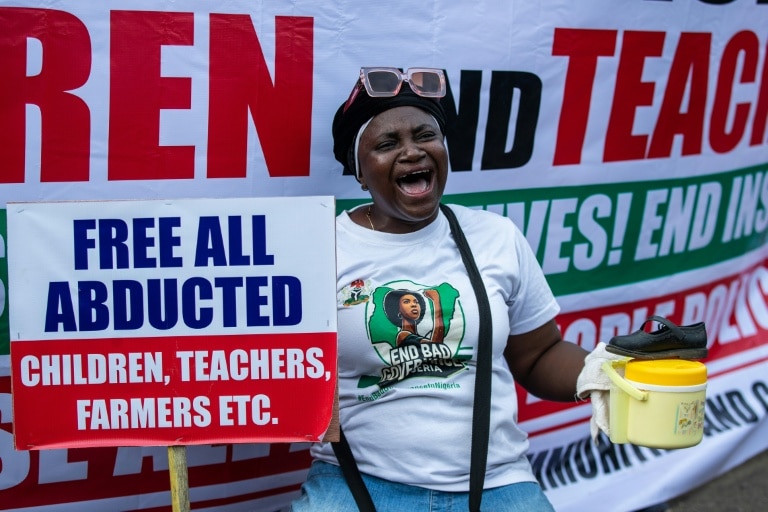
Nigeria’s military has confirmed that security personnel sustained unspecified casualties during a multi-week operation that secured the freedom of more than 40 kidnapped schoolchildren and teachers held captive for nearly two months in the country’s southwest, a region long considered one of the nation’s safest. The hostages, who included toddlers as young as two and three years old, were abducted in late 2025 from three schools in Oyo State’s Oriire local government area, a kidnapping that triggered nationwide outrage, protests and a regional teachers’ strike just 14 months ahead of Nigeria’s January 2027 presidential election.
The rescue operation, formally announced by authorities on Friday, was described by the Nigerian Army as a carefully coordinated campaign carried out jointly by military units, domestic intelligence agencies, state police and local community vigilante groups. While the operation successfully freed all hostages, the army confirmed Saturday that “there were some casualties on the part of the security forces,” offering no additional details on the number of personnel killed or injured.
Nigerian President Bola Tinubu has attributed the mass abduction to Ansaru, a jihadist splinter faction of Boko Haram that has historically operated primarily in central Nigeria, marking a concerning expansion of the group’s operational reach into the southwest. Oyo State Senator Abdulfatai Buhari, who met with the freed hostages after their rescue, told reporters he was overcome with emotion after seeing the condition of the captives, saying, “I was almost shedding tears yesterday when I saw them. It was mental torture… They were so frail.”
For more than a decade, Nigeria has battled an expanding jihadist insurgency that began in the country’s northeastern region. In recent years, armed Islamist factions and criminal gangs known locally as “bandits” have spread their influence across the north, increasingly adopting mass kidnapping as a tactic to generate millions of dollars in ransom payments and leverage political concessions from the federal government. The Oyo State abduction sent shockwaves across Nigeria, however, because it represented a major act of jihadist kidnapping in a region that had long been seen as insulated from the worst of the country’s ongoing security crises. Southwest Nigeria is home to Lagos, Nigeria’s economic and commercial capital, while Oyo State is one of the nation’s most populous sub-national regions, with its capital Ibadan ranking as a major center for education in the country.
Nigeria’s Defence Minister Christopher Musa explained last week that the kidnappers had seized the students to use as bargaining leverage, after Nigerian security forces detained several of the group’s senior commanders. The faction threatened to kill all hostages if military forces launched an offensive against their positions, Musa added. Over the course of a more than month-long operation, military forces targeted the group’s broader criminal network, clearing multiple militant hideouts scattered across the forested terrain of Old Oyo National Park. Supporting arrest operations carried out across multiple Nigerian states disrupted the group’s command structure, the military said, leaving the faction disorganized and under overwhelming pressure, which ultimately forced the terrorists to unconditionally release all captives.
Following their rescue, the freed schoolchildren and teachers are currently receiving medical assessment and treatment at a military medical facility based in Ibadan. Mass school kidnappings have long been a high-profile tactic used by armed groups in Nigeria, dating back to the 2014 abduction of 276 schoolgirls from a secondary school in Chibok, Borno State, an incident that drew global condemnation and sparked the international #BringBackOurGirls movement. A wave of mass abductions across northern Nigeria in late 2025, including the kidnapping of two dozen schoolgirls in Kebbi State and more than 300 students and teachers in Niger State, has renewed international scrutiny of Nigeria’s persistent insecurity and the federal government’s ability to contain the spread of violent extremism. Since the Oyo State kidnapping, public protests have repeatedly called on the Tinubu administration to implement sweeping reforms to end the country’s ongoing kidnapping crisis, which experts estimate has generated hundreds of millions of dollars in illicit ransom payments for armed groups over the past decade.