博客

  • Typhoon makes landfall in China after forcing nearly two million to flee

    Typhoon makes landfall in China after forcing nearly two million to flee

    A powerful typhoon that carved a destructive path across the Pacific has made landfall in eastern China, forcing nearly 2 million people across multiple regions to abandon their homes for safer ground in one of the largest pre-storm evacuation efforts in recent years. Typhoon Bavi came ashore around 11:20 pm local time Saturday in Yuhuan, a city in China’s coastal Zhejiang province, carrying maximum sustained winds of 144 kilometers per hour, according to the provincial meteorological observatory in a report carried by China’s official Xinhua News Agency.

    Before reaching the Chinese mainland, the storm system already left a wake of disruption across northern Taiwan and Japan’s remote southwestern Ryukyu Islands, toppling urban trees, cutting electrical power to tens of thousands of households, and forcing widespread shutdowns of businesses and transport links. The landfall comes as China has already faced a week of devastating extreme weather across its central and southern regions, where earlier storms killed at least 39 people, swelled dozens of rivers past flood stages, and caused a reservoir dam to collapse.

    Meteorologists forecast Bavi will continue tracking northwest after landfall, gradually weakening as it moves inland. As of Saturday morning, Chinese authorities had already relocated 1.72 million residents in high-risk zones to emergency shelters. In anticipation of the storm’s arrival, Zhejiang suspended all in-person classes, non-essential work, public transport and outdoor events, canceling more than 400 flights and dozens of intercity train services to minimize risk.

    Wenzhou, a major Zhejiang metropolis home to nearly 10 million people, emphasized in an official statement that its full-scale, proactive mobilization left no resource spared, with all efforts focused on preparing for the worst possible outcome. Footage from state broadcaster CCTV showed local residents reinforcing shop shutters with wooden planks and applying protective tape to windows, as forecasters warned Bavi would bring exceptionally heavy rainfall to eastern Zhejiang and neighboring northeastern Fujian province.

    Further north, torrential pre-emptive rainfall prompted Beijing authorities to evacuate more than 100,000 residents, as the capital increased water discharge flows from the strategic Miyun Reservoir to create extra storage capacity for incoming floodwaters. State media reports show an additional 130,000 residents have been evacuated across Fujian, while roughly 34,000 people left high-risk and coastal areas of Shanghai.

    In northern Taiwan, streets sat largely empty as businesses remained closed for a second consecutive day, battered by strong wind and heavy rain. The storm forced the evacuation of more than 14,000 residents across the island, canceled hundreds of flights, and left more than 170,000 households without power. Taiwan’s Central Weather Administration warned of extremely torrential rain across northern sections of the island and dangerous coastal waves reaching up to 10 meters as Bavi passed just north of Taiwan’s coastline.

    The storm system’s origins stretch back to earlier this week, when it made landfall in Guam and the Northern Marianas as a powerful super typhoon before weakening to a standard typhoon as it moved west across the Pacific. The death toll from Bavi has already climbed to 18 in the Philippines, where the storm triggered deadly landslides and flooding, mostly on the southern island of Mindanao. Nearly 11,000 Filipinos have fled their homes, dozens of ports remain closed, and more than 300 vessels have been forced to seek shelter in safe harbors.

    In Japan, thousands of households and public facilities across Okinawa Prefecture lost power when Bavi pounded the southwestern islands, with the Miyako region suffering the worst damage. Japanese carriers canceled dozens of domestic flights, disrupting travel plans for more than 26,000 passengers.

    Climate scientists have linked the increasing intensity of tropical storms like Bavi to rising ocean temperatures. Last week, the European Union’s Copernicus Marine Service confirmed that oceans globally recorded their hottest June on record, with projections that new temperature records will be set in the coming months. Warmer ocean waters fuel more rapid intensification of tropical cyclones and add more moisture to storm systems, which translates to heavier rainfall when they make landfall. This year’s weather has been further amplified by the return of El Niño, a natural climate pattern that warms Pacific surface temperatures and occurs every two to seven years.

    Initially, forecasters predicted Bavi would become the strongest typhoon to hit Taiwan in more than 30 years, but CWA senior forecaster Jason Cheng noted the storm’s strong wind radius has since shrunk to 350 kilometers. The shifted forecast and scaled-back impact left some Taiwanese residents frustrated with the early government warnings that prompted widespread shutdowns. “Look at how it caused people to scramble for groceries and clear out supermarket shelves. Honestly, there hasn’t even been much wind or rain these past two days,” said Li, a breakfast shop owner in the northern coastal city of Keelung.

  • Exclusive: Syria, Iraq and US plan to unveil Mediterranean pipeline deal to bypass Strait of Hormuz

    Exclusive: Syria, Iraq and US plan to unveil Mediterranean pipeline deal to bypass Strait of Hormuz

    A landmark transnational energy project is set to move forward after senior Iraqi and regional officials confirmed to Middle East Eye that Iraq, Syria and the United States have reached an agreement to reactivate the decades-old Kirkuk-Baniyas oil pipeline, a 500-mile corridor stretching from northern Iraq’s major oil fields to Syria’s Mediterranean coastline. The initiative is framed explicitly as a strategy to reduce Iraq’s overreliance on the Strait of Hormuz, where Iran has tightened control amid escalating regional tensions tied to the US-Israeli war. The formal unveiling of the agreement is scheduled for next week, during Iraqi Prime Minister Ali al-Zaidi’s upcoming visit to the White House for talks with US President Donald Trump, sources confirmed.

    Leading the behind-the-scenes negotiations on the US side is Tom Barrack, Trump’s ambassador to Turkey and special envoy for Syria and Iraq, who has spent weeks ironing out project details ahead of Zaidi’s trip, which will also include a stop in Texas, America’s core energy production hub. Senior Iraqi sources tell MEE that Barrack has built a strong working partnership with Zaidi, and frames the pipeline project as a blueprint for future US-aligned commercial development across the Levant that would deliver mutual benefits to Washington and regional host governments.

    Originally completed in 1952 by the Iraq Petroleum Company, the pipeline was built to carry up to 300,000 barrels of crude oil per day. It was shut down by Baghdad in the 1980s after Syria aligned with Iran during the Iran-Iraq War, then suffered extensive damage following the 2003 US-led invasion of Iraq, leaving it completely non-functional for decades.

    Extensive modernization and reconstruction work will be required to bring the corridor back online, including new storage infrastructure, upgraded pumping stations and replacement electrical systems. One senior regional official told MEE that a full, wholesale replacement of the aging pipeline is the most likely path forward, with a total construction timeline of two to three years. The official added that a consortium of US energy firms has already been assembled to lead the reconstruction effort, a clear signal of the US government’s commitment to advancing the project.

    Initial discussions between Baghdad and the new Syrian government to revive the pipeline first emerged in late 2024, shortly after Islamist militias loyal to Syrian President Ahmed al-Sharaa ousted long-time ruler Bashar al-Assad. Those early talks failed to gain sufficient momentum to move forward, until shifting regional dynamics created new urgency for the project.

    That urgency stems directly from Iran’s expanding control over the Strait of Hormuz amid the ongoing regional war. In recent months, Iraq has relied on small-scale crude exports via tanker trucks crossing into Syria, but volumes have been far too low to meet Baghdad’s revenue needs.

    “Iraq has started to see Syria in a different light,” independent Iraqi analyst Sarhang Hamasaeed told MEE. “Prior to the war, there was deep skepticism. The reality of the war made it clear that Iraq needs Syria as an alternative export route.”

    Regional sources confirm that Syrian Foreign Minister Asaad al-Shaibani will travel to the US to attend the official signing ceremony for the pipeline agreement. The project comes amid a sweeping reset in US-Syria relations: after al-Sharaa toppled Assad, he aligned with Washington, and now enjoys strong backing from Turkey and Gulf powers including Qatar and Saudi Arabia. The Trump administration has already rolled back multiple layers of sanctions on Syria, including sanctions on al-Sharaa’s former rebel group Hay’at Tahrir al-Sham (HTS), which evolved from al-Qaeda’s former Syrian affiliate al-Nusra Front.

    Last week at a NATO summit in Ankara, Trump issued unusually public praise for al-Sharaa, calling him “fantastic” and “highly respected”. The US also announced last week it would remove Syria from its list of State Sponsors of Terrorism, a designation the country had held since 1979. The delisting clears a major regulatory hurdle for US firms to participate in the pipeline project.

    Earlier this month, the Iraqi government already approved a preliminary agreement for US firms Capital TI and Chevron, alongside a Qatari energy company, to explore development of both the original Kirkuk-Baniyas route and a second line from the Iraqi oil hub of Haditha in Anbar Province to Baniyas.

    For Iraq, the stakes of the project could not be higher. Roughly 95% of Iraq’s oil exports currently flow through the Strait of Hormuz, leaving the country extremely vulnerable to Iran’s chokehold on the waterway. Data from energy analytics firm Vortexa released last month shows that Iraq’s seaborne oil exports in May fell to just 8% of the 2024 average. With oil sales accounting for 90% of the Iraqi government’s annual budget, the disruption has created a severe fiscal crisis for Baghdad, making an alternative export route a matter of national economic survival.

    Baghdad’s ruling coalition is dominated by Shia political parties and militias with close ties to Iran, which have historically been wary of partnering with al-Sharaa, a Sunni leader with a history as a hardline Islamist insurgent. But the acute economic pressure from disrupted Hormuz exports has pushed Baghdad to prioritize the project despite internal opposition.

  • Trump says US ready to ‘destroy’ Iran after Israeli intelligence warns of ‘assassination plot’

    Trump says US ready to ‘destroy’ Iran after Israeli intelligence warns of ‘assassination plot’

    Escalating tensions between the United States and Iran have reached a new boiling point after former U.S. President Donald Trump issued an extraordinary threat of overwhelming military retaliation against Tehran, following Israeli intelligence warnings of an alleged plot to assassinate him. The dramatic escalation comes as a previously Pakistan-brokered ceasefire between the two nations teeters on collapse, marked by new airstrikes, fresh sanctions, and dueling accusations of broken commitments.

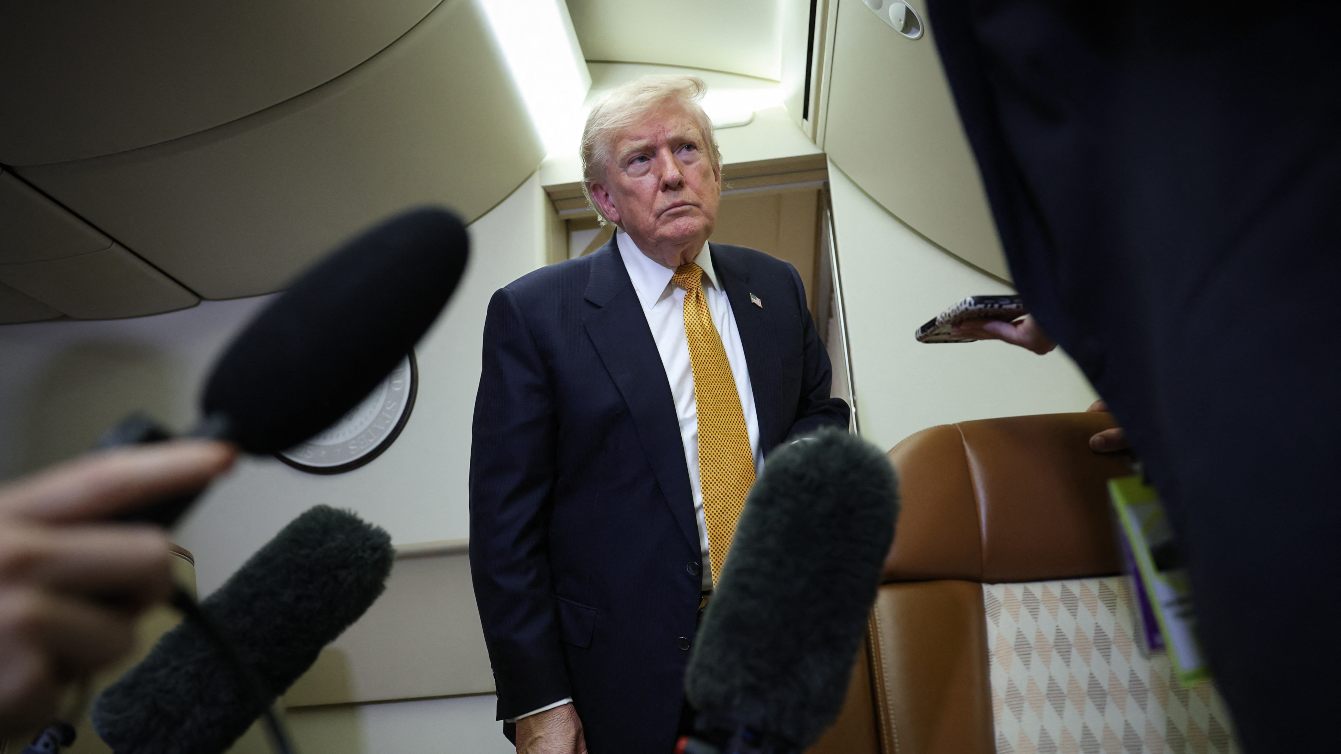
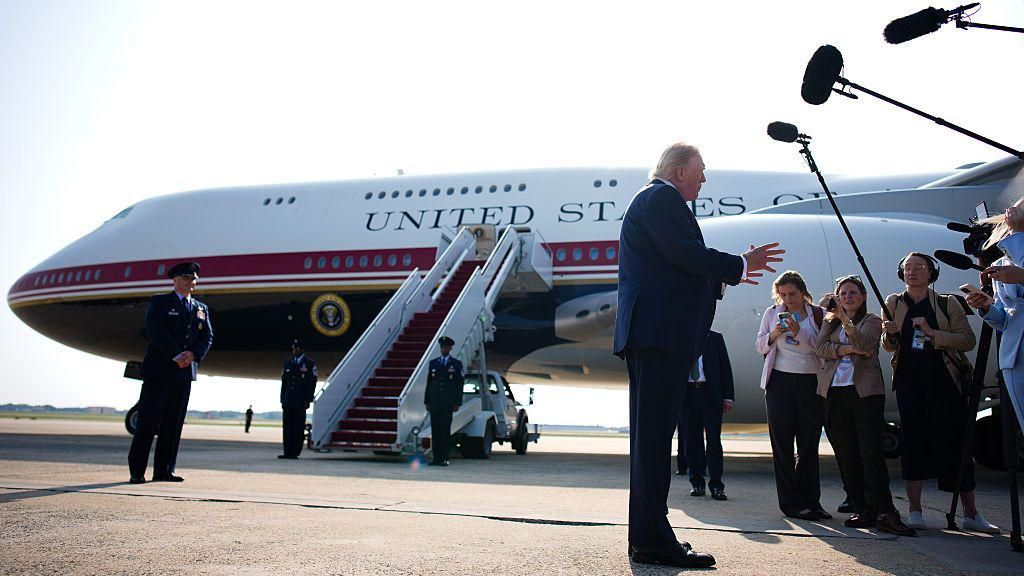
    According to a Wall Street Journal report citing anonymous intelligence sources, Israeli security agencies recently shared new details of what they described as a “specific” and “active” Iranian plan to target Trump with Washington. CNN further confirmed that the intelligence prompted elevated security precautions, leading the U.S. Secret Service to request a last-minute change to Trump’s travel itinerary following the NATO summit held in Washington D.C.. Trump ultimately departed the region aboard an older aircraft, while his newer, Qatari-donated jet was sent separately to his next destination in the United Kingdom, a shift directly tied to the newly uncovered threat.

    In a fiery post shared on his Truth Social platform, Trump doubled down on the warnings, announcing that 1,000 American missiles are already locked and targeted at the Islamic Republic of Iran, with thousands more waiting to be deployed immediately should Tehran move forward with the alleged plot. “Orders have already been given, and the U.S. Military is ready, willing, and able – for a one year period of time, subject to extension – to completely decimate and destroy all areas of Iran – PRAISE BE TO ALLAH!” the post read.

    The threatening rhetoric comes amid a rapidly unraveling interim truce agreed through a Pakistan-brokered memorandum of understanding just one month prior. Earlier this week, the U.S. launched two consecutive nights of airstrikes across six Iranian cities, which Iranian officials say killed 17 people and wounded another 115. On Friday, the U.S. Treasury Department unveiled a new round of sanctions targeting Mojtaba Khamenei, a key financier linked to Iran’s supreme leader, alongside 13 additional individuals and entities – a move that directly violates the terms of the interim agreement, according to Iranian officials.

    Paragraph 9 of the signed MoU explicitly prohibits the U.S. from imposing new sanctions or deploying additional military forces to the region, while allowing Iran to maintain its current nuclear program status. Iranian Foreign Minister Abbas Araghchi took to social media platform X to condemn the actions, noting that Iran has strictly upheld its end of the agreement while Washington has flagrantly violated its commitments. “Iran has so far kept its word, unlike the so-called US Treasury Secretary who is violating Para 9 of the MoU,” Araghchi wrote, adding that “there can only be mutual compliance” moving forward.

    Even amid the open hostilities, Trump confirmed that negotiations toward a final comprehensive peace agreement with Iran will continue, despite declaring the month-old ceasefire “over.” The outbreak of renewed violence was sparked by attacks on Qatari and Saudi oil tankers near the strategically critical Strait of Hormuz earlier this week, which triggered the U.S. airstrikes and subsequent Iranian missile and drone strikes on U.S.-affiliated military sites across the Middle East.

    Trump stated on social media that Iran itself requested that talks continue, and the U.S. has agreed to move forward with negotiations, even as the truce is no longer in effect. However, Iranian lead negotiator and parliament speaker Mohammad Bagher Ghalibaf rejected any claims that Tehran would surrender to U.S. pressure, stressing that Iran has maintained full military preparedness in case Washington fully abandons the interim agreement. “We have never stopped preparing to defend our country, and if at any moment the Americans betray the understanding, we are ready for full-scale defence,” Ghalibaf said. “Ending the war is a priority for the countries of the world, but everyone should know that this conflict will never end with Iran’s surrender.”

    Pakistan, which has served as the primary mediator for the talks between Washington and Tehran, has stepped in to urge de-escalation. Pakistani Prime Minister Shehbaz Sharif held a phone call with Iranian President Masoud Pezeshkian, where he emphasized the urgent need for both parties to uphold the terms of the MoU and work to restore regional stability.

    Senior U.S. officials speaking to CBS News offered a nuanced perspective on the recent tanker attacks, noting that Iranian representatives have attributed the assaults to rogue hardline factions that seek to derail diplomatic negotiations. “They came back to the table and said, ‘We screwed up. We made a mistake. Let’s keep talking,’” one unnamed senior official told the network.

    This report was originally published by Middle East Eye, which provides independent, in-depth coverage of the Middle East, North Africa, and surrounding regions.

  • Sixteen starve to death in Uganda as drought kills crops

    Sixteen starve to death in Uganda as drought kills crops

    A devastating prolonged drought in Uganda’s northeastern semi-arid Karamoja region has left at least 16 people dead from hunger in recent weeks, according to official government statements, renewing long-running concerns over the region’s growing vulnerability to climate-driven food insecurity.

    Local farming communities report that staple crops including maize, sorghum, and soybeans have entirely failed this growing season. Since April, when the annual planting period begins, the region has recorded barely any rainfall — leaving parched fields and withered crops that have destroyed all hopes of a productive harvest. Thousands of households across Karamoja now face acute food shortages after losing their entire seasonal crop yield.

    Climate and agricultural experts point to a combination of overlapping drivers that have put the region on a cycle of recurring hunger crises. Recurring climate change-fueled low rainfall patterns, combined with widespread deforestation, unsustainable overgrazing, and persistent crop pest outbreaks, have steadily eroded the ability of local communities to withstand dry spells, leaving them increasingly exposed to severe food shortages. To address these systemic risks, experts are calling for long-term interventions: improved weather forecasting to help communities prepare for drought, expanded public investment in irrigation infrastructure, and wider adoption of drought-resistant crop varieties that can survive extended dry conditions.

    Ugandan Prime Minister Robinah Nabbanja announced that her office will request cabinet approval on Monday to allocate additional funding and acquire emergency food supplies for the affected region. The government has already begun rolling out initial emergency food aid distributions to hard-hit communities, but the scale of the crisis has left policymakers scrambling to scale up support.

    This is not the first time Karamoja has faced a catastrophic hunger emergency. A 2022 report from Uganda’s official human rights commission documented that more than 2,200 people died from starvation and hunger-related illnesses in the country’s northeast during that year’s drought. That crisis sparked national outrage after then-Foreign Minister Henry Okello Oryem drew widespread condemnation for calling hunger victims “idiots”, claiming that Uganda’s generally favorable climate and fertile land meant people should always be able to grow enough food to feed themselves.

    Karamoja’s long-standing pattern of drought-driven hunger has underscored growing warnings across East Africa that climate change is intensifying the frequency and severity of extreme weather events, pushing marginalized rural communities into repeated cycles of crisis that require both emergency aid and long-term adaptive investment.

  • Merlier wins eighth stage of the Tour de France in bunch sprint

    Merlier wins eighth stage of the Tour de France in bunch sprint

    The 2024 Tour de France delivered yet another thrilling display of sprinting prowess on Saturday, as Belgian rider Tim Merlier pulled off a remarkable comeback victory to claim the eighth stage title in a chaotic bunch sprint finish in the Dordogne region. This win marks Merlier’s second consecutive sprint stage victory and his fifth overall Tour de France stage win across just three appearances in cycling’s most prestigious grand tour.

    Long before the finish line came into view, the stage was widely predicted to end in a mass sprint showdown. The 175.6-kilometer route through Dordogne, a region famous for its rolling hills, medieval castles, and prehistoric cave art, offered few natural obstacles to break up the peloton, setting the stage for the sport’s top fast finishers to compete for the win.

    Early in the stage, a three-man breakaway formed, featuring Belgian Liam Slock, Czech rider Jakub Otruba, and Frenchman Thibault Guernalec. The escape group built a lead of more than two minutes over the peloton at its maximum, but as the race approached the final climbs, their advantage began to melt away. On the 2.2-kilometer Cote du Buisson-de-Cadouin climb, Otruba launched an attack, only for Slock to power past him and strike out on his own solo bid for victory with 40 kilometers remaining.

    Slock, who went viral on social media last month after securing his first pro win despite crashing meters before the line at the Gippingen Grand Prix in Switzerland, held off the peloton valiantly for more than 30 kilometers. But the combined pressure of sprinters’ teams chasing a bunch finish dragged him back just 1.3 kilometers from the line, ending his fairy tale bid for an upset win.

    In the chaotic final kilometers, Merlier looked certain to miss out on the win after getting boxed in and caught out of position heading into the final turn. Former world champion Mathieu van der Poel worked to lead out his Alpecin-Premier Tech teammate Jasper Philipsen for the sprint, and Merlier was caught on the wrong side of a split when van der Poel accelerated early. But the Soudal Quick-Step sprinter dug deep, launching a searing long-range charge from distance to overhaul every rival ahead of him.

    In the final dash to the line, Merlier crossed first ahead of Ethiopian star Biniam Girmay, who finished second, while Dutch sprinter Olav Kooij—winner of the Tour’s first sprint stage on Wednesday—took third. Speaking after the finish, Merlier downplayed claims that he has established himself as the dominant sprinter in this year’s race, highlighting the fight he put in to secure position.

    “I needed to fight for my position all the time until the last minute,” Merlier told reporters. “Just before the corner, I was a bit boxed in, and then they almost crashed. I thought it was over, so I gave it a try to come back off the guys who did the lead out. I was coming with so much speed.”

    With this back-to-back sprint wins, Merlier now sits just 15 points behind green jersey leader Mads Pedersen of Denmark in the battle for the sprinters’ classification. Reflecting on his performance so far in this year’s Tour, Merlier said: “If you win one, you can win a second, and I’m happy. Three sprint stages, I won two. This is definitely my Tour de France.”

  • Merlier wins stage 8 of Tour as race favorite Pogačar keeps yellow jersey

    Merlier wins stage 8 of Tour as race favorite Pogačar keeps yellow jersey

    BERGERAC, France — The 2025 Tour de France delivered another dramatic day of racing Saturday, as Belgian sprinter Tim Merlier notched a fifth career Tour de France stage victory and a second consecutive win with a perfectly timed sprint finish on Stage 8, while defending champion Tadej Pogačar retained the overall race lead and the iconic yellow jersey. The 180-kilometer route stretching from the southwestern French town of Périgueux to southeastern Bergerac played out under sweltering, record-breaking temperatures, part of the ongoing heatwave that has gripped western Europe during this year’s race.

    Four-time Tour champion Pogačar finished safely within the main peloton alongside his biggest overall contender, two-time winner Jonas Vingegaard, and preserved his commanding 2-minute 42-second advantage over Vingegaard in the general classification. Pogačar’s young teammate Isaac del Toro remains in third place overall after eight days of racing.

    Speaking on the grueling heat conditions that tested every rider in the peloton, the Slovenian champion emphasized the extreme challenges of racing in high temperatures. “Just like every day, a lot of water and keep cooling the body down,” Pogačar said after finishing the stage. “The body gets tired in the heat. Definitely we need to be careful and keep cooling down, take care of nutrition, hydration.”

    The sprint finale mirrored the dynamics of Stage 7, with Dutch star Mathieu van der Poel putting in a hard early effort to position his teammate Jasper Philipsen for the run to the line. However, the team’s attack launched too soon, opening the door for Merlier to navigate a chaotic sprint that nearly ended in a crash, before timing his finishing kick to perfection to cross the line first.

    “I needed to fight for my position all the time … I almost crashed, thought it was over,” Merlier told reporters after the stage. “In this heat it was a really difficult effort.”

    Eritrea’s Biniam Girmay claimed second place in the stage, while Dutch rider Olav Kooij finished third. All three top sprinters clocked the same official stage time of 3 hours 52 minutes and 50 seconds.

    The extreme heat has already forced changes to the race’s upcoming schedule. Tour organizers announced Saturday evening that Sunday’s Stage 9, originally planned as an 185.5-kilometer hilly route from Malemort to Ussel in central France, will be shortened by 30 kilometers to 155.5 kilometers. The adjustment comes after the local department hosting the stage was placed on red heat alert, prioritizing rider safety amid dangerous high temperatures. This year’s Tour de France will conclude with its traditional final stage finish on the Champs-Élysées in Paris on July 26.

  • Trump administration subpoenas New York Times journalists over Air Force One reporting

    Trump administration subpoenas New York Times journalists over Air Force One reporting

    A dramatic collision between press freedom and federal law enforcement has erupted in the United States after The New York Times confirmed multiple of its reporters have been subpoenaed to give sworn testimony before a federal grand jury, stemming from the outlet’s reporting on alleged national security flaws linked to former President Donald Trump’s newly gifted Qatari Air Force One plane.

    Federal agents personally delivered the court orders to the reporters’ private residences, requiring their appearance before the panel in Manhattan this coming Wednesday. The investigation, launched by the Department of Justice (DOJ), centers on alleged illegal leaks of classified national security information connected to the reporting. The subpoenas make clear that testimony is sought to probe a suspected violation of federal criminal law, the Times confirmed.

    The controversy traces back to last year, when the Qatari government gifted the U.S. a pre-owned Boeing 747-8 jumbo jet, valued at roughly $400 million, as an unconditional donation to join the Air Force One fleet. Trump formally unveiled the aircraft in a public event last month, with the U.S. Air Force asserting at the time that the luxury jet had already undergone modifications to meet presidential transport requirements, including upgrades to security systems, mission communications, logistics infrastructure and advanced technology. The service also added that any potential security risks carried over from the jet’s previous use had been fully neutralized.

    But in July 2026, amid rising tensions with Iran that included ongoing U.S. military strikes, the Times published a pair of explosive reports citing anonymous government sources. The outlet claimed that during Trump’s return trip from a NATO summit held in Turkey, U.S. Secret Service officials pressured Trump to abandon the new Qatari-gifted jet and switch to an older, proven Air Force One aircraft due to unaddressed security gaps. Reporters later elaborated that security officials warned the newer aircraft lacked critical defensive features, including advanced anti-missile capabilities needed to protect the sitting president. Multiple other major U.S. news outlets, including CBS News—partner outlet of the BBC in the U.S.—published matching reporting, with a former senior U.S. government official telling CBS that there had not been sufficient time or funding to retrofit the jet to meet all mandatory Air Force One security standards.

    When asked about the security concerns during a press appearance this week, Trump downplayed the risks, telling reporters: ‘I have a threat all the time. I’m No. 1 on their list.’

    The DOJ has defended its investigation in an official statement to the BBC, acknowledging the vital constitutional role of a free press in American democracy but arguing the department has a core responsibility to enforce rules governing classified information. ‘We value and appreciate the important role that the press plays in this country, but DOJ also plays an important role to make sure that the people entrusted with our nation’s secrets do what they’re supposed to do with that information, which means not sharing classified information,’ the statement read.

    For its part, The New York Time’s chief newsroom legal counsel David McCraw has decried the subpoenas as an unprecedented attack on press freedom. In sharp remarks, McCraw called the move a ‘brazen act’ that amounts to nothing less than a deliberate attempt to chill investigative journalism, saying it is designed to intimidate reporters and block the American public from learning information that is clearly in the public interest. ‘Our journalists report the facts and advance the American public’s right to know how their government is operating and their taxpayer dollars are being used,’ McCraw added.

    Under U.S. law, the unauthorized disclosure of classified information by government insiders is classified as a federal criminal offense. At the same time, the First Amendment to the U.S. Constitution provides strong protections for press freedom, shielding journalists who publish information that serves the public good from prosecution in most cases. Grand juries, which are composed of ordinary citizens convened by the federal government, are tasked with reviewing evidence collected by prosecutors to determine whether there is sufficient probable cause to bring criminal charges against a suspect or suspects.

  • Russian strikes kill six in Ukraine, officials say

    Russian strikes kill six in Ukraine, officials say

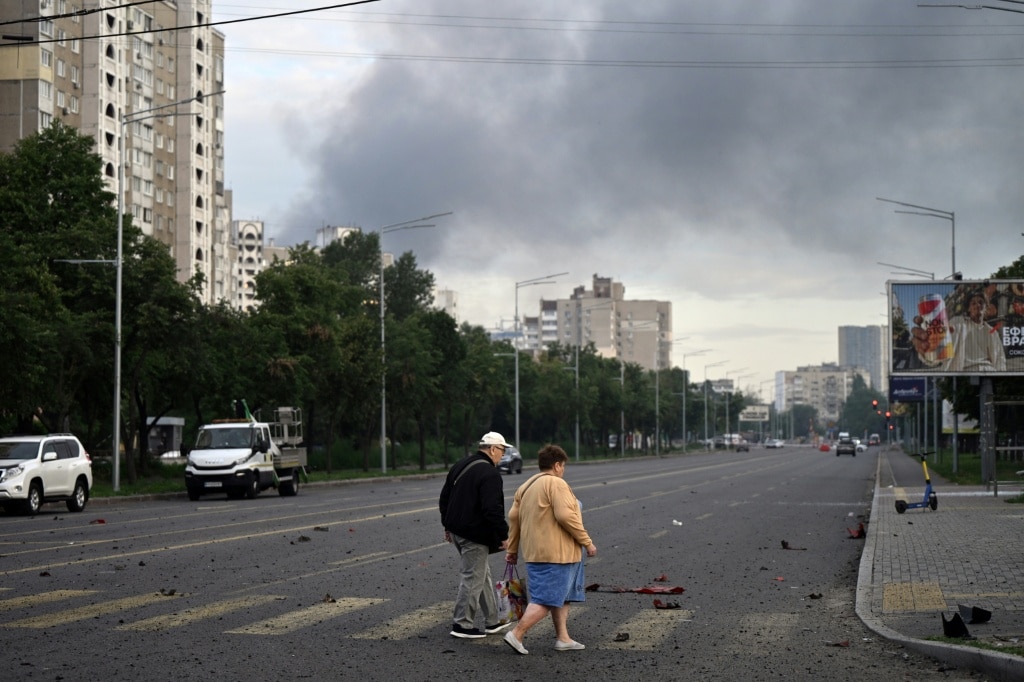
    A new barrage of Russian missile, drone and guided bomb attacks across Ukraine on Saturday left at least six civilians dead and dozens injured, Ukrainian authorities have confirmed, marking the latest escalation in Moscow’s ongoing full-scale invasion that began in February 2022.

    In the capital city Kyiv, regional officials reported that 12 people were wounded in the strikes, including two minor children. AFP correspondents on the ground in Kyiv confirmed hearing two distinct waves of explosions in the early hours of Saturday, with a nationwide air alert siren activated only minutes after the first blast rattled the city.

    While Russian forces have launched near-daily airstrikes against Kyiv since the invasion began, a recent surge in deadly attacks deploying large volumes of ultra-fast ballistic missiles has stretched Ukraine’s overstretched air defense network to breaking point. In a public post on social media platform X Saturday, Ukrainian President Volodymyr Zelenskyy confirmed that Russia launched more than 120 drones and 12 missiles overnight, with half of those projectiles being hard-to-intercept ballistic missiles.

    “Civilian infrastructure was hit even before the air raid alert was issued,” Zelenskyy said, alongside shared footage showing first responders and emergency crews searching for survivors through smoke and rubble of destroyed structures. He added that apartment blocks, commercial office buildings and a theological academy in Kyiv sustained heavy damage, with search and recovery operations ongoing across multiple affected regions.

    Casualties were reported in two other major Ukrainian cities outside the capital. In the northern city of Sumy, a guided aerial bomb strike killed four people, including a young girl, Sumy Mayor Artem Kobzar confirmed. A separate missile attack on the southern port city of Odesa left two more civilians dead, regional governor Oleg Kiper announced.

    Zelenskyy noted that Ukrainian air defenses successfully intercepted the majority of incoming Russian targets, but struggled against the faster ballistic missiles. He renewed his longstanding plea for Western military allies to speed up and expand security assistance to help Ukraine fend off the invasion, which has entered its third full year of conflict. Specifically, he called on the United States to quickly finalize a pledge to allow Ukraine to domestically produce Patriot air defense systems. Earlier this week, U.S. President Donald Trump announced the U.S. would approve Ukrainian domestic manufacturing of Patriot missiles, though Zelenskyy noted Thursday that key technical details of the agreement are still being negotiated.

    Saturday’s pre-air-alert strike on Kyiv marks the second time in less than a week that Russian projectiles hit targets before sirens could be activated. Sergiy Sternenko, an advisor to Ukraine’s defense minister, wrote on Telegram that the early impacts suggest Russia is repurposing its S-400 anti-aircraft systems to conduct ground strikes, a tactic that makes incoming projectiles far harder for Ukrainian radar systems to detect in advance. “There is no military logic to such attacks. It is simply terrorism for the sake of terrorism,” Sternenko added.

    Moscow has denied intentionally targeting civilian populations in Ukraine, claiming in a statement that its Saturday strikes only hit “military-industrial facilities in Kyiv and seaport infrastructure in Odesa.” The attack comes one day after Ukrainian drones struck multiple oil refineries in southern Russia, part of Kyiv’s recent campaign targeting Russian energy infrastructure to disrupt its war machine.

  • How US muddle made a bad Iran war a quagmire

    How US muddle made a bad Iran war a quagmire

    For weeks, analysts have hesitated to dissect the fragile U.S.-Iran ceasefire, mired in contradictory rhetoric and half-baked commitments around the so-called “framework agreement”. But the recent resumption of open hostilities makes it impossible to ignore the catastrophic consequences of an ill-conceived conflict born from strategic emptiness. Like all weak deals built on wishful thinking rather than tangible compromise, this ceasefire has crumbled at the first sign of genuine pressure.

    This week, direct exchanges of fire resumed between Washington and Tehran. After a series of attacks on liquefied natural gas tankers transiting the Strait of Hormuz, U.S. forces launched strikes on Iranian targets, prompting Tehran to retaliate against American military installations in Bahrain and Kuwait. Speaking to reporters on the sidelines of the NATO summit in Ankara, former President Donald Trump declared the interim agreement “over”, even as he left the door open for future negotiations. In response to the collapse, global oil prices have already begun to climb, as markets price in the growing risk that the world’s most critical energy chokepoint will no longer operate under predictable, open access rules.

    Since the framework was first announced, the public has been flooded with a chaotic stream of statements, threats, retractions, counter-threats, last-minute social media posts, and improvised press conferences – all fitting the Orwellian definition of competing “truths” that obscure rather than clarify. Tracking every twist implies there is a coherent strategy to follow, but in reality, no such strategy exists. There are only reactions to events: missile strikes, drone attacks, disrupted tanker traffic, volatile oil markets, NATO allies scrambling to interpret shifting White House positions, and Iranian hardliners testing just how far they can push control of the Strait of Hormuz before Washington pushes back. This chaos is not a side effect of the process – it is the process, a product of total lack of clear direction and long-term planning from the very beginning.

    To understand where things went wrong, it is first necessary to examine what the 14-point interim Islamabad Memorandum of Understanding actually promised. The framework was designed to halt active conflict, reopen the Strait of Hormuz, create a 60-day window for final negotiations, outline a path to U.S. sanctions relief, and conveniently kick the most contentious issue – Iran’s nuclear program – down the road to a future final deal. All the hardest questions, including how to roll back Iran’s enrichment activities, were simply deferred for later.

    This is precisely the issue that the original Joint Comprehensive Plan of Action (JCPOA), reached in 2015, was built to address through years of careful negotiation, rigorous verification protocols, and binding enforcement mechanisms. Trump withdrew the U.S. from that agreement in his first term, dismissing it as the “worst deal in history”. The current framework is thinner, weaker, far more vulnerable to coercion, and by any measure, significantly worse than the deal it replaced.

    On paper, the arrangement appeared to offer a controlled off-ramp from escalating conflict, and delivered a perceived political win for Trump as domestic political pressure mounted. In practice, it was nothing more than a fraying rope bridge spanning an active volcano. Its core terms carried fatal flaws from the start:

    First, a full ceasefire across all fronts, including Lebanon, sounded like a sweeping breakthrough, but it immediately created an insurmountable enforcement gap. Iran could always point to Israeli strikes on Hezbollah and its continued military presence in Lebanon as a breach, while the U.S. could cite any Iranian-linked activity as justification to walk away. Israel, for its part, never agreed to adjust its threat assessments to suit Washington’s desire for a deal with Tehran, and has grown increasingly assertive in disregarding White House priorities, further undermining the agreement.

    Second, the 60-day negotiating window was billed as a way to build urgency and momentum toward a final deal. In reality, the short timeline handed Iran maximum leverage. Every delay at Hormuz, every tanker incident, every ambiguous move by the Islamic Revolutionary Guard Corps (IRGC), and every resulting shock to global oil markets increases pressure on Washington to offer concessions in exchange for even temporary stability. This puts the U.S. in a position of weakness, effectively negotiating under the threat of higher gasoline prices for American consumers.

    Third, the framework required the U.S. to lift its naval blockade and reduce military pressure on Iran, while all major Iranian concessions were pushed to future talks. This meant Washington gave up its primary leverage early, allowing Iran to resume oil exports and gain immediate sanctions relief that has shored up the IRGC, which was previously reeling from severe economic distress. That gives Iran room to bank the economic benefits of the deal, test its boundaries, and haggle over the meaning of core terms later when concessions are finally due.

    Fourth, Iran agreed to allow commercial vessels to pass through Hormuz without charge for only 60 days. That small phrase “for 60 days only” hides the greatest long-term risk. The deal also allowed Iran to hold talks with Oman and other Gulf states on “future administration and maritime services” for the strait. Tehran has already begun framing new access requirements under different labels – permits, maritime safety fees, routing systems, demining charges, coastal state services, and technical clearance requirements – all of which amount to a de facto toll on shipping that Iran controls. The deal effectively enshrined Iran’s right to dictate which vessels can pass and what routes they must take.

    Fifth, Iran reaffirmed its commitment not to develop nuclear weapons. This sounds like a win, but it is nothing more than empty language. The size of Iran’s enriched uranium stockpile, plans for down-blending under International Atomic Energy Agency (IAEA) supervision, and the future of Iran’s enrichment program itself were all left for future negotiations. In short, the nuclear issue – the very justification Trump cited to launch the conflict in the first place after withdrawing from the JCPOA – remains completely unresolved, tucked away in the “deal with it later” basket where it has sat for years.

    Finally, the U.S. put significant concessions on the table: sanctions relief, oil export waivers, the release of frozen Iranian assets, and a proposed $300 billion reconstruction and development plan. This amounts to the largest political victory the Iranian regime could have asked for. Tehran can now frame the war as proof that its policy of resistance works: absorb U.S. strikes, threaten to close Hormuz, force Washington to the negotiating table, and walk away with sanctions relief and new investment. Before the war, the IRGC was at its weakest point since the 1979 Islamic Revolution, with widespread economic turmoil fueling massive internal unrest that culminated in mass protests earlier this year, where tens of thousands of innocent civilian protesters were reportedly killed by regime forces. Now, the IRGC has access to new funds to crush remaining dissent, rearm its regional proxies, and solidify its grip on power.

    In the end, this framework, celebrated by some as a major breakthrough, solved none of the core issues at hand. It only temporarily rebranded them, while simultaneously strengthening a brutal, repressive theocratic regime that much of the international community has long sought to constrain.

    Contrary to Trump’s claims that Iran’s actions came as an unexpected surprise, the closure of Hormuz and Tehran’s efforts to control the strait were entirely predictable. Back in March, Trump claimed Iranian retaliation against Gulf states had shocked his administration, but this is one of the most basic lessons of Middle East geopolitics. Military and policy analysts explicitly warned the Trump administration before it launched strikes that Iran would retaliate against U.S. Gulf allies and move to control the Strait of Hormuz in response to any attack.

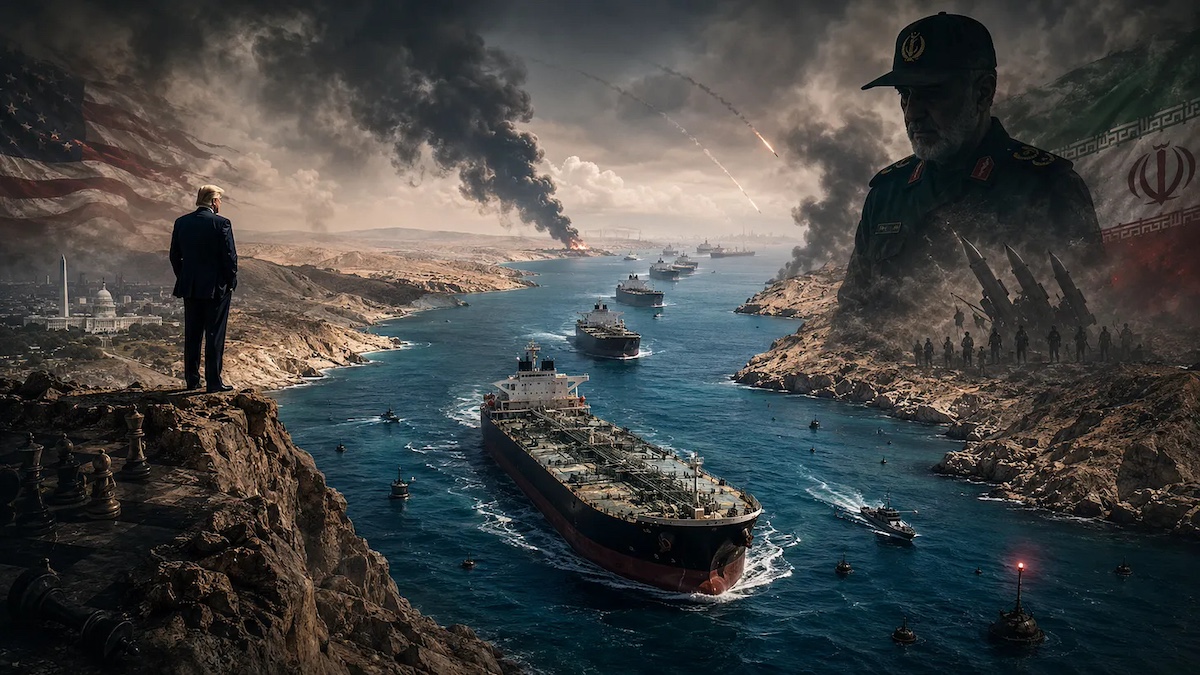
    The Strait of Hormuz is no obscure, classified vulnerability known only to naval planners and oil traders. It is a textbook example of how geography shapes global power: roughly one-fifth of the world’s total oil supply transits through its waters every day. Control of the strait has always been Iran’s ultimate geopolitical trump card. Tehran was reluctant to use it for decades, fearing that a failed attempt to close it would permanently disarm the regime of its most powerful coercive tool. But that calculation has now shifted.

    By demonstrating its ability to disrupt traffic without defeating the U.S. Navy outright, Iran has rewritten the rules of the strait. Tehran does not need to sink ships or block every waterway to exert control: all it needs to do is make transit prohibitively expensive, unpredictably risky, and politically painful for consuming nations. That is a far lower bar to achieve, and Iran has already cleared it. Trump’s claims that the strait is now “open” must be taken with a heavy grain of salt. While some vessels continue to move, normal, unimpeded access has not returned. Following the latest round of hostilities, multiple oil and gas tankers have already turned around rather than attempt to transit the strait. Multiple confirmed reports show Iranian forces have ordered vessels to turn back, and Iran’s strait authority has issued public advisories stating no vessel may transit without a valid government-issued permit. That is not open access – that is access only on Iran’s terms.

    While the war damaged some Iranian military infrastructure and disrupted the national economy, it has not shifted the regional balance of power in the U.S.’s favor. If anything, the IRGC is stronger today than it was before the conflict. It now has a far more powerful domestic and regional narrative: it can claim to have survived massive U.S. and Israeli strikes, kept the nuclear program intact, forced Washington into direct negotiations, secured sanctions relief, and proven it can use Hormuz as a coercive lever whenever it chooses.

    Before the war, Iranian hardliners were under immense domestic pressure: economic collapse, crippling sanctions, widespread public anger over social repression, and a growing legitimacy crisis had created deep internal fissures within the regime. The war gave the IRGC exactly what it needed: a national security emergency that justifies cracking down on dissent at home while rallying nationalist support around resistance to foreign aggression abroad.

    The result is a perverse outcome for the U.S. and Israel, who marketed the war as a campaign to eliminate Iran’s nuclear threat and dismantle its regional network of proxies. Instead, the emerging settlement leaves the nuclear question unresolved, elevates Hormuz to Iran’s most effective negotiating weapon, and paves the way for sanctions relief that will flow directly to the sectors of the Iranian economy controlled most tightly by the IRGC.

    The latest collapse of the ceasefire is not an unexpected outlier – it is the inevitable outcome of a process built on lack of strategy. The real story is not the latest exchange of fire, but the consistent chaos that has defined the Trump administration’s approach to Iran from the start. One day the deal is a historic triumph; the next it is over. One day talks will continue; the next all concessions are revoked. One day we need to protect shipping; the next we need to avoid escalation. One day Iran must be punished; the next allies must fall in line behind Washington. And through it all, the administration acts shocked when Iran does the most predictable thing possible: uses its control of Hormuz to advance its own interests.

    This entire fiasco is a testament to the absence of any coherent U.S. strategy. It is nothing more than the noise of ad hoc decision-making from a White House driven by the personal whims of a president who lacks even a basic understanding of core geopolitical principles. There is no clear end goal, no logical sequence of steps, and no plan for how to respond when Iran acts exactly as experts predicted it would.

    A coherent Iran strategy would have answered basic questions before the first strike was launched: What is the core political objective? Rollback of Iran’s nuclear program, weakening or replacing the regime, deterrence, guaranteed maritime access, reassuring regional allies, or just a political spectacle for domestic consumption? What concessions are acceptable? What costs can the U.S. sustain long-term? What happens if Iran attacks Gulf allies? What happens if shipping is disrupted? What happens if the IRGC survives and claims victory? What will Washington do if Israel and Iran interpret ceasefire obligations in completely different ways? None of these questions were ever answered, despite their simplicity.

    The uncomfortable, unavoidable conclusion is that nearly every actor except Iranian hardliners is now in a worse position than before the conflict started. The U.S. has proven it can strike Iranian targets, but it has also proven it cannot turn military power into lasting political outcomes. Domestic political opposition to long-term conflict means Washington does not have the public support to mobilize a ground invasion, which would be required to achieve regime change or total disarmament. Israel has demonstrated its military reach in the region, but global public support for the country – including support within the U.S. – is at its lowest point in history, with a growing share of the global public viewing Israel as a rogue, belligerent actor that disregards the harm its actions inflict on others. Gulf Arab states have been reminded once again that they are stuck in the blast zone of decisions made in Washington and Tel Aviv, with little regard for the collateral damage they will bear. Europe and Asia are once again facing volatile oil prices because of a narrow waterway they have no power to control. NATO allies have been repeatedly berated by Trump for not contributing enough, even as Trump claims he has already won the war and does not need their help. Shipping companies, insurers, and energy firms now have to price the risk of unplanned U.S. political improvisation into every single transit decision through the Gulf.

    For Iran, the conflict has taught a dangerous lesson: Tehran can force the world to negotiate over control of key geography. It can threaten Hormuz, reopen it partially, introduce new permit requirements, test the limits of the agreement, and use every delay to commercial shipping as leverage to extract more concessions. The lesson Tehran will take away is not that escalation is too costly. It is that controlled, gradual escalation works when the other side is more afraid of a sustained crisis than you are.

    This is the quagmire the world now finds itself in. It is not a traditional failed invasion, not a costly occupation, not a clear battlefield defeat. It is a distinctly modern failure: a war launched to restore U.S. leverage in the Gulf that instead exposed how much leverage Iran already held, and how little strategic planning Washington put into taking it away.
  • South Africa seeks tariff exemption as US probes forced labor tied to imports

    South Africa seeks tariff exemption as US probes forced labor tied to imports

    JOHANNESBURG – As tensions between the United States and South Africa continue to simmer over bilateral trade and foreign policy, Pretoria has formally pushed Washington to grant it an exemption from planned punitive tariffs tied to a sweeping U.S. trade probe into forced labor import bans across dozens of nations. South Africa’s core argument rests on its existing, robust legal framework that strictly bans the use of forced labor in domestic production and imports.

    This week, a high-level delegation from South Africa’s Department of Trade, Industry and Competition presented Pretoria’s case to the Office of the U.S. Trade Representative (USTR) in Washington D.C. The appearance comes as part of USTR’s ongoing Section 301 investigation, which assesses whether 60 major global economies enforce sufficient restrictions on imports of goods produced with forced labor.

    During the hearing, the South African delegation emphasized that the country has ratified all core International Labour Organization (ILO) conventions that prohibit forced labor. It also highlighted that Pretoria has already enacted domestic legislation granting law enforcement authorities the power to seize and block any imports manufactured through forced labor practices. Beyond that, South African law already explicitly bans the production of goods via prison labor, closing a key loophole that investigators often flag in other jurisdictions.

    The delegation made a specific push to block USTR’s proposed 12.5 percent tariff on South African exports to the United States, calling for full exemptions for the country’s most critical export sectors. These key goods include platinum group metals, passenger and commercial vehicles, citrus produce, seafood, wine, and tree nuts, with the delegation noting there is no credible evidence linking any of these products to forced labor.

    The request comes amid a period of growing friction in trade and diplomatic relations between Washington and Pretoria. Over the past several years, the two partners have faced repeated disagreements over existing tariffs, Pretoria’s domestic economic policies, and clashing stances on global conflicts – most recently the 2023-2024 war in Gaza.

    For decades, South Africa has enjoyed duty-free access to the huge U.S. consumer market under the African Growth and Opportunity Act (AGOA), a preferential trade program designed to boost economic development across sub-Saharan Africa. The initiative has supported billions of dollars in annual exports from the region, but its future remains uncertain as it is set to expire imminently without reauthorization from the U.S. Congress.

    South African Trade Minister Parks Tau reaffirmed that the United States remains one of South Africa’s most important trading partners, and that Pretoria will maintain constructive, ongoing engagement with Washington both on the Section 301 probe and other outstanding trade disputes. These include longstanding U.S. tariffs on South African steel, aluminum, and automobile exports.

    Following this week’s hearing, USTR has opened a window for additional public and official submissions, due by Thursday, before the agency moves to a final decision on the proposed tariffs and exemption requests.