博客

  • Firefighters gain upper hand on deadly Spain wildfire

    Firefighters gain upper hand on deadly Spain wildfire

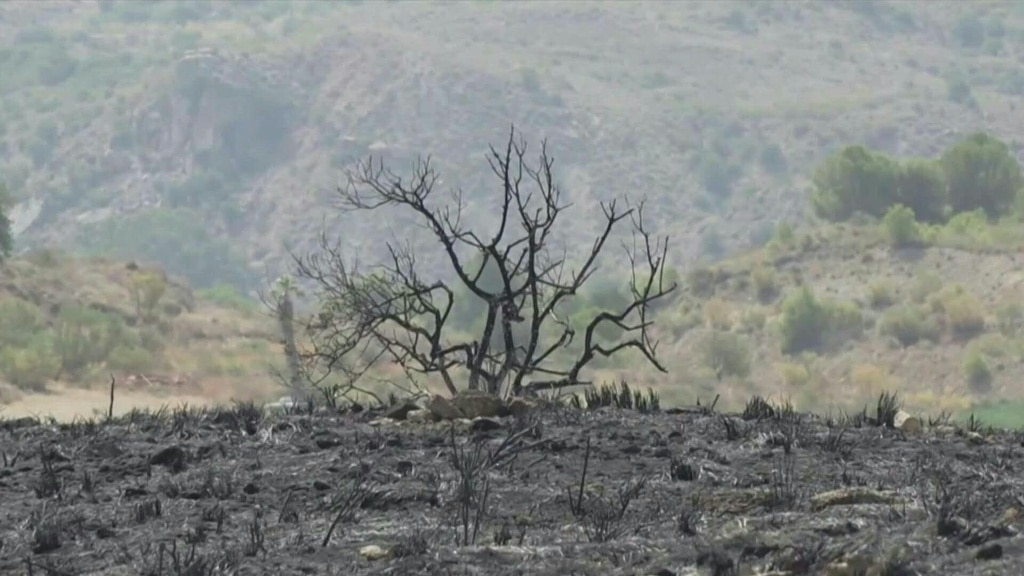
    Sixteen months after one of the deadliest wildfires in modern Spanish history erupted in southern Spain’s Andalusia region, emergency crews have finally turned a corner in their battle against the blaze, thanks to a sudden shift in favorable weather conditions.

    The fast-moving inferno first ignited on Thursday in the hilly Gallardos area, a scenic stretch of Andalusia that hosts a large community of foreign residents and seasonal tourists. By Saturday, improved atmospheric conditions — including dropping temperatures, receding high winds that had previously stoked the flames, and rising humidity — gave firefighters the opening they needed to launch a direct offensive against the blaze, a tactic that had been impossible for the first 48 hours of the emergency.

    Twelve people from multiple nationalities have been confirmed killed in the fire, with most of the victims discovered in or near the small whitewashed village of Bedar. Many of the deceased were trapped while attempting to flee the advancing flames, either in their vehicles or on foot, regional officials confirmed. Authorities have also noted that a number of the victims failed to comply with mandatory evacuation orders or instructions to shelter in place as the fire approached their communities.

    Survivors who escaped the blaze have described harrowing, nightmare-like scenes that they say will stay with them forever. “We were absolutely terrified. We could see the flames. It was horrific,” Manoli Ramos, 72, a local councillor in Bedar, told reporters. Ramos, who lived through a major 2012 wildfire in the same region, compared this event to something out of a nightmare: “This time it was like hell.”

    Austin Crilly, an 87-year-old British resident who was evacuated by police from the high-risk zone, recalled the sudden speed with which the fire advanced. “I was watching television when I saw a huge black cloud, well I thought it was a cloud,” Crilly said. “I thought, ‘My God, I will shut the door’. Then, five minutes later, there was banging at the door. They said, ‘Take your money, take your cards and get out’.”

    Martin Smith, a 63-year-old British tourist who was evacuated from a local campsite alongside his 65-year-old wife Elizabeth, called the scene unprecedented. “It wasn’t good. Not good at all. I’d never seen anything like it. You see things like that in films, but never in real life,” Smith said.

    Antonio Sanz, chief of emergency management for the Andalusian regional government, announced Saturday that no new fatalities had been recorded overnight, a development he called “the best news we could have”. Spain’s Civil Guard has completed an initial sweep of burned areas, and while search operations continue, no additional bodies have been discovered so far.

    Sanz also clarified public confusion around reports of 23 missing people, explaining that the count refers to individuals whose families have been unable to reach them, many of whom have already reached safe evacuation centers. Only seven formal missing persons reports have been filed with authorities to date. Officials caution that a final confirmed death toll will not be released until all recovered remains undergo autopsies and formal identification, which is still underway.

    As of Saturday, the blaze has scorched approximately 6,600 hectares (16,300 acres) of rugged terrain, marked by steep ravines that make it nearly impossible for ground fire vehicles to access. Around 500 firefighting personnel, supported by more than 20 water-bombing aircraft, have been deployed to contain the spread of the fire.

    Investigators currently believe the wildfire was sparked when a power line snapped amid weeks of extreme heat that has gripped Spain, with temperatures regularly exceeding 40°C. Those sustained high temperatures turned the region’s vegetation into dry, tinder-like fuel ready to ignite at the smallest spark.

    Climate scientists around the world have repeatedly warned that human-caused climate change is increasing both the frequency and severity of extreme weather events, including the record-breaking heatwaves and large-scale wildfires that have become increasingly common across southern Europe in recent years.


  • 15 Indian tourists killed when a speedboat capsizes in southern Vietnam

    15 Indian tourists killed when a speedboat capsizes in southern Vietnam

    On Saturday, a tragic tourist boat accident unfolded off the coast of southern Vietnam, leaving 15 Indian visitors dead after the vessel overturned mid-return from a day trip to a local island, Vietnamese state media has confirmed. The incident occurred approximately 400 meters, or 1310 feet, from Hon May Rut Ngoai Island, a small scenic outpost just off Phu Quoc, Vietnam’s largest island located in the Gulf of Thailand. At the time of the capsizing, the speedboat was carrying a total of 36 people: 32 Indian tourists and 4 local crew members.

    Eyewitness accounts shared with Vietnamese news outlet VN Express detail an immediate emergency response: private vessels operating nearby were the first to reach the overturned boat, pulling struggling passengers from the choppy water before official rescue teams arrived. First responders, including border guard units, the Vietnamese navy, and coast guard personnel, joined the large-scale rescue operation, but recovery efforts faced significant challenges. Many passengers were trapped inside the overturned hull of the speedboat, slowing access and extraction, local media reported.

    By the conclusion of initial rescue operations, 21 people had been pulled from the water alive, and all 15 deceased victims had been recovered. Injured survivors were quickly transported to local hospitals for urgent medical care. Broadcast footage from Vietnamese television captured the dangerous conditions that contributed to the incident, showing rough, choppy seas and strong winds buffeting the rescue site. Footage also shows rescue teams tossing life buoys to stranded swimmers, jet skis ferrying survivors back to the mainland, and bystanders and emergency workers administering immediate first aid to victims on the beach before transport to care facilities.

    In the wake of the tragedy, Vietnamese Prime Minister Le Minh Hung has issued official directives ordering a full investigation into the root cause of the accident, and instructed relevant authorities to hold any parties found responsible legally accountable. He also called for immediate safety reviews of maritime and waterway regulations across the accident site and all similar high-traffic tourist areas across the country to prevent future incidents.

    Indian Prime Minister Narendra Modi released a public statement confirming the identity of the tourists, noting that all those on board were employees of a private Indian mobile phone company traveling for an annual corporate retreat. Modi also shared on social media that personnel from the Indian Embassy in Vietnam were already on site coordinating with local authorities to support survivors and repatriation efforts for the deceased.

    Phu Quoc and its surrounding outlying islands, including the Hon May Rut archipelago, are among Vietnam’s most popular coastal tourist destinations. Located roughly 10 kilometers, or 6 miles, south of main Phu Quoc Island, the Hon May Rut islands draw millions of domestic and international travelers each year, famous for their powdery white sand beaches and crystal-clear tropical waters. As of Saturday evening, official authorities had not released a confirmed cause for the capsizing, with the full investigation still ongoing.

  • France storm back with 30 straight points to beat Australia 42-26

    France storm back with 30 straight points to beat Australia 42-26

    BRISBANE, Australia – The second round of the newly launched Rugby Nations Championship delivered one of the tournament’s most dramatic turnarounds on Saturday, as back-to-back Six Nations title holders France roared back from a nine-point halftime deficit to secure a commanding 42-26 victory over host Australia at Suncorp Stadium.

    The opening 40 minutes was a back-and-forth affair marked by disciplinary swings that shaped the scoreboard. Australia-born French forward Emmanuel Meafou, who left his home country to pursue a professional rugby career in France, set an early tone for Les Bleus, crossing for the opening try just three minutes after kickoff. France jumped out to an early lead, only for the Wallabies to respond six minutes later via a clever set-piece trick: hooker Brandon Paenga-Amosa threw a lineout to scrumhalf Ryan Lonergan at the front of the pack, received a quick return pass, and finished the coordinated movement to level the score at 7-7.

    France reclaimed the lead in the 18th minute, when playmaker Romain Ntamack delivered a perfectly weighted 30-meter grubber kick into the left corner. Winger Aaron Grandidier-Nkanang outpaced rookie Australian flyhalf Duncan Meredith to the ball to dot down, putting Les Bleus up 12-7. The momentum shifted sharply 10 minutes before halftime, when Meafou was issued a 10-minute yellow card for dangerous head-on-head contact with Australian backrower Rob Valentini. The one-man advantage opened up space for the Wallabies to capitalize, and flanker Fraser McReight scored two close-range tries before the break. McReight also produced a match-saving defensive play right before halftime, outrunning France’s Matthieu Jalibert in a sprint for a loose ball in the in-goal to snuff out a potential try. When the half-time whistle blew, the Wallabies held a 21-12 lead, putting the hosts on track for their first win in six consecutive test matches.

    That trajectory shifted completely in the second half, however, as France turned on a clinical attacking performance that left the Wallabies unable to respond. The turning point began in the 49th minute, when France spread the ball wide to the unmarked Grandidier-Nkanang, who crossed for his second try. Three minutes later, Australian fullback Tom Wright was sent to the sin bin for a disciplinary infringement, and France wasted no time exploiting the extra space. Ntamack scored a spectacular solo try in the 52nd minute, breaking from 22 meters out on the short side, selling a dummy to a defender, fending off a tackle, and crashing over the line to put France back in the lead. Skipper Maxime Lucu slotted the conversion to extend the advantage.

    In a blistering seven-minute scoring spree, France crossed for three tries to blow the game open. Tries from Florian Verhaeghe and Theo Attissogbe followed Ntamack’s score, capping a run of 30 unanswered second-half points for Les Bleus, who bounced back from a narrow 34-32 opening-round defeat to New Zealand. Australia managed a late consolation try in the 76th minute, but it did nothing to alter the final result.

    Looking ahead, France will travel to Tokyo next week to face Japan in their third tournament match. For the Wallabies, who fell 33-31 to Ireland in the opening round and now face a second consecutive defeat, the team heads to Perth, Western Australia, for their next matchup against Italy, still chasing an end to their current six-test losing streak.

  • Hamas holds talks on truce: Egyptian source

    Hamas holds talks on truce: Egyptian source

    In a critical development for Middle East peace efforts, a Hamas diplomatic delegation convened high-stakes discussions with Egyptian security officials in Cairo on Thursday focused on finalizing arrangements for the second phase of the existing Gaza ceasefire agreement, an anonymous senior Egyptian security source with direct knowledge of the negotiations confirmed to Xinhua News Agency.

    The talks centered on logistical and political preparations to advance the expanded Gaza peace plan, with the source outlining key commitments Hamas has put forward to move the process forward. The group has formally reaffirmed its readiness to transfer full administrative control of the Gaza Strip to the newly formed National Committee for the Administration of Gaza, a foundational step required to launch the second phase. That phase of the agreement calls for a complete withdrawal of all Israeli military forces from Gaza territory.

    Hamas has additionally agreed to place all of its weapons under the custody of the national transitional committee, and has expressed its willingness to remove all barriers to the operations of an international peacekeeping force and the committee’s civilian governance work, the source added.

    Mediators currently reviewing peace proposals have received a plan from the U.S.-led “Board of Peace” that calls for the creation of a pilot buffer zone in Rafah, the southern Gaza coastal city. The zone would house tens of thousands of displaced Gaza residents after they complete mandatory security screenings administered by the national committee, according to the source. All relevant parties to the negotiations are currently maintaining close coordination to work through remaining obstacles and implement the full peace plan, the source noted.

    Thursday’s talks come just days after Hamas announced on Monday that it had dissolved its existing Government Emergency Committee in Gaza, completing the first formal step of transferring administrative authority to the new cross-factional transitional body. Established in January 2026, the 15-member committee is composed entirely of independent Palestinian technocratic figures, tasked with overseeing civilian administration, public services, and post-conflict reconstruction throughout a transitional governance period.

    The current ceasefire between Hamas and Israel has held since October 10, 2025. Its first successful phase delivered on core initial commitments: the exchange of hostages and detained prisoners between the two sides, the opening of Gaza’s border crossings to large-scale humanitarian aid shipments, and the withdrawal of Israeli forces from multiple populated areas of the territory.

    The United States formally unveiled its framework for the second phase of the peace process in mid-January. The U.S. plan lays out core end goals: full Israeli military withdrawal from all of Gaza, the disarmament of Hamas-aligned factions, the launch of large-scale reconstruction projects, and the consolidation of the transitional authority’s governance over the enclave.

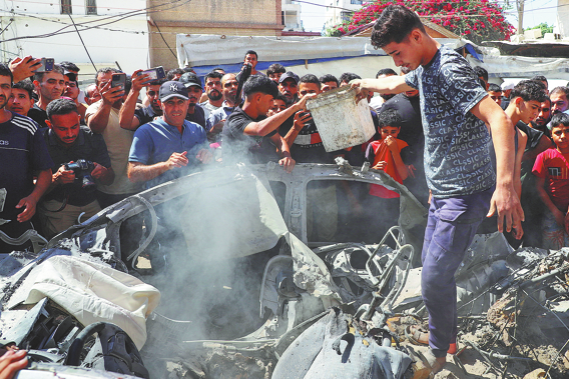
    Even as diplomatic progress moves forward, violence continued to disrupt calm across Gaza on Thursday. Gaza’s civil defense agency, which operates rescue and recovery services under Hamas administration, and local health officials confirmed that new Israeli attacks across the Palestinian territory left six people dead. Two people were killed and multiple others wounded when an Israeli drone targeted the Nuseirat refugee camp in central Gaza, the civil defense agency reported, with four additional fatalities recorded in separate strikes in other parts of the enclave.

    Gaza hospital officials have confirmed they received the bodies of all six victims. A local Gaza security source confirmed that one Israeli drone strike targeted a vehicle belonging to Hazem Qassem, a prominent Hamas spokesman. Qassem was not inside the vehicle at the time of the attack, but his bodyguard was killed in the strike, and the bodyguard is counted among the six fatalities confirmed by civil defense. The Israeli military had not issued any official comment or response to requests for statement about the strikes as of Thursday evening.

    In a separate parallel development for Palestinian governance Thursday, Palestinian President Mahmoud Abbas issued a formal decree scheduling legislative elections for November 28. If the vote proceeds as planned, it will mark the first nationwide Palestinian legislative election in nearly 20 years; the last such vote was held in 2006.

  • Newly-released video shows Peter Falconio’s killer questioned

    Newly-released video shows Peter Falconio’s killer questioned

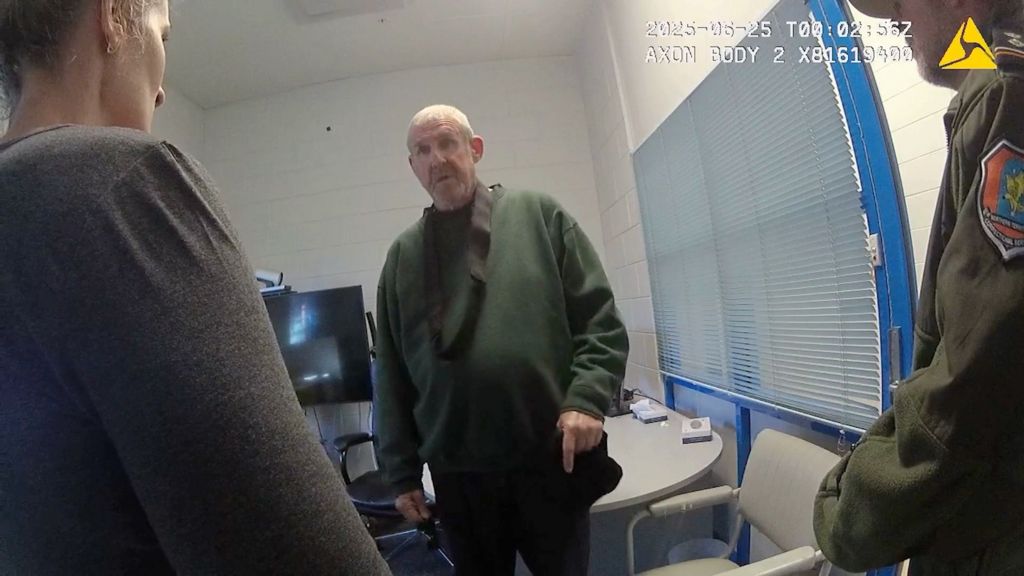
    A quarter-century after the high-profile disappearance and murder of British traveler Peter Falconio outback Australia, Australian law enforcement has made a rare move by publishing previously unseen body-worn camera footage. The newly released clip captures one of the final official efforts by investigators to compel convicted killer Bradley Murdoch to disclose where he hid Falconio’s remains, marking the somber 25th anniversary of the crime that shocked the nation.

    Falconio’s 2001 murder on a remote stretch of the Stuart Highway, a major outback road connecting the Northern Territory and South Australia, remains one of Australia’s most infamous cold-case adjacent crimes. Despite Murdoch’s conviction in 2005 for Falconio’s murder and the abduction of Falconio’s then-girlfriend Joanne Lees, the victim’s body has never been located. For 25 years, Falconio’s family has held out hope for answers that would allow them to lay their loved one to rest, while the case has continued to capture public attention across Australia and internationally.

    The released bodycam footage offers a raw, unfiltered look at the ongoing effort by police to get a full accounting of the crime. Shot during a recent interview with Murdoch, who is currently serving a life sentence in an Australian prison, the recording shows investigators pressing the convicted murderer to share details he has long withheld. This move to release the footage comes as the anniversary brings renewed attention to the case, with police holding out that new public interest could potentially prompt further information, even after decades of uncertainty.

    For Falconio’s family, the anniversary and the release of the footage represent another difficult moment in their long wait for closure. Law enforcement officials have stated that they will not give up efforts to locate the victim’s body, noting that solving this final piece of the case is a priority for both the investigation and the family who has endured 25 years of not knowing what happened to their son.

  • 10 injured in overnight Russian missile and drone strikes on Kyiv

    10 injured in overnight Russian missile and drone strikes on Kyiv

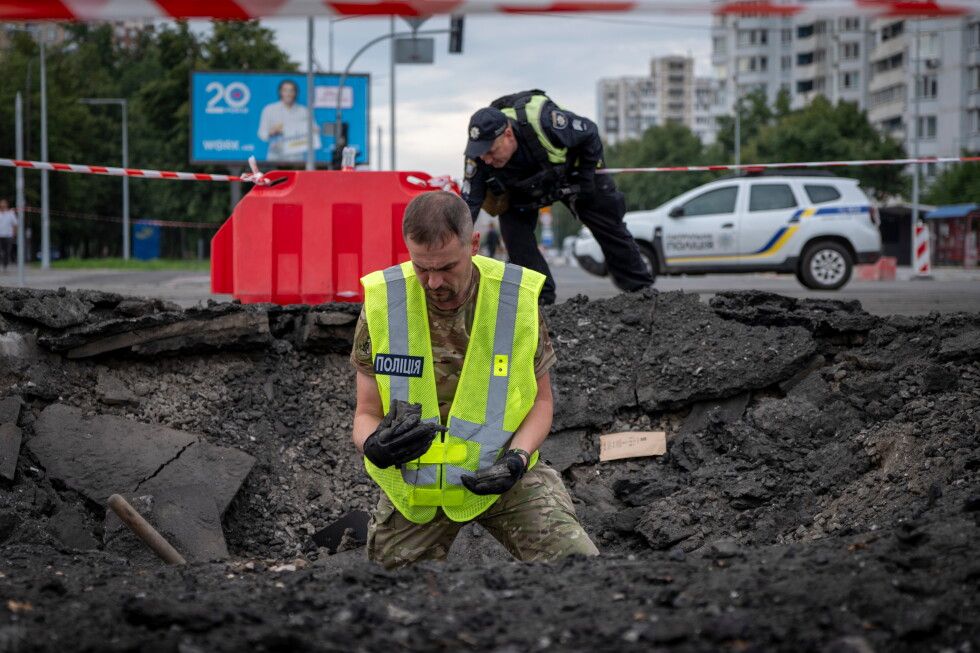
    In a large-scale overnight aerial assault targeting multiple Ukrainian regions early Saturday, at least 10 people including one child were wounded in strikes on Kyiv, Ukraine’s State Emergency Service has confirmed. The attack, which combined missiles and a large fleet of attack drones, sparked multiple fires and structural damage across three districts of the Ukrainian capital.

    Local emergency responders confirmed reports of explosions and fire outbreaks across Kyiv’s Solomianskyi, Darnytskyi, and Dniprovskyi districts in an official update posted to the Telegram messaging platform. In Solomianskyi, a direct strike on a three-story mixed office and warehouse building triggered an extensive blaze, while a separate warehouse in Dniprovskyi district also ignited after being hit by incoming ordnance.

    According to statements from Ukraine’s Air Force, the Russian assault involved a total of 10 missiles of multiple variants, including six short-range ballistic missiles, alongside 121 Iranian-made Shahed-style attack drones deployed across Ukrainian territory. Ukrainian air defense crews managed to intercept or electronically disable all but 10 of the incoming weapons, shooting down two missiles and 111 drones before they could reach their intended targets.

    Ukrainian military officials confirmed that direct impacts from surviving Russian weapons were recorded at 11 locations across the country, from ballistic missiles, two guided air-to-surface missiles, and seven attack drones. Debris from intercepted Russian weapons also caused damage and disruptions at three additional locations, emergency teams added.

    On the Russian side, the country’s Defense Ministry claimed the assault was deliberately targeted at Ukrainian drone production infrastructure in Kyiv, as well as port facilities in the southern Ukrainian cities of Izmail and Chornomorsk, located in Odesa region near the Danube River and Black Sea respectively.

    The Russian ministry also issued its own separate account of overnight hostilities, stating that Russian air defense systems destroyed 178 Ukrainian drones launched across eight Russian regions, the Russian-occupied Crimean Peninsula, and the adjacent Black and Azov seas.

  • Jordan achieves a try-scoring record as New Zealand beats Italy 47-17 in the Nations Championship

    Jordan achieves a try-scoring record as New Zealand beats Italy 47-17 in the Nations Championship

    WELLINGTON, New Zealand — New Zealand’s national rugby union team, the legendary All Blacks, secured their second consecutive victory at the inaugural Nations Championship on Saturday, grinding out a 47-17 win over Italy after a shaky opening half that exposed persistent flaws in their game plan. Though the final scoreline was lopsided, the match highlighted a growing gap between the team’s high offensive ambitions and their inconsistent on-field execution, leaving questions ahead of their much-anticipated next matchup against Ireland in Auckland.

    From the opening whistle, repeated errors from the All Blacks handed Italy an early advantage. Just days after a narrow 34-32 win over France that was also marred by unforced mistakes in handling, aerial defense, and discipline, the All Blacks gifted Italy the opening try. Italian center Tommaso Menoncello crossed the line after capitalizing on an All Blacks turnover, putting the visitors out to an early lead.

    The All Blacks responded within five minutes to narrow the score, with lock Sam Darry touching down for his first try of the match. But Italy’s tight defense denied New Zealand both space and possession, holding the All Blacks to a 14-10 lead at the halftime break.

    The turning point of the first half came in the 30th minute, when Will Jordan scored his first try of the match against the run of play. The try, set up by a perfectly placed chip kick from Jordie Barrett and a deft offload from Leroy Carter, gave the All Blacks their first lead of the game. More importantly, it marked the first of three tries that would cement Jordan’s place in All Blacks history.

    Two debutants made the most of their opportunities after coming off the bench to turn the tide of the match in the second half. Winger Josh Moorby made his first test appearance on his 26th birthday, entering the game in the 31st minute before lighting up the pitch after halftime. Backrower Anton Segner, the first Germany-born player ever selected for the All Blacks, also made his debut coming off the bench at the start of the second half, with his parents flying in from Frankfurt to witness the historic moment.

    Moorby was the star of the second half, playing a key role in three of the All Blacks’ five second-half tries that turned a narrow deficit into a comfortable win. Just two minutes after the resumption of play, he broke down the left wing and combined with his Hurricanes teammate Cam Roigard to score. He then won an intercept that nearly put him over the line before prop Ethan de Groot crashed over for a try in his 42nd test. Finally, he outpaced Italy’s cover defense to set up Jordan’s second try of the match, which equaled the All Blacks’ all-time test try record of 49 set by Doug Howlett.

    Just 10 minutes later, Jordan claimed the record outright when he scored his third try, created by a quick-tapped penalty from Jordie Barrett. Jordan finished the match with 50 career test tries from just 56 appearances, a new milestone for New Zealand rugby. Reflecting on the record after the match, Jordan called the achievement humbling. “I think back to when I was a kid practicing my chip and chase in the back yard. To think I’d be here today, it’s hugely humbling,” he said. “I guess as a winger on the end of the chain I’ve been part of some great teams over the last seven years.”

    Italy captain Michele Lamaro acknowledged that his side could not match the All Blacks’ second-half intensity, after a strong opening 40 minutes put the world-famous side on the back foot. “I think we started really well and we were putting them under pressure,” Lamaro said. “They were trying to compete around the breakdown and we were really strong in that area. They came back on the field after halftime with another gear and we couldn’t hold them.”

    Italy was forced to play most of the final quarter with 14 men, after a yellow card given to Niccolo Cannone for an attempted head butt on Roigard was upgraded to a red card. Despite being a man down, Italy still crossed for a second try through Leonardo Marin in the 57th minute. The All Blacks were also reduced to 14 men late in the match, when flyhalf Ruben Love was sin-binned for a deliberate knock-on in the 71st minute, his second yellow card in two matches.

    Italy entered the match still reeling from an opening-round loss to Japan in Tokyo, leaving them winless after two rounds of the new tournament. For the All Blacks, while the win keeps their tournament record unbeaten at 2-0, head coach Dave Rennie will likely have plenty to address ahead of next weekend’s clash with world number one ranked Ireland. Persistent unforced errors at both ends of the pitch throughout the match have emerged as a worrying pattern for the side after similar problems plagued their opening win over France.

  • Will Trump Accounts deliver for American children?

    Will Trump Accounts deliver for American children?

    A new national children’s savings initiative, dubbed Trump Accounts, officially launched this week with a historic ceremony that rang the iconic Wall Street opening bell directly from the Oval Office, marking one of the most high-profile domestic policy rollouts of the current administration ahead of November’s midterm elections.

    Designed to cultivate long-term investing habits and give younger generations a foothold in the U.S. financial system, the program is open to all American children under the age of 18 with a valid Social Security number. Infants born between 2025 and 2028 qualify for an automatic $1,000 government seed contribution to kickstart their savings, and parents can open an account through a simple mobile app download. Third parties, including family members, friends, and employers, are permitted to contribute up to $5,000 per child annually, and account holders gain full access to their funds once they turn 18.

    By legislative requirement, all funds must be held in low-cost index funds structured for long-term growth. While account balances grow tax-free, withdrawals made before the account holder turns 59.5 incur income taxes and a potential 10% penalty unless the funds are used for approved expenses: higher education costs, the purchase or construction of a first home, or qualifying personal emergencies. The program adds a new option to the existing landscape of U.S. tax-advantaged savings tools, complementing existing products such as individual retirement accounts (IRAs) for retirement planning and 529 plans for education savings. A congressional analysis classifies Trump Accounts as a modified iteration of traditional IRAs, with distinct eligibility and withdrawal rules unique to the program.

    The White House has framed the initiative as a solution to the longstanding uneven distribution of stock ownership across the U.S., arguing that millions of younger and lower-income households currently hold little to no exposure to financial markets. “This program gives every child in America a stake in our country’s economic future,” a senior administration official said in comments ahead of the launch.

    But reaction across policy and financial circles has been deeply split, with critics arguing the program’s complexity will leave low-income families behind and fail to live up to administration hype amid ongoing widespread concerns over rising cost of living. Will McBride, chief economist at nonpartisan think tank the Tax Foundation, argues the onboarding process is unnecessarily convoluted, meaning only a small minority of eligible families will actually benefit. “The households that will actually take advantage of this are those that are already well-informed, well-off, and organized about their finances,” McBride explained.

    Other analysts have acknowledged the program’s core goal of expanding investment access is worthwhile, but warn it falls short of solving structural barriers to savings for low-income groups. Adam Michel, director of tax policy studies at the Cato Institute, noted that the $1,000 starting subsidy is the program’s biggest benefit, but most families would be better served by existing tax-advantaged savings products. Michel also pointed to the early withdrawal penalty as a critical unaddressed flaw: lower-income young adults who turn 18 may be forced to withdraw funds to cover immediate living costs, leaving them stuck paying the 10% penalty that the program does nothing to eliminate. “Trump Accounts do not fix that problem,” Michel emphasized.

    Supporters, however, argue the initiative removes a key barrier to entry for new savers. Andy Blocker, head of policy, regulatory and government relations at major financial services firm Edward Jones, said the $1,000 automatic contribution for eligible infants eliminates the most common barrier for new families: “not having anything to start with.” “If by the end of the year, more American families have a clear pathway to start building financial security for their children, that counts as a success,” Blocker said.

    Preliminary uptake data shows that around six million families opened accounts ahead of the program’s July 4 launch, a figure that represents only a small fraction of the tens of millions of children eligible nationwide. As of Monday, the White House confirmed that the $1,000 starting subsidy has already been deposited into more than 500,000 accounts for newborns, aligned with provisional U.S. birth data that recorded roughly 3.6 million births in 2025. By the end of the first week post-launch, total contributions across all Trump Accounts from private sources had reached nearly $125 million, per administration figures.

    Program projections based on historical average returns from the S&P 500 estimate that the $1,000 starting seed could grow to as much as $6,000 by the time a child turns 18 even with no additional contributions, though projections note actual returns are not guaranteed. If families contribute an average of $250 per year, the balance could reach roughly $19,000 by age 18; with the maximum annual $5,000 contribution from family or employers, that balance could climb to as high as $271,000 by the time the child reaches adulthood.

    The initiative has secured backing from major players in the U.S. corporate and financial sectors. Global investment giant BlackRock has publicly supported the program, noting that nearly 40% of all Americans hold no investments in financial markets. Major U.S. firms including payment processing leader Visa and technology conglomerate Dell have also pledged formal support for the rollout.

  • UK police release man arrested over killing of former politician Ann Widdecombe

    UK police release man arrested over killing of former politician Ann Widdecombe

    LONDON – Just two days after taking a 26-year-old man into custody in connection with the fatal killing of veteran British politician and media personality Ann Widdecombe, Devon and Cornwall Police announced Saturday that the individual has been released from custody and is no longer a target of the investigation.

    The 78-year-old Widdecombe, whose decades-long career spanned frontline British politics and mainstream reality television, was discovered dead Thursday at her secluded rural property located on the outskirts of Dartmoor National Park in southwest England. Investigators took the 26-year-old suspect into custody a day later, during a raid in a nearby town just a few miles from Widdecombe’s home.

    In an official statement following the suspect’s release, the police force emphasized that the investigation into Widdecombe’s death remains active. “Detectives continue to carry out numerous enquiries as part of the ongoing investigation and we remain committed to establishing the full circumstances surrounding the incident,” the statement read.

    Early investigative assessments have already ruled out two key potential motives: law enforcement have confirmed the killing is not believed to be an act of terrorism, and there is no current evidence to suggest the attack was politically motivated.

    Widdecombe’s death has sent ripples of shock across the United Kingdom’s political landscape, where she established herself as one of the Conservative Party’s most prominent and unapologetic right-wing voices over a generation. She served as a Member of Parliament in the House of Commons from 1987 to 2010, and held a cabinet position as Prisons Minister during Prime Minister John Major’s Conservative administration in the 1990s.

    After stepping down from parliamentary office, Widdecombe reinvented her public profile, finding new mainstream fame as a contestant on two hit UK reality TV shows: *Strictly Come Dancing* and *Celebrity Big Brother*. She never left politics entirely, however, later joining the pro-Brexit Brexit Party before ultimately becoming a spokesperson for Reform UK, the right-wing anti-immigration political party.

  • One runner gored in the face at Spain’s San Fermin bull run festival

    One runner gored in the face at Spain’s San Fermin bull run festival

    PAMPLONA, Spain – The iconic yet dangerous annual San Fermin festival saw a chaotic fifth morning bull run on Saturday, leaving one thrill-seeking runner with a severe facial goring and a dozen more needing emergency medical care for injuries sustained during the 875-meter dash through Pamplona’s historic narrow streets. This year’s event carries a special milestone, marking a full century since the release of Ernest Hemingway’s *The Sun Also Rises* — the novel that catapulted this regional Spanish celebration to global notoriety, drawing thousands of first-time participants and international tourists every year.

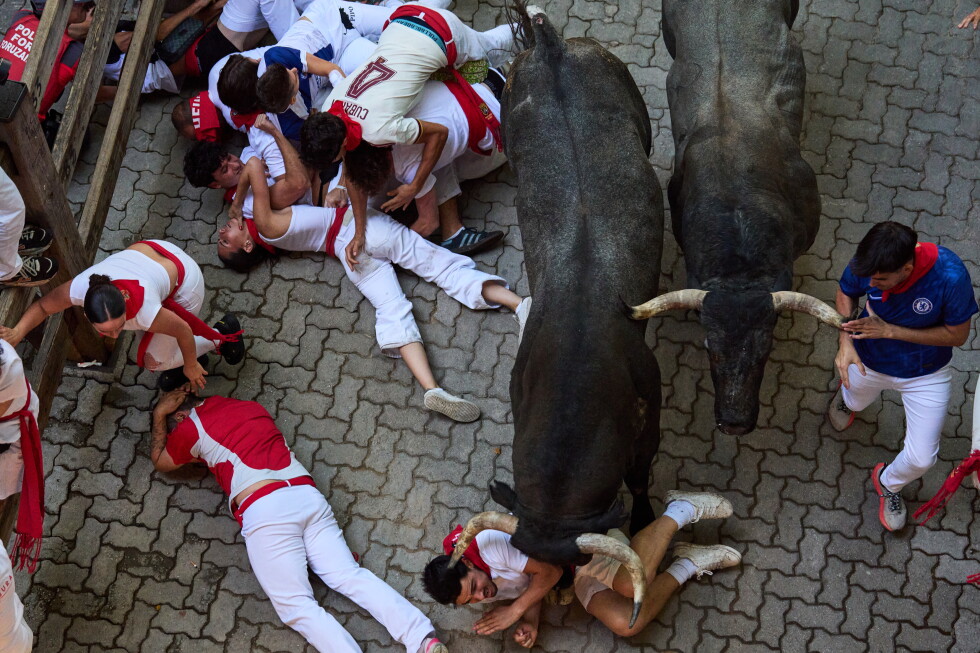
    During the two-and-a-half-minute run, six fighting bulls and their guiding steers charged through tightly packed crowds that lined the cobblestone course from the holding pen to the city’s bullring, where the animals will be killed by professional bullfighters later the same day. The confined space and panicked movement of participants created multiple dangerous pileups, with dozens of runners knocked off balance as the massive animals surged through. What made the incident even more unpredictable was an early breakaway: a black bull separated from the main pack just moments into the run and charged directly into a clustered group of runners, striking one participant in the side of the face with its horn. While officials have not confirmed this breakaway charge was the exact moment the facial goring occurred, it was the most high-risk incident of the day.

    Officials from the University of Navarra Hospital confirmed that one runner suffered a horn penetration to the face, while 12 additional people sought treatment for minor bruises, scrapes, and other impact injuries from the rush. Witness accounts note that many inexperienced participants failed to notice how close the bulls were until the animals were mere feet behind them; surprisingly, several bulls did not attempt to gore runners and instead simply pushed people out of their path to continue along the course.

    This year’s eight-day festival has drawn extra attention for its centennial connection to Hemingway’s work, which introduced the adrenaline-fueled tradition to audiences across the globe. While the sport carries inherent risk, major fatalities have been rare: the last death recorded during a San Fermin bull run dates back to 2009. Even so, non-fatal injuries including gorings and broken bones remain a regular occurrence, a trend experts attribute to the growing mix of novice runners and international tourists with little experience navigating the high-stakes course alongside more practiced local participants.