博客

  • Marat Ganiev: Man charged after missing teenager Isla Bell found dead at tip seeks rare stay of proceedings

    Marat Ganiev: Man charged after missing teenager Isla Bell found dead at tip seeks rare stay of proceedings

    A legal battle is unfolding in Victoria’s Supreme Court after a Melbourne man accused of tampering with a missing teenager’s remains is pushing to have the entire case thrown out, claiming the prosecution’s actions amount to a fundamental abuse of the court process. The case centres around 19-year-old Isla Bell, who disappeared without a trace from Melbourne in October 2024. Roughly six weeks after her disappearance, her partial remains were located at a Dandenong South waste depot, triggering a homicide investigation that has now reached a critical crossroads.

    Prosecutors initially advanced a serious manslaughter allegation against 55-year-old Marat Ganiev, claiming he killed Bell inside his St Kilda residence before hiding her body in a refrigerator and moving the container across multiple Melbourne locations. Forensic investigators, however, ran into significant dead ends during their examination of Bell’s remains: experts could not confirm an official cause of death, could not rule out death by drug overdose, and could not determine whether visible injuries on the body were inflicted before death or caused by a waste compactor after the remains were dumped at the depot.

    Weeks before Ganiev was set to stand trial on the manslaughter charge in May 2024, prosecutors made the rare decision to abandon the count, acknowledging publicly that there were no reasonable prospects of securing a conviction before a jury. Instead of closing the case entirely, prosecuting authorities later filed a new indictment charging Ganiev with attempting to pervert the course of justice, a charge directly tied to the alleged handling and concealment of Bell’s body after her death.

    When the case reached the Victorian Supreme Court on Tuesday, Ganiev’s senior barrister Sally Flynn KC told Justice James Elliott that the prosecution’s pivot from dropping the manslaughter charge to laying a new equally serious charge violates basic legal fairness. Flynn argued that the defense had always maintained the original manslaughter charge was legally unsound and doomed to fail. She told the court that after the defense pushed to have the first charge thrown out, prosecutors instead discontinued the original count and filed a new charge, creating an unfair outcome that justifies the extraordinary step of a permanent stay of proceedings.

    “It’s so unfair as to mean that this court ought take the extraordinary step of staying the prosecution,” Flynn stated in court. Outside the courtroom on Tuesday, dozens of supporters of Bell’s family gathered to rally, holding signs demanding justice for the 19-year-old, while members of Bell’s family sat inside the court gallery to observe the proceedings.

    Crown prosecutor Jeremy McWilliams pushed back against the defense’s application on Tuesday, arguing that permanent stays of prosecution are only granted in the most extreme, exceptional legal circumstances, and Ganiev’s case does not meet the required legal threshold. McWilliams noted that it is standard practice for prosecutors to regularly review the strength of cases as evidence evolves, and there is no proof that the defense’s pressure to dismiss the original manslaughter charge influenced the prosecution’s decision. “There’s nothing relevantly unfair about that process being undertaken in this case,” McWilliams said, adding that “Nothing in the way the case will proceed from here is different, new or unexpected.”

    Justice Elliott has reserved his decision on the defense’s application for a permanent stay, and will release his ruling at a later, unannounced date.
  • Rubio says US will dismantle ICC ‘brick by brick’

    Rubio says US will dismantle ICC ‘brick by brick’

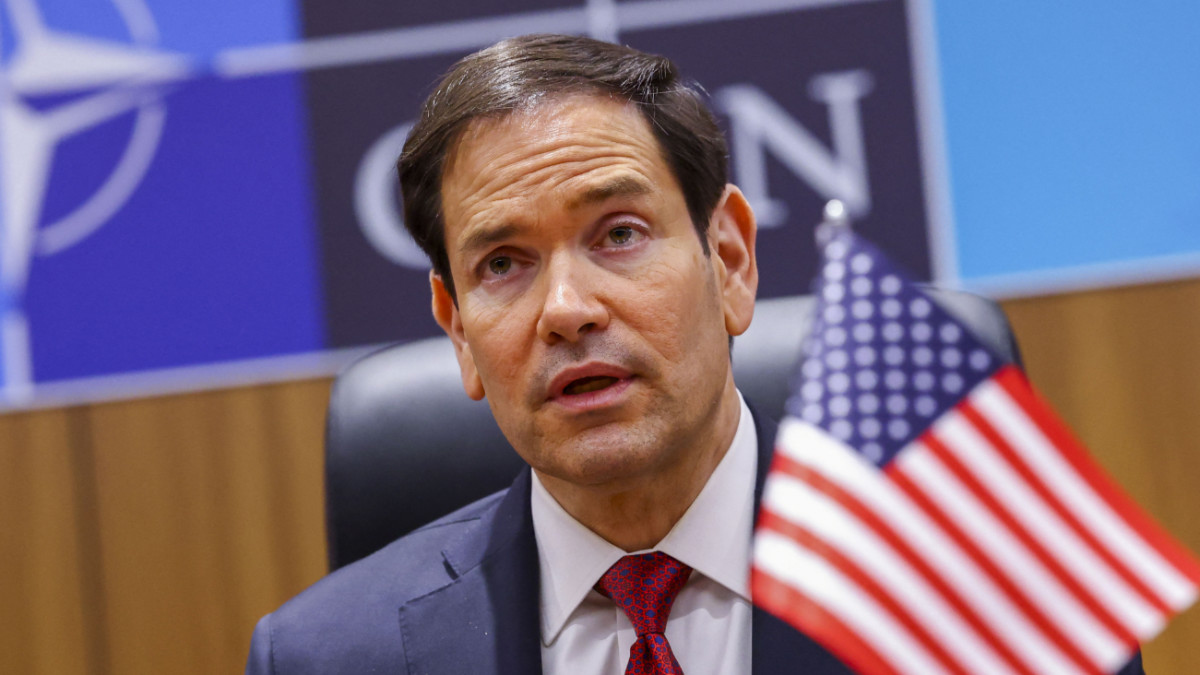
    In a stark public challenge to the International Criminal Court (ICC) just months after it issued an arrest warrant for Israeli Prime Minister Benjamin Netanyahu, U.S. Secretary of State Marco Rubio has formally announced the Trump administration’s deliberate campaign to dismantle the global judicial body “brick by brick”.

    Rubio laid out the administration’s hardline stance in a candid opinion piece published in *The Wall Street Journal* on Monday, framing the ICC’s oversight of U.S. military and law enforcement activities as an unprecedented overstep of institutional authority that poses an existential threat to American national sovereignty. “The ICC’s interfering with American military and law enforcement operations isn’t just a grave overreach of its purported authorities. It would mean the death of the U.S. as a sovereign and independent nation,” he wrote.

    “Using all the tools at our government’s disposal, working beside every ally with whom we can make common cause, we will dismantle the ICC – brick by brick, if necessary,” Rubio added. He doubled down on this position in a pre-recorded monologue released to social media platform X the same day, arguing the court seeks to strip American citizens of their long-held legal right to be tried under domestic law by a jury of their peers. “But today powerful people in far away places want to take that away from us. They believe that they should be in charge of your laws, of your country, your life – and they don’t care whether or not you agree,” he stated in the video.

    Rubio further accused the ICC of actively waging a campaign against the U.S., noting that most American citizens have no familiarity with the court’s judges, prosecutors, or leadership — and that they “shouldn’t have to”. He emphasized that opposition to the court crosses U.S. party lines, a longstanding position dating back to the ICC’s founding in 2002, when the body was established to prosecute genocide, crimes against humanity, and war crimes following mass atrocities in Rwanda and the former Yugoslavia.

    Notably, Rubio avoided any direct reference to the 2024 arrest warrants issued by the ICC for Netanyahu and former Israeli Defense Minister Yoav Gallant, who stand accused of crimes against humanity in the Gaza Strip, where the Gaza health ministry reports more than 73,000 Palestinians have been killed since conflict resumed in October 2023. The court also issued arrest warrants for senior Hamas leaders over the October 7, 2023 attack on southern Israel that killed roughly 1,200 people; all Hamas leaders named in the warrants have since been assassinated by Israeli forces.

    Rubio framed the administration’s campaign against the court through a nationalist lens, positioning the effort as a defense of state sovereignty against what he calls overreach by global institutions. “The U.S. is launching a diplomatic campaign with a simple message – sovereign states over globalism,” he said. Drawing a parallel to the American Revolution, he added: “Our forefathers fought a revolution against a foreign power transporting us beyond Seas to be tried for pretended offences. Independence is our birthright. We don’t intend to trade it for rule by a self-appointed priesthood of ‘international law’.”

    He reminded audiences of the ICC’s 2020 investigation into alleged war crimes committed by U.S. soldiers in Afghanistan, warning that the court could eventually extend its probes to U.S. Border Patrol agents and Marine Corps personnel. “The ICC is backed and run by a powerful network of leftist nongovernment organizations, smug globalists, and hostile Third World governments united by their enmity toward the U.S,” he claimed. In his X video, he pushed back against the court’s founding mandate, arguing that while it was billed as a tribunal to prosecute severe crimes when national courts are unable to act, it has become an unaccountable body of unelected officials with near-unlimited claims to power.

    In reality, the ICC counts 125 member states, including all member nations of the European Union. Major global powers have historically opposed the court, largely to avoid submitting their own personnel to its jurisdiction. The U.S.’s primary geopolitical rivals, Russia and China, are not ICC members.

    U.S. opposition to the court stretches back more than two decades: in 2002, then-President George W. Bush formally withdrew U.S. signature from the court’s founding Rome Statute and signed the American Servicemembers’ Protection Act (ASPA), a law that restricted any U.S. cooperation with the ICC. The legislation even authorized the use of military force to rescue any U.S. personnel detained by the court, earning it the popular nickname the “Hague Invasion Act”. At the time, Washington also pressured dozens of countries around the world to sign bilateral immunity agreements barring them from surrendering U.S. citizens to the ICC.

    Analysts view Rubio’s broadside as confirmation that the U.S. and its closest allies have launched a full diplomatic assault on the ICC specifically because of its efforts to hold Israeli leadership accountable for alleged war crimes in Gaza, a situation that the United Nations, leading human rights organizations, and prominent genocide scholars have formally designated as a genocide.

    This campaign is not new: last year, former U.S. President Donald Trump signed an executive order imposing sanctions on ICC judges over their investigation into senior Israeli officials. According to previous reporting from Middle East Eye, these sanctions have severely impacted judges’ ability to travel, threatened their personal security and that of their families, and restricted their access to basic financial services. MEE has also exclusively reported on a parallel pressure campaign led by former UK Foreign Secretary David Cameron, who privately threatened ICC Chief Prosecutor Karim Khan in April 2024 that the UK would defund and withdraw from the court if it moved forward with arrest warrants for Israeli leaders.

    The U.S. did play a role in the ICC’s early founding: then-President Bill Clinton signed the Rome Statute in 2000, but the agreement was never sent to the U.S. Senate for ratification amid widespread bipartisan fears that the court would eventually prosecute U.S. military personnel and government officials for alleged war crimes in conflicts including Afghanistan and Iraq. Notably, the ICC has also issued an arrest warrant for Russian President Vladimir Putin for alleged war crimes connected to the invasion of Ukraine.

    Rubio closed his video monologue with a sharp warning to the ICC and its supporters: “This administration will not sit by as the ICC and its allies seek to threaten our people. If they believe they can deprive us of our sovereignty, we will teach them the full meaning of American resolve.”

  • Sudan court sentences RSF commander to death over West Darfur killings

    Sudan court sentences RSF commander to death over West Darfur killings

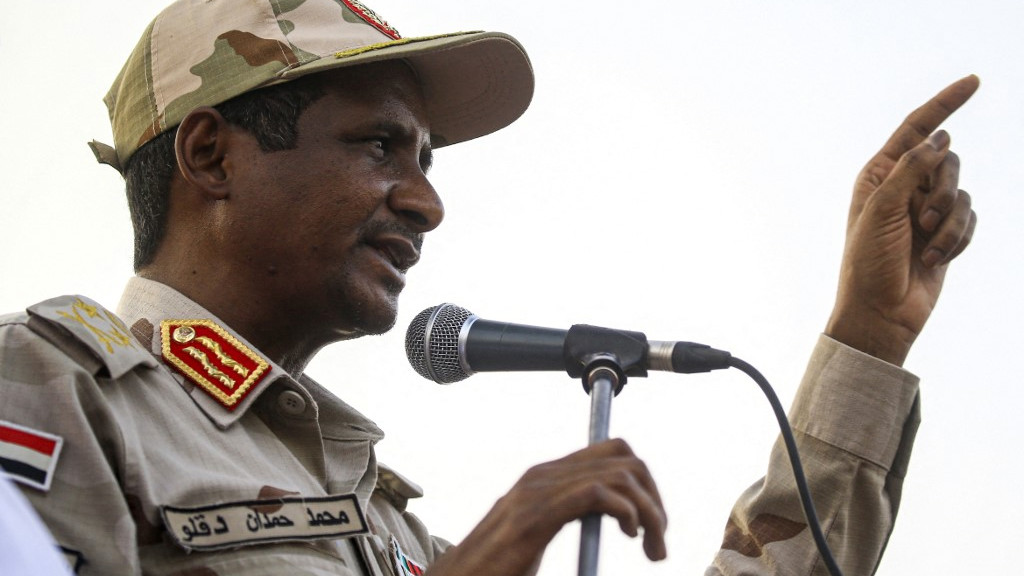
    In a landmark ruling marking the first judicial conviction of senior Rapid Support Forces (RSF) leadership since Sudan’s brutal civil war erupted in April 2023, an anti-terrorism court based in Port Sudan handed down death sentences in absentia on Sunday to RSF commander Mohamed Hamdan Dagalo—widely known as Hemedti—and 15 other co-defendants. The convictions center on allegations of war crimes, crimes against humanity, genocide, and the targeted assassination of West Darfur Governor Khamis Abdullah Abakar in the West Darfur capital of el-Geneina.

    The case was rooted in the 2023 assassination of Governor Abakar, which occurred just 24 hours after the governor publicly condemned RSF shelling of the el-Jamarik neighborhood in el-Geneina. Circulated video evidence showing RSF fighters mutilating Abakar’s body has been publicly available, though the paramilitary group has consistently denied involvement and pinned blame on the opposing Sudanese Armed Forces (SAF).

    Human Rights Watch’s 2024 investigation into violence in el-Geneina concluded that the attacks against the Masalit people and other non-Arab communities in the region amounted to ethnic cleansing, with strong evidence pointing to acts of genocide. Data from Middle East Eye’s June 2023 reporting estimates that roughly 1,500 people were killed in el-Geneina in the first two months of the war alone, forcing tens of thousands of Masalit civilians to flee on foot across the border to refugee camps in eastern Chad.

    Among the convicted defendants are two of Hemedti’s brothers: RSF deputy leader Abdel Rahim Hamdan Dagalo and Algoney Hamdan Daglo Musa, commonly referred to as al-Qoni. Additional high-profile convictions include West Darfur RSF commander Abdel Rahman Juma Barkallah and the region’s former deputy governor al-Tijani al-Tahir Karshoum.

    Presiding over the trial, special judge Mohamed al-Amin ruled that Hemedti bore direct legal responsibility for orchestrating the genocide of the Masalit community and organizing the siege of el-Geneina. The judgment detailed systemic patterns of property destruction and looting, as well as deliberate targeted attacks on civilian populations, residential zones, schools, and religious sites. Abdel Rahim Dagalo was found guilty of co-organizing the el-Geneina siege, mass civilian displacement, and the Masalit genocide; al-Qoni was convicted of facilitating the siege; and Barkallah was held responsible for leading frontline RSF fighters in coordinated assaults on Masalit-majority neighborhoods.

    Alongside the death sentences, the court ordered the full confiscation of all RSF assets and directed Sudanese authorities to request Interpol red notices to secure the arrest and extradition of all convicted individuals. In his closing statement, Judge Amin delivered a blistering rebuke of the RSF’s actions, noting that the group deployed heavy weaponry in residential areas, carried out widespread looting, arson, and sexual violence, and acted on explicit ethnic hatred with the goal of eradicating the Masalit community.

    “These convicted individuals were state leaders who abused their authority and turned state weapons—meant to protect citizens—into tools of crime,” Judge Amin said. “Their actions left thousands dead or displaced, destroyed an entire city, and erased its civilization and history.”

    The Port Sudan ruling comes just days after International Criminal Court (ICC) Deputy Prosecutor Nazhat Khan announced a “breakthrough” in the court’s investigations into alleged crimes against humanity and war crimes in West Darfur, following an investigative trip to eastern Chad. However, a recent Middle East Eye investigation uncovered that the ICC prosecutor’s office has privately decided not to move forward with an arrest warrant application for an RSF member, despite three years of investigations and public promises that applications would be filed imminently. The decision has sparked growing scrutiny over the timeline and commitment of international judicial action against RSF leadership.

    While international progress on accountability remains slow, the first extraterritorial prosecution attempt against RSF members has already been launched in neighboring Kenya. On June 9, 12 Sudanese victims represented by Legal Action Worldwide and the African Centre for Justice and Peace Studies filed a formal complaint alleging war crimes and crimes against humanity with Kenya’s Director of Public Prosecutions, relying on the principle of universal jurisdiction.

    The complaint calls for an investigation into allegations of torture and sexual violence committed by 10 RSF members, several of whom are believed to currently reside in Kenya. The filing directly undermines the Kenyan government’s long-standing public partnership with the RSF: Kenyan President William Samoei Ruto has hosted Hemedti at the country’s State House, allowed the RSF to hold meetings for a parallel Sudanese administration in Nairobi, and granted Kenyan passports to RSF leaders to facilitate cross-border travel. Critics further accuse the Ruto administration of supplying crates of ammunition to the paramilitary group and enabling the smuggling and export of Sudanese gold and gum arabic through Kenyan ports.
    “This moment is not just a test of Kenya’s commitment to upholding international justice,” said Dr. Owiso Owiso, lead Kenyan counsel for the 12 victims. “It also proves that even when domestic accountability systems and the broader international community have failed the people of Sudan, avenues to seek justice are not completely closed.”

  • Identity of Sydney daycare worker facing 329 child abuse offences revealed

    Identity of Sydney daycare worker facing 329 child abuse offences revealed

    One of Australia’s most disturbing recent child abuse cases has moved a step forward, as a Sydney court has lifted a gag order that kept the name of an accused childcare worker hidden from the public for nearly a year. Thirty-five-year-old Hamish Tait, who faces 329 criminal charges connected to the alleged abuse of 136 children across five Sydney-based childcare facilities over a 16-year period, can now be publicly identified. The case has sent fresh shockwaves across Australia, a nation already grappling with a growing pattern of child safety failures in early education settings.

    Tait was first taken into custody in July 2024, after Australian Federal Police (AFP) investigators first connected him to suspected illegal online child exploitation activity the previous month. During a raid on a property in Glossodia, a rural community on Sydney’s outer fringe, officers seized multiple electronic devices and uncovered a large cache of child abuse material. A court subsequently issued a non-publication order, which police requested to give them time to track down potential victims, notify affected families and avoid compromising their ongoing investigation. That order was lifted on Monday this week, clearing the way for Tait’s identity to be released publicly.

    The scope of the alleged offences outlined by police is staggering. Court documents show the charges include 162 counts of producing child abuse material, 81 counts of non-consensual filming of people in private acts, 22 counts of aggravated production of child abuse material involving children under the age of 14, and 18 counts of intentional sexual touching of children under 10 years old. Tait, who remains in police custody, is alleged to have committed all offences between 2009 and 2025.

    Over the course of his career in early childhood education, Tait worked at or was affiliated with 62 different early education facilities across greater Sydney, though investigators say the majority of his work was centered in the city’s fast-growing north-western suburbs. The confirmed abuse is linked to five locations: four commercial childcare centres and a private business run by Tait himself. To date, AFP officers have successfully reached out to 121 families confirmed to have been impacted by the alleged offending, but investigators say they are still working to identify 15 additional victims, leaving 22 families yet to be notified.

    In an official statement following the lifting of the publication ban, AFP Acting Commander Luke Needham emphasized the gravity of the alleged crimes, noting that the breach of public trust at the heart of the case makes it even more abhorrent. “Any form of child sexual abuse is confronting and horrific, even more so when the alleged perpetrator is an individual trusted with the care of our youth,” Needham said. To help families access information and support, police have launched a dedicated public website that lists all facilities linked to Tait’s employment and provides contact details for counseling and victim support services.

    Tait’s case is the third high-profile large-scale child abuse case involving childcare workers to emerge in Australia in less than three years, amplifying longstanding calls for stronger national safety standards for early childhood education facilities. In 2024, Ashley Paul Griffith pleaded guilty to 307 child abuse offences committed over 20 years at childcare centres in Queensland and overseas. Just last year, after Joshua Dale Brown was charged with dozens of abuse offences committed across four Victorian childcare centres, public health officials urged more than 1,200 children who attended the facilities to undergo testing for sexually transmitted infections. These consecutive cases have triggered widespread public anger and renewed pressure on state and federal governments to overhaul background checking and monitoring systems for childcare workers across the country.

  • Pen America chief resigns, accuses literary institution of erasing Palestinians

    Pen America chief resigns, accuses literary institution of erasing Palestinians

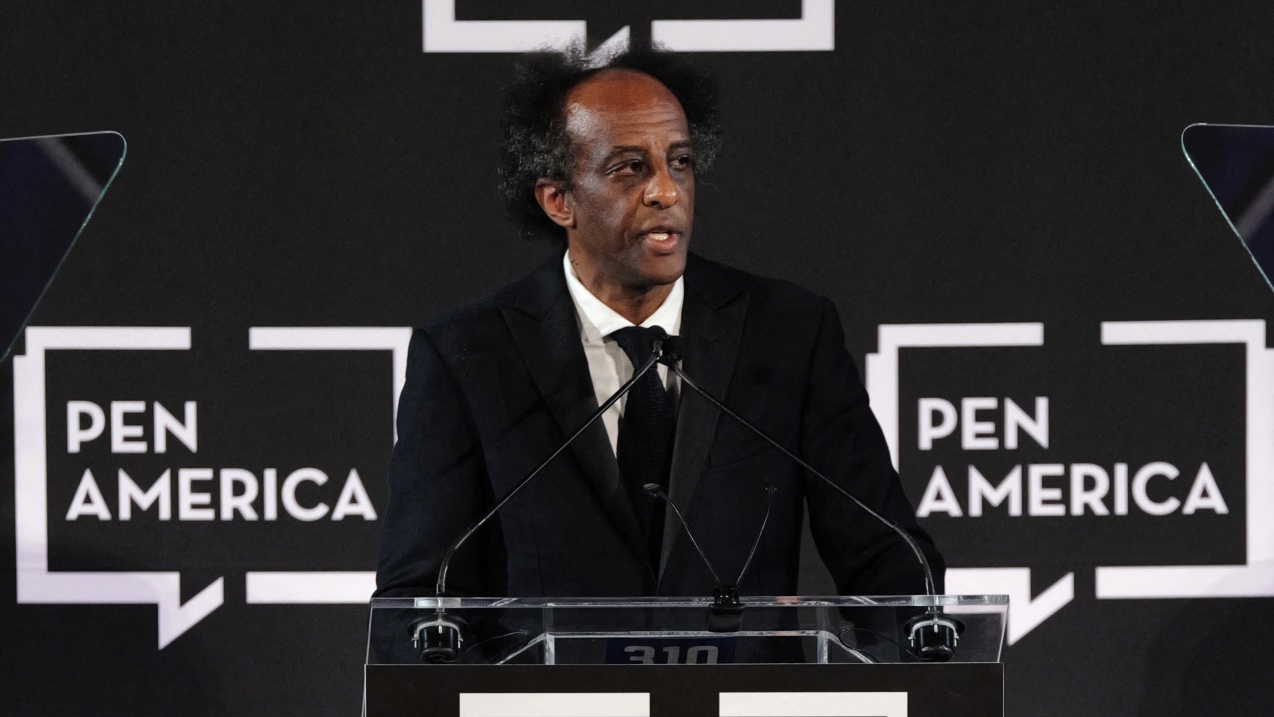
    Seven months after taking on the presidency of PEN America, one of the United States’ most prominent literary organizations dedicated to defending free speech, award-winning Ethiopian-American novelist Dinaw Mengestu has stepped down from his post. His departure, announced last week, stems from long-simmering frustration over what he calls systemic unfair treatment of Palestinians at the organization, in contrast to its positioning toward Israelis and Jewish Americans.

    Mengestu’s resignation came in the wake of PEN America’s release of a new report documenting the professional and emotional harm faced by Israeli and Jewish-American writers in the aftermath of Israel’s ongoing military campaign in Gaza, now stretching nearly three years. The report detailed multiple accounts of writers losing employment, speaking opportunities and career advancement due to their positions on the conflict. But for Mengestu, the report was just the latest example of the organization’s long-standing failure to uphold its core mission of defending free expression fairly and equitably across all sides of the conflict.

    In an Instagram statement posted Sunday, Mengestu clarified that his departure was not a dispute over differing personal perspectives or experiences. Instead, he argued that PEN America’s ongoing institutional choices produce work that enables suppression through bigotry and deliberate indifference toward Palestinian voices. At the center of this disagreement is the organization’s long-standing stance on the Palestinian-led Boycott, Divestment, Sanctions (BDS) movement, a global nonviolent campaign launched in 2005 to end Israeli occupation, racial segregation and the blockade of Gaza, modeled on the anti-apartheid pressure campaign that helped end white minority rule in South Africa. Mengestu emphasized that BDS activity constitutes protected free speech under the First Amendment of the U.S. Constitution, a right PEN America has consistently failed to uphold.

    For years, Mengestu noted, PEN America has framed BDS as a direct assault on the identity of Jewish students, while systematically diminishing Palestinian experiences of violence and dispossession to the point of near erasure. “What PEN America fails to understand is that a boycott is a form of dialogue,” he wrote. He added that the hundreds of writers who boycotted PEN America in 2024 did so to push for meaningful institutional change, and many only returned to the organization after being promised reform.

    Many of those boycotting writers are affiliated with Writers Against The War on Gaza (WAWOG), a prominent collective that labeled Israel’s military campaign in Gaza a genocide just two weeks after it launched in October 2023 – a classification that has since been endorsed by the United Nations, leading historians and leading genocide scholars. WAWOG’s website documents more than 400 successful cultural boycott outcomes across North America since the start of the conflict. The group declined to share its full membership size or demographic breakdown with Middle East Eye, but an anonymous representative praised Mengestu’s decision to step down.

    “We understand and commend [Mengestu] for not wanting to be associated with an institution that would… equate BDS as discriminatory,” the representative told Middle East Eye Monday. “For a lot of us, principles are the only thing we have.” The representative added that PEN America consistently draws false equivalence between material genocidal violence against Palestinians and the semantic disagreements raised by Zionist Israelis and Jewish Americans. “The desecration of cultural spaces in Gaza, wiping out the universities, killing scholars and writers and arresting them, it just doesn’t even compare,” they said.

    When contacted for comment by Middle East Eye, PEN America offered only a brief, measured statement acknowledging Mengestu’s departure. “We are grateful for Dinaw Mengestu’s leadership and we respect that he’s made a decision he believes in,” the organization said. “We recognize people can disagree about how best to apply free expression principles in this extraordinarily difficult environment.” The 100-year-old institution, which centers its public mission on defending free expression in all its forms, outlined its formal stance on boycotts in the 9 July report on Israeli and Jewish writers: the organization opposes cultural and academic boycotts that inhibit the international exchange of art, literature and knowledge, but will defend the right of writers who choose to participate in such boycotts against professional retaliation.

    PEN America confirmed to Middle East Eye that this caveat, affirming BDS participation as protected free speech, was only added to the organization’s public position in the past week. Prior to this update, the organization’s 2007-era stance on boycotts did not acknowledge that participating in or advocating for boycotts qualifies as protected free expression. Mengestu has characterized this last-minute adjustment as a hollow attempt to appease all sides amid mounting pressure for reform, though the organization has not publicly explained why it chose to update its position now after years of escalating criticism.

    The 9 July report did acknowledge that no organized BDS campaign has called for targeting writers solely on the basis of their Jewish identity. It did, however, note that many Jewish writers have reported losing access to agents, publishers and public events since 7 October 2023, due to their Jewish identity, support for Zionism, or sympathy for Israel.

    As of Monday, Gaza’s Ministry of Health has confirmed at least 73,231 Palestinians killed in Israeli military operations since the 7 October 2023 Hamas attacks that killed roughly 1,200 people in southern Israel. Independent experts estimate an additional 10,000 Palestinians remain buried under rubble across the blockaded enclave, with hundreds of thousands more sustaining injuries. Even after a recently announced ceasefire brokered by former U.S. President Donald Trump on 10 October, 1,108 Palestinians have been killed in Israeli airstrikes and sniper fire across Gaza.

  • UK police arrest 12 over far-right terror plot targeting major Muslim gathering

    UK police arrest 12 over far-right terror plot targeting major Muslim gathering

    British Counter Terrorism Policing (CTP) has disrupted an alleged far-right terror plot targeting one of the United Kingdom’s largest annual Muslim gatherings, resulting in 12 arrests and forcing the early closure of the event that drew 15,000 attendees. The gathering, known as the UK Ijtima, is hosted annually by the Tablighi Jamaat movement at Shrubland Hall, attracting worshippers from across Britain and international visitors alike. Scheduled to run from July 9 to 13, the event was wrapped up days early after counter-terrorism officers detected what they categorized as a credible, potentially catastrophic threat to attendees.

    In an official statement, Commander Helen Flanagan, head of CTP London, confirmed that 11 men and one woman were taken into custody across multiple regions of England, including the South East, East of England, and Greater Manchester. Flanagan explicitly tied the ongoing investigation to right-wing extremism, noting that law enforcement teams are currently executing search warrants at multiple locations connected to the suspects across the country. Eight of the arrested men are being held under Section 41 of the 2000 Terrorism Act and remain in police custody as questioning continues. Among the detainees are three men aged 81, 60, and 55, who face suspicion of conspiracy to commit murder, one of the most severe charges connected to the alleged plot.

    CTP has not released additional public details about the specific nature of the planned attack, but officials have repeatedly emphasized that the threat was classified as serious. UK Home Secretary Shabana Mahmood praised the rapid, proactive work of counter-terrorism officers, saying their timely intervention “undoubtedly” prevented mass loss of life at the gathering. Acknowledging the fear and uncertainty the incident has sparked among British Muslim communities across the country, Mahmood called for national unity in the face of extremist hatred. “We must stand against hatred and we must unite around our shared belief in a country that is open, generous and tolerant to all our communities,” she said.

  • Origin Energy forced to repay thousands over misleading electricity saver plan

    Origin Energy forced to repay thousands over misleading electricity saver plan

    A major Australian energy retailer is set to issue hundreds of thousands of dollars in compensation after Australia’s competition regulator confirmed the company overcharged thousands of households on a misleadingly marketed plan. The Australian Competition and Consumer Commission (ACCC) has ordered Origin Energy to refund a total of $270,000 to 4,500 residential customers who were incorrectly billed on the provider’s so-called “ongoing savers” plan.

    The investigation into Origin’s pricing practices launched after consumer advocacy group Choice submitted formal complaints, raising alarms that energy suppliers across the country were using confusing, misleading plan names to falsely advertise cost savings to households. ACCC Commissioner Anna Brakey explained that many customers who signed up for the “ongoing savers” plan ultimately ended up paying higher rates than customers on Origin’s basic, no-frills plan, directly contradicting the value promised by the plan’s branding.

    “Energy plans are inherently complex, with layered usage and supply charges that make it challenging for the average consumer to accurately compare potential savings across offerings,” Brakey noted. “It is the core responsibility of retailers to deliver clear, accurate information about their plans so consumers can make fully informed choices that fit their household budgets.”

    Under the remediation order, each affected household will receive an average refund of approximately $60, though impacted customers have the option to apply the amount as a credit to their future energy bills instead of claiming a cash refund. In an official statement following the regulator’s announcement, Origin Energy acknowledged the error and apologized to the affected customers, who make up just 0.5% of all customers enrolled in the “ongoing savers” plan. The company added that the average overcharge per affected household sat at roughly $28, and that it has already implemented internal pricing adjustments to prevent a repeat of the error, with refund disbursements currently underway.

    Beyond the Origin Energy case, the ACCC used the announcement to issue a broader warning to all Australian energy consumers: long-term loyalty to a single provider rarely benefits the customer, and instead pads the bottom lines of energy companies. The watchdog urged all households to proactively shop around for cheaper energy plans, noting that consumers can request a better rate directly from their current provider. Under Australian regulations, retailers are legally required to disclose how a customer’s existing plan pricing stacks up against the national regulated price safety net.

    Brakey encouraged consumers to take advantage of free, government-run energy comparison tools to find plans aligned with their specific usage needs, adding that the gap between the cheapest and most expensive energy plans on the market remains substantial, leaving hundreds of dollars in potential annual savings on the table for inactive customers.

  • Israel blocks Red Cross access to Palestinian prisoners despite court ruling

    Israel blocks Red Cross access to Palestinian prisoners despite court ruling

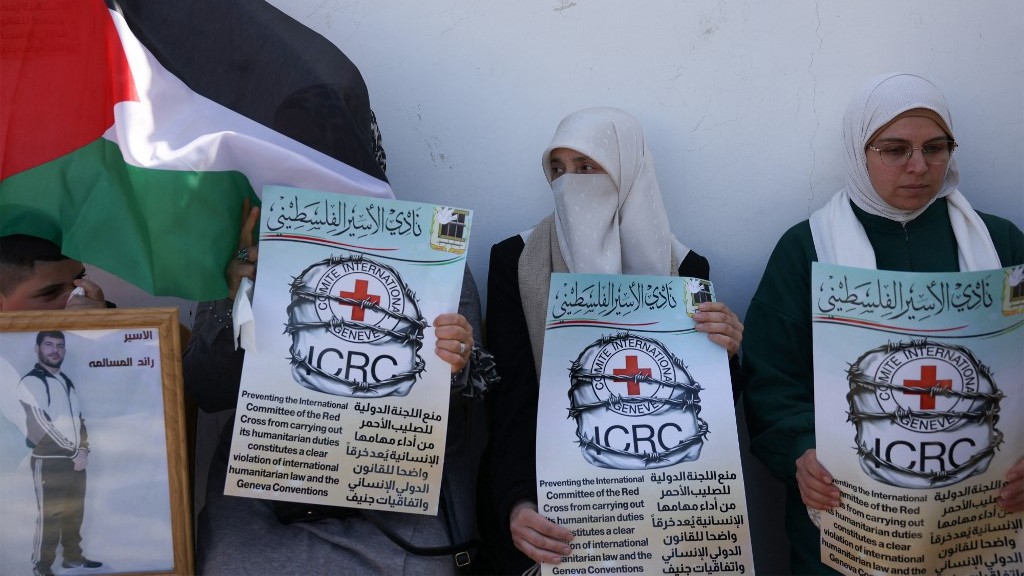
    In a direct challenge to a recent Israeli High Court of Justice ruling that deemed a prior access ban unlawful, Israeli authorities have implemented sweeping new restrictions that effectively expand a blanket ban on International Committee of the Red Cross (ICRC) access to Palestinian captives held in Israeli prisons.

    Last week, Israel Prison Service (IPS) Commissioner Kobi Yaakobi formalized the new sweeping regulations, which impose far-reaching limits on the humanitarian organization’s ability to carry out routine visits to detained Palestinians. Under the updated rules, Red Cross representatives are barred entirely from visiting multiple categories of Palestinian captives under any circumstances. This total ban applies to detainees the IPS labels as “highly violent”, as well as those held in solitary confinement and prisoners currently undergoing interrogation.

    For the remaining detainees who are not subject to a total ban, visits are capped at just 30 minutes per meeting, and prison commanders retain full authority to cut humanitarian visits short at their own discretion without formal oversight. Additional constraints further restrict access: the Red Cross is only permitted to conduct one round of visits per quarter, and the organization is required to submit a pre-approved list of no more than five captives it intends to meet with ahead of any visit.

    This latest policy shift directly defies a High Court order issued last month, which compelled the Israeli state to restore Red Cross access to Palestinian captives after an initial blanket ban was introduced immediately following the October 7, 2023 attacks in southern Israel. In a brief official statement defending the new measures, the IPS asserted that “The agency operates in accordance with the law. If any allegation is raised, it should be addressed through the appropriate channels.”

    The new restrictions come just weeks after a parliamentary bill that would have formally codified a total ban on Red Cross visits failed to pass in the Israeli Knesset, falling in a 36-41 vote. The bill failed after ultra-Orthodox Haredi coalition parties boycotted the vote in protest over the ruling government’s failure to advance legislation key to their own policy agenda, in a move unrelated to the Red Cross access debate.

    This report was originally published by Middle East Eye, an outlet that provides independent, on-the-ground coverage and analysis of the Middle East, North Africa and surrounding regions.

  • ‘Hero, legend, sweetheart’: Tributes to Jurassic Park actor Sam Neill, who has died aged 78

    ‘Hero, legend, sweetheart’: Tributes to Jurassic Park actor Sam Neill, who has died aged 78

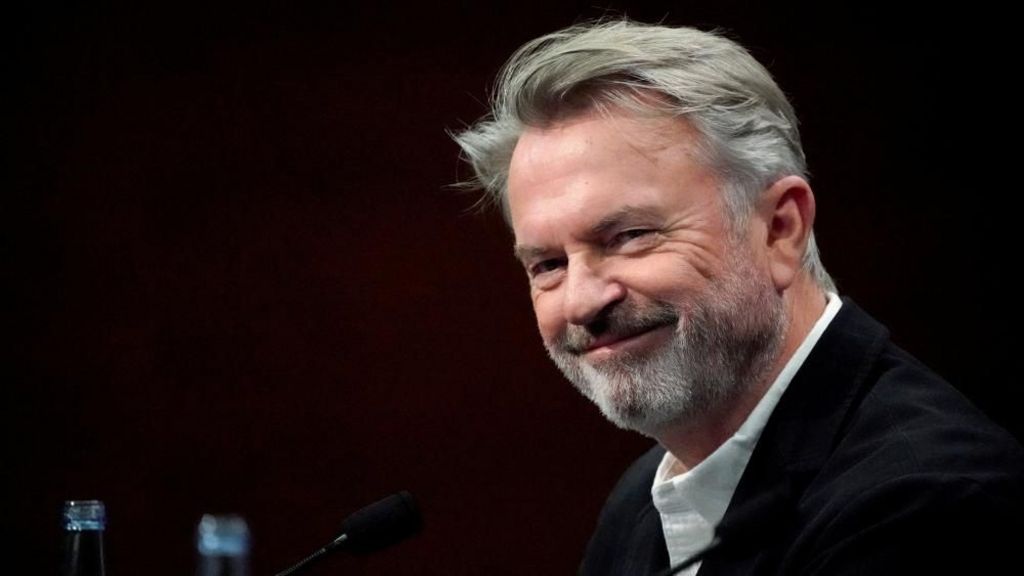
    The global entertainment community is mourning the sudden, unexpected passing of beloved New Zealand actor Sir Sam Neill, who died at the age of 78 in Sydney, Australia. His family confirmed the news in an official public statement, noting that Neill died peacefully surrounded by loved ones, carrying the quiet dignity that defined his decades-long public and private life.

    Neill first revealed a diagnosis of non-Hodgkin’s lymphoma, a form of blood cancer, in 2023, when he announced he had begun ongoing monthly chemotherapy after the disease went into remission. Just three months prior to his death, in April 2026, Neill shared that a full-body scan showed no remaining cancer cells in his body, a status his family confirmed he maintained up until his sudden passing. In a statement released after his death, Neill’s family thanked medical staff who cared for him, and requested privacy as they grieve their immeasurable loss, noting that additional funeral details will be shared at a later date.

    Born Nigel John Dermot Neill in Omagh, Northern Ireland in 1947, Neill moved to New Zealand with his family as a young child. He adopted the stage name Sam at the age of 12 to avoid confusion with multiple other students named Nigel at his secondary school, and cut his acting teeth while studying at the University of Canterbury. He made his feature film debut in 1971’s *The City of No*, and earned his first international recognition for his leading role in 1977’s *Sleeping Dogs*—one of the first New Zealand films to secure wide global distribution. He relocated to Australia shortly after, where his star turn in 1979’s *My Brilliant Career* cemented his status as a rising leading man.

    Neill’s rise to global superstardom came in 1993, when he starred in two career-defining roles: the romantic lead in Jane Campion’s Oscar-winning drama *The Piano*, and the sharp, quick-witted palaeontologist Dr. Alan Grant in Steven Spielberg’s blockbuster cultural phenomenon *Jurassic Park*. He would go on to reprise the role of Dr. Grant in 2001’s *Jurassic Park III* and 2022’s *Jurassic World Dominion*, and even voiced the character for three *Jurassic Park* franchise video games. Beyond his iconic film roles, Neill earned widespread acclaim for his television work, most notably his portrayal of the corrupt, brutal Major Chester Campbell in the first two seasons of the hit BBC drama *Peaky Blinders*. Over a career that spanned more than 55 years, Neill accumulated more than 150 screen credits, with additional standout roles in *Dead Calm*, *The Hunt for Red October*, and *Event Horizon*. His final on-screen performances came in 2025, in the feature film *The Fox* and the Netflix series *Untamed*. Two posthumous releases, *Godzilla x Kong: Supernova* and *The Last Resort*, are scheduled to hit theaters in 2027.

    Honored for his contributions to the arts throughout his lifetime, Neill was appointed an Officer of the Order of the British Empire (OBE) in 1991, named a Distinguished Companion of the New Zealand Order of Merit in 2007, and accepted a knighthood in 2022 after changes to New Zealand’s honors system allowed recipients to accept titular distinctions. After his cancer diagnosis in 2023, Neill released a memoir titled *Did I Ever Tell You This?*, where he opened up about his treatment and his perspective on mortality. In an interview with the BBC that year, he shared: “I’m not afraid of dying. What I don’t want to do is to stop living, because I really enjoy living. I’ve regarded it as an adventure, quite a dark adventure, but an adventure nevertheless.”

    Following the announcement of his death, tributes poured in from across the globe from political leaders, co-stars, and entertainment figures. New Zealand Prime Minister Christopher Luxon called Neill “one of the greats,” noting that for more than half a century, Neill brought New Zealand stories to global audiences and helped grow the country’s film industry into one of its most celebrated cultural exports. Former New Zealand Prime Minister Jacinda Ardern remembered Neill as “such a thoughtful, curious, and decent person,” adding that “we’ve lost another incredible kiwi, and I feel profoundly sad.” Australian Prime Minister Anthony Albanese wrote on X that Neill “starred in so many beloved Australian stories and he earned a special place in Australian hearts.”

    Longtime co-stars and collaborators also shared heartfelt remembrances. Laura Dern, who starred opposite Neill as Ellie Sattler in all three of his *Jurassic Park* franchise appearances, called him “my beloved lifetime friend,” writing: “He showed me the depths of loyalty, protectiveness and love always with the driest of wit. He was a true and noble gentleman, wrapped up in my dream leading man. I will love you forever, Dr Alan Grant.” Australian acting icon Toni Collette wrote: “I love you, dear Sam. You hero. You legend. You sweetheart. Our great friend. You are already missed so very much.” British actor Richard E. Grant, who counted Neill as a friend for 30 years, shared that Neill supported him through an incredibly difficult personal period, calling him “an officer and a gentleman in the truest sense.” *Jurassic World Dominion* director Colin Trevorrow remembered Neill as “a deeply soulful and beautiful man,” writing: “He was a friend and collaborator at a challenging time, and his strength gave us all strength. I’ll remember him for his tranquillity, his love of wine, and for the calm assuredness he brought to his characters. It’s not every lifetime you get to befriend a legend.” Global pop superstar Kylie Minogue paid her respects with the message “Vale [goodbye] Sam” paired with a broken heart emoji, while *Peaky Blinders* co-star Joe Cole simply posted “Rest in peace big dog.” Daisy Ridley, who will appear alongside Neill in the upcoming 2027 release *The Last Resort*, shared a personal photo of the pair to her Instagram story with three broken heart emojis.

    Sir Sam Neill is survived by his four children and eight grandchildren.

  • Indian activist on hunger strike at ‘cockroach’ protest loses 8.2kg

    Indian activist on hunger strike at ‘cockroach’ protest loses 8.2kg

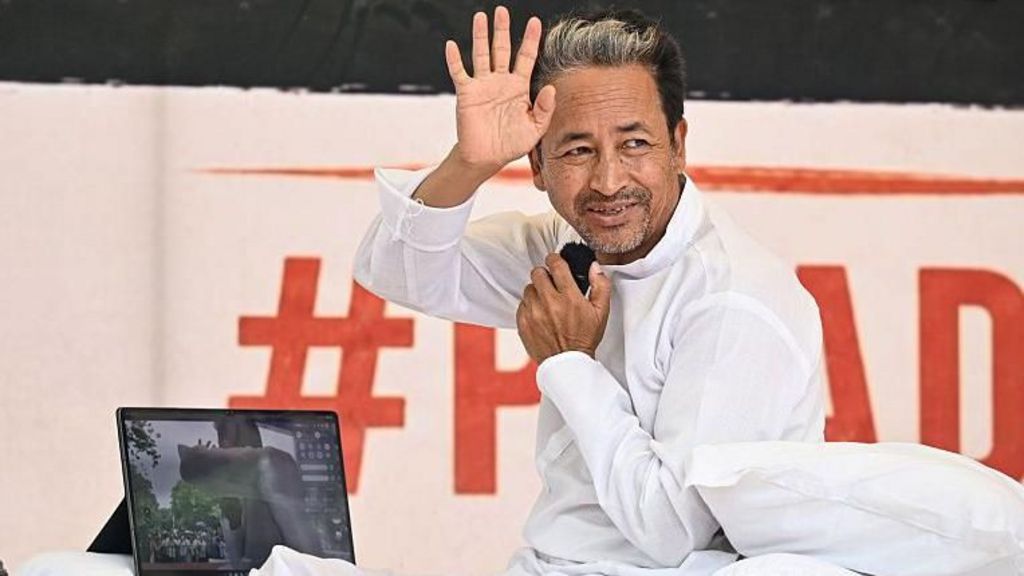
    In the heart of India’s capital New Delhi, at the historic Jantar Mantar protest ground, 59-year-old Sonam Wangchuk – an award-winning educationist, climate innovator and revered public figure – has entered the 16th day of an indefinite hunger strike, his resolve unshaken even as his health deteriorates to alarming levels.

    Wangchuk, who traces his protest philosophy to Mahatma Gandhi’s principles of nonviolent resistance, told the BBC on Monday: “I’m weak from the outside, but I’m strong from inside.” A Monday morning health bulletin confirms the activist has lost 8.2 kilograms (18 pounds) since beginning his fast, with his blood pressure registering at 107/70 and blood sugar dropping to a dangerously low 67. Thousands of supporters across the country have pleaded with him to end his fast, but Wangchuk says he will see his protest through to its conclusion: “I have to take what I’ve begun to its logical conclusion.”

    The hunger strike is part of a broader protest organized by the online satirical activist group Cockroach Janta Party (CJP), which is demanding sweeping accountability and reform in India’s education sector. The movement’s immediate demand is the resignation of Union Education Minister Dharmendra Pradhan, following the cancellation of a major national medical entrance exam in early May after a widespread paper leak scandal. Protesters argue Pradhan must accept moral responsibility for the systemic failure that led to the leak. The minister has rejected the call, dismissing CJP and its allies as “the B-team of disruptive elements” who oppose the country’s progress.

    A native of the remote Himalayan region of Ladakh, Wangchuk is far more than a protest figure. A trained mechanical engineer, he has earned international acclaim for his work in both education innovation and climate adaptation. His most famous invention, the ice stupa – an artificial cone-shaped glacier modeled after Buddhist religious structures – stores glacial meltwater during winter and releases it in late spring, when mountain communities and farmers face critical water shortages. The innovation has transformed water access for Ladakhi communities, earning Wangchuk the 2018 Ramon Magsaysay Award, widely recognized as Asia’s highest honor. He also gained nationwide fame as the inspiration for the lead character in Aamir Khan’s 2009 Bollywood blockbuster *Three Idiots*, and has been a household name across India for decades. This is not his first run-in with authorities: last October, he was arrested on charges of inciting unrest, which he denied. He spent 170 days in detention before authorities dropped all charges and released him.

    Even amid soaring Delhi summer temperatures that hit 38 degrees Celsius on Monday, with a “real feel” of 46 degrees, hundreds of supporters have maintained a continuous vigil at Jantar Mantar to stand in solidarity with Wangchuk and the CJP’s demands. CJP founder Abhijeet Dipke, who has led the movement from its start, says organizers are gravely concerned about Wangchuk’s declining condition. “Today is the 16th day of his hunger strike and his blood sugar level and blood pressure have dropped and whenever he tries to sit or stand, he feels very dizzy,” Dipke told the BBC. “He’s finding it difficult to even walk to the washroom. He’s really struggling. He’s in a lot of pain but whenever I try to tell him to end his hunger strike, he scolds me and says that ‘don’t you worry about me’.”

    Medical teams have warned Wangchuk that continuing the fast poses severe risks to his life, and Dipke says he receives thousands of messages daily from people urging him to convince the activist to end his fast. Even fellow protesters and supporters are increasingly calling on Wangchuk to stop. Animesh Sahu, a 29-year-old engineer from Hyderabad who traveled to Delhi to join the vigil, said: “I’ve grown up watching his videos and I have an emotional connect with him. I’m feeling very concerned about his health. The government must pay attention to him.” Satyaprakash Bharadwaj, a farmer who joined the protest, called Wangchuk “a diamond” sacrificing himself for India’s younger generation: “I’m praying that he will call off his hunger strike. He can fight for our children only when he’s strong.”

    Prominent educationist Professor Nandita Narain echoed those concerns, saying it is tragic that a figure of Wangchuk’s standing has to resort to extreme hunger strike to force government action. “It’s very sad that someone like Wangchuk, who has made such outstanding contribution to public life has to resort to a hunger strike to get the government to act,” she said. “I would also appeal to Wangchuk to end his fast because his life is in danger. We have a battle to fight which will go on for much longer. We need a sustained protest and the movement has to be sustained. It’s important that he lives to fight the battle.”

    Since Wangchuk began his fast, dozens of opposition lawmakers, prominent activists and social media influencers have visited the protest site to express support. But Dipke says no representatives from the ruling Bharatiya Janata Party (BJP) have reached out or agreed to enter dialogue over the protesters’ demands. “I don’t know why the government is so dismissive of the citizens of this country. We have been simply asking for accountability,” Dipke said. “We are not saying make us or Sonam Wangchuk the education minister. All we are asking for is to fix accountability and to change the person who has failed to conduct exams properly as an education minister.”

    With no government response forthcoming, protesters have announced their next step: a mass march to India’s Parliament on July 20, when the next monsoon session of the legislature is set to begin. “We have been sitting here for the last 24 days and Sonam sir has been on hunger strike for 16 days. Despite that, the government has not intervened, they have not even initiated a dialogue with us,” Dipke said. “So we thought maybe it’s time to go to the government, go to the parliament of India and keep our demands there.”